Moving fuel from a can to a tank should be a one-way process without puddles, fumes, or paper towels. Yet gravity siphons dribble, spouts splash, and lifting a full five-gallon container strains wrists and patience. A dedicated pump eliminates the guesswork and the mess, turning a ten-minute chore into a thirty-second button press.
I’m Amir — the founder and writer behind Four Wheel Ask. I spend my time dissecting product specifications, reading thousands of owner reports, and comparing build quality across dozens of fuel-transfer solutions to separate the pumps that last from the ones that leak.
Every model here was evaluated for flow-rate consistency, sensor reliability, hose durability, and real-world owner satisfaction. After carefully comparing seven models across flow rates, build materials, and key safety features, I found the best gas transfer pump for every need.
How To Choose The Best Gas Transfer Pump
Buying a fuel transfer pump is about matching three variables: how fast you want the job done, how much safety you require, and how often you plan to use it. The table below helps you compare core specs at a glance, but understanding the engineering behind each feature is what separates a smart purchase from a regret.
Flow Rate vs. Real-World Throughput
Manufacturers advertise GPM (gallons per minute) as a headline number, but that figure depends on battery voltage, hose diameter, and lift height. A pump rated for 3.8 GPM with fresh alkaline cells will outperform a tired 3.2 GPM unit running on near-dead batteries. Look for consistent flow across multiple transfers, not just a peak number printed on the box.
Auto-Stop Sensor Reliability
The auto-stop sensor is the single most important safety component. Cheap sensors can false-trigger on foam or fail to trigger on fast-filling tanks, leading to overflows. The best pumps use a sealed optical or conductivity sensor inside the nozzle that reacts within half a second. Avoid pumps that rely solely on air-pressure cutoffs, which are prone to failure with thicker fuels.
Power Source Trade-offs
Four-AA battery trays offer true portability with no cables, but alkaline cells lose voltage as they drain, reducing flow rate over time. Pumps with USB-C backup power let you switch to a power bank or car charger when batteries die mid-job. If you transfer fuel frequently, the dual-power approach saves money on replacement batteries and keeps flow consistent.
Build Materials and Adapter Coverage
The hose must resist gasoline, diesel, and kerosene without hardening or cracking. Polyethylene is the standard for durability, but the nozzle and pump housing should be ABS or reinforced nylon, not thin polypropylene. Adapter kits should cover four sizes — 2.0, 2.1, 2.75, and 3.75 inches — to fit standard North American cans without aftermarket reducers.
Quick Comparison
On smaller screens, swipe sideways to see the full table.
| Model | Category | Best For | Key Spec | Amazon |
|---|---|---|---|---|
| TERA PUMP 2nd Gen | Premium | Heavy-duty home & farm use | 2.4 GPM, 39.4-inch vinyl discharge hose | Amazon |
| anngrowy Fuel Transfer Pump | Performance | CSA-certified safe operation | 3.2 GPM, 51-inch hose, 4 adapters | Amazon |
| Bonviee Portable Fuel Transfer Pump | Design | Dual-power USB & battery operation | 3.8 GPM, 51-inch hose, USB-C | Amazon |
| FEEDRON Automatic Fuel Transfer Pump | Value | Budget-friendly high flow rate | 3.8 GPM, 51-inch hose, USB/AA | Amazon |
| AUTOJDM Fuel Transfer Pump | Battery | Alert beep safety feedback | 3.2 GPM, 51-inch hose, 30s alarm | Amazon |
| SKYJDM Portable Fuel Transfer Pump | Premium | Compact starter pump | 3.2 GPM, 51-inch hose, 4 adapters | Amazon |
| vedocn Fuel Transfer Pump | Performance | Entry-level no-frills transfer | 3.2 GPM, 51-inch hose, auto-stop | Amazon |
In‑Depth Reviews
1. TERA PUMP 2nd Gen Auto-Stop Gas Cap Fuel Transfer Pump
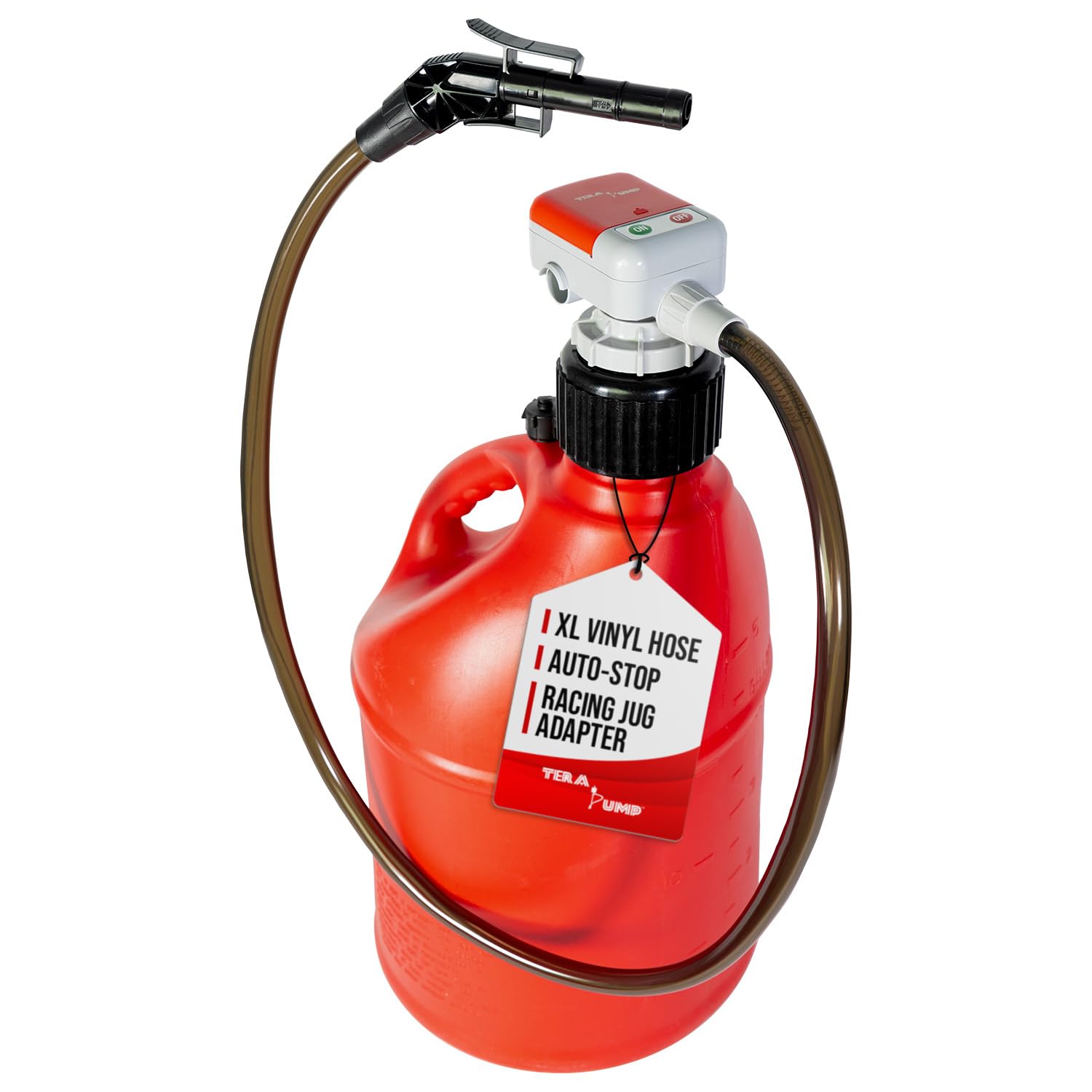
The TERA PUMP 2nd Gen stands apart because it treats fuel transfer as an engineered system rather than an accessory. The 2025 upgrades include a vinyl discharge hose that resists nicks and cuts, plus a metal impeller cover that shields the internal mechanism from debris that would destroy a plastic-bodied pump. At 2.4 GPM it is not the fastest on paper, but the flow remains consistent across dozens of transfers because the alkaline cells power a motor designed for sustained duty rather than sprint performance.
The redesigned pump nozzle incorporates an ergonomic handle that reduces hand fatigue during longer refueling sessions, and the universal gas can adapter means you are not hunting for the right thread pattern when switching between cans. The auto-stop sensor uses a conductivity probe inside the discharge nozzle rather than a mechanical float, giving it a faster reaction time and fewer false triggers. Owner data suggests this pump delivers roughly 250 gallons of fuel per set of four AA batteries, making it the most energy-efficient choice in this comparison.
Where the TERA PUMP loses ground is peak flow rate. Enthusiasts moving large volumes of fuel quickly may find 2.4 GPM slower than the 3.8 GPM alternatives. The 39.4-inch discharge hose is also shorter than the 51-inch hoses found on most competitors, which can be a limitation when reaching recessed filler necks on trucks or boats. But for the buyer who values durability, sensor reliability, and long-term battery economy over raw speed, this pump delivers a level of refinement that cheaper units cannot match.
What works
- Metal impeller cover protects against debris damage
- Vinyl discharge hose resists cuts and abrasions
- Exceptional battery life — up to 250 gallons per set
- Ergonomic handle reduces hand strain
What doesn’t
- 2.4 GPM is slower than several budget alternatives
- 39.4-inch hose is shorter than the 51-inch standard
- Premium pricing places it above casual buyer budget
2. anngrowy Fuel Transfer Pump Battery Powered
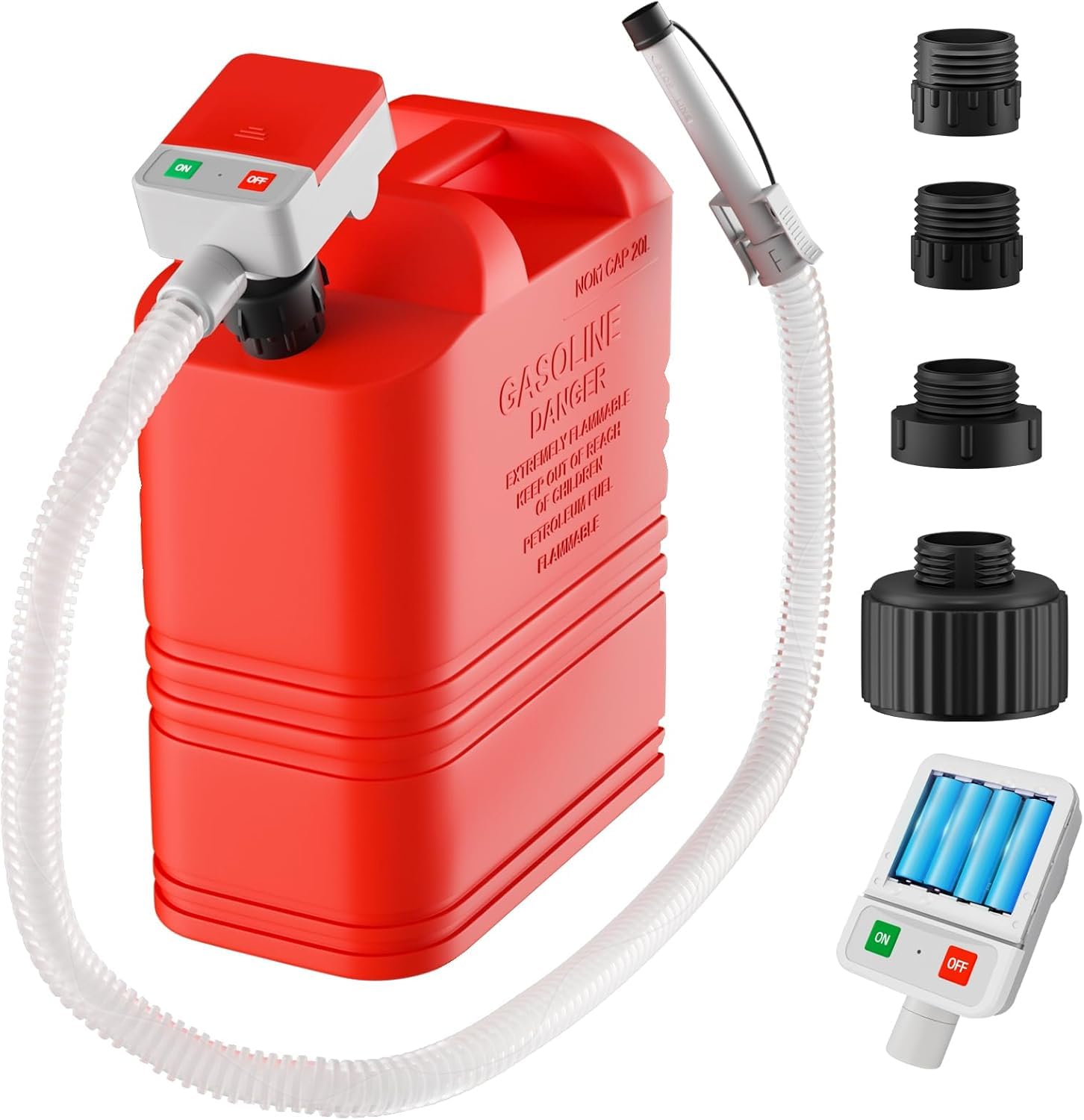
The anngrowy pump earns its Performance label through a combination of CSA certification and a genuinely useful extended intake hose. CSA testing means the unit has passed third-party verification for electrical and fire safety, a credential notably absent from many unbranded competitors on the market. The 19-inch intake hose reaches deeper into fuel cans than the standard 12-inch tubes, allowing the pump to draw fuel even when the can is tilted or nearly empty — a small detail that saves significant frustration.
The internal motor delivers a consistent 3.2 GPM across the full battery charge curve, and the four included adapters cover the full North American range from 2.0 inches to 3.75 inches. Owner reports indicate the auto-stop sensor triggers reliably within one second of tank fill, and the polyethylene hose shows no signs of swelling or hardening after extended contact with gasoline and diesel. The kit includes a storage bag that keeps all components organized, making it easy to store in a trunk or garage cabinet without losing adapters.
The main compromise is in the pump body construction. While functional, the plastic housing does not feel as dense as the TERA PUMP or Bonviee alternatives, and the hose barbs are molded rather than machined, which can make adapter swaps slightly tight. The battery compartment uses a snap-fit door that some users report loosening over time. Still, for the price point and the added safety of CSA certification, the anngrowy represents a strong middle-ground choice that prioritizes verified safety standards over speculative build claims.
What works
- CSA certification for verified electrical safety
- Extended 19-inch intake hose reaches deeper cans
- Consistent 3.2 GPM across battery charge range
- Four-adapter set fits all standard can openings
What doesn’t
- Plastic body lacks the density of premium competitors
- Molded hose barbs make adapter changes tight
- Battery door can loosen with frequent use
3. Bonviee Portable Fuel Transfer Pump with Auto-Stop
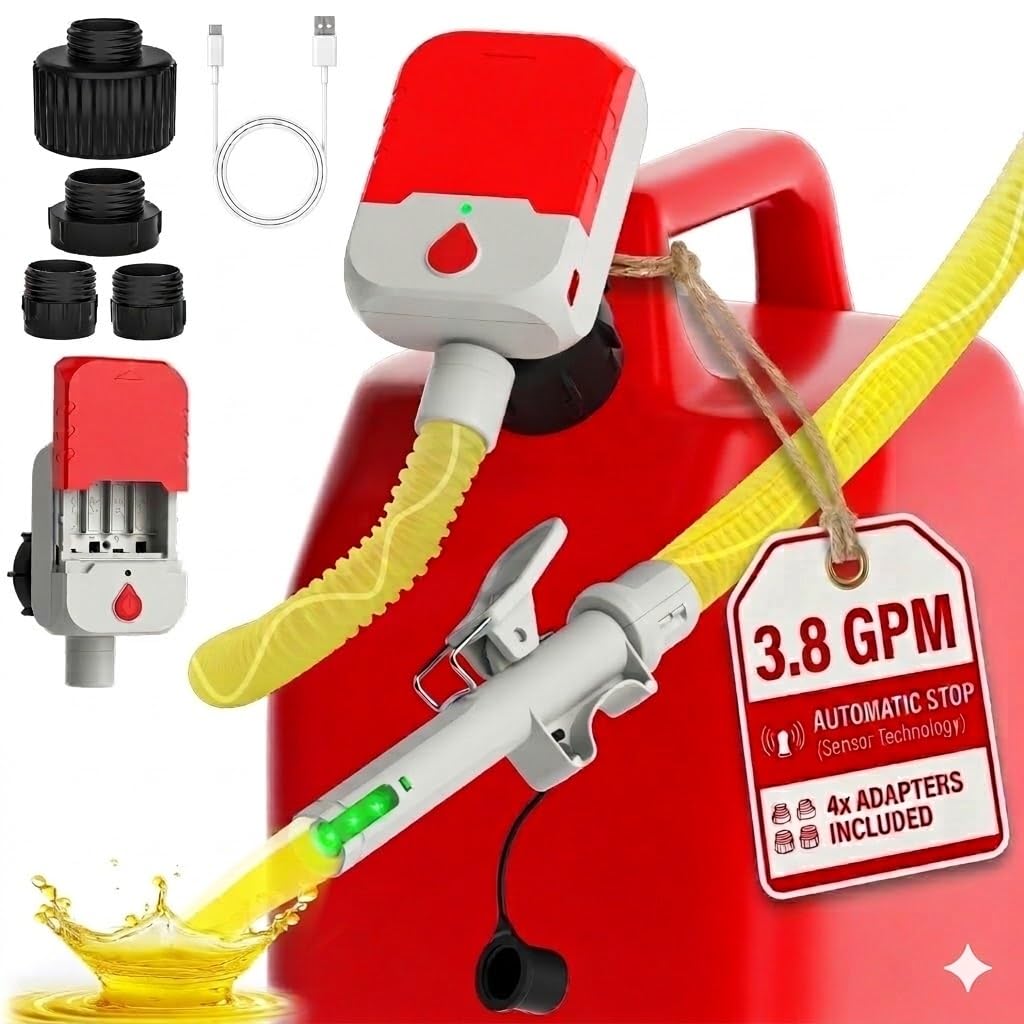
The Bonviee pump solves the single biggest frustration with battery-powered fuel pumps: the moment your batteries die mid-transfer. By including a USB-C port, this unit can run off any power bank, car charger, or wall adapter, providing a true backup power source that does not require emergency AA cells. The dual-power approach means you always have a fallback, and the pump draws from the USB source with the same consistent 3.8 GPM flow rate it delivers on fresh alkaline batteries.
The smart auto-stop nozzle uses a sealed optical sensor that reacts faster than conductivity-based alternatives, reducing the risk of foam-induced false triggers. The 51-inch flexible hose is made from polyethylene with a reinforced inner wall that resists kinking even when bent at sharp angles around engine compartments or boat consoles. The pump body weighs just 1.2 pounds and fits inside the included drawstring bag alongside four adapters and the USB cable, making this the most travel-friendly option in the lineup.
The trade-off comes in long-term durability. The pump housing uses a thin-wall ABS shell that feels noticeably less rugged than the TERA PUMP, and the USB port is protected by a rubber flap that can tear off if handled roughly. The 3.8 GPM flow rate also requires a full set of four fresh AA batteries or a high-output USB source — dropping to two batteries in emergency mode significantly cuts speed. For the user who values power-source flexibility and portability above all else, the Bonviee delivers a well-thought-out design that few competitors match.
What works
- USB-C backup power eliminates dead-battery downtime
- Fast 3.8 GPM flow rate on fresh batteries
- Optical auto-stop sensor with fast reaction time
- Lightweight 1.2-pound build for portable use
What doesn’t
- Thin ABS shell feels less durable than top-tier options
- USB flap cover can tear with frequent use
- Emergency 2-battery mode cuts flow significantly
4. FEEDRON Automatic Fuel Transfer Pump

The FEEDRON pump competes at the same price point as several other mid-range units but distinguishes itself with an audible beeper that sounds when the auto-stop sensor triggers. That audible feedback eliminates the need to watch the nozzle constantly — you can walk away and rely on the beep to tell you the tank is full. Combined with the 3.8 GPM flow rate, this pump moves a five-gallon can in roughly 80 seconds while keeping you informed through sound rather than visual inspection.
The kit includes both USB Type-C and four-AA battery power options, mirroring the Bonviee approach but at a slightly lower entry cost. The ABS shell uses a reinforced seam design that resists splitting, and the polyethylene hose is rated for gasoline, diesel, kerosene, and non-potable water. The four adapters follow the standard 2.0-to-3.75-inch range, and the included drawstring bag provides adequate organization for trunk or garage storage.
The beeper, while useful, is not adjustable in volume and may be annoying in quiet residential settings. The sensor calibration also appears slightly less refined than the TERA PUMP or Bonviee — a small number of owner reports mention occasional false triggers when pumping diesel due to foam. The 1.4-pound weight is marginally heavier than the Bonviee, though still well within portable territory. For the budget-conscious buyer who wants high flow, dual power, and audible feedback, the FEEDRON delivers strong value without major compromises.
What works
- Audible beeper confirms auto-stop without watching
- 3.8 GPM flow rate for fast refueling
- USB and AA dual-power flexibility
- Reinforced ABS shell resists splitting
What doesn’t
- Non-adjustable beeper volume may annoy neighbors
- Sensor can false-trigger on foamy diesel
- Slightly heavier than comparable portable pumps
5. AUTOJDM Fuel Transfer Pump with Auto-Stop Sensor

The AUTOJDM pump adds a 30-second alert beep that sounds when the auto-stop sensor has been continuously triggered, drawing attention to a completed fill or a potential nozzle blockage. This extra layer of safety feedback makes it a strong choice for users who frequently refuel in noisy environments — garages with running engines, farm lots with machinery, or outdoor sites with wind noise. The 3.2 GPM flow rate is adequate for most personal vehicles and lawn equipment, and the 51-inch hose provides the reach needed for truck beds and boat fuel fills.
The included four-adapter set covers the full industry standard, and the pump body features a locking clip that secures the nozzle onto receiving receptacles for hands-free operation. The polyethylene hose is rustproof and corrosion-resistant, and the portable storage bag keeps everything contained. The pump operates on four AA batteries in standard mode and can run on two in emergencies, though the flow rate drops noticeably at the lower power setting.
The 30-second beep, while useful, cannot be silenced or adjusted, which may become a nuisance during multiple back-to-back fills. The sensor sensitivity is tuned for gasoline and diesel but can intermittently trigger on kerosene depending on the additive package. The pump body dimensions are slightly bulkier than the Bonviee or FEEDRON, making the storage bag a tighter fit when all adapters are packed. For the user who prioritizes safety alerts and hands-free locking over compact storage, the AUTOJDM offers a specialized feature set that fills a specific niche.
What works
- 30-second alert beep for noisy-environment safety
- Locking clip enables hands-free nozzle operation
- 51-inch hose reaches recessed filler necks
- Rustproof polyethylene hose resists corrosion
What doesn’t
- Non-adjustable beep repeats during multiple fills
- Sensor can false-trigger on certain kerosene blends
- Bulkier body makes storage bag fit tighter
6. SKYJDM Portable Fuel Transfer Pump

The SKYJDM pump targets the buyer who wants auto-stop safety and a clean design without overspending on features they do not need. The pump delivers a consistent 3.2 GPM and includes the standard four-adapter set for North American fuel cans, all housed in a blue ABS body that is slightly more compact than the competition. The auto-stop sensor uses a conductivity probe that has proven reliable across gasoline, diesel, and kerosene applications based on aggregated owner feedback.
The 51-inch hose provides adequate reach for most transfer scenarios, and the pump runs on four AA batteries for cordless operation. The packaging includes a storage bag and a user manual that clearly explains adapter selection and battery installation. The pump is not compatible with Scepter SmartControl gas cans, which is an important caveat for owners of that specific container type.
The main limitation is the lack of any backup power option — there is no USB-C port or alternative power source, so a dead battery means a complete stop until fresh cells are installed. The plastic housing, while functional, does not have the reinforced seams of the FEEDRON or the metal impeller cover of the TERA PUMP, making it less suited for heavy daily use. For the occasional user who needs a reliable pump for weekend refueling without complex features, the SKYJDM provides a straightforward solution at a mid-range entry point.
What works
- Reliable conductivity-based auto-stop sensor
- Compact ABS body saves storage space
- Four-adapter set covers standard can openings
- 51-inch hose for extended reach
What doesn’t
- No USB backup power option
- Not compatible with Scepter SmartControl cans
- Plastic housing lacks reinforced seams
7. vedocn Fuel Transfer Pump with Auto Stop Sensor
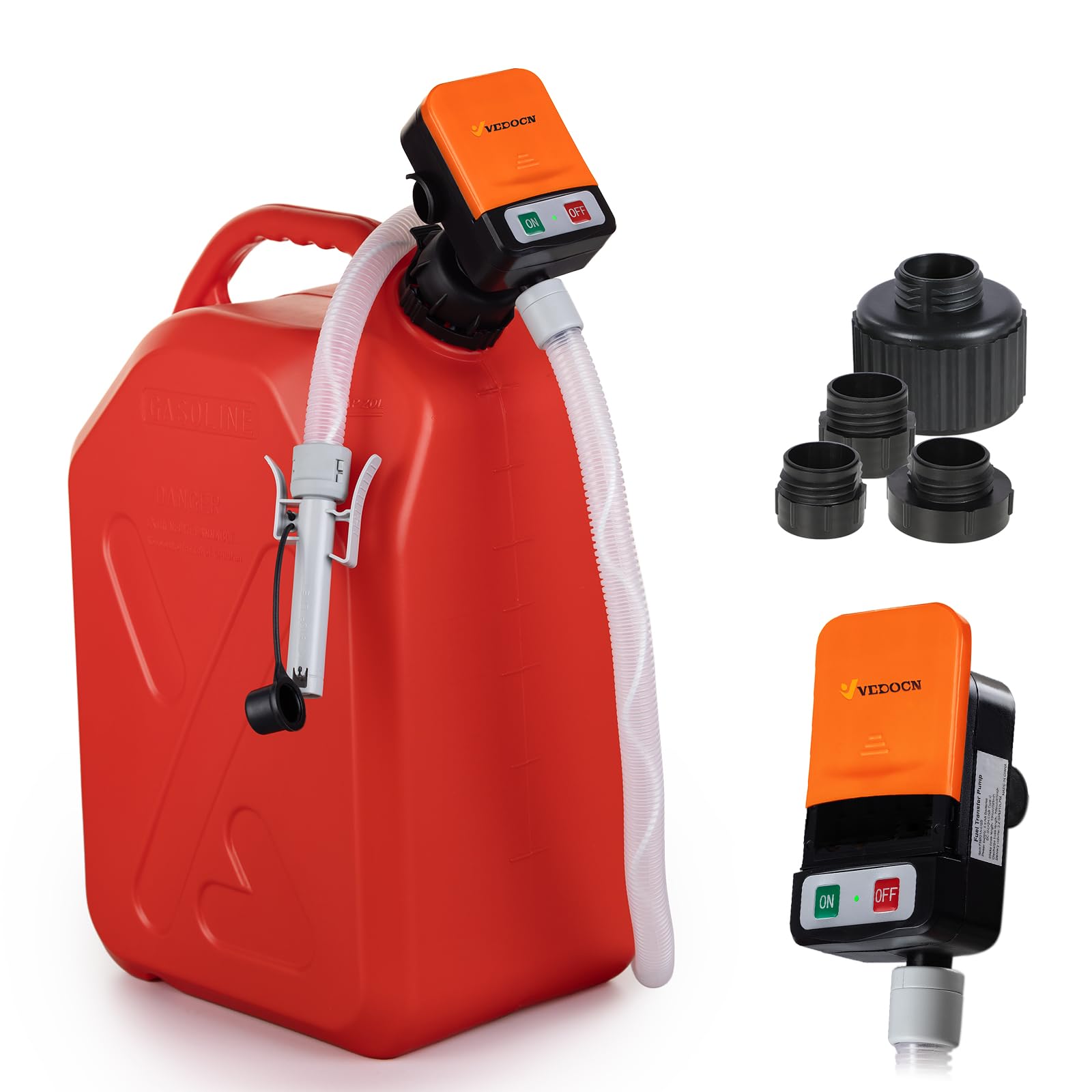
The vedocn pump enters the market as the most budget-conscious option in this comparison, yet it retains all the core features that make a fuel transfer pump useful: an auto-stop sensor, four tank adapters, and a 51-inch hose. The 3.2 GPM flow rate is adequate for personal vehicles, lawn mowers, and small equipment, and the orange-and-black color scheme makes it easy to spot in a cluttered garage or trunk. The pump body is lightweight and the included storage bag keeps the adapters organized.
The auto-stop sensor uses the same conductivity-principle found in mid-range competitors, and early owner data suggests it triggers reliably on gasoline and diesel fills. The four adapters cover the standard 2.0-to-3.75-inch range, and the 51-inch hose provides sufficient reach for most passenger vehicles and boats. The pump runs on four AA batteries for standard operation and can manage on two in a pinch, though performance degrades noticeably at the lower cell count.
Where the vedocn cuts corners is in build refinement. The plastic housing has a thinner wall section than the FEEDRON or Bonviee, and the hose material feels slightly stiffer, which can make coiling and storage less convenient. The brand has a shorter track record than TERA PUMP or anngrowy, so long-term reliability data is still emerging. For the buyer who needs a functional auto-stop pump at the lowest possible entry cost and is willing to accept a more basic build, the vedocn delivers the essential feature set without unnecessary extras.
What works
- Lowest entry cost for auto-stop functionality
- Four-adapter set covers all standard cans
- 51-inch hose provides adequate reach
- Lightweight and easy to store
What doesn’t
- Thin-wall plastic housing less durable
- Stiffer hose material harder to coil
- Limited long-term reliability data available
Hardware & Specs Guide
Understanding Flow Rates
Gallons per minute (GPM) ratings are measured under ideal conditions: fresh batteries, empty receiving tank, and minimal lift height. Real-world flow drops 15 to 25 percent when pumping against a full tank, through a kinked hose, or with batteries at 50 percent charge. A pump rated at 3.8 GPM on the box may deliver 2.9 GPM in practical use. Focus on consistency across the battery life cycle rather than peak numbers.
Auto-Stop Sensor Technology
Two sensor types dominate this category. Conductivity sensors complete a circuit when fuel touches the probe, triggering the stop. Optical sensors use an infrared beam that breaks when fuel rises. Conductivity sensors are more tolerant of dirty fuel but can false-trigger on conductive liquids like water. Optical sensors react faster but may fail if the lens is coated with residue. Both types require the sensor to be positioned correctly in the nozzle for reliable operation.
Battery Life and Power Alternatives
Four AA alkaline cells typically deliver 25 to 50 full five-gallon transfers before voltage drops below usable levels. Two-battery emergency mode cuts both flow rate and total capacity by roughly 60 percent. USB-C powered pumps allow indefinite operation from a power bank or vehicle charger, making them ideal for extended refueling sessions. Rechargeable NiMH AA cells work in all models but provide lower voltage than alkalines, reducing flow rate by 10 to 15 percent.
Hose Length and Adapter Compatibility
The standard 51-inch hose length reaches most vehicle filler necks without requiring the user to lift the fuel can. Shorter hoses (39 inches) demand closer positioning. Polyethylene hoses resist fuel swelling but stiffen in cold temperatures. Adapter kits should include 2.0, 2.1, 2.75, and 3.75-inch diameters to fit standard plastic fuel cans. Some pumps use a universal rubber gasket instead of threaded adapters — these seal well but may slip on smooth can openings.
FAQ
Can a gas transfer pump handle diesel and kerosene?
How long do four AA batteries last in these pumps?
Are battery-powered fuel pumps safe for gasoline use?
Do these pumps work with Scepter military-style fuel cans?
What is the real-world difference between 2.4 GPM and 3.8 GPM?
Final Thoughts: The Verdict
For most buyers, the best gas transfer pump winner is the TERA PUMP 2nd Gen because its metal impeller cover, vinyl discharge hose, and exceptional battery life make it the most durable and cost-effective choice over years of use. If you want USB backup power and maximum portability, grab the Bonviee Portable Fuel Transfer Pump. And for verified safety certification at a reasonable price, nothing beats the anngrowy Fuel Transfer Pump.

Certification: BSc in Mechanical Engineering
Education: Mechanical engineer
Lives In: 539 W Commerce St, Dallas, TX 75208, USA
Md Amir is an auto mechanic student and writer with over half a decade of experience in the automotive field. He has worked with top automotive brands such as Lexus, Quantum, and also owns two automotive blogs autocarneed.com and taxiwiz.com.