A stale, musty draft from your vents every time you crank the AC isn’t just unpleasant — it’s a sign that your cabin air filter has reached the end of its service life. For owners of the ninth-generation Civic, swapping this overlooked component is one of the quickest ways to restore interior air quality without a trip to the shop.
I’m Amir — the founder and writer behind Four Wheel Ask. My approach involves sifting through technical specifications, comparing filter media construction, and cross-referencing real owner feedback to identify which aftermarket options deliver measurable improvements over stock.
Whether you prioritize odor absorption, particle capture, or long-term cost per mile, the right choice depends on how you use the car. After analyzing dozens of cabin filters, the best 2014 honda civic cabin air filter picks balance particle capture with long-term value and easy installation.
How To Choose The Best 2014 Honda Civic Cabin Air Filter
Selecting the right replacement means looking past the brand name and understanding the three variables that matter most: media composition, dimensional accuracy, and service interval. A filter that fits loose or uses thin media will let particulates bypass the element entirely.
Filter Media Type
Standard pleated paper catches dust and pollen but does little for odors. Activated carbon layers (often coconut-shell based) adsorb volatile compounds and exhaust fumes. Electrostatic media adds a charge that attracts finer particles. Washable polyurethane filters trade some particle efficiency for reusability and higher airflow.
Dimensional Fit and Seal Integrity
The 2014 Civic uses a rectangular filter measuring roughly 9.25 by 8.8 by 1.2 inches. A gap of even a few millimeters around the edges allows unfiltered air to enter the HVAC plenum, defeating the purpose of the upgrade. OEM-spec frames with compressible foam borders ensure a snug seal.
Service Life and Total Cost
Disposable filters with activated carbon typically last 12,000 to 15,000 miles. Three-packs reduce per-unit cost significantly. Washable options carry a higher upfront price but can last the life of the vehicle with proper cleaning, making them attractive for owners who plan to keep the car for many years.
Quick Comparison
On smaller screens, swipe sideways to see the full table.
| Model | Category | Best For | Key Spec | Amazon |
|---|---|---|---|---|
| EPAuto CP134 (3-Pack) | Multi-Pack | Best Overall Value | Activated carbon, soda-infused media, 3 filters per pack | Amazon |
| K&N VF2033 | Washable | Lifetime Ownership | Washable polyurethane, lifetime limited warranty | Amazon |
| Spearhead Breathe Easy BE-134 | Activated Carbon | Odor Control | Coconut-shell carbon, electrostatic media, up to 15k miles | Amazon |
| KAX CF10134 | Dual Carbon | Filtration Efficiency | Dual-layer carbon matrix, 99.9% PM2.5 capture | Amazon |
| RICHWEI CF10134 | Budget | Entry-Level Replacement | Activated carbon nonwoven media, basic odor reduction | Amazon |
In‑Depth Reviews
1. EPAuto CP134 (CF10134) Premium Cabin Air Filter, 3-Pack
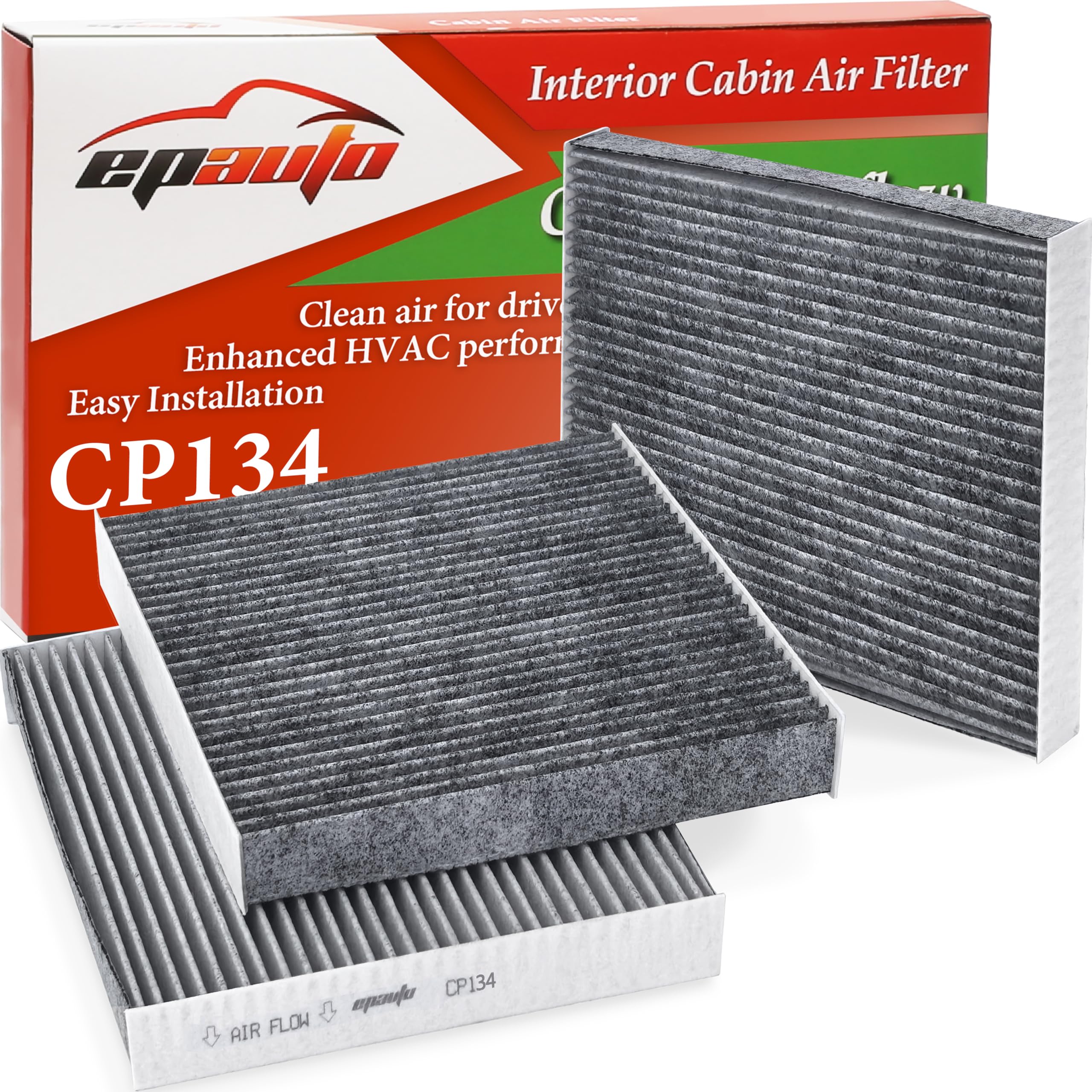
The EPAuto CP134 arrives as a three-pack, which drops the per-filter cost significantly while maintaining consistent build quality across all units. Each filter uses a pleated electrostatic media infused with both activated carbon and soda to adsorb odors and generate a noticeably fresher airstream. The frame dimensions match OEM specs closely, with a dense foam border that compresses evenly inside the glovebox housing to prevent bypass leakage.
Owner feedback frequently highlights the straightforward installation and the immediate reduction of musty smells from the vents — especially in vehicles that sit in humid climates. The soda component adds a mild freshness that persists longer than carbon-only designs. At 12,000-mile intervals, the three-pack covers roughly three years of driving for the average commuter, making this a compelling cost-per-mile proposition.
One area where the CP134 does not lead is maximum airflow. The dense electrostatic and carbon layers create slightly more resistance than a basic pleated filter, though the difference is negligible for daily driving. If you prioritize unrestricted HVAC flow above all else, a thinner media design may be more appropriate. For the vast majority of Civic owners, the balance of filtration, odor control, and price is hard to beat.
What works
- Three-pack provides exceptional per-filter value
- Soda-infused carbon media controls odors effectively
- Foam border ensures a tight seal inside the filter housing
What doesn’t
- Dense media may reduce airflow slightly versus basic pleated filters
2. K&N VF2033 Lifetime Cabin Air Filter

K&N brings its signature washable philosophy to the cabin with the VF2033. Instead of disposable pleated paper or carbon media, this filter uses layered polyurethane mesh that captures particulates through oil adhesion rather than mechanical sieving. The design prioritizes high airflow — HVAC blowers move air through this element with noticeably less resistance compared to carbon-loaded disposable filters.
Owners who plan to keep their Civic for the long haul appreciate the lifetime limited warranty. A single purchase replaces what would otherwise be a series of disposable filters over the vehicle’s lifespan. Cleaning involves rinsing with low-pressure water and reapplying K&N’s recharge oil every 30,000 to 50,000 miles, which reduces landfill waste substantially over a decade of ownership.
The trade-off is particle filtration efficiency. Polyurethane oiled media does not capture sub-micron particulates or gases as effectively as electrostatic carbon filters. If you drive behind diesel trucks or in heavy urban pollution, the lack of odor-adsorbing carbon will be noticeable. The VF2033 is best suited for owners who value reduced waste, lower long-term cost, and maximum HVAC airflow over absolute air purity.
What works
- Washable and reusable for the life of the vehicle
- Lifetime limited warranty adds long-term peace of mind
- High airflow design minimizes HVAC blower resistance
What doesn’t
- Lower particle capture efficiency compared to electrostatic carbon filters
- No activated carbon layer for odor or gas adsorption
3. Spearhead Odor Defense Breathe Easy BE-134
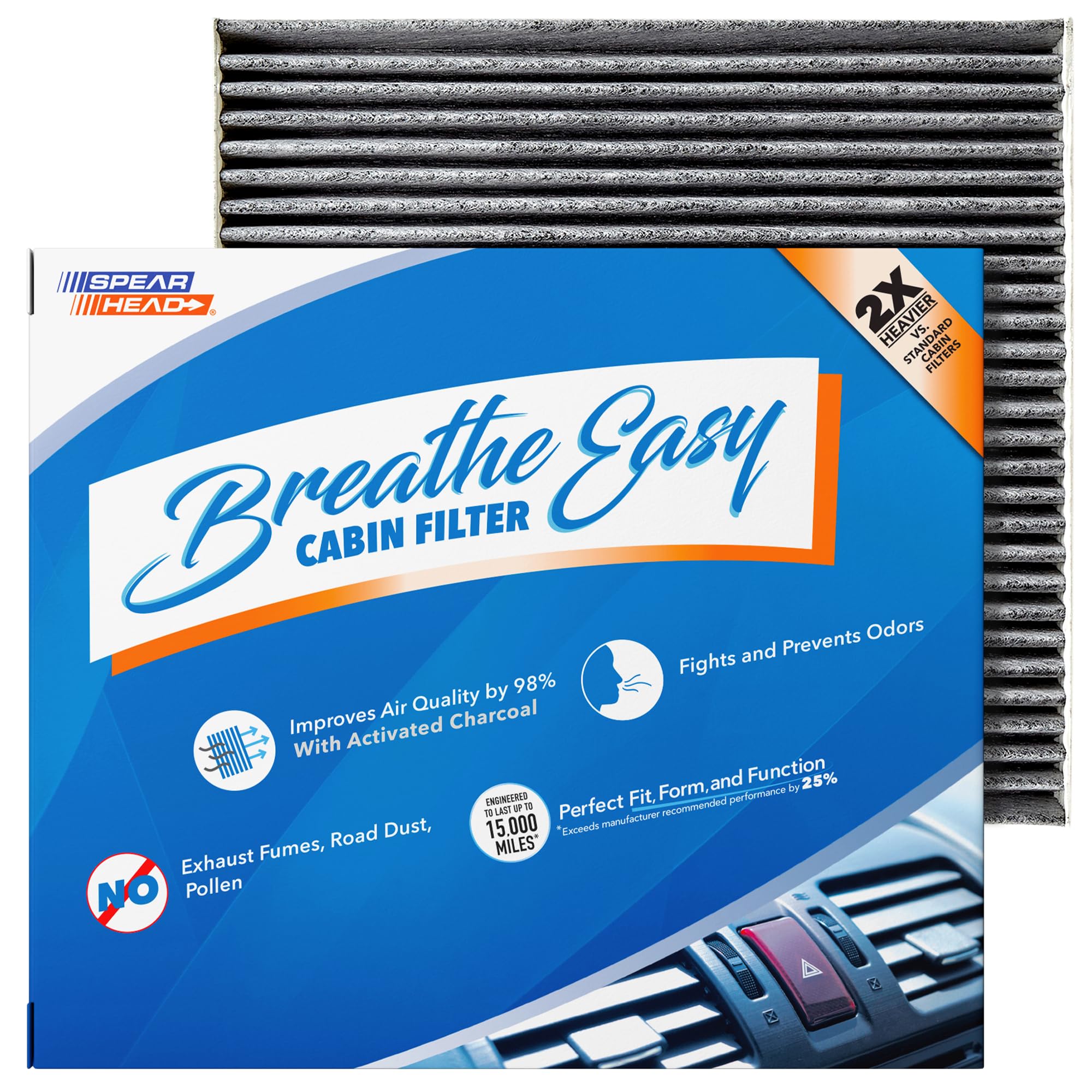
Spearhead’s Breathe Easy BE-134 uses a dense electrostatic media infused with real coconut-shell activated carbon. The manufacturer claims up to 25 percent longer service life than standard 12,000-mile filters, which translates to roughly 15,000 miles between swaps. The carbon layer is thick enough to handle exhaust fumes, road debris odors, and general outside contaminants commonly encountered during city and highway driving.
The frame construction is consistent with OEM dimensions, and the included installation manual guides first-time DIYers through the process. Owner reports indicate that the filter slides into the 2014 Civic’s housing without excessive force and that the foam perimeter seals well against the plastic edges. The electrostatic charge attracts fine dust particles that would otherwise pass through basic media.
Some users note that the carbon content, while effective, can shed a small amount of loose carbon dust during initial installation — a common trait among coconut-shell carbon filters. Tapping the filter gently before insertion resolves this. Considering the extended mileage rating and the robust odor adsorption, the BE-134 offers a strong middle-ground option for drivers who want carbon filtration without buying a premium-priced brand.
What works
- Rated for up to 15,000 miles of service life
- Coconut-shell carbon layer adsorbs odors and fumes effectively
- Electrostatic media captures fine dust particles
What doesn’t
- Minor carbon shedding may occur during installation
4. KAX Premium CF10134 Cabin Air Filter

The KAX CF10134 features a dual-layer carbon matrix design that the brand claims achieves 99.9 percent PM2.5 filtration efficiency — a meaningful number for owners who drive in urban areas with elevated particulate levels. The two distinct carbon layers work in sequence: the first traps larger particles and the second adsorbs finer particulates and gaseous compounds. This staged approach reduces the risk of early saturation compared to single-layer carbon filters.
Airflow resistance is a common concern with dual-layer filters, but KAX engineered the media to reduce restriction by approximately 15 percent relative to standard carbon designs. Owner reviews frequently mention that the Civic’s HVAC performance remains unchanged after installation, with no noticeable reduction in vent output. The frame dimensions match the OEM spec precisely, and the filter fits securely without having to force it into the tray.
The primary downside is the single-unit packaging — there is no multi-pack option here, so the per-filter cost is higher than bulk alternatives. For owners who want maximum particulate protection and are willing to pay a modest premium for the dual-layer construction, the KAX filter delivers measurable air quality improvements. It is particularly effective during pollen season for drivers with allergy sensitivities.
What works
- Dual-layer carbon matrix captures 99.9% of PM2.5 particulates
- Engineered for 15% less airflow resistance than standard carbon filters
- Precise OEM-dimension frame for tool-free installation
What doesn’t
- Single-pack only — higher per-filter cost than multi-pack options
5. RICHWEI CF10134 Cabin Air Filter

The RICHWEI CF10134 is a no-frills entry that covers the basics: pleated nonwoven media with a layer of activated carbon for light odor reduction. It is designed to replace the OEM filter in the 2014 Civic without any modifications, and the dimensions are within the acceptable range for the filter housing. For owners who simply need a functional replacement and are not chasing maximum filtration benchmarks, this option gets the job done at a low entry point.
Material quality is adequate for standard driving conditions. The activated carbon layer is thinner than what you will find on premium competitors, so odor adsorption is moderate — enough to handle light exhaust smells but not prolonged exposure to heavy pollution or diesel fumes. The frame uses a basic cardboard edge with minimal foam padding, so careful alignment during installation is necessary to ensure a proper seal.
Long-term durability is the main compromise. Owner reports suggest that the media holds up well for the standard 12,000-mile interval, but some users note earlier dust bypass if the filter is not seated perfectly. For budget-conscious owners who change their cabin filter annually as part of routine maintenance, the RICHWEI provides acceptable performance at the lowest cost. Just confirm the fit via the garage tool before purchase to avoid compatibility surprises.
What works
- Lowest entry price for basic carbon filtration
- Direct OEM replacement dimensions for simple installation
- Adequate for light odor and dust control
What doesn’t
- Thin carbon layer limits heavy odor adsorption
- Minimal foam padding requires careful alignment to seal properly
Hardware & Specs Guide
Filter Media Types
Three main media categories dominate the aftermarket: pleated electrostatic with activated carbon, washable polyurethane mesh, and basic nonwoven with light carbon coating. Electrostatic carbon filters offer the best balance of particle capture and odor control for most drivers. Washable filters prioritize airflow and reusability at the expense of fine-particle efficiency. Basic nonwoven filters cover the minimum requirement for cabin air quality at the lowest upfront cost.
Dimensions and Seal Design
The 2014 Civic cabin air filter measures approximately 9.25 inches long, 8.8 inches wide, and 1.2 inches thick. Filters with a compressible foam perimeter or molded plastic frame seat more securely than those with bare cardboard edges. A tight seal prevents dust and pollen from bypassing the media entirely, which is critical for maintaining HVAC cleanliness and preventing odors from settling on the evaporator core.
Service Intervals and Mileage Ratings
Standard disposable filters are rated for 12,000 to 15,000 miles of operation. Extended-life designs with thicker carbon beds or denser electrostatic media can reach 15,000 miles before noticeable efficiency drop-off. Washable filters require cleaning every 30,000 to 50,000 miles. Drivers in dusty, high-pollution, or humid environments should shorten replacement intervals by roughly 25 percent to maintain consistent cabin air quality.
Activated Carbon Density
The weight and density of the carbon layer directly correlate with odor adsorption capacity. Coconut-shell carbon offers higher porosity than coal-based alternatives, meaning more surface area for trapping volatile compounds. Dual-layer carbon designs stage the filtration to prevent early saturation, while single-layer carbon filters are adequate for light to moderate odor exposure. Filters without carbon will not reduce exhaust smells or VOCs.
FAQ
How often should I replace the cabin air filter in my 2014 Civic?
Can I install a cabin air filter in the 2014 Civic myself?
What is the difference between a carbon filter and a standard pleated filter?
Does a cabin air filter affect the performance of my Civic’s AC system?
Are washable cabin air filters worth the higher upfront cost?
Final Thoughts: The Verdict
For most buyers, the best 2014 honda civic cabin air filter winner is the EPAuto CP134 3-Pack because it combines effective carbon media, a tight seal, and a per-filter cost that undercuts almost every single-pack competitor. If you want zero recurring waste and the lowest long-term cost, grab the K&N VF2033. And for maximum particulate protection in polluted urban environments, nothing beats the KAX CF10134 with its dual-layer carbon matrix and PM2.5 rating.

Certification: BSc in Mechanical Engineering
Education: Mechanical engineer
Lives In: 539 W Commerce St, Dallas, TX 75208, USA
Md Amir is an auto mechanic student and writer with over half a decade of experience in the automotive field. He has worked with top automotive brands such as Lexus, Quantum, and also owns two automotive blogs autocarneed.com and taxiwiz.com.