Nothing derails a well-tuned engine faster than a brittle, cracked vacuum hose. That random rough idle, the intermittent check engine light, or the HVAC mode that only blows through the defroster — nine times out of ten, degraded rubber vacuum lines are the culprit hiding in plain sight. The aftermarket has responded with thick-walled silicone replacements that resist heat, hold their shape under vacuum, and simply outlast the factory rubber by years.
I’m Amir — the founder and writer behind Four Wheel Ask. My approach to automotive components comes from deep market research, poring over material specifications, comparing manufacturer tolerances, and aggregating thousands of owner-reported reliability data points to identify what actually holds up underhood.
Experienced DIYers and mechanics know the best auto vacuum hose uses thick silicone walls to stop vacuum leaks and outlast any old rubber factory line.
How To Choose The Best Auto Vacuum Hose
Selecting the right vacuum hose comes down to material quality, dimensional accuracy, and intended application. A well-chosen silicone hose solves vacuum leaks permanently, while a poor choice can introduce new problems. Here are the critical factors to evaluate before buying.
Material Quality: Silicone vs Rubber
Factory vacuum lines are typically extruded rubber that hardens and cracks after years of heat cycling. Premium silicone resists temperatures from well below freezing up to over 400°F without becoming brittle. FDA-grade silicone also means no off-gassing or chemical leaching that could contaminate sensitive emission components. The silicone hoses in this guide are all rated for continuous underhood use and maintain pliability far longer than standard rubber.
Wall Thickness and Collapse Resistance
Vacuum systems rely on pressure differentials. Thin-walled hoses can collapse under high vacuum, restricting flow and mimicking a blockage. A 3mm nominal wall thickness is the current gold standard for aftermarket vacuum line — it provides enough rigidity to resist suction collapse while remaining flexible enough to route through tight engine bays. Every product featured in this list uses a 3mm wall as baseline construction.
Size Accuracy and Fitment
Metric and fractional sizing differences cause more fitment headaches than any other factor. A hose labeled 1/4 inch that actually measures 6mm ID will fit loose on standard 1/4-inch barb fittings, requiring clamps. The best silicone vacuum hoses are manufactured to precise inner diameters that match OEM hardline and nipple dimensions. Pay close attention to whether the hose is specified in inches or millimeters and cross-reference with your vehicle’s factory line size.
Kit vs Individual Rolls
Multi-size kits with assorted connectors offer the best value for anyone refreshing an entire engine bay. They cover the range from small vacuum reference lines to larger PCV and emission hoses in one purchase. Single-size rolls make more sense when you already know the exact diameter needed and want maximum length for a specific routing job. The right choice depends on whether you are chasing one known leak or proactively replacing every aging line under the hood.
Quick Comparison
On smaller screens, swipe sideways to see the full table.
| Model | Category | Best For | Key Spec | Amazon |
|---|---|---|---|---|
| Ucreative Silicone Kit | Kit | Complete engine refresh | 6 sizes, 5 ft each, 113 connectors | Amazon |
| Shineyoo 5-Pack | Multipack | Versatility and length | 5 sizes, 6.6 ft each, no connectors | Amazon |
| OFBAND Vacuum Line Kit | Kit | Budget-friendly assortment | 6 sizes, 5 ft each, 64 connectors | Amazon |
| EVIL ENERGY 10FT Roll | Single Roll | Long single-size runs | 5/32 in ID, 10 ft, 130 PSI | Amazon |
| Podavelle 15/32 in Roll | Single Roll | Large diameter applications | 12mm ID, 5 ft, 130 PSI | Amazon |
In‑Depth Reviews
1. Ucreative Silicone Vacuum Hose Kit

The Ucreative kit delivers exactly what a thorough vacuum line refresh demands: six different inner diameters spanning from 1/8 inch up to 3/8 inch, each in a five-foot length, backed by a generous assortment of 113 nylon connectors. That range covers everything from thin MAP sensor reference lines to thicker PCV and emission control hoses, all constructed from high-temperature reinforced silicone with a uniform 3mm wall thickness. Owner reports consistently highlight how the included tee fittings and reducers made quick work of replacing brittle factory hoses on vehicles ranging from Chevy Express vans to third-generation Firebirds.
The 130 PSI burst rating at room temperature and 100 PSI at elevated temperatures provides more than enough safety margin for any engine vacuum system. The silicone compound remains flexible down to minus 40 degrees Fahrenheit and withstands continuous underhood heat up to 428 degrees Fahrenheit without hardening. Owners specifically note that the thick wall prevents the hose from collapsing under high vacuum conditions, a common failure point with thinner aftermarket alternatives.
What separates this kit from other options at similar price points is the sheer completeness of the connector selection. Having the right fitting on hand means no mid-project trips to the auto parts store. The only real limitation is that these hoses are designed for air and water only — not fuel or oil contact. For anyone looking to methodically replace every aging vacuum line in one efficient session, this kit represents the most complete solution available.
What works
- Complete size range with abundant nylon connectors eliminates guesswork
- Thick 3mm wall resists collapse under heavy vacuum loads
- High-temp silicone stays flexible in extreme engine bay conditions
What doesn’t
- Not compatible with fuel or oil applications
- Some specialty connectors must be sourced separately for specific vehicles
2. Shineyoo Silicone Vacuum Tubing Hose 5-Pack

The Shineyoo five-pack takes a slightly different approach than the full kits, offering five of the most commonly used vacuum line sizes — 1/8 inch, 5/32 inch, 1/4 inch, 5/16 inch, and 3/8 inch — each in a generous 6.6-foot length. That extra length per spool is meaningful for routing longer runs across the engine bay without needing to splice multiple pieces together. The 3mm wall construction matches the premium standard, and the silicone compound is rated from minus 76 degrees Fahrenheit up to 392 degrees Fahrenheit with a 130 PSI burst pressure at room temperature.
Owner feedback on this set is remarkably consistent: the hoses seal tightly on barb fittings, remain pliable during installation, and hold up over time without the hardening that plagues rubber lines. Multiple reviews from turbo-equipped vehicle owners specifically praise the thick wall for not collapsing under the higher vacuum demands of forced-induction systems. The black color keeps the engine bay looking factory-clean while providing the durability upgrade over original equipment.
The trade-off for the longer individual lengths is the absence of connectors — there are no tees, reducers, or couplers included. Buyers will need to source their own fittings or reuse existing ones. This matters most for those doing a full engine bay overhaul where multiple branch connections are required. For focused replacements where you need maximum continuous hose length per size, this pack delivers the best value on a per-foot basis.
What works
- Longer 6.6-foot spools reduce splicing for extended runs
- Thick wall holds up under turbo and high-vacuum conditions
- Premium silicone maintains flexibility across wide temperature range
What doesn’t
- No connectors included in the package
- Lacks the 3/16 inch size found in some competitor kits
3. OFBAND Multipurpose Vacuum Line Kit

The OFBAND kit strikes a compelling balance between coverage and cost, providing six silicone hoses in the standard 1/8-inch through 3/8-inch diameter range alongside 64 nylon connectors across 12 different sizes. Each hose measures five feet in length with the same 3mm wall thickness found in more expensive offerings, and the silicone material is rated for temperatures from minus 40 to 392 degrees Fahrenheit with a 130 PSI maximum pressure rating. The connector set includes straight couplers, tees, elbows, and reducers that cover the vast majority of common vacuum routing configurations.
Real-world owner reports from several months of use confirm the hoses hold up well underhood, resisting the heat and vibration that cause rubber lines to fail. One review from a Chevy Express 3500 owner noted that the variety pack ensured they had the correct size on hand to fix an AC selector malfunction caused by a disintegrated factory hose. The silicone is described as soft and easy to stretch over fittings while maintaining a tight seal without requiring clamps in most applications.
The main distinction between this and the Ucreative kit is the connector count — 64 versus 113 — which may matter for larger projects with many branch points. The connectors themselves are well-made nylon that fits snugly without cracking during installation. For the DIYer tackling a typical engine vacuum line refresh on a single vehicle, the included fitting count is more than adequate. This kit represents the smart buy for anyone who wants the kit convenience without paying for more connectors than they realistically need.
What works
- Well-rounded size selection covers common automotive vacuum needs
- Included connector assortment supports most routing configurations
- Silicone compound seals tightly without additional clamps in many cases
What doesn’t
- Connector count lower than some competing kits
- Hoses are for air and water only, not fuel or oil
4. EVIL ENERGY 5/32 Silicone Vacuum Tubing 10FT

The EVIL ENERGY 10-foot roll targets the buyer who already knows they need the 5/32-inch (4mm ID) size and wants maximum continuous length at a budget-friendly price point. This diameter is commonly used for vacuum reference lines on MAP sensors, transmission vacuum modulators, and four-wheel-drive engagement systems. The 3mm wall thickness is present here as well, and the silicone is FDA-compliant food-grade material rated for temperatures from minus 40 to 428 degrees Fahrenheit with a working pressure of 43 PSI and burst pressure up to 130 PSI at room temperature.
Owner reviews consistently describe this hose as pliable yet thick-walled, requiring a bit of effort to install on barb fittings — which is actually a desirable trait for ensuring a leak-free seal. One F-250 owner confirmed the hose fits through factory hose holders on the front axle vacuum locker system and considers it a meaningful upgrade over the original thinner factory line. Another reviewer noted that cheaper alternatives at lower price points use thinner walls that collapse under suction, making this a durability win despite the slightly higher install effort.
The single-size limitation is the obvious constraint — this roll only covers 5/32-inch applications. A buyer refreshing an entire engine bay will need multiple rolls of different diameters or a multi-size kit. However, for targeted repairs where you already know the size needed, the ten-foot length provides enough material for multiple replacements or a single long routing path. The thicker construction compared to generic store-bought hose makes this a performance-oriented choice for critical vacuum circuits.
What works
- Generous 10-foot length covers multiple repairs or long runs
- Thick wall resists collapse better than budget alternatives
- FDA-grade silicone handles extreme underhood temperatures
What doesn’t
- Single size only — requires separate purchases for other diameters
- Snug fit on barb fittings can make initial installation challenging
5. Podavelle 15/32 Silicone Vacuum Hose 5FT
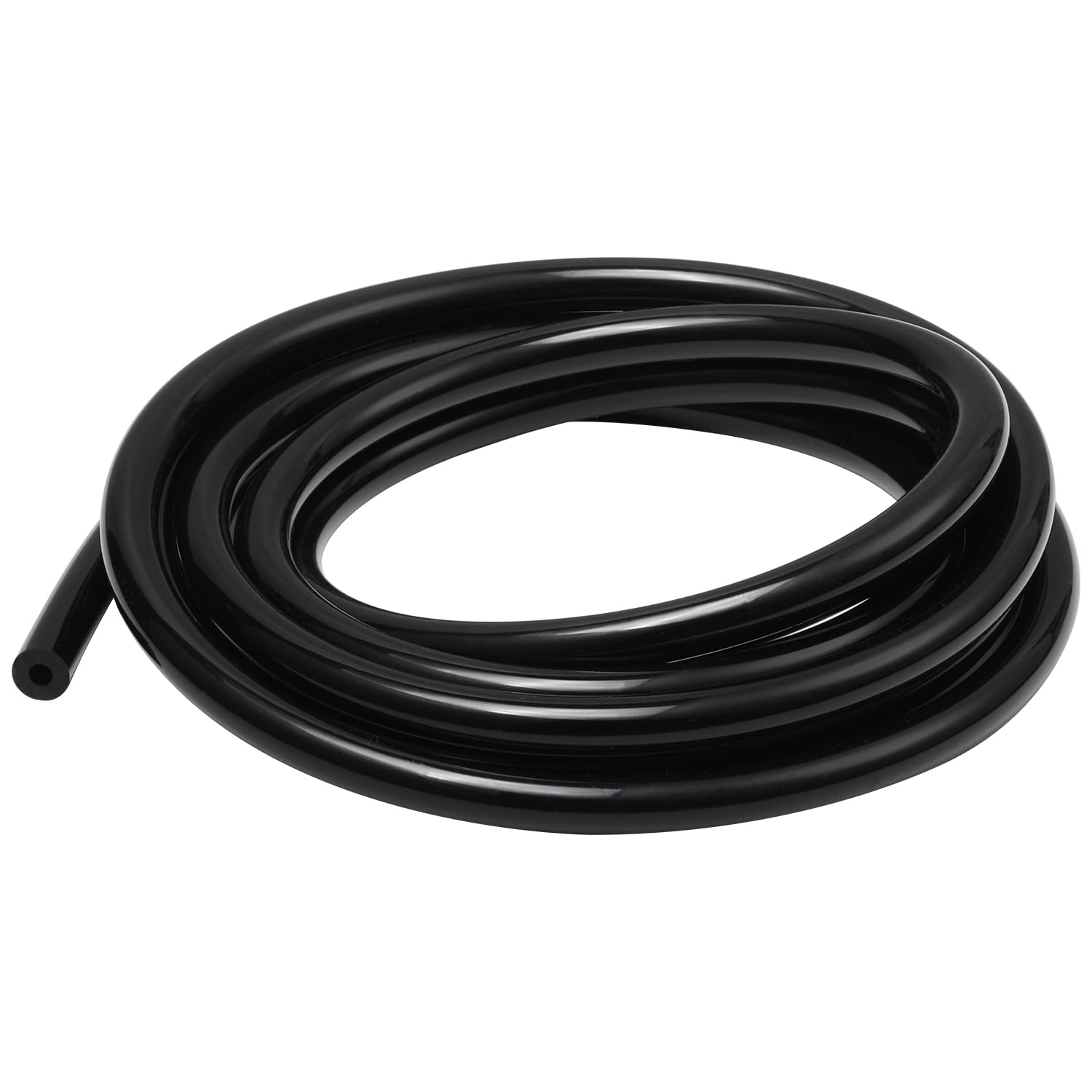
The Podavelle 15/32-inch (12mm ID) hose fills a specific niche for larger-diameter vacuum and low-pressure applications. This size is commonly needed for PCV systems, EVAP canister purge lines, and certain emission control circuits that require higher flow capacity. The 3mm wall construction is consistent with the rest of this guide, and the silicone material carries the same FDA compliance, temperature range of minus 40 to 428 degrees Fahrenheit, and 130 PSI maximum pressure rating. The five-foot length is appropriate for the typical single-circuit replacement.
Owner reports highlight the hose working well not only for automotive vacuum systems but also for hobby and home equipment — several buyers used it to replace lines on CPAP machines and ozone generators, citing the absence of rubber particulate contamination as a key advantage. For automotive use, one review from a 1993 C1500 owner confirmed the hose worked perfectly for refreshing MAP and EGR vacuum circuits. The flexibility is noted as excellent, allowing tight radius bends without kinking.
The specialized 12mm inner diameter means this hose is not a general-purpose replacement for the more common 1/4-inch or 5/32-inch lines found on most engines. Buyers must confirm their vehicle uses this specific metric size before purchasing. The five-foot length is adequate for most single-line replacements but may be tight for longer routing paths across wide engine bays. For owners of European vehicles or specific domestic models that use 12mm vacuum lines, this dedicated-hose represents a precise fitment solution that avoids the loose connections caused by using the wrong nominal size.
What works
- Precise 12mm ID matches metric vacuum line applications
- Flexible silicone routes easily around tight engine bay obstacles
- Thick wall prevents collapse under vacuum load
What doesn’t
- 5-foot length may be insufficient for longer routing paths
- 12mm size only fits vehicles designed for that metric diameter
Hardware & Specs Guide
Silicone vs Rubber Construction
The fundamental upgrade with any of these hoses is the shift from standard rubber to silicone. Rubber vacuum lines contain plasticizers that evaporate over time, leaving the material brittle and prone to cracking. Silicone elastomers maintain their flexibility through hundreds of thermal cycles because the polymer backbone is inherently stable. All five products in this guide use platinum-cured or peroxide-cured silicone that resists ozone, UV, and underhood chemicals. The practical result is a hose that still feels pliable after years of service when rubber would have already failed.
Wall Thickness Ratings
Every hose featured here uses a 3mm nominal wall thickness, which has become the de facto standard for aftermarket silicone vacuum line. This thickness provides enough structural rigidity to resist the suction force of engine vacuum without collapsing, while remaining flexible enough for routing around tight corners. Thinner wall hoses, typically 1.5mm to 2mm, are more prone to kinking and suction collapse — especially in longer runs or higher-vacuum applications like turbo wastegate control lines. The 3mm standard is not arbitrary; it is the result of real-world testing across thousands of installations.
Temperature and Pressure Tolerance
Silicone vacuum hoses in this class are typically rated for continuous operation between minus 40 degrees Fahrenheit and over 390 degrees Fahrenheit, with peak tolerance up to 428 degrees Fahrenheit. This covers everything from cold-start conditions in northern winters to the radiant heat near exhaust manifolds and turbochargers. Working pressure hovers around 43 PSI with burst pressures at 130 PSI at room temperature and 100 PSI at elevated temperatures — far exceeding the roughly 20 to 25 inches of mercury vacuum (approximately 10 to 12 PSI negative pressure) that an engine intake manifold generates.
Connector Compatibility and Materials
Kits that include nylon connectors offer a significant convenience advantage. Nylon is chosen for its combination of strength, heat resistance, and chemical stability inside the engine bay. Straight couplers, tees, and reducers should match the hose inner diameter precisely to prevent leaks. The connector counts vary between kits — 113 pieces in the Ucreative set versus 64 pieces in the OFBAND set — but both provide enough variety for a complete engine vacuum line overhaul. For single-roll purchases, existing factory connectors can typically be reused if they are not degraded, though replacing them is recommended during a full system refresh.
FAQ
What makes silicone vacuum hose better than standard rubber?
How do I choose the correct diameter vacuum hose for my vehicle?
Can silicone vacuum hose handle the heat under my hood?
Should I buy a kit with connectors or individual hose rolls?
Final Thoughts: The Verdict
For most buyers, the best auto vacuum hose winner is the Ucreative Silicone Vacuum Hose Kit because it combines six essential sizes, a generous 5-foot length per spool, and over a hundred nylon connectors in one complete package that handles a full engine bay refresh. If you want maximum continuous length per size without paying for connectors you already own, grab the Shineyoo 5-Pack. And for a targeted single-diameter replacement with proven thick-wall durability, nothing beats the EVIL ENERGY 10-Foot Roll.

Certification: BSc in Mechanical Engineering
Education: Mechanical engineer
Lives In: 539 W Commerce St, Dallas, TX 75208, USA
Md Amir is an auto mechanic student and writer with over half a decade of experience in the automotive field. He has worked with top automotive brands such as Lexus, Quantum, and also owns two automotive blogs autocarneed.com and taxiwiz.com.