A sim racing cockpit is the single most consequential purchase you will make as a sim racer — the frame determines everything from force feedback clarity to your ability to endure multi-hour stints without fatigue. Buy a flimsy rig and even the most expensive direct drive wheel will feel vague and imprecise. Buy wisely and every corner, every curb strike, every weight transfer translates directly through your hands and feet.
I’m Amir — the founder and writer behind Four Wheel Ask. I’ve spent countless hours analyzing frame geometries, comparing extrusion profiles, cross-referencing torque ratings against chassis rigidity reports, and aggregating owner experiences across dozens of models to understand what actually holds up under sustained use.
From budget-friendly steel tube frames to industrial-grade aluminum profile rigs designed for motion platform integration, the market is crowded with options that vary wildly in build quality, adjustability, and long-term durability. After evaluating dozens of models through spec analysis and owner feedback, the obvious choice for sim racers remains the best sim racing cockpit.
How To Choose The Best Sim Racing Cockpit
Selecting the right cockpit is a balance of structural rigidity, adjustability, compatibility with your existing gear, and the physical space you have available. Focus on these four criteria and you will avoid the most common buyer regrets.
Frame Material: Steel Tube vs. Aluminum Profile
Steel tube frames are welded or bolted together from round or square tubing and are generally more affordable. They offer adequate rigidity for entry-level to mid-range wheelbases but can flex under higher torque loads. Aluminum profile rigs use extruded rails with T-nut slots that allow infinite positioning of components. They are inherently stiffer, modular for future upgrades, and the preferred choice for direct drive wheelbases above 8 Nm. The trade-off is typically higher cost and a more involved assembly process.
Rigidity and Direct Drive Compatibility
Your wheelbase torque rating dictates the minimum rigidity your cockpit must provide. Wheelbases under 5 Nm, such as entry-level Logitech and Thrustmaster gear, work well on steel tube frames with proper bracing. Direct drive units from Simucube, Fanatec DD, or Moza R9 and above demand aluminum profile construction or a heavily reinforced steel design. Any flex in the wheel deck translates into a muted, delayed force feedback signal that undermines your ability to feel the limit of grip.
Adjustability and Ergonomics
A cockpit should accommodate your height, arm length, and preferred driving position — whether GT or Formula style. Look for seat sliders with adequate travel, pedal plate angle adjustment, and wheel deck height and tilt adjustability. Stepless adjustment via T-nuts on aluminum profile rigs is superior to fixed-hole positioning because it allows micro-corrections that eliminate discomfort over long sessions.
Monitor Integration
Single monitor mounts are adequate for most setups, but triple monitor support dramatically increases immersion by expanding peripheral vision. VESA pattern compatibility and adjustable uprights are critical for aligning screens properly. An integrated monitor mount also saves floor space compared to a separate stand, though it ties the screen position to the cockpit frame.
Quick Comparison
On smaller screens, swipe sideways to see the full table.
| Model | Category | Best For | Key Spec | Amazon |
|---|---|---|---|---|
| Next Level Racing F-GT Pro | Premium | Formula & GT switching | 136 lbs, aluminum profile | Amazon |
| Next Level Racing GTTrack | Premium | Professional, motion ready | Steel/aluminum, V3 compatible | Amazon |
| Anman Triple Monitor | Aluminum | Triple screen setups | 4080 profile, triple 24-32″ | Amazon |
| Marada 8040 w/ Monitor | Aluminum | Complete with TV mount | 8040 profile, 120 lbs | Amazon |
| Marada 8040 Profile | Aluminum | Entry-level aluminum | 8040 profile, 104 lbs | Amazon |
| Anman 8040 Profile | Aluminum | Budget aluminum builders | 8040 profile, 68 lbs | Amazon |
| Playseat Challenge DD | Foldable | Space saving | Foldable, 9 Nm rated | Amazon |
| RACGTING Simulator | Steel | Budget with TV stand | Welded steel, TV mount | Amazon |
| DIWANGUS F1 Style | Steel | F1 seating position | Q235 steel, floor mat | Amazon |
| GTPLAYER GTS03 | Steel | Budget with speakers | 2″ steel, BT audio | Amazon |
| ARES WING | Steel | First cockpit purchase | Steel, 50″ monitor mount | Amazon |
In‑Depth Reviews
1. Next Level Racing F-GT Pro Formula and GT Racing Simulator Cockpit

The F-GT Pro represents the pinnacle of production sim racing cockpit design, combining industrial-grade aluminum profile construction with a premium gloss metallic powder coat finish that resists wear far better than standard coatings. Built around a mid-frame reinforcement structure and high-tensile bracing plates, this rig handles the most demanding direct drive wheelbases and heavy load cell brake pedals without introducing any perceptible flex. The extended chassis extrusions are specifically designed to accommodate taller drivers, addressing a common complaint in shorter-framed cockpits where ergonomic compromise is inevitable.
Five distinct adjustment points allow seamless transitions between true Formula and GT driving positions, a flexibility that matters for sim racers who compete across different disciplines. The seat is comfortable for multi-hour sessions and the overall build quality reflects the premium price point with precise fitment and robust hardware throughout. Owner feedback consistently highlights the ease of assembly relative to other aluminum profile kits, though the individual components are heavy and a second person is recommended during setup.
Where the F-GT Pro truly separates itself from lower-priced competitors is in its motion platform readiness — the chassis is engineered to accept the Next Level Racing motion platform V3 and Traction Plus system without requiring modification. This forward-thinking design means the cockpit grows with your investment rather than becoming a bottleneck. The shifter mount position is well thought out and the pedal plate offers sufficient stiffness for even the most aggressive braking inputs without noticeable deflection.
What works
- Exceptional rigidity with zero flex under high-torque direct drive wheels
- True Formula-to-GT switchable seating without compromise in either position
- Extended chassis accommodates taller drivers comfortably
What doesn’t
- Premium price places it out of reach for budget-constrained buyers
- Heavy components require two-person assembly
- Monitor mount positioning may need adjustment for ultra-wide screens
2. Next Level Racing GTTrack Simulator Cockpit
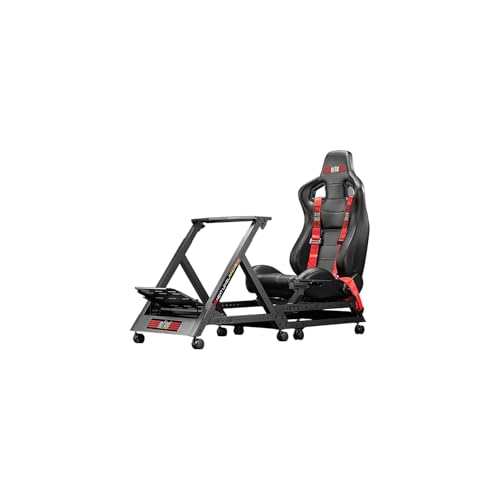
The GTTrack occupies a unique position in the sim racing market as a hybrid design that blends steel tubing with aluminum reinforcements to achieve direct drive-grade rigidity at a lower price point than full aluminum profile rigs. The frame is engineered from the ground up to accept the Next Level Racing motion platform V3, with bolt-on integration that takes under ten minutes — a significant advantage for sim racers who plan to add motion later. The included casters with smooth-locking mechanism make it easy to move the rig between rooms without sacrificing stability during use.
Pre-drilled mounting patterns cover all major wheelbase and pedal brands including Thrustmaster, Logitech, Fanatec, and Simucube, eliminating the need for adapter plates or drilling. The pedal plate includes extra bracing that eliminates the flex commonly found in this price segment, particularly under heavy braking loads from load cell pedals. Owners report that the seat slider mechanism is robust, though some tall drivers have noted the slider does not always catch at full rear extension, which may affect those above six feet two inches.
Assembly is straightforward and can be completed in under an hour with basic tools. The PU leather upholstery is durable and easy to clean, though the seat itself is on the narrower side and may feel snug for larger-framed users. The lack of a dedicated floorboard is a minor oversight that some owners address with a simple add-on mat. Overall, the GTTrack represents a well-engineered middle ground between entry-level steel rigs and premium aluminum profile systems, with the motion platform compatibility extending its useful lifespan significantly.
What works
- Motion platform V3 bolts directly on in under ten minutes
- Excellent rigidity with Fanatec DD1 and similar high-torque bases
- Smooth-locking casters make room-to-room movement effortless
What doesn’t
- Seat slider may not fully extend for very tall drivers
- Seat width is snug for larger users
- No integrated floorboard included
3. Anman Aluminum Profile Cockpit with Triple Monitor Mount
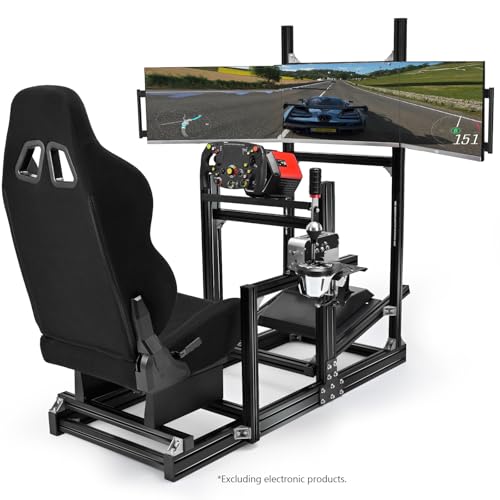
The Anman triple monitor cockpit is a standout option for sim racers who prioritize peripheral vision and immersion without stepping up to the most expensive aluminum profile systems. The 4080 extrusion frame provides ample rigidity for direct drive wheelbases up to the mid-teens in Newton meters, and the all-in-one monitor stand supports three screens from 24 to 32 inches, creating a wraparound view that transforms spatial awareness on track. The integrated support bar at the handle position adds lateral stiffness that reduces vibration transfer from the wheelbase to the display structure.
Assembly is time-consuming but the included hardware is plentiful and the instructions, while not perfect, provide enough guidance to complete the build in an afternoon. The black ergonomic seat features a double-track slider and breathable upholstery that resists collapse over extended use, though the seat remains the weakest structural element in an otherwise very rigid chassis. Owners report that the pedal plate requires significant force to adjust even when fully loosened, but once set it holds position without slipping under heavy braking.
Customer service responsiveness is a recurring positive theme in owner feedback, with replacement parts shipped quickly when needed. The frame accommodates mainstream wheelbases from Logitech, Thrustmaster, Fanatec, and Moza without drilling, though some users have chosen to add additional T-nuts for peripheral mounting flexibility. The triple monitor integration is the clear value proposition here — buying a separate triple stand would cost nearly as much as this complete cockpit, making it a financially smart choice for multi-screen sim racers.
What works
- Integrated triple monitor mount saves significant floor space and cost
- 4080 aluminum profile provides zero-flex performance for mid-range direct drive
- Excellent value compared to buying separate cockpit and triple stand
What doesn’t
- Pedal plate adjustment is stiff even when hardware is loosened
- Assembly is labor-intensive with basic instructions
- Seat quality lags behind the frame rigidity
4. Marada 8040 Aluminum Profile Cockpit with Monitor Stand
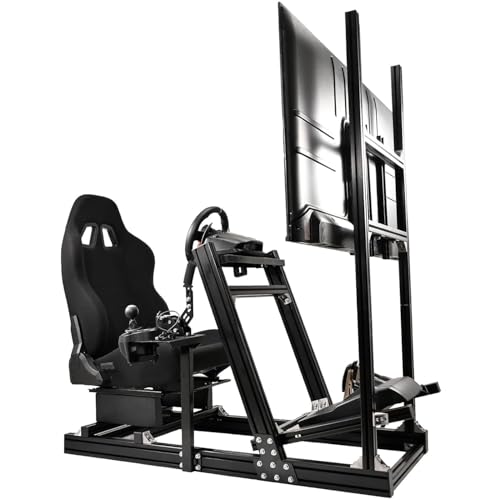
The Marada 8040 with integrated monitor stand delivers the core benefits of aluminum profile construction — infinite adjustability, modular expansion capability, and robust rigidity — while including a TV bracket that accommodates displays from 24 to 70 inches. The 8040 aluminum frame provides a stable foundation for direct drive wheelbases up to at least 12 Nm, with the weight and non-slip pads effectively managing vibration transfer during aggressive driving. The monitor bracket offers up/down and front/back adjustment, allowing precise screen positioning relative to the wheelbase.
Compatibility covers the full spectrum of mainstream gear including Fanatec CSL-DD and Podium, Thrustmaster T818 and T598, Logitech G29 through G Pro, and Moza R5 through R16. The pedal plate and wheel deck both offer tilt and height adjustment, and the shifter mount can be swapped between left and right sides without modification. Owners note that the seat is breathable and comfortable for long sessions, with a double-track slider system that provides smooth fore-aft positioning. The 90- to 180-degree recline range accommodates both upright GT and more laid-back cruising positions.
Assembly is rated as moderately challenging with some owners reporting that the monitor mount has minor play that requires careful tightening to eliminate. The instructions are sufficient but not exemplary, and the sheer number of T-nuts and brackets means the build process is repetitive. Once assembled and dialed in, however, the cockpit maintains its adjustments without loosening over time. The inclusion of a monitor stand at this price point makes the Marada an attractive complete package for sim racers who want a single monitor setup without buying separate components.
What works
- Inclusive monitor bracket supports large displays up to 70 inches
- 8040 profile construction handles high-torque direct drive without flex
- Wide compatibility with all major wheelbase and pedal brands
What doesn’t
- Monitor mount has some play that requires careful tightening
- Assembly is repetitive and moderately time-consuming
- Instructions could be more detailed for first-time builders
5. Marada 8040 Aluminum Profile Cockpit with Seat
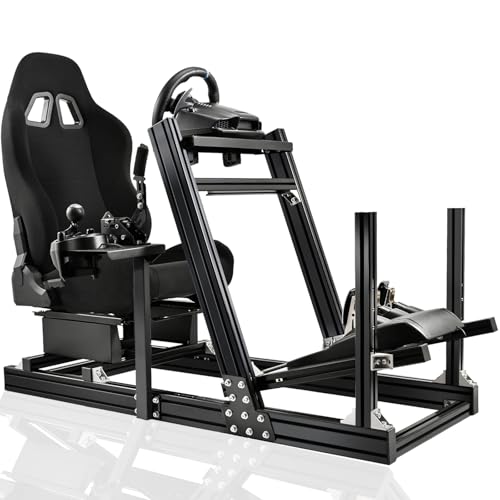
The Marada 8040 is one of the most accessible entry points into aluminum profile sim racing, offering the fundamental rigidity and adjustability benefits of extrusion construction at a price that undercuts most competitors. The 40x80mm aluminum rails provide a stable foundation that handles 8 Nm direct drive wheelbases without perceptible flex, and the embedded T-slot channels allow infinite positioning of the seat, wheel deck, and pedal plate. The frame supports three distinct driving modes — F1, truck, and off-road — making it versatile for sim racers who enjoy different disciplines.
The included ergonomic seat features breathable upholstery and a double-track sliding mechanism that provides smooth adjustment, though the seat itself is the component most likely to be upgraded over time as owners move to more serious hardware. Owner feedback indicates that the reclining mechanism introduces some flex under heavy braking, and the main aluminum bars are joined by a bracket plate that may flex under motion platform loads. For a static rig running up to 10 Nm of wheel torque, however, the structure is more than adequate and represents exceptional value.
Assembly takes several hours and requires attention to detail with T-nut orientation, but the standard 8040 profile format means replacement parts and expansion accessories are widely available. The frame is heavy at over 100 pounds, providing inherent stability without requiring floor anchoring. Some owners report that the zipper quality on the seat cover is mediocre and that the seat material attracts pet hair and static. These are relatively minor complaints given the price point, and the modular nature of the aluminum profile system means the seat can be swapped without replacing the entire rig.
What works
- Entry-level aluminum profile pricing with full 8040 extrusion construction
- Infinite adjustability via T-slot channels for personalized positioning
- Supports F1, GT, and truck driving positions
What doesn’t
- Seat reclining mechanism has some flex under aggressive braking
- Main frame bracket plates may not suit motion platform use
- Seat upholstery attracts static and pet hair
6. Anman 8040 Aluminum Profile Racing Stand
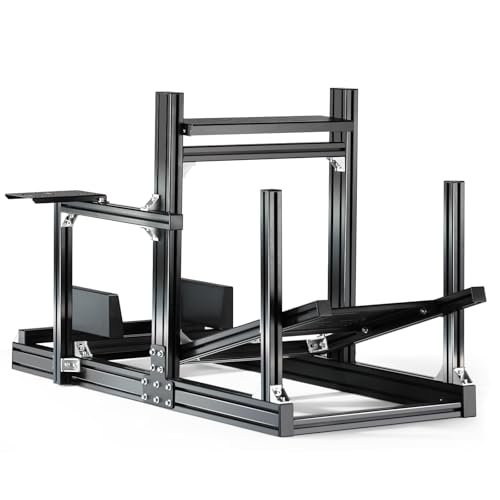
The Anman 8040 aluminum profile cockpit strips away non-essentials to deliver a bare-bones extrusion frame at a price that makes aluminum profile ownership accessible to budget-conscious sim racers. Built entirely from standard 8040 aluminum profiles with reinforced connectors, the frame provides a lightweight yet rigid platform that supports high-torque direct drive wheelbases without deforming during long-term use. The quick-lock adjustment system allows one person to fine-tune the seat position, wheel angle, and pedal distance without requiring tools for every adjustment.
Compatibility spans Logitech G29 through G Pro, Thrustmaster T300 through T818, Fanatec CSL-DD and GT-DD-Pro, and Moza R5 through R16, making it one of the most universally compatible aluminum profile options at this price. The large shifter plate accommodates multiple shifters and handbrakes simultaneously, a feature typically reserved for more expensive rigs. Owner feedback from users running Asetek Forte wheelbases at 12-14 Nm and load cell pedals at 55 kgf confirms that the frame remains silent and flex-free even under these demanding conditions.
Assembly is the most challenging aspect of this cockpit, with several owners reporting build times of six to seven hours on the first attempt. The instructions are functional but lack the clarity of premium brands, and the spring nut orientation can be confusing until you understand the pattern. A few users reported shipping delays and tracking issues, though customer service was responsive in resolving problems. Once assembled and tightened, the rig requires re-tightening after the first two to three sessions as the T-nuts settle into their final positions. The modular design allows future expansion with monitor mounts, motion platforms, and accessories using standard 8040 components.
What works
- Best price-to-rigidity ratio for aluminum profile construction
- Silent and flex-free even with 12-14 Nm wheelbases and heavy pedals
- Large shifter plate accommodates multiple peripherals
What doesn’t
- Assembly is complex and time-consuming for first-time builders
- Instructions lack clarity and detail
- Requires re-tightening after initial use as components settle
7. Playseat Challenge DD – F1 Edition
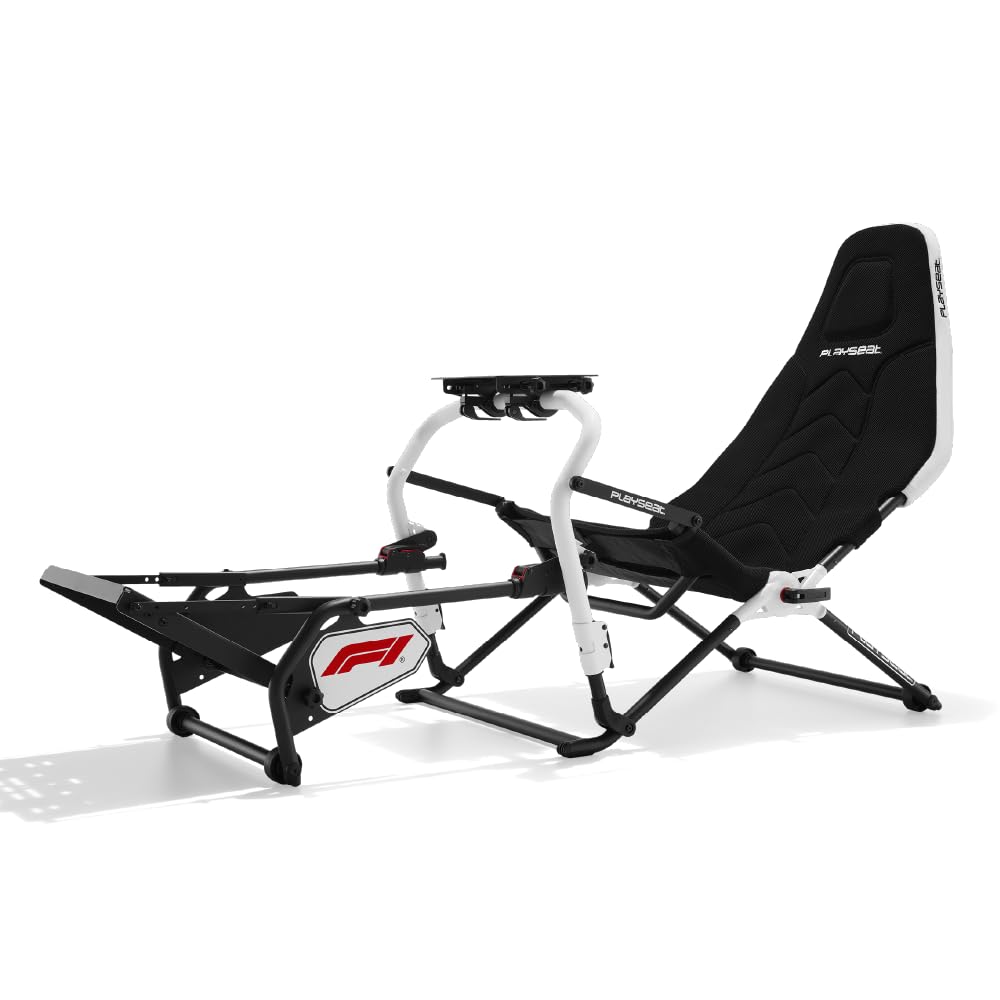
The Playseat Challenge DD F1 Edition redefines what is possible in a foldable cockpit, delivering surprising levels of rigidity and adjustability in a package that compresses to a fraction of its operating size. Co-developed with Formula 1, the frame uses a tubular steel design with optimized bracing to handle direct drive wheelbases up to approximately 9 Nm without the flex that plagued earlier folding cockpits. The ActiFit breathable fabric promotes airflow during long sessions and the ergonomic body support with customizable lumbar and leg positioning ensures comfort across a wide range of driver sizes.
Tool-less adjustability is the standout feature — the wheel deck height, distance, and tilt can all be modified without any tools, and the pedal plate angle adjusts to accommodate both GT and F1 seating positions. Owners report that folding the rig takes about one minute once you learn the process, making it ideal for sim racers who need to reclaim living space between sessions. The stability with Simagic Alpha Evo and Simucube Sport wheelbases is repeatedly praised in owner feedback, with many noting that it performs far better than its foldable form factor would suggest.
The main trade-offs are the lack of an integrated shifter mount solution and the three-screw wheelbase mounting pattern that may not align perfectly with all wheelbases. The included instructions are sparse and reference hardware configurations that have been revised without updating the documentation. Despite these minor shortcomings, the Challenge DD represents a genuine engineering achievement for space-constrained sim racers who refuse to compromise on wheelbase performance. The foldable design does not introduce the creaking or loosening that plagued earlier generation folding cockpits.
What works
- Folds compactly in about one minute for space-saving storage
- Handles direct drive wheelbases up to 9 Nm with minimal flex
- Tool-less adjustability for wheel and pedal positioning
What doesn’t
- No integrated shifter or handbrake mounting solution
- Instructions are incomplete and reference outdated hardware
- Three-screw wheelbase pattern may not align with all brands
8. RACGTING Racing Simulator Cockpit with TV Monitor Stand

The RACGTING cockpit takes a welded all-in-one approach to steel frame construction, eliminating the bolted joints that can introduce flex in less carefully designed tubular rigs. The dual-pillar TV mount is width-adjustable to accommodate different television sizes, and the frame is pre-drilled for compatibility with Logitech G Pro, G29, G920, G923, Thrustmaster T248, T300RS, T-GT, TS-PC, TS-XW, and Fanatec CSL-DD through DD+ wheelbases. The one-year warranty provides peace of mind for a purchase in this price tier, though the frame itself feels substantial enough to outlast the warranty period.
Assembly is straightforward and can be completed in under an hour with power tools, though owners recommend adding lock washers to prevent vibration-induced loosening over time. The steering wheel panel offers height adjustment and the pedal plate angle is configurable, providing enough range to find a comfortable driving position for most users. The shifter mount supports left or right installation and the overall footprint is manageable at approximately five feet in length and two and a half feet in width with the shifter attached.
The seat comfort receives mixed feedback — some owners find it adequate for sessions lasting a few hours while others note that the folding bar in the backrest can be felt through the upholstery. A simple cushion resolves this issue for most. The monitor support arms use worm clamps that can lose grip over time, and the bracket design may require modification for televisions larger than 50 inches. Several owners have bolted a standard wall mount directly to the frame as a more secure alternative. For the price, the RACGTING represents a solid steel-framed option with useful monitor integration that rivals more expensive alternatives.
What works
- Welded all-in-one steel frame eliminates flex at connection points
- Integrated TV mount saves floor space and simplifies setup
- Wide compatibility with major wheelbase and pedal brands
What doesn’t
- Seat backrest has a folding bar that can be felt during use
- Monitor arm worm clamps may loosen over time
- Larger TVs may require custom bracket modification
9. DIWANGUS F1 Style Sim Racing Cockpit with Monitor Mount
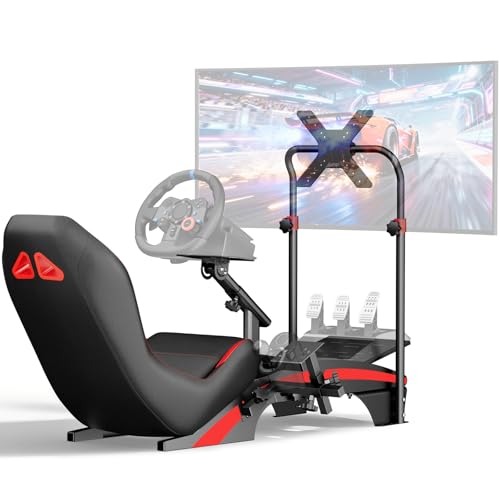
The DIWANGUS F1-style cockpit targets sim racers who prioritize a low, laid-back driving position similar to a Formula car, with the integrated monitor mount completing the package for a clean all-in-one setup. The high-strength Q235 steel frame provides a stable platform that resists flex under direct drive wheel loads, and the included non-slip floor mat protects flooring while adding an extra layer of stability. The F1 seating position is achieved through a fixed bucket seat design with soft sponge leather padding that reduces back and leg fatigue during extended sessions.
Assembly is straightforward with most owners completing the build in under an hour, and the packaging is notably efficient with clear labeling. The VESA-compatible monitor mount supports 75×75, 100×100, 150×150, and 200×200 patterns, accommodating most monitors up to approximately 32 inches. Compatibility covers Logitech, Thrustmaster, Fanatec, and Moza systems, though the center-post wheel mount design means entry and exit require a bit more effort than side-mount designs. The shifter mount uses thumb screws for quick adjustment, though some owners report these screws require occasional re-tightening.
The bucket seat design is the most polarizing aspect of this cockpit — it looks fantastic and provides excellent lateral support during hard cornering, but it is tight for wider users and the fixed recline limits adjustability. The pedal mount adjustment knobs are difficult to reach once the pedals are installed, so getting the position right before final tightening is recommended. Owners praise the immersion factor and the quality of the included floor mat, noting that the rig looks far more expensive than its price point suggests. This is a solid choice for sim racers who value aesthetics and F1-style seating over maximum adjustability.
What works
- Authentic F1-style low seating position enhances immersion
- Q235 steel frame and included floor mat provide stable foundation
- Quick assembly with efficient packaging and labeling
What doesn’t
- Bucket seat is tight for larger-framed users
- Center-post wheel mount complicates entry and exit
- Pedal adjustment knobs are hard to access after installation
10. GTPLAYER GTS03 Racing Simulator Cockpit with Bluetooth Speakers

The GTPLAYER GTS03 differentiates itself from other budget-friendly steel cockpits through the inclusion of dual Bluetooth speakers integrated into the seat back, providing mid and high-range audio without the need for external speakers or headphones. The frame uses two-inch alloy steel pipes that are cold-pressed and bent in a proprietary process, rated to handle the force requirements of high-torque direct drive wheels from Fanatec and competitors. The seat reclines up to 160 degrees while maintaining chassis rigidity, a claim that owner feedback largely supports even with wheelbases in the 5-8 Nm range.
Compatibility covers Logitech G29 through G Pro, Thrustmaster, Fanatec, and Moza systems, though some owners report that mounting hole alignment is not perfect for every wheelbase and may require drilling or zip ties for a secure fit. The seat slider accommodates drivers from approximately five feet eight inches up to six feet two inches, and the included casters make moving the rig between rooms practical. Assembly takes about two hours and the packaging is split into two boxes — one for the seat and one for the frame — which simplifies handling of the heavy components.
The Bluetooth speakers are a novel feature but the sound quality is adequate rather than impressive, with limited bass response that some owners supplement with an additional subwoofer. The shifter mount assembly is tight and requires careful positioning during installation. Owner feedback consistently emphasizes the value proposition — the GTS03 delivers a surprisingly complete experience at a price that undercuts most competitors with similar structural credentials. The leather seat upholstery looks and feels more premium than the price suggests, and the powder-coated finish on the frame resists scratches and wear well.
What works
- Integrated Bluetooth speakers provide convenient audio without headphones
- Two-inch alloy steel frame handles direct drive wheels surprisingly well
- Excellent overall value with comfortable leather seat
What doesn’t
- Speaker audio quality lacks bass and depth
- Mounting holes may not align perfectly with all wheelbase brands
- Shifter mount assembly is tight and finicky to position
11. ARES WING Racing Simulator Cockpit with Monitor Mount and Seat
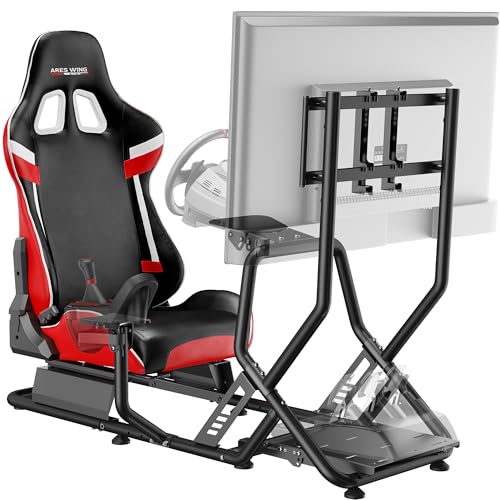
The ARES WING cockpit is a budget-focused steel tube design that delivers genuine value for sim racers taking their first step from a desk clamp setup to a dedicated rig. The upgraded strengthened frame structure uses powder-coated steel with eight non-slip support feet that prevent movement during aggressive driving, and the integrated monitor mount supports screens up to 50 inches with VESA patterns covering 75×75 through 400×200. The design prioritizes ease of assembly and a complete out-of-box experience, with no need to source additional hardware or adapters for the included components.
The seat offers 7.1 inches of fore-aft travel and 90- to 150-degree recline adjustment, with widened soft foam padding that provides better comfort than many steel tube competitors in this price bracket. The high-quality PU leather upholstery looks more premium than the price suggests and holds up well to regular use. Adjustability extends to the steering wheel deck, pedal plate, shifter mount, and monitor position, allowing a reasonable range of setup configurations for different driver sizes. The shifter mount supports left or right installation without additional parts.
Owner feedback is overwhelmingly positive for the price, with assembly taking approximately 90 minutes and all hardware packaged clearly according to the instructions. The frame is heavy at roughly 40 pounds for the base components, providing inherent stability without requiring floor mounting. Some owners note that the tubular frame design does transmit vibration more readily than aluminum profile rigs, and the pedal plate adjustment uses bolts rather than quick-release levers, making on-the-fly changes inconvenient. For sim racers running Logitech G29, Thrustmaster T300, or entry-level Moza gear, the ARES WING provides a complete, stable platform that outperforms wheel stands while keeping the total investment minimal.
What works
- Complete all-in-one package with seat and monitor mount included
- Sturdy steel frame with non-slip feet eliminates movement during racing
- Easy assembly with well-packaged hardware and clear instructions
What doesn’t
- Tubular frame transmits more vibration than aluminum profile rigs
- Pedal plate uses bolt adjustment rather than quick-release levers
- Not recommended for high-torque direct drive wheels without reinforcement
Hardware & Specs Guide
Aluminum Profile vs. Steel Tube Construction
Aluminum profile cockpits use extruded rails with T-slot channels that allow infinite positioning of components using T-nuts and bolts. The 8040 designation refers to the cross-section dimensions — 80 millimeters by 40 millimeters — which provide a stiffness-to-weight ratio that is ideal for sim racing applications. Steel tube frames are welded or bolted from round or square tubing and are typically more affordable, but the fixed mounting points and lower inherent rigidity make them less suitable for high-torque direct drive wheelbases above 8 Nm.
Direct Drive Wheelbase Compatibility
Direct drive wheelbases transmit torque directly from the motor to the steering wheel without gears or belts, creating forces that can exceed 20 Nm in top-tier units. A cockpit must resist these forces without twisting or deflecting, as any flex introduces latency and distortion in the force feedback signal. Aluminum profile rigs with 8040 or larger extrusions are the standard for wheelbases above 8 Nm, while steel tube rigs with proper cross-bracing can adequately support entry-level direct drive units up to approximately 8 Nm.
Adjustability Range and Ergonomics
Stepless adjustment via T-slot channels is superior to fixed-hole positioning because it allows micro-corrections that eliminate pressure points and discomfort over long sessions. Critical adjustment points include wheel deck height and tilt, pedal plate angle and distance, and seat fore-aft position. Drivers between five feet four inches and six feet four inches require at least six inches of seat slider travel, and the wheel deck should offer at least four inches of vertical adjustment to accommodate both GT and Formula-style seating positions.
Monitor Mount Integration
Integrated monitor mounts save floor space by attaching the display directly to the cockpit frame, creating a unified structure that moves as one unit. VESA pattern compatibility should cover at least 100×100 millimeters, and the mount should offer both height and distance adjustment to achieve the correct viewing position behind the wheelbase. Triple monitor mounts require sturdy uprights with adjustable angle brackets to align the side screens correctly for peripheral vision without introducing distortion.
FAQ
What is the difference between 8040 and 4080 aluminum profile?
Can I use a direct drive wheel on a steel tube cockpit?
How long does it take to assemble an aluminum profile cockpit?
Do I need a monitor mount or can I use a separate stand?
What seat options work with aluminum profile cockpits?
Final Thoughts: The Verdict
For most buyers, the best sim racing cockpit winner is the Next Level Racing F-GT Pro because it delivers uncompromising rigidity, true Formula-to-GT adjustability, and motion platform readiness in a single premium package that will serve serious sim racers for years. If you want the best balance of rigidity and space efficiency, grab the Playseat Challenge DD — it folds away cleanly without sacrificing direct drive compatibility. And for the best value in aluminum profile construction, nothing beats the Anman 8040, which provides a flex-free foundation at a price that leaves room for wheelbase and pedal upgrades.

Certification: BSc in Mechanical Engineering
Education: Mechanical engineer
Lives In: 539 W Commerce St, Dallas, TX 75208, USA
Md Amir is an auto mechanic student and writer with over half a decade of experience in the automotive field. He has worked with top automotive brands such as Lexus, Quantum, and also owns two automotive blogs autocarneed.com and taxiwiz.com.