Road bike tires are the single most weight-sensitive, grip-critical contact point between you and the asphalt. A 25c tire at 90 psi flexes differently under a sprint than a 28c tire at 75 psi — the wrong choice drains watts, increases puncture risk, or leaves you sliding through a corner. This guide isolates the spec-level decisions that actually matter: TPI casing count, compound polymer blend, bead type, and puncture belt thickness.
I’m Amir — the founder and writer behind Four Wheel Ask. My analysis combines long-term market tracking of rolling resistance benchmarks, puncture-force testing data, and aggregated material feedback from road cycling communities to separate marketing fluff from measurable performance.
Whether you’re training for a century, racing a crit, or commuting on mixed pavement, the right set of tires for road bike will balance speed, protection, and ride quality without breaking your budget or your momentum.
How To Choose The Best Tires For Road Bike
Picking a road tire isn’t just about diameter. The three specs that define on-road performance are casing TPI, bead material, and puncture belt thickness. Ignore any one of these and you risk a pinch flat at mile 80 or a sluggish ride that tires your legs before the climb even starts.
TPI Casing: The Framework of Ride Quality
Threads Per Inch (TPI) determines how supple the tire feels and how well it absorbs road vibration. A 60 TPI casing is stiff, durable, and heavy — fine for training bikes on smooth asphalt. A 120 TPI casing flexes more easily, lowering rolling resistance and improving grip on imperfect pavement, but it demands stronger puncture protection to avoid cuts. Mid-range tires often split the difference with a 60-120 TPI nylon carcass.
Width and Pressure: 23c vs 25c vs 28c
Narrow 23c tires (common on older racing frames) offer less air volume, requiring higher pressure (100-120 psi) to avoid pinch flats — which translates to a harsher ride and reduced cornering traction on wet roads. A 25c tire at 90-100 psi is the modern standard for most recreational and performance riding, delivering lower rolling resistance than a 23c in real-world conditions. A 28c tire at 75-90 psi provides the most comfort and grip for long days or rough tarmac, though it adds slight aerodynamic drag and may not fit some frames with tight clearances.
Puncture Protection: Nylon vs Kevlar Belts
A puncture-resistant layer adds 20 to 60 grams per tire but prevents sidewall cuts from glass or debris. Nylon puncture belts (1mm thick) are the most common in mid-range training tires. Kevlar-reinforced belts are lighter for a given level of cut resistance, but they tend to be more expensive. If your route includes chip-seal roads or urban debris, a 1mm nylon belt is the minimum threshold — anything thinner risks failing on a sharp shard at speed.
Quick Comparison
On smaller screens, swipe sideways to see the full table.
| Model | Category | Best For | Key Spec | Amazon |
|---|---|---|---|---|
| Pirelli P7 Sport 26c | All-Round | Performance endurance | 127 TPI / TechBELT reinforcement | Amazon |
| Vittoria Zaffiro Pro G2.0 | Training | High-mileage durability | Graphene 2.0 compound | Amazon |
| Fincci Pair Kevlar 700x25c | Value Pair | Budget performance training | 120 TPI / 1mm nylon puncture belt | Amazon |
| YUNSCM 700x28C Pair | Complete Kit | Entry-level commuting | Tubes, rim strips, levers included | Amazon |
| Fincci Conna 700x23c Pair | Racing Narrow | Lightweight speed runs | 60 TPI / 1mm antipuncture layer | Amazon |
In‑Depth Reviews
1. Pirelli P7 Sport 26-622 (700x26c)
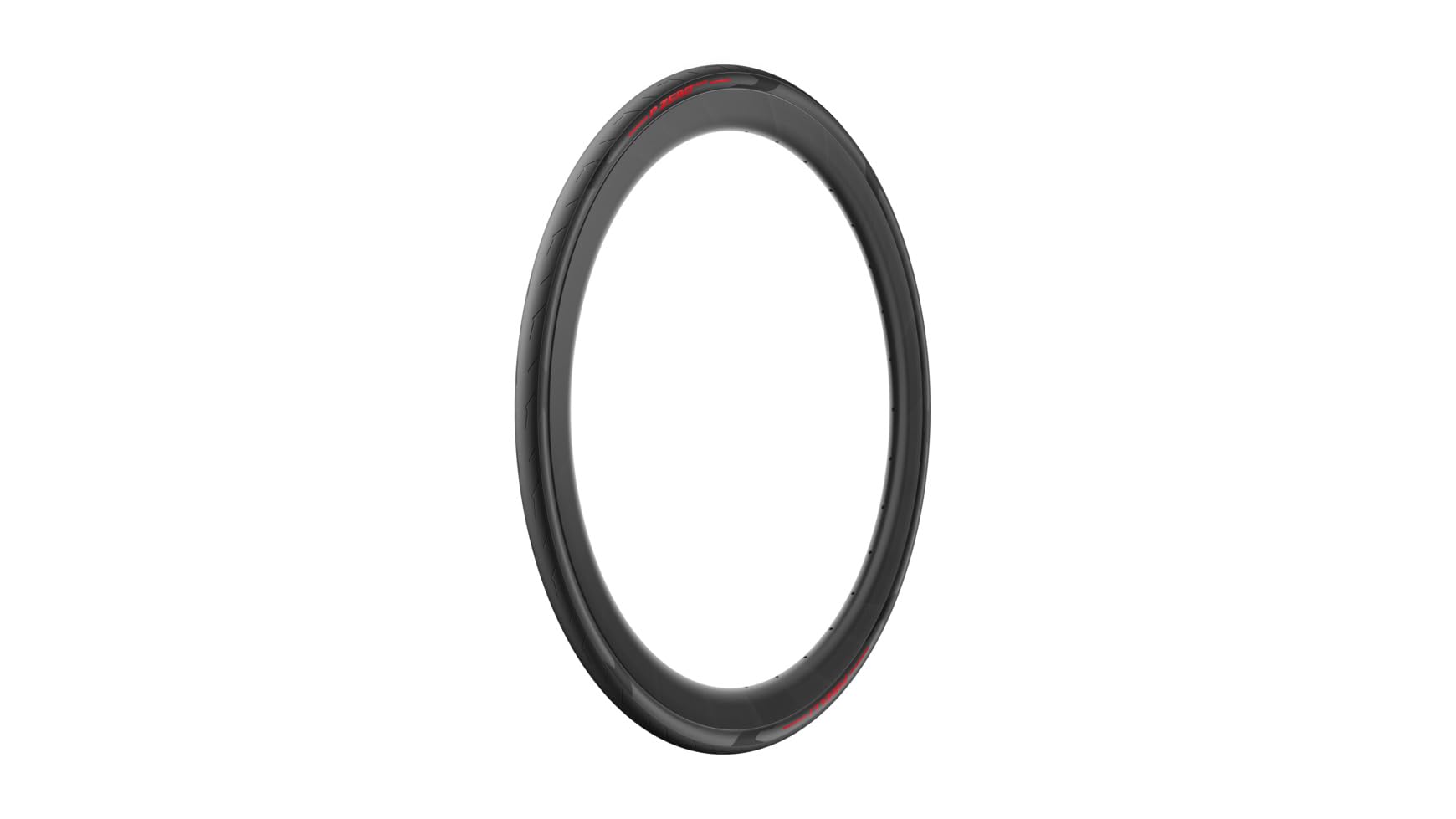
The Pirelli P7 Sport uses a 127 TPI casing — unusually high for a training-tier tire — which gives it the supple ride feel you’d normally only find at twice the price. The SmartEVO polymer blend (a three-compound formula originally developed for the PZero Race) delivers consistent grip across dry and slightly damp pavement without the high rolling resistance penalty of a soft compound. At 230 grams in the 700x26c version, it’s light enough for fast recreational rides yet stiff enough under cornering loads thanks to the TechBELT nylon layer beneath the tread.
You’ll notice the most benefit on chip-seal roads where a 60 TPI casing would transmit every vibration through the bars — the P7 absorbs small surface chatter without feeling vague. The center tread is nearly slick, with minimal siping, so steering response is direct and predictable. Durability is strong for a mid-weight tire: the nylon belt resists glass cuts better than a bare carcass, though heavy debris impacts can still cause sidewall damage if you run low pressure.
Installation on modern hookless rims is straightforward; the folding Kevlar bead seats easily with a standard pump. For riders who log 100+ miles per week across mixed pavement, the P7 Sport balances speed, protection, and weight better than any other option at this tier. It’s the closest you can get to race-day performance without the race-day price.
What works
- Premium SmartEVO compound grips well in varied conditions
- 127 TPI casing delivers a supple, vibration-damping ride
- TechBELT puncture layer adds real cut protection without excess weight
What doesn’t
- Sidewalls are less robust than reinforced touring tires
- 230g weight is low but not the lightest available
2. Vittoria Zaffiro Pro G2.0 700x25c

The Zaffiro Pro G2.0 is the workhorse tire that many club riders use for years of training, and the Graphene 2.0 compound is the reason why. The Graphene additive lowers rolling resistance versus standard rubber compounds while improving wet-grip hysteresis — meaning you get faster acceleration out of corners without sacrificing braking traction. The 700x25c version weighs 340 grams, which is on the heavy side, but that weight goes into a thick casing that resists punctures and wears slowly.
Subtle shoulder texture and center grooves provide visual feedback at low profile angles, but the compound itself handles light moisture well. The tire is rated for high-mileage durability rather than peak race-day speed, so you’ll get 3,000 to 4,000 miles of riding before the tread flattens noticeably. The bead is a folding wire type, which is stiffer than Kevlar and requires firm hands during installation but ensures a snug fit on the rim even after repeated inflation cycles.
For group rides, fast endurance training, or any scenario where you don’t want to think about tire failure mid-ride, the Zaffiro Pro is a solid choice. The Graphene compound also exhibits lower heat buildup on long descents, reducing the risk of blowouts when braking heavily. Just be aware that the higher weight and thicker carcass make it feel less lively under hard acceleration compared to a lightweight race tire.
What works
- Graphene 2.0 compound reduces rolling resistance noticeably
- Thick casing delivers exceptional mileage and puncture resistance
- Low heat buildup on extended descents improves safety
What doesn’t
- 340g weight feels heavy for acceleration-focused rides
- Stiffer bead makes installation slightly more difficult
3. Fincci Pair Kevlar 700x25c
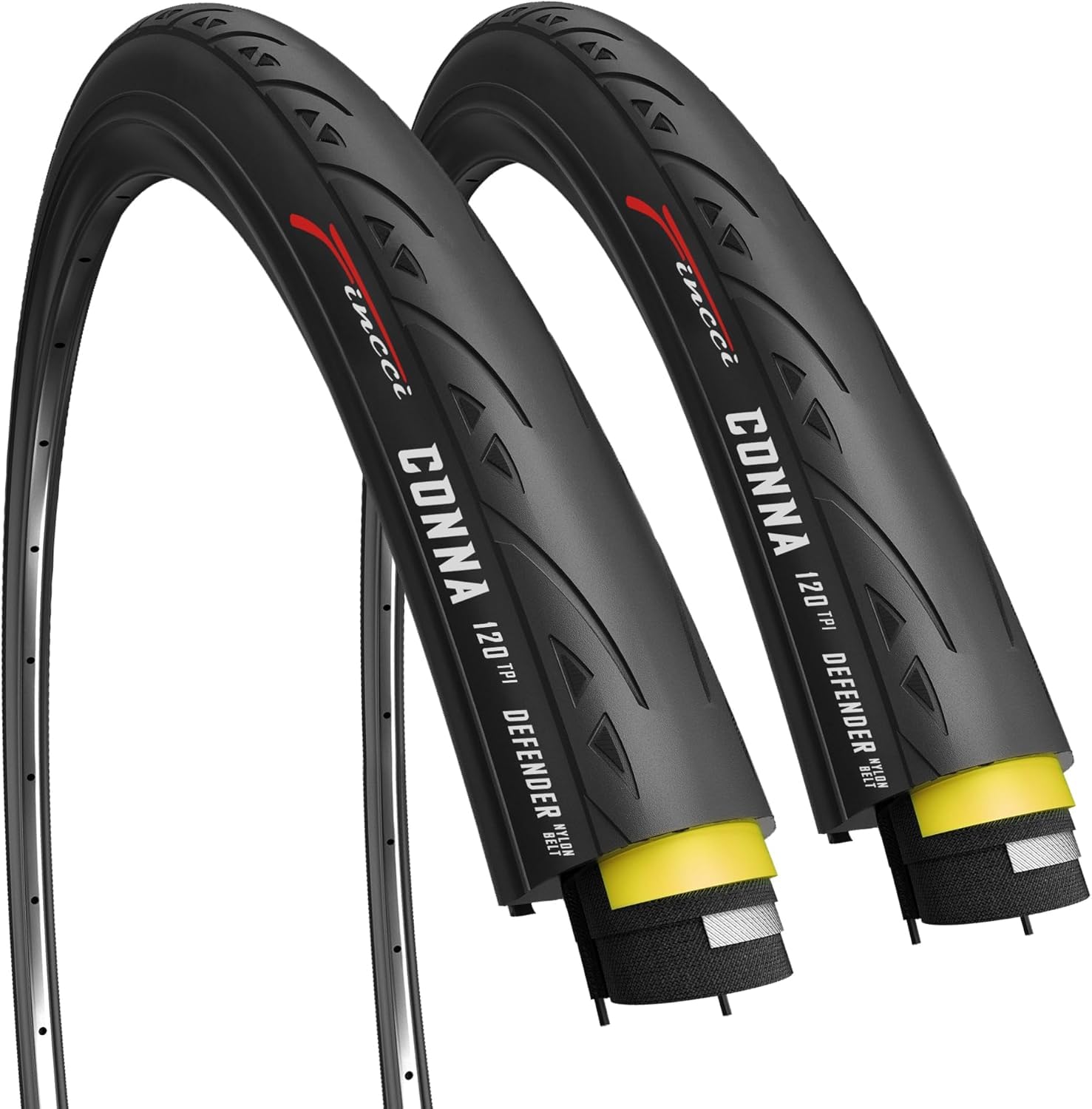
This Fincci pair offers a high 120 TPI casing and a 1mm nylon puncture belt at a two-pack price that undercuts almost every single-tire competitor. Each tire weighs only 210 grams — lighter than many premium solo options — making this set an excellent upgrade for entry-level road bikes where rotating mass affects acceleration. The Kevlar-reinforced bead wire ensures a secure fit on standard 700c rims and allows easy folding for storage or travel.
The tread pattern is nearly slick with a fine center ridge, producing low rolling resistance on smooth pavement. Under hard cornering, the 120 TPI carcass flexes predictably, offering more contact patch than a comparable 60 TPI tire at the same pressure. The 1mm nylon belt handles glass shards and small stones well in urban debris, though repeated impacts from sharp potholes can cut through the belt if pressure is low.
Narrower frames will appreciate the 25c width, which fits most modern road brake clearances. The trade-off is that the 210g weight savings come from a thinner sidewall, which feels less robust than heavier training tires when leaning hard into fast corners. For riders on a budget who want a lively, fast-rolling tire for fitness rides or club runs, this Fincci pair is the best price-to-performance ratio available.
What works
- Two tires included at a price that beats single-tire options
- 120 TPI casing and 210g weight feel fast and responsive
- 1mm nylon belt provides solid debris protection for urban roads
What doesn’t
- Thinner sidewalls are less durable under aggressive cornering
- Stiff Kevlar bead can be tricky to seat on tight rims
4. YUNSCM 700x28C Pair with Tubes and Levers
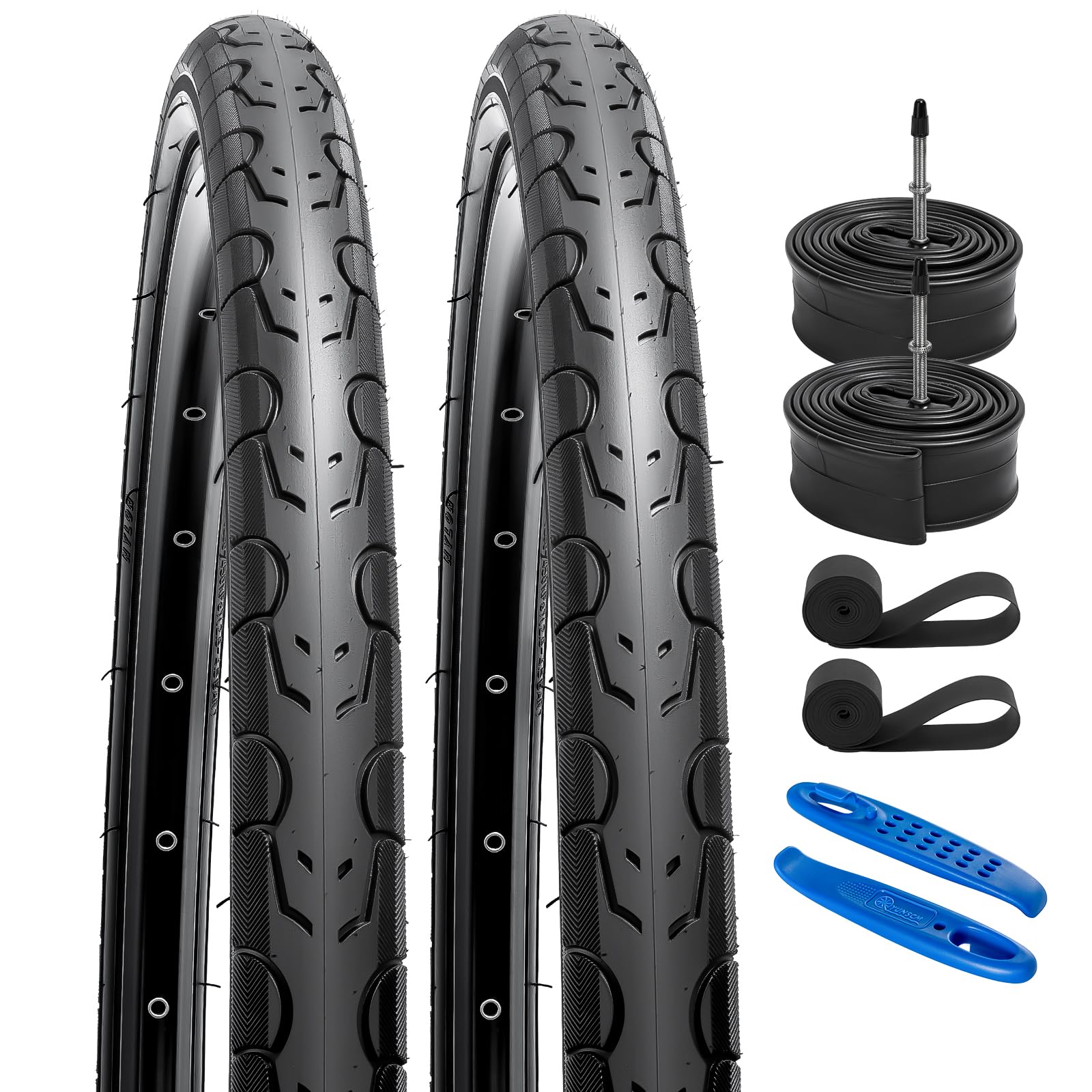
The YUNSCM 700x28C package is designed for riders who want everything in one box: two tires, two Presta valve tubes (FV60mm), two rim strips, and tire levers. The tires themselves use a rubber and nylon cord construction with a 75 PSI tensile strength rating, inflating to 80-100 PSI as per the spec. At 28c width, they provide a noticeably more comfortable ride than narrower tires — absorbing expansion joints and chip-seal chatter without needing ultra-low pressure.
The tread pattern is smooth with side stripes for aesthetics; cornering grip is adequate for commuting and light recreational speeds, but experienced riders will notice less bite at aggressive lean angles compared to performance compounds. The included tubes are basic heavy-duty 700×25/34c units with non-removable Presta valve cores, which simplifies inflation but means you can’t add sealant for tubeless conversion. The tire levers are wider and thicker than typical cheap levers, reducing the risk of snapping during installation on tight rims.
Durability is acceptable for entry-level use: the nylon cord belt resists glass cuts at moderate pressure, but the tread compound wears faster than higher-end materials — expect 1,500 to 2,000 miles before noticeable flattening. This kit is best suited for new cyclists equipping a first road bike or commuters who want a complete swap without sourcing additional parts. Riders seeking performance or long-wear durability should look at the higher-tier options above.
What works
- Includes everything needed for a full tire swap: tubes, strips, levers
- 28c width provides a plush, comfortable ride on rough roads
- Thick tire levers are durable and reduce installation effort
What doesn’t
- Tread compound wears faster than premium options
- Basic tubes lack removable valve cores for tubeless conversion
5. Fincci Conna Pair 700x23c
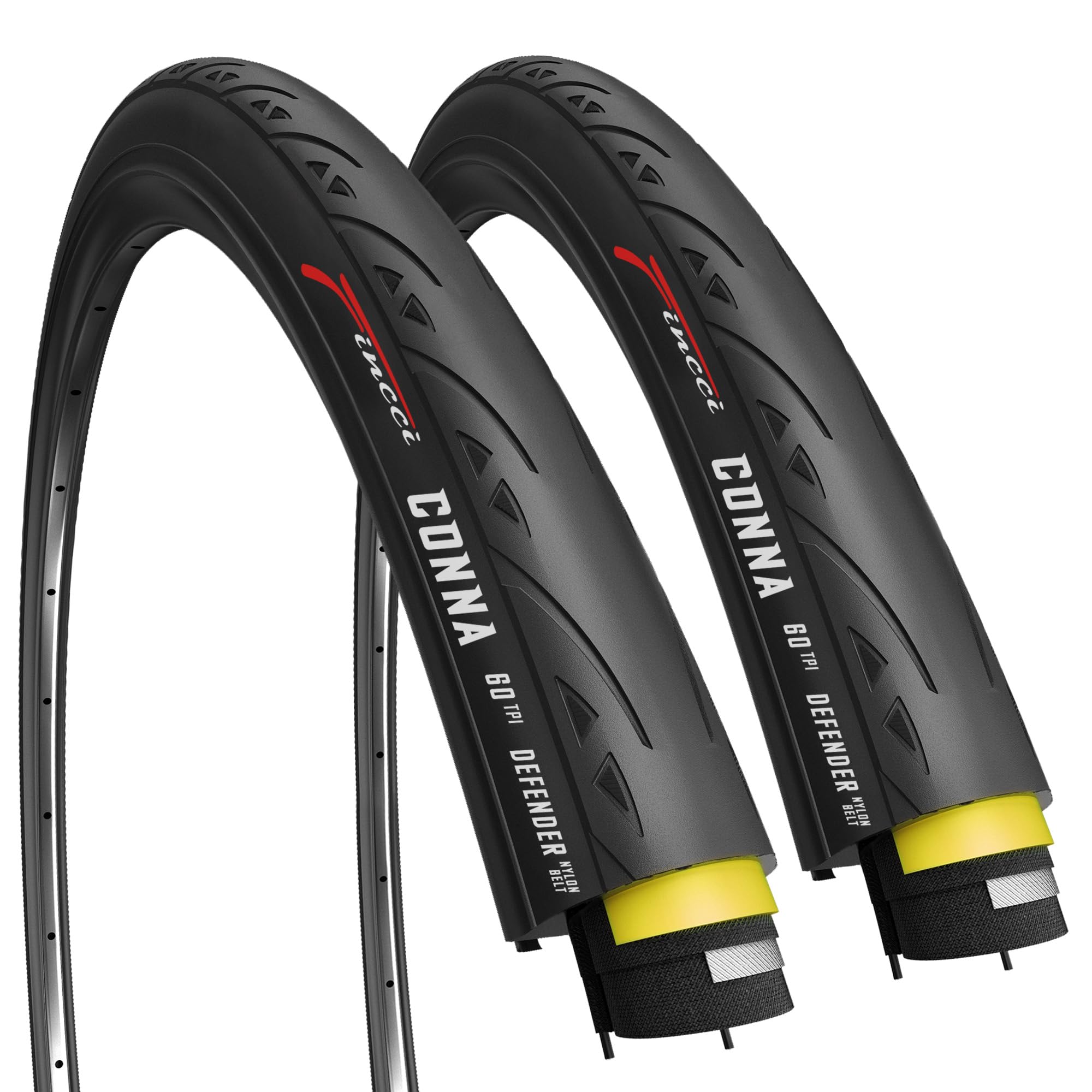
The Fincci Conna 700x23c targets the narrow-width crowd — riders with older racing frames that only clear 23c tires, or those who prioritize aerodynamics and light weight over comfort. Each tire weighs 290 grams with a 60 TPI nylon casing and a 1mm antipuncture layer, providing a stiff, direct feel. The slick tread pattern minimizes rolling resistance on smooth asphalt, and the Kevlar wire cord bead allows folding for easy packing.
At the recommended 100-120 PSI range, the Conna feels crisp under hard pedaling, transmitting every watt to the pavement without sidewall flex. The stiff 60 TPI casing offers good cut resistance — the 1mm puncture belt catches most glass shards — but the ride is noticeably harsher on rough terrain than a 25c or 28c tire at lower pressure. Cornering traction is adequate for dry roads, but the narrow contact patch requires caution on wet pavement or loose surfaces.
Durability is solid: the rubber compound wears evenly over 2,000+ miles when used exclusively on smooth roads. The 100 PSI tensile strength rating aligns with typical road pressures, so the tire won’t deform at max inflation. For time-trial bikes, vintage road frames, or any setup where tire clearance forces a 23c choice, the Conna pair provides reliable performance. Wider clearances offer better ride quality, but within the 23c class, this Fincci set is a competitive value.
What works
- Stiff 60 TPI casing offers direct power transfer on sprint efforts
- 1mm antipuncture layer reduces flat risk on debris-strewn roads
- Folding Kevlar bead simplifies storage and travel
What doesn’t
- 23c width transmits more road vibration than wider options
- Narrow contact patch reduces cornering grip in wet conditions
Hardware & Specs Guide
TPI Casing Count
Threads Per Inch (TPI) defines the density of the casing fabric. 60 TPI casings are stiff and durable, ideal for heavy training tires that resist cuts. 120 TPI casings are more supple — they flex more easily over road imperfections, lowering rolling resistance and improving traction. The trade-off: higher TPI casings are more vulnerable to sidewall cuts and typically need a thicker puncture belt for protection. Measure the TPI number on the tire sidewall; any tire claiming “high performance” should start at 120 TPI for a supple ride.
Bead Type and Rim Fit
Road bike tires use either a steel wire bead (stiff, non-folding, cheaper) or a Kevlar bead (flexible, folding, lighter, easier to pack for emergencies). Kevlar beads also form a tighter seal on tubeless-ready rims, reducing the risk of air leaks. When installing, check that the bead diameter matches your rim’s internal depth — a mismatch causes blow-offs at high pressure. Always inflate to the minimum rated pressure first and verify the bead is evenly seated along both sides before riding near the max pressure.
FAQ
How often should I replace road bike tires?
Should I run 23c, 25c, or 28c tires on my road bike?
Do Kevlar puncture belts really work on road debris?
Final Thoughts: The Verdict
For most buyers, the tires for road bike winner is the Pirelli P7 Sport because its 127 TPI casing and SmartEVO compound deliver race-inspired grip and ride quality at a training-tier weight. If you want maximum mileage and wet-grip confidence, grab the Vittoria Zaffiro Pro G2.0. And for a two-pack value that punches above its price point, nothing beats the Fincci Pair Kevlar 700x25c.

Certification: BSc in Mechanical Engineering
Education: Mechanical engineer
Lives In: 539 W Commerce St, Dallas, TX 75208, USA
Md Amir is an auto mechanic student and writer with over half a decade of experience in the automotive field. He has worked with top automotive brands such as Lexus, Quantum, and also owns two automotive blogs autocarneed.com and taxiwiz.com.