A diesel engine’s longevity hinges on one critical decision: the oil that circulates through its block. Choose a lubricant that meets the correct viscosity and API service category, and you unlock decades of reliable service. Pick the wrong bottle, and internal wear accelerates silently until repair bills force a reckoning.
I’m Amir — the founder and writer behind Four Wheel Ask. My approach to evaluating diesel engine oil combines extensive analysis of API and SAE specifications, chemical additive packages, and thousands of owner-reported wear data points across light-duty pickups and heavy-duty equipment.
What matters most is matching the oil’s formulation to your engine’s emission controls and operating conditions. Selecting the best motor oil for diesel engines requires understanding viscosity ratings, API service categories, and the specific demands of your vehicle’s emission system.
How To Choose The Best Motor Oil For Diesel Engines
Diesel engine oil is not a one-size-fits-all commodity. The wrong viscosity or an outdated API classification can lead to turbocharger coking, piston ring sticking, and premature bearing failure. Understanding three core factors ensures you pick a lubricant that matches your engine’s design and your driving conditions.
Viscosity Grade — The Flow Factor
The SAE J300 viscosity grade tells you how the oil flows at cold start and at operating temperature. A 15W-40 remains thick enough at high heat to maintain film strength in heavy-duty diesel engines, while a 5W-40 flows more readily in sub-zero conditions for faster cold-start protection. If you live in a cold climate or make short trips, a lower winter rating matters. For consistent highway hauling in moderate temperatures, conventional 15W-40 works well.
API Service Category — Emission System Compatibility
The American Petroleum Institute assigns letters that indicate backward and forward compatibility with emission equipment. CK-4 is the current standard for modern diesel engines with diesel particulate filters and selective catalytic reduction. CJ-4 is an older but still widely used category. CI-4 applies to pre-2007 engines without DPF systems. Using an oil rated for an older category in a modern truck can clog the particulate filter. Conversely, using CK-4 in an older engine is safe and often beneficial due to better additive packages.
Synthetic vs Conventional — Base Oil Chemistry
Full synthetic base oils offer superior thermal stability, higher shear resistance, and longer drain intervals compared to conventional mineral oils. Synthetic blends mix Group II or Group III base stocks with conventional oil to balance cost and performance. For heavy towing, extended drain schedules, or extreme temperature operation, a full synthetic pays for itself through reduced wear and fewer oil changes. For older engines with high mileage or leak-prone seals, conventional oil remains a practical choice.
Quick Comparison
On smaller screens, swipe sideways to see the full table.
| Model | Category | Best For | Key Spec | Amazon |
|---|---|---|---|---|
| Mobil 1 Turbo Diesel Truck 5W-40 | Full Synthetic | Modern diesel trucks with DPF | 5W-40 / CK-4 / 1 Gal | Amazon |
| Triax Fleet Supreme 15W-40 CK-4 | Premium Synthetic | Extended drain & heavy towing | 15W-40 / CK-4 / Moly Boron | Amazon |
| Delo 400 XSP 5W-40 | Synthetic Diesel | Cold-weather starting reliability | 5W-40 / CK-4 / 1 Gal | Amazon |
| Shell Rotella T4 15W-40 | Conventional | Everyday heavy-duty fleet use | 15W-40 / Triple Protection | Amazon |
| Royal Purple 15W-40 | Synthetic Blend | Wear protection & fuel economy | 15W-40 / Universal Fit | Amazon |
| Lucas Oil Magnum 15W-40 | Conventional | Pre-2007 engines with high sulfur fuel | 15W-40 / CI-4 / High TBN | Amazon |
| Motorcraft 10W-30 | Conventional | Gasoline & light diesel compatibility | 10W-30 / OEM Spec | Amazon |
In‑Depth Reviews
1. Mobil 1 Turbo Diesel Truck Full Synthetic 5W-40

Mobil 1 Turbo Diesel Truck sets the benchmark for full synthetic diesel engine oil with a formulation engineered for low-emission engines equipped with DPF and SCR systems. The 5W-40 viscosity delivers excellent cold-flow properties while maintaining film strength at operating temperatures, making it a versatile choice across climates. Owner feedback consistently reports smoother cold starts and quieter valve train operation compared to conventional 15W-40 alternatives.
The additive package focuses on reducing low-temperature sludge buildup and controlling high-temperature deposits, two failure modes that plague diesel engines under severe service. Flash point sits at 234 degrees Celsius, indicating strong resistance to oil consumption at high cylinder pressures. Mixed-fleet operators benefit from a single oil that meets the specifications of multiple truck manufacturers, simplifying inventory management.
Long-drain capability is a standout feature — the formulation resists viscosity breakdown well beyond typical 5,000-mile intervals. For daily drivers who tow occasionally or run delivery routes, this oil balances protection with extended service life. The universal fit classification means it works across Ford Powerstroke, Cummins, and Duramax platforms without compatibility concerns.
What works
- Excellent cold-start flow in sub-zero temperatures
- Strong deposit control keeps emissions equipment clean
- Long drain intervals reduce total ownership cost
What doesn’t
- Higher price point than conventional 15W-40 options
- May feel too thin for high-mileage older engines with seal leaks
2. Triax Fleet Supreme 15W-40 CK-4 Full Synthetic
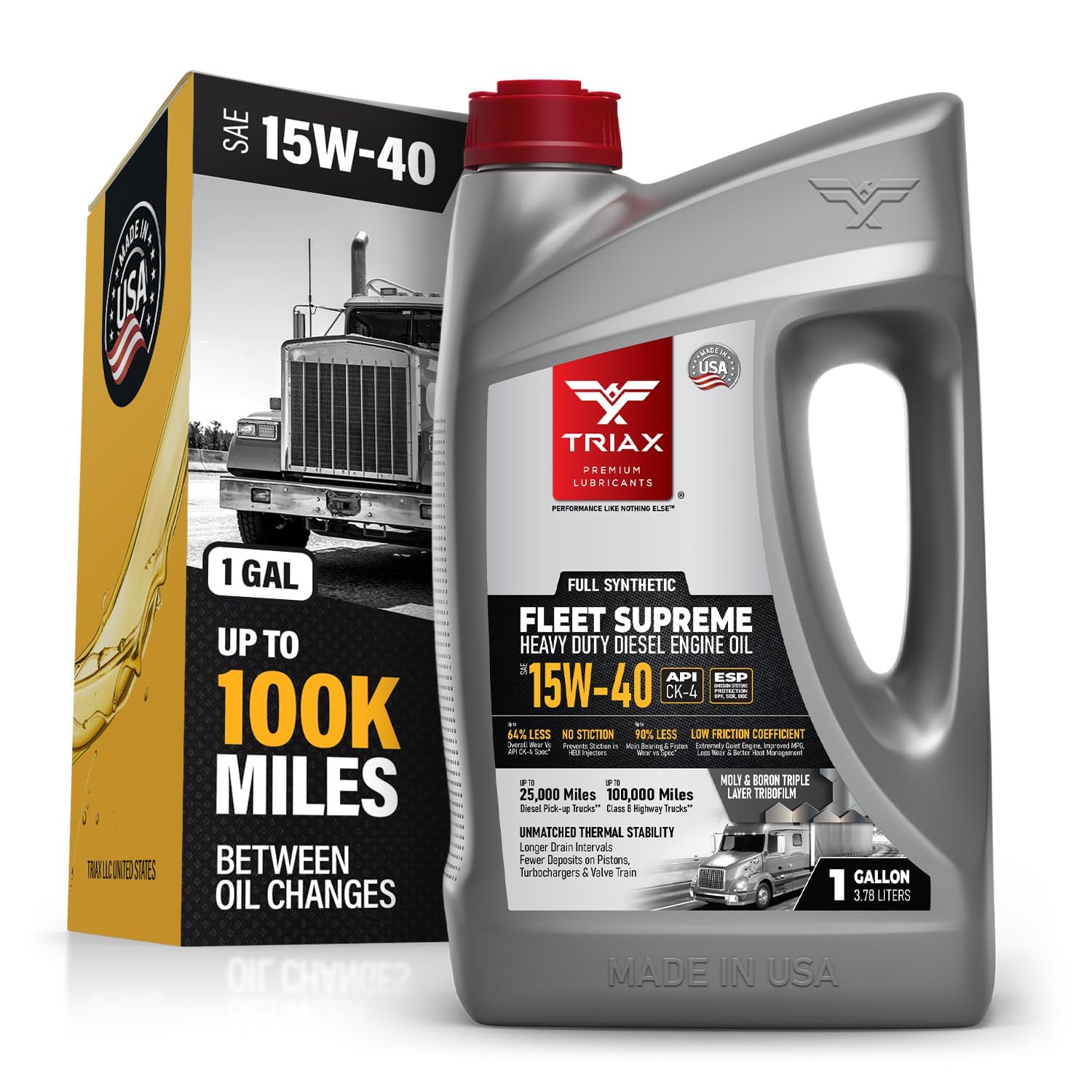
Triax Fleet Supreme enters the premium tier with a full synthetic CK-4 formulation fortified with nano-boron and moly friction modifiers. Manufacturer claims cite up to 48 percent lower wear compared to industry standards, supported by a friction coefficient reported as 50 percent lower than leading competitors. The 15W-40 viscosity is ideal for heavy-duty diesel pickups engaged in frequent towing or hauling where film strength matters most.
Extended drain intervals are a central selling point — the oil is engineered for up to 30,000 miles in super-duty pickups and beyond 100,000 miles in highway semi-truck applications. Owner reports highlight noticeably quieter engine operation and lower oil temperatures under sustained load. The additive package maintains viscosity stability under high shear conditions, which translates to consistent oil pressure during hard acceleration and grade climbing.
Cold-start capability extends down to negative 45 degrees Fahrenheit, making this a viable option for northern fleets. Compatibility spans Ford Powerstroke, Chevy Silverado, Dodge RAM, and GMC Sierra platforms. The moly-boron blend provides a boundary lubrication layer that protects during the critical seconds after cold start when oil pressure has not yet fully built.
What works
- Exceptional wear protection from moly-boron friction modifiers
- Very long drain intervals reduce maintenance frequency
- Operates well in extreme cold down to -45°F
What doesn’t
- Premium price per gallon exceeds standard synthetic blends
- Overkill for light-duty driving and short commutes
3. Delo 400 XSP SAE 5W-40 Synthetic Diesel Engine Oil

Chevron’s Delo 400 XSP carries a strong reputation in the commercial fleet space for its ability to promote consistent cold-engine starting in sub-zero conditions. The 5W-40 viscosity grade is specifically engineered for gasoline and diesel engines operating in cold climates, offering noticeably faster oil circulation during winter starts compared to heavier 15W-40 alternatives. The synthetic base oil formulation resists thermal breakdown even when coolant and oil temperatures climb during extended idling.
Package weight of 3.4 kilograms per gallon reflects the dense additive chemistry that Chevron has refined over decades of heavy-duty lubricant production. The universal fit classification covers both car and truck applications, making it a flexible option for households with mixed fleets. Owner feedback highlights reduced turbo lag on cold mornings and lower oil consumption between changes when used in modern diesel pickups.
Country of origin is the United States, and the formulation meets the latest OEM requirements for low-emission diesel engines. The jug packaging includes a measured pour spout that reduces mess during refills. For operators who face harsh winter conditions and need reliable cranking without block heater dependency, this oil delivers tangible starting improvement.
What works
- Excellent cold-start performance in freezing temperatures
- Versatile compatibility with both diesel and gasoline engines
- Proven additive package from a major refinery operator
What doesn’t
- Not the best choice for high-mileage engines with seal wear
- Limited availability in some retail locations
4. Shell Rotella T4 Triple Protection 15W-40
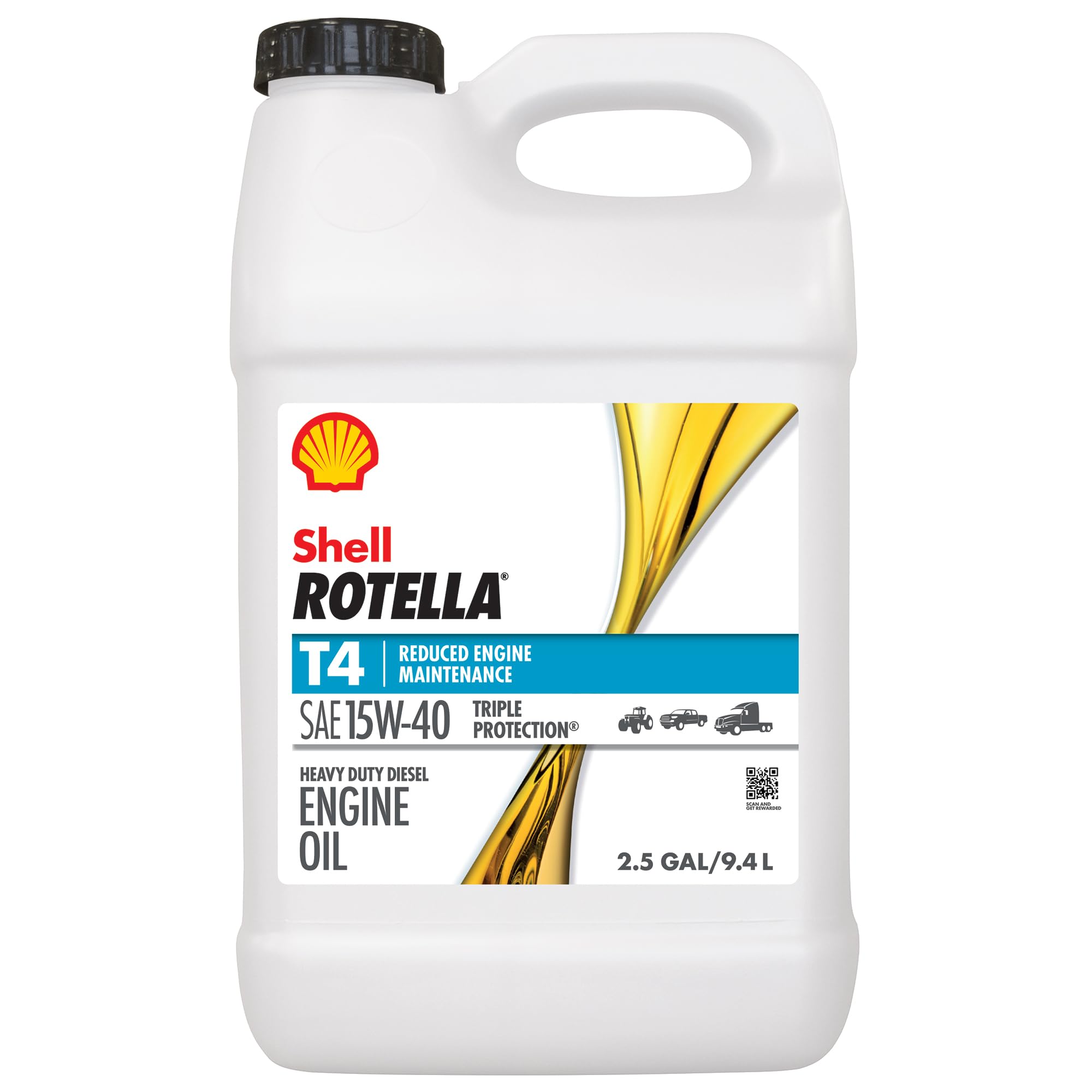
Shell Rotella T4 Triple Protection is a conventional 15W-40 diesel engine oil engineered with advanced additive chemistry plus synthetic base oil components for enhanced deposit control. The Triple Protection technology targets three failure modes: wear, deposits, and oil breakdown. For fleet operators managing older trucks or mixed-age equipment, this oil provides a proven balance of protection and cost efficiency.
The formulation offers significantly better wear protection than previous-generation Rotella oils, with enhanced shear stability that maintains viscosity control across the full drain interval. Owner data from heavy-duty applications shows consistent oil pressure even after extended high-idle periods. The 2.5-gallon container reduces per-mile cost compared to gallon jugs, making it attractive for high-volume users.
Compatibility extends to the latest emission-controlled engines using EGR and diesel particulate filters, so it works for both pre-2007 and modern platforms. The additive package helps keep piston rings and turbocharger bearings clean, which directly impacts long-term oil consumption. For daily drivers who rack up highway miles and want a trusted name without the synthetic price premium, Rotella T4 remains a default recommendation.
What works
- Proven wear protection across a wide range of diesel engines
- Good shear stability maintains viscosity longer
- Cost-effective per-mile for high-volume users
What doesn’t
- Conventional base oil limits extended drain intervals
- Thicker cold-start viscosity compared to 5W-40 synthetics
5. Royal Purple 15W-40 Oil, 1 Gallon

Royal Purple 15W-40 leverages a synthetic blend base oil with a proprietary additive chemistry that prioritizes wear protection and fuel efficiency. The formulation includes corrosion protection for the catalytic emission system, a consideration that matters for modern diesel trucks with complex aftertreatment hardware. The universal fit classification covers a broad range of passenger cars and light trucks, providing flexibility for mixed-vehicle households.
Improved compatibility with fuels containing ethanol is a notable feature for diesel owners who occasionally run biodiesel blends. The additive package also targets superior corrosion protection for internal engine components exposed to moisture from condensation during short-trip operation. Owner reports frequently cite reduced engine noise and smoother idle characteristics compared to standard conventional oils.
The 128-ounce container provides four quarts of oil, enough for most light-duty diesel engine oil changes. The bottle design includes a measured pour spout that reduces waste and spillage. For diesel pickup owners who want a step up from basic conventional oil without moving to a full synthetic, this blend offers a balance of enhanced protection and reasonable cost.
What works
- Provides corrosion protection for emission system components
- Compatible with ethanol-blended fuels
- Reduces engine noise and vibration at idle
What doesn’t
- Synthetic blend formulation limits extreme drain intervals
- Not recommended for severe cold-start conditions
6. Lucas Oil Magnum 15W-40 Heavy Duty Motor Oil

Lucas Oil Magnum 15W-40 is formulated with a high TBN (Total Base Number) to neutralize acidic byproducts from combustion, making it particularly effective in engines burning high-sulfur fuel. The CI-4 API classification targets pre-2007 diesel engines without diesel particulate filters, where the additive chemistry is optimized for older emission control systems. This oil is designed to last longer than standard plain 15W-40 formulations, with wear protection that reduces the risk of dry starts.
The high TBN chemistry provides extended acid-neutralizing capacity, which is valuable for engines that operate under heavy load or idle for extended periods. Owner feedback from agricultural and construction equipment operators highlights reliable cold-start performance and consistent oil pressure across long operating hours. The 1-gallon container offers straightforward handling for top-offs and oil changes.
For owners of older diesel pickups, farm tractors, and stationary generators, this oil matches the specific needs of engines that predate modern emission controls. The formulation includes Lucas’s proprietary lubricating technology that clings to engine surfaces, reducing wear during the critical moments after startup when oil pressure is building. This makes it a strong choice for equipment that sits idle for extended periods.
What works
- High TBN formulation handles high-sulfur fuel effectively
- Excellent cling properties reduce dry-start wear
- Ideal for pre-2007 engines and off-road equipment
What doesn’t
- CI-4 rating is not compatible with modern DPF systems
- Conventional base oil limits drain interval length
7. Motorcraft 10W-30 Engine Oil

Motorcraft 10W-30 engine oil is produced by Ford’s official lubricant supplier, carrying the engineering pedigree of a manufacturer that designs engines for millions of vehicles. The 10W-30 viscosity grade is thinner than traditional 15W-40 diesel oil, making it suitable for light-duty diesel engines that specify lower viscosity for improved fuel economy and cold-flow performance. The flash point is rated at 464 degrees Fahrenheit, indicating robust thermal stability for an oil in this viscosity class.
The 5-quart container provides a complete fill for many passenger car and light truck engines, reducing the need for multiple bottles. Motorcraft’s quality control processes align with OEM specifications, ensuring consistent additive dosing and base oil quality across production batches. Owner feedback from Ford diesel owners notes reliable performance in Super Duty trucks when used according to the manufacturer’s viscosity recommendation.
For mixed fleets that include both gasoline and light diesel vehicles, this oil offers the convenience of a single stock number. The formulation includes detergent additives that help keep pistons and valve trains clean, contributing to consistent compression and reduced oil consumption over the fill interval. The packaging is designed with a foil seal and ergonomic handle for clean pouring.
What works
- OEM-grade quality from Ford’s official lubricant partner
- Strong thermal stability for a 10W-30 formulation
- Convenient 5-quart container for complete oil changes
What doesn’t
- 10W-30 viscosity not suitable for heavy towing applications
- Not compatible with DPF-equipped diesel engines needing CK-4
Hardware & Specs Guide
Viscosity Grades Explained
SAE J300 viscosity grades define oil flow at cold and hot conditions. The first number (5W, 10W, 15W) indicates cold-weather pumping performance. The second number (30, 40) indicates kinematic viscosity at 100 degrees Celsius. Diesel engines typically require 15W-40 for adequate film strength at high cylinder pressures, while 5W-40 offers improved cold-start protection in northern climates. Using a grade thinner than specified can lead to accelerated bearing wear under heavy load.
API Service Categories
The American Petroleum Institute’s classification system ensures oil meets specific performance benchmarks. CK-4 is the current standard for modern diesel engines with DPF and SCR emission systems, offering enhanced protection against oxidation and shear. CJ-4 is the previous standard and remains backward compatible. CI-4 applies to engines without particulate filters. Always check your owner’s manual to match the required API category — using an outdated classification in a modern engine risks clogging the DPF.
Synthetic vs Conventional Base Oils
Full synthetic base oils (Group III, IV, or V) provide superior thermal stability, lower volatility, and higher viscosity index compared to conventional Group I and II mineral oils. Synthetic oils resist thermal breakdown at higher temperatures and flow better at cold temperatures. Synthetic blends mix conventional and synthetic base stocks to balance cost and performance. For severe service conditions like towing, extended idle, or extreme temperatures, full synthetic oil provides measurable protection advantages.
Additive Packages and TBN
Diesel engine oil contains detergent dispersants to suspend soot particles, anti-wear additives like zinc dialkyldithiophosphate (ZDDP) to protect cam lobes and lifters, and alkaline reserves measured as Total Base Number (TBN) to neutralize acidic combustion byproducts. High TBN oils extend drain intervals by maintaining pH balance longer. Molybdenum and boron friction modifiers, as found in premium formulations, reduce friction coefficient and improve fuel economy while protecting against boundary layer wear.
FAQ
What viscosity should I use in my diesel pickup truck?
Can I use gasoline engine oil in a diesel engine?
What is the difference between CK-4 and CJ-4 diesel oil?
How often should I change diesel engine oil?
Does using synthetic oil void my diesel engine warranty?
Final Thoughts: The Verdict
For most buyers, the best motor oil for diesel engines winner is the Mobil 1 Turbo Diesel Truck 5W-40 because it delivers full synthetic protection at a competitive price point and works across modern DPF-equipped trucks without compatibility concerns. If you want the ultimate in extended drain intervals and friction-reducing additives, grab the Triax Fleet Supreme 15W-40 CK-4. And for a budget-friendly conventional oil that has proven itself across millions of fleet miles, nothing beats the Shell Rotella T4 Triple Protection 15W-40.

Certification: BSc in Mechanical Engineering
Education: Mechanical engineer
Lives In: 539 W Commerce St, Dallas, TX 75208, USA
Md Amir is an auto mechanic student and writer with over half a decade of experience in the automotive field. He has worked with top automotive brands such as Lexus, Quantum, and also owns two automotive blogs autocarneed.com and taxiwiz.com.