Gear oil lube is the unsung hero of drivetrain longevity. The wrong viscosity or additive package can turn a smooth highway cruiser into a noisy, wear-prone machine, especially under towing, track, or off-road loads. Picking a formula that matches your specific differential, transfer case, or manual transmission matters more than brand loyalty.
I’m Amir — the founder and writer behind Four Wheel Ask. My approach combines deep spec-sheet analysis with cross-referencing thousands of owner-reported outcomes across various platforms to identify real-world performance trends.
This guide compares five distinct gear oil formulations — from ultra-long-drain synthetics to specialized manual-transmission fluids — to deliver a clear, data-backed recommendation for your vehicle. Choosing the right best gear oil lube means balancing protection, shift feel, and drain interval without overpaying for features you don’t need.
How To Choose The Best Gear Oil Lube
Gear oil is not a one-size-fits-all product. The ideal formulation depends on the component type, the load, the operating temperature, and whether your vehicle uses yellow-metal synchronizers or a limited-slip differential. Ignoring these factors can lead to shift issues, chatter, or accelerated wear.
Understand GL Ratings
The API GL rating defines the additive chemistry. GL-4 formulations use milder extreme-pressure (EP) additives that are safe for brass, bronze, or copper synchronizers in manual transmissions. GL-5 oils contain higher sulfur-phosphorus content for high-load hypoid gears but can corrode yellow metals. Check your owner’s manual: many modern manual transmissions require GL-4, while differentials call for GL-5.
Viscosity and Drain Interval
75W-90 remains the most common viscosity for passenger cars and light trucks, offering a good balance of cold flow and high-temperature film strength. 75W-140 suits heavy towing, racing, or extreme ambient heat, providing a thicker cushion under high torque. Drain intervals vary widely: budget-friendly conventional blends may need changes every 30,000–50,000 miles, while premium full synthetics with PAO/ester bases can stretch beyond 100,000 miles — or even 500,000 miles, as seen in some long-drain formulations.
Limited-Slip vs. Open Differential
Limited-slip differentials (LSDs) often require friction modifiers to prevent clutch-pack chatter during turns. Some gear oils come pre-blended with these modifiers; others are intentionally free of them for open-diff or racing applications where precise lockup is desired. Using an LSD-specific oil in an open diff will not cause harm, but the reverse (using a non-LSD oil in an LSD) can produce noise and harsh engagement.
Quick Comparison
On smaller screens, swipe sideways to see the full table.
| Model | Category | Best For | Key Spec | Amazon |
|---|---|---|---|---|
| Triax Synergy Gear Max 75W-90 | Mid-Range | Ultra-long drain intervals | PAO/Ester; rated for 500k miles | Amazon |
| Lucas Oil 10121 SAE 75W-140 | Mid-Range | Heavy-duty towing, high heat | 75W-140 synthetic blend | Amazon |
| Red Line 50504 MT-85 75W85 GL-4 | Premium | Manual transmission shift quality | 75W85 GL-4 polyol ester | Amazon |
| Motul Gear 300 75W90 | Premium | Racing / non-LSD performance | 100% synthetic ester, GL-4/GL-5 | Amazon |
| Royal Purple MAX GEAR 75W140 | Premium | Severe duty, high-torque applications | 75W-140 full synthetic | Amazon |
In‑Depth Reviews
1. Triax Synergy Gear Max 75W-90 GL-5
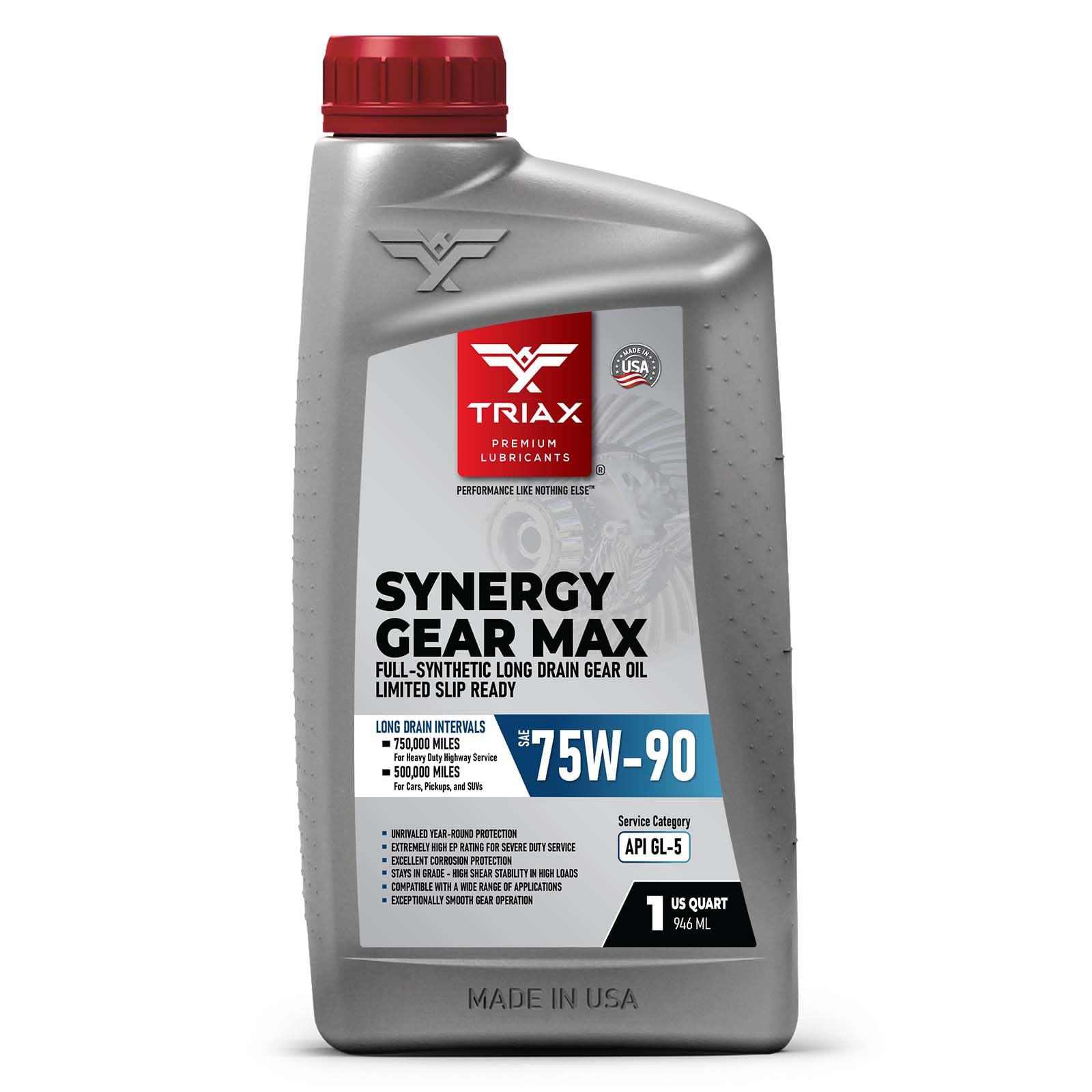
Triax Synergy Gear Max uses a PAO and ester synthetic base that delivers an advertised drain interval of up to 500,000 miles for light trucks and passenger cars — a figure that far exceeds standard OEM recommendations. Owner feedback for differentials in Toyota Tundras and Tacomas consistently reports a quiet, smooth rear end after the swap, with several users noting the bottle’s cap design required modification to fit standard hand pumps.
On the spec sheet, this oil exceeds the highest Stage 14 load test rating and claims up to 62% less wear than OEM specifications. It is formulated for both limited-slip and open differentials, meaning no additional friction modifier is needed for most LS applications. The 75W-90 viscosity covers the vast majority of modern pickup and SUV rear ends, making it a versatile, value-driven option for owners who keep their vehicles beyond the standard service interval.
Where the Triax truly stands out is the gap between price point and laboratory performance. It undercuts many premium competitors while offering extreme-pressure and anti-wear results that rival track-focused formulations. The primary trade-off is bottle ergonomics — several buyers found the cap incompatible with standard pump adapters, requiring a cut or funnel approach.
What works
- Exceptional 500k-mile drain interval reduces service frequency
- Outperforms most major brands in EP and wear tests per owner reports
- Works with both LS and non-LS differentials without additives
What doesn’t
- Bottle cap design can interfere with hand pump fittings
- Brand recognition lower than established competitors
2. Lucas Oil 10121 SAE 75W-140 Synthetic Blend

Lucas Oil’s 75W-140 synthetic blend targets applications that generate higher thermal loads — towing, off-road, or heavy-duty truck use. The heavier viscosity provides a thicker hydrodynamic film at operating temperature, which owners of Ford F-150s and Jeep Wranglers with Dana axles report reduces gear noise and improves bearing life. A few long-term reviews on older high-mileage trucks note the oil still looked clean at 50,000-mile change intervals.
This formulation is a blend, not a full synthetic, which places it in a middle tier between budget conventional oils and premium PAO/ester fluids. Lucas does not publish extreme-pressure test data as extensively as some competitors, but the brand’s established warranty-backed reputation and widespread availability make it a safe bet for those who prioritize proven reliability over lab numbers. Several users with race transmissions also reported no issues under track conditions.
The 75W-140 grade is thicker than the standard 75W-90 used in most passenger cars. That means it can cause sluggish cold-weather shifting or slightly reduced fuel economy in mild climates. It is best reserved for vehicles that regularly tow near capacity or operate in sustained high-heat environments. For daily-driven compact cars or light-duty SUVs, a 75W-90 is usually more appropriate.
What works
- Strong reputation for noise reduction in heavy-duty differentials
- Affordable entry into a thicker viscosity for towing
- Widely available and backed by Lucas warranty
What doesn’t
- Blend base offers shorter drain intervals than full synthetics
- 75W-140 is too thick for many standard passenger car applications
3. Red Line 50504 MT-85 75W85 GL-4

Red Line MT-85 is a specialized GL-4 manual transmission fluid designed to improve shift feel and synchronizer life. The polyol ester base provides excellent film strength while lacking the corrosive sulfur compounds found in most GL-5 oils — critical for brass or bronze synchros in Nissan, Hyundai, Kia, and Mitsubishi transmissions. Owners of Genesis Coupes and Nissan 370Zs consistently report an 80% or greater reduction in notchiness and cold-weather grinding after switching from OEM fluid.
The 75W85 viscosity sits slightly thinner than a standard 75W-90, which promotes faster oil flow to synchronizers during cold starts. Red Line recommends this fluid for GL-1, GL-3, and GL-4 applications, as well as many special synchromesh fluids. Multiple users on Colorado and Minnesota climates noted the car shifted smoothly even below freezing, a clear improvement over factory-fill gear oil that turned to molasses in winter.
It is important to note that MT-85 is not intended for differentials. It lacks the extreme-pressure additives needed for hypoid gear protection. Using it in a rear diff would lead to premature wear. This is a transmission-only product, best matched to the specific vehicles listed in the manufacturer’s application guide. For cross-compatible use, Red Line also offers MT-90 (75W-90 GL-4) which covers a broader range of gearboxes.
What works
- Dramatic improvement in cold-shift smoothness
- Safe for yellow-metal synchronizers
- Superior wear protection in synchronized gearboxes
What doesn’t
- Not suitable for differentials or transfer cases
- Vehicle application list is specific, not universal
4. Motul Gear 300 75W90
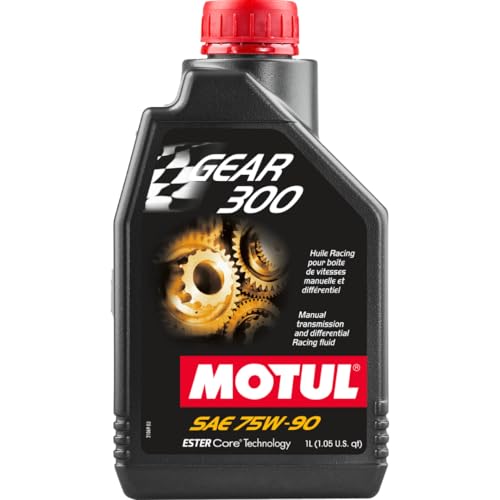
Motul Gear 300 is a fully synthetic ester-based gear oil built for racing and high-performance use. Unlike many GL-5 oils, it is intentionally formulated without friction modifiers, making it ideal for open differentials, manual transmissions, and non-LS applications in track cars. Subaru STi and Ford F-150 owners alike have reported consistent wear protection and stable viscosity under sustained abuse, from autocross runs to 100,000-mile daily driving.
The ester base provides a naturally polar attraction to metal surfaces, meaning the oil film clings to gears even after shutdown — reducing dry-start scuffing. Motul claims un-shearability based on the KRL 20-hour shear test, and user reports from high-torque applications support that the oil does not thin out significantly over long intervals. The 75W90 grade also flows well in cold weather, enabling easier engagement during winter warm-up.
Because Gear 300 lacks any limited-slip additive package, it is not recommended for clutch-type LSDs unless you add a separate friction modifier per the differential manufacturer’s guidance. Several owners of vehicles with factory LSDs noted chatter after switching, reversing the change by adding the appropriate additive. This is a niche product for those who know exactly what additive profile their drivetrain requires.
What works
- Outstanding film strength and shear stability for extreme driving
- Cold-flow properties improve early lubrication
- No unnecessary friction modifiers for open-diff users
What doesn’t
- Requires additive for many limited-slip differentials
- Premium price bracket with no drain-interval advantage for casual drivers
5. Royal Purple MAX GEAR 75W140

Royal Purple’s MAX GEAR 75W140 targets the most demanding gearbox applications — heavy towing, desert off-roading, and high-horsepower street builds. The full synthetic formulation is engineered to maintain viscosity under extreme shear while offering additive chemistry that reduces friction and heat. Users of Jeep Gladiators and Ford F-150s report chatter-free limited-slip performance after switching, often noting that the oil stayed darker longer than prior blends, indicating better thermal stability.
This fluid carries Royal Purple’s reputation for high-quality base stocks, though the company publishes less quantified wear-test data than brands like Red Line or Motul. The 75W-140 grade provides a thicker film at temperature, making it a poor fit for daily drivers in temperate climates — it can cause noticeable drag and reduced fuel economy. The bottle’s cap design received no criticism in owner reviews, a point worth noting compared to the Triax bottle issues.
One caution: MAX GEAR 75W140 is advertised for severe duty, but its viscosity may not be compatible with certain differentials designed for 75W-90. Always consult your owner’s manual or differential manufacturer before stepping up to a thicker grade. On modern vehicles with electronic LSDs or torque-vectoring systems, using the wrong viscosity can trigger performance degradation or fault codes.
What works
- Excellent thermal stability for heavy towing and racing
- Consistent chatter-free operation in limited-slip diffs
- Strong brand reputation and user trust
What doesn’t
- 75W-140 may hinder cold-weather performance and fuel economy
- Limited published wear-test data vs. premium competitors
Hardware & Specs Guide
Viscosity Grade (SAE J300)
The SAE gear oil viscosity grade (e.g., 75W-90) defines flow characteristics at both cold and operating temperatures. The “W” rating (1-Winter) indicates the lowest temperature at which the oil can be pumped effectively. Lower “W” numbers, like 75W, flow better in cold climates. The high-temperature number (90, 140) indicates film thickness at 100°C. Thicker oils (140) support higher loads but increase drag and can worsen cold-shift feel.
API GL Rating (Additive Chemistry)
API GL-4 and GL-5 are the most common ratings for automotive gear oils. GL-5 uses higher concentrations of sulfur-phosphorus extreme-pressure (EP) additives designed for hypoid gears, but these can corrode yellow metals like brass synchros. GL-4 formulations reduce EP additive levels to safely lubricate synchronized manual transmissions. Using the wrong rating can cause rapid wear or damage to internal components.
Base Oil: Mineral, Synthetic Blend, or Full Synthetic
Mineral (conventional) oils offer the lowest cost but require more frequent changes and provide inferior thermal stability. Synthetic blends mix conventional base with a percentage of synthetic stock to improve performance at a moderate price point. Full synthetics (PAO, ester, or Group V) deliver the highest film strength, longest drain intervals, and best cold-flow performance, making them the preferred choice for severe duty or extended service.
Limited-Slip (LS) vs. Non-LS Formulations
Limited-slip differentials rely on clutch packs to distribute torque. These clutches require specific friction modifiers to prevent chatter during turns. Many gear oils are pre-blended with these modifiers (labeled “LS” or “limited-slip” compatible). Non-LS oils lack these modifiers and are suited for open differentials, racing applications, or manual transmissions where precise lockup is desired. Adding the wrong type can cause noise, grab, or poor traction delivery.
FAQ
Can I use GL-5 gear oil in my manual transmission?
What happens if I use the wrong viscosity in my differential?
How often should I change gear oil lube?
Do I need to add a friction modifier for a limited-slip differential?
Final Thoughts: The Verdict
For most buyers, the best gear oil lube winner is the Triax Synergy Gear Max 75W-90 because it offers a class-leading drain interval and load protection at a price that undercuts many premium options. If you need a manual-transmission-specific fluid that dramatically improves cold-weather shift feel, grab the Red Line 50504 MT-85. And for severe-duty towing or racing with an open differential, nothing beats the track-ready film strength of the Motul Gear 300 75W90.

Certification: BSc in Mechanical Engineering
Education: Mechanical engineer
Lives In: 539 W Commerce St, Dallas, TX 75208, USA
Md Amir is an auto mechanic student and writer with over half a decade of experience in the automotive field. He has worked with top automotive brands such as Lexus, Quantum, and also owns two automotive blogs autocarneed.com and taxiwiz.com.