The difference between a helmet you wear and a helmet you forget you are wearing comes down to shell composition, ventilation engineering, and how well the interior matches your head shape. Full face cruiser helmets walk a tightrope between vintage aesthetics and modern protection standards, and not every retro-looking lid delivers the real-world comfort that matters on a full day of riding. Understanding the trade-offs between fiberglass, polycarbonate, and composite shells is the first step toward a purchase you will not second-guess a thousand miles later.
I’m Amir — the founder and writer behind Four Wheel Ask. I track market trends and analyze spec sheets, owner feedback, and build quality data across the full-spectrum helmet market to identify what actually delivers on the road.
Experienced riders know that selecting the best full face cruiser motorcycle helmets means prioritizing safety certifications, ventilation efficiency, and a secure fit that stays comfortable through an entire tank of fuel.
How To Choose The Best Full Face Cruiser Motorcycle Helmets
Full face cruiser helmets blend the protection of a closed-face design with the styling cues riders expect from the cruiser and cafe racer world. Unlike sportbike helmets that prioritize aerodynamics at triple-digit speeds or adventure helmets built for off-road versatility, cruiser helmets focus on low-speed comfort, a compact silhouette, and materials that reduce neck fatigue during long, relaxed rides. The challenge is that the market is flooded with helmets that look the part but cut corners on padding density, visor optics, or ventilation channels. Knowing which specs actually matter helps you avoid a helmet that spends more time on a shelf than on your head.
Shell Material and Weight Distribution
Fiberglass shells offer a superior strength-to-weight ratio and naturally dampen road vibration better than polycarbonate, but they come at a higher price point. Polycarbonate shells dominate the budget and mid-range categories because they are impact-resistant and cost-effective to produce, though they tend to feel heavier after several hours of riding. Composite shells — often blends of fiberglass, Kevlar, and carbon fiber — represent the premium tier, shaving ounces while maintaining structural integrity. Weight distribution matters just as much as raw weight: a helmet that carries its mass low and centered feels substantially lighter than one that feels top-heavy, regardless of the scale reading.
Ventilation and Interior Climate Control
Full face helmets trap heat by nature, so the ventilation system determines whether a lid feels breathable or suffocating on a warm afternoon. Look for adjustable intake vents on the forehead and chin bar that allow you to tune airflow, paired with passive exhaust vents at the rear that extract warm air. Moisture-wicking, removable liners also play a major role: a liner that dries quickly and resists odor buildup extends the comfort window considerably. Helmets with breath deflectors and chin curtains further reduce fogging and wind noise, two of the most common complaints from full face riders transitioning from open-face setups.
Visor Technology and Field of View
A cruiser helmet’s visor needs to handle changing light conditions without distorting the road ahead. Look for optics with anti-scratch and anti-fog treatments — Pinlock-ready shields offer the best fog resistance in cold or humid conditions. Drop-down internal sun visors add convenience by eliminating the need to carry a separate tinted shield, though they add a small amount of weight and complexity. The field of view should feel natural and unobstructed: a narrow eye port might look aggressive but can create blind spots when checking mirrors or scanning intersections. Tool-less shield replacement is a practical feature that makes swapping between clear and tinted shields a thirty-second job.
Quick Comparison
On smaller screens, swipe sideways to see the full table.
| Model | Category | Best For | Key Spec | Amazon |
|---|---|---|---|---|
| ScorpionEXO Covert FX | Full Face | Quiet highway cruising | 2.9 lb TCT-Ultra composite shell, ECE 22.06 | Amazon |
| Bell Broozer | Convertible | Versatile 2-in-1 riding | Removable chin bar, Nutrafog II shield | Amazon |
| ScorpionEXO T520 | Touring | Long-distance comfort | AirFit cheek inflation, drop-down sun visor | Amazon |
| ILM MF509 | Sport/Full Face | Feature-packed value | Dual visor + Pinlock70, two head models | Amazon |
| HJC i10 | Full Face | Daily commuting | Snell M2020 approved, Pinlock-ready shield | Amazon |
| LS2 Assault | Full Face | Budget performance | Drop-down sun shield, active chin vents | Amazon |
| Daytona Retro | Retro Full Face | Vintage style seekers | Compact fiberglass shell, D-ring retention | Amazon |
| CRG Sports Retro | Retro Full Face | Cafe racer look | Fiberglass shell, 4 lb weight | Amazon |
| ILM Z502 | Vintage Full Face | Entry-level buyers | Retractable inner visor, ABS shell, DOT+ECE | Amazon |
In‑Depth Reviews
1. ScorpionEXO Covert FX Full Face Motorcycle Helmet

The ScorpionEXO Covert FX is the kind of helmet that makes you question why more manufacturers do not put this level of engineering into a sub-premium price bracket. Its TCT-Ultra composite shell weighs approximately 2.9 pounds in a medium, which places it among the lightest full face lids available at this tier without compromising on impact dispersion. The ECE 22.06 certification means it has passed testing protocols that exceed standard DOT requirements, including oblique impact tests that simulate more realistic crash angles. Owner feedback consistently highlights how the helmet disappears on the head during long rides, a direct result of the low mass and balanced shell geometry.
Ventilation is a standout feature here. The aero-tuned system includes a large top intake, a dual-position mouth vent that alternates between defog and full airflow, and rear exhaust ports that actually move hot air out rather than just looking aggressive. The KwikWick C liner manages moisture effectively, and the KwikFit cheek pads accommodate eyeglasses without creating pressure points — a detail that matters for riders who wear prescription lenses. The included dark smoke Everclear shield is fog-free on both surfaces and swaps out without tools, so transitioning between day and night riding takes seconds.
The Covert FX also integrates seamlessly with Bluetooth communication systems thanks to 50mm speaker pockets and a neoprene chin curtain that reduces wind noise noticeably. Some riders report that the initial fit feels tight until the padding breaks in, and the ratchet closure system, while convenient, takes a moment to get used to if you are accustomed to D-rings. For riders who want a lightweight, quiet, and well-ventilated full face helmet that does not scream sportbike, this is the benchmark.
What works
- Sub-3-pound composite shell reduces neck fatigue on all-day rides
- ECE 22.06 certification covers oblique impact scenarios
- Excellent ventilation control with dual-position mouth vent
- Fog-free Everclear shield included; tool-less swap
What doesn’t
- Initial fit is snug before break-in; sizing up may be necessary for some head shapes
- Ratchet closure lacks the tactile feedback some riders prefer over D-rings
2. Bell Broozer Motorcycle Helmet
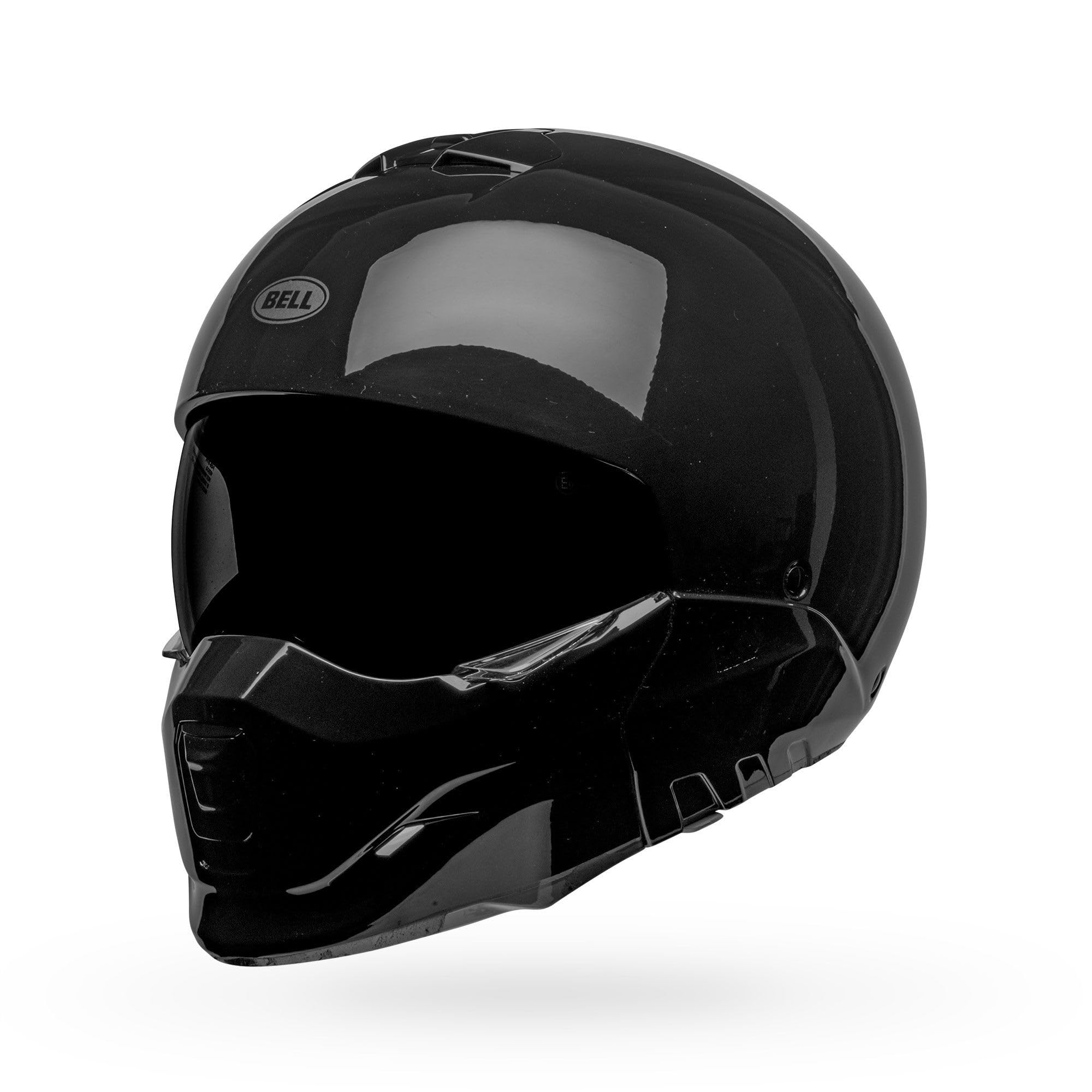
The Bell Broozer occupies a unique space in the full face cruiser market because it offers a removable chin bar, effectively giving riders two helmets in one without asking them to compromise on safety certification. In its full face configuration, the Broozer meets DOT requirements and provides the same level of chin protection you expect from a fixed-bar helmet. Remove the chin bar, and it transforms into an open-face three-quarter shell that works well for around-town cruising or hot summer days. That flexibility makes it a strong contender for riders who own a single bike and want versatility without maintaining two separate helmets.
The shell uses an ABS construction that keeps the price reasonable, though it tips the scales on the heavier side compared to composite competitors. Bell compensates with three shell sizes across the size range, which helps larger sizes avoid the disproportionate weight penalty common in helmets that use a single shell for all sizes. The Nutrafog II anti-fog, anti-scratch, and UV-protected integrated shield performs well across changing weather conditions, and the eyewear-compatible liner includes woven arm pockets for prescription glasses or sunglasses. The quick-release chin strap is easy to operate with gloves on, and the overall fit leans toward a long-oval head shape — a detail that long-oval riders will appreciate given how few options exist for that head profile.
Ventilation is adequate but not class-leading: the top vents and chin vent provide noticeable airflow, but the fixed shield design limits the kind of fine-tuned adjustability found on more expensive touring helmets. Some owners note the chin bar mechanism requires deliberate effort to remove and reinstall, which can feel fussy if you switch configurations frequently. For riders with an intermediate-oval or round head shape, the Broozer may create pressure points at the forehead that do not fade with break-in. As a 2-in-1 solution for the cruiser rider who values adaptability, the Broozer delivers genuine utility.
What works
- Removable chin bar offers true full face and open-face versatility
- Three shell sizes optimize fit and weight across the size range
- Excellent for long-oval head shapes; hard-to-find geometry
- Integrated eyewear pockets work well with prescription glasses
What doesn’t
- ABS shell is heavier than fiberglass or composite alternatives
- Chin bar removal and reinstallation is not quick or intuitive
3. ScorpionEXO T520 Full Face Touring Motorcycle Helmet

The ScorpionEXO T520 is engineered specifically for the touring rider who spends consecutive hours in the saddle and expects a helmet that adapts to fatigue rather than accelerates it. The defining feature here is the AirFit inflation system: integrated cheek pads that you can pump up or deflate via a small button on the shell, allowing you to dial in the snugness of the fit without changing pads. This is particularly valuable for riders whose face shape shifts slightly during a long day or who want to fine-tune the seal to reduce wind noise. The dual-density EPS works in tandem with the advanced polycarbonate shell to manage impact energy across a broader range of speeds and impact angles than a standard single-density liner.
Visibility and convenience are strong suits. The Ellip-Tec ratchet shield system uses an elliptical cam motion that pulls the visor flush against the eye port gasket, eliminating the gaps that create whistling sounds and dust ingress. The Everclear no-fog treatment on both surfaces of the shield, combined with the drop-down SpeedView internal sun visor, means you can ride from dawn through midday without stopping to swap shields. The KwikWick C liner handles moisture effectively, and the KwikFit cheek pads are contoured to allow easy entry and exit for eyeglasses — a rare feature that touring riders who need reading glasses for navigation will appreciate.
The ventilation suite includes closeable top intakes, a dual-position mouth vent, and rear exhaust vents that create negative pressure to pull hot air out. Aero skirts and a breath deflector are included to help manage noise and fog. Some owners report that the helmet runs slightly large compared to the size chart, so measuring head circumference precisely is important before ordering. The speaker pockets accommodate most Bluetooth systems, but the position may require repositioning for taller riders. For touring-focused riders who prioritize customizable fit and all-weather visibility, the T520 is a carefully considered package.
What works
- AirFit inflation system allows on-the-fly fit customization
- Ellip-Tec shield ratchet ensures a noise-free seal
- Drop-down sun visor eliminates the need for a separate tinted shield
- Excellent moisture management with KwikWick C liner
What doesn’t
- Sizing runs slightly generous; measure carefully before ordering
- Bluetooth speaker pockets may need repositioning for optimal audio
4. ILM Motorcycle Helmet MF509
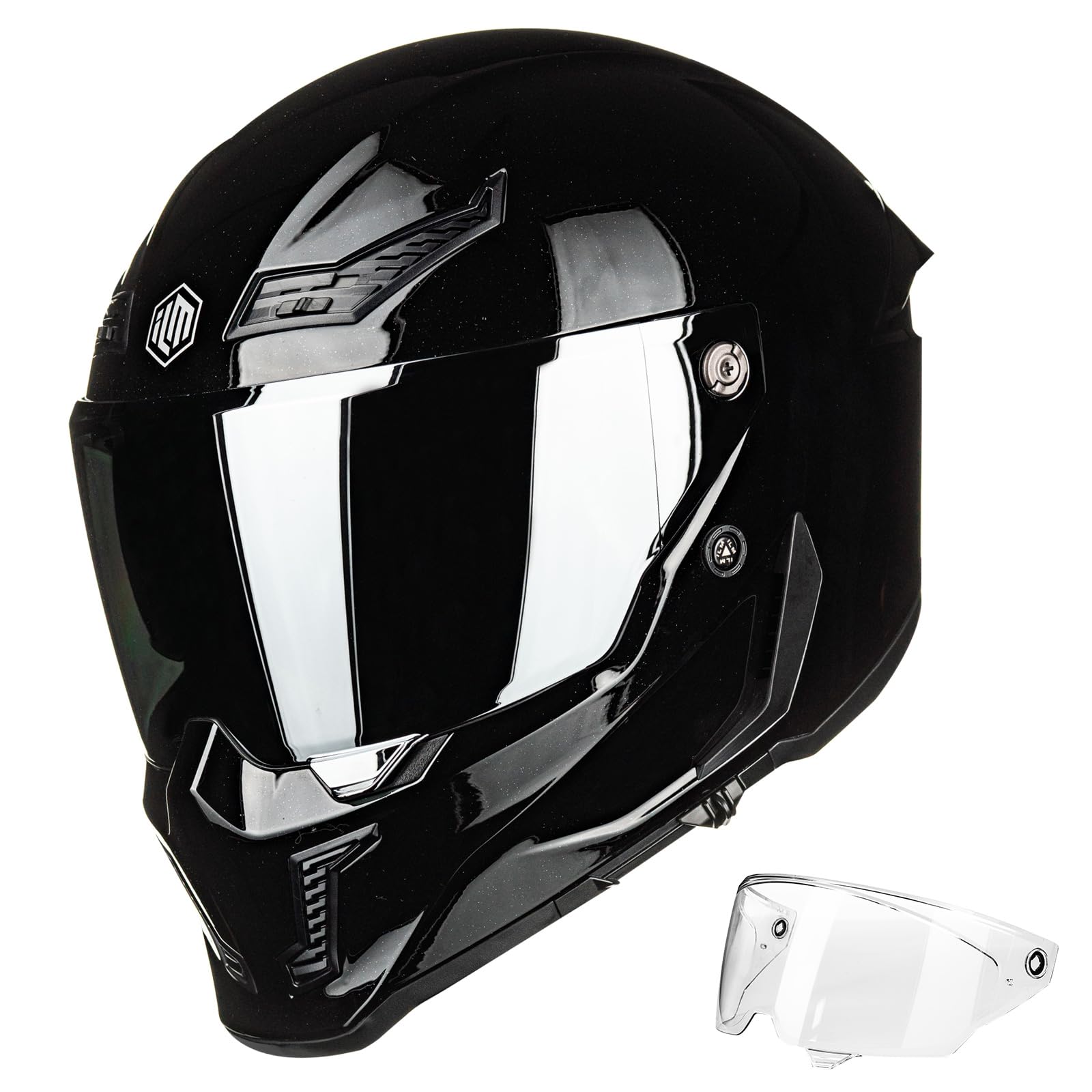
The ILM MF509 enters the conversation as a feature-dense option that brings dual visor capability, Pinlock70 anti-fog technology, and a dedicated two-model head shape system to a price point that undercuts most competitors with similar spec sheets. The inclusion of a Pinlock70 lens in the package is a meaningful differentiator because Pinlock inserts are typically sold as aftermarket add-ons, and the 70-grade lens offers superior fog resistance compared to the standard Pinlock30 found on many budget helmets. The dual visor design pairs a clear outer shield with a drop-down inner sun visor, giving riders immediate adaptability to changing light without carrying spare shields.
The ABS shell with black EPS liner keeps weight reasonable for the category, and the ventilation layout uses channels at the mouth, forehead, top, and rear to create continuous airflow that reduces internal fogging even in cooler conditions. One of the more thoughtful engineering choices is the dual head model system: the MF509 includes two sets of interior padding specifically designed for European and American head shapes, acknowledging that head profiles vary across markets and that a one-size-fits-all approach often leads to pressure points. Riders with rounder or more oval head shapes can select the model that matches their anatomy for a more consistent fit.
Italian design influence shows in the silhouette and color options, which manage to look modern without drifting into aggressive sportbike territory. The visor lock mechanism creates a solid seal that cuts down on wind noise, and the speaker pockets accommodate most Bluetooth communication systems without modification. A small subset of owners note that the inner sun visor button can feel stiff at first, and the tinted visor color may appear darker or more mirrored than product images suggest. For riders who want Pinlock anti-fog performance and dual visor convenience without stepping into premium pricing, the MF509 delivers disproportionate value.
What works
- Pinlock70 lens included for superior fog resistance
- Dual head model system improves fit across different head shapes
- Dual visor design with clear outer and drop-down inner sun shield
- Well-designed ventilation channels reduce fogging in cool weather
What doesn’t
- Inner sun visor button feels stiff during initial use
- Tinted visor color may differ slightly from product imagery
5. HJC i10 Solid Full Face Motorcycle Helmet
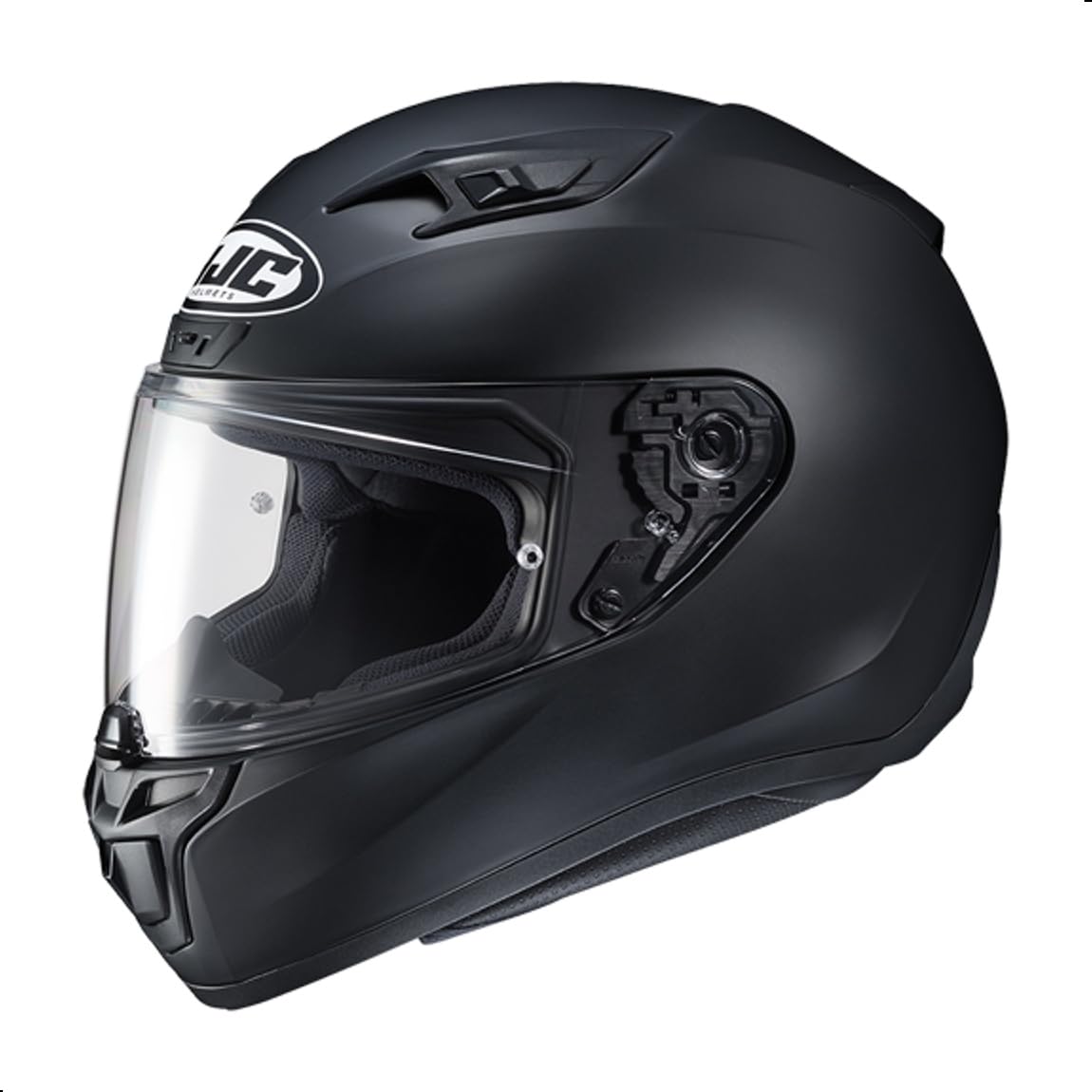
The HJC i10 carries both DOT and Snell M2020 certifications, placing it in a small group of sub-premium helmets that have passed the more demanding Snell impact test protocols. Snell M2020 requires multiple impacts at higher energy levels than DOT alone, and the i10 meets those standards with a lightweight polycarbonate shell that uses CAD-optimized geometry to manage impact forces without excessive weight. The HJ-31 shield is Pinlock-ready, meaning you can add a Pinlock anti-fog insert for cold-weather riding, though the insert is sold separately. For a rider who wants the reassurance of dual certification without paying premium-tier prices, the i10 is a logical starting point.
The Multicool interior fabric wicks moisture effectively and dries quickly, which matters when you are riding in warm conditions or working up a sweat in stop-and-go traffic. The entire liner is removable and washable, making long-term maintenance straightforward. The Advanced Channeling Ventilation System uses top and chin vents paired with rear exhaust ports to create airflow that keeps the interior fresh even at lower speeds typical of cruiser riding. The i10 is also Smart HJC ready, with recessed pockets designed to accommodate HJC’s 20B and 10B Bluetooth communication systems — though third-party systems may require some adjustment to fit cleanly.
Owner feedback consistently mentions that the i10 runs small compared to other brands, so ordering one to two sizes up from your usual measurement is strongly recommended. Wind noise is present at highway speeds, though adding the optional chin curtain helps. The shield mechanism operates smoothly but does not include a center locking tab, which some riders prefer for additional security against the visor popping open at speed. For the rider who values safety certifications over fashion and wants a dependable daily driver that does not break the bank, the i10 is a pragmatic choice.
What works
- DOT and Snell M2020 dual certification at an accessible price
- Lightweight polycarbonate shell with CAD-optimized geometry
- Removable, washable Multicool liner for easy maintenance
- Smart HJC ready with integrated Bluetooth speaker pockets
What doesn’t
- Runs small — plan to size up one to two sizes from measurement
- Wind noise noticeable at highway speeds without chin curtain
6. LS2 Helmets Assault Full Face Motorcycle Helmet

The LS2 Assault punches above its weight class by combining features that are typically reserved for more expensive helmets — a drop-down internal sun shield, closable chin and top vents, and a Pinlock-ready face shield — all within a budget-friendly framework. The drop-down sun visor is the headline feature because it eliminates the need to carry a separate tinted shield or stop riding when the sun shifts angle mid-trip. Unlike some budget implementations where the sun shield feels flimsy or distorts vision, the LS2 unit offers optical clarity that owners consistently describe as impressive for the price bracket.
The ventilation system includes active vents on the chin bar and crown that you can open or close based on conditions, plus exhaust ports at the rear that help extract stale air. This level of vent adjustability is uncommon at this price point, where many helmets rely on fixed-position vents or simple on-off sliders. The shell uses a polycarbonate alloy that keeps weight manageable, and the liner is removable and washable for hygiene. The Pinlock-ready shield allows you to install an anti-fog insert for cold or wet riding, though LS2 recommends using their branded Pinlock lens for proper fitment.
Long-term owner reports indicate that the helmet maintains its structural integrity and visual quality well beyond the first season, with the sun shield mechanism remaining smooth after thousands of miles. Some riders note that the helmet produces more wind noise than premium touring lids, particularly around the neck roll area, and that the sizing can be slightly generous compared to other brands. The chin strap uses a quick-release buckle rather than traditional D-rings, which some riders find more convenient and others consider less secure. For the rider who wants modern convenience features without climbing the price ladder, the LS2 Assault represents a smart compromise.
What works
- Built-in drop-down sun shield with good optical quality
- Closable chin and top vents offer real adjustability
- Pinlock-ready shield for optional anti-fog upgrade
- Removable, washable liner for long-term cleanliness
What doesn’t
- Wind noise is higher than premium touring helmets
- Sizing tends to run slightly generous; verify against measurements
7. DOT Daytona Retro Full Face Motorcycle Helmet

The DOT Daytona Retro focuses on a single priority that many budget helmets overlook: keeping the outer shell as compact as possible for a vintage proportion. Full face retro helmets often suffer from a bulbous appearance that ruins the cafe racer or chopper aesthetic, but the Daytona maintains a tight profile that sits close to the head without looking oversized. The fiberglass shell construction at this price point is noteworthy because most sub-premium helmets use ABS plastic. Fiberglass offers better vibration damping and a more premium feel, though the trade-off is that the shell may be more susceptible to cosmetic damage from drops.
The interior uses moisture-wicking fabric that is removable for hand washing, and the dual-density EPS liner provides energy management across different impact speeds. The nylon strap retention system with a quick-release mechanism is straightforward to operate, and the helmet comes with a drawstring bag and keychain — small touches that improve the unboxing experience. The visor provides a wide field of view and uses a simple friction-based pivot system that allows for incremental positioning. Two shell sizes cover the XS to 2XL range, which helps larger sizes avoid the disproportionate appearance that comes from using a single shell across all sizes.
Wind noise is present at highway speeds, and the visor mechanism does not have a positive lock when fully closed, so it can be pushed open by strong gusts. Some owners report that the chin bar feels close to the face for riders with longer noses or pronounced chins. The D-ring closure on some color options can be less convenient than the quick-release buckle found on competing helmets. For the rider who prioritizes the genuine fiberglass construction and compact retro silhouette over noise isolation and visor refinement, the Daytona delivers the look without a major financial outlay.
What works
- Fiberglass shell at an accessible price point
- Compact, vintage-proportional silhouette that fits cafe racer styling
- Removable, washable moisture-wicking liner
- Two shell sizes improve fit across the size range
What doesn’t
- Visor lacks a positive closed-lock mechanism
- Wind noise is noticeable at highway speeds
8. CRG Sports Retro Full Face Motorcycle Helmet

The CRG Sports Retro helmet appeals primarily to riders who want a specific vintage aesthetic — particularly the metallic flake paint finishes that evoke 1970s cafe racer culture — without spending several hundred dollars. The fiberglass shell construction is a genuine bright spot at this end of the market, keeping the weight around 4 pounds and providing a solid feel that ABS shells at similar prices often lack. The helmet meets DOT standards, and the fiberglass layup provides a level of impact energy management that matches or exceeds comparably priced polycarbonate alternatives. For a rider on a tight budget who refuses to compromise on shell material, the CRG Sports Retro is one of the few options worth considering.
The interior padding uses soft foam that offers reasonable comfort for short to medium rides, though the liner is not removable for washing, which limits long-term hygiene. The clear visor provides a wide field of view and uses a simple detent system for positioning, but the mechanism relies on small threaded components that have been reported to loosen over time. The paint quality on the metallic finishes draws consistent praise in owner reviews, with the sparkle effect under direct sunlight being a frequent highlight. The sizing follows a standard chart, and most owners report that the fit is true to measurement without unexpected tightness or looseness.
The most common durability concern involves the visor retention hardware: after months of daily use, the small threaded rod that holds the visor position selector can separate, leaving the nut rattling inside the shell. This is a known weak point that potential buyers should factor into their expectations. The chin strap uses D-rings, which some riders prefer for security but others find less convenient than a quick-release buckle. For the rider who values the fiberglass shell and retro paint options above all else and is willing to accept potential hardware limitations, this helmet offers a specific look that is hard to find elsewhere at the price.
What works
- Genuine fiberglass shell at a budget-friendly price
- Metallic flake paint finishes that pop in sunlight
- Sizing runs true to standard measurement charts
- Wide field of view through the clear visor
What doesn’t
- Visor retention hardware prone to loosening over time
- Liner is not removable for washing
9. ILM Vintage Full Face Motorcycle Helmet Z502

The ILM Z502 brings a retractable inner sun visor and dual DOT and ECE 22.06 certification to a price point where those features are virtually unheard of. The ECE 22.06 standard is particularly significant because it is the most recent European certification with more demanding impact and abrasion tests than the older 22.05 standard, and finding it on a budget-oriented helmet signals that ILM is prioritizing safety compliance as a core feature rather than an afterthought. The ABS shell is not as light as fiberglass, but the dual certification provides confidence that the energy management system has been tested to a rigorous international standard.
The retractable inner visor uses a seven-snap adjustment system that allows riders to fine-tune the position of the inner lens, which is a level of customization rarely seen at this price. The helmet is designed to be eyeglass-friendly, with recessed channels that accommodate frames without creating pressure points — a detail that riders with prescription eyewear will appreciate. The suede-like top and cheek liners are fully removable and washable, which extends the practical lifespan of the helmet considerably. The leather buckle on the back is designed to secure goggles, paying homage to the vintage cafe racer aesthetic while adding practical utility for riders who prefer goggles over a visor.
Some owners have reported that the inner sun visor buttons can loosen after repeated use, and the overall finish, while good for the price, does not match the tactile quality of helmets at twice the cost. Wind noise is moderate, and the chin bar area can feel slightly cramped for riders with larger faces. The quick-release metal buckle is convenient but some riders prefer the security of a D-ring system. For the budget-conscious rider who wants an ECE 22.06-certified full face helmet with a retractable sun visor and does not mind the weight penalty of an ABS shell, the Z502 is a remarkable value proposition.
What works
- DOT and ECE 22.06 dual certification at a budget price
- Retractable inner sun visor with adjustable snap positioning
- Eyeglass-friendly design with recessed frame channels
- Removable, washable suede liners for long-term hygiene
What doesn’t
- ABS shell is heavier than fiberglass or composite alternatives
- Inner visor buttons may loosen with repeated use
Hardware & Specs Guide
Shell Materials
Helmet shells fall into three broad categories: polycarbonate, fiberglass, and composite. Polycarbonate is the most common at entry-level pricing because it is durable and inexpensive to mold, but it transfers more vibration and typically weighs more. Fiberglass shells are lighter and dampen road noise better, but they cost more to produce. Composite shells — blends of fiberglass, Kevlar, and carbon fiber — sit at the top of the market, offering the best strength-to-weight ratio with superior impact energy dispersal. For cruiser riders who spend hours in the saddle, the weight difference between a 3-pound composite shell and a 4.5-pound polycarbonate shell becomes noticeable well before the first fuel stop.
Safety Certifications
DOT FMVSS 218 is the minimum legal standard for helmets sold in the United States. Snell M2020 is a voluntary certification that requires passing higher-impact energy tests, including multiple impacts on the same helmet. ECE 22.06 is the European standard that includes oblique impact testing and a broader range of impact velocities and angles. A helmet carrying DOT and ECE 22.06 certification has been tested to two different regulatory frameworks, which provides a stronger safety assurance than DOT alone. Snell certification is the most demanding but also limits a helmet to a five-year certification cycle, after which the model must be recertified.
Visor Technology
Anti-fog coatings and Pinlock inserts are the two primary methods for preventing visor fogging. Pinlock uses a silicone seal to create a double-pane effect that eliminates condensation on the inner surface, and it is widely considered the most effective solution for cold-weather riding. Drop-down internal sun visors add convenience by integrating a tinted shield into the helmet shell, but they add weight and complexity to the mechanism. Shield replacement systems that allow tool-less swaps make it practical to carry a clear and tinted shield and switch between them mid-ride. UV protection ratings of 95 percent or higher are standard on quality visors.
Ventilation Systems
A well-designed ventilation system uses intake vents at the forehead and chin bar to force air in, paired with exhaust vents at the rear to create negative pressure that pulls hot air and moisture out. Adjustable vents that can be closed in cold weather or opened in warm weather offer greater versatility than fixed-position vents. Chin curtains and breath deflectors reduce the amount of exhaled air that reaches the visor, which directly reduces fogging. The number of vents is less important than their placement and sealing — poorly positioned vents create noise without meaningful airflow, while well-engineered vents can keep a helmet comfortable across a 30-degree temperature range.
FAQ
What is the difference between DOT, Snell, and ECE safety certifications for full face helmets?
Should I size up when buying a full face cruiser helmet online?
How do I reduce wind noise in a full face helmet?
How often should I replace a full face motorcycle helmet?
Final Thoughts: The Verdict
For most buyers, the best full face cruiser motorcycle helmets winner is the ScorpionEXO Covert FX because it combines a sub-3-pound composite shell, ECE 22.06 certification, and genuine ventilation engineering that makes long rides comfortable without compromising on the street fighter aesthetic. If you want the versatility of a removable chin bar and have a long-oval head shape, grab the Bell Broozer. And for maximum touring comfort with an inflatable fit system and drop-down sun visor, nothing beats the ScorpionEXO T520.

Certification: BSc in Mechanical Engineering
Education: Mechanical engineer
Lives In: 539 W Commerce St, Dallas, TX 75208, USA
Md Amir is an auto mechanic student and writer with over half a decade of experience in the automotive field. He has worked with top automotive brands such as Lexus, Quantum, and also owns two automotive blogs autocarneed.com and taxiwiz.com.