That narrow crevice between your car seat and center console swallows phones, keys, and loose change with alarming efficiency — and the same frustration applies to exterior body gaps that invite moisture and rust. Whether you are dealing with an interior black hole or a seam that needs sealing, the right filler transforms a perennial annoyance into a solved problem.
I’m Amir — the founder and writer behind Four Wheel Ask. My approach relies on deep market research, careful analysis of material specifications and build quality, and systematic review of owner feedback across dozens of products to identify what actually holds up over time.
Whether you’re sealing exterior body seams or preventing items from falling between seats, I analyzed build materials and real-world feedback to find the best gap filler for car.
How To Choose The Best Gap Filler For Car
Not all gap fillers serve the same purpose. Some are designed to block the interior crevice between your seat and console, while others are formulated to seal exterior body seams against moisture and corrosion. Understanding the distinction and evaluating a few key factors will help you pick the right solution the first time.
Identify the Gap Type First
Interior seat gap fillers are soft, flexible inserts that sit between the seat and center console to prevent small items from falling through. Exterior seam sealers are thick, paintable compounds that bond to metal or composite panels to block air and water intrusion. Choosing the wrong category means poor fitment or failed adhesion, so match the product to the specific gap you are trying to address.
Material Quality and Durability
For interior fillers, TPE and neoprene offer excellent flexibility and temperature resistance without cracking or hardening over time. Premium leather options add a refined look and often include storage compartments. For exterior sealers, polyurethane and high-temperature silicone provide permanent flexibility, resist UV degradation, and bond strongly to bare or painted metal without shrinking.
Fitment and Installation
Interior gap fillers depend on precise dimensions — measure the distance between your seat and console, and check whether the product anchors to the seat belt bracket for stability. Exterior sealers require a clean, dry surface and a standard caulking gun for application. Fast-cure formulas allow same-day painting, while slower-cure options provide more working time for larger areas.
Quick Comparison
On smaller screens, swipe sideways to see the full table.
| Model | Category | Best For | Key Spec | Amazon |
|---|---|---|---|---|
| Drop Stop | Seat Gap Filler | Overall interior gap prevention | Neoprene, universal fit, attaches to seat belt catch | Amazon |
| Owntow Premium Leather | Seat Gap Filler | Stylish interior organization | Leather, card slots, fits gaps 0.2–1.2 in | Amazon |
| Edotim TPE Set | Seat Gap Filler | Value two-pack with phone holder | TPE, 15.4×1.25 in, built-in cable port | Amazon |
| Berkland Seam Sealer | Auto Seam Sealer | Body panel and weld joint sealing | Polyurethane, paintable in 30 min, 10.5 fl oz | Amazon |
| Akfix HT300 Silicone | High-Temp Sealant | Gasket making and high-heat sealing | Silicone, RTV, heat resistant to 482°F, 12-pack | Amazon |
In‑Depth Reviews
1. Drop Stop – Original Patented Seat Gap Filler

The Drop Stop earned its reputation as the original patented seat gap filler after appearing on Shark Tank, and the design remains one of the most well-thought-out solutions on the market. Rather than relying on friction alone, it integrates a built-in slot that attaches directly to the seat belt catch, so the filler moves with the seat and never needs readjustment. The high-grade neoprene casing contracts or expands to match any gap size while blending into the dark shadow between seat and console.
Owner feedback across several vehicle platforms — including Jeep Wrangler, Camaro, and various trucks — consistently highlights the ease of installation and the fact that it stays in place even with frequent seat adjustments. The two-pack covers both driver and passenger sides, and the included Slide Free Pad and LED Credit Card Light add practical value without inflating the cost. The neoprene material feels dense enough to block items effectively yet remains flexible enough to accommodate tight or irregular gaps.
Some owners note that the fit can be extremely tight in certain vehicles, requiring significant force to insert, and the filler may occasionally pop out when the seat moves aggressively through its full range. These instances appear to be the exception rather than the rule, and the overwhelming majority of reports confirm that once installed, the Drop Stop stays put and delivers exactly what it promises — no more lost items disappearing into the void.
What works
- Attaches to seat belt catch for permanent positioning
- Neoprene flexes to fit a wide range of gap sizes
- Comes as a two-pack with useful bonus accessories
- Moves with the seat, no reinstallation needed
What doesn’t
- Very tight fit in some vehicles makes installation difficult
- May pop out during aggressive seat adjustments
- Limited color options — one shade blends with dark interiors
2. Owntow Premium Leather Car Seat Gap Filler Organizer
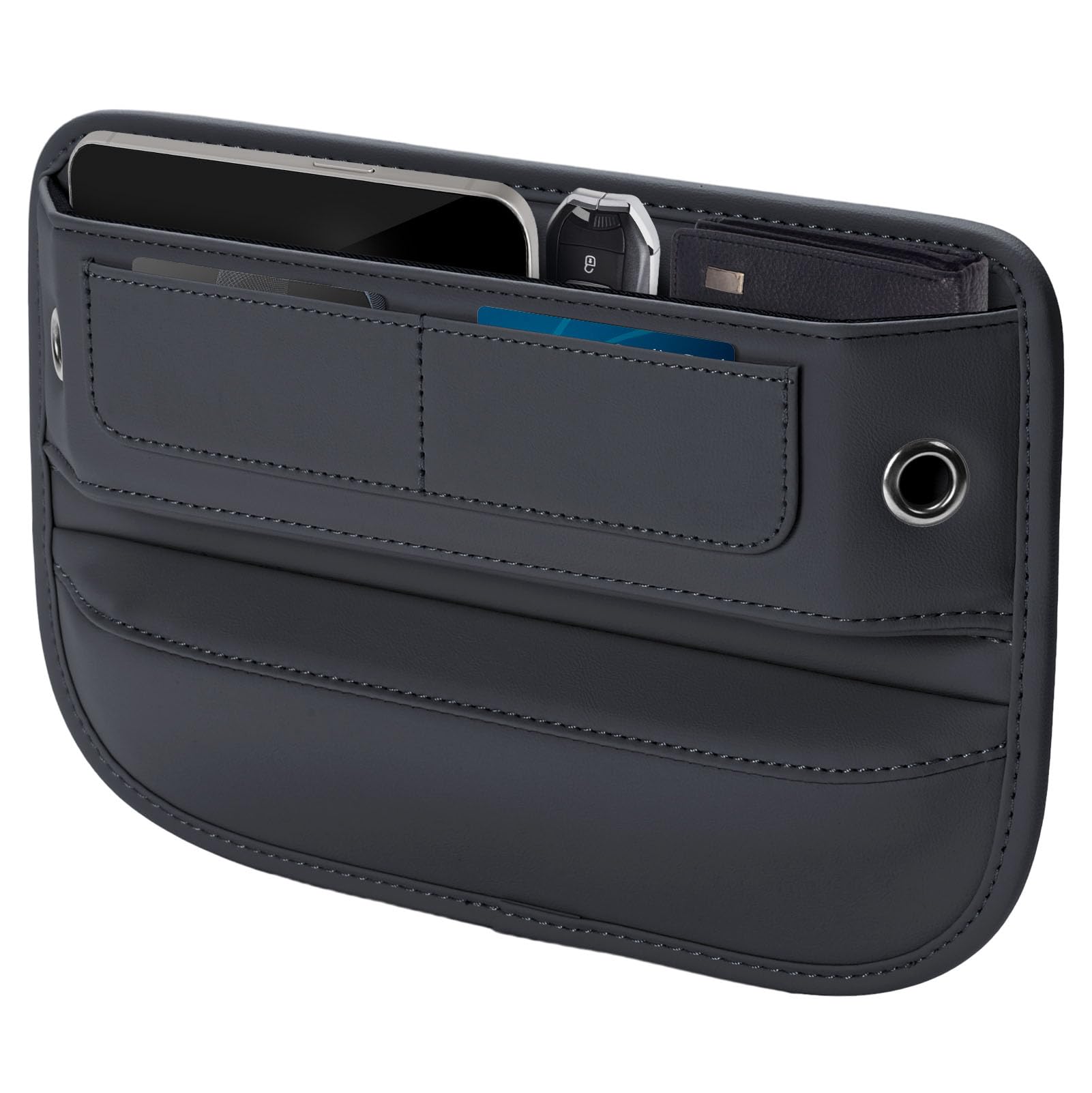
The Owntow Premium Leather Gap Filler elevates the category by combining a gap-blocking function with genuine organized storage. Rather than a simple foam wedge, this unit features meticulously stitched leather construction with integrated card slots and a slim pocket that transforms wasted crevice space into a functional caddy for your phone, keys, or sunglasses. The polished finish and reversible design allow it to complement a wide range of interior trims without looking like an aftermarket add-on.
Designed to fit gaps between 0.2 and 1.2 inches, this filler claims compatibility with 95 percent of vehicles, and real-world installations reported by owners include 2006 Pontiac Solstice, 2021 Lexus NX 300, 2023 Mercedes-Benz EQB 250+, and 2015-2025 Mazda MX-5. The non-slip backing helps keep the unit in place, and the low-profile shape does not interfere with seat belt access or cup holder clearance. The built-in cable management port is a thoughtful touch for those who charge phones while driving.
Several owners note that the material is high-quality PU rather than genuine leather, though the look and feel still represent a clear upgrade over plastic or basic fabric alternatives. A small number of users report that the fit is too tight for their specific vehicle, so measuring your gap beforehand is recommended. The 3-year manufacturer warranty provides above-average peace of mind for a product in this category.
What works
- Premium PU leather with stitched detailing looks upscale
- Card slots and pocket provide real storage utility
- Low-profile design does not interfere with seat belts or cup holders
- 3-year warranty signals confidence in build quality
What doesn’t
- Material is high-quality PU, not genuine leather
- Fit may be too snug for some vehicle models
- Single pack only — one side at a time
3. Edotim Car Seat Gap Filler with Phone Holder

The Edotim two-piece set delivers solid functionality at a very accessible price point, making it a strong contender for budget-conscious buyers who still want useful features. Each filler measures 15.4 by 1.25 inches and is molded from TPE — a flexible, durable material that resists cracking in extreme temperatures and protects seat surfaces from scratches. The design includes an integrated phone slot with a bottom charging hole for neat cable routing, plus an open storage compartment for small items.
Owner reports indicate that the Edotim fits well in vehicles such as the 5th-gen Toyota 4Runner, Subaru Forester Hybrid, and 2024 VW Atlas, though it did not fit a 2021 VW Tiguan — confirming that measuring your gap is essential before purchase. The material feels lightweight yet sturdy, and the smooth finish blends reasonably well with most interior colors. The two-pack format means both driver and passenger sides are covered immediately.
The most common concern among owners is that the filler tends to slide down over time, especially in vehicles with wider or shallower gaps. A few users resorted to double-sided tape to keep it in place, which is a minor workaround. The storage compartment is also relatively shallow, so smaller items like AirPods or coins may fall out during spirited driving. For the price, however, the Edotim offers a practical entry point into the seat gap filler category.
What works
- Affordable two-pack covers both front seats
- TPE material resists temperature extremes and scratching
- Phone slot with cable routing is convenient for daily driving
- Lightweight and easy to install without tools
What doesn’t
- Tends to slide down in wider or shallower gaps
- Storage compartment is shallow — small items can fall out
- Fitment varies; not universal across all vehicle models
4. Berkland Polyurethane Seam Sealer for Automotive

The Berkland Seam Sealer targets a completely different gap — the one between body panels, weld joints, and seams where moisture can enter and cause corrosion over time. This polyurethane compound applies through a standard caulking gun and cures to a flexible, paintable finish that bonds to bare steel, primed surfaces, painted metal, fiberglass, and composite panels. The 10.5-fluid-ounce cartridge provides enough material for targeted panel repairs, door jamb sealing, or spot work on rocker panels and wheel wells.
One of the strongest advantages of this formula is its fast cure time — it can be painted over in just 30 minutes, allowing body work to proceed without an overnight delay. Owners restoring classic British sports cars and sealing shed roofs alike report that the compound stays flexible without cracking or pulling away from the substrate, even after 19 months of exposure. The included gloves and application tip are small touches that improve the user experience.
Some users note that the white color stands out against darker body panels until painted, which is an expected step in any proper body repair workflow. The compound also requires a clean, dry surface for maximum adhesion, so surface preparation cannot be skipped. A few owners mention that it applies more like caulk than traditional seam sealer, curing slightly tougher than expected but still performing well for the price.
What works
- Fast 30-minute cure time allows same-day painting
- Flexible polyurethane resists cracking through temperature changes
- Bonds to bare, primed, and painted metal plus fiberglass
- Waterproof and weather resistant once cured
What doesn’t
- White color requires painting to match darker panels
- Needs clean, dry surface for proper adhesion
- Applies thicker than traditional seam sealer formulas
5. Akfix HT300 High Temp Silicone Sealant – 12-Pack
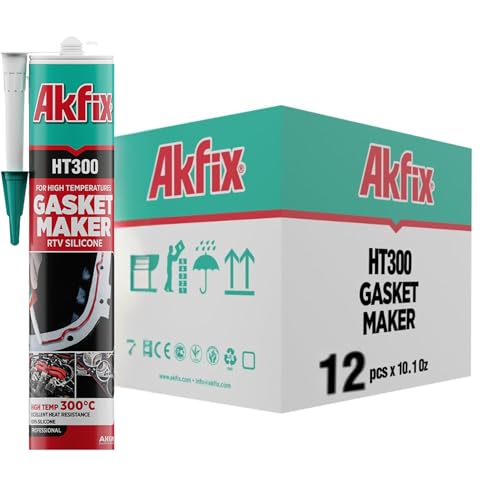
The Akfix HT300 is a high-temperature RTV silicone sealant engineered for applications where standard fillers fail — gasket making, pump housings, motor assemblies, chimneys, and exhaust components that see sustained heat up to 482 degrees Fahrenheit, with temporary tolerance up to 572 degrees. This is not a seat gap filler; it is a professional-grade compound for sealing oil pans, valve covers, timing covers, and other engine bay gaps where heat resistance and chemical stability are non-negotiable.
Owner reports consistently highlight the value of the 12-pack format, which provides enough material for multiple projects without frequent reordering. The silicone remains flexible after curing and resists shrinking, cracking, and becoming brittle — even under hood where temperature swings are extreme. Users repairing oil leaks on Jeeps and other vehicles note that the sealant works best when used alongside metal or rubber gaskets, applied on both sides for maximum sealing integrity.
The one drawback is the dispenser design — first-time users often struggle with opening the tube correctly, and the red silicone stains surfaces and skin on contact, so gloves are essential. The reusable cap allows the tube to remain usable for six months or more after opening, which adds to the overall value. For anyone tackling high-heat sealing projects, the Akfix HT300 delivers professional results without requiring specialized equipment.
What works
- Withstands sustained heat up to 482°F, temporary to 572°F
- Flexible after curing — resists cracking and shrinking
- 12-pack offers excellent per-unit value for multiple jobs
- Reusable cap extends tube life beyond six months
What doesn’t
- Dispenser opening can be tricky for first-time users
- Red silicone stains surfaces and skin permanently
- Slow cure requires patience before reassembly
Hardware & Specs Guide
Neoprene vs TPE vs Leather
Interior seat gap fillers use three primary materials. Neoprene — used by Drop Stop — offers excellent compression recovery and blends into dark interiors, but can be difficult to install in tight gaps. TPE — found in the Edotim set — is lightweight, temperature-resistant, and scratch-free, though it may slide in wider gaps. Premium PU leather — as seen in the Owntow filler — adds storage pockets and a refined look, but fitment is less forgiving and the material is not genuine leather.
Polyurethane vs High-Temp Silicone
For exterior and engine bay sealing, polyurethane compounds like the Berkland Seam Sealer cure fast, bond to multiple substrates, and accept paint within 30 minutes — ideal for body panel work where appearance matters. High-temperature RTV silicone, such as the Akfix HT300, remains flexible up to 482°F and resists oil and chemical degradation, making it the correct choice for gasket making and heat-exposed joints. Choose polyurethane for body seams and silicone for powertrain gaps.
Attachment Methods
Seat gap fillers rely on one of three retention strategies. The most secure is seat belt catch attachment, which keeps the filler anchored as the seat moves. Friction-fit designs rely on tight compression between seat and console but can shift over time. Gravity-based inserts with storage pockets stay in place through weight distribution but may tilt or slide on steeply contoured seats. Matching the attachment method to your seat adjustment frequency prevents repeated reinstallation.
Gap Measurement and Compatibility
Most interior gap fillers accommodate gaps between 0.2 and 1.5 inches, but measuring your specific vehicle gap is critical before purchase. Use a ruler or measuring tape to check the distance at the narrowest and widest points — seats often taper front to back. Vehicles with fixed center consoles offer more predictable fitment, while models with sliding or removable consoles may require a flexible filler that conforms to irregular shapes.
FAQ
What is the difference between a seat gap filler and an automotive seam sealer?
How do I measure the gap in my car before buying a filler?
Can I use a seam sealer for interior gaps or a seat filler for body seams?
Final Thoughts: The Verdict
For most buyers, the best gap filler for car winner is the Drop Stop because it combines universal fitment, secure seat belt catch attachment, and proven durability that outlasts cheaper alternatives. If you want integrated storage and a premium interior look, grab the Owntow Premium Leather Organizer. And for exterior body panel or engine bay sealing, nothing beats the Akfix HT300 for high-temperature reliability.

Certification: BSc in Mechanical Engineering
Education: Mechanical engineer
Lives In: 539 W Commerce St, Dallas, TX 75208, USA
Md Amir is an auto mechanic student and writer with over half a decade of experience in the automotive field. He has worked with top automotive brands such as Lexus, Quantum, and also owns two automotive blogs autocarneed.com and taxiwiz.com.