A cracked fender, a rusted floorboard, or a shattered bumper cover can feel like a death sentence for a vehicle’s body. Fiberglass repair is the only permanent solution for composite panels, but the market is flooded with options that range from water-soluble junk to professional-grade laminating systems. The difference between a repair that fails in six months and one that outlasts the car comes down to resin chemistry, reinforcement compatibility, and hardener precision.
I’m Amir — the founder and writer behind Four Wheel Ask. My approach to evaluating these kits involves cross-referencing technical data sheets with long-term owner feedback to identify which systems deliver genuine structural integrity rather than just a cosmetic cover-up.
Selecting the optimal best fiberglass car body repair kit directly impacts the strength and durability of your automotive repair work.
How To Choose The Best Fiberglass Car Body Repair Kit
Selecting a fiberglass repair kit requires understanding the three resin families — polyester, epoxy, and vinylester — each with distinct mechanical properties, cure characteristics, and compatibility with reinforcement materials. Polyester resin is the most common for automotive body work due to its affordability and sandability, while epoxy offers superior adhesion to difficult substrates and higher moisture resistance. The reinforcement format — chopped strand mat versus woven cloth versus biaxial fabric — determines whether the repair will handle structural loads or merely fill cosmetic gaps.
Resin Type and Hardener Compatibility
Polyester and vinylester resins cure via an exothermic reaction triggered by MEKP catalyst, and the ratio directly controls working time and final hardness. Epoxy resins use a separate amine hardener and require precise volumetric or gravimetric mixing. Kits that include pre-measured hardener eliminate the most common failure point: incorrect catalyst ratio. Owner reports consistently show that repairs fail when users guess the hardener amount rather than measuring by weight or using the included dispensing system.
Reinforcement Material and Layup Strategy
Chopped strand mat (CSM) requires polyester or vinylester resin to dissolve the binder that holds the fibers together — epoxy will not dissolve this binder, resulting in a weak laminate. Woven cloth and biaxial fabrics work with any resin system and provide higher tensile strength per layer. For structural body panel repairs, a minimum of three layers of CSM or two layers of 6-ounce cloth is necessary to restore impact resistance. Kits that supply sufficient mat or cloth for the intended repair size avoid the need for separate material purchases.
Cure Time, Temperature, and Workability
Resin chemistry dictates the temperature window for proper cure. Most polyester resins require ambient temperatures above 60°F for adequate crosslinking, while some epoxy systems can cure in cold or damp conditions. Faster cure times reduce the risk of contamination during the layup process but shorten the window for working the material into complex shapes. The ideal kit for automotive body repair balances a 15-to-20-minute working time with a tack-free cure within 2 to 4 hours, allowing for sanding and finishing on the same day.
Quick Comparison
On smaller screens, swipe sideways to see the full table.
| Model | Category | Best For | Key Spec | Amazon |
|---|---|---|---|---|
| RAPTOR Repair Kit | All-in-One | Complete auto body repairs | Includes resin, hardener, mat, brush, cups | Amazon |
| WEST SYSTEM G/flex 650 | Epoxy | Structural & cold-weather bonding | Toughened epoxy, 7-hour full cure | Amazon |
| Evercoat Body Shop 105006 | Pro-Grade | Professional panel fabrication | Pro-grade polyester, 128 fl oz | Amazon |
| U.S. Chemical 58005 | Marine Kit | Small marine & auto repairs | Quart resin, hardener, spreader, mat | Amazon |
| Bondo 00404 | Polyester | Classic auto & boat restoration | 0.9 gallon, sandable in 2 hours | Amazon |
| TotalBoat Putty | Structural Putty | Filling & bonding gaps | Long-strand fiber, 30-min cure | Amazon |
| TRUE COMPOSITES Resin | Laminating | Marine laminating & auto parts | Grade-A polyester, 1 gallon + MEKP | Amazon |
| FIBERLAM Plus | Laminating | Multi-layer laminating projects | Ortho resin, tack-free in 24-36 hrs | Amazon |
| Polymer World Resin | Polyester | Budget marine & auto repairs | 1 gallon with MEKP, UV-stable | Amazon |
| J-B Weld Fiberglass Resin | Quart Kit | Small gap and crack repairs | 2-hour dry time, waterproof | Amazon |
| SIMPLYHARDWARE CSM Mat | Reinforcement | Reinforcing resin repairs | 50″ x 360″, 1 oz chopped strand mat | Amazon |
In‑Depth Reviews
1. RAPTOR Fiberglass Repair Kit

The RAPTOR Fiberglass Repair Kit delivers a complete system for repairing holes, splits, and cracks in automotive body panels, metal, wood, brick, and hard plastics. This kit includes resin, hardener, an applicator brush, mixing cup and sticks, and a generous amount of fiberglass matting, eliminating the need to source individual components. Owner reports confirm that the system produces durable, weatherproof repairs that retain their shape permanently after curing.
The resin-to-hardener ratio is straightforward, and the included instruction guide walks first-time users through the process without ambiguity. Multiple verified buyers used this kit to repair rusted floorboards, cracked lawn mower hoods, and split plastic body panels, with all reporting strong adhesion and a smooth final surface. The chemical fumes are potent — users consistently emphasize the need for outdoor application or heavy ventilation during the cure phase.
For a mid-premium all-in-one solution that eliminates guesswork, this kit represents the most balanced option for automotive body repair. The included mat is sufficient for several moderate-sized repairs, and the cured material sands and shapes similarly to factory fiberglass. This is the kit to buy when you want one box that covers the entire job without extra trips to the hardware store.
What works
- Complete kit includes everything for a professional repair
- Durable, weatherproof final result
- Clear instructions suitable for beginners
What doesn’t
- Strong fumes require outdoor ventilation
- Limited mat quantity for large structural repairs
2. WEST SYSTEM G/flex 650 Epoxy Kit

The WEST SYSTEM G/flex 650 is a toughened structural epoxy engineered for permanent bonding where movement, vibration, or moisture is present. Unlike rigid polyester resins, G/flex allows controlled flex that improves peel strength and impact resistance — critical for automotive body panels that experience thermal expansion and road vibration. The two-part system bonds fiberglass, metals, ceramics, plastics, and difficult-to-bond woods with reliable adhesion verified by decades of marine and industrial use.
Owner feedback from knife makers, boat builders, and automotive restorers consistently ranks this as the strongest adhesive they have used. The epoxy requires measurement by weight (resin is 1.2 times heavier than hardener) and demands an overnight cure for full strength, but the resulting bond often exceeds the strength of the parent material. One reviewer noted it outperformed 3M DP420 in shear strength testing, and multiple users reported it as the only epoxy that reliably bonds oily hardwoods and wet materials.
This kit is not a quick repair for small cracks — it is a serious structural system for load-bearing repairs where failure is not an option. The honey-like viscosity wets fabric thoroughly, and the 35-minute working time at room temperature is generous enough for complex layups. For a premium-grade epoxy that handles cold, damp, and demanding conditions, this is the definitive choice.
What works
- Exceptional bond strength on difficult substrates
- Flexible formulation resists impact and vibration
- Cures in cold and damp conditions
What doesn’t
- Requires overnight cure for full strength
- Must be measured by weight for accuracy
3. Evercoat Body Shop 105006 Pro-Grade Resin
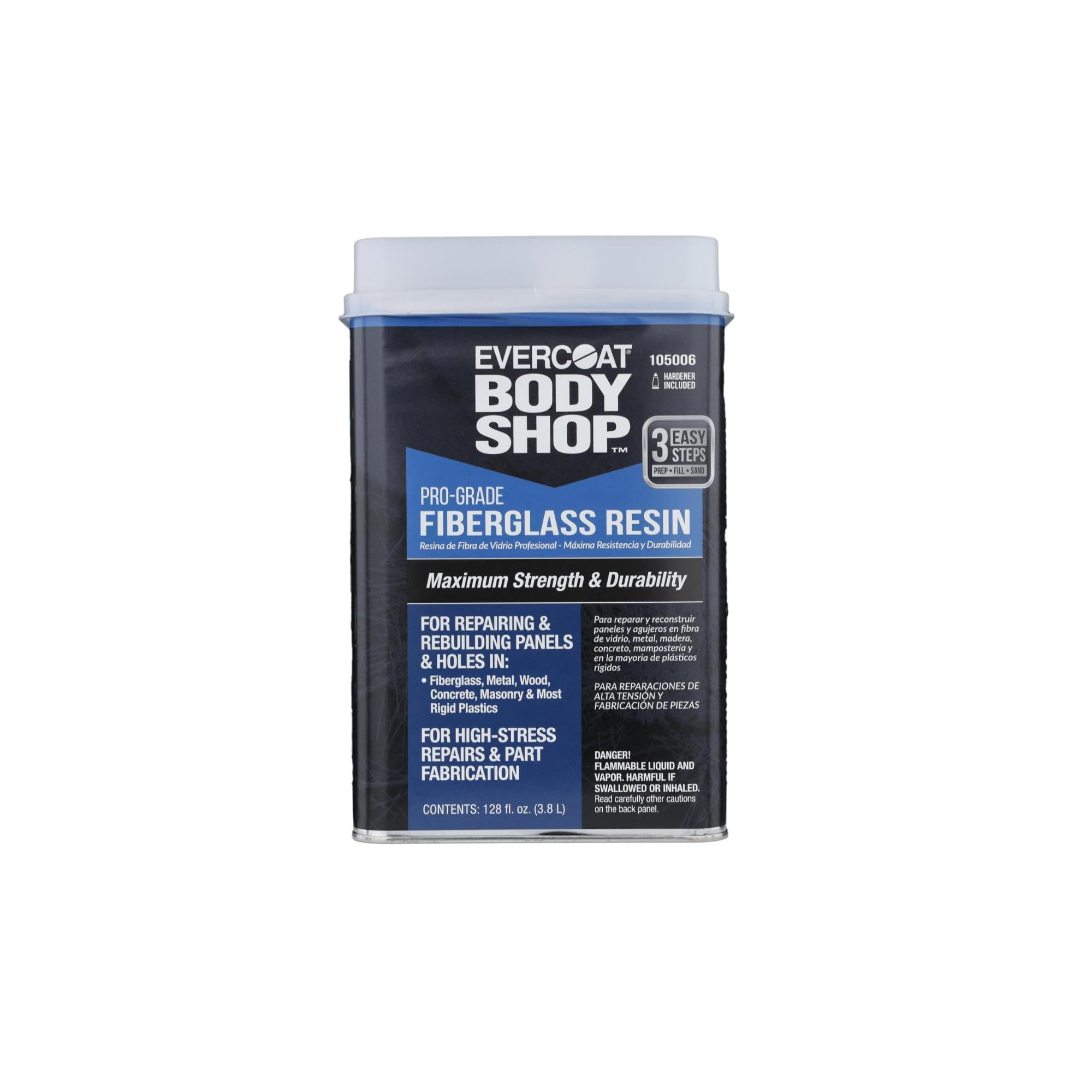
Evercoat Body Shop 105006 is a pro-grade polyester resin formulated for repairing and rebuilding panels, holes, and structural components in fiberglass, metal, wood, concrete, and rigid plastics. This resin wets out mat and cloth quickly without running or sagging on vertical surfaces, a characteristic that professional body shops demand for overhead or upright panel repairs. The included liquid hardener ensures consistent cure ratios, and the cured material can be filed, sanded, or drilled for precision finishing.
Verified purchasers consistently note that this resin performs identically to products found in professional collision centers at a significantly better value than buying quart sizes locally. One reviewer used it for a stringer replacement project and confirmed the cured laminate matched the strength of the original factory layup. The non-tacky surface after cure eliminates the need for wax additives, simplifying the finishing process for clear coats or gelcoats.
The 128-fluid-ounce volume makes this suitable for multiple repairs or larger fabrication projects. While it is a polyester system and lacks the moisture tolerance of epoxy, for dry automotive body work it delivers professional-grade results at a working-class price point. This is the choice for serious DIY enthusiasts who want body-shop outcomes without the body-shop markup.
What works
- Professional-quality wet-out and non-sag formula
- Large 128 oz volume for multiple repairs
- Sands and drills cleanly after cure
What doesn’t
- Polyester resin requires dry conditions for best results
- Strong chemical odor during application
4. U.S. Chemical & Plastics USC-58005 Repair Kit
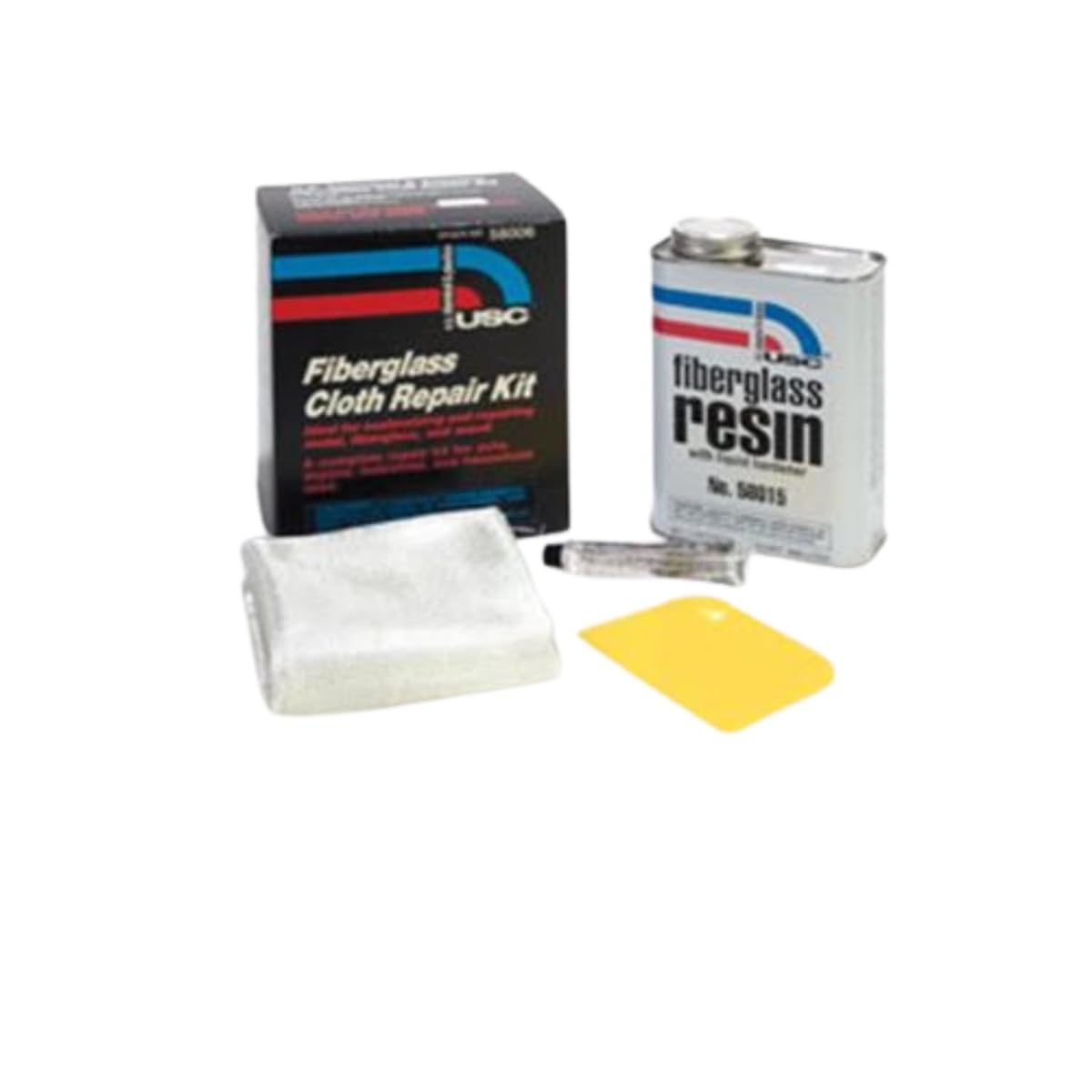
The U.S. Chemical & Plastics USC-58005 is a compact quart-sized repair kit designed for professional marine repair yards and mobile technicians who need quick, off-site repair capability. The kit contains resin, liquid hardener, a spreader, fiberglass mat or cloth, and illustrated instructions, all packaged in a portable footprint. It repairs fiberglass, metal, and wood surfaces, making it versatile for both boat and automotive applications.
Owner reports highlight the kit’s ease of use for small repairs such as lawn mower hoods, automotive body cracks, and marine gelcoat damage. The resin-to-hardener ratio requires precision — approximately 30 parts resin to one part catalyst — and one user noted the working time is only about four minutes before the material becomes too firm to apply. This fast cure is advantageous for experienced users but may challenge beginners who work slowly.
The matted fiberglass included in the kit is suitable for cosmetic and light structural repairs but may not provide sufficient reinforcement for load-bearing automotive panels. Despite the compact size, the kit delivers professional-grade results when instructions are followed precisely. For technicians who need a portable, reliable repair system for small jobs, this kit packs significant capability into a small package.
What works
- Compact and portable for mobile repairs
- Professional-grade resin and hardener
- Clear illustrated instructions
What doesn’t
- Very short working time (about 4 minutes)
- Mat quantity is limited for larger repairs
5. Bondo 00404 Fiberglass Resin
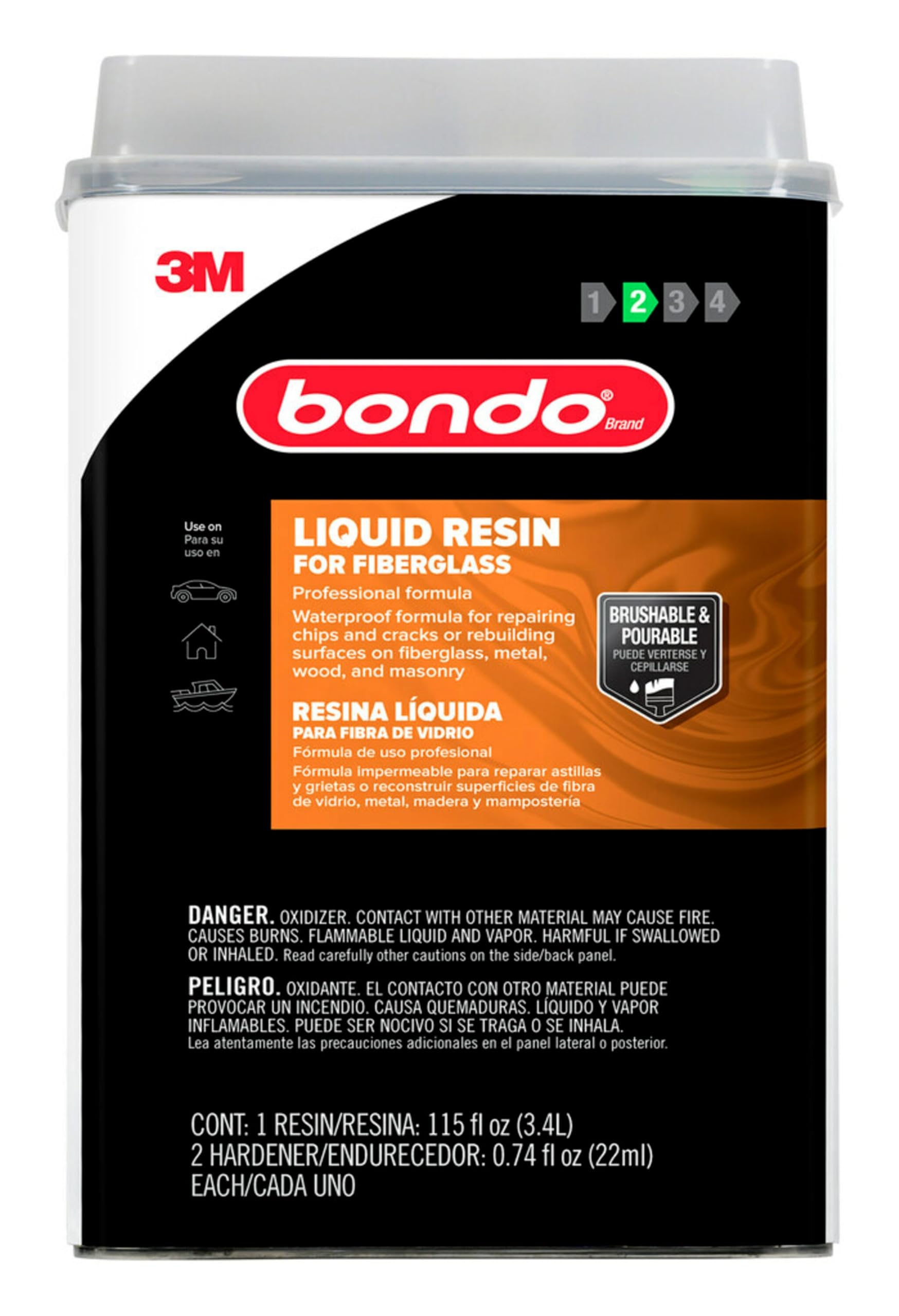
Bondo 00404 is the polyester resin that has anchored automotive and marine repair for decades. The 0.9-gallon can includes liquid hardener for convenient, accurate mixing, and the system creates 100% waterproof repairs on fiberglass, metal, and other surfaces. The resin sands smooth in less than two hours, allowing for same-day finishing — a critical advantage for body shops and DIY restorers working to tight timelines.
Verified buyers have used this resin extensively for sailboat deck repairs, pop-up camper roof restoration, and auto body panel fabrication. One reviewer documented using 5 to 6 gallons with 2-ounce mat for a full sailboat deck rebuild, confirming consistent results across multiple batches. Another user applied it with a foam roller to prewet the surface before laying mat, a technique that produced excellent wet-out and a smooth finish with minimal air entrapment.
The classic Bondo formulation is well-understood by experienced fabricators, and the cure time can be adjusted by varying the hardener ratio within the recommended range. This is not a specialized epoxy system but a workhorse polyester resin that has proven its reliability over millions of repairs. For general automotive fiberglass work where cost-effectiveness and predictable performance matter, this remains a benchmark option.
What works
- Proven polyester formulation trusted for decades
- Fast sandable cure in under 2 hours
- Consistent results across multiple gallons
What doesn’t
- Polyester is toxic and flammable — requires ventilation
- Not suitable for damp or cold application conditions
6. TotalBoat Polyester Structural Repair Putty

TotalBoat Polyester Structural Repair Putty is a pre-thickened, fiber-reinforced polyester putty designed for high-strength structural filling, bonding, bedding, and radius forming. The formulation incorporates long-strand glass fibers that provide impact resistance and elasticity, making it suitable for bonding decks, stringers, and liners to hulls, as well as filling screw holes, bolt holes, chips, and dents. The putty consistency stays in place on vertical surfaces without sagging.
Marine and automotive users report excellent results for filling low spots in fiberglass hulls and repairing missing sections on classic vehicles. One owner used it to fabricate a missing rear wheel well piece on a 1966 Corvette, demonstrating the putty’s ability to match complex contours. The material cures extremely hard and sands smoothly, though some users note that sanding requires more effort than lighter fillers due to the fiber reinforcement.
The included MEKP catalyst allows for adjustable working time — approximately 15 to 20 minutes at 70°F with the recommended 1% mix ratio. This is not a laminating resin but a structural filler that bridges the gap between liquid resin and body filler. For automotive repairs that require gap-filling strength without the need for multiple layers of mat and resin, this putty delivers structural integrity in a single application.
What works
- Non-sag putty stays on vertical surfaces
- Long-strand fibers provide high impact resistance
- Excellent for filling gaps and bonding structures
What doesn’t
- Sanding requires more effort than standard fillers
- Polyester chemistry limits damp-surface application
7. TRUE COMPOSITES Fiberglass Resin

TRUE COMPOSITES offers a Grade-A polyester laminating resin that meets the quality standards of the marine industry while remaining accessible for automotive and general fabrication use. This DCPD-type resin cures tack-free without requiring a surface sealer, simplifying the finishing process for gelcoat or paint application. The kit includes 1 gallon of resin and a 2-ounce bottle of MEKP catalyst, with cure times ranging from 4 to 24 hours depending on temperature and catalyst ratio.
Owner feedback emphasizes the resin’s excellent wet-out characteristics — it penetrates fiberglass mat quickly and laminates smoothly without the air bubbles and premature gelling that plague lower-quality resins. One user who previously struggled with an alternative brand noted that this resin tripled their productivity due to the extended working time and consistent flow. Multiple buyers used it for camper top repairs, speaker box fabrication, and marine stringer replacement with uniformly positive results.
Shipping is non-Prime and takes 4 to 5 days, which is a consideration for time-sensitive projects. The resin performs best when ambient temperatures are above 72°F, and users in cooler climates should allow additional cure time. For a mid-range polyester resin that delivers premium wet-out performance without the premium price tag, this is a well-balanced option for builders who value workability.
What works
- Excellent wet-out and smooth lamination
- Cures tack-free without wax additive
- Extended working time for complex layups
What doesn’t
- Non-Prime shipping takes 4-5 days
- Slower cure in cooler temperatures
8. FIBERLAM Plus 1-10G Polyester Resin
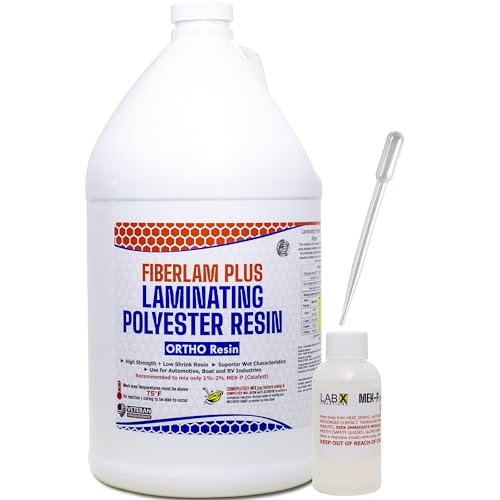
FIBERLAM Plus is an orthothalic polyester laminating resin manufactured in the USA, formulated for marine, automotive, RV, and general FRP applications. This Grade-A resin is designed to stay tacky for an extended period, allowing for multiple layers of reinforcement to be stacked before the surface becomes too firm. Each gallon includes a 2-ounce bottle of MEKP catalyst and pipettes for accurate measurement, removing the guesswork from the mixing process.
Verified buyers report excellent results for boat building, auto body repairs, and structural laminating. The resin wets out fiberglass cloth smoothly and creates a strong, durable laminate that withstands the demands of marine environments. One reviewer documented building an entire boat with this resin and praised its consistent performance and ease of application. The extended tack time is particularly valuable for complex shapes where multiple mat layers must be positioned before curing.
Full cure to a tack-free state requires 24 to 36 hours without wax addition — users who need faster tack-free cure can add wax to reduce that window. The resin is compatible with all fiberglass types and coring materials including expanded PVC, making it suitable for both new construction and repair work. For projects that benefit from extended working time and excellent fiber wet-out, this resin delivers strong value.
What works
- Extended tack time for multi-layer layups
- Excellent fiber wet-out and lamination quality
- Includes MEKP and pipettes for accurate mixing
What doesn’t
- 24-36 hour cure time to tack-free state
- Slower cure at temperatures below 72°F
9. Polymer World Premium Grade Polyester Resin
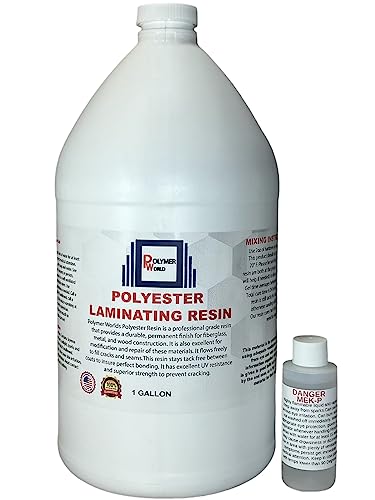
Polymer World’s polyester resin is a general-purpose marine-grade laminating system designed for boats, surfboards, automobiles, motor homes, and bathroom fixtures. The formulation includes UV stabilizers that resist degradation from sunlight exposure, providing long-term protection for outdoor repairs. Each gallon kit includes a 2-fluid-ounce bottle of MEKP catalyst, and the resin is engineered for fast wet-out with spray-up or hand layup application methods.
Owner feedback highlights the resin’s thinner consistency compared to some competitors, which allows for easier saturation of 1708 biaxial cloth and other dense reinforcements. One user documented a complete boat stringer and transom rebuild using this resin, noting that the price was significantly lower than local marine suppliers who charge substantially more per gallon. The cure time is notably slower than some alternatives — one reviewer added extra catalyst and still experienced a delayed set, requiring patience before sanding.
The slower cure can be an advantage for beginners who need more time to position reinforcement layers, but experienced fabricators may prefer faster-setting systems. The resin’s non-sag characteristic on sloping surfaces is a practical benefit for vertical repairs. For budget-conscious builders who prioritize affordability and UV stability over rapid cure speed, this kit provides reliable performance at a compelling price point.
What works
- UV stabilizers protect against sunlight degradation
- Thin consistency wets out dense cloth easily
- Excellent value compared to local marine pricing
What doesn’t
- Slow cure time requires patience
- Strong odor requires heavy ventilation
10. J-B Weld Fiberglass Resin – Quart

J-B Weld Fiberglass Resin is a two-component resin system that provides waterproof, durable repairs for small to large gaps, holes, cracks, and other damage in pools, boats, tubs, showers, and automotive applications. The resin dries in 2 hours and can be used with fiberglass cloth or mat for reinforcement on holes or gaps. It bonds to fiberglass, rigid plastics, metal, concrete, and more, making it a versatile entry point for beginners.
Verified buyers report successful repairs on outdoor decorations, yard structures, and small automotive cracks. One user repaired a 12-foot skeleton decoration after epoxy failed, noting that the resin brushed on easily like thick glue and bonded cloth into an extremely strong shell. Another used it to build a 7-foot lighthouse for their daughter, praising the ease of use and perfect coverage. The quart size is ideal for small to moderate repairs where a full gallon would be excessive.
This is not a high-volume laminating system for structural automotive panels, but for small cracks, holes, and cosmetic repairs it provides reliable performance at a very accessible price point. The 2-hour dry time allows for same-day finishing when working with thin applications. For DIY users who need a simple, waterproof repair solution for occasional fiberglass work, this kit offers a low-commitment entry into resin repair.
What works
- Easy brush-on application like thick glue
- Dries in 2 hours for quick finishing
- Waterproof and durable for outdoor use
What doesn’t
- Quart size is limited for larger repairs
- Not designed for high-stress structural panels
11. SIMPLYHARDWARE Fiberglass Chopped Strand Mat
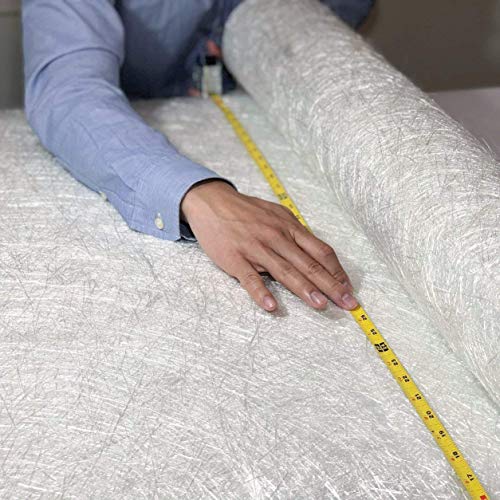
The SIMPLYHARDWARE Fiberglass Chopped Strand Mat provides 50 inches of width by 360 inches (10 yards) of 1-ounce CSM reinforcement, making it the most commonly used composite reinforcement for general fiberglass work. The randomly dispersed fibers provide equal strength in every direction, and the mat conforms to tight curves and corners without bridging. It can be torn or cut to size, allowing for precise fitting to complex repair shapes.
Critical owner feedback reveals that this mat uses a binder that only dissolves in polyester or vinylester resin — epoxy resin will not break down the binder, resulting in a weak laminate with poor fiber-to-resin bonding. Multiple reviewers emphasize this limitation, with one advising users to lay 2 to 3 layers and stipple the resin with a stiff brush or metal roller for optimal saturation. For boat, jetski, and automotive repairs using polyester resin, the mat performs excellently when applied correctly.
Users report consistent thickness and durability, with one photographer even repurposing it as a heat-resistant light modifier. The shedding of fiberglass needles during handling is a noted inconvenience — cutting rather than tearing can reduce loose fibers, and wearing gloves is essential. For anyone building or repairing with polyester resin, this roll provides sufficient material for multiple projects and represents a practical companion to any resin kit in this guide.
What works
- Even strength in all directions ideal for repairs
- Conforms well to curves and complex shapes
- Large 10-yard roll for multiple projects
What doesn’t
- NOT compatible with epoxy resin — polyester only
- Fiberglass needles shed during handling
Hardware & Specs Guide
Polyester Resin Chemistry
Polyester resin is the industry standard for automotive fiberglass repair due to its affordability, fast cure, and excellent sandability. It requires MEKP catalyst to initiate the exothermic curing reaction, and the ratio directly controls working time and final hardness. Orthothalic polyester resins offer good general-purpose performance, while DCPD-type resins provide faster cure and improved surface qualities. Polyester bonds well to cured fiberglass and gelcoat surfaces but has limited adhesion to bare metal and plastics without proper surface preparation. The cured material sands smoothly and accepts paint and gelcoat readily, making it the preferred choice for cosmetic body panel repairs. However, polyester resin is brittle compared to epoxy and may crack under extreme flexing or impact. It also releases styrene fumes during cure, requiring adequate ventilation or respiratory protection. For structural automotive repairs that will experience vibration or thermal cycling, epoxy systems offer superior longevity despite their higher cost.
Epoxy Resin Advantages
Epoxy resin systems consist of a resin and a separate amine hardener that must be mixed in precise ratios, typically measured by volume or weight. Epoxy provides superior adhesion to difficult substrates including metals, ceramics, and oily or damp woods, making it the preferred choice for structural repairs where bond failure is not an option. Unlike polyester, epoxy does not rely on an exothermic reaction to cure — it cures via chemical crosslinking that generates less heat and can proceed at lower temperatures. WEST SYSTEM G/flex represents a toughened epoxy class that incorporates a flexible backbone, allowing the cured material to absorb impact and vibration without cracking. Epoxy also functions as an effective moisture barrier and does not shrink during cure, ensuring dimensional stability in precision repairs. The trade-offs include longer cure times, higher cost, and more complex mixing requirements. Epoxy cannot be used with chopped strand mat that contains polyester binder — woven cloth or biaxial fabric must be used instead. For automotive repairs that bridge different material types or must withstand harsh environments, epoxy delivers unmatched reliability.
Reinforcement Material Selection
Chopped strand mat (CSM) consists of randomly oriented glass fibers held together by a binder that dissolves in polyester or vinylester resin. CSM provides equal strength in all directions and conforms well to complex curves, making it ideal for contour repairs and general laminating. The key limitation is incompatibility with epoxy resin — the binder will not dissolve, preventing proper fiber wet-out and resulting in a weak laminate. Woven cloth and biaxial fabrics use continuous fibers oriented in specific directions, providing higher tensile strength per layer and compatibility with all resin types. Woven cloth is easier to wet out by hand and produces a smoother surface finish, while biaxial fabrics offer superior load-bearing capacity for structural repairs. For automotive body panel repair, a typical layup schedule uses 2 to 3 layers of 1.5-ounce CSM or 2 layers of 6-ounce woven cloth for impact resistance. The fiber weight and orientation should match the loading conditions of the repaired area — stress-bearing panels require more reinforcement than cosmetic patches.
Cure Time and Temperature Management
Resin cure kinetics depend on three variables: catalyst ratio, ambient temperature, and mass of the repair. Polyester resin cure accelerates with higher MEKP concentration, but exceeding the recommended ratio can cause excessive exothermic heat that damages the laminate or creates brittleness. Ambient temperature below 60°F significantly slows polyester cure and may prevent full crosslinking, resulting in a soft or tacky final surface. Warming the resin container in warm water before mixing can improve flow and cure speed in cold conditions. Epoxy systems are less temperature-sensitive but cure slower overall — G/flex requires a minimum of 24 hours at 70°F for full strength development. The mass effect means that thick puddles of resin generate more exothermic heat than thin films, potentially causing overheating in bulk fills. For automotive repairs, the ideal strategy is to use multiple thin layers rather than one thick application, allowing each layer to exotherm safely before adding the next. Surface preparation temperature should match the cure temperature — applying warm resin to a cold panel can cause thermal shock and adhesion failure.
FAQ
What is the difference between polyester resin and epoxy resin for car body repair?
Can I use fiberglass resin on plastic car bumpers?
How many layers of fiberglass mat do I need for a structural car body repair?
Why is my fiberglass repair still sticky after 24 hours?
Can I paint over fiberglass resin after it cures?
Final Thoughts: The Verdict
For most buyers, the best fiberglass car body repair kit winner is the RAPTOR Fiberglass Repair Kit because it provides a complete all-in-one system with resin, hardener, mat, and applicators that eliminates the guesswork and extra sourcing that derails DIY repairs. If you need maximum structural strength for load-bearing panels or harsh-environment repairs, grab the WEST SYSTEM G/flex 650 Epoxy Kit. And for professional fabricators who demand pro-grade performance at a working-class price, nothing beats the Evercoat Body Shop 105006 Pro-Grade Resin.

Certification: BSc in Mechanical Engineering
Education: Mechanical engineer
Lives In: 539 W Commerce St, Dallas, TX 75208, USA
Md Amir is an auto mechanic student and writer with over half a decade of experience in the automotive field. He has worked with top automotive brands such as Lexus, Quantum, and also owns two automotive blogs autocarneed.com and taxiwiz.com.