Your bass hits clean until the voltage dips at the first heavy drop. That dimming headlight is the car telling you the factory electrical system isn’t enough. Adding a dedicated reserve power source separates a mediocre install from a rock-solid system that delivers consistent output even during the most demanding passages.
I’m Amir — the founder and writer behind Four Wheel Ask. I specialize in deep market research and analyzing product specifications, build quality, and owner feedback to identify the most reliable components for demanding audio systems.
When your system demands consistent power and voltage stability, selecting the best extra battery for car audio system ensures your bass hits hard without headlight dimming.
How To Choose The Best Extra Battery For Car Audio System
Adding a second battery is not merely about capacity — it requires matching chemistry, physical size, and electrical integration to your specific amplifier load. Below are the key factors that separate a successful upgrade from a frustrating one.
Chemistry: AGM vs. Deep‑Cycle Lead‑Acid vs. LiFePO4
AGM batteries (like the Goodyear and ACDelco) offer maintenance‑free operation and decent cycle life, but their discharge curve drops more quickly under heavy load. True deep‑cycle lead‑acid (e.g., WEIZE 100Ah) can be discharged deeper without damage, making them ideal for long listening sessions. Lithium iron phosphate (LiFePO4) provides the flattest voltage curve, highest cycle life, and lightest weight — but requires a compatible charger and often a higher upfront investment.
Capacity and Reserve Power
For car audio, reserve capacity (RC) or amp‑hours (Ah) matters more than CCA. A 100‑120Ah deep‑cycle battery can support a moderate 1000W system for hours without recharging. If you run multiple amplifiers, aim for at least 200Ah of total reserve. Remember that you only want to discharge a lead‑acid battery to 50% DoD, so double the usable capacity. LiFePO4 can safely go to 80‑100% DoD, giving you more usable energy from a smaller physical footprint.
Physical Fit and Installation
Group size (31, 34, 35 etc.) dictates physical dimensions. Many auxiliary batteries fit in a separate battery tray or on the firewall. Quad‑post terminals (like the NOCO) simplify parallel connections. Ensure you have proper fusing, a battery isolator (or a voltage‑sensing relay), and adequate gauge wiring to handle the current draw.
Battery Management System (BMS)
Lithium batteries include an internal BMS that protects against over‑charge, over‑discharge, over‑current, and thermal runaway. For lead‑acid AGM, the vehicle’s alternator or an external charger must handle these functions. A high‑quality BMS adds a layer of safety and extends pack life, but it also adds cost — a worthwhile trade‑off for high‑power systems.
Quick Comparison
On smaller screens, swipe sideways to see the full table.
| Model | Category | Best For | Key Spec | Amazon |
|---|---|---|---|---|
| NOCO NLX31 | LiFePO4 Starting/Deep Cycle | Ultimate dual‑purpose reserve | 120Ah, 1600A peak, Group 31 | Amazon |
| ACDelco Gold AUX14‑200 | Auxiliary AGM | OEM‑grade auxiliary replacement | 12Ah, 200 CCA | Amazon |
| Goodyear AUX12‑AGM | Auxiliary AGM | Affordable AGM backup | 12Ah, 200 CCA | Amazon |
| WEIZE 12V 100Ah Deep Cycle | Deep Cycle SLA | Low‑cost high‑capacity reserve | 100Ah, Group 31 | Amazon |
| Dumfume 314Ah LiFePO4 | LiFePO4 Deep Cycle | Massive energy density for audio | 314Ah, 200A BMS | Amazon |
| Yeagulch 2‑Pack 300Ah LiFePO4 | LiFePO4 Deep Cycle (Pair) | Dual‑battery high‑power systems | 2×300Ah, 200A BMS each | Amazon |
| Minye 6.36″ Single Din Car Stereo | Head Unit | Clear display + DSP tuning | 240W DSP, 6.36″ In‑Cell | Amazon |
| Soundstream VRCPAA‑7DRM | Head Unit | Budget CarPlay/Android Auto | 7″ touch, 10‑band EQ, camera input | Amazon |
| CT Sounds CT‑1000.1D | Monoblock Amplifier | Compact 1000W subwoofer amp | 1000W RMS @ 1Ω | Amazon |
In‑Depth Reviews
1. NOCO NLX31
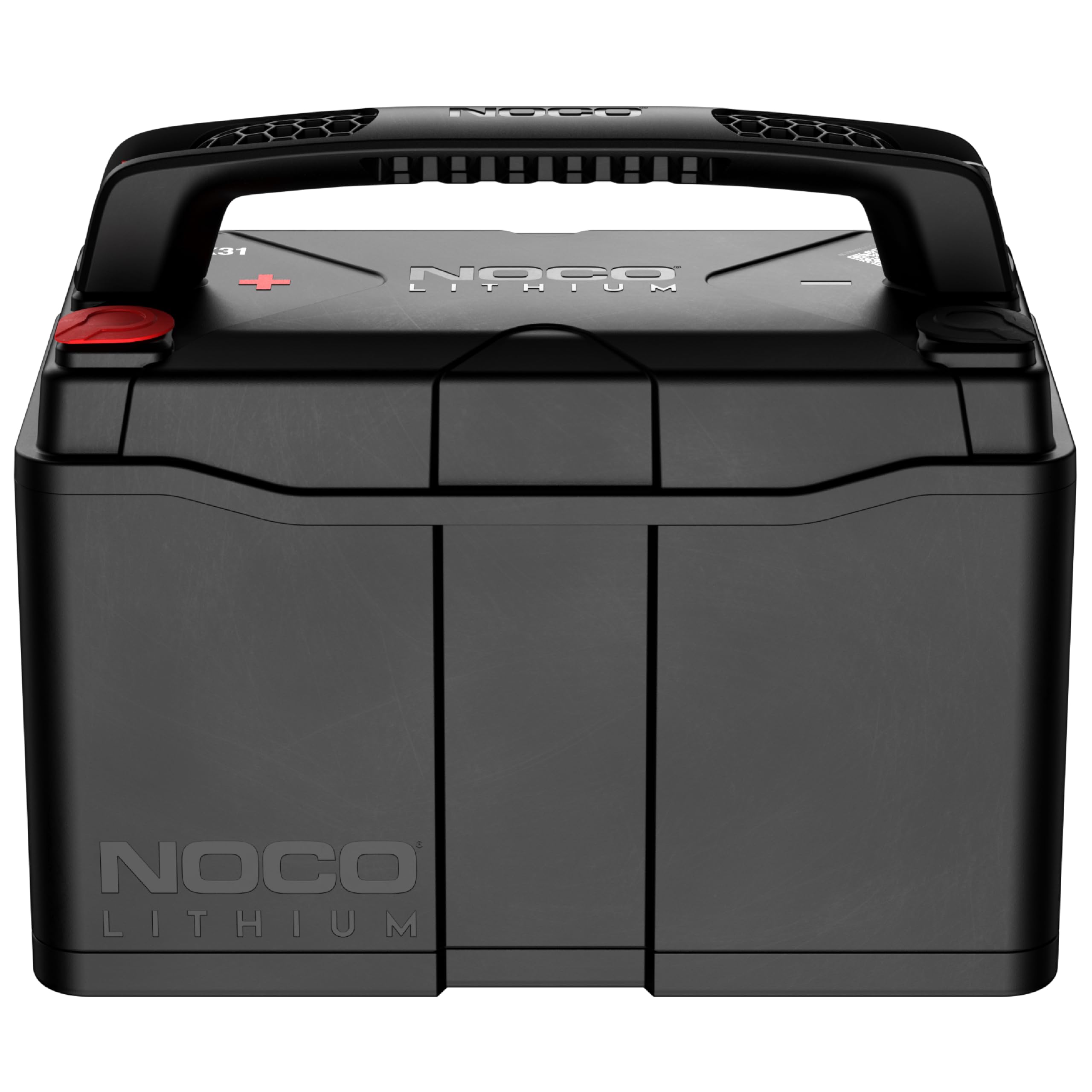
The NOCO NLX31 is a dual‑purpose lithium battery that excels as both a starting battery and a deep‑cycle reserve. With 120Ah of usable capacity and a staggering 1600A peak current, it can handle the draw of high‑power amplifiers while still cranking the engine without hesitation. Owner feedback consistently highlights the instant voltage response — no sag during bass hits — and the ability to run accessories for extended periods without recharging.
Built as a drop‑in Group 31 replacement, it weighs only 37.9 pounds — less than half of an equivalent AGM. The quad‑post terminal system (threaded, SAE, and button head) makes parallel or series wiring straightforward. The internal BMS includes bidirectional cell balancing, active thermal monitoring, and protection against overcharge, overdischarge, and short circuits. Owners report flawless performance even in demanding UTV and truck setups.
The only trade‑off is the premium investment. For a system that demands the highest reliability and longest service life — up to 6,000 cycles at 50% DoD — the NLX31 delivers value over time. It charges fully in about 2.4 hours with a 50A charger, making it practical for daily use. If your audio build calls for a single battery that does everything, this is the benchmark.
What works
- Flat voltage curve under heavy load
- Lightweight, compact Group 31 size
- Fast recharge speed (2.4 hours to full)
What doesn’t
- Requires lithium‑compatible charger for full benefit
- Premium price point per Ah
2. ACDelco Gold AUX14‑200
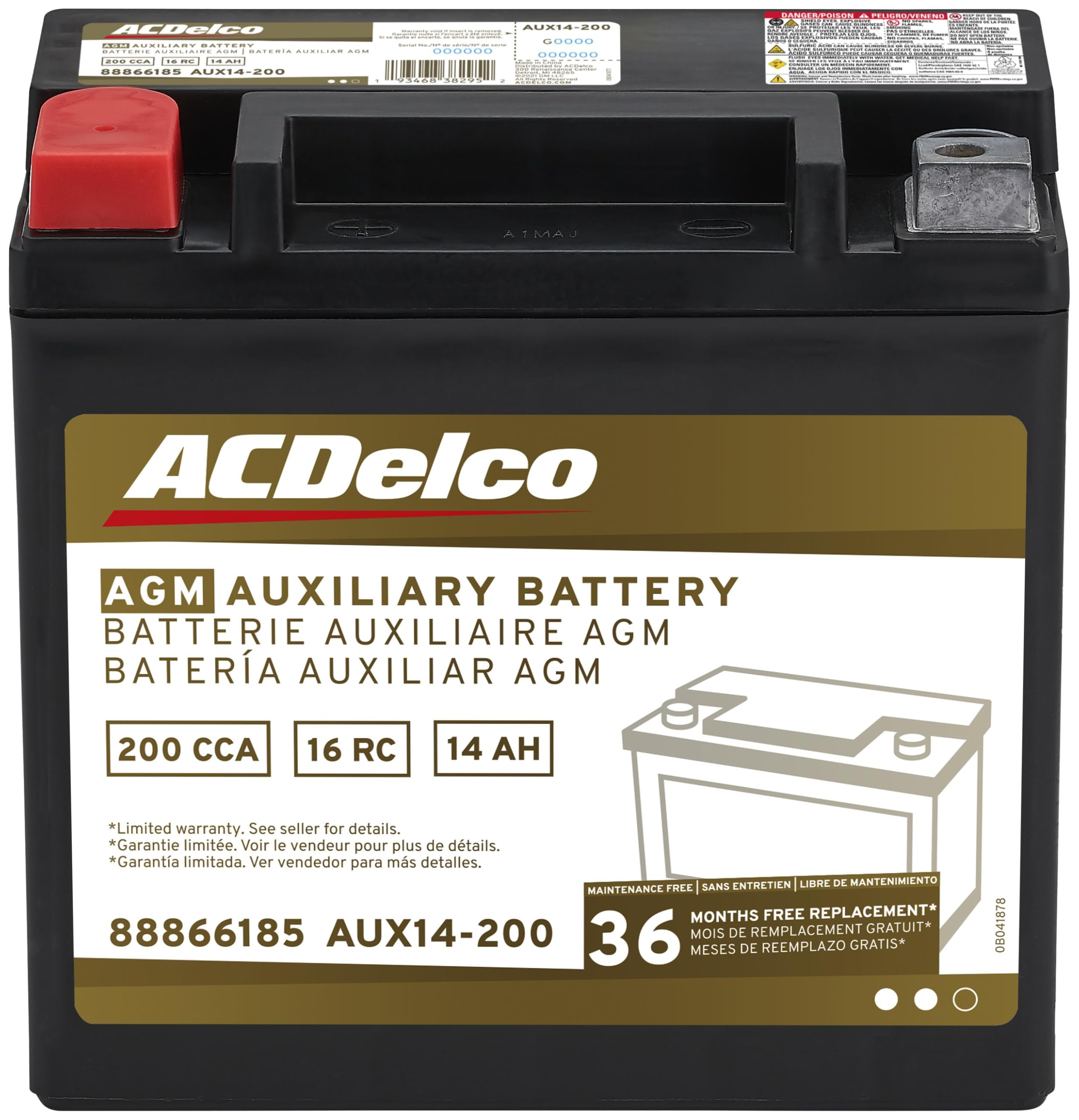
The ACDelco Gold AUX14‑200 is a maintenance‑free AGM auxiliary battery built to OEM specifications. It delivers 200 CCA and 12Ah of capacity in a compact 5.9″ × 3.4″ × 5.7″ package. Originally designed for GM vehicles, it works universally as a secondary battery for audio systems where space is tight. Owner reviews praise its plug‑and‑play compatibility with vehicles that already have an auxiliary battery tray.
AGM technology means no spills, no water checks, and excellent vibration resistance. The leak‑proof pressurized valve system prevents acid damage to terminals, and the high‑density plate oxide provides consistent power delivery. Many users replaced their factory auxiliary battery with this unit and noted improved voltage stability during loud playback. The 36‑month warranty adds peace of mind.
Where it falls short is raw capacity — 12Ah is suitable only for modest systems (under 500W RMS continuous). If you run multiple amplifiers or plan on extended listening sessions, you’ll need a larger battery. Also, some owners reported difficulty claiming the warranty directly through ACDelco. For a simple, reliable auxiliary battery at a fair price, this is a solid choice.
What works
- Perfect OEM‑replacement fit
- No maintenance, spill‑proof
- Strong 200 CCA for starting backup
What doesn’t
- Limited 12Ah capacity for high‑power systems
- Warranty process can be frustrating
3. Goodyear AUX12‑AGM
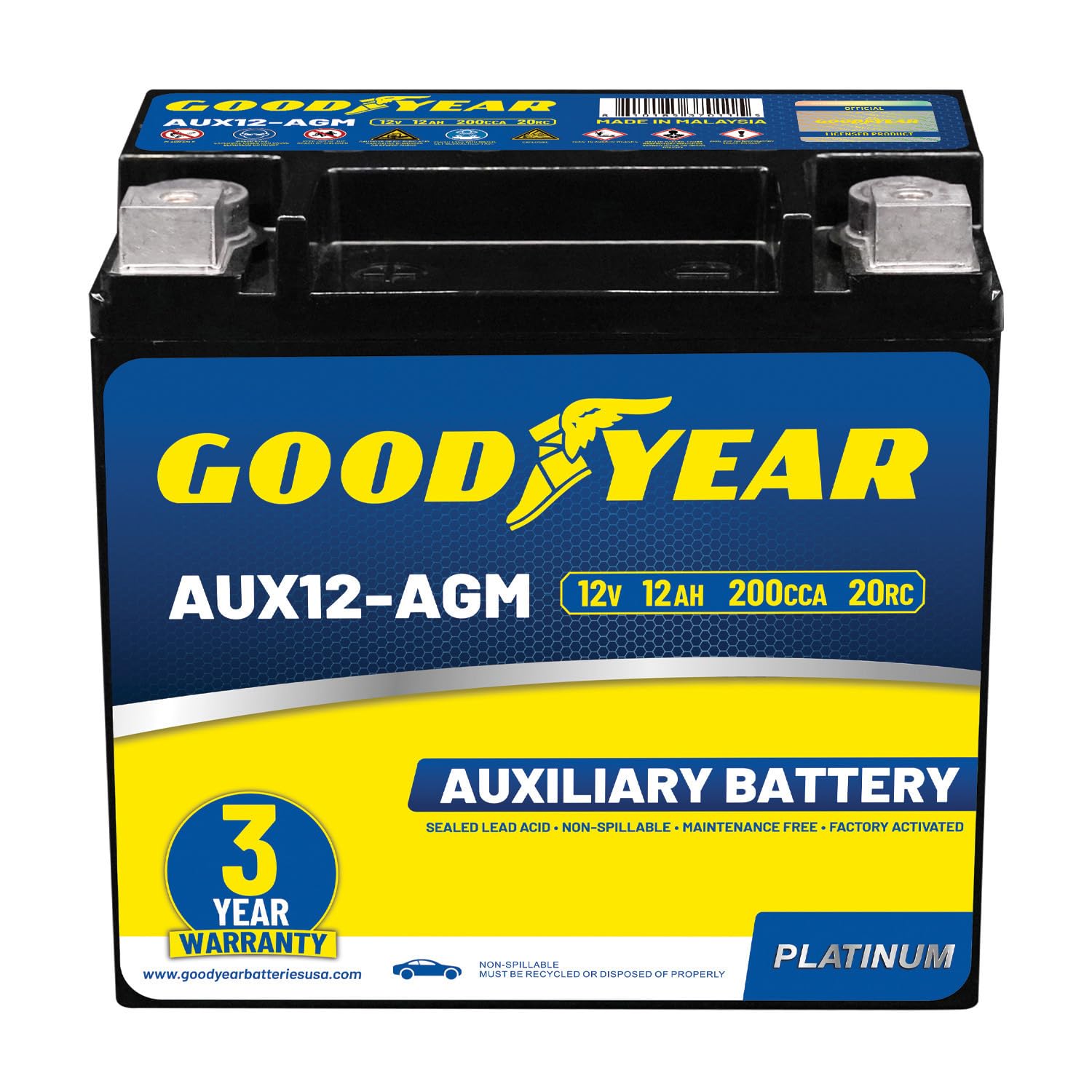
The Goodyear AUX12‑AGM mirrors the ACDelco in specs — 12Ah, 200 CCA, AGM construction — but comes at a lower entry point. It’s a universal fit battery that works as an auxiliary for stop‑start vehicles or as a small reserve for audio. User feedback frequently mentions that it replaced a dead OEM auxiliary battery in Jeeps and Pacificas with no modification required.
Spill‑proof and vibration‑resistant, it can be mounted in multiple positions (except upside down), offering flexibility in tight engine bays. The 36‑month warranty is identical to the ACDelco. Many buyers note that the battery arrived fully charged and held voltage well during installation. For a budget‑minded enthusiast building a simple 2‑ch or single‑sub system, this is a cost‑effective way to stabilize voltage.
The biggest concern reported is a single critical failure where the battery allegedly damaged the vehicle’s electrical system — though that appears to be an isolated incident. Overall, for applications that don’t demand deep cycling, the Goodyear AUX12‑AGM delivers reliable performance. Just ensure your total current draw doesn’t exceed the battery’s recovery rate.
What works
- Excellent value for an AGM auxiliary
- Compact size fits most trays
- Good for stop‑start vehicles
What doesn’t
- 12Ah limits use to low‑power systems
- One report of electrical system damage
4. WEIZE 12V 100Ah Deep Cycle

The WEIZE 12V 100Ah deep cycle battery is a sealed lead‑acid (SLA) unit built for sustained discharge applications like solar, RV, and marine — and it translates perfectly to car audio reserve power. With 100Ah of capacity, it can support a 1000W amplifier for over an hour at full tilt before reaching 50% depth of discharge. The Group 31 footprint is standard, and the heavy 63‑pound weight reflects robust internal plates.
Maintenance‑free and spill‑proof, it can be mounted in any orientation except inverted. The screw terminals accept standard battery lugs, and the low self‑discharge rate (3% per month) makes it suitable for vehicles that sit unused. Owners who use it as a house battery for audio report that voltage stays stable until the battery is nearly exhausted.
The downsides are typical of lead‑acid: weight and cycle life. At 63 pounds, this is not something you want to move frequently. It also can’t be charged as quickly as lithium. But for a stationary secondary battery in a trunk or under the hood, the WEIZE 100Ah offers the most amp‑hours per dollar of any option on this list. If your system draws moderate current and you prioritize budget, this is a strong contender.
What works
- 100Ah capacity at a low price per Ah
- True deep cycle design
- Maintenance‑free and spill‑proof
What doesn’t
- Very heavy (63 lbs)
- Slower recharge rate
5. Dumfume 314Ah LiFePO4
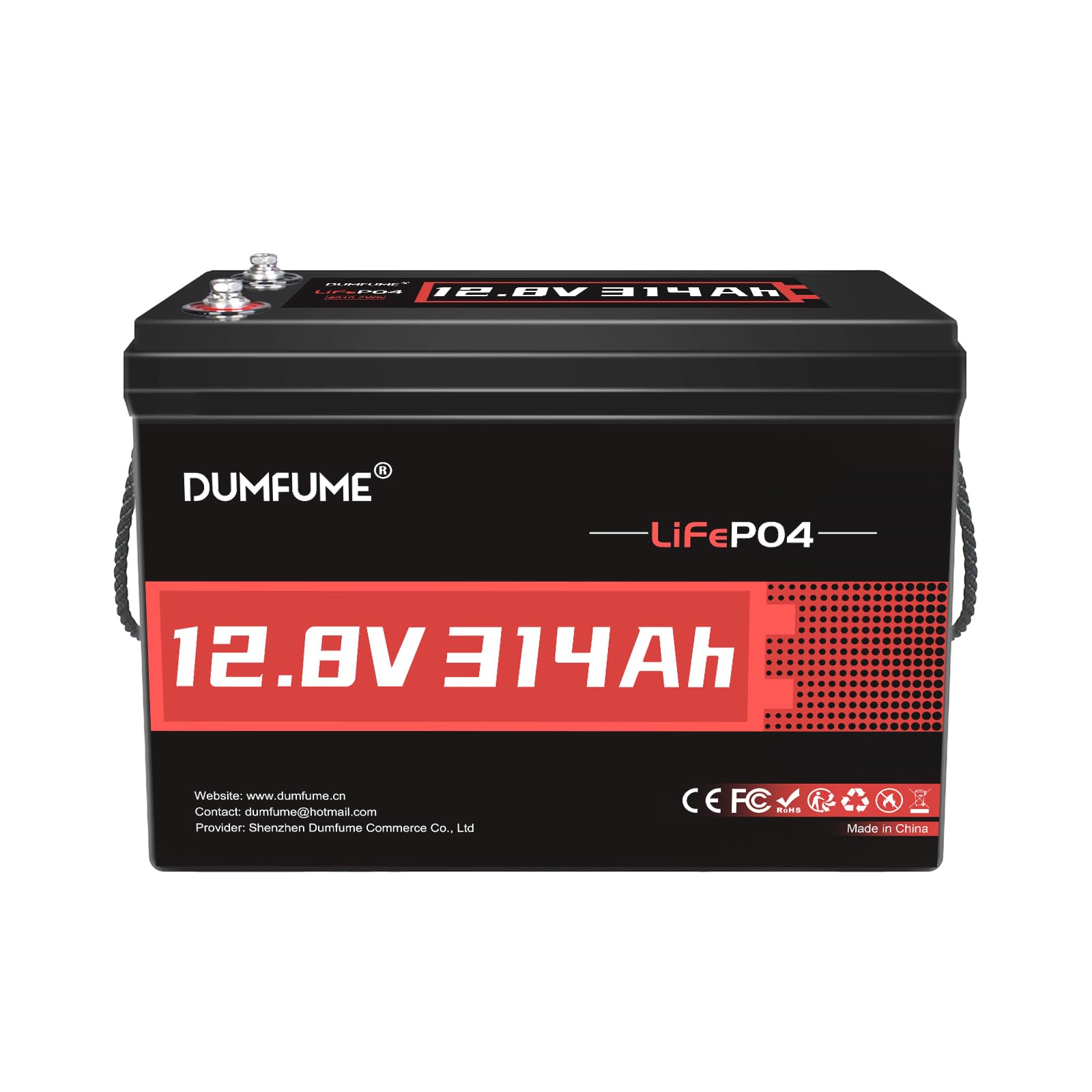
The Dumfume 314Ah LiFePO4 battery delivers nearly 4kWh of usable energy in a package that weighs only 57 pounds — about a third of an equivalent lead‑acid setup. With a built‑in 200A BMS and support for up to 15,000 cycles at 60% DoD, this is a long‑term investment for serious audio enthusiasts who want to run large systems for hours without the engine running.
Lithium iron phosphate chemistry maintains a flat voltage curve above 13V for most of the discharge, meaning your amplifiers see consistent rail voltage until the battery is nearly empty. The BMS handles overcharge, overdischarge, overcurrent, and temperature cut‑off. Users report that the battery exceeds its rated capacity by a few amp‑hours when new.
Potential issues include sensitivity to cold charging — the BMS disables charging below 5°C (41°F), which can be problematic in winter climates. Some units arrived with lower than expected voltage, requiring a full charge cycle. Also, the dimensions are larger than a standard Group 31, so verify your tray space. For a stationary audio power plant, this battery offers unmatched capacity per dollar.
What works
- Massive 314Ah capacity
- Extremely long cycle life
- Flat voltage under load
What doesn’t
- Charging disabled below 5°C
- Large footprint not standard Group 31
6. Yeagulch 2‑Pack 300Ah LiFePO4
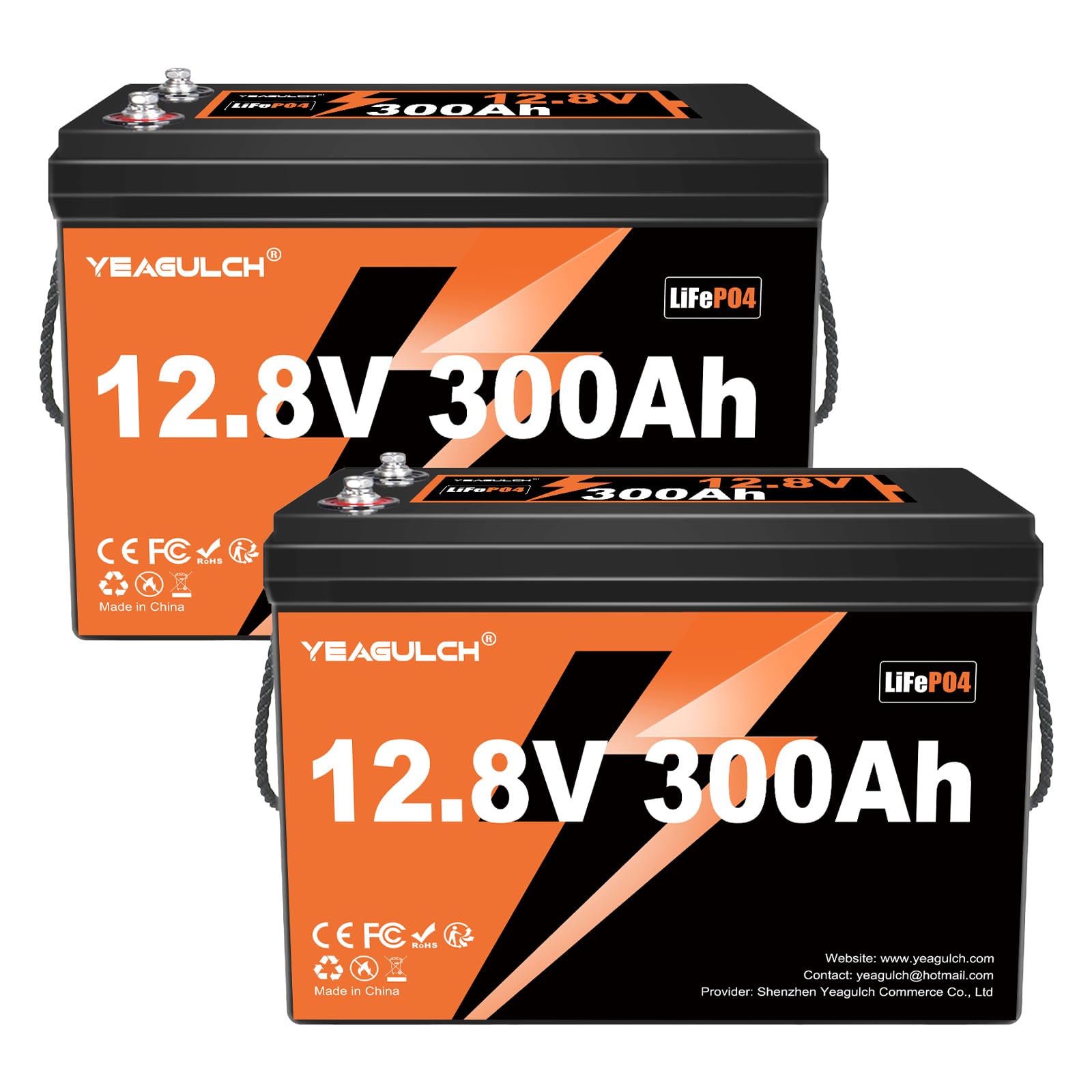
For massive multi‑amplifier systems that need extreme reserve capacity, the Yeagulch 2‑Pack of 300Ah LiFePO4 batteries provides 600Ah total (over 7.6kWh). Each battery includes a 200A BMS, and the pair can be wired in parallel for enormous sustained current delivery. At just 57 pounds each, they are manageable for installation and provide twenty times the cycle life of lead‑acid.
These batteries carry an IP67 waterproof rating, making them suitable for marine or outdoor installations. User feedback highlights excellent packaging and customer service responsiveness. One owner noted that a single unit arrived non‑functional but was replaced quickly. The voltage and capacity seem to meet or exceed advertised specs in most tests.
The primary concern is BMS top‑balancing: one review reported cells drifting after extended use, requiring a manual balance. For audio use where the battery sits in a remote location (trunk, cargo area), a manual top‑balance is inconvenient. Additionally, these batteries are not designed for starting — they are pure deep‑cycle. If you need a combo starting/reserve, look elsewhere. For dedicated audio reserve, this dual pack is hard to beat.
What works
- Massive 600Ah combined capacity
- IP67 waterproof rating
- Great value per Ah
What doesn’t
- BMS can struggle with cell balancing
- Not suitable for starting use
7. Minye 6.36″ Single Din Car Stereo
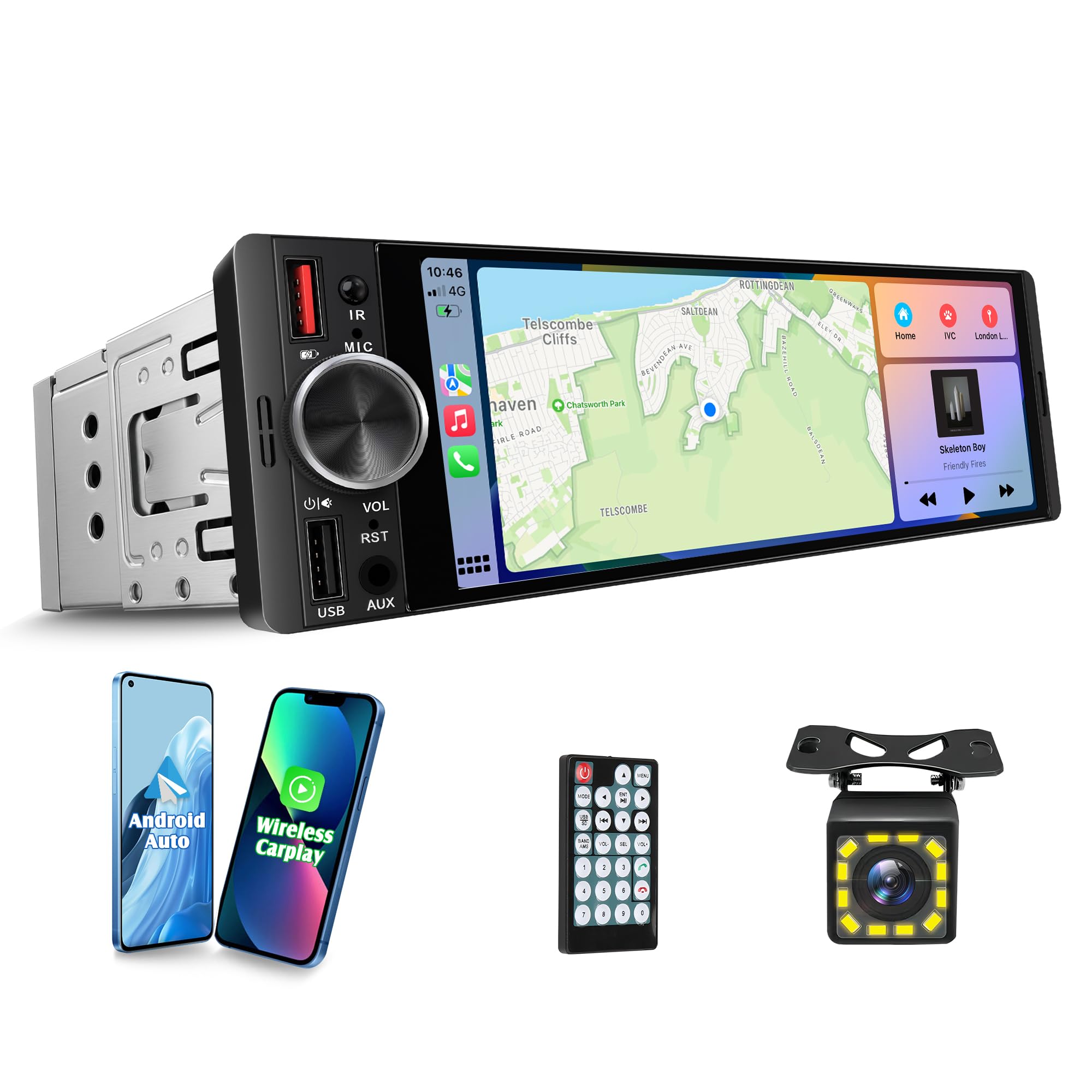
While not a battery, this head unit belongs in a complete system upgrade. The Minye 6.36″ In‑Cell capacitive screen delivers 1280×480 resolution with excellent sunlight readability — a rare trait for single‑din units. Its built‑in 240W DSP with 32‑band EQ gives you fine control over frequency shaping, and the wireless Apple CarPlay/Android Auto is snappy and reliable.
The independent DSP chip processes audio before it reaches your external amplifiers, allowing you to tune out road noise and match speaker characteristics. Users report clear, powerful sound after basic EQ adjustments. The dual Bluetooth 5.3 modules maintain stable connections, and the included 12‑LED backup camera adds safety.
The supplied accessories (harness, camera) feel cheaper than the radio itself, and the camera quality is mediocre. But as a processing and connectivity hub, the Minye stereo offers features found in units costing much more. If you’re rebuilding your entire audio system and need a modern source unit with DSP, this is a worthy addition.
What works
- Excellent daylight visibility
- Powerful built‑in DSP
- Wireless CarPlay/Android Auto
What doesn’t
- Included accessories feel low‑quality
- Backup camera is average
8. Soundstream VRCPAA‑7DRM
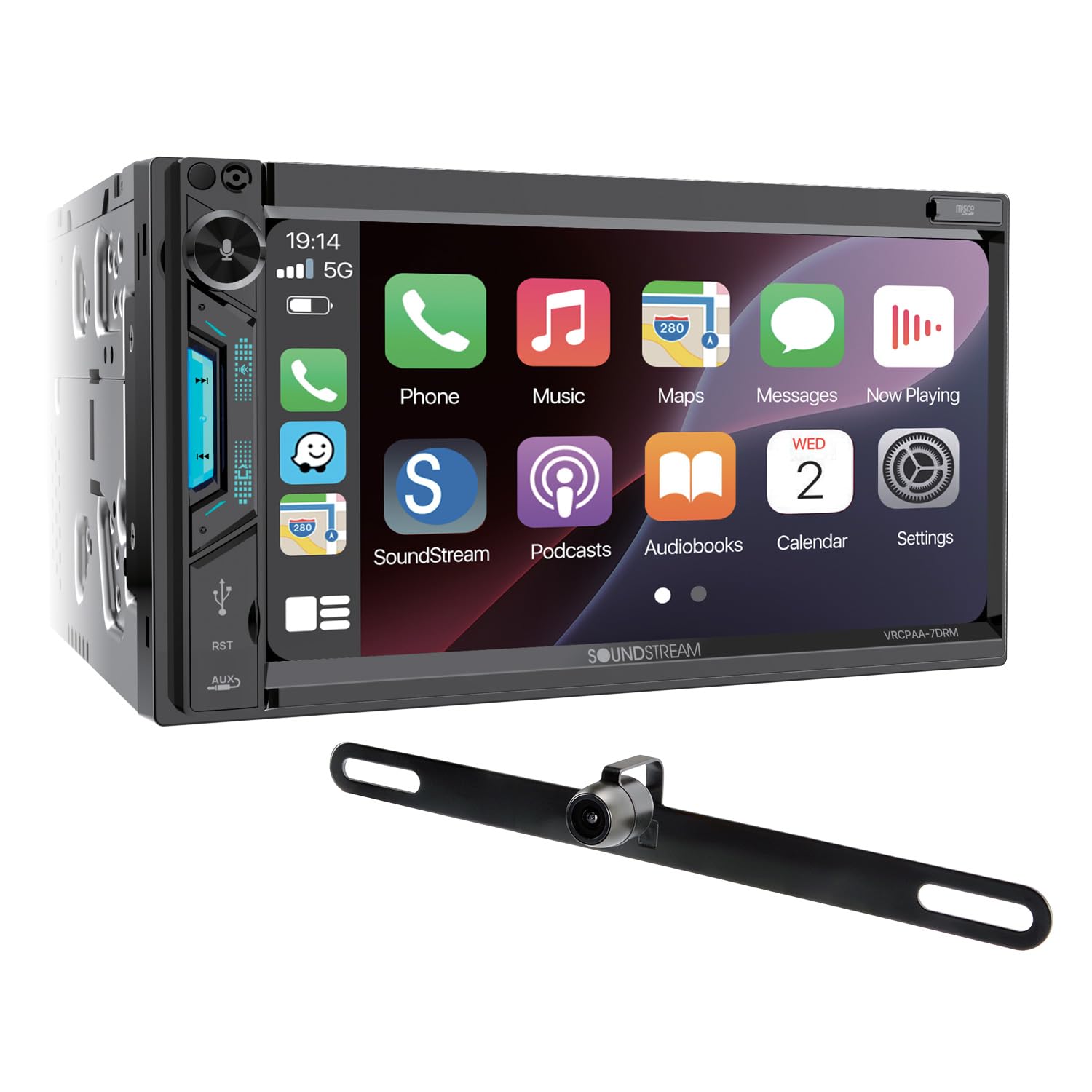
The Soundstream VRCPAA‑7DRM is a budget‑friendly double‑din media receiver with wired Apple CarPlay/Android Auto. The 7″ capacitive screen is responsive, and the mechless design eliminates moving parts for reliability. Audio output includes 4V preouts for front, rear, and sub, plus a 10‑band EQ — enough tuning flexibility for most builds.
Users who have installed multiple units praise its simplicity and compatibility with restoration vehicles. The unit includes a backup camera input (camera not included) and supports USB/microSD playback. Bluetooth streaming and hands‑free calling work well for the price.
The main complaints are longevity: some units develop issues with CarPlay after a few months, and the touchscreen can lag slightly. Also, there is no rear USB port, which makes a clean install more difficult. For a temporary or budget‑conscious build, the Soundstream delivers core functionality, but reliability is not on par with name‑brand units.
What works
- Low cost with CarPlay/Android Auto
- 4V preouts + 10‑band EQ
- Simple mechless design
What doesn’t
- Reliability concerns after a few months
- No rear USB port
9. CT Sounds CT‑1000.1D

The CT Sounds CT‑1000.1D is a compact Class D monoblock amplifier that delivers 1000W RMS at 1 ohm in a chassis barely larger than a hand. Despite its size, it features a MOSFET power supply and proprietary heat sink that keeps temperatures under control even during long listening sessions. The subsonic filter, low‑pass crossover, and bass boost provide tuning flexibility.
Owner reviews overwhelmingly praise the output for the size — many pair it with a single 12″ subwoofer and report tight, punchy bass. Protection circuitry guards against voltage spikes, thermal overload, and short circuits. The bass knob is a welcome inclusion for adjusting on the fly.
Limitations include the lack of a high‑pass filter for midrange drivers (it’s a pure subwoofer amp) and the need for a solid electrical system — this amp will tax a weak battery setup. For a dedicated sub channel, it’s one of the best values in compact 1000W amplifiers.
What works
- Exceptional power density
- Stable thermal performance
- Clean signal with fine adjustments
What doesn’t
- Only for subwoofer duty
- May require electrical upgrade
Hardware & Specs Guide
AGM vs. Deep‑Cycle SLA vs. LiFePO4
AGM batteries (like the Goodyear and ACDelco) are sealed and vibration‑resistant, but they are designed primarily for starting and short bursts. True deep‑cycle SLA (like the WEIZE) can be discharged to 50% repeatedly, offering more usable capacity per dollar. LiFePO4 batteries (NOCO, Dumfume, Yeagulch) have the highest upfront cost but deliver the flattest voltage curve, longest cycle life, and lightest weight. For a car audio reserve battery, LiFePO4 is the technology of choice when budget allows.
Cold Cranking Amps (CCA) Explained
CCA measures a battery’s ability to start an engine in cold conditions. For a dedicated audio reserve battery, CCA is less important than amp‑hours (Ah) because the battery will not be used for starting. However, if you plan to use the same battery for both starting and audio (like the NOCO NLX31), high CCA ensures reliable cranking even with deep discharges. Most auxiliary batteries in this guide offer 200 CCA, which is adequate for secondary starting duty.
Depth of Discharge (DoD) and Cycle Life
DoD refers to how much of a battery’s capacity is used before recharging. Lead‑acid batteries should not be discharged below 50% to avoid damage, effectively halving their rated Ah. LiFePO4 can safely go to 80‑100% DoD, providing more usable energy. Cycle life is the number of charge/discharge cycles a battery can deliver before capacity drops below 80%. LiFePO4 batteries typically offer 4,000‑15,000 cycles, compared to 300‑500 for lead‑acid — making them far more economical over time despite the higher purchase price.
Battery Management System (BMS) Importance
All lithium batteries in this guide include an internal BMS that monitors cell voltage, temperature, and current. The BMS prevents overcharge, overdischarge, and short circuits, and it balances cells to maximize pack life. For AGM and SLA batteries, there is no BMS; you must rely on your vehicle’s charging system or an external charger. When building a multi‑battery setup, always verify that each lithium battery’s BMS can communicate with series/parallel configurations — the NOCO and Dumfume units support this, while some budget packs may not.
FAQ
Do I really need an extra battery for my car audio system?
What size extra battery do I need for a 2000W system?
Can I use a regular car battery as an extra audio battery?
Do I need a battery isolator when adding a second battery?
Final Thoughts: The Verdict
For most buyers, the best extra battery for car audio system winner is the NOCO NLX31 because it combines starting capability with deep‑cycle reserve in a lightweight, drop‑in Group 31 package with a flat voltage curve. If you want to save money and need only a small auxiliary battery, the ACDelco Gold AUX14‑200 is a reliable OEM‑grade pick. And for extreme capacity on a budget, nothing beats the WEIZE 100Ah Deep Cycle for fixed installation where weight isn’t a concern.

Certification: BSc in Mechanical Engineering
Education: Mechanical engineer
Lives In: 539 W Commerce St, Dallas, TX 75208, USA
Md Amir is an auto mechanic student and writer with over half a decade of experience in the automotive field. He has worked with top automotive brands such as Lexus, Quantum, and also owns two automotive blogs autocarneed.com and taxiwiz.com.