An exposed exhaust muffler radiates enough heat to melt wiring, cook nearby hoses, and turn your floorboards into a radiant heater you never asked for. The right heat shield stops that energy where it starts, but choosing one means sorting through material claims, temperature ratings, and mounting approaches that vary wildly between brands.
I’m Amir — the founder and writer behind Four Wheel Ask. My approach centers on studying product specifications, analyzing build quality across different price tiers, and aggregating owner feedback to separate marketing from real-world performance.
Selecting the ideal best exhaust muffler heat shield requires understanding material ratings, coverage area, and how each design handles radiant heat transfer under continuous use.
How To Choose The Best Exhaust Muffler Heat Shield
Selecting the right heat shield involves more than picking a size that looks close enough. Material composition, temperature tolerance, mounting design, and coverage area each play a distinct role in how well the shield performs under sustained exhaust heat. Understanding these factors helps you match the product to your specific exhaust layout and driving conditions.
Material and Build Quality
Heat shields typically use aluminum, titanium-wrapped basalt, or glass-fiber composites with reflective coatings. Aluminum sheets offer good corrosion resistance and are easy to cut and shape, but they rely on an air gap for full effectiveness. Multi-layer designs with titanium or silica fabric provide higher temperature thresholds and better radiant heat rejection without requiring as much clearance. The thickness of the material — measured in mils or millimeters — directly affects how long the shield resists warping and fatigue over repeated heat cycles.
Temperature Resistance and Ratings
Manufacturers publish continuous and intermittent temperature ratings that indicate the upper limits of the material. Continuous ratings of 1000°F to 1800°F cover most automotive exhaust applications, while higher intermittent ratings handle short-duration spikes from high-load driving or turbocharged setups. Choosing a shield rated well above your expected exhaust temperatures adds a safety margin that prevents degradation over time.
Size, Coverage, and Fitment
Measure the diameter of your exhaust pipe or muffler body and the length of the area you need to cover. Flexible strap-on shields work well for cylindrical pipes, while rigid formed shields are better for flat or irregular surfaces like muffler bodies or floor pans. Some shields come as sheets you cut to size, giving you full control over coverage, while others are pre-sized for specific muffler models and offer a cleaner appearance.
Installation Method
Stainless steel zip ties or hose clamps are the most common mounting hardware for wrap-style shields. Peel-and-stick adhesive backing simplifies installation on clean flat surfaces but requires careful surface preparation. Rivet-based bracket systems create a fixed air gap between the shield and the exhaust component, which improves cooling through convection. Consider how much access you have to the exhaust area and whether you will need to remove the shield for future maintenance.
Quick Comparison
On smaller screens, swipe sideways to see the full table.
| Model | Category | Best For | Key Spec | Amazon |
|---|---|---|---|---|
| Heatshield Products 175102 | Rigid Shield | High-heat exhaust pipes | 1/2″ thick, 1800°F continuous | Amazon |
| DEI Titanium Pipe Shield 10451 | Wrap Shield | Wires and hoses near exhaust | 6″ x 2′, silicone-coated glass | Amazon |
| Flowmaster 51013 | Formed Shield | Muffler floor board protection | Lightweight aluminum, stainless clamps | Amazon |
| Flowmaster 51017 | Vehicle Specific | Super 50 Series mufflers | Aluminum, truck/SUV fit | Amazon |
| DEI Floor & Tunnel Shield II | Adhesive Mat | Cabin heat and noise reduction | 21″ x 48″, 7 sq ft coverage | Amazon |
| Second Skin Thermal Block | Peel & Stick | Firewall and under hood areas | 12″ x 24″, 98% radiant reflection | Amazon |
| Racewill Titanium Pipe Shield | Double Layer | Universal pipe heat protection | 6″ x 12″, 1350°F rating | Amazon |
| PLOZANO Titanium Pipe Shield | Wrap Shield | Motorcycle and ATV exhausts | 12″ x 6″, 1350°F, includes gloves | Amazon |
| Peastorm Exhaust Wrap | Aluminum Sheet | General purpose heat shielding | 12″ x 24″, 1/2″ thick, 1000°F | Amazon |
| SINNSIDELIN Aluminum Heat Shield | Sheet Kit | Custom cut applications | 16″ x 39″, 0.5mm thick, 1022°F | Amazon |
| DEGEOBERLIN Titanium Pipe Shield | Flexible Wrap | Small pipes and mufflers | 4″ x 8″, basalt + titanium, 2500°F intermittent | Amazon |
In‑Depth Reviews
1. Heatshield Products 175102 Heatshield Armor

The Heatshield Armor combines a thick 0.003-inch aluminum armor layer with a dense insulation core rated for 1800°F continuous and 2200°F intermittent exposure. This construction targets high-performance applications where exhaust temperatures routinely push past what standard aluminum sheets can handle. The 1/2-inch overall thickness provides a substantial thermal barrier that reduces radiant heat by roughly 70 percent according to the manufacturer, making it suitable for downpipes, DPFs, and turbocharger outlets.
At 1 foot wide by 2 feet long, the sheet covers a meaningful section of exhaust piping and can be trimmed to fit irregular shapes. The reflective silver exterior helps deflect radiant energy, while the insulation layer slows conductive heat transfer to surrounding components. Installation uses the included stainless steel ties and requires only basic hand tools, though the thickness means it bends less easily than thinner wraps around tight-radius curves.
Owner feedback highlights the shield’s ability to noticeably reduce under-hood and under-cabin temperatures on both diesel and gasoline vehicles. Some users note that the rigid construction demands careful measurement before cutting, as mistakes are not easily reversed. For those needing reliable protection in extreme heat zones, this remains one of the most capable sheet-style shields available.
What works
- Exceptional continuous temperature rating handles extreme exhaust environments
- Thick insulation core provides measurable radiant heat reduction
- Cleanable reflective surface maintains performance over time
What doesn’t
- Less flexible than thinner wraps for tight-radius bends
- Requires precise measurement before cutting
- Premium pricing reflects the heavy-duty construction
2. Design Engineering Titanium Pipe Shield 10451

The DEI Titanium Pipe Shield uses a high-temperature braided glass fiber construction coated with 100 percent silicone rubber to create a flexible protective sleeve. Measuring 6 inches wide by 2 feet long, it wraps around exhaust pipes, hoses, and wiring to shield against direct heat up to 500°F. The silicone coating resists fraying and unraveling, which extends the service life in environments with vibration and thermal cycling.
This shield is designed primarily for protecting sensitive components rather than insulating large muffler bodies. It fits tightly around cylindrical surfaces and stays in place with integrated fastening points. The lightweight construction adds minimal mass, which matters in performance and racing applications where every ounce counts. Installation requires no special tools and can be completed in minutes with the pipe accessible.
Users report that the shield effectively prevents heat damage to nearby wiring looms and rubber hoses in tight engine bays. The universal fit works across automotive, marine, and industrial settings, though the 500°F direct heat rating means it is best suited for areas away from the hottest exhaust surfaces. For targeted protection of vulnerable components, this offers a clean and durable solution.
What works
- Silicone coating prevents fraying and adds chemical resistance
- Lightweight and flexible for tight routing areas
- Quick installation with no special tools required
What doesn’t
- Lower direct heat rating limits placement near exhaust manifolds
- Not designed for large flat surfaces or muffler bodies
- Length may be insufficient for long pipe runs
3. Flowmaster 51013 Heat Shield
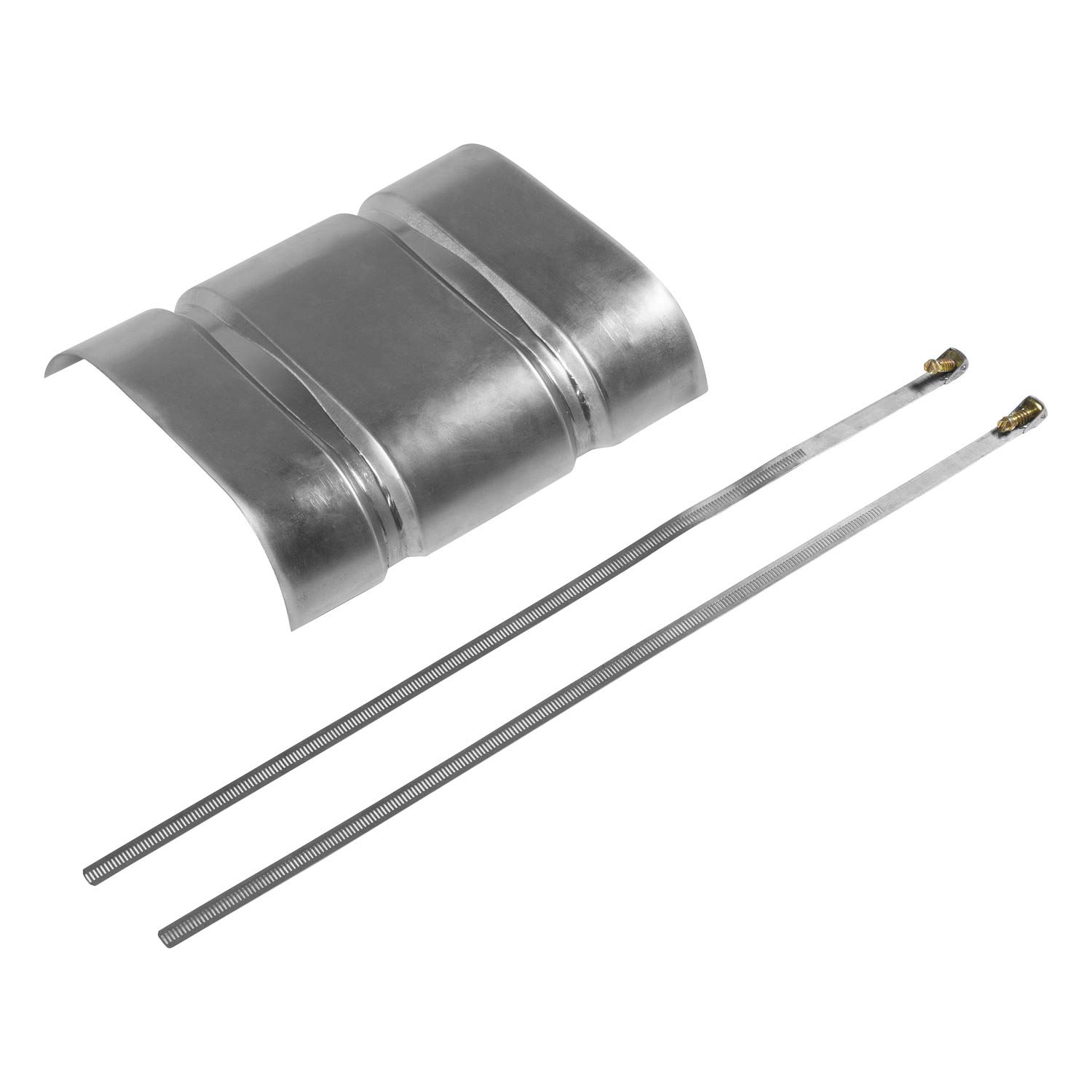
Flowmaster designed the 51013 as a formed aluminum heat shield that attaches directly to the muffler body using integrated stainless steel clamps. The lightweight construction dissipates exhaust heat quickly while adding a layer of protection between the muffler and the vehicle floor board. This design reduces interior noise transmission and prevents radiant heat from soaking into the cabin floor.
The shield measures 20.3 inches by 5.5 inches by 10.5 inches, making it suitable for a range of aftermarket and OEM muffler shapes. The painted exterior resists corrosion, and the pre-formed shape means no cutting or trimming is required for most installations. Mounting hardware is included, and the clamps grip the muffler shell securely without damaging the surface.
Owners appreciate the straightforward bolt-on installation and the noticeable reduction in floorboard temperature during extended drives. The shield works best with Flowmaster mufflers but fits many cylindrical and oval bodies with similar dimensions. Some users note that the pre-formed shape may not align perfectly with every muffler contour, requiring minor bending for optimal contact.
What works
- Pre-formed design installs without cutting or modifications
- Reduces interior noise transmission alongside heat protection
- Corrosion-resistant painted aluminum construction
What doesn’t
- Shape may require bending to match non-Flowmaster mufflers
- Limited to specific muffler size range
- Does not include insulation backing for extreme heat zones
4. Flowmaster 51017 Heat Shield Kit
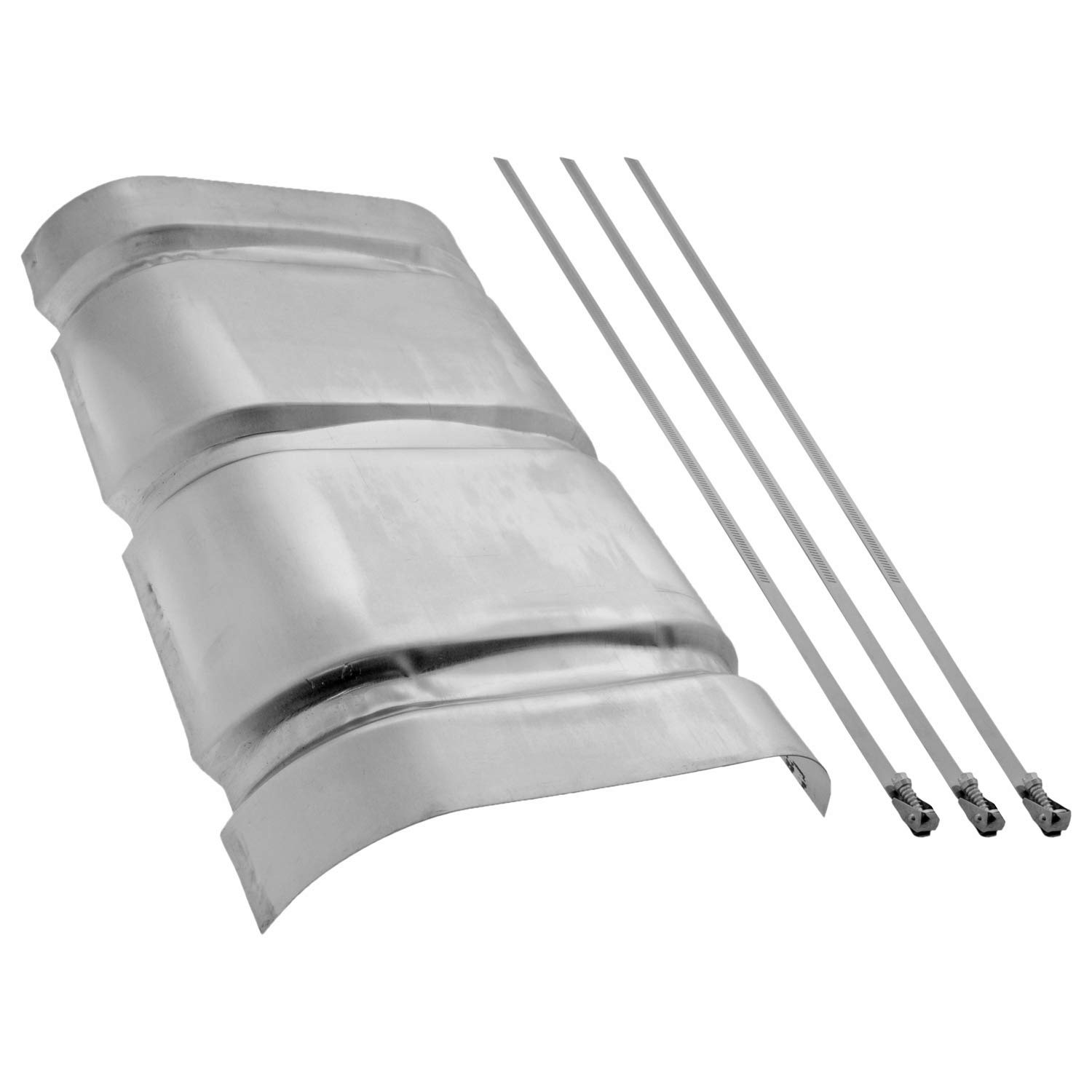
The Flowmaster 51017 is a vehicle-specific heat shield kit engineered for the Super 50 Series and Performance muffler lines. Precision-formed aluminum construction matches the muffler contour exactly, providing full coverage without gaps or overhang. The kit includes stainless steel mounting clamps and all necessary hardware for a direct installation that requires no drilling or modification.
This shield focuses on floor board protection for trucks and SUVs, where exhaust heat can radiate upward into the cabin. The lightweight aluminum material dissipates heat rapidly while adding minimal weight to the exhaust system. The vehicle-specific fit ensures the shield sits at the optimal distance from the muffler surface to allow convective airflow that enhances cooling.
Feedback from owners confirms that the shield installs in minutes using basic hand tools and stays secure over rough terrain and long highway trips. The primary limitation is its incompatibility with mufflers outside the Super 50 Series family. For those running the correct Flowmaster model, this provides a clean OEM-plus solution that looks factory-installed.
What works
- Precision fit for Super 50 Series mufflers eliminates guesswork
- Quick bolt-on installation with included hardware
- Aluminum construction resists corrosion and stays lightweight
What doesn’t
- Only compatible with specific Flowmaster muffler models
- Not suitable for universal or custom exhaust setups
- Limited coverage area compared to larger sheet shields
5. Design Engineering Floor & Tunnel Shield II 50502
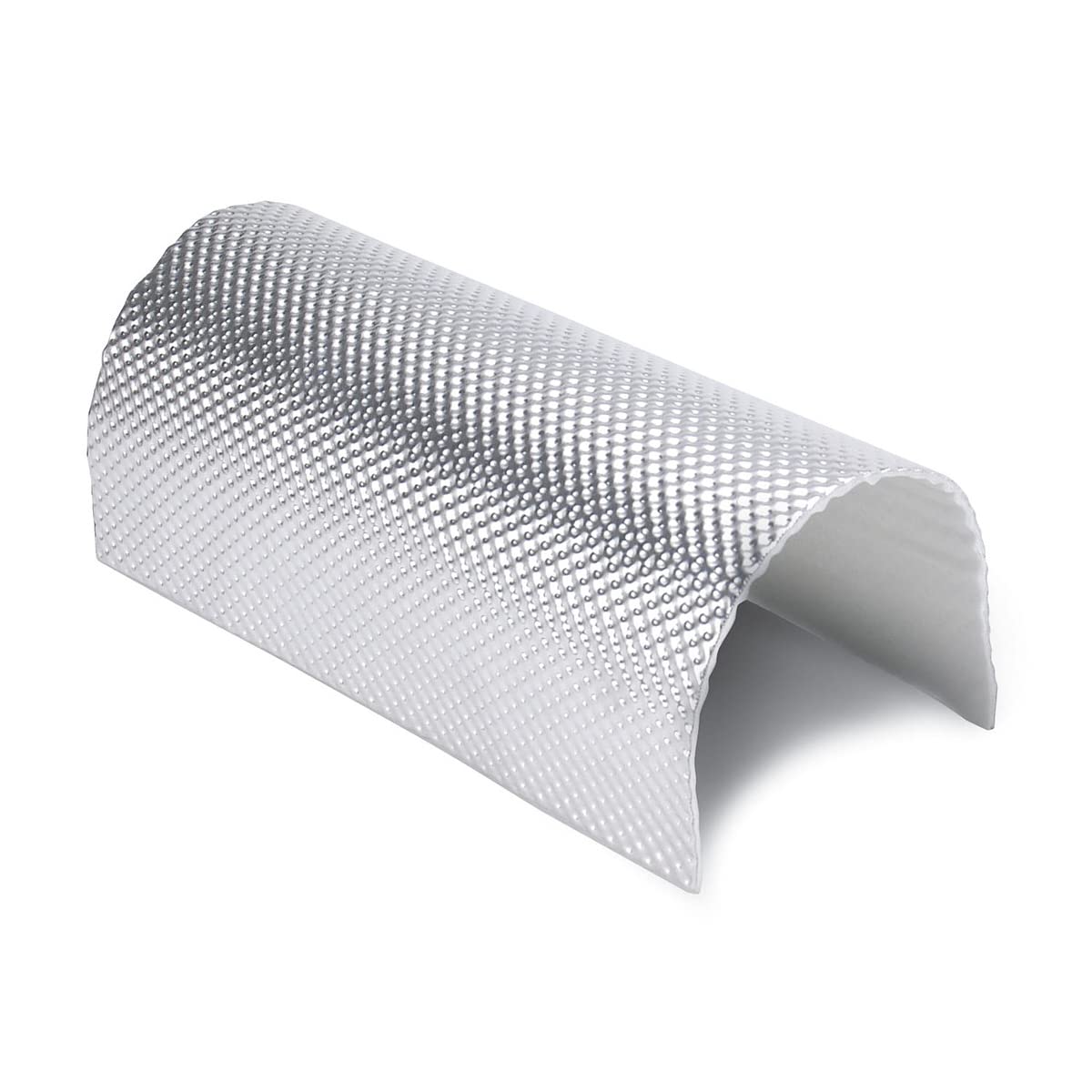
The DEI Floor & Tunnel Shield II is a premium adhesive-backed insulation mat designed to reduce both heat transfer and noise through vehicle floors and transmission tunnels. The 21-inch by 48-inch sheet provides 7 square feet of coverage, enough for the front floor area of most passenger vehicles. A durable aluminum outer layer bonds to a dense sound-deadening core that absorbs vibration and blocks radiant heat simultaneously.
Installation uses the strong pressure-sensitive adhesive backing that conforms to metal, plastic, fiberglass, and other common underbody surfaces. The material cuts easily with a utility knife and molds around curves and contoured panels without cracking. This makes it ideal for automotive restoration projects, race car builds, or daily drivers where cabin comfort is a priority.
Users consistently report lower cabin temperatures and reduced road and exhaust noise after installation. The adhesive holds firmly over time even in warm climates, though surface preparation is critical for long-term bonding. For those tackling both heat and sound issues in one product, this delivers professional-grade results in a DIY-friendly format.
What works
- Combines heat insulation with sound deadening in one sheet
- Large coverage area suits full floor and tunnel applications
- Adhesive backing simplifies installation on multiple surface types
What doesn’t
- Surface must be thoroughly cleaned for adhesive to bond
- Not designed for direct exhaust pipe contact
- Heavier than simple reflective sheets
6. Second Skin Thermal Block Automotive Heat Shield

Second Skin Thermal Block is a 1/8-inch thick self-adhesive heat shield that reflects up to 98 percent of radiant heat using a reflective aluminum foil layer bonded to a PET fiber insulating core. Each sheet measures 12 inches by 24 inches and is rated for continuous exposure up to 800°F. The peel-and-stick design eliminates the need for mechanical fasteners on clean flat surfaces.
The material resists water, oil, solvents, coolant, and flame, making it suitable for under-hood and underbody environments where exposure to automotive fluids is expected. It cuts easily with scissors or a knife and conforms to gentle curves without lifting. For optimal performance, the manufacturer recommends a minimum 2-inch air gap between the shield and the heat source, which limits its use in tight spaces.
Owners report that the shield effectively lowers surface temperatures by 100°F to 200°F when installed correctly on firewalls, hood liners, and floor pans. The Made in USA construction adds confidence in material quality. Some users caution that the adhesive requires a meticulously clean surface for lasting adhesion in high-vibration areas.
What works
- Exceptional radiant heat reflection with 98% efficiency rating
- Peel-and-stick installation saves time on flat surfaces
- Resistant to common automotive fluids and flame
What doesn’t
- Requires 2-inch air gap for best performance
- Adhesive bonding depends on flawless surface prep
- 800°F rating limits use near direct exhaust contact
7. Racewill Titanium Pipe Shield 6″ x 12″

The Racewill Titanium Pipe Shield uses an advanced double-layer construction with an outer titanium material and an inner silica fabric core that provides heat protection up to 1350°F. The 6-inch by 12-inch size fits a wide range of exhaust pipe diameters up to 3.5 inches. A unique rivet-based standoff bracket system creates an air gap between the shield and the pipe, enhancing convective cooling and heat dissipation.
The flexible material can be shaped around almost any pipe contour, and the included stainless steel hose clamps allow for easy repositioning after initial installation. The air gap design is particularly effective at reducing surface temperatures on the outside of the shield, which protects nearby components and reduces burn risk. Installation requires basic hand tools and a wrench to tighten the clamps.
Users highlight the robust build quality and the effectiveness of the standoff design in keeping the shield cool to the touch even after extended operation. The 1350°F rating provides a comfortable safety margin for most street and track applications. A few owners mention that the rivet brackets can be finicky to align on very small diameter pipes.
What works
- Standoff air gap design maximizes cooling through convection
- Double-layer titanium and silica withstands 1350°F
- Flexible enough to conform to various pipe shapes
What doesn’t
- Rivet brackets can be tricky on very small pipes
- Limited to 12-inch length for coverage
- Installation requires attention to bracket alignment
8. PLOZANO Titanium Pipe Shield with Gloves
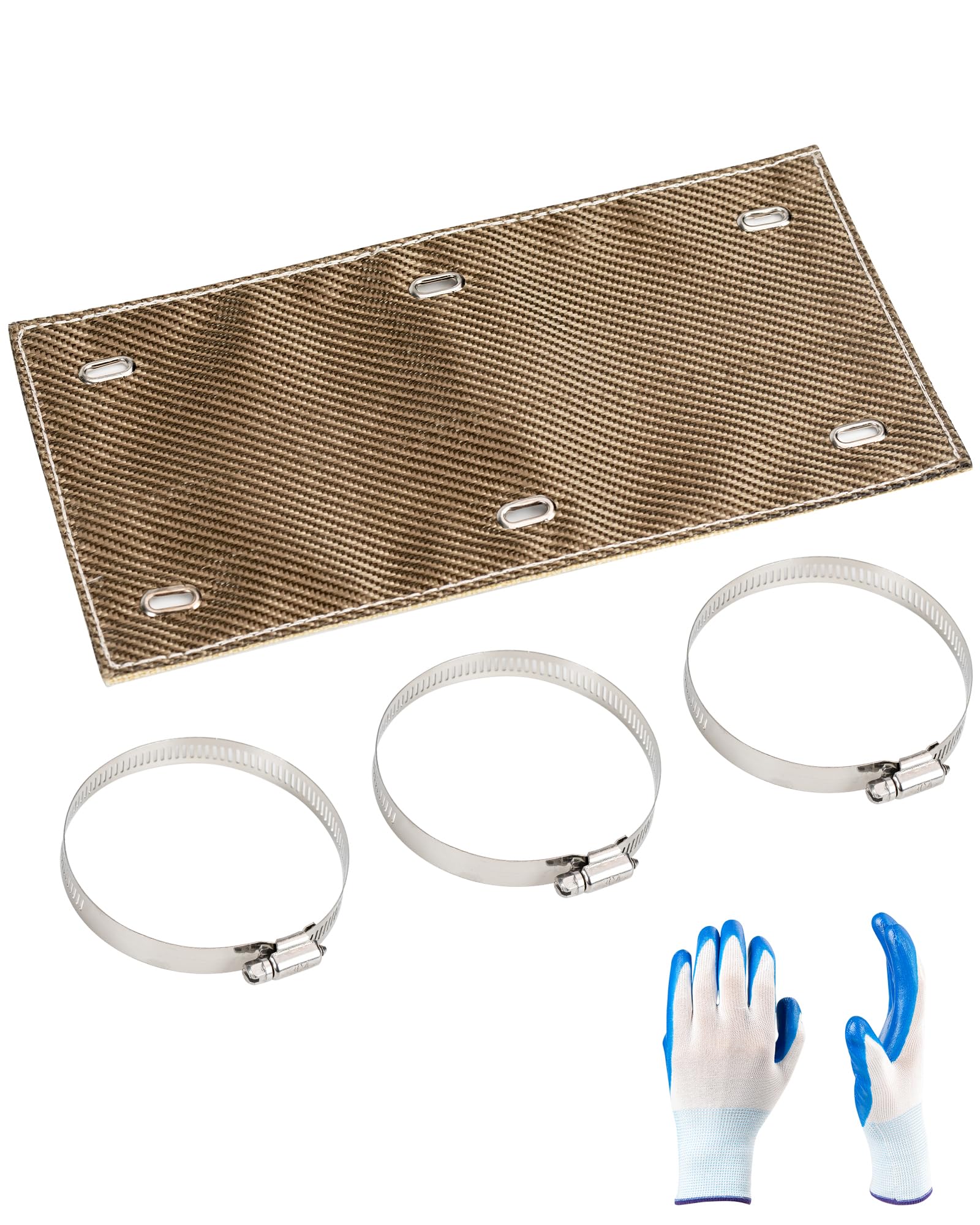
The PLOZANO Titanium Pipe Shield combines a two-layer titanium and silica fabric construction with a thoughtful design that includes protective gloves in the package. The 12-inch by 6-inch shield handles temperatures up to 1350°F and uses directly stamped square holes instead of rivets for the strap attachments, eliminating a common failure point where rivets can tear through the material over time.
The included gloves address a practical concern — handling titanium and silica materials can irritate skin, and the gloves make installation more comfortable. Stainless steel adjustable ties secure the shield around pipes up to 3.5 inches in diameter, and the gap between the shield and the tie improves heat dissipation. The shield also protects the exhaust pipe from moisture and rust while solving contact issues between the exhaust and the rider’s leg on motorcycles.
Owner feedback emphasizes the value of the stamped hole design, which holds up better than rivet-based attachments under vibration and thermal cycling. The shield installs quickly by bending it to the pipe shape and tightening the straps with a wrench. Some users note that the 6-inch width may be narrow for larger muffler bodies, but it works well for standard exhaust pipes.
What works
- Stamped square holes resist tearing better than rivet attachments
- Includes gloves for safe and comfortable installation
- Stainless steel ties stay secure once tightened
What doesn’t
- 6-inch width may not cover larger muffler surfaces
- Limited to pipe diameters within 3.5 inches
- Design focused more on motorcycles than automotive use
9. Peastorm Exhaust Wrap Heat Shield 12″ x 24″

The Peastorm Exhaust Wrap uses a heavy-duty embossed aluminum outer layer bonded to a heat-resistant glass fiber core, creating a 1/2-inch thick insulating sheet that withstands continuous temperatures up to 1000°F. The 12-inch by 24-inch size provides 2 square feet of coverage that can be cut to fit mufflers, chassis sections, fuel tanks, engine compartments, and intake areas.
The 10 mil aluminum outer layer reflects radiant heat while the glass fiber core absorbs and slows conducted heat. The material cuts easily with scissors or a utility knife and bends around contours without cracking. The kit includes two 39-inch stainless steel ties for mounting, though the sheet can also be secured with additional fasteners for larger installations.
Owners report that the shield provides noticeably cooler surface temperatures on mufflers and exhaust pipes compared to bare metal. The embossed aluminum surface resists corrosion and cleans up well if needed. Some users mention that the glass fiber core can shed small fibers during cutting, so wearing gloves and a dust mask during installation is recommended.
What works
- Generous 12″ x 24″ coverage at a competitive price
- Embossed aluminum reflects radiant heat effectively
- Easy to cut and shape for custom applications
What doesn’t
- Glass fiber core can shed irritating fibers during cutting
- Only includes two ties for mounting
- 1000°F rating adequate but not extreme-duty
10. SINNSIDELIN Exhaust Heat Shield Kit 16″ x 39″

The SINNSIDELIN Heat Shield kit provides a large 16-inch by 39-inch embossed aluminum sheet with 0.5mm thickness and a continuous heat rating of 1022°F. The generous dimensions make it one of the most cost-effective options for covering long exhaust sections, large muffler bodies, or multiple components in a single installation. The kit includes 20 stainless steel metal ties — 12 inches long each — giving you plenty of fastening points for secure mounting.
The aluminum material is flexible enough to bend around curves and hammer into custom shapes, yet stiff enough to hold its form once installed. It works well for motorcycle mufflers, car undercarriages, fuel tank insulation, heavy-duty industrial piping, and firewalls. Cutting to size requires basic sheet metal snips or heavy scissors, and the material does not fray or shed fibers like some fabric-based shields.
Users appreciate the large coverage area and the abundance of included ties, which allow for thorough fastening across the entire sheet. The sharp edges of the cut aluminum require careful handling during installation — gloves are recommended. Some owners note that the 0.5mm thickness is adequate for most applications but may deform under direct impact from road debris.
What works
- Very large sheet covers extensive exhaust sections in one piece
- 20 stainless steel ties provide ample mounting points
- Flexible and easy to cut for custom shapes
What doesn’t
- Sharp edges require careful handling during installation
- 0.5mm thickness vulnerable to impact damage
- No insulation core — relies on reflection and air gap only
11. DEGEOBERLIN Titanium Pipe Heat Shield 4″ x 8″
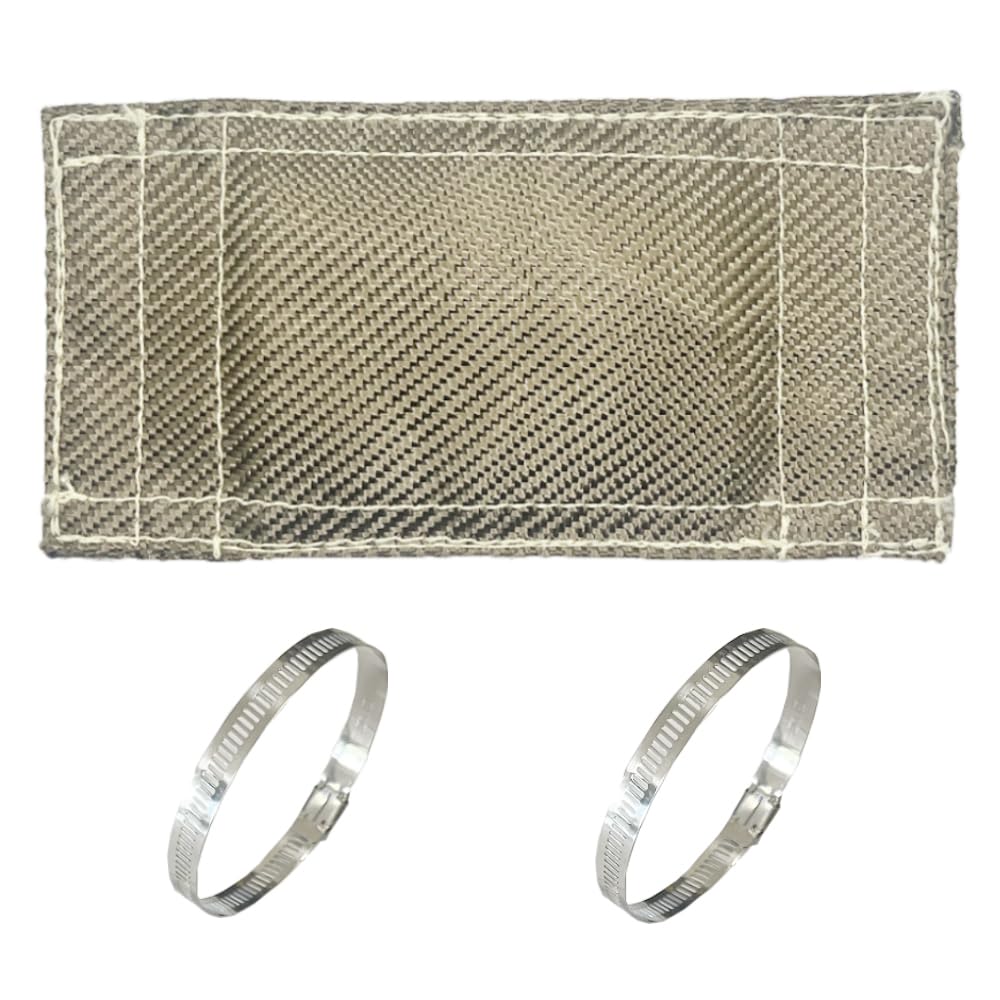
The DEGEOBERLIN Titanium Pipe Heat Shield uses a two-layer construction with an outer titanium material and an inner basalt fiber core that achieves an impressive 2500°F intermittent temperature rating. The 4-inch by 8-inch size targets smaller exhaust pipes, muffler sections, and motorcycle headers where space is limited. The basalt fiber inner layer provides excellent thermal insulation and corrosion resistance while remaining flexible enough to wrap around tight curves.
The shield secures with two stainless steel clamps that fit pipe diameters up to 3.5 inches and can be adjusted for tension. Installation requires only a spanner or wrench, and the shield can be easily repositioned if needed. The compact size makes it ideal for spot-protecting specific hot zones rather than covering entire exhaust runs.
Owner feedback notes that the intermittent 2500°F rating gives peace of mind for high-performance applications where temperature spikes can exceed what standard shields handle. The compact footprint limits coverage area, but for targeted protection of sensitive components in tight spaces, this shield delivers exceptional heat resistance in a small package. Some users mention that smaller pipes may require trimming the clamp length for a cleaner installation.
What works
- Exceptional 2500°F intermittent temperature rating
- Compact size ideal for tight spaces and small pipes
- Basalt fiber core resists corrosion and insulates well
What doesn’t
- Small 4″ x 8″ size limits coverage area
- Clamps may need trimming for very small diameters
- Not suitable for large muffler or flat surface applications
Hardware & Specs Guide
Aluminum vs. Composite Materials
Aluminum heat shields rely on reflective surfaces to bounce radiant heat away from components. They are lightweight, corrosion-resistant, and easy to cut, but they work best with an air gap behind the shield to prevent conductive heat transfer. Composite shields using titanium, basalt, or silica fabric layers provide higher temperature thresholds and better insulation without requiring as much clearance, making them suitable for tight engine bays where airflow is limited.
Understanding Temperature Ratings
Continuous temperature ratings indicate the maximum sustained heat the material can endure without degradation. Intermittent ratings cover short-duration spikes from hard acceleration or high-load conditions. For most street vehicles, a continuous rating of 1000°F to 1500°F provides adequate protection. Performance and diesel applications benefit from shields rated 1800°F or higher, especially near turbochargers, DPFs, and exhaust manifolds where temperatures climb rapidly.
Air Gap and Convective Cooling
Many effective heat shield designs incorporate a deliberate air gap between the shield and the exhaust surface. This gap allows air to flow between the hot pipe and the shield, carrying away heat through convection before it can transfer to the shield itself. Standoff brackets, rivet spacers, and formed shield contours all create this gap. Without it, the shield absorbs heat directly and radiates it outward, defeating much of the protective purpose.
Installation Hardware and Mounting
Stainless steel zip ties, hose clamps, and adhesive backing are the three primary mounting methods. Zip ties and clamps work best for cylindrical pipes and allow repositioning after installation. Adhesive backing provides a clean look on flat surfaces but requires meticulous cleaning and may weaken in high-heat areas. Some shields combine multiple methods — using adhesive for positioning and mechanical fasteners for long-term retention in high-vibration environments.
FAQ
Can I cut a heat shield to fit my specific exhaust pipe?
What is the difference between continuous and intermittent temperature ratings?
Do I need an air gap between the heat shield and the exhaust pipe?
Will a heat shield reduce interior cabin noise as well as heat?
How do I clean and maintain an exhaust heat shield over time?
Final Thoughts: The Verdict
For most buyers, the best exhaust muffler heat shield winner is the Heatshield Products 175102 because it combines the highest continuous temperature rating with a thick armor layer that delivers measurable radiant heat reduction in extreme environments. If you want a flexible wrap that protects wiring and hoses in tight spaces, grab the DEI Titanium Pipe Shield 10451. And for reducing cabin heat and noise across large floor areas, nothing beats the Design Engineering Floor & Tunnel Shield II.

Certification: BSc in Mechanical Engineering
Education: Mechanical engineer
Lives In: 539 W Commerce St, Dallas, TX 75208, USA
Md Amir is an auto mechanic student and writer with over half a decade of experience in the automotive field. He has worked with top automotive brands such as Lexus, Quantum, and also owns two automotive blogs autocarneed.com and taxiwiz.com.