Selecting a home EV charger means committing to years of daily refueling convenience, electrical load management, and compatibility with both your vehicle and future-proof connector standards. The market now offers everything from basic no-frills units to fully networked stations with load sharing and OCPP compliance, making the choice far more nuanced than simply picking the highest amperage.
I’m Amir — the founder and writer behind Four Wheel Ask. I’ve spent years analyzing EVSE specifications, studying owner-reported reliability data, and comparing build quality across residential charging hardware to cut through the marketing clutter and identify what actually matters for long-term ownership.
Smart home charging requires more than just plugging in—this guide evaluates the best ev charger for home based on real owner feedback and detailed technical specifications.
How To Choose The Best EV Charger For Home
Home EV charging hardware varies in amperage, connector type, smart features, and installation complexity. Understanding these core differences helps you avoid costly mistakes like undersized circuits or incompatible connectors that require expensive rework down the road.
Amperage and Charging Speed
Residential Level 2 chargers typically range from 16 to 50 amps. A 48-amp unit on a 60-amp breaker delivers up to 11.5 kW, adding roughly 40 to 46 miles of range per hour depending on your vehicle’s onboard charger. Lower-amp units around 32 amps still charge most EVs overnight but take longer for large battery packs. Matching the charger output to your breaker capacity and vehicle acceptance rate is the first step in any purchase decision.
Connector Type: J1772 vs. NACS
Every non-Tesla EV sold in North America uses the SAE J1772 connector. Tesla vehicles use the NACS port, though adapters are widely available. Many modern chargers include both options, with some offering a universal dock that switches between the two. If you own a Tesla or plan to buy one, a NACS-native charger eliminates the need for an adapter and provides native port-release functionality.
Hardwired vs. Plug-In Installation
Hardwired chargers connect directly to a dedicated breaker, avoiding the extra failure point of a receptacle and allowing higher continuous amperage (up to 48A on a 60A circuit). Plug-in units using a NEMA 14-50 outlet are easier to install, portable, and can be removed when moving, but are typically limited to 40A continuous draw. Local electrical codes and rebate eligibility may also influence which method you choose.
Quick Comparison
On smaller screens, swipe sideways to see the full table.
| Model | Category | Best For | Key Spec | Amazon |
|---|---|---|---|---|
| EMPORIA 48A | Smart | Overall value and smart features | 48A, J1772, WiFi | Amazon |
| Grizzl-E 48A | Heavy-Duty | Outdoor durability and cold climates | 48A, J1772, aluminum case | Amazon |
| Autel 40A | Design | Plug-in convenience and app control | 40A, J1772, NEMA 14-50 | Amazon |
| ChargePoint HomeFlex | Network | Network access and brand reliability | 50A, NACS, WiFi | Amazon |
| Tesla Universal | Universal | Dual-connector flexibility | 48A, NACS+J1772, PowerShare | Amazon |
| EVIQO NACS 48A | Value | Budget-friendly NACS charging | 48A, NACS, WiFi, IP66 | Amazon |
| ApexCharger MACH 1 | Entry | Budget flexibility with included adapter | 40A, J1772+NACS adapter, WiFi | Amazon |
| WOLFBOX E40 | Display | LCD screen and voice control | 40A, J1772, LCD, RFID | Amazon |
| Autel AC Elite 50A | High-Speed | Max hardwired output | 50A, J1772, WiFi+BLE+Ethernet | Amazon |
| Enphase HCS-40 | Reliability | Commercial-grade simplicity | 32A, J1772, NEMA 4 | Amazon |
| Enphase HCS-50 | Pro-Grade | Durability and long warranty | 40A, J1772, NEMA 4, 5-yr warranty | Amazon |
In‑Depth Reviews
1. EMPORIA Level 2 EV Charger 48A
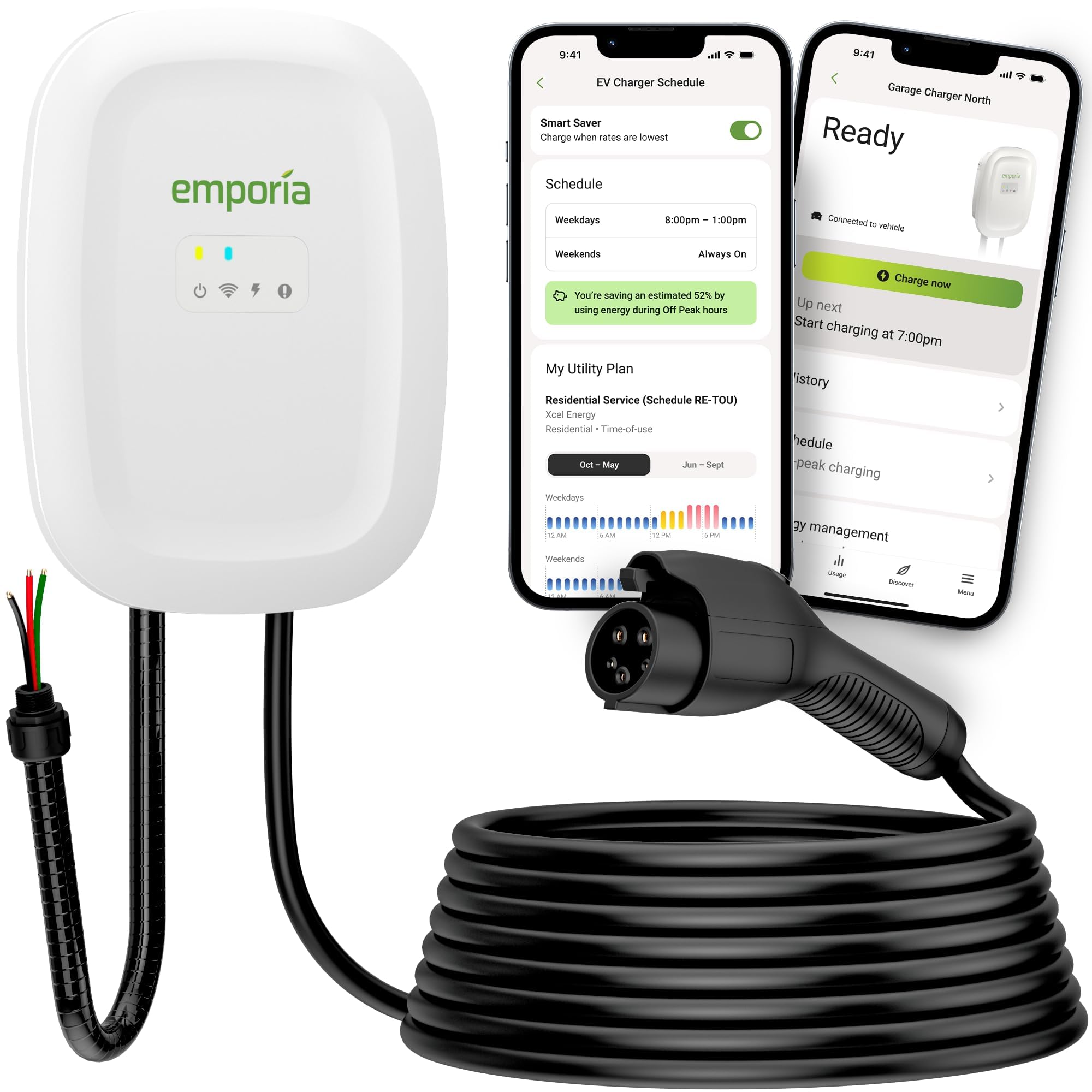
The Emporia 48A charger delivers a rare combination of fast hardwired output and genuinely useful smart features at a mid-range price point that undercuts many lower-specced competitors. Owner reports consistently highlight the robust app interface that tracks energy consumption in kilowatt-hours and displays a running monthly cost. The unit is preconfigured for hardwired installation with a whip, requiring a 60-amp breaker to achieve the full 48-amp output, and it carries UL and ENERGY STAR certifications that satisfy most rebate programs.
Real-world charging sessions routinely hit 11.5 kW on compatible vehicles, adding roughly 46 miles of range per hour. The app allows scheduling around time-of-use rates, and the charger logs historical data that helps owners track their charging habits over weeks and months. Several reviewers with multiple EVs noted that the Emporia handles daily cycling without hiccups, and the 25-foot cable provides ample reach across a two-car garage layout.
Build quality feels solid for the price tier, though the plastic enclosure lacks the anodized-aluminum heft of premium competitors. The included whip is pre-stripped, which simplifies the electrician’s job during installation. For owners seeking a well-connected charger that does not require a subscription or proprietary ecosystem, the Emporia represents the strongest all-around value in this comparison.
What works
- Excellent app interface with consumption tracking and cost reporting
- Full 48A output at a mid-range price point
What doesn’t
- Plastic housing feels less premium than metal-enclosure units
- Requires professional hardwired installation for full amperage
2. Grizzl-E 48A Ultimate Level 2 EV Charger
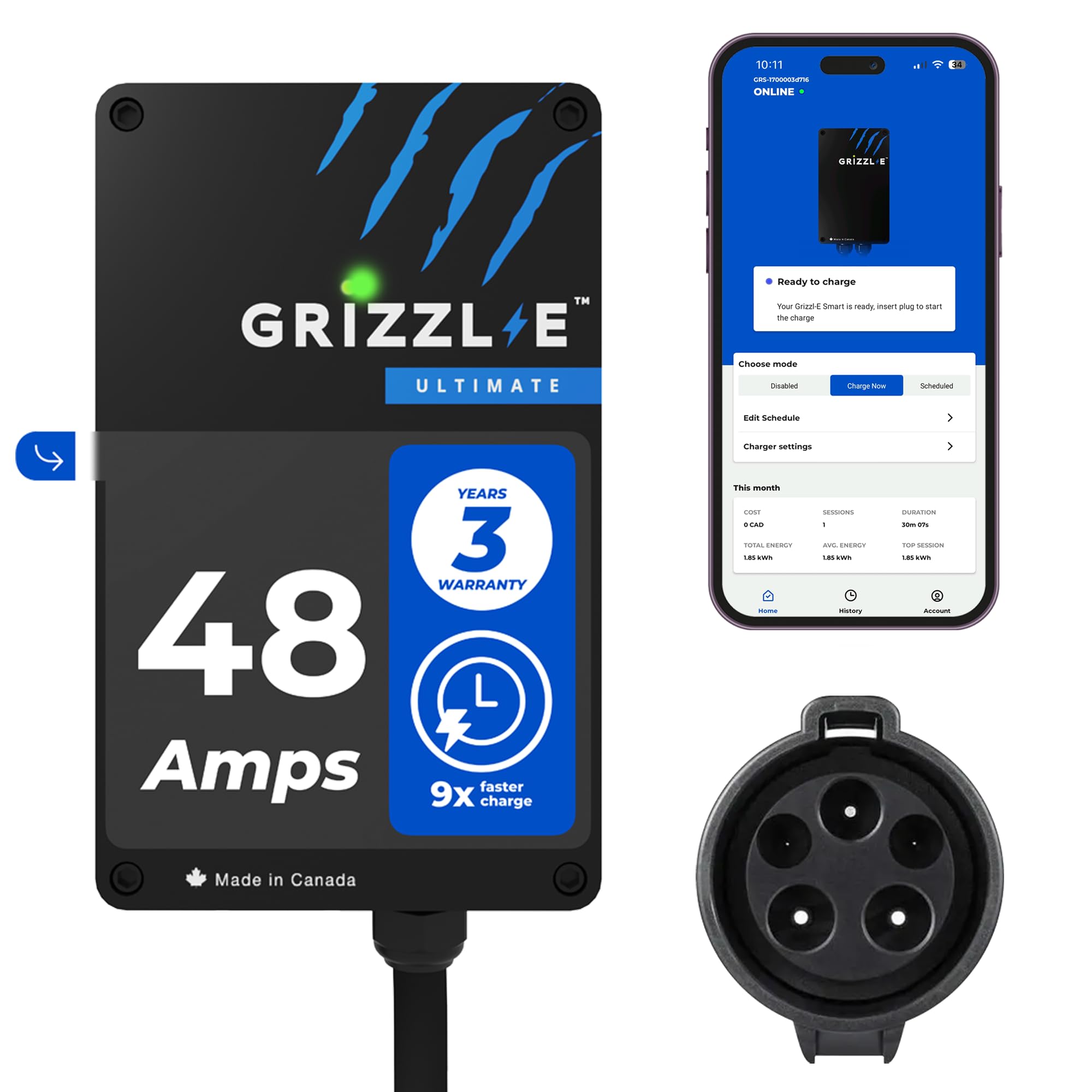
The Grizzl-E Ultimate 48A is built around a cast-aluminum NEMA Type 4 enclosure that shrugs off rain, snow, and direct sunlight better than any plastic-bodied competitor in this price range. Made in Canada and UL-certified, this unit prioritizes long-term durability over flashy touchscreens, and the external antenna design ensures reliable WiFi connectivity even when mounted inside a metal-frame garage. Owners in Canadian and northern US climates consistently report flawless operation through winter conditions well below minus 20 degrees Celsius.
Smart features are handled by the Grizzl-E Connect platform, which provides real-time monitoring, scheduling, and detailed energy statistics without requiring an always-on internet connection for basic charging. The unit also supports OCPP via a one-time activation fee, enabling integration with third-party energy management systems. Intelligent power distribution allows multiple Grizzl-E units to share a single circuit through equal or priority-based load balancing, a capability rarely seen at this price point.
The 25-foot J1772 cable uses a durable jacket that remains flexible in cold weather, and the included hardwire kit with terminal lugs makes electrician installation straightforward. One minor trade-off is the lack of a built-in holster for the connector—the unit relies on a separate mounting bracket. For owners who need a charger that can live outdoors full-time and survive anything the weather throws at it, the Grizzl-E Ultimate sets the benchmark in this category.
What works
- Cast-aluminum enclosure with superior weather resistance
- OCPP support and intelligent load balancing between multiple units
What doesn’t
- No built-in connector holster; separate bracket required
- OCPP advanced features require a one-time activation fee
3. Autel Level 2 EV Charger 40 Amp
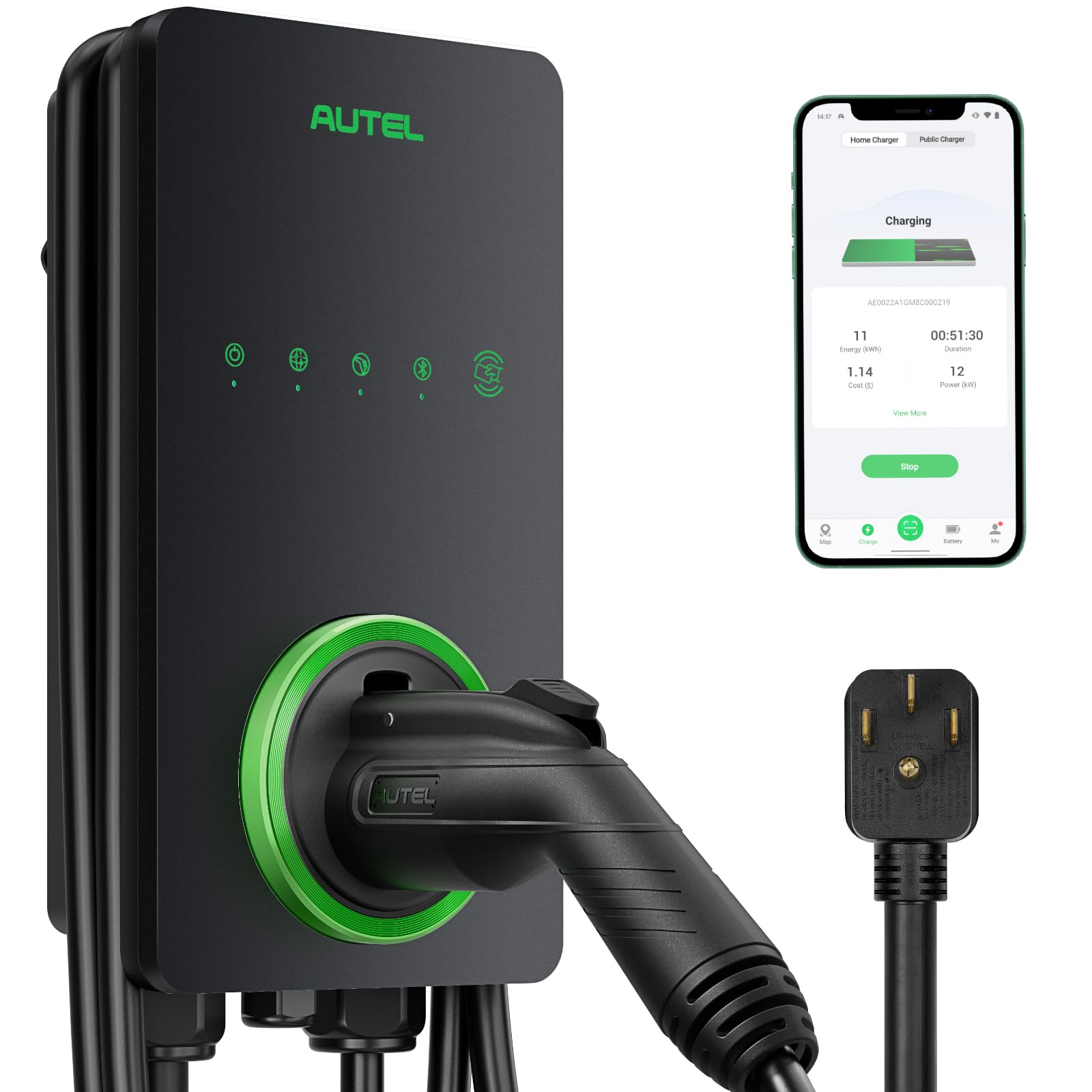
The Autel MaxiCharger AC Home 40A combines a sleek dark-gray housing with thoughtful ergonomic touches like an in-body holster that keeps the J1772 connector neatly docked when not in use. The plug-in NEMA 14-50 configuration allows a five-minute installation without an electrician, making it an ideal choice for renters or homeowners who want to avoid hardwiring costs. Autel brings its automotive diagnostic heritage to the charging space, and the build quality reflects that engineering background with NEMA 4X weatherproofing rated for snow, rain, and ice.
The Autel Charge app provides adjustable amperage from 16A to 40A, along with smart scheduling to take advantage of off-peak electricity rates. RFID card authentication adds a layer of security against unauthorized use, and the app allows remote monitoring of session data. OTA firmware updates ensure the unit stays current without manual intervention, and Autel backs the charger with a three-year warranty and 24/7 customer support.
Several owners praised the quick setup and reliable performance across multiple EV models, though a few noted that the app interface could feel slightly cluttered compared to more minimalist competitors. The 25-foot cable provides sufficient reach for most single-car garage layouts, and the plug-in design makes it easy to take the unit along when moving. For buyers who value installation simplicity and a polished industrial look, this Autel model is a strong contender in the 40-amp segment.
What works
- Five-minute plug-in installation with NEMA 14-50 outlet
- Integrated holster and NEMA 4X weatherproof construction
What doesn’t
- App interface is feature-rich but not the most intuitive
- Limited to 40A output; no hardwired 48A option
4. ChargePoint HomeFlex Level 2 EV Charger

The ChargePoint HomeFlex brings the company’s extensive public charging network expertise into a residential form factor with a native NACS connector optimized for Tesla vehicles. The unit supports hardwired installation on circuits from 20A to 80A, delivering up to 50 amps continuous output when paired with an appropriately sized breaker. The ChargePoint mobile app integrates station location, charging reminders, and smart home connectivity alongside the home charger controls, creating a unified experience for drivers who also use public ChargePoint stations.
UL certification and a cold-resistant cable jacket ensure reliable operation in outdoor installations across varied climates. The HomeFlex is one of the few residential chargers that allows the homeowner to set the exact circuit amperage during configuration, making it adaptable to existing wiring without requiring a breaker swap. The design is compact and wall-hugging, with a low-profile footprint that mounts flush against the wall surface.
Owner feedback is generally positive regarding reliability and app functionality, though some users reported early-production WiFi connectivity quirks that required a replacement unit from ChargePoint’s customer support. The charger does not include a J1772 adapter, so non-Tesla owners will need to purchase one separately. For Tesla drivers who want a seamless home-to-public charging ecosystem backed by a well-established brand, the HomeFlex delivers a polished ownership experience.
What works
- Seamless integration with ChargePoint public network and app
- Supports a wide range of circuit sizes from 20A to 80A
What doesn’t
- Some early units had WiFi reliability issues needing replacement
- No J1772 adapter included for non-Tesla EVs
5. Tesla Universal Wall Connector

The Tesla Universal Wall Connector solves the connector compatibility problem by integrating both NACS and J1772 docks into a single unit, allowing any North American EV to charge without an external adapter. The charger automatically detects which connector is plugged in and adjusts communication accordingly, making it a future-proof choice for multi-EV households or those planning to switch brands. Output reaches 48 amps on a 60-amp circuit, delivering up to 44 miles of range per hour depending on the vehicle.
Variable amperage settings from 12A to 48A let the installer match the charger to existing wiring without swapping breakers, and PowerShare technology enables vehicle-to-home backup power for Cybertruck owners. The 24-foot cable provides solid reach, and the white minimalist aesthetic fits the Tesla design language. Over-the-air updates keep the firmware current, and the unit carries UL, CE, and FCC certifications.
Installation is straightforward for a qualified electrician, and owner reports highlight the convenience of having both connector types available without hunting for adapters. The primary downside is the premium price, which sits well above comparable single-connector chargers. For households with both a Tesla and a J1772 EV, or for anyone who wants maximum flexibility without sacrificing native charging speed, the Universal Wall Connector is the cleanest solution on the market.
What works
- Integrated NACS and J1772 docks with automatic detection
- PowerShare vehicle-to-home backup capability
What doesn’t
- Premium price significantly higher than single-connector alternatives
- PowerShare feature limited to Cybertruck at launch
6. EVIQO NACS Charger 48 Amp
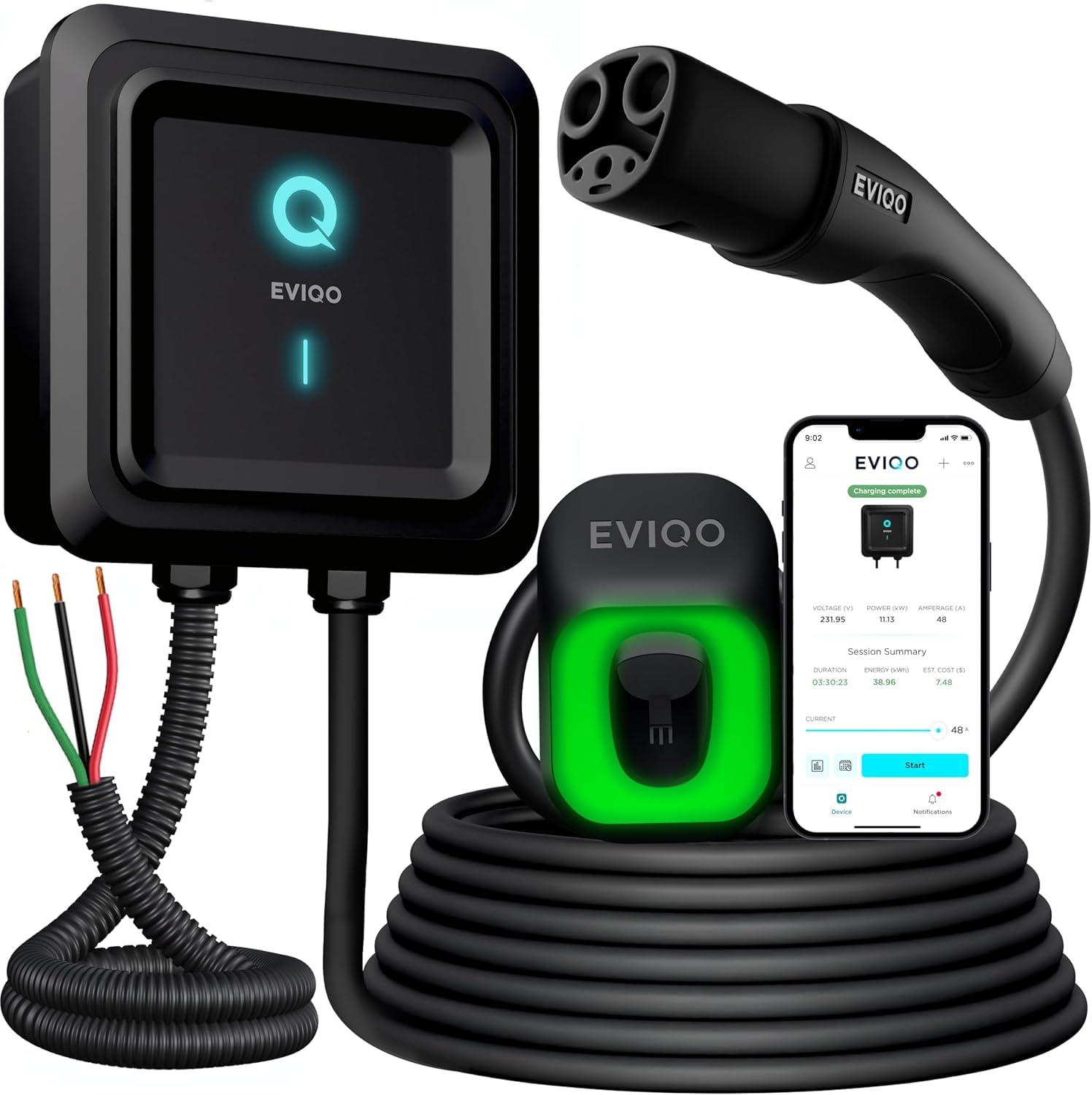
The EVIQO NACS charger delivers a full 48-amp hardwired output at a price point that undercuts most competitors with similar specifications, making it a strong value play for Tesla owners. The IP66-rated and NEMA 4-certified enclosure provides dust-tight and water-tight protection suitable for outdoor mounting in exposed locations. A high-visibility fluorescent holster helps locate the connector in low-light conditions, a small but practical detail that owners appreciate during evening charging sessions.
The smart app supports scheduling, consumption tracking, and amperage adjustment from 6A to 48A. An enhanced WiFi antenna keeps the unit connected even in garages with limited signal penetration, and OTA firmware updates ensure the software stays current. A side-mounted reset button allows fault clearing without opening the unit or cycling the breaker, reducing downtime during troubleshooting.
Owners report straightforward installation and reliable daily operation across multiple Tesla models, with the 25-foot cable providing generous reach. The three-year warranty and US-based customer support add peace of mind at this price tier. The main compromise relative to premium brands is the plastic housing, which lacks the rugged feel of metal-enclosure units, though the IP66 rating confirms its weather resistance regardless of material choice.
What works
- Full 48A output at a budget-friendly price point
- IP66 weatherproof rating and fluorescent holster for low-light use
What doesn’t
- Plastic enclosure less rugged than metal alternatives
- No J1772 adapter included for non-Tesla EVs
7. ApexCharger MACH 1 Level 2 EV Charger
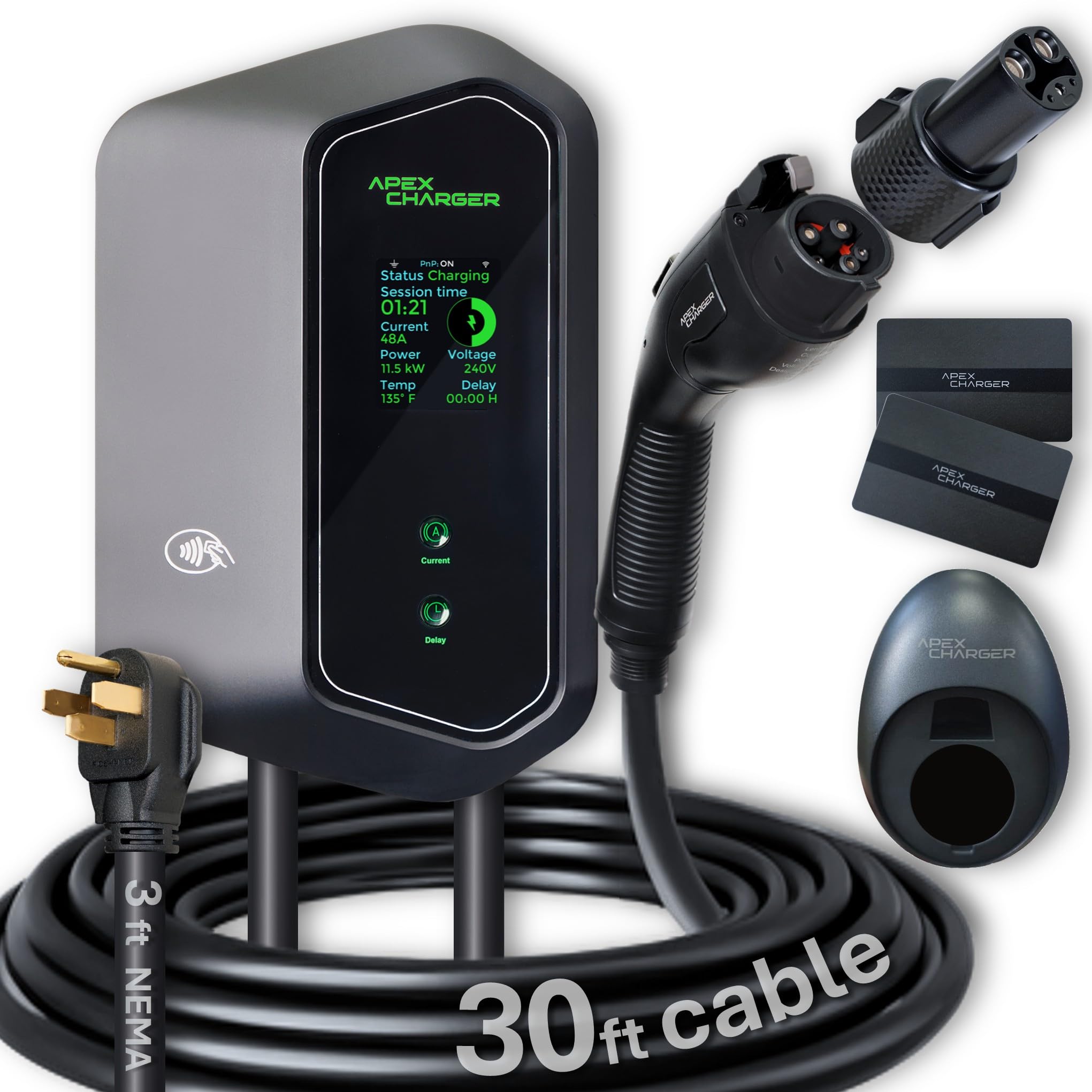
The ApexCharger MACH 1 positions itself as a universal solution by shipping with both a J1772 connector and a PRO 1 NACS adapter in a branded carrying case, covering all North American EVs out of the box. The unit includes a 2.4-inch LED display panel that shows charging rate, energy delivered, and session status, giving the user at-a-glance information without needing to open a phone app. RFID cards provide secure access control, and the charger supports Bluetooth and Wi-Fi connectivity for remote monitoring via the mobile app.
Installation flexibility is a key selling point—the MACH 1 can be used as a plug-in 40-amp unit with a NEMA 14-50 outlet or hardwired for full 48-amp output using the included hardwire kit and instructions. The 30-foot charging cable is one of the longest in this comparison, making it easier to reach vehicles parked further from the mount point. Owners consistently praise the cable length and the included anti-theft mounting hardware for outdoor installations.
Early units had a scheduling bug that affected Tesla compatibility, but an October 2024 firmware update resolved the issue, and subsequent owner reports indicate reliable performance across both Tesla and J1772 vehicles. The American brand backing and 24/7 customer support provide additional reassurance at this entry-level price. For budget-conscious buyers who want maximum connector compatibility without sacrificing smart features or cable reach, the MACH 1 delivers exceptional versatility.
What works
- Includes both J1772 connector and NACS adapter with carrying case
- 30-foot cable is among the longest available in this class
What doesn’t
- Early units required a firmware update to fix Tesla scheduling
- Display interface is basic compared to smartphone app alternatives
8. WOLFBOX Level 2 EV Charger 40 Amp

The WOLFBOX E40 distinguishes itself with a bright 4.3-inch LCD screen that displays charging rate, elapsed time, voltage, and accumulated energy in real time, reducing reliance on a smartphone app for basic feedback. The unit integrates with Alexa and Google Assistant for voice control, and RFID card support allows access restriction in shared or public installations. CSA certification to UL 2594 standards and a NEMA 4X waterproof housing confirm its suitability for outdoor use in all weather conditions.
The 40-amp output on a 50-amp circuit delivers roughly 38 miles of range per hour, sufficient for overnight top-ups on most EVs. The 25-foot premium cable provides adequate reach, and the plug-in NEMA 14-50 design keeps installation simple for DIY-inclined homeowners. The WOLFBOX app supports current adjustment, scheduled charging, and Google account login for easy device sharing among household members.
Owner feedback highlights the screen readability and voice-control convenience, though some users noted that the app integration is not as polished as more established brands like ChargePoint or Emporia. The unit is CSA certified rather than UL listed, which may affect eligibility for certain local rebate programs. For buyers who prefer on-device display feedback over app-centric operation, the WOLFBOX E40 offers a distinctive feature set at a reasonable mid-range price.
What works
- Built-in 4.3-inch LCD screen for at-a-glance charging data
- Works with Alexa and Google Assistant for voice control
What doesn’t
- App interface less refined than established competitors
- CSA certification instead of UL may affect some rebate eligibility
9. Autel Level 2 EV Charger 50A AC Elite
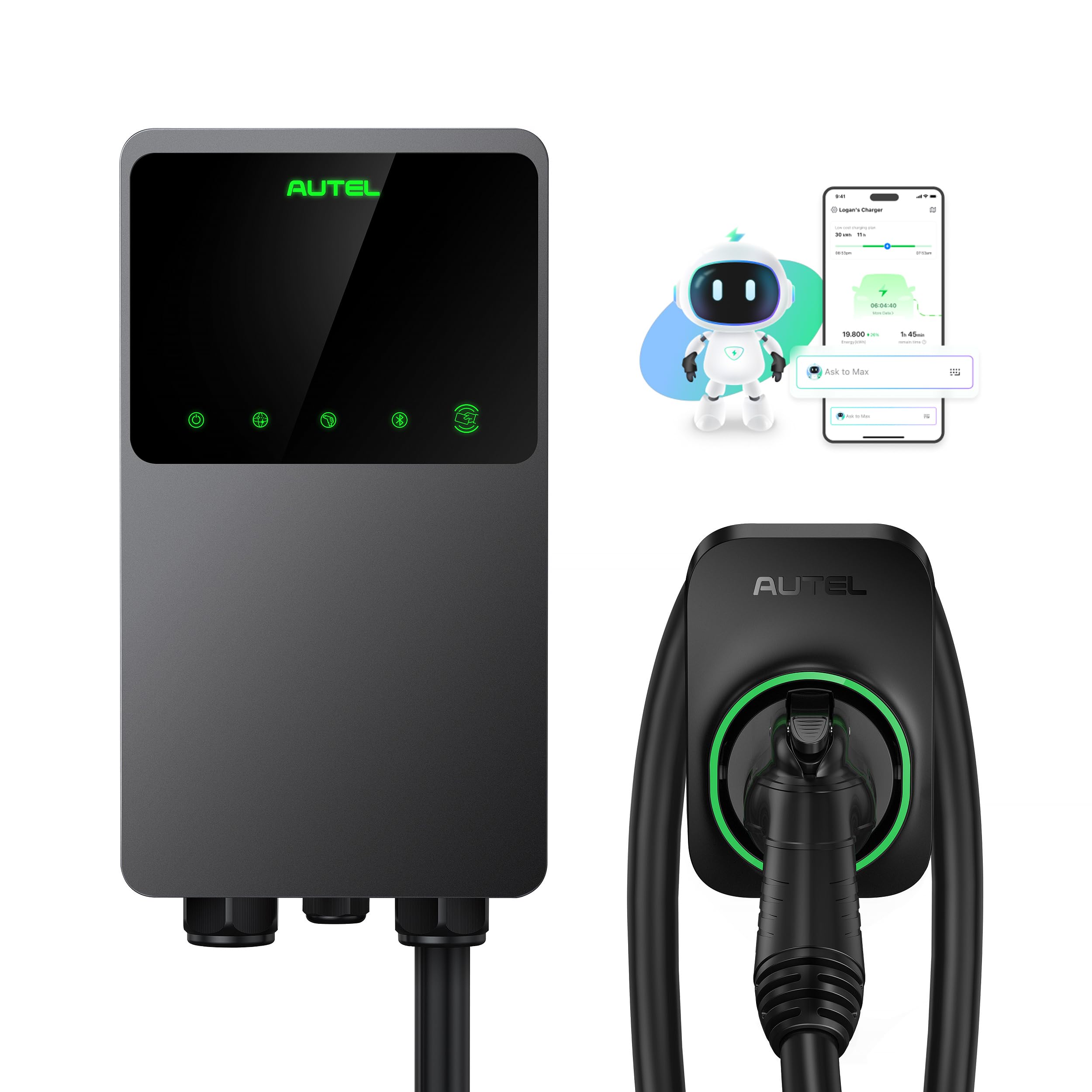
The Autel AC Elite pushes residential charging output to 50 amps continuous, delivering 12 kW of power that adds up to 37 miles of range per hour for vehicles with compatible onboard chargers. The unit offers triple connectivity options—Wi-Fi, Bluetooth, and Ethernet—providing installation flexibility in locations where wireless signals are unreliable. CSA certification and NEMA Type 4 weatherproofing qualify it for federal rebate programs and outdoor mounting in harsh climates, with a cold-rated cable that stays flexible down to minus 40 degrees Celsius.
The Autel Charge app mirrors the functionality of the 40A sibling, with adjustable amperage, scheduling, and OTA firmware updates, but the AC Elite adds a separate holster design that allows flexible cable routing during installation. The three-year warranty and 24/7 support from Autel’s service team provide long-term coverage. Owners who upgraded from lower-amp chargers report noticeably faster replenishment during off-peak windows, particularly with large-pack EVs like the Chevy Bolt EUV and Hyundai Ioniq 5.
The hardwired installation requires a 60-amp or larger breaker to achieve the full 50-amp output, and the unit is noticeably larger than the standard 40A MaxiCharger. Some owners found the separate holster less convenient than the integrated holster on the 40A model. For drivers with vehicles that can accept 11.5 kW or more, the AC Elite provides a genuine speed advantage over typical 40-amp chargers and future-proofs the installation for higher-capacity EVs.
What works
- 50-amp output delivers true 12 kW charging speed
- Triple connectivity with Wi-Fi, Bluetooth, and Ethernet options
What doesn’t
- Physical footprint is larger than the 40A Autel model
- Separate holster design less convenient than integrated alternatives
10. Enphase HCS-40 (Formerly ClipperCreek)

The Enphase HCS-40, originally built by ClipperCreek and now part of the Enphase ecosystem, represents a philosophy of deliberate simplicity—no apps, no WiFi, no screens, just a sealed NEMA 4 enclosure housing a proven 32-amp charging circuit. ETL certified to UL 2594 standards and ENERGY STAR rated, this unit is designed for commercial-grade durability in high-traffic or extreme-weather environments. The 25-foot cable terminates in a ruggedized J1772 connector with an over-molded rubber grip that withstands years of daily plugging and unplugging.
Installation requires a dedicated 40-amp circuit and hardwired connection by a licensed electrician, after which the unit requires zero configuration or maintenance. The integrated cable wrap and wall-mounted holster keep the cord organized when not in use. Owner reports spanning multiple years describe the HCS-40 as boringly reliable—it simply charges every time without glitches or connectivity issues. The five-year warranty is among the longest in the residential EVSE market.
The absence of smart features is a deliberate trade-off that appeals to owners who prioritize reliability over remote control. The 32-amp output (7.7 kW) is modest compared to 48-amp competitors, adding about 31 miles of range per hour, which still covers overnight charging for daily commuting. A small number of owners reported internal contactor failures that caused the unit to stay energized after charging, though these appear to be isolated quality-control incidents rather than a widespread pattern.
What works
- Commercial-grade NEMA 4 sealed enclosure with proven long-term durability
- Five-year warranty and zero-configuration operation
What doesn’t
- No smart features, app connectivity, or charging scheduling
- 32-amp output is slower than modern 48-amp alternatives
11. Enphase HCS-50 (Formerly ClipperCreek)

The Enphase HCS-50 upgrades the proven ClipperCreek formula to 40 amps (9.6 kW) while retaining the same rugged NEMA 4 enclosure, ETL certification, and five-year warranty that made its sibling a favorite among reliability-focused buyers. This model is best suited for vehicles with onboard chargers capable of accepting 9.6 kW or more, including the Chevy Bolt, Ford Mustang Mach-E, Hyundai Ioniq 5, Kia EV6, and Audi e-tron SUV. The unit adds up to 38 miles of range per hour, a meaningful improvement over the 32-amp HCS-40 without jumping to the complexity of smart chargers.
Build quality mirrors the commercial-grade ethos of the HCS-40, with a fully sealed enclosure, a ruggedized 25-foot cable, and an integrated cable management system. Installation requires a dedicated 50-amp circuit and hardwired connection. Owners report years of trouble-free operation in both garage and outdoor installations, with the unit functioning reliably through extreme heat, cold, and precipitation without any maintenance.
The premium price reflects the industrial construction and long warranty rather than feature content, and buyers should be aware that this charger offers no app, scheduling, or energy monitoring. The trade-off is a device that will likely outlast the vehicle it charges. For owners who value absolute dependability over convenience features and want a charger that can handle daily use in exposed outdoor locations, the HCS-50 represents the highest level of build quality in this comparison, backed by one of the longest warranties available.
What works
- Commercial-grade NEMA 4 enclosure with proven long-term reliability
- Five-year warranty and strong compatibility with high-acceptance EVs
What doesn’t
- No smart features or app connectivity at a premium price
- 40-amp output is matched by many lower-cost smart chargers
Hardware & Specs Guide
Amperage and Charging Speed
Residential Level 2 chargers typically deliver between 16 and 50 amps. A 48-amp unit on a 60-amp breaker provides up to 11.5 kW, adding roughly 40 to 46 miles of range per hour depending on the vehicle’s onboard charger. Lower-amp units around 32 to 40 amps still charge most EVs overnight but take longer for large battery packs. Matching the charger output to your breaker capacity and vehicle acceptance rate is essential.
Connector Types: J1772 vs. NACS
The SAE J1772 connector is standard on all non-Tesla EVs in North America, while Tesla uses the NACS port. Many modern chargers include both options or ship with an adapter. A NACS-native charger eliminates the need for an adapter on Tesla vehicles and provides native port-release functionality. Universal units with dual docks offer the most flexibility for multi-EV households.
Smart Features and Connectivity
Smart chargers offer WiFi or Bluetooth connectivity for scheduling, consumption tracking, and remote start/stop. Features like RFID authentication, voice control, and OCPP compliance vary by brand. Some chargers require an internet connection for full functionality, while others operate as basic dumb chargers without app dependency. Evaluate whether you need real-time data or simply reliable overnight charging.
Installation Methods
Hardwired chargers connect directly to a dedicated breaker, allowing higher continuous amperage and eliminating the failure point of a receptacle. Plug-in units using a NEMA 14-50 outlet are easier to install, portable, and removable when moving home, but are typically limited to 40A continuous draw. Local electrical codes and rebate eligibility may influence which method you choose.
FAQ
What size breaker do I need for a 48-amp EV charger?
Can I install a Level 2 charger myself?
What is the difference between J1772 and NACS connectors?
Do I need a smart EV charger?
Are all Level 2 chargers eligible for the federal tax credit?
Final Thoughts: The Verdict
For most buyers, the best ev charger for home winner is the EMPORIA Level 2 48A because it delivers the strongest balance of fast charging speed, comprehensive smart features, and reasonable pricing without requiring a subscription or proprietary ecosystem. If you need outdoor-rated durability with a metal enclosure, grab the Grizzl-E 48A Ultimate. And for maximum connector flexibility across both Tesla and J1772 vehicles, nothing beats the Tesla Universal Wall Connector.

Certification: BSc in Mechanical Engineering
Education: Mechanical engineer
Lives In: 539 W Commerce St, Dallas, TX 75208, USA
Md Amir is an auto mechanic student and writer with over half a decade of experience in the automotive field. He has worked with top automotive brands such as Lexus, Quantum, and also owns two automotive blogs autocarneed.com and taxiwiz.com.