The personal electric mobility market has reached a point where spec sheets no longer tell the full story—real-world range, component durability, and consistent power delivery matter far more than peak speed numbers printed on a box. Riders are looking for a machine that handles daily commutes, uneven pavement, and varied terrain without sudden performance drops or reliability surprises.
I’m Amir — the founder and writer behind Four Wheel Ask. My approach centers on cross-referencing manufacturer claims against battery discharge curves, motor winding quality, and long-term owner reports to build a clear picture of what actually holds up over hundreds of miles.
I examined motor efficiency data, battery range test results, and owner feedback to find the best electric skateboard for dependable daily use.
How To Choose The Best Electric Skateboard
Selecting the right electric skateboard requires understanding how motor configuration, battery chemistry, and deck design interact to produce the riding experience you expect. Below are the critical factors that separate a reliable daily driver from a short-lived novelty.
Motor Type: Hub vs. Belt Drive
Hub motors sit inside the wheel and operate quietly with minimal maintenance, but they transmit vibration directly through the deck and offer less torque for steep inclines. Belt-driven systems deliver higher torque, better hill-climbing ability, and a smoother ride because the motor is isolated from the wheel, but belts wear over time and need replacement. For flat urban commuting, hub motors provide adequate performance with lower upkeep. For hilly terrain or aggressive acceleration, belt drive generally outperforms.
Battery Capacity and Real-World Range
Manufacturer range estimates are measured under ideal conditions—low rider weight, flat ground, moderate speed, warm temperatures. Expect actual range to fall between 60 and 80 percent of the advertised number depending on your weight, terrain, speed setting, and ambient temperature. Look for watt-hour (Wh) ratings instead of amp-hour (Ah) to compare capacity across different voltage platforms. A higher Wh number directly translates to more stored energy and longer ride time.
Deck Material and Wheel Durometer
Maple, bamboo, and composite decks each offer different flex characteristics. Maple provides stiffness and stability at higher speeds. Bamboo adds natural vibration dampening and a livelier flex. Composite decks blend both properties. Wheel durometer—measured on the Shore A scale—determines grip and shock absorption. Softer wheels (78A–83A) grip better and smooth out rough pavement. Harder wheels (84A–90A) slide more easily and last longer on smooth surfaces but transmit more vibration.
Safety Certifications and Electrical Protection
UL 2272 certification verifies that the electrical system and battery assembly meet rigorous safety testing for thermal runaway, short-circuit protection, and charging stability. A quality Battery Management System (BMS) monitors individual cell voltages, balances charge distribution, and prevents over-discharge or over-current conditions. These features directly reduce fire risk and extend overall battery service life.
Quick Comparison
On smaller screens, swipe sideways to see the full table.
| Model | Category | Best For | Key Spec | Amazon |
|---|---|---|---|---|
| MEEPO Mini5 | Electric Skateboard | Portable commuter with kick-tail | 29 mph top speed, 11 mi range, 8-ply maple deck | Amazon |
| UDITER S3 | Electric Skateboard | Swappable battery extended range | 28 mph, dual 600W motors, 105mm PU wheels | Amazon |
| MEEPO V5 | Electric Skateboard | Carry handle convenience | 28 mph, 500W dual hub motors, 11 mi range | Amazon |
| Segway Ninebot MAX G3 | Electric Scooter | Long-distance premium commuter | 28 mph, 50 mi range, dual hydraulic suspension | Amazon |
| JUNLING RD2 | Electric Scooter | High-speed dual motor performance | 50 mph, dual 5000W motors, 55 mi max range | Amazon |
| AONIU M4 | Electric Scooter | Heavy-duty with removable seat | 28 mph, 800W peak motor, 31 mi range, 330 lb load | Amazon |
| MEGAWHEELS | Electric Scooter | Pneumatic tire comfort | 20 mph, 600W motor, 28 mi range, 10-inch tires | Amazon |
| VOLPAM SP08 | Electric Scooter | Budget commuter with solid tires | 22 mph, 500W motor, 22 mi range, dual suspension | Amazon |
| Hapali A16 | Electric Scooter | All-terrain with fat tires | 1200W motor, 31 mi range, 11-inch off-road tires | Amazon |
In‑Depth Reviews
1. MEEPO Mini5 Electric Skateboard

The MEEPO Mini5 combines a compact 33-inch deck with a functional kick-tail, making it one of the more maneuverable electric skateboards in this segment. The 8-ply maple construction provides a stiff platform that remains stable at higher speeds, while the shorter wheelbase allows tighter turns and easier carrying onto public transit. The dual 500W hub motors deliver a claimed top speed of 29 mph, and owner reports consistently confirm mid-20s mph on flat ground under normal riding conditions.
Battery performance is rated at 11 miles of range, though real-world reports from riders near 200 lb indicate approximately 8 to 9 miles per charge in speed mode 3. The 2.8-hour charge time is competitive for this price tier. The detachable PU wheel design is a thoughtful addition—it simplifies hub motor replacement down the road rather than requiring a full wheel assembly swap. The IPX5 water resistance rating adds confidence for damp road use, though submerging is not advised.
Build quality feedback from long-term owners is largely positive, with several noting that the board holds up well past the first several hundred miles. The 330 lb weight capacity is generous for this category, and the included M6C remote provides responsive acceleration and regenerative braking curves. Some owners report squeaking wheels after extended use and occasional random braking events, but these appear to be isolated rather than systemic issues.
What works
- Kick-tail adds real maneuverability for urban navigation
- Detachable PU wheels simplify hub motor maintenance
- High 330 lb weight capacity for a compact deck
What doesn’t
- Real-world range falls short of 11 miles for heavier riders
- Some units develop wheel squeaking after break-in
- Occasional reports of erratic braking behavior
2. UDITER S3 Electric Skateboard

The UDITER S3 stands out in this price bracket with its swappable battery system, a feature typically reserved for higher-end models. The standard 187.2Wh pack delivers 10 to 13 miles of range, but the ability to carry a spare and swap in seconds effectively doubles that figure to 20 to 26 miles. This design addresses the most common complaint among electric skateboard users—range anxiety. The UL 2272 certification on the battery module adds a meaningful layer of safety verification.
Dual 600W hub motors produce a combined 1200W output that pushes the board to a tested top speed of 28 mph. Owner reports indicate the board handles 30-degree inclines without significant speed drop, which is impressive for hub motors that typically lack the low-end torque of belt-driven setups. The 105mm PU wheels with 78A durometer provide good shock absorption on rough urban surfaces, and the 7-ply bamboo and maple deck composite adds natural flex for vibration dampening during longer rides.
Charging flexibility is another strong point—the dual-port system allows a full recharge in 1.25 hours when using two chargers, or 2.5 hours with a single charger. The remote includes a small screen that displays speed and battery level, a feature that improves situational awareness. One owner reported a battery smoking incident, though the company responded with support. The FSC-certified timber deck and 330 lb load capacity round out a solid package for riders who prioritize extended range capability.
What works
- Swappable battery eliminates range limitations
- Dual-port charging cuts recharge time significantly
- Large 105mm PU wheels absorb urban road imperfections
What doesn’t
- Spare battery sold separately adds to initial investment
- Isolated reports of battery thermal issues
- Deck flex may feel soft for heavier riders
3. MEEPO V5 Electric Skateboard

The MEEPO V5 refines the longboard formula with an integrated carry handle cut directly into the deck—a seemingly small detail that dramatically improves portability for commuters who need to carry the board up stairs, onto buses, or into offices. The 38-inch deck is built from 8 layers of Canadian maple, producing a stiff, responsive ride that holds an edge through carves and maintains stability at the advertised 28 mph top speed. The 500W dual hub motors provide adequate acceleration for city riding without the aggressive torque curve that can unsettle newer riders.
Range is rated at 11 miles, and owner feedback from riders around 200 lb suggests a realistic expectation of 8 to 9 miles in higher speed modes. The 1.5A charger replenishes the battery in approximately 2.8 hours, which is standard for this class. The M5 remote control system delivers smooth acceleration and braking progression, and the four speed modes allow beginners to start in LO mode before working up to higher settings. IPX5 waterproofing provides protection against splashes and light rain.
Long-term durability reviews are mixed. Many owners report the board performs well for several months of daily use, but a notable portion describe battery corrosion caused by water ingress through the charge port, particularly when the board is stored or charged in damp conditions. One owner reported the controller failing after seven months. The UL 2272 certification covers the electrical system, and the FSC-certified wood deck reflects responsible material sourcing.
What works
- Carry handle cutout makes transit significantly easier
- Smooth power delivery suits beginner to intermediate riders
- Four speed modes allow gradual skill progression
What doesn’t
- Charge port corrosion reported from moisture exposure
- Real-world range limited for heavier riders
- Controller reliability concerns after extended use
4. Segway Ninebot MAX G3

The Segway Ninebot MAX G3 represents a significant step up in engineering refinement. The 597 Wh battery pack—among the largest in this comparison—delivers a claimed 50 miles of range, and early owner reports from a 260 lb rider confirm over 25 miles of real-world range at full speed with gear, with lighter riders approaching 40 miles in mixed conditions. The SegRange battery management system actively optimizes power draw across the cell array to extend usable capacity through the discharge curve.
The dual hydraulic suspension system is fully adjustable, allowing riders to tune compression and rebound damping for their weight and terrain. Segway’s durability testing is extensive—12,427 miles of simulated random vibration and 500,000 suspension cycles—which translates to a frame and component set built for long-term ownership. The 11-inch self-sealing tubeless tires automatically close punctures up to 4mm, eliminating the most common cause of roadside breakdowns. The 6W adjustable headlight provides genuine nighttime visibility rather than the marker-level illumination found on most budget scooters.
Charging is handled by a built-in 3.5-hour fast charger, with an optional DC charger that reduces time to 2.5 hours. The triple-certified safety package—ANSI/CAN/UL-2272 by TUV Rheinland—is the most thorough in this lineup. Some owners note that sport mode drains the battery noticeably faster and that the ride feels stiffer than the MAX G2, though this is a trade-off for improved handling precision at higher speeds. The underglow lighting and ergonomic grips are quality-of-life details that reflect Segway’s experience in this market.
What works
- Exceptional real-world range from high-capacity 597 Wh battery
- Adjustable dual hydraulic suspension for personalized damping
- Self-sealing tubeless tires eliminate most puncture issues
What doesn’t
- Sport mode reduces range significantly under sustained use
- Ride feel is stiffer than previous MAX G2 model
- Handlebar height may feel low for taller riders
5. JUNLING RD2 Electric Scooter
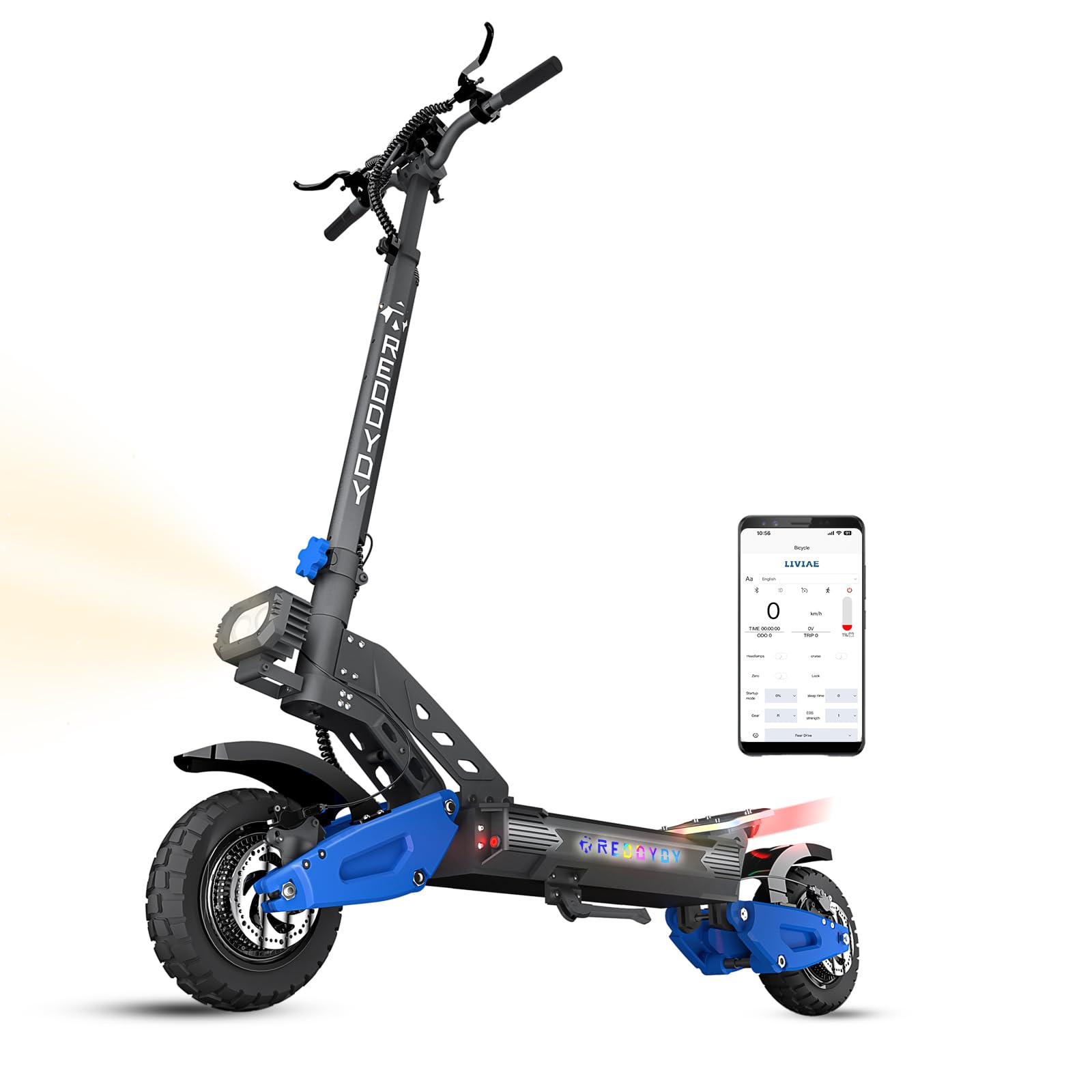
The JUNLING RD2 is built around a 60V 25Ah battery pack that feeds dual 5000W motors, producing enough power to reach a claimed 50 mph. Owner reports suggest a realistic top speed of approximately 45 mph on flat ground, which still places it among the faster options in this price tier. The 55-mile maximum range claim assumes low-speed Eco mode operation; sustained high-speed riding reduces that figure considerably, but the large capacity still provides more range than most riders will use in a single session.
Drive mode flexibility is a standout feature—riders can select front-wheel drive, rear-wheel drive, or dual-wheel drive depending on terrain and riding conditions. The dual hydraulic braking system with ABS modulation provides stopping power that matches the scooter’s high-speed capability. The 10.5-inch off-road pneumatic tires and dual suspension setup absorb rough terrain reasonably well, though owners note that the scooter begins to develop steering shake near top speed, suggesting the steering damper could benefit from an upgrade.
Build quality feedback from owners is generally favorable, with several commenting that the scooter feels more substantial than the product images suggest. The aluminum alloy frame keeps weight manageable for a dual-motor scooter of this size, and the integrated lighting system—headlight, brake light, turn signals, and logo light—provides comprehensive visibility after dark. One owner strongly recommends applying thread-locking compound to all bolts and screws before the first ride, as vibration loosens hardware over time.
What works
- Selectable drive modes for different terrain conditions
- Large 25Ah battery provides class-leading range capacity
- Hydraulic brakes with ABS deliver confident stopping power
What doesn’t
- Steering shake develops near top speed without damper upgrade
- Screws and bolts loosen with vibration—thread lock required
- Claimed 50 mph top speed is optimistic; real-world closer to 45 mph
6. AONIU M4 Electric Scooter
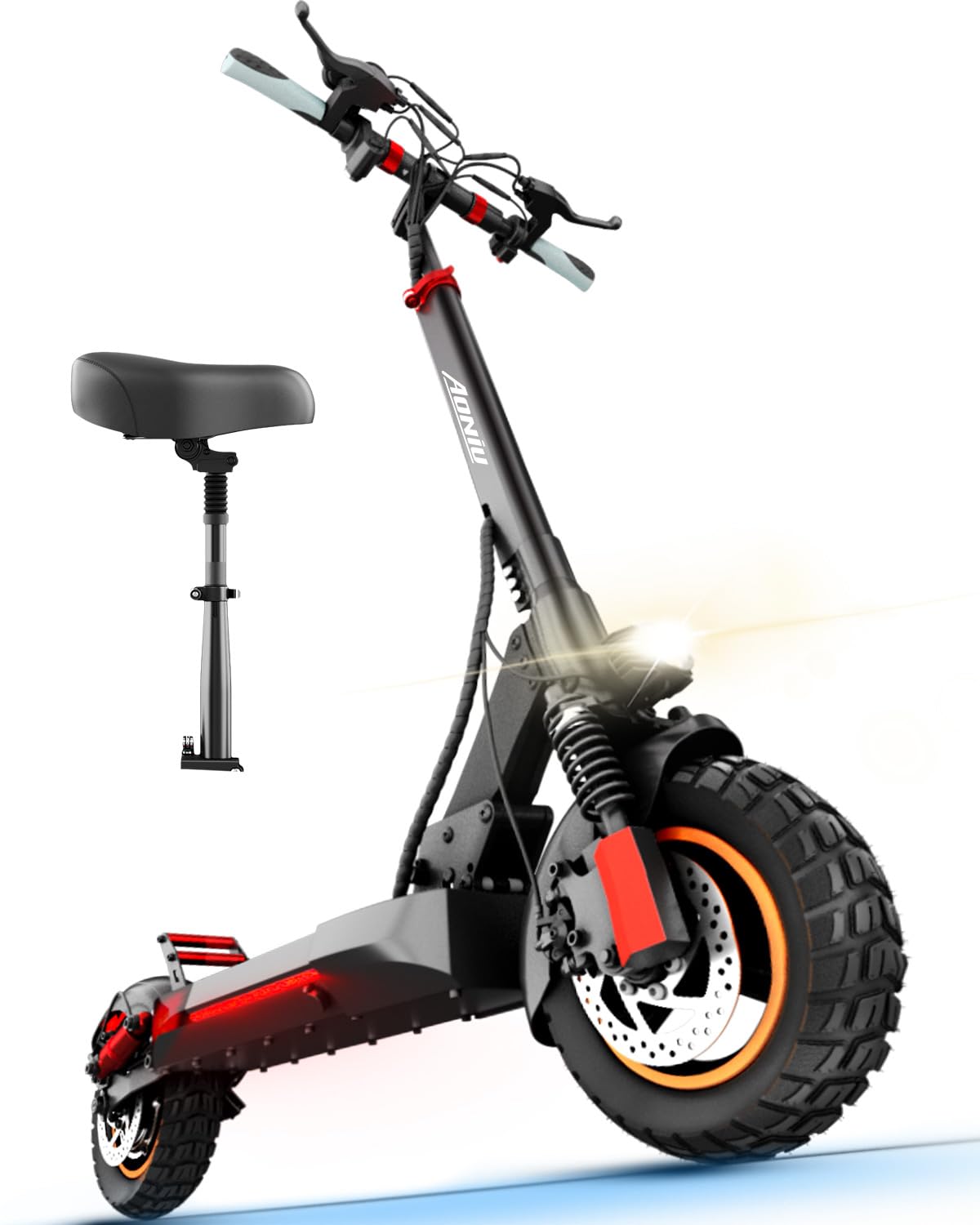
The AONIU M4 brings a removable seat and dual riding modes—sit or stand—to a price point where few competitors offer either feature. The 800W peak brushless motor delivers a claimed 28 mph top speed, and a 210 lb owner reports a consistent 22 to 24 mph on flat ground with a 26-mile real-world range, which aligns reasonably well with the advertised 31-mile maximum. The three-gear speed selection system allows riders to cap speed at 15 mph in first gear, 27 mph in second, or push to the limit in third.
The aircraft-grade aluminum alloy frame is rated for 330+ lb, making it one of the more accommodating options for heavier riders. The 10-inch pneumatic tires paired with dual shock absorbers handle speed bumps and uneven pavement without excessive jarring. The folding mechanism locks securely with a one-click latch, and the LCD display provides clear readouts for speed, mode, and cruise control status. The bright headlight and taillight combination supports safe nighttime riding.
Customer service responsiveness receives consistent praise from owners who needed support. The 12-month warranty on the frame and motor, with 180-day coverage on the battery and charger, is a reasonable safety net at this price tier. One critical owner reported significant issues including a non-functional scooter shortly after purchase, while another noted that the accelerator handle placement—mounted above the brake—takes adjustment. Overall, the M4 offers good utility for the investment if the seat versatility matters for your use case.
What works
- Sit and stand modes increase versatility for longer rides
- 330 lb weight capacity accommodates larger riders
- Responsive customer service and 12-month frame warranty
What doesn’t
- Accelerator lever position above brake feels unnatural initially
- Quality control inconsistency reported by some buyers
- Seat attachment adds weight for standing-only riders
7. MEGAWHEELS Electric Scooter
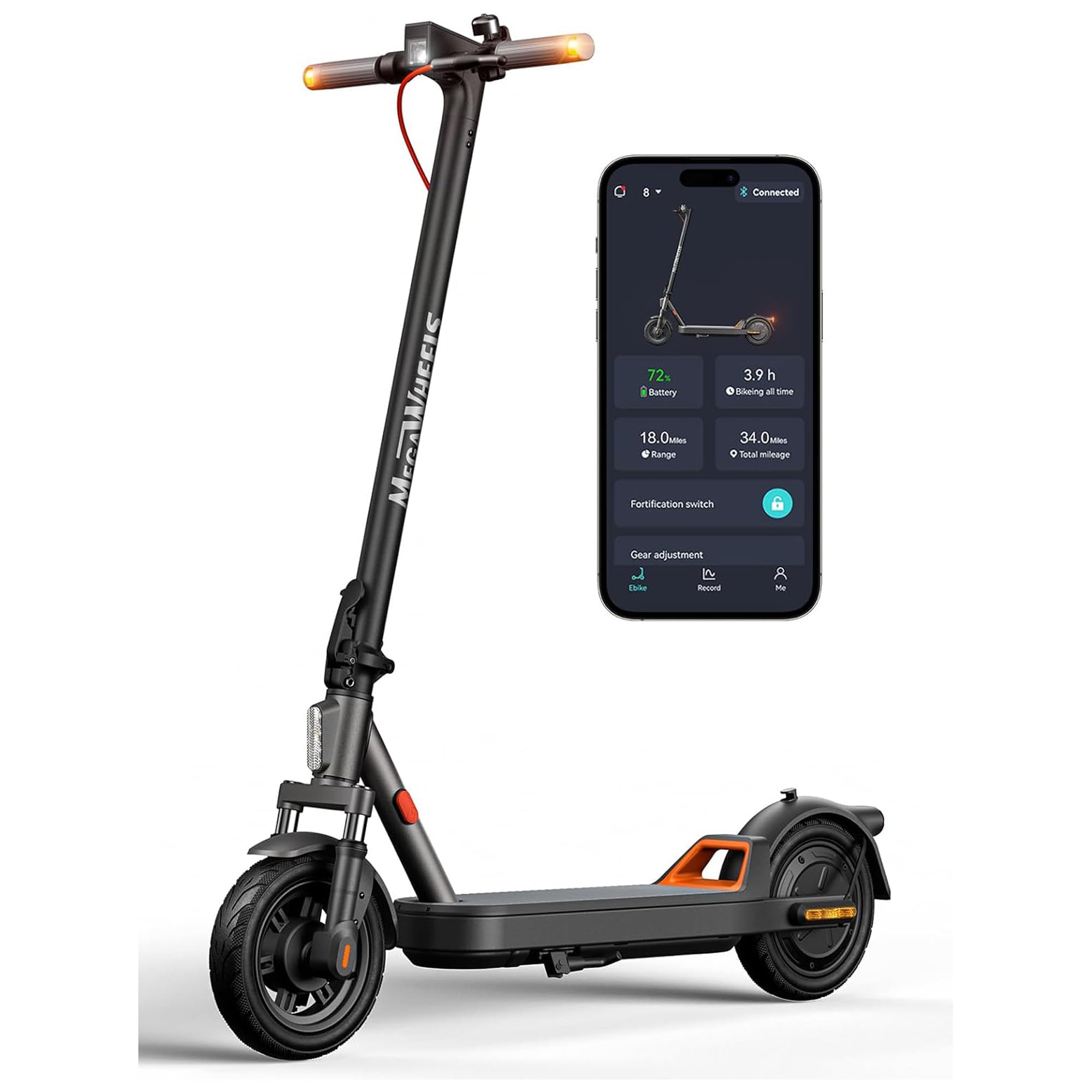
The MEGAWHEELS electric scooter focuses on ride comfort through its 10-inch pneumatic tires and front suspension system. The 600W brushless motor reaches a tested top speed of 20 mph and handles 20-degree inclines without noticeable strain, making it suited for urban commuting with moderate hill sections. The 10.2Ah battery delivers a claimed 28 miles of range, and owner reports from daily commuters confirm the scooter reliably covers multi-errand trips without range anxiety.
The dual braking system combines front drum braking with rear electronic braking, providing predictable stopping power in dry conditions. The full lighting setup includes a bright headlight, turn signals, and tail lights—a complete package for daytime and nighttime visibility. UL 2272 certification backs the electrical safety of the system, which is a meaningful consideration for riders who charge indoors or store the scooter in their living space.
Build quality feedback is consistently positive, with owners describing the scooter as solid, rattle-free, and confidence-inspiring on rough pavement. The one-step folding mechanism collapses in seconds for storage or transit. The LCD dashboard displays speed, battery level, and riding mode at a glance. The main limitation is the 20 mph top speed, which may feel restrictive for experienced riders accustomed to faster machines, but for everyday commuting on bike lanes and shared paths, it remains a practical and reliable choice.
What works
- Pneumatic tires and front suspension deliver genuine comfort
- Complete lighting package with turn signals improves visibility
- Solid build quality with no rattles or loose components
What doesn’t
- 20 mph top speed is modest for experienced riders
- Charge time exceeds 3 hours for full replenishment
- No rear suspension—bumps transfer through the deck
8. VOLPAM SP08 Electric Scooter
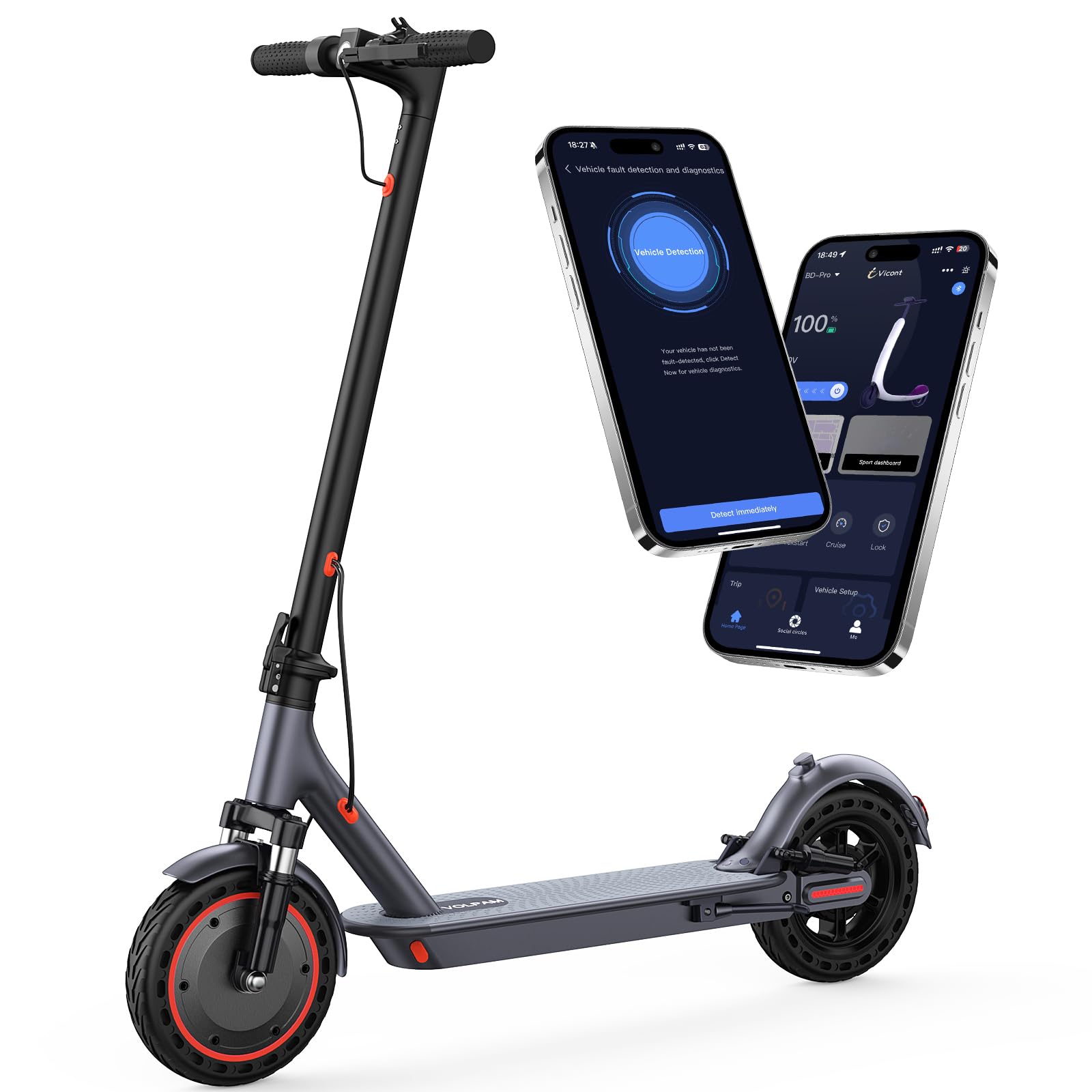
The VOLPAM SP08 enters the market as a budget-friendly option that does not skip the essentials. The 500W motor reaches a tested top speed of 22 mph, and the 800W version available at a modest upcharge provides noticeable additional acceleration for riders who want a bit more headroom. The 22-mile range claim is achievable in Eco mode with a lighter rider; typical mixed-use riding returns approximately 15 to 18 miles before recharge, which covers most daily commutes without issue.
The dual suspension system—front and rear—absorbs roughly 80 percent of vibration from rough terrain, according to owner reports, which is uncommon at this price point. The 10-inch solid honeycomb tires eliminate the risk of punctures entirely, removing the most common maintenance headache for urban scooter owners. The trade-off is a firmer ride feel compared to pneumatic tires, but the suspension compensates well enough to maintain comfort over cracked asphalt and speed bumps.
The Smart App control adds lock functionality, cruise control customization, and live telemetry monitoring—features typically found on scooters costing significantly more. The aerospace-grade aluminum frame folds in three seconds for storage. Owner feedback highlights the solid build quality, easy assembly, and responsive brakes as standout attributes. The absence of pneumatic tire compliance and the 4-hour charge time are the primary compromises at this price level, but the overall package delivers strong daily utility.
What works
- Solid honeycomb tires eliminate puncture maintenance
- Dual suspension provides rare comfort for the price bracket
- Smart App control with lock and telemetry features
What doesn’t
- Solid tires transmit more road texture than pneumatics
- 4-hour charge time is slower than competing models
- Real-world range drops significantly in higher speed modes
9. Hapali A16 Electric Scooter
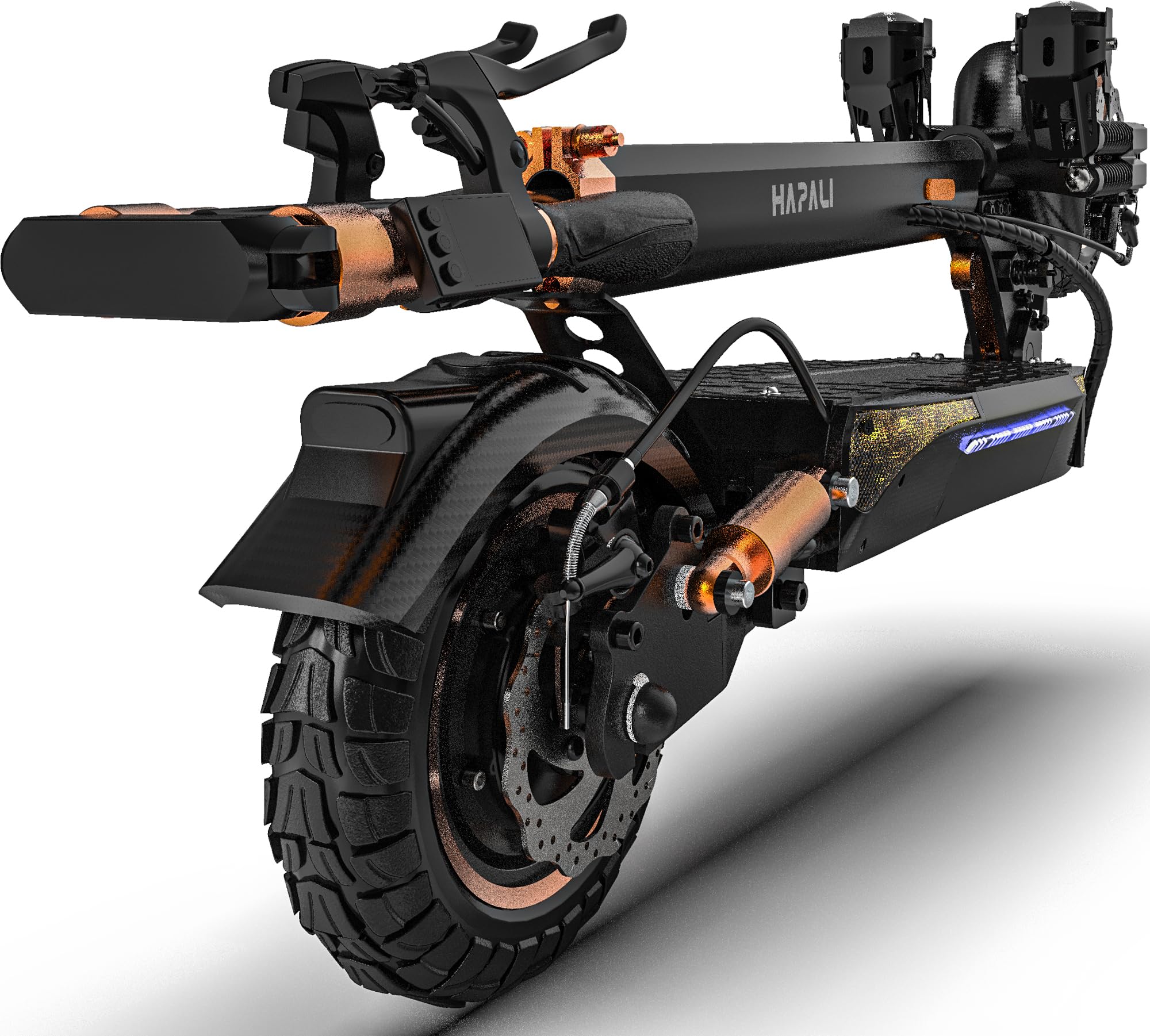
The Hapali A16 is built around a 1200W brushless rear hub motor that produces 25 Nm of torque, enabling confident climbing on 20- to 30-degree grades. The 31-mile range in Eco mode serves daily commuting and weekend exploration equally well, though the 5- to 8-hour charge time requires planning ahead for consecutive long rides. The 11-inch by 4.0-inch fat pneumatic tires provide substantial float over loose surfaces, gravel, and uneven terrain that would challenge standard commuter scooters.
Dual shock absorbers work with the wide 9.08-inch deck to create a stable platform for all-terrain riding. The 3-mode front light—strong, weak, and flash—combined with rear brake lights, turn signals, and reflective side strips ensures visibility across a wide range of lighting conditions. The dual disc brakes deliver immediate stopping power regardless of weather. UL 2272 certification covers the electrical safety of the system, which is a positive indicator given the higher power output.
Owner experiences are divided. Several riders praise the scooter’s torque, smooth ride, and easy assembly, while one critical report describes a tire blowout on the second ride and a failing screen within two months. Another owner notes that the rear shocks tend to loosen over time and that speed gradually decreases after three months of use. The 90 percent pre-assembled delivery simplifies setup, and the folding mechanism allows car-trunk storage. The A16 represents a capable all-terrain option for riders who accept the quality variability reported by some users.
What works
- Fat 11-inch tires provide genuine off-road capability
- 1200W motor delivers strong torque for steep inclines
- Dual disc brakes offer reliable stopping in all conditions
What doesn’t
- Quality control and durability vary between units
- Suspension components loosen with extended use
- Long charge time limits consecutive-day range utility
Hardware & Specs Guide
Motor Configuration and Torque Delivery
Hub motors are integrated into the wheel hub and drive directly without gears or belts. They operate quietly and require minimal maintenance, but the lack of mechanical advantage means they deliver less low-speed torque than belt-driven systems. Belt drives use a pulley and belt to multiply motor torque, providing stronger acceleration and better hill-climbing ability at the cost of belt wear and replacement every few hundred miles. Dual motor configurations—whether hub or belt—distribute power across both wheels for improved traction and acceleration, especially on loose or uneven surfaces.
Battery Chemistry and Capacity Metrics
Lithium-ion battery packs are the standard in this category, with capacity measured in watt-hours (Wh) for direct energy comparison across different voltage platforms. A higher Wh rating means more stored energy and longer real-world range. The Battery Management System (BMS) is critical—it monitors individual cell voltages, prevents over-discharge, and balances charge across the pack during charging. UL 2272 certification confirms the entire electrical assembly has passed thermal runaway, short-circuit, and charging safety tests under laboratory conditions.
Deck Construction and Flex Characteristics
Deck materials directly influence ride feel and stability at speed. Canadian maple offers high stiffness and predictable response, which suits riders who prioritize control at higher speeds. Bamboo provides natural vibration damping and a livelier flex that improves comfort on rough pavement but can feel less stable during aggressive carving. Composite laminates blend both properties. Deck length determines turning radius and stability—longer decks (38+ inches) track straighter at speed, while shorter decks (30–33 inches) allow tighter turns and easier portability.
Wheel Durometer and Terrain Matching
The durometer, measured on the Shore A scale, indicates wheel hardness. Softer compounds in the 78A to 83A range conform to road imperfections, provide superior grip, and absorb vibration, making them ideal for rough urban surfaces. Harder compounds from 84A to 90A roll faster on smooth pavement, last longer, and allow controlled slides but transmit more road vibration through the deck. Wheel diameter also matters—larger wheels (100mm+) roll over cracks and debris more easily than smaller ones, reducing the chance of sudden stops from wheel bite.
FAQ
What is the difference between hub motors and belt-driven motors on an electric skateboard?
How do I determine the real-world range of an electric skateboard before buying?
Are electric skateboards safe for beginners to ride?
What does UL 2272 certification mean for an electric skateboard or scooter?
Final Thoughts: The Verdict
For most buyers, the best electric skateboard winner is the MEEPO Mini5 because it combines a compact form factor, genuine kick-tail maneuverability, and reliable dual-hub motor performance at a balanced price point. If you want swappable battery capability for extended range, grab the UDITER S3. And for premium long-distance commuting with hydraulic suspension and industry-leading safety certification, nothing beats the Segway Ninebot MAX G3.

Certification: BSc in Mechanical Engineering
Education: Mechanical engineer
Lives In: 539 W Commerce St, Dallas, TX 75208, USA
Md Amir is an auto mechanic student and writer with over half a decade of experience in the automotive field. He has worked with top automotive brands such as Lexus, Quantum, and also owns two automotive blogs autocarneed.com and taxiwiz.com.