Selecting an electric rally car means choosing a machine that balances blistering straight-line speed with the chassis composure to hold a drift on loose surfaces. Unlike a generic buggy or monster truck, a proper rally chassis demands a stiff platform, oil-filled shocks, and a drivetrain that can handle repeated impacts.
I’m Amir — the founder and writer behind Four Wheel Ask. My buying guides are built on deep market research, specification cross-referencing, and the careful analysis of long-term owner feedback and durability reports from the RC hobby community.
Through rigorous analysis of drivetrain specs, chassis materials, and real owner feedback, we identified the most reliable best electric rally car.
How To Choose The Best Electric Rally Car
Rally driving places unique demands on an RC car. You need a machine that accelerates hard on tarmac, floats over gravel, and can be thrown into slides without shredding the drivetrain. Understanding three critical areas will help you pick the right chassis for your budget and skill level.
Motor and ESC Configuration
Brushed motors are cheaper and work fine for casual bashing, but they wear out quickly under the constant load changes rallying demands. A brushless system — specifically a 2845 to 3650 sized motor paired with a 35A or larger ESC — delivers the thermal headroom and torque to sustain high-speed runs and repeated drifts without fading or overheating.
Gyro Assistance and Tuning
A programmable gyro stabilizes the car during high-speed corners by automatically correcting the steering angle. For rally, a gyro set between 60 and 75 percent sensitivity lets the tail slide while keeping the car recoverable. Models with an adjustable or switchable gyro give you the flexibility to go from precision stage driving to full drift mode without changing hardware.
Chassis and Drivetrain Materials
Plastic tub chassis flex under hard cornering and crack after repeated jumps. Look for a 6061 aluminum alloy chassis plate with metal differentials and steel CVD drive shafts. Oil-filled shocks with threaded collars let you tune ride height and damping for different rally surfaces, while sealed gearboxes keep dust and pebbles out of the drivetrain.
Quick Comparison
On smaller screens, swipe sideways to see the full table.
| Model | Category | Best For | Key Spec | Amazon |
|---|---|---|---|---|
| MJX Hyper GO 14303 | Rally Replica | Scale Accuracy | 1/14 Scale, 3900KV Motor | Amazon |
| HYPER GO 14301 V3 | Drift/Rally | Drift Versatility | 1/14 Scale, 3900KV Motor | Amazon |
| DIKAVEY 1/12 Rally | High-Speed Rally | Top Speed | 1/12 Scale, 50 mph | Amazon |
| HAIBOXING 2997A | Stadium Truck | Upgrade Potential | 1/12 Scale, 3650 Motor | Amazon |
| HAIBOXING 903A | Monster Rally | Runtime | 1/12 Scale, 3800KV Motor | Amazon |
| ZD Racing 1/12 | Buggy Rally | Value | 1/12 Scale, 3600KV Motor | Amazon |
| HOMETALL 1/18 | Entry Level | Beginners | 1/18 Scale, 380 Motor | Amazon |
In-Depth Reviews
1. MJX Hyper GO 14303 Citroen C3

The MJX Hyper GO 14303 is the only officially licensed Citroën C3 WRC replica on this list, and the attention to detail extends well beyond the decals. The body features molded bumpers, a wide rear spoiler, functional air intakes, and a full LED lighting system with programmable brake and turn signals controlled directly from the transmitter. This makes it the most visually authentic option for rally fans who want their RC car to mirror the real World Rally Championship machine.
Under the shell, the 1/14 scale chassis runs a 2845 3900KV brushless motor paired with a 45A independent ESC that accepts 2S and 3S LiPo packs. On the included 2S battery, the car hits 26 mph out of the box, and owners who upgrade to a 3S pack report speeds exceeding 38 mph. The independent gyro system — adjustable via the transmitter — provides the stability needed for high-speed straights while allowing controlled tail slides during corner entry. Three sets of tires ship with the car: high-grip slicks for tarmac, rally blocks for dirt, and bald drift tires for polished surfaces.
The chassis features a 6061 aluminum alloy plate, powder-metallurgy transmission gears, and oil-filled shock absorbers that deliver consistent damping over rough terrain. The 400-foot transmitter range and 70 percent throttle limiter make this car accessible for newer drivers while still offering the speed and adjustability experienced hobbyists expect. Overall, the Hyper GO 14303 combines race-grade components with show-quality scale details better than any other model at its price tier.
What works
- Licensed Citroën C3 body with detailed replica styling
- Interchangeable tire sets cover tarmac, dirt, and drift
- Adjustable gyro delivers stable high-speed handling
What doesn’t
- 3S LiPo battery not included for full speed potential
- Body clips can be difficult to secure with thicker shells
2. HYPER GO 14301 V3

The Hyper GO 14301 V3 is the drift-focused sibling in the MJX lineup, but its rally credentials are equally impressive. Like the Citroën model, it uses a 2845 3900KV brushless motor with a 45A ESC and a dedicated gyro system that can be dialed between zero and full intervention. The recommended 75 percent gyro setting provides a balance of stability and yaw that makes slide maintenance intuitive even for drivers transitioning from on-road cars to loose-surface rallying.
The V3 chassis retains the 6061 aluminum alloy frame and metal differentials of the 14303, but adds larger foam bumpers and reinforced metal support rods throughout the body for improved crash resilience. The 2S 2000 mAh battery delivers approximately 20 minutes of runtime, and the ESC supports 3S packs for those who want the full 38 mph top speed. The transmitter includes a 70 percent throttle limiter as a safety net for newer drivers still learning throttle modulation on loose surfaces.
Three tire sets are included — rubber road tires, rally treads, and slick drift tires — all pre-mounted with sponge inserts and paired with oil-filled shock absorbers that minimize chassis bounce during hard transitions. The 14301 V3 also features interactive LED lighting with brake and turn signal effects controlled through the remote. For drivers who want a single chassis that can tackle tarmac stage days and drift events without swapping parts, this is the most versatile option available at this price point.
What works
- Three pre-mounted tire sets for maximum surface flexibility
- Strong metal chassis and drivetrain survive hard impacts
- Gyro tuning range covers both stability and full drift modes
What doesn’t
- Body shell lacks the licensed replica detailing of the 14303
- Stock 2S battery requires upgrade for peak speed claims
3. DIKAVEY 1/12 Rally Car
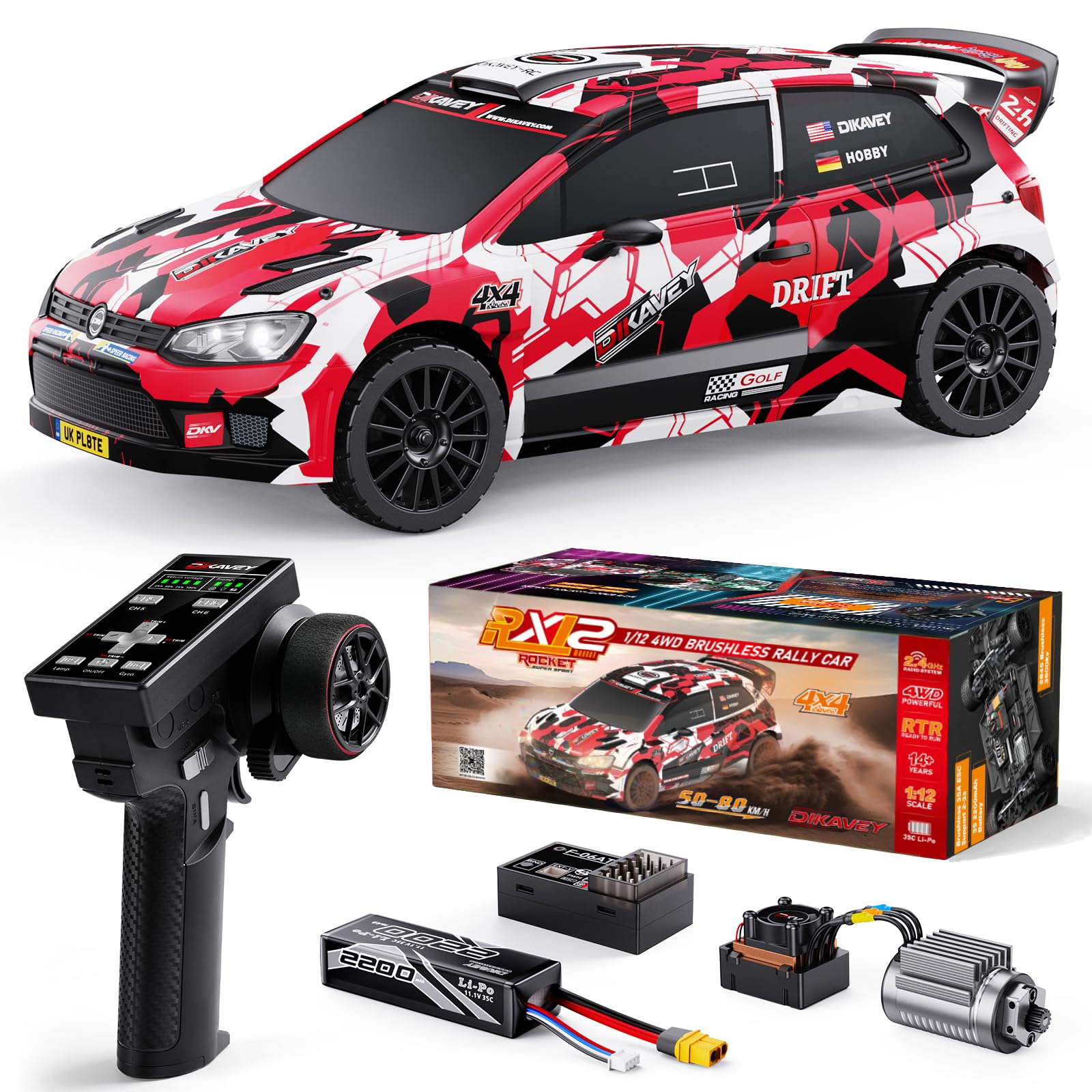
The DIKAVEY 1/12 Rally Car is built around a Rocket 2845 3600KV brushless motor and a 35A ESC, but the headline figure is the 50 mph top speed achievable with the included 3S 2200 mAh LiPo battery. This makes it the fastest ready-to-run car in the comparison by a significant margin. The speed comes from a carefully matched power system that includes dedicated metal heatsinks and dual cooling fans on both the motor and ESC to prevent thermal throttling during extended high-speed runs.
The chassis uses a 6061 aluminum plate with a full CNC 59TC steel differential, powder-metallurgy gears, steel CVD drive shafts, and oil-damped suspension. The sealed differentials and center slipper clutch reduce the risk of drivetrain damage when transitioning from high-grip tarmac to loose gravel. A 2 mm reinforced polycarbonate shell with a front anti-collision bumper provides structural protection, and the full LED lighting array includes headlights, turn signals, brake lights, and flame-effect tail lights that can be switched between flash, constant, and off modes from the transmitter.
The 2.4 GHz transmitter offers a 350-meter range with three speed modes, lighting controls, and gyro-assisted drifting capability. The ESC includes built-in overheating warnings, low-voltage cutoff, and overcurrent protection with an audible alarm system. Assembly is required, and the battery takes approximately four hours to charge with the included charger. For experienced hobbyists seeking a track-ready rally car that can also serve as a high-speed basher, the DIKAVEY delivers speed and durability that justifies its mid-range investment.
What works
- Highest stock top speed at 50 mph with included 3S battery
- Full metal drivetrain with CNC steel differential
- Comprehensive cooling system prevents overheating
What doesn’t
- Long charge time with the included standard charger
- Assembly required out of the box
4. HAIBOXING 2997A
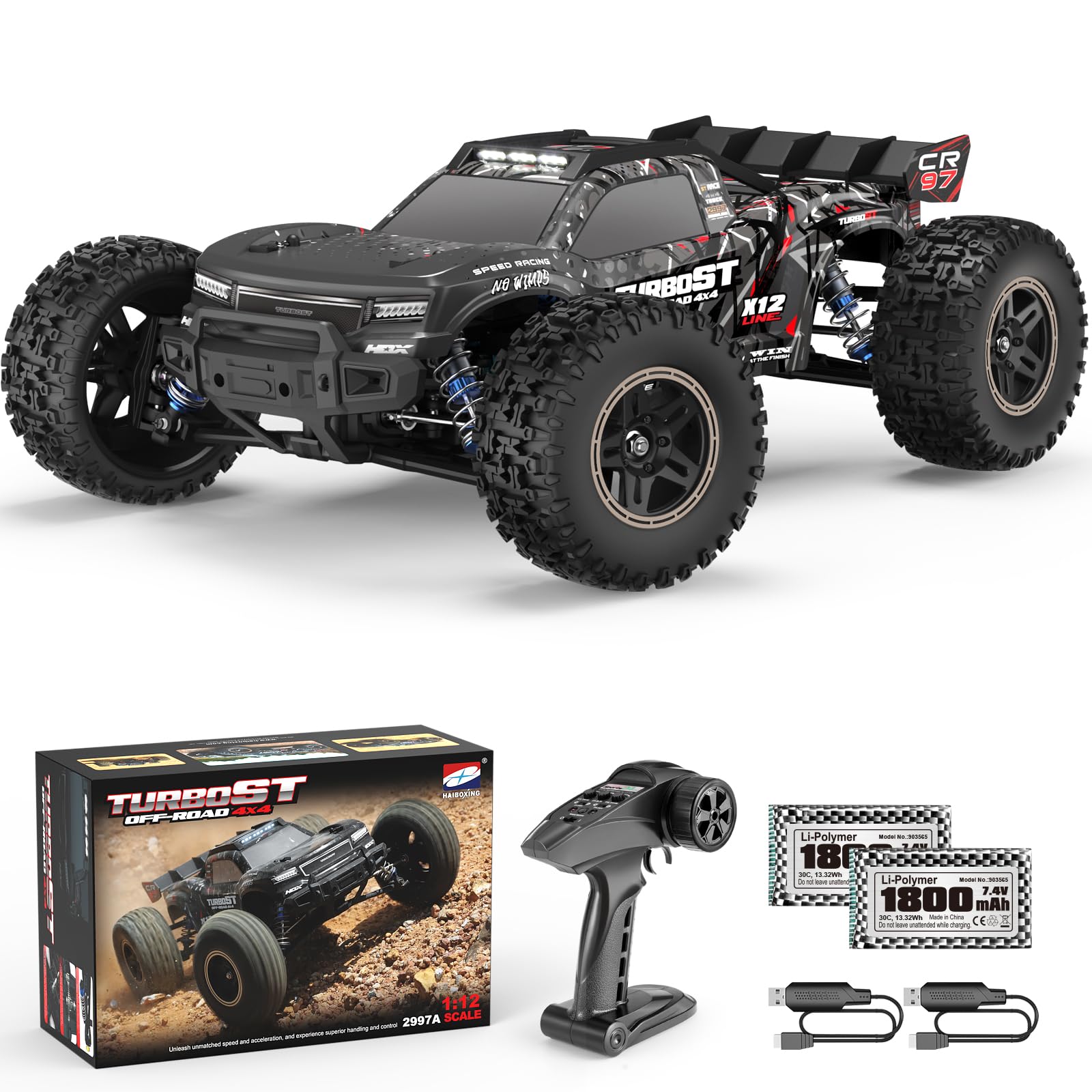
Haiboxing’s 2997A steps up the power delivery with a 3650 3800KV brushless motor — the largest can size in this comparison — paired with a 60A independent ESC. On the included 2S 1800 mAh battery, the car reaches 30 mph, but the chassis is designed to accept 3S packs, which push the top speed beyond 45 mph. The 60A ESC provides substantial headroom for gearing changes and heavier driving conditions without entering thermal protection.
The drivetrain features high-density powder-metallurgy gears in the front, center, and rear differentials, along with metal universal drive shafts and adjustable steering links. The 1.2 mm thick PVC shell is reinforced at the mounting points and includes illuminating LED lights for low-light visibility. Oil-filled aluminum shock absorbers with threaded collars allow ride height tuning for different rally surfaces, and the off-road tires use sponge inserts for consistent grip across loose and hard-packed terrain.
The 2.4 GHz remote provides a 330-foot control range, and the ESC includes splash-water resistance, overheating protection, motor anti-lock safeguards, and low-voltage alert. Two USB charging cables are included for the dual battery setup — one battery in the car and one spare. The 2997A requires no assembly out of the box and is rated for drivers aged 14 and up. For enthusiasts who want a platform with a larger motor mount and higher ESC capacity for future upgrades, this model offers the most headroom for component swaps.
What works
- Largest brushless motor and 60A ESC provide upgrade headroom
- Three metal differentials with powder-metallurgy gears
- Ready to run with no assembly required
What doesn’t
- 3S battery not included for full 45 mph potential
- PVC shell is thinner than some competitor options
5. HAIBOXING 903A

The Haiboxing 903A uses a 2847 3800KV brushless motor paired with a 35A splash-resistant ESC, and it ships with two 7.4V 1600 mAh LiPo batteries — one installed and one spare. This dual-battery approach extends runtime to approximately 30 minutes of continuous driving, which is significantly longer than single-battery configurations in this class. The USB charging cables allow both batteries to be charged simultaneously, reducing downtime between sessions.
The chassis features a motor-centered weight distribution with steel gear pinions, aluminum oil-filled shocks, and metal drive shafts. All driving components have been upgraded to metal parts, and the PA plastic chassis components are reinforced for impact resistance. The 2.4 GHz transmitter provides over 330 feet of range, and the ESC includes overheating protection, overcurrent protection, and automatic low-voltage cutoff. A 25-gram 3-wire servo handles steering with enough torque for aggressive cornering on loose surfaces.
The 903A mounts high-grip V-tread off-road tires with sponge inserts and includes an optional wheelie bar to prevent chassis tipping during hard acceleration. The thickened PVC body comes with a DIY decal sheet for customization. While the 903A does not support 3S batteries — a limitation versus the other brushless models here — the dual 2S setup provides ample runtime and sufficient speed for most rally and bashing applications. It remains one of the most beginner-friendly ready-to-run options in the comparison.
What works
- Two batteries included for long combined runtime
- Motor-centered chassis design improves balance
- USB charging allows simultaneous battery charging
What doesn’t
- No 3S support limits top speed potential
- Smaller 1600 mAh batteries require more frequent swaps
6. ZD Racing 1/12 Brushless Buggy
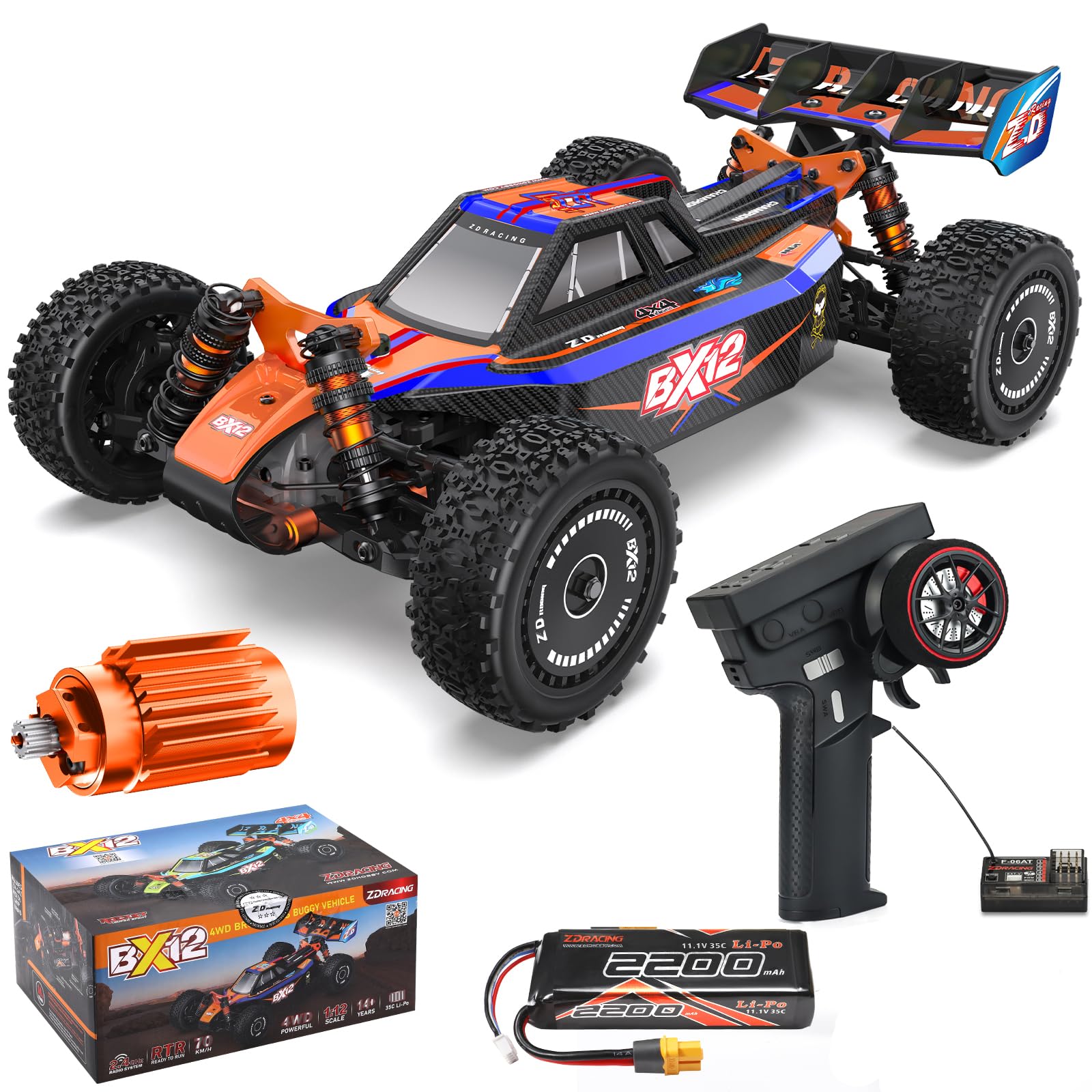
The ZD Racing 1/12 buggy is powered by a Rocket 2845 3600KV brushless motor and a 3S 2200 mAh LiPo battery that delivers a top speed of 42 mph — impressive for a model in this price tier. The motor gear can be swapped to adjust speed characteristics, giving owners the ability to prioritize acceleration or top speed depending on the rally surface. The independent receiver and ESC layout simplify replacement and upgrade paths.
The drivetrain features a full metal differential with oil damping and an overload-limited slip group built around 59T CNC high-carbon steel teeth. Steel CVD components transfer power to the wheels, and the enhanced cooling system uses dedicated fans and heatsinks on both the motor and ESC to maintain performance during extended runs. The chassis is constructed with a 2 mm thick shell and a front anti-collision bumper that absorbs impact energy during crashes. The 16×71 mm metal hydraulic shock absorbers are adjustable and oil-filled for consistent damping.
The 2.4 GHz transmitter includes TH.D/R knobs for speed mode adjustment, and the ESC provides intelligent alerts for overheating, overcurrent, and electronic blockades along with low-voltage cutoff. The all-terrain tires use natural rubber with a newly designed tread pattern that performs well on dirt, grass, and gravel. Assembly is required, and the remote must be adjusted above 25 on the throttle dial before the car will respond — a minor quirk that owners should note during initial setup. For buyers seeking brushless speed on a restrained budget, this model delivers the best performance-per-dollar ratio in the group.
What works
- Exceptional 42 mph speed for the price point
- CNC steel differential with overload-limited slip
- Adjustable shock absorbers with oil damping
What doesn’t
- Throttle dial quirk requires adjustment before first run
- Assembly required and spare parts must be sourced separately
7. HOMETALL 1/18 RC Monster Truck
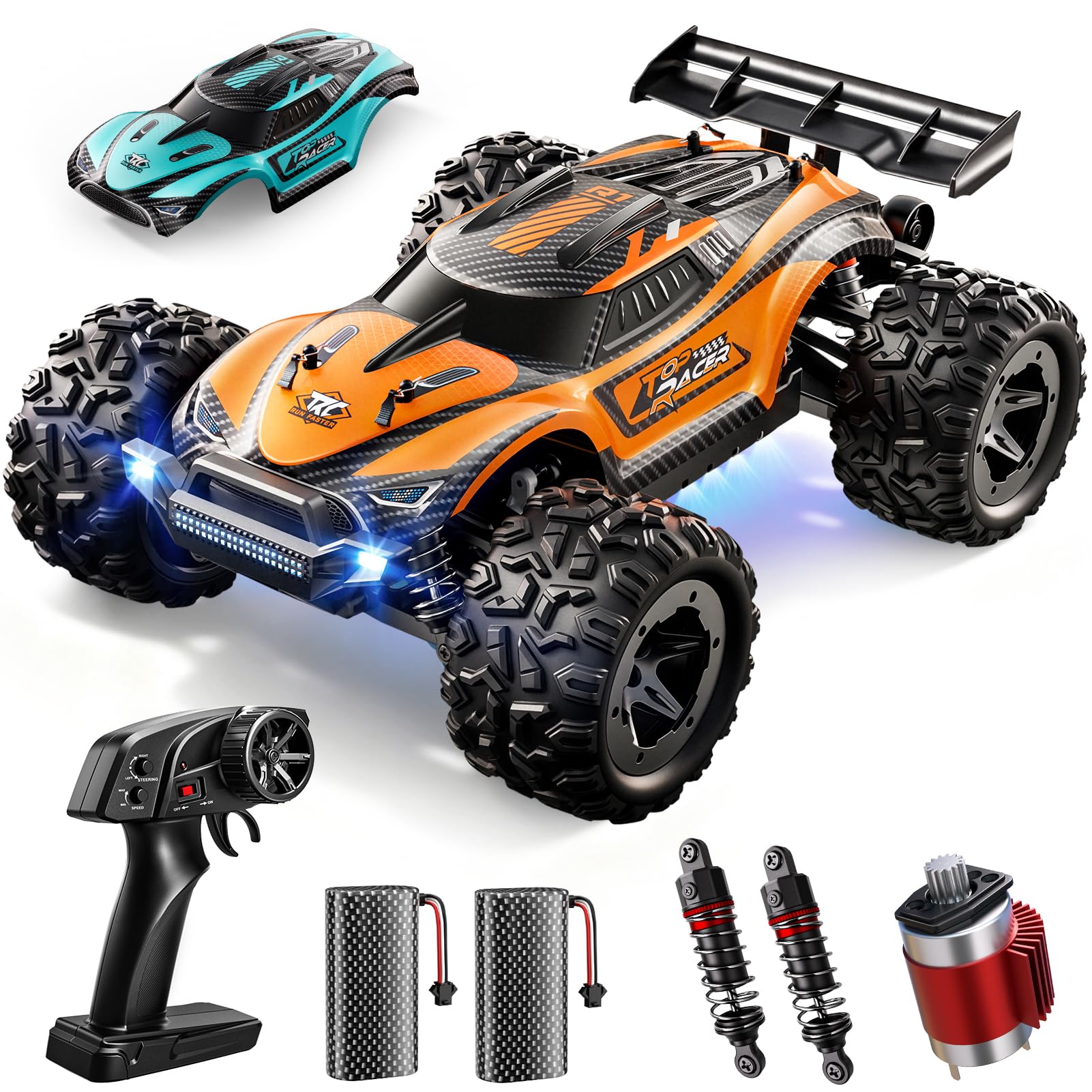
The HOMETALL 1/18 is the only brushed motor entry in this comparison, using a 380 motor paired with a 35A splash-proof ESC. While the 38 km/h top speed is modest compared to the brushless models above, the car includes two 7.4V 1500 mAh batteries for extended runtime. The 2.4 GHz 80-meter range transmitter supports speed level control, forward and reverse, drifting, and wheelie stunts, making it a capable entry-level platform for learning rally driving fundamentals.
The 4WD drivetrain uses a durable PA chassis with metal drive shafts, ball bearings to reduce friction, and four-wheel independent suspension with metal shock absorbers. The truck features a shark-inspired body shell with RGB LED lighting, and it ships with two PVC shells so drivers can swap colors without painting. The packaging includes the truck, remote, two shells, two batteries, two USB charging cables, a screwdriver, manual, and eight extra body clips — everything needed to get started out of the box.
The battery requires two hours for a full charge, and the remote uses two AA batteries not included. Assembly is required, and the manufacturer notes that the battery should be charged on a non-flammable surface with overnight charging strictly avoided. The HOMETALL is best suited for younger drivers or adults looking for a low-cost introduction to RC rally driving. Its brushed motor and smaller 1/18 scale limit its performance on rough terrain, but for paved surfaces and packed dirt, it provides a reliable and affordable starting point.
What works
- Two batteries and two body shells included in the box
- Metal drive shafts and ball bearings at an entry-level price
- RGB lighting adds visual appeal for night driving
What doesn’t
- Brushed motor lacks the speed and durability of brushless systems
- 1/18 scale struggles with rough or deep loose terrain
Hardware & Specs Guide
Brushless vs Brushed Motors
Brushless motors use an electronic controller to energize stationary electromagnets, eliminating the physical brushes and commutator found in brushed motors. This design reduces friction and heat, allowing brushless motors to run at higher RPMs for longer periods without performance fade. For rally driving — which demands sustained high-speed runs and rapid throttle changes — a 2845 to 3650 size brushless motor paired with a 35A or larger ESC is the recommended specification. Brushed motors, while significantly cheaper, lose torque as the brushes wear and generate more heat under load, making them suitable only for entry-level use on smooth surfaces.
Gyro Systems Explained
A gyro (gyroscope) in an RC car detects yaw and steering angle deviations and automatically counters them by adjusting the servo position. In rally driving, the gyro stabilizes the car during high-speed corners and crosswinds, allowing the driver to focus on throttle modulation and entry angle. Adjustable gyro systems, like those found on the MJX and Hyper GO models, let you dial in sensitivity from zero (no assistance) to 100 percent (full stabilization). The recommended setting for rally is 60–75 percent, where the rear end can still slide under power but the gyro prevents full spinouts.
Chassis Materials and Durability
The chassis material directly affects how the car handles impacts and weight transfer during cornering. Nylon-reinforced PA plastic is lightweight and flexible, absorbing minor impacts without cracking, but it flexes under hard cornering and can deform after repeated jumps. A 6061 aluminum alloy chassis provides a rigid platform that maintains consistent suspension geometry and transfers power more efficiently to the wheels. Models with aluminum chassis plates, metal differentials, and steel CVD drive shafts — such as the DIKAVEY and MJX entries — offer significantly longer service intervals than all-plastic alternatives.
LiPo Battery Types and Charging
Lithium polymer (LiPo) batteries are standard in hobby-grade RC cars due to their high energy density and discharge rates. A 2S (7.4V) battery is suitable for speeds up to 30 mph, while a 3S (11.1V) battery unlocks speeds above 45 mph. When selecting a car, consider whether the ESC supports 3S out of the box — many budget models limit voltage to 2S. Charging safety is critical: always use a LiPo-compatible charger on a non-flammable surface, never charge unattended, and stop using the battery if it shows swelling or leakage. Most included USB chargers take two to four hours for a full charge.
FAQ
What scale is best for electric rally driving?
Do I need a gyro for rally driving?
How fast should a good electric rally car go?
Can I upgrade a brushed rally car to brushless later?
Final Thoughts: The Verdict
For most buyers, the best electric rally car winner is the MJX Hyper GO 14303 because it combines an officially licensed Citroën C3 WRC body, a powerful brushless drivetrain, an adjustable gyro, and three tire sets for different surfaces — all in a durable aluminum chassis. If you want the highest stock speed, grab the DIKAVEY 1/12 for its 50 mph top end and full metal drivetrain. And for maximum runtime, nothing beats the HAIBOXING 903A with its dual-battery setup and balanced chassis design.

Certification: BSc in Mechanical Engineering
Education: Mechanical engineer
Lives In: 539 W Commerce St, Dallas, TX 75208, USA
Md Amir is an auto mechanic student and writer with over half a decade of experience in the automotive field. He has worked with top automotive brands such as Lexus, Quantum, and also owns two automotive blogs autocarneed.com and taxiwiz.com.