A clogged EGR valve doesn’t always announce itself with a loud knock — more often it creeps in as a rough idle, a hesitation during acceleration, or that dreaded check engine light that emissions test day. What looks like a major repair bill at the shop can often be resolved with the right chemical cleaner, saving both time and the cost of component replacement.
I’m Amir — the founder and writer behind Four Wheel Ask. I’ve spent years analyzing product formulations, reading owner-reported outcomes across thousands of vehicles, and comparing how different solvents and additives affect EGR function and long-term engine health.
Knowing the difference between fuel additives and aerosol sprays is critical when selecting the best egr valve cleaner for your specific engine type and driving habits.
How To Choose The Best EGR Valve Cleaner
An effective EGR cleaner needs to dissolve baked-on carbon without damaging oxygen sensors or catalytic converters. The wrong formula can leave residue or attack sensitive engine components.
Delivery Method: Additive vs. Spray
Fuel additives are poured into the tank and clean the entire exhaust path including the EGR valve, combustion chamber, and catalytic converter. Aerosol sprays target the valve directly and work faster on heavy buildup but require access to the intake system. Your choice depends on whether you want a passive treatment or a hands-on cleaning session.
Formula Safety and Sensor Compatibility
Look for cleaners labeled O2 sensor safe and catalytic converter safe. Harsh solvents like concentrated acetone or xylene can damage sensor coatings. Modern vehicles with sensitive emissions equipment demand a formula that dissolves carbon without attacking precious metals or ceramic substrates.
Application Frequency and Mileage Range
High-mileage engines above 75,000 miles benefit from stronger cleaning agents that tackle years of accumulation. Some products are designed for preventive maintenance every 3,000 miles, while others are intensive treatments meant to clear existing fault codes. Match the product strength to your current engine condition.
Quick Comparison
On smaller screens, swipe sideways to see the full table.
| Model | Category | Best For | Key Spec | Amazon |
|---|---|---|---|---|
| MotorPower Care Catalytic Converter Cleaner | Fuel Additive | Emissions test & P0420 codes | 8.45 fl oz, German TÜV formula | Amazon |
| Solder-It Catalytic Converter Cleaner | Fuel Additive | Rotten egg odor & sensor cleaning | 16 fl oz, unscented formula | Amazon |
| Holley Carburetor and Throttle Body Cleaner | Aerosol Spray | Direct valve & throttle cleaning | 18 oz, O2 sensor safe | Amazon |
| Lucas Oil 10872 Diesel Deep Clean | Fuel Additive | Diesel particulate & injector cleaning | 16 oz, reduces particulate matter | Amazon |
| 3Pcs Catalytic Converter Cleaner Kit | Fuel Additive Kit | Budget multi-bottle maintenance | 3-piece kit, universal compatibility | Amazon |
In‑Depth Reviews
1. MotorPower Care Catalytic Converter Cleaner
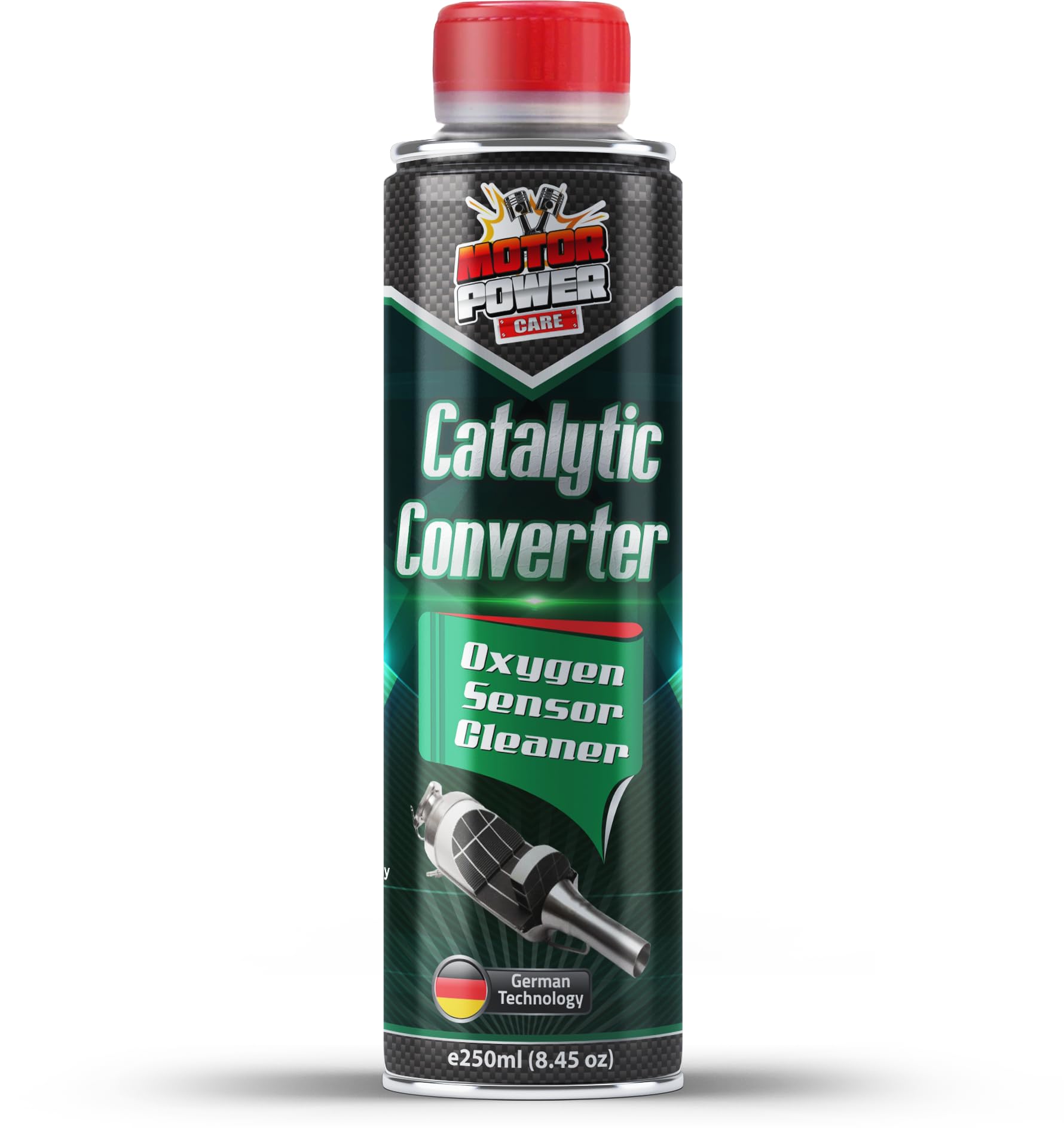
MotorPower Care stands apart because its manufacturer provides real government-tested emissions reduction data — HC dropped from 108 to 67 ppm and NOx from 986 to 332 ppm in documented testing. That level of transparency is rare in the additive market and gives owners a concrete reason to trust the product before pouring it into the tank.
The formula targets the entire exhaust system: catalytic converter, oxygen sensors, EGR valve, fuel injectors, and combustion chamber. Users report clearing P0420 and P0430 fault codes after a single 40-minute drive cycle, which eliminates the diagnostic fee and potential converter replacement cost. The German-engineered TÜV certification adds another layer of credibility for those skeptical of off-the-shelf additives.
For preventive maintenance the manufacturer recommends treatment every 3,000 miles, and the 8.45-ounce bottle treats a full tank of 5 to 15 gallons. Owners of high-mileage gasoline and hybrid vehicles find this product especially effective when check engine lights appear just before emissions testing season.
What works
- Documented emissions reduction data from lab testing
- Clears P0420 and P0430 codes without shop visits
- Safe for all gasoline and hybrid engines
What doesn’t
- Smaller bottle volume compared to some competitors
- Not designed for direct intake spray cleaning
2. Solder-It Catalytic Converter Cleaner and Deodorizer

Solder-It markets its CAT-1 formula specifically around one of the most annoying symptoms of a failing catalytic converter: the rotten egg sulfur smell. The additive works by breaking down sulfur deposits inside the converter and EGR system, which not only cleans the valve but also eliminates the odor at its source rather than masking it.
The 16-ounce bottle provides twice the volume of many competitors, making it an economical choice for owners who want multiple treatments per purchase. The product functions as an oxygen sensor cleaner and supports emissions testing readiness, which matters for drivers in states with annual smog check requirements. The unscented formula means no chemical perfume residue in the exhaust.
Users report smoother idle after treatment and a noticeable reduction in hesitation during acceleration. The additive works best when poured into a near-empty tank and followed by a long highway drive to allow the solvent to circulate through the entire exhaust path at operating temperature.
What works
- Eliminates sulfur/rotten egg exhaust odor effectively
- Large 16-ounce bottle offers multiple treatments
- Supports emissions test readiness
What doesn’t
- Not suitable for direct intake or throttle body spray cleaning
- Results vary on heavily clogged converters
3. Holley Carburetor and Throttle Body Cleaner Spray

Holley brings decades of fuel system expertise to this 18-ounce aerosol spray that targets carbon buildup on carburetors, throttle bodies, choke valves, PCV valves, and EGR systems. Unlike fuel additives that clean from the combustion side, this spray allows direct application to the valve itself, which speeds up cleaning on heavily carbon-fouled components.
The formula is O2 sensor safe and 50-state compliant with a low VOC rating, so it meets California air quality standards without sacrificing cleaning power. Users report that the high-pressure aerosol dissolves gum and varnish deposits quickly, often without requiring any tear-down of the intake system. The large can provides multiple applications and also doubles as a starting fluid in a pinch.
For small engines on mowers, snow throwers, and ATVs as well as full-size automotive throttle bodies, this spray offers a hands-on cleaning method that additives cannot replicate. Owners dealing with gummed-up carburetors from ethanol-laced fuel find this product especially effective at restoring immediate idle quality.
What works
- Direct spray cleans heavy buildup without tear-down
- O2 sensor safe and 50-state compliant
- Large 18 oz can with high-pressure delivery
What doesn’t
- Requires access to intake for direct EGR valve cleaning
- Not a fuel additive — can’t clean downstream catalytic converter
4. Lucas Oil 10872 Diesel Deep Clean

Lucas Oil is a trusted name in the diesel community, and the 10872 Deep Clean formula is engineered specifically for compression-ignition engines where soot and particulate matter accumulate differently than in gasoline engines. The additive targets fuel injectors, reduces particulate matter trapped in diesel particulate filters, and helps restore lost power and acceleration in high-mileage trucks and equipment.
The 16-ounce bottle treats a standard diesel fuel tank and works through normal driving cycles, meaning no special procedures or equipment are required. Diesel owners who have noticed sluggish throttle response and increasing regeneration frequency on their DPF report measurable improvements after a single treatment. The formula is safe for all diesel engines including those with common rail injection systems.
For diesel pickup owners who tow heavy loads or run their engines at low RPM for extended periods, this product helps manage the carbon buildup that accumulates in the EGR system and intake valves. Combined with regular oil changes, it extends the interval between expensive EGR valve replacements.
What works
- Formulated specifically for diesel engine soot patterns
- Reduces DPF particulate loading
- Restores acceleration and power in high-mileage engines
What doesn’t
- Not for gasoline engines — diesel formula only
- Results depend on driving cycle length after treatment
5. 3Pcs Catalytic Converter Cleaner Kit
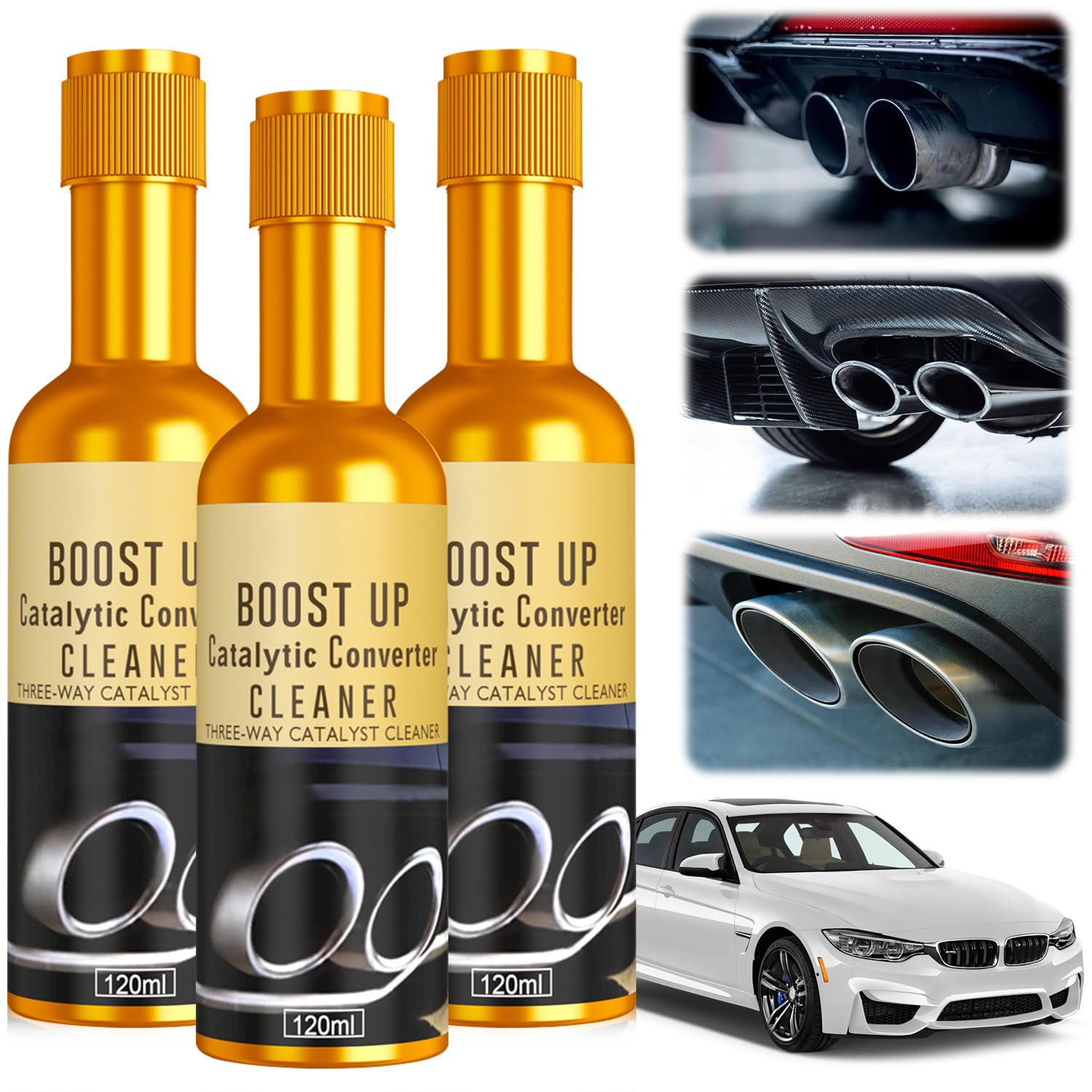
This three-bottle kit from stray poet offers a budget-friendly entry point for drivers who want multiple treatments without a single-bottle premium. Each bottle is a fuel additive that claims to reduce carbon buildup in catalytic converters, fuel injectors, cylinder heads, and the EGR valve, targeting symptoms like rough idle, hard starts, hesitation, and lost fuel economy.
The kit is compatible with gasoline, diesel, hybrid, and flex-fuel vehicles, which makes it a versatile option for households with multiple vehicle types. Application is straightforward — pour one bottle into the fuel tank during refueling — and the manufacturer states it is safe for engines over 75,000 miles where carbon accumulation is more likely. The three-bottle format allows for sequential treatments spaced across multiple tank fills.
While the brand lacks the long-standing reputation of Holley or Lucas Oil, the value proposition is clear: three treatments at a cost that undercuts most single-bottle competitors. Owners looking for a maintenance-level cleaner rather than a heavy-duty code-clearing solution will find this kit a practical way to keep the EGR system functioning without a large upfront investment.
What works
- Three bottles provide multiple treatments per purchase
- Compatible with gasoline, diesel, hybrid, and flex-fuel
- Simple pour-and-drive application
What doesn’t
- Less established brand with limited owner feedback data
- Best for maintenance rather than severe clog remediation
Hardware & Specs Guide
Solvent Chemistry Types
Most EGR cleaners use either petroleum-based solvents for heavy carbon dissolution or alcohol-based carriers for gentle cleaning. Aerosol sprays typically contain stronger aromatic hydrocarbons that dissolve baked-on buildup in minutes, while fuel additives rely on dispersant chemistry to break down deposits gradually over a full drive cycle. Knowing which solvent you need depends on how accessible your EGR valve is and how much buildup exists.
Delivery Method Trade-offs
Fuel additives clean from inside the combustion chamber outward, reaching the EGR valve, intake ports, catalytic converter, and oxygen sensors in one pass. Aerosol sprays require you to remove intake tubing and spray directly onto the valve, which provides faster visual results but demands mechanical access. Some owners combine both methods — using a spray for initial heavy buildup and an additive for ongoing maintenance.
Emissions System Compatibility
Modern vehicles with ceramic catalytic converters and zirconia oxygen sensors require cleaners that do not contain chlorinated solvents or silicones, both of which can poison the catalyst or coat the sensor element. Look for formulas explicitly labeled O2 sensor safe and catalytic converter safe. Products carrying TÜV certification or California Air Resources Board compliance add an extra layer of formula safety verification.
Application Frequency Guidelines
Preventive maintenance treatments every 3,000 to 5,000 miles work well for vehicles that see regular highway driving and consistent oil change intervals. Severe-use scenarios — short trips, heavy towing, stop-and-go traffic — may require treatment every 1,500 miles. Diesel engines with EGR systems benefit from dedicated diesel cleaners every other oil change due to higher soot production from compression ignition.
FAQ
Can an EGR valve cleaner fix a P0420 code?
How often should I use an EGR valve cleaner?
Is aerosol spray or fuel additive better for EGR cleaning?
Will an EGR cleaner damage my oxygen sensors?
Can I use a diesel EGR cleaner in a gasoline engine?
Final Thoughts: The Verdict
For most buyers, the best egr valve cleaner winner is the MotorPower Care Catalytic Converter Cleaner because it combines TÜV-certified German formulation with proven emissions reduction data and the ability to clear P0420 codes in a single drive cycle. If you prefer a hands-on spray approach for direct valve cleaning, grab the Holley Carburetor and Throttle Body Cleaner. And for diesel owners needing DPF and injector cleaning, nothing beats the Lucas Oil 10872 Diesel Deep Clean.

Certification: BSc in Mechanical Engineering
Education: Mechanical engineer
Lives In: 539 W Commerce St, Dallas, TX 75208, USA
Md Amir is an auto mechanic student and writer with over half a decade of experience in the automotive field. He has worked with top automotive brands such as Lexus, Quantum, and also owns two automotive blogs autocarneed.com and taxiwiz.com.