A driver monitoring camera is no longer a luxury reserved for high-end sedans. It is a practical safety tool that reads your alertness level, detects distraction, and provides real-time warnings before a moment of inattention turns into an insurance claim. Whether you manage a fleet, drive rideshare shifts, or want an extra layer of protection for a teen driver, the right system pays for itself the first time it prevents an incident.
I’m Amir — the founder and writer behind Four Wheel Ask. I spend my time dissecting product specifications, analyzing sensor performance data, and cross-referencing owner feedback to separate real capability from marketing claims in the automotive safety space.
The market now offers everything from basic fatigue alerts to full 360-degree cabin surveillance with AI-powered behavior analysis. After evaluating seven top contenders, the clear winner for the best driver monitoring camera title is the HUPEJOS V8 MAX, thanks to its proven STARVIS 2 sensor, true four-channel coverage, and fatigue detection that works reliably at highway speeds.
How To Choose The Best Driver Monitoring Camera
Selecting the right driver monitoring camera requires more than comparing megapixel counts. You need to evaluate sensor quality, the type of alerts the system provides, and whether the hardware can integrate with your vehicle’s power system for 24-hour protection. Focus on these three areas to narrow your options.
Sensor Technology and Low-Light Performance
The sensor is the heart of any monitoring camera. Sony STARVIS 2 sensors, such as the IMX675, offer four times the low-light sensitivity of conventional sensors, which means the camera can detect subtle facial cues like drooping eyelids or yawning even on unlit roads at night. Avoid cameras that rely solely on IR LEDs without a quality sensor base, as they produce grainy footage that the AI struggles to interpret accurately.
AI Detection Capabilities and False Alerts
Not all AI driver monitoring systems are equal. Basic models only detect lane departure using optical flow from the forward camera, while dedicated interior-facing cameras with dedicated AI processors can identify phone use, smoking, yawning, and loss of focus. Look for systems that allow you to adjust sensitivity and set a minimum speed threshold to avoid nuisance alerts during stop-and-go traffic.
Form Factor and Cabin Integration
A driver monitoring camera must be positioned to see the driver’s face without obstructing the windshield view or creating a glare hazard. Compact units that mount behind the rearview mirror or clip onto the dashboard with an adjustable arm offer the best compromise between coverage and visibility. Ensure the camera supports both forward recording and cabin monitoring simultaneously if you want full documentation of road events and driver behavior.
Quick Comparison
On smaller screens, swipe sideways to see the full table.
| Model | Category | Best For | Key Spec | Amazon |
|---|---|---|---|---|
| HUPEJOS V8 MAX | Premium | AI Fatigue Detection & 360° Coverage | STARVIS 2 IMX675, 4-Channel, Touch Screen | Amazon |
| Neideso N700Pro | Premium | 360° Recording with DMS Alerts | 4K+1080P, AI Fatigue Monitor, 8 IR Lamps | Amazon |
| REDTIGER F17 | Premium | Triple-Channel Build Quality | STARVIS 2 IMX675, 2160P+1080P+1080P | Amazon |
| 70mai T800E | Mid-Range | Rideshare Cabin Monitoring | 4K Front, 1080P Interior, Wi-Fi 6 | Amazon |
| LAMTTO 4G LTE | Mid-Range | Remote Live View & Cloud Backup | 4G LTE, Real-Time GPS, Two-Way Voice | Amazon |
| FAIMEE 3 Channel | Mid-Range | Triple Recording Value | 4K+2K+2K, 128GB Card Included | Amazon |
| Pelsee P1 Pro | Budget-Friendly | Entry-Level ADAS & Night Vision | STARVIS 2, 4K Front, 64GB Card | Amazon |
In‑Depth Reviews
1. HUPEJOS V8 MAX
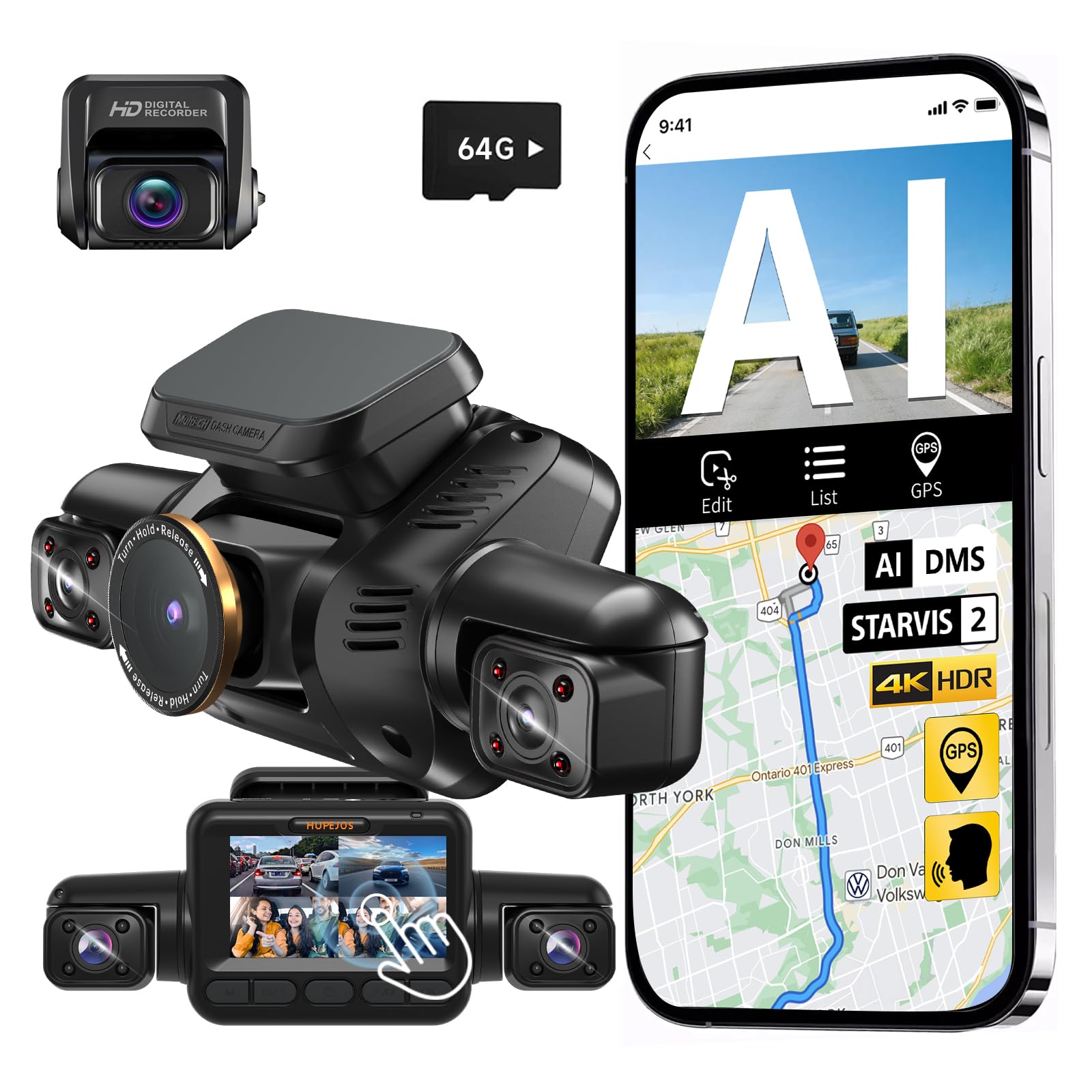
The HUPEJOS V8 MAX earns the top spot because it integrates a dedicated AI Driver Monitoring System with true four-channel 360-degree recording, a combination that no other camera in this lineup matches at this level. The STARVIS 2 IMX675 front sensor delivers 4K UHD clarity with exceptional dynamic range, while the left, right, and rear cameras capture simultaneous 1080P footage. This means you get both driver behavior data and complete surrounding evidence without compromising on recording quality.
The DMS function detects yawning, eye closure, phone use, and distraction, triggering visual and audible warnings only above a configurable speed threshold. This reduces false alerts during city driving while maintaining vigilance on the highway. The 3-inch touchscreen, physical lock buttons, and voice commands provide three ways to interact without taking your eyes off the road, which is exactly the ergonomic design a safety camera should have.
Night performance is reinforced by eight IR LEDs and a bundled CPL filter that eliminates dashboard reflections. The G-sensor automatically locks collision footage to a protected folder, and the parking guard mode activates radar motion detection when the vehicle is off. The 18-month warranty and responsive support team add long-term confidence to a well-engineered package.
What works
- True 4-channel 360-degree video with DMS on one platform
- STARVIS 2 IMX675 provides industry-leading low-light clarity
- Touchscreen, voice, and physical buttons offer flexible control
- CPL filter included to reduce windshield glare
What doesn’t
- Hardwire kit for parking mode sold separately
- No 4G LTE for remote cloud viewing
2. Neideso N700Pro
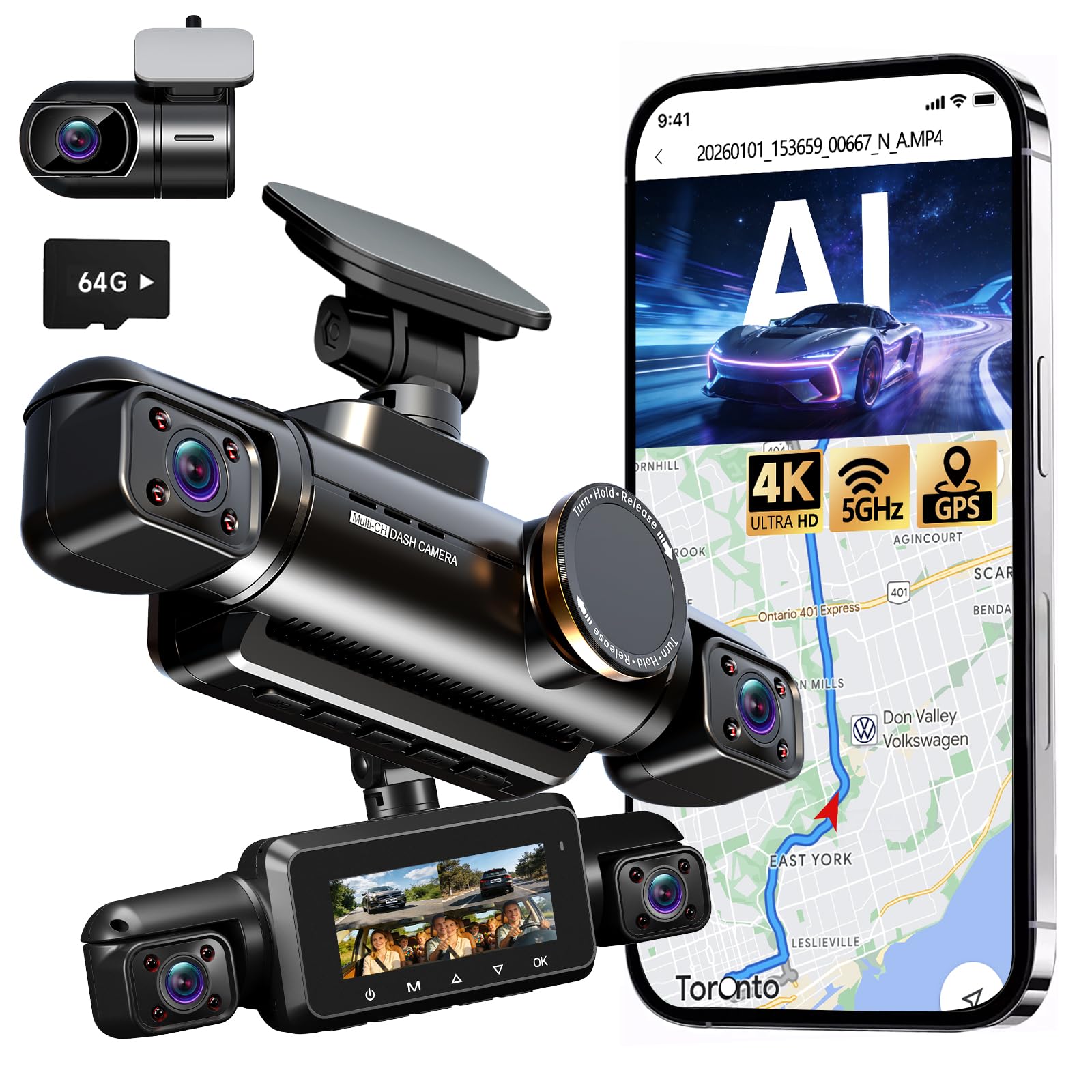
The Neideso N700Pro focuses heavily on the driver monitoring aspect with an AI system that uses sophisticated algorithms to detect drowsiness, phone calls, and general inattention. The four-channel setup captures a 360-degree field of view using ultra-wide 150-degree lenses, giving you front, rear, interior, and side coverage in one unit. You can choose between 4K+1080P+1080P or 3K+1080P+1080P+1080P recording modes depending on whether you prioritize front resolution or equal multi-channel balance.
Night vision is handled by eight IR lamps and six glass lens elements, supported by a CPL filter that cuts down on windshield reflections. The voice control system lets you operate the camera hands-free with English commands, which is essential for keeping focus on the road. The built-in 5GHz Wi-Fi enables fast app-based footage review, though there is no cloud storage or remote viewing option, so all data stays local on the SD card.
Parking mode activates automatically when the vehicle is off and monitors movement within a 3-to-4-meter range. The G-sensor locks collision footage instantly, and 3-minute loop recording ensures continuous overwriting without gaps. The 64GB card is pre-installed, and the system supports expansion up to 512GB, making it a solid option for drivers who want AI monitoring without a monthly subscription.
What works
- Four-channel 360-degree recording with dedicated DMS alerts
- 8 IR lamps and CPL filter deliver strong night performance
- Voice control in English keeps hands on the wheel
- 64GB card included and supports up to 512GB
What doesn’t
- Hardwire kit required for parking mode and sold separately
- No cloud backup or remote viewing via 4G
3. REDTIGER F17

The REDTIGER F17 uses the same STARVIS 2 IMX675 sensor found in more expensive models, giving it a genuine low-light advantage for both forward and cabin recording. The triple-channel configuration captures 4K front, 1080P interior, and 1080P rear video, covering the driver and the road ahead simultaneously. The 150-degree front lens combined with a 160-degree cabin lens ensures the driver’s face is fully visible to the AI analysis system.
One standout feature is the dual recording mode flexibility: you can disable the interior camera to enable 2.5K dual-channel recording with the front and rear, maximizing resolution for the road while still maintaining some cabin awareness through the rear lens. The 5GHz Wi-Fi delivers transfer speeds four times faster than standard 2.4GHz, making clip downloads through the REDTIGER app noticeably quicker than most competitors.
The parking monitor supports both time-lapse and collision detection modes when connected to the optional hardwire kit. The super capacitor design ensures reliable operation in extreme temperatures from well below freezing to hot summer interiors, and the 18-month guarantee with 24/7 support provides solid after-purchase protection. The F17 is a premium pick that prioritizes sensor quality and recording flexibility.
What works
- STARVIS 2 IMX675 sensor delivers true premium night vision
- Dual recording mode option for maximum road resolution
- 5GHz Wi-Fi for fast app-based footage transfer
- Super capacitor handles extreme temperature ranges
What doesn’t
- No built-in AI driver fatigue alerts — relies on passive recording
- Interior camera must be disabled for 2.5K dual mode
4. 70mai T800E

The 70mai T800E is engineered with the rideshare driver in mind, offering a dedicated 3-channel system with a switchable IR interior camera that can be turned on for nighttime cabin clarity or off for privacy when not needed. The front camera records at true 4K resolution using an F1.55 aperture lens that captures more light than typical dash cams in this class, while the 1080P rear camera ensures complete road coverage. The interior camera provides the third angle that is essential for documenting passenger behavior and driver alertness.
Wi-Fi 6 support is a rare feature at this price point, enabling file transfer speeds up to 10 MB per second through the 70mai app, which is roughly five times faster than older Wi-Fi 4 standards. The built-in 5-mode GPS tracks location, speed, and route with high accuracy, and the voice control system lets you lock footage or snap photos without touching the device. The super capacitor design eliminates battery swelling risks and maintains stable operation from 14°F to 140°F.
Parking monitoring requires the optional UP06 or UP03 hardwire kit, but once connected, the G-sensor and motion detection provide round-the-clock surveillance. A 64GB SD card is included in the box, and the system supports expansion up to 512GB. The 18-month warranty and local service centers in New York and California add practical support infrastructure that is uncommon in this segment.
What works
- Wi-Fi 6 delivers fast file transfers for busy drivers
- Switchable IR interior camera offers privacy flexibility
- Super capacitor handles extreme heat and cold reliably
- Local service centers in NY and CA for in-person support
What doesn’t
- No built-in AI driver fatigue detection system
- 4G connectivity not supported for remote viewing
5. LAMTTO 4G LTE
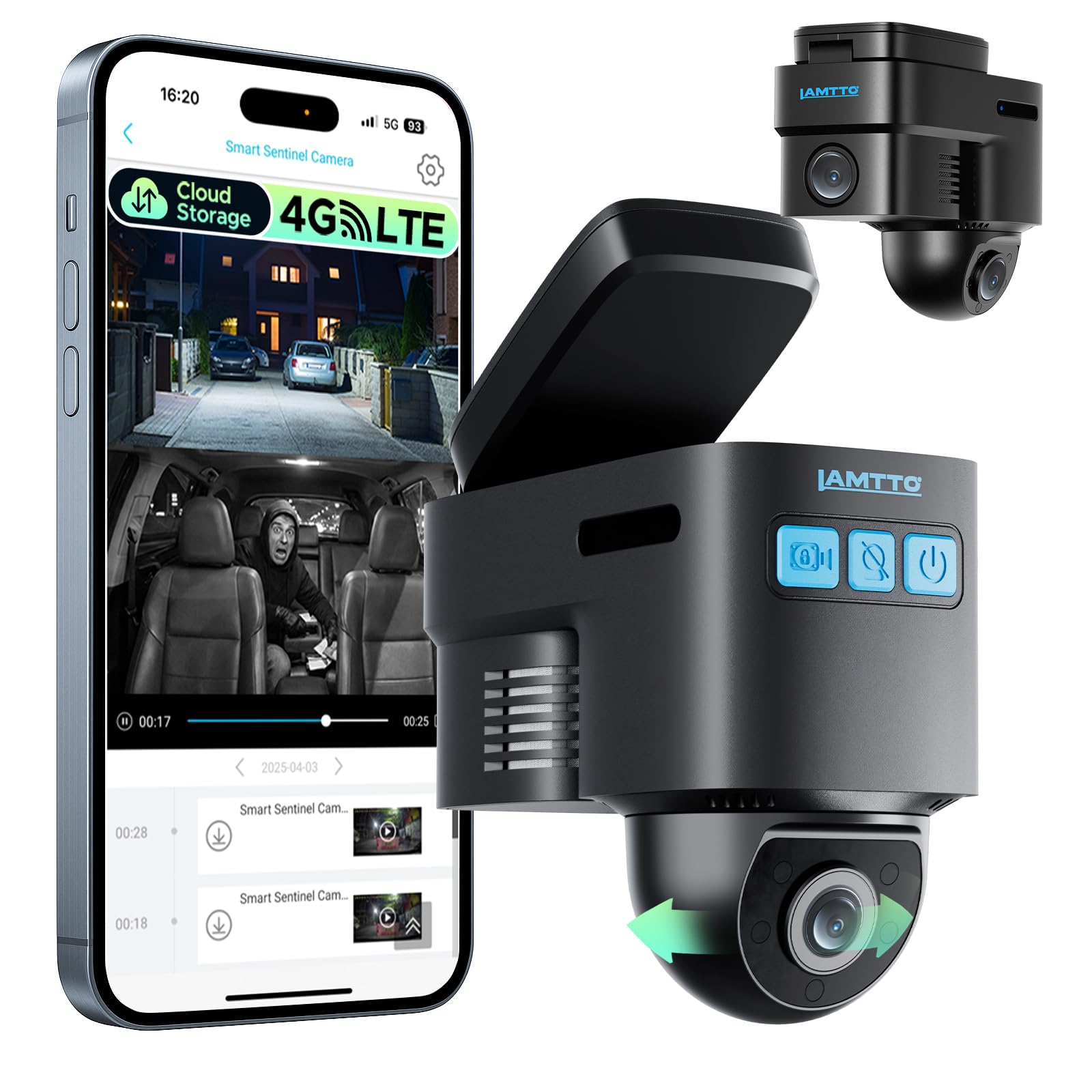
The LAMTTO 4G LTE dash cam takes a different approach by prioritizing remote connectivity over raw resolution. The built-in 4G SIM card enables live view, real-time GPS tracking, and cloud backup through the uboxPro app, turning your vehicle into a connected security hub. The AI human detection combined with microwave radar provides instant app alerts when suspicious movement is detected near the car, making this a strong choice for urban parking and fleet management.
The two-way voice communication feature allows you to speak directly to the driver or passenger through the camera, which is invaluable for parents monitoring teen drivers or fleet managers checking in with delivery personnel. The OBD-II power supply enables 24/7 parking surveillance without draining the car battery to dangerous levels, and the G-sensor provides redundant impact detection. A 32GB memory card is included, and the system supports up to 128GB.
It is important to note that remote features require a cellular subscription after the trial period, with plans averaging under a dollar per day. Without a subscription, the camera functions as a standard dual-channel dash cam with local SD recording. The LAMTTO is the only unit in this lineup that offers cloud backup, which protects footage even if the camera is damaged or stolen. Lifetime technical support and a 1-year warranty back the purchase.
What works
- 4G LTE enables live remote viewing and cloud backup
- Two-way voice communication for real-time driver interaction
- Radar parking monitor with AI human detection
- OBD-II power supply supports 24/7 parking mode
What doesn’t
- Remote features require a paid cellular data plan
- Front camera only records at 1080P, not 4K
6. FAIMEE 3 Channel
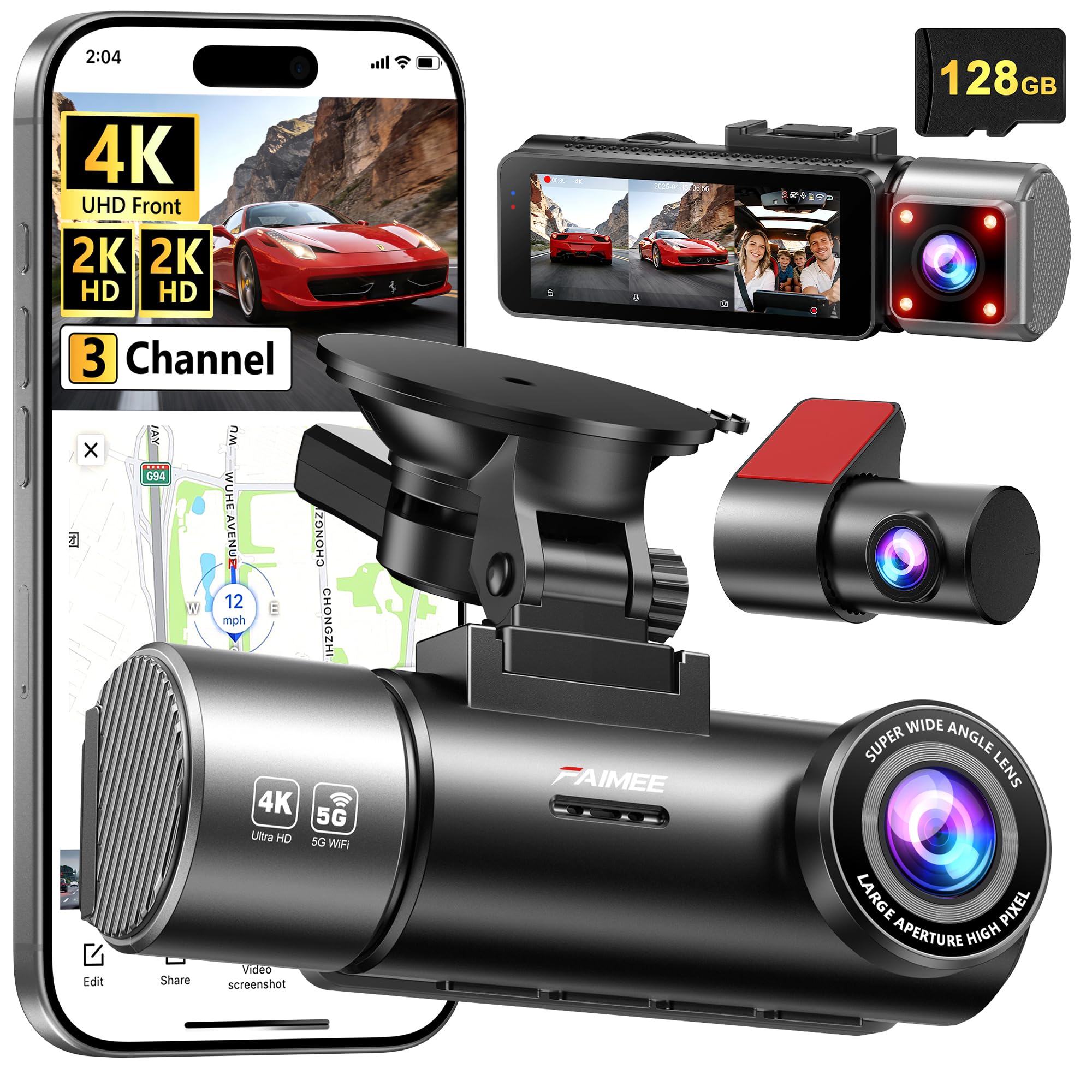
The FAIMEE 3 Channel dash cam delivers one of the best resolution-to-price ratios in the current market. The front camera records at true 4K UHD, while the interior and rear cameras both capture 2K resolution, providing significantly sharper cabin footage than the typical 1080P secondary cameras found on comparably priced units. The 170-degree front lens and 150-degree rear lens minimize blind spots and provide comprehensive coverage for accident documentation and insurance evidence.
The F1.8 aperture lens with six-layer glass optics and WDR technology balances exposure across high-contrast scenes, such as tunnel exits or direct sunlight, ensuring plates and faces remain readable. The built-in GPS logs speed, route history, and location coordinates, which can be reviewed on Google Maps through the FAIMEE app. Dual-band Wi-Fi supports both 5.8GHz and 2.4GHz connections for flexible app-based management of recorded footage.
The package includes a 128GB high-endurance memory card right in the box, which eliminates the immediate need for an additional purchase. Loop recording and G-sensor collision lock work automatically, and parking mode with time-lapse recording is available with the separate hardwire kit. The 18-month warranty and 24/7 technical assistance make this a low-risk entry point for buyers who want premium resolution without premium pricing.
What works
- 4K front with 2K interior and rear for exceptional cabin detail
- 128GB high-endurance card included out of the box
- Dual-band Wi-Fi for flexible app connectivity
- GPS tracking with Google Maps route review
What doesn’t
- No dedicated AI driver fatigue detection system
- Parking mode requires separate hardwire kit purchase
7. Pelsee P1 Pro
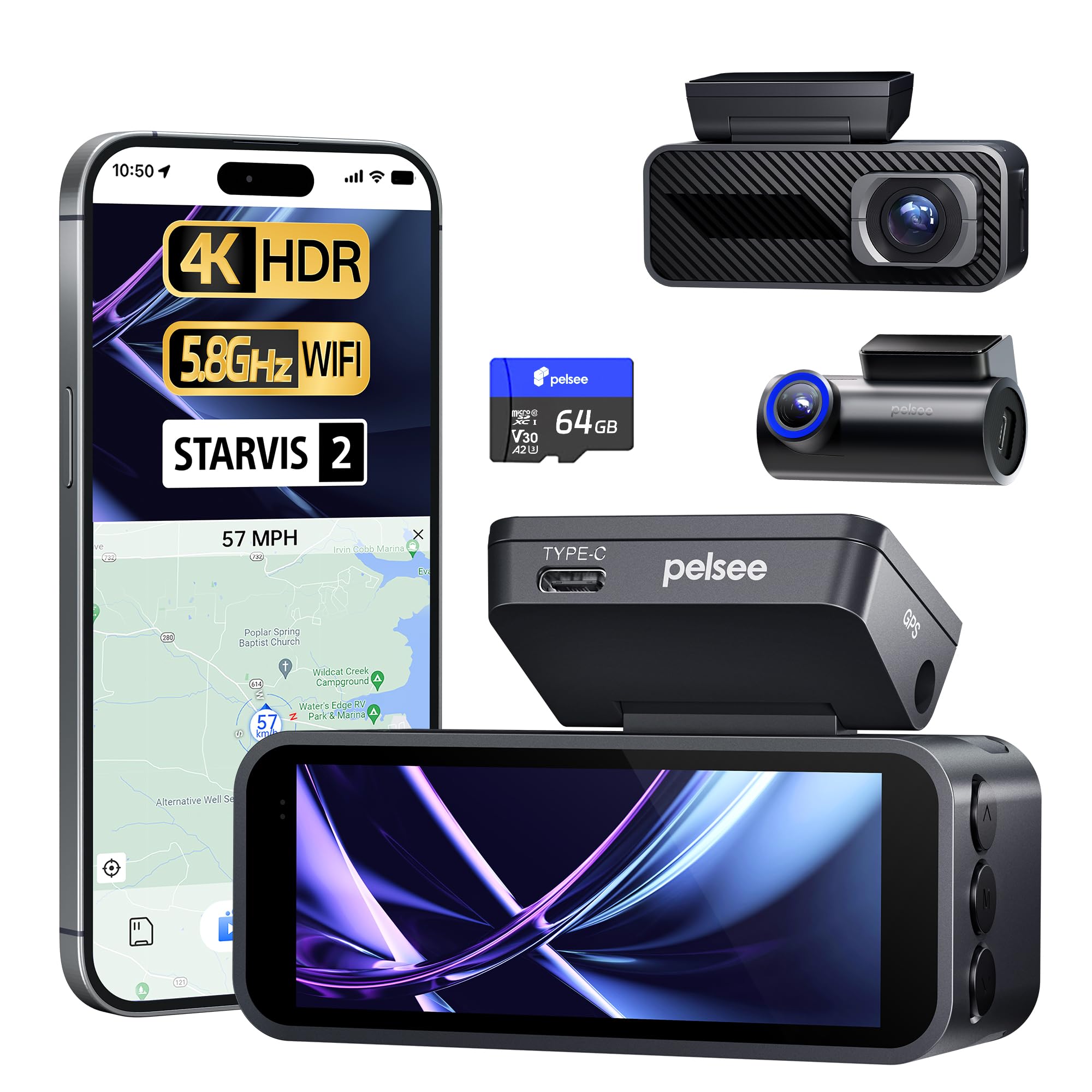
The Pelsee P1 Pro proves that entry-level pricing does not have to mean entry-level sensor technology. It uses a Sony STARVIS 2 sensor for the front camera, delivering 4K HDR recording with the same low-light sensitivity found in cameras costing twice as much. The front 4K HDR lens handles high-contrast scenes like direct sunlight and oncoming headlights effectively, while the rear 1080P WDR camera balances fog and tunnel lighting. The system records at 25 frames per second across both channels.
What sets the P1 Pro apart at this price point is the inclusion of a full Advanced Driver Assistance System. The ADAS provides proactive alerts for forward collisions, pedestrian detection, lane departure, and front vehicle start reminders, with reaction times between 0.8 and 2 seconds. The noise-canceling voice control supports eight commands for hands-free operation, including locking video and taking photos, which is genuinely useful for keeping both hands on the wheel.
The 3.39-inch IPS screen is larger than average and provides crisp live previews and menu navigation. The pre-installed 64GB card supports expansion up to 512GB, and 24-hour parking mode activates via G-sensor impact detection when paired with the hardwire kit. The 5.8GHz Wi-Fi and built-in GPS complete the feature set. For budget-conscious buyers who still want STARVIS 2 quality and driver assistance alerts, the P1 Pro is a compelling starting point.
What works
- STARVIS 2 sensor at a budget-friendly price point
- Full ADAS suite including collision and lane departure warnings
- Large 3.39-inch IPS screen for live preview
- Noise-canceling voice control with eight commands
What doesn’t
- Rear camera limited to 1080P, no 2K or 4K option
- Hardwire kit for parking mode not included
Hardware & Specs Guide
STARVIS 2 Sensor Technology
Sony’s STARVIS 2 generation, particularly the IMX675, represents a major leap in automotive camera sensitivity. It uses a back-illuminated pixel structure that quadruples low-light capture compared to first-generation STARVIS sensors. For driver monitoring, this means the camera can read facial cues like eyelid droop or head tilt in near-darkness without relying entirely on IR illumination, which often creates harsh shadows and false reflections on glasses.
AI Driver Monitoring vs. ADAS
ADAS (Advanced Driver Assistance Systems) uses the forward-facing camera to detect lane drift, forward collisions, and pedestrian proximity based on road geometry. True driver monitoring uses an interior-facing camera with dedicated AI to analyze the driver’s face for fatigue, distraction, and phone use. The most effective systems combine both: ADAS handles external threats while DMS addresses internal driver state. Products like the HUPEJOS V8 MAX and Neideso N700Pro integrate both layers into a single unit.
4G LTE vs. Local Recording
4G LTE dash cams like the LAMTTO transmit live video and alerts to a cloud server, enabling remote viewing and instant notifications regardless of your location. This requires a monthly data plan but provides the highest level of security for parked vehicles. Local recording systems store footage on a microSD card and only offer remote access when connected to the camera’s Wi-Fi hotspot within range. Choose 4G if you park on the street or need fleet oversight; choose local recording if you prioritize resolution quality and zero ongoing costs.
Parking Mode Power Options
All seven products support parking monitoring, but the power source determines reliability. OBD-II hardwire kits draw power from the vehicle’s diagnostic port and can monitor battery voltage to prevent drain. Standard hardwire kits connect to the fuse box and offer similar protection. Cameras with built-in super capacitors, such as the 70mai T800E and REDTIGER F17, handle the temperature stress of parked cars better than lithium battery units, which degrade faster in hot interiors.
FAQ
What does a driver monitoring camera actually detect?
Do I need a separate hardwire kit for parking mode?
Can a driver monitoring camera work for Uber and Lyft drivers?
Will the AI fatigue alerts trigger falsely during normal driving?
How much storage do I need for a multi-channel dash cam?
Final Thoughts: The Verdict
For most buyers, the best driver monitoring camera winner is the HUPEJOS V8 MAX because it delivers a proven AI fatigue detection system, true four-channel 360-degree coverage, and a STARVIS 2 sensor that performs exceptionally well in low light—all at a price that undercuts premium competitors. If you need remote live viewing and cloud backup for fleet or urban parking security, grab the LAMTTO 4G LTE. And for a budget-friendly entry point with solid ADAS alerts and the same STARVIS 2 front sensor, nothing beats the Pelsee P1 Pro.

Certification: BSc in Mechanical Engineering
Education: Mechanical engineer
Lives In: 539 W Commerce St, Dallas, TX 75208, USA
Md Amir is an auto mechanic student and writer with over half a decade of experience in the automotive field. He has worked with top automotive brands such as Lexus, Quantum, and also owns two automotive blogs autocarneed.com and taxiwiz.com.