A worn single-barrel carburetor turns a dependable inline-six into a cold-start frustration with rough idling and flat throttle response. Swapping in a properly matched replacement restores drivability immediately without the complexity or cost of a multi-barrel conversion.
I’m Amir — the founder and writer behind Four Wheel Ask. My evaluations focus on cross-referencing owner-reported fitment accuracy, comparing casting and material quality across brands, and identifying long-term reliability patterns documented by vintage Ford and Jeep enthusiasts.
This guide examines seven aftermarket carburetors covering classic Ford inline-six applications, vintage Jeep F134 powertrains, and early Falcon or Mustang engines. Whether restoring a classic Ford or vintage Jeep, selecting the best 1 barrel carburetor means matching airflow, choke, and bolt pattern to your engine.
How To Choose The Best 1 Barrel Carburetor
Selecting the right single-barrel carburetor requires understanding three core variables: choke mechanism, mounting dimensions, and engine application. The wrong choice leads to poor idle, hesitation, or a part that simply does not bolt up. Focus on these factors before ordering.
Choke Type — Manual, Electric, or Hot Air
Manual chokes use a cable pulled from the dash and offer simplicity with no electrical or vacuum connections. Electric chokes rely on a 12-volt source to open a bimetal spring as the engine warms, providing consistent cold starts. Hot air chokes draw heated air from a stove tube on the exhaust manifold — these are common on factory Ford installations of the 1960s and 1970s. Choose the type that matches your original setup or that you are comfortable wiring.
Mounting Bolt Pattern and Intake Bore Size
Every single-barrel carburetor has a specific bolt hole spacing and a throttle bore diameter that must align with the intake manifold. Measure the center-to-center distance between your existing mounting studs and the inner diameter of the intake opening. Common spacings include 58 mm or 75 mm for Ford applications and 68 mm for the Autolite 1100 pattern. A mismatch here makes installation impossible without an adapter plate.
Build Quality and Casting Precision
Aftermarket carburetors vary widely in material quality. Look for units made from zinc or aluminum alloy with smooth internal passages and throttle plates that seal completely when closed. Poor castings cause vacuum leaks, fuel seepage around brass plugs, and throttle shaft wear. Reading owner reports about leak rates and out-of-box adjustment needs helps separate well-made units from problematic ones.
Quick Comparison
On smaller screens, swipe sideways to see the full table.
| Model | Category | Best For | Key Spec | Amazon |
|---|---|---|---|---|
| maXpeedingrods 1 Barrel | 1-Barrel | Ford 1965-1985 I6 engines | 43 mm air inlet, auto choke | Amazon |
| HENKYO Autolite 1100 | 1-Barrel | Ford 170/200 6-cyl 1963-1968 | 68 mm bolt spacing, hot air choke | Amazon |
| Waverspeed Holley 1904 | 1-Barrel | Ford 1957-1962 4-cyl/6-cyl | 36 mm venturi, manual choke | Amazon |
| THUNDERMINGO 2100/2150 | 2-Barrel | Ford 289/302/351 & Jeep 360 | Electric choke, bolt-on design | Amazon |
| Auto Parts Prodigy 1 Barrel | 1-Barrel | Ford 3.3L-4.9L I6 1965-1985 | Heavy duty metal, auto choke | Amazon |
| THUNDERMINGO D5TZ9510AG | 1-Barrel | Ford 240/250/300 I6 & Jeep CJ5 | Carter YF type, 43 mm intake | Amazon |
| maXpeedingrods Quadrajet 4MV | 4-Barrel | Chevy 305/350 1980-1989 | 750 CFM, electric choke | Amazon |
In‑Depth Reviews
1. maXpeedingrods 1 Barrel Carburetor
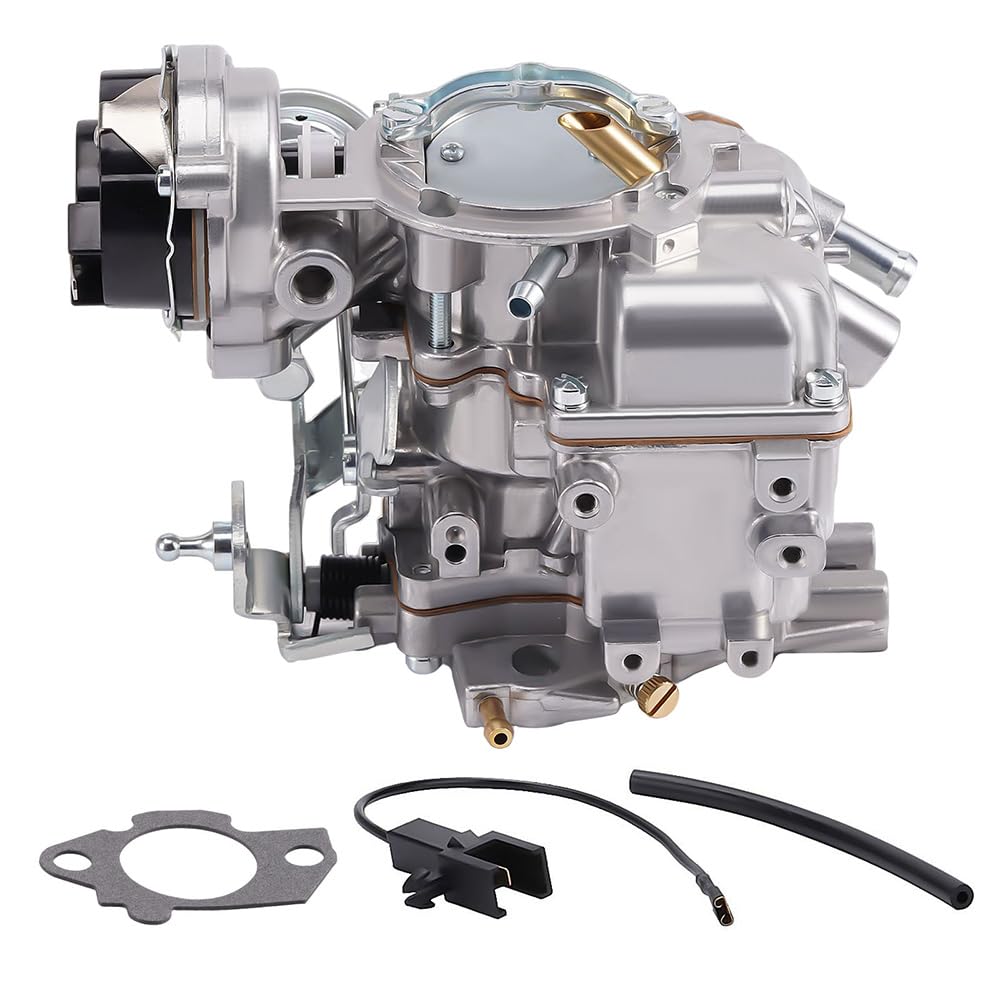
The maXpeedingrods 1-barrel carburetor covers the widest application range in this group — directly replacing Carter YFA units on Ford 200, 250, and 300 cubic-inch inline-six engines from 1965 through 1985. It fits Broncos, F-Series trucks, Econolines, Fairmonts, and Granadas, making it the most versatile pick for Ford I6 owners who want a single solution across multiple platforms. Owner reports consistently highlight the value proposition of buying a new carburetor versus paying for a rebuild kit on a worn original unit.
Throttle response and idle stability receive strong praise in verified reviews, with multiple owners stating it fired up on the first crank after basic idle and mixture adjustments. The 43 mm air inlet bore matches factory YFA dimensions, and the automatic choke simplifies cold starts without requiring a separate hot air tube. Several long-term users report trouble-free operation beyond 50 miles of driving with no leaks or hesitation.
The primary limitation noted across reviews involves quality control inconsistency — a small percentage of units arrive with throttle plates that do not fully seal or with choke components that require additional tuning. The hot air choke ports are not completely drilled on some examples, which prevents the factory Ford hot air choke system from working. Owners who need the factory hot air choke function should verify port drilling before installation.
What works
- Broadest vehicle coverage for Ford I6 engines
- Fires right up after basic idle adjustment
- Excellent value compared to rebuilding original
What doesn’t
- Inconsistent QC on throttle plate seal
- Hot air choke ports not always fully drilled
- Some units need additional tuning out of box
2. HENKYO Autolite 1100 1 Barrel Carburetor
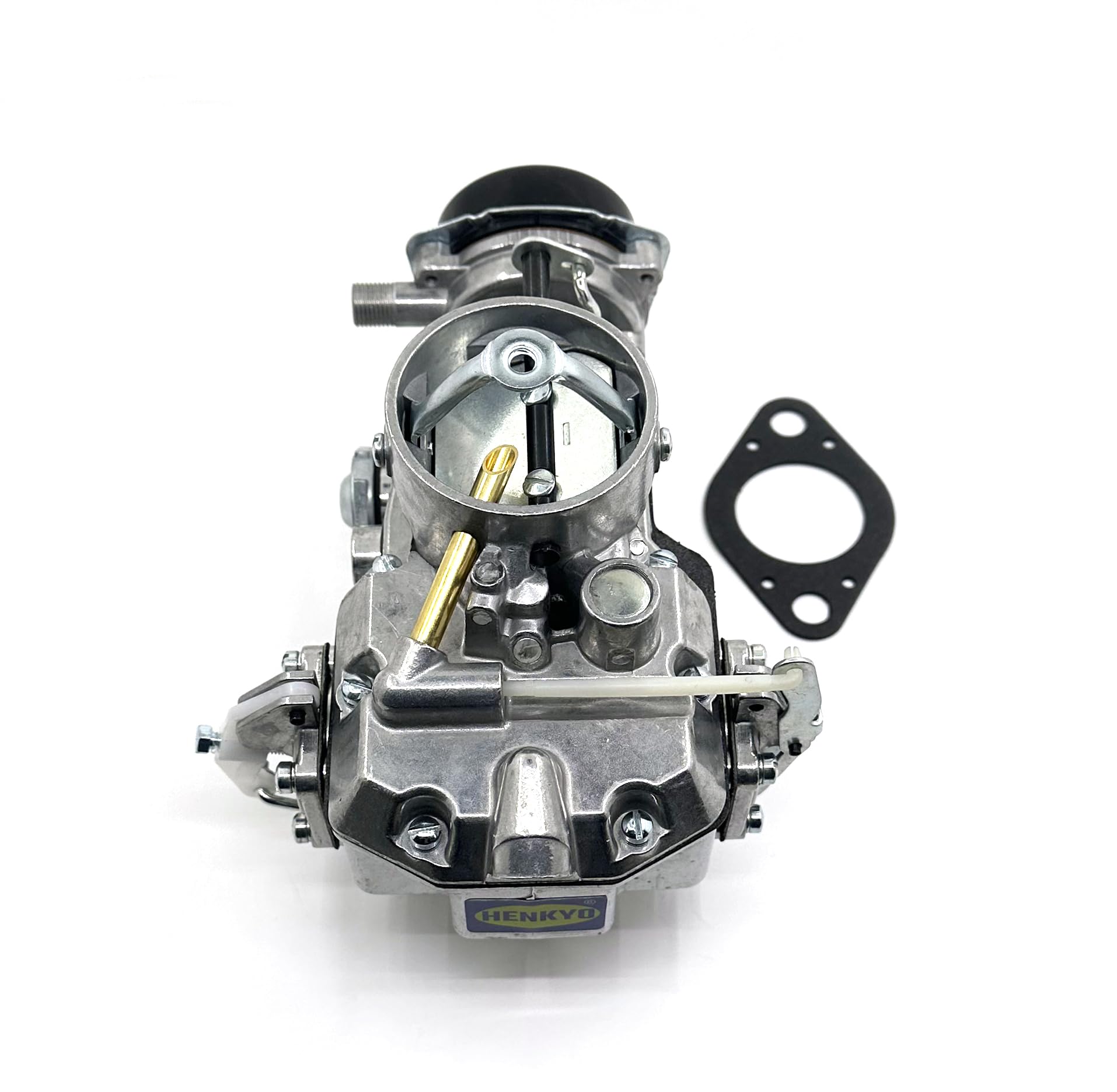
This reproduction of the classic Autolite 1100 is built specifically for 1963-1968 Ford Mustang, Falcon, and Comet models with 170 or 200 cubic-inch straight-six engines. The hot air choke design matches the factory configuration used during those years, which is critical for owners who want a period-correct appearance and function. The 68 mm mounting bolt spacing and 10.5 mm aperture dimensions directly replicate the original Autolite 1100 layout.
Verified buyers report that the carburetor works without adjustment on many installations, with one 1965 Mustang 200-ci owner noting perfect float height and needle valve function right out of the box. The improved needle valve design addresses a common failure point on original Autolite units. Owners who have rebuilt multiple original 1100s note that this aftermarket version saves significant time compared to sourcing worn cores and rebuilding them.
Multiple reports mention fuel leakage around brass plugs and choke sticking issues after installation. Some units arrive with the float height set incorrectly, causing flooding and raw fuel overflow from the vent. Buyers should expect to verify float level and check all brass plug seals before final installation. A few owners found the needle valve could not hold fuel pressure from a mechanical pump and required a pressure regulator set to 5 PSI.
What works
- Period-correct Autolite 1100 replacement for classic Ford sixes
- Improved needle valve over original design
- Many units work with little to no adjustment
What doesn’t
- Fuel leakage from brass plugs on some units
- Choke stickiness requires manual intervention
- Inconsistent float height out of the box
3. Waverspeed 1 Barrel Carburetor Holley 1904 Type
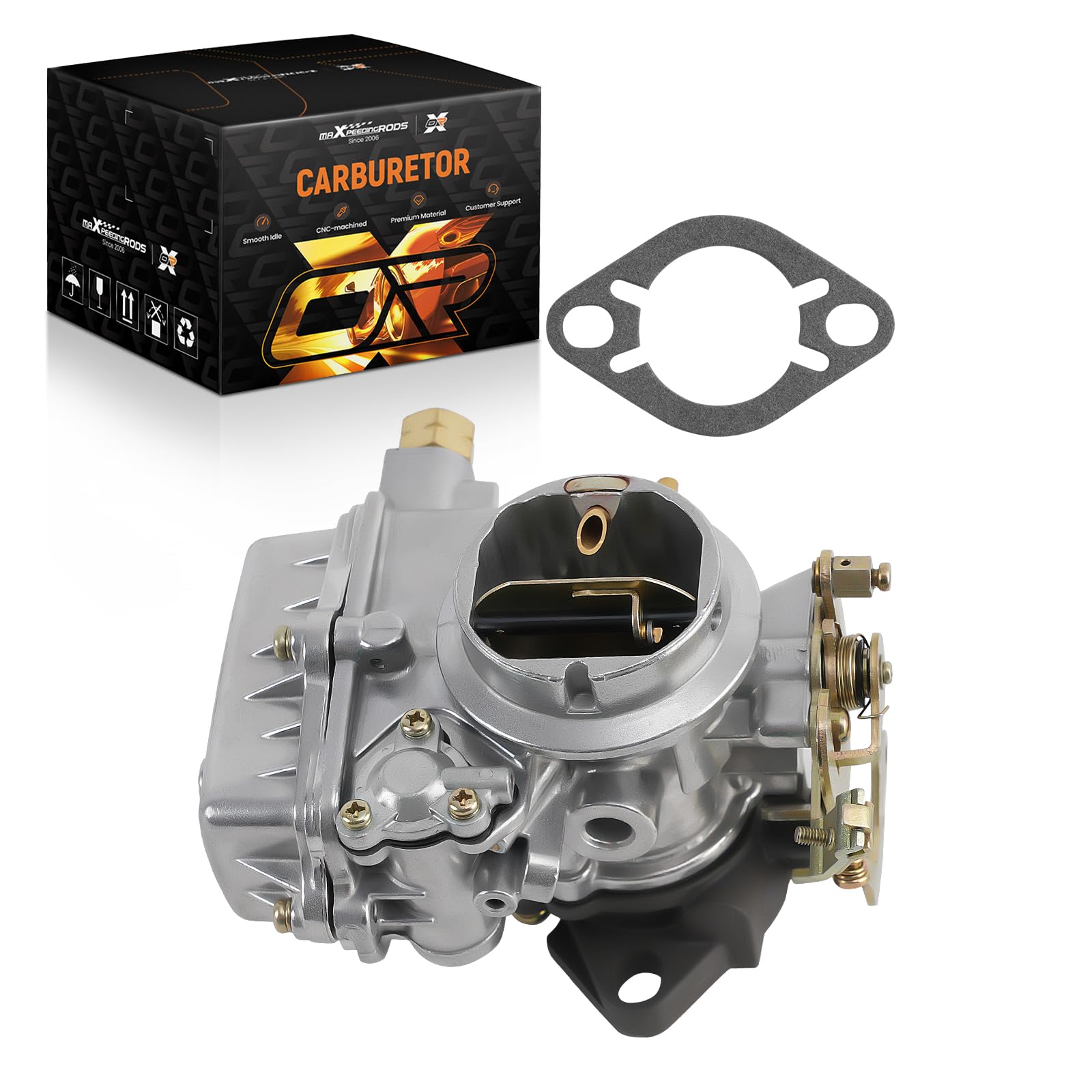
Designed as a direct replacement for the Holley 1904, this Waverspeed 1-barrel carburetor fits Ford 144, 170, 200, and 223 cubic-inch inline four and six-cylinder engines produced between 1957 and 1962. The zinc and aluminum construction with a manual choke appeals to restorers who want a simple, mechanical setup without electrical or vacuum connections. The 36 mm venturi diameter and 75 mm mounting bolt spacing match the original Holley 1904 pattern.
Owner feedback from jeep and Scout applications is notably strong, with multiple users reporting bolt-on installation followed by immediate smooth idle and responsive acceleration. One 1951 Willys CJ3a owner with the F134 engine reported two years of trouble-free operation before purchasing a second unit for another vehicle. The carburetor works well on International Scout 196 engines and Ford Falcon 170-ci applications with minor vacuum line modifications.
The manual choke cable routing may require adaptation depending on the vehicle — the choke arm geometry differs slightly from original Holley designs on some applications. Several owners noted the throttle lever is configured for pull-up rather than push-down operation, requiring a custom linkage arm or 3D-printed adapter. The carburetor does not include a dash-pot connection, which may affect deceleration behavior on vehicles originally equipped with one.
What works
- Excellent fit for Willys F134 and Scout engines
- Smooth idle and peppy acceleration after installation
- Simple mechanical design with minimal failure points
What doesn’t
- Throttle lever direction may need modification
- No dash-pot included for deceleration control
- Vacuum line routing sometimes requires rework
4. THUNDERMINGO 2 Barrel Carburetor 2100/2150

While this is a 2-barrel unit and not a single-barrel design, it deserves consideration for owners of Ford 289, 302, or 351 V8 engines who want an affordable replacement for the Motorcraft 2100 or 2150. The THUNDERMINGO carburetor covers Ford F-Series trucks from 1964-1979, Mustangs from 1968-1973, and Jeep Wagoneers with the 360 V8. The electric choke provides reliable cold starts without running a hot air tube.
Verified reviews from 1975 F100 and 1978 F250 owners confirm the carburetor bolts on with no modifications and runs well after setting idle mixture screws to 1.5 turns out. Multiple buyers describe it as a direct Motorcraft replacement that fires up immediately and delivers smooth idle and throttle response. The float level was correct out of the box on most examples, and no vacuum leaks were reported after installation.
Some owners of 1977 Granada and 1978 Ford trucks noted that the included installation instructions are minimal, and the linkage design requires careful inspection before tightening. A few reports mention that the primary throttle shaft can develop play after extended use, and one owner experienced a fuel leak from the accelerator pump area after several months. The carburetor works best as a direct swap for a worn Motorcraft unit on a stock engine.
What works
- Direct bolt-on for Motorcraft 2100/2150 applications
- Electric choke simplifies cold start procedure
- Good out-of-box float level on most units
What doesn’t
- Minimal installation instructions provided
- Throttle shaft play may develop over time
- Some units develop accelerator pump leaks
5. Auto Parts Prodigy 1 Barrel Carburetor

This aftermarket 1-barrel carburetor from Auto Parts Prodigy targets 1965-1985 Ford applications with 200, 250, and 300 cubic-inch inline-six engines, covering Bronco, Fairmont, Granada, and F-Series trucks. The heavy-duty metal construction and automatic choke are designed for direct replacement of worn Carter YF-style units. The included gaskets, vacuum hose, and electric wire provide everything needed for a basic installation.
Owner reports from F100 and F250 owners are mixed but generally positive, with several users noting that the carburetor improved drivability significantly over a worn original. One 1980 F100 owner reported easy installation and immediate improvement in starting and drivability. The electronic choke feature is appreciated by those who want to eliminate the factory hot air system, and the included wiring harness simplifies the connection to a 12-volt ignition source.
The primary concerns center on fitment inconsistency — multiple owners report that the base plate holes are not machined correctly for the stock intake manifold studs on 1973-1975 F250 trucks. This requires slotting the holes or sourcing different studs. Some units lack sufficient vacuum ports for accessories, and a few owners report difficulty achieving a smooth idle despite adjustments. This carburetor works best on later model Ford trucks where the mounting pattern is verified.
What works
- Complete kit with gaskets and wiring included
- Electronic choke eliminates hot air tube complexity
- Improves drivability over worn original carburetor
What doesn’t
- Base plate bolt holes misaligned on some units
- Limited vacuum port availability
- Inconsistent idle quality in some installations
6. THUNDERMINGO D5TZ9510AG 1 Barrel Carburetor

This THUNDERMINGO carburetor directly replaces the Carter YF-type 1-barrel used on Ford 240, 250, and 300 cubic-inch inline-six engines from 1975-1982, along with Jeep CJ5 applications using the YF 7109S pattern. The polished exterior and precision construction aim to deliver a reliable alternative to rebuilding a tired original unit. The intake inner diameter measures 43 mm with a mounting bolt spacing of 85 mm at the longest point and 58 mm at the shortest.
Owner feedback is among the most positive in this category — multiple buyers report that the carburetor bolted on, required only idle and choke spring adjustments, and ran exceptionally well immediately. One 1977 CJ5 owner described it as a quality piece that idles great and delivers excellent throttle response at highway speeds. The carburetor weighs noticeably less than the stock Carter unit, but several long-term users report no durability issues after months of regular driving.
A few owners noted that the material feels lighter than the original cast-iron or heavy zinc Carter units, raising questions about long-term durability under constant vibration. One 1985 F150 owner with a Duraspark conversion reported the carburetor worked fine but the lighter construction required careful torque management during installation to avoid warping the base plate. The included 1-year manufacturer warranty provides some peace of mind for budget-conscious buyers.
What works
- Excellent out-of-box operation on most installations
- Direct fit for Ford I6 and Jeep CJ5 applications
- Great value compared to rebuilding original unit
What doesn’t
- Lighter material raises durability questions
- May require careful torque to avoid warping
- Longer air cleaner stud needed on some trucks
7. maXpeedingrods 4 Barrel Quadrajet 4MV Carburetor
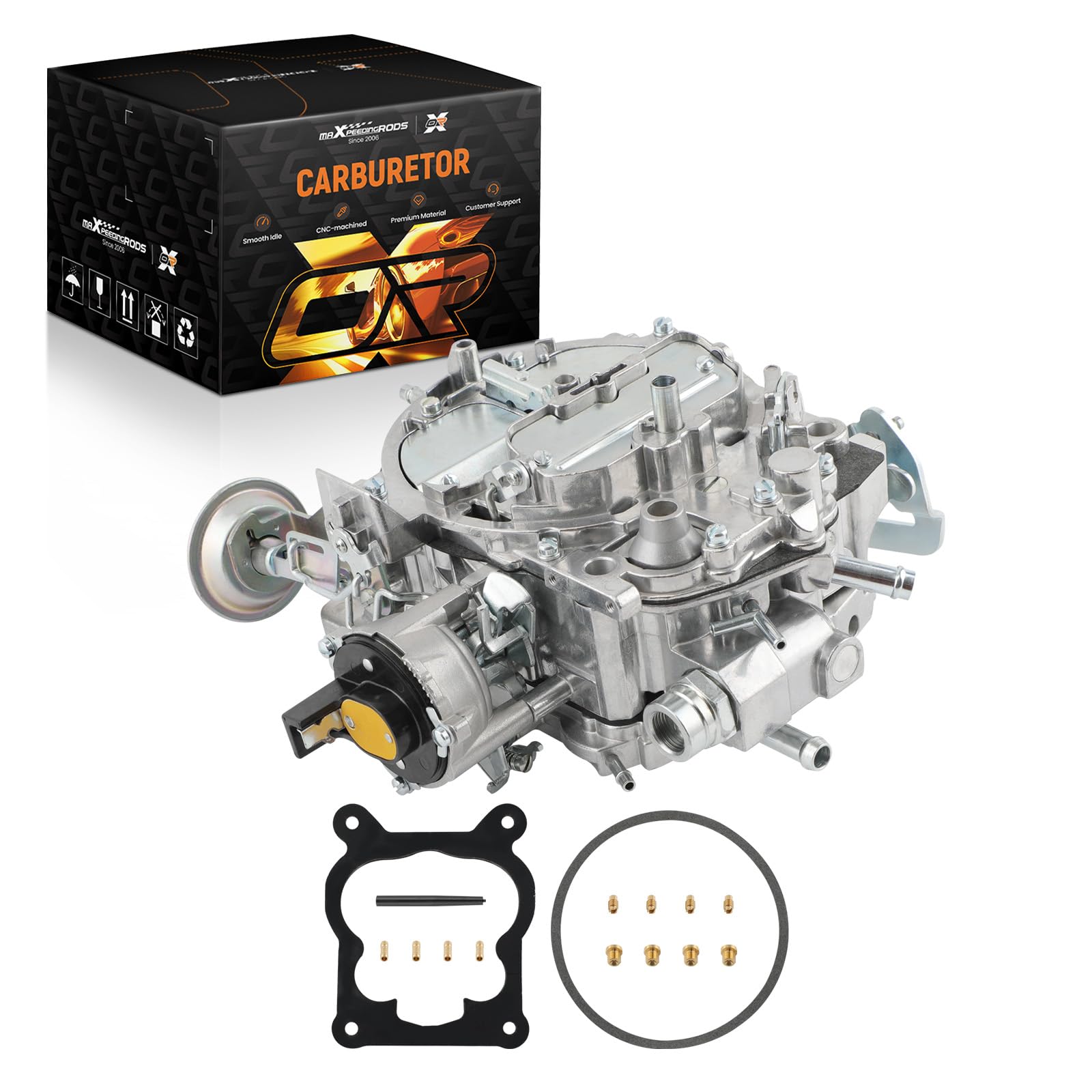
This maXpeedingrods 4-barrel Quadrajet replacement serves Chevy 305 and 350 engines in 1980-1986 GM cars and 1981-1986 GMC trucks that originally used the Rochester 4MV. Rated at 750 CFM with vacuum secondaries and an electric choke, it is designed for non-computer-controlled vehicles only. The zinc alloy construction matches the factory Quadrajet footprint, and the 190 main jet / 190 air correction jet specification targets stock to mildly modified small-block Chevys.
Verified reports from owners of 1982 GMC trucks and 1985 Chevy square-body pickups confirm that the carburetor fires up immediately after installation with only idle speed adjustment needed. One owner using it on a marine 350 SBC reported the replacement was superior to a worn early-70s original Quadrajet, with better throttle response and no secondary shaft play. The carburetor includes the correct Chevy bowl entrance and linkage style for direct bolt-on fitment.
Several owners reported fuel leakage developing after 5-6 months of use, typically from the throttle shaft area or the float bowl gasket. The carburetor does not include electrical plugs or the AC throttle assembly, limiting compatibility with certain factory accessory configurations. Installation instructions are not included, so buyers should be comfortable with Quadrajet tuning procedures. This unit is not recommended for computer-controlled or marine applications.
What works
- Direct bolt-on for Chevy 305/350 Quadrajet applications
- Strong throttle response and smooth idle
- Good replacement for worn original Quadrajet units
What doesn’t
- Fuel leakage reported after several months
- No installation instructions included
- Not compatible with computer-controlled vehicles
Hardware & Specs Guide
Choke System Types
Manual chokes use a mechanical cable pulled from the dash to close the choke plate before starting, giving the driver full control. Electric chokes apply 12 volts to a bimetal spring that gradually opens the choke as the engine warms — they require a switched power source connected to the stator or ignition terminal. Hot air chokes route filtered air through a stove tube on the exhaust manifold into a thermostat housing that opens the choke based on temperature. Verify which system your vehicle originally used before ordering.
Mounting Dimensions
The two most critical measurements are the center-to-center distance between mounting studs and the inner bore diameter of the intake flange. Common 1-barrel patterns include the 75 mm spacing used by Holley 1904 and many Ford applications, the 68 mm spacing for Autolite 1100 units, and the 58 mm short-side pattern on some Carter YF applications. Measuring these dimensions on your existing carburetor or intake manifold guarantees the new unit will bolt on without adapter plates.
FAQ
What is the difference between manual, electric, and hot air chokes on a 1-barrel carburetor?
How do I verify that a 1-barrel carburetor will bolt onto my intake manifold?
Can I replace a 2-barrel or 4-barrel carburetor with a 1-barrel carburetor?
Final Thoughts: The Verdict
For most buyers, the best 1 barrel carburetor winner is the maXpeedingrods 1 Barrel because it offers the widest vehicle coverage, reliable automatic choke operation, and consistent out-of-box performance backed by strong owner feedback. If you need a period-correct unit for a 1960s Mustang or Falcon, the HENKYO Autolite 1100 reproduces the factory hot air choke setup faithfully. And for jeep F134 or early Ford six-cylinder engines requiring a simple mechanical choke, the Waverspeed Holley 1904 Type delivers bolt-on reliability with minimal complexity.

Certification: BSc in Mechanical Engineering
Education: Mechanical engineer
Lives In: 539 W Commerce St, Dallas, TX 75208, USA
Md Amir is an auto mechanic student and writer with over half a decade of experience in the automotive field. He has worked with top automotive brands such as Lexus, Quantum, and also owns two automotive blogs autocarneed.com and taxiwiz.com.