A clogged diesel particulate filter doesn’t always mean a trip to the service bay for an expensive replacement. With the right chemistry, many partially blocked DPFs can be restored to full function through enhanced regeneration — and the additive you choose determines whether that process succeeds or leaves you stranded.
I’m Amir — the founder and writer behind Four Wheel Ask. My approach to evaluating DPF additives involves cross-referencing technical specifications with real owner-reported outcomes across thousands of miles of combined driving data to identify which formulations actually deliver on their promises.
Modern diesel engines rely on precise thermal management to burn off soot, and the wrong additive can interfere with that balance. This guide evaluates the most effective dpf clean additive formulas that diesel owners trust for maintaining peak emissions system health and performance.
How To Choose The Best DPF Clean Additive
Selecting a DPF additive requires understanding how these chemical treatments interact with your engine’s regeneration cycle. Not all formulations work the same way, and the wrong choice can waste money or delay necessary maintenance. Focus on the chemistry, the treatment ratio, and the specific symptoms your vehicle is exhibiting.
How Additives Lower Soot Combustion Temperature
The fundamental mechanism behind DPF additives is catalytic — they lower the temperature at which trapped soot ignites. Quality formulations reduce this threshold from approximately 1,100°F to around 750°F, allowing passive regeneration during normal highway driving. Products that fail to specify their catalytic action or active ingredients often underperform in real-world conditions, leaving soot to accumulate until forced regeneration is required.
Evaluating Lubricity and Cetane Boost Claims
A DPF additive must work alongside your fuel injection system without causing deposits or corrosion. Look for formulations that include lubricity improvers for CP4 pump protection and cetane boosters for cleaner combustion. Combined fuel system and DPF treatments offer better value than standalone soot-burning products. Independent testing data from organizations like the South Texas Research Institute provides objective verification of lubricity improvement claims.
Matching Treatment Frequency to Driving Habits
The concentration matters as much as the chemistry. Some additives require treatment at every fill-up, while others work in a single concentrated dose every 5,000 miles. Short-haul drivers who rarely reach regeneration temperatures need more aggressive formulations, while highway commuters benefit from maintenance-level dosing. High-mileage fleet operators should prioritize bulk treatment options with higher per-unit economy, while occasional users gain more from single-shot professional-grade purge fluids.
Quick Comparison
On smaller screens, swipe sideways to see the full table.
| Model | Category | Best For | Key Spec | Amazon |
|---|---|---|---|---|
| Power Service Diesel Injector & DPF Flush | Fuel System Flush | Rapid deposit removal and regen optimization | 64 oz treats up to 300 gallons | Amazon |
| Lucas Oil 10873 Diesel Deep Clean | Performance Cleaner | MPG improvement and soot reduction | 64 oz, reduces particulate matter up to 32% | Amazon |
| Archoil AR6300 Winter Diesel Treatment | Winter Treatment | Cold weather DPF protection and anti-gel | 41 oz treats 275 gallons, cetane boost +8 | Amazon |
| Rislone 4744 DPF CLEAN | Emissions System Cleaner | Preventive maintenance and code clearing | 16.9 oz, clears P242F codes | Amazon |
| Liqui Moly 20112 DPF Purge Fluid | Professional Purge | Direct DPF purge for passenger diesels | 16.9 oz, professional spray application | Amazon |
| Opti-Lube XPD All-Season Diesel Additive | All-Season Additive | Maximum lubricity and injector cleaning | 1 gallon treats 512 gallons | Amazon |
| Hot Shot’s Secret Fuel Duo | Dual Action Kit | Fuel system and DPF maintenance combo | 16 oz each, Diesel Extreme + EDT | Amazon |
| Stanadyne Performance Formula 38566 | Bulk Performance | Fleet and high-mileage engine protection | 2 x 1/2 gallon, treats 640 gallons | Amazon |
| Stanadyne Performance Formula 38564 | Multi-Pack Value | Regular maintenance for multiple vehicles | 4 x 8 oz, aftertreatment safe | Amazon |
| Star Tron Super Concentrated Diesel Formula | Enzyme Treatment | Fuel stabilization and water dispersion | 1 oz treats 32 gallons, enzyme formula | Amazon |
| Wynn’s DPF Regenerator | Professional Solution | Blocked filter recovery without dismantling | 500ml, professional use | Amazon |
In‑Depth Reviews
1. Power Service Diesel Injector & DPF Flush

Power Service’s latest formulation combines injector cleaning chemistry with their exclusive REGENEXTEND technology, which targets the frequency and duration of regeneration cycles. The 64-ounce bottle treats an entire fuel system in a single tank, making it one of the most aggressive cleaning options available without professional equipment. Owner reports from high-mileage Duramax and Powerstroke platforms indicate measurable reductions in both NOx emissions and visible black smoke after a single treatment.
The formulation addresses multiple failure points simultaneously: injector deposits (including internal diesel injector deposits and nozzle coking), soot accumulation on turbo and EGR components, and MAF sensor contamination. Data from fleet applications suggests fuel economy improvements of up to 10% when the product is used at the onset of DPF-related performance loss. The chemistry is compatible with Ultra Low Sulfur Diesel, biodiesel blends, and renewable diesel, broadening its applicability across different fuel sources.
Where this product separates itself from single-purpose additives is its ability to balance fuel injector flow rates while simultaneously reducing the thermal load on the DPF. Owners of 2006-era LBZ Duramax engines with over 240,000 miles have reported idle quality improvements and reduced smoke output that persisted beyond the initial treatment cycle. The product holds the number-one position in Amazon’s Fuel Injection Flush category, reflecting strong marketplace validation.
What works
- Single-tank treatment delivers rapid results on stubborn deposits
- REGENEXTEND technology targets regen frequency reduction of up to 50%
- Compatible with biodiesel and renewable diesel blends
What doesn’t
- Large 64 oz bottle may be excessive for passenger car diesel tanks
- Premium formulation carries higher per-treatment cost
2. Lucas Oil 10873 Diesel Deep Clean

Lucas Oil has engineered the Diesel Deep Clean formula to target particulate matter reduction at the source — the combustion event itself. By improving burn efficiency, the additive reduces the volume of soot entering the DPF in the first place, which translates to fewer regeneration cycles and longer filter life. Independent data suggests particulate matter reductions of up to 32% under normal operating conditions, a figure that aligns with owner-reported improvements in regeneration frequency.
The 64-ounce bottle is designed for full-system treatment, and the chemistry works to dissolve existing exhaust deposits while preventing new buildup on injector tips and combustion chamber surfaces. Owners of 2006 Jetta TDI models have documented fuel economy improvements from 40 to 46 miles per gallon after consistent use, with corresponding reductions in black smoke under heavy acceleration. The formulation is safe for continuous use, making it suitable for owners who prefer to add a maintenance dose at every fill-up.
Real-world feedback from Nissan XD 5.0 diesel owners highlights the product’s ability to clear DPF filter full faults and restore lost power within 30 minutes of highway driving. The improvement in regeneration efficiency appears most pronounced in vehicles that primarily operate in stop-and-go traffic, where passive regeneration rarely occurs naturally. Lucas Oil’s reputation in the heavy-duty diesel market adds credibility to the performance claims.
What works
- Demonstrates up to 32% reduction in particulate matter emissions
- Continuous-use formula safe for every fill-up
- Rapid restoration of power and MPG in partially blocked DPF systems
What doesn’t
- Premium price point for a maintenance-level additive
- Some owners report minimal change in severely clogged filters
3. Archoil AR6300 Winter Diesel Treatment
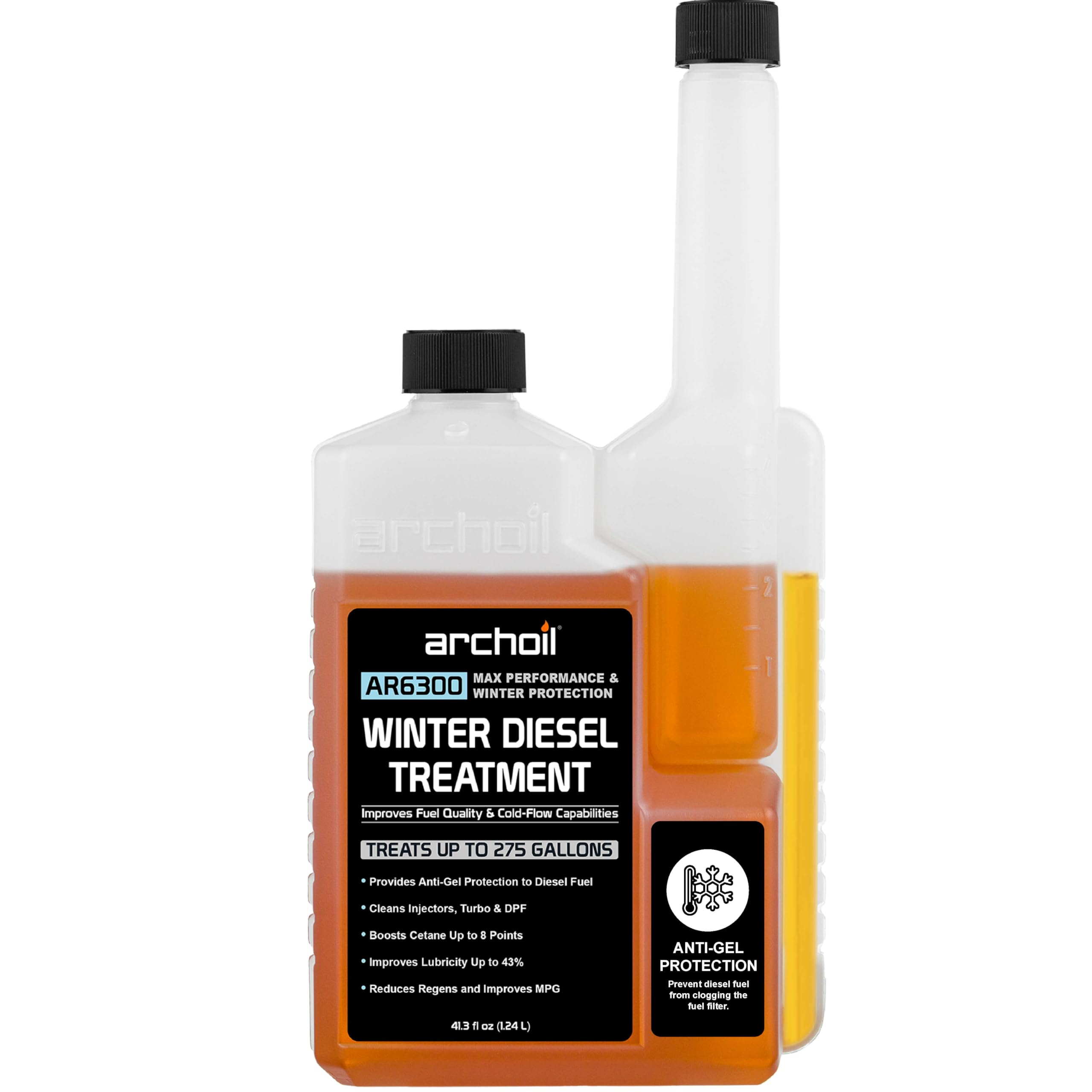
Archoil’s AR6300 bridges the gap between winter fuel management and DPF deposit control, making it a dual-purpose formulation for cold-climate diesel operators. The additive raises cetane by up to 8 points — moving typical pump diesel from the 40–45 range to an optimal 48–50 — which directly improves combustion completeness and reduces the soot load entering the DPF. The anti-gel component provides reliable cold-weather flow down to extreme temperatures without sacrificing the cleaning chemistry.
Lubricity improvement of 43% per ASTM D6079 testing addresses the vulnerability of modern CP4 high-pressure fuel pumps to low-sulfur diesel, adding a layer of wear protection that many standalone DPF additives lack. The integrated detergent package cleans injector deposits and restores spray patterns for better atomization, which supports more complete combustion and lower particulate output. Owners running the AR6300 through harsh winter conditions report consistent cold starts and smoother idle across multiple vehicle platforms.
The 41-ounce bottle treats up to 275 gallons of diesel, placing it in the mid-range treatment cost category despite its premium formulation. Archoil recommends switching to their AR6500 formulation for warmer months, but the AR6300’s deposit control properties make it effective year-round for owners who prioritize DPF cleanliness alongside winter operability. The high customer satisfaction rating of 4.8 stars across 620 reviews reflects strong real-world validation.
What works
- Dual-action winter protection and DPF deposit control
- Independent lubricity improvement verified by ASTM testing
- Cetane boost improves cold-start reliability and combustion quality
What doesn’t
- Winter-specific formula may be overkill for warm climate operators
- Seasonal switching to AR6500 adds complexity to maintenance routine
4. Rislone 4744 DPF CLEAN

Rislone positions the 4744 DPF CLEAN as a preventive maintenance tool that simultaneously addresses fuel system, emissions, and exhaust system cleanliness in a single 16.9-ounce bottle. The formulation lowers the ignition temperature inside the DPF to burn off accumulated soot, making it particularly effective for vehicles that primarily operate in low-speed urban environments where passive regeneration rarely occurs naturally. Multiple owner reports confirm successful clearing of the P242F diagnostic trouble code after treatment.
The chemistry is designed to be safe for all modern diesel aftertreatment components, including DOC catalytic converters, DPF filters, SCR selective catalytic reduction devices, and DEF systems. Rislone specifically markets this product as compatible with both ULSD and off-road diesel, as well as biodiesel blends B2 through B20. Owners of 2019 Silverado Duramax trucks with 49,000 miles have documented resolution of P2002 codes and limp mode conditions using two consecutive bottles, avoiding a quoted replacement cost of over three thousand dollars.
Regular application every 5,000 miles appears to provide cumulative benefits, with users reporting progressively shorter regeneration cycles and reduced frequency of check engine light recurrence. The product works across indirect and direct injection configurations, including common rail, TDI, and turbocharged engines. For owners seeking a low-cost entry point into DPF maintenance without committing to high-volume bulk purchases, this represents one of the most accessible options in the category.
What works
- Effective at clearing P242F and P2002 diagnostic codes
- Compatible with biodiesel blends and off-road diesel fuel
- Low per-treatment cost at 5,000-mile intervals
What doesn’t
- Smaller bottle size requires multiple treatments for severe blockages
- Some late-model trucks may need two consecutive doses for full effect
5. Liqui Moly 20112 Diesel Particulate Filter Purge Fluid

Liqui Moly’s DPF Purge Fluid takes a fundamentally different approach than fuel-borne additives — it is a professional-grade spray applied directly into the DPF through the pressure sensor port or oxygen sensor bung. This direct application method allows the chemistry to soak into the filter substrate and dissolve ash and soot deposits that fuel additives cannot reach. The formulation targets closed DPF systems on passenger cars and light commercial vehicles, with documented success on VW, Mercedes, and Sprinter platforms.
Application requires mechanical access to the DPF and the use of a modified sprayer, typically through the O2 sensor port. Owners who have performed the procedure report significant smoke output during the subsequent regeneration cycle — a sign that the dissolved deposits are being expelled. Post-treatment pressure differential readings below 0.5 psi indicate restored filter flow. The product is particularly well-suited for vehicles with moderate ash loading that have not yet triggered permanent fault codes.
While the direct application method delivers more concentrated cleaning power than fuel additives, it also requires more technical skill and equipment. Owners without mechanical experience should factor in professional installation costs. For those comfortable with the procedure, the Liqui Moly purge fluid offers a middle ground between chemical fuel additives and complete DPF removal for cleaning, potentially extending filter life by tens of thousands of miles when used proactively.
What works
- Direct DPF application delivers concentrated cleaning power
- Proven effectiveness on VW, Mercedes, and Sprinter diesel platforms
- Restores low pressure differential across the filter substrate
What doesn’t
- Requires mechanical access and modified spray equipment
- Not a pour-in solution — technical skill needed for proper application
6. Opti-Lube XPD All-Season Diesel Fuel Additive
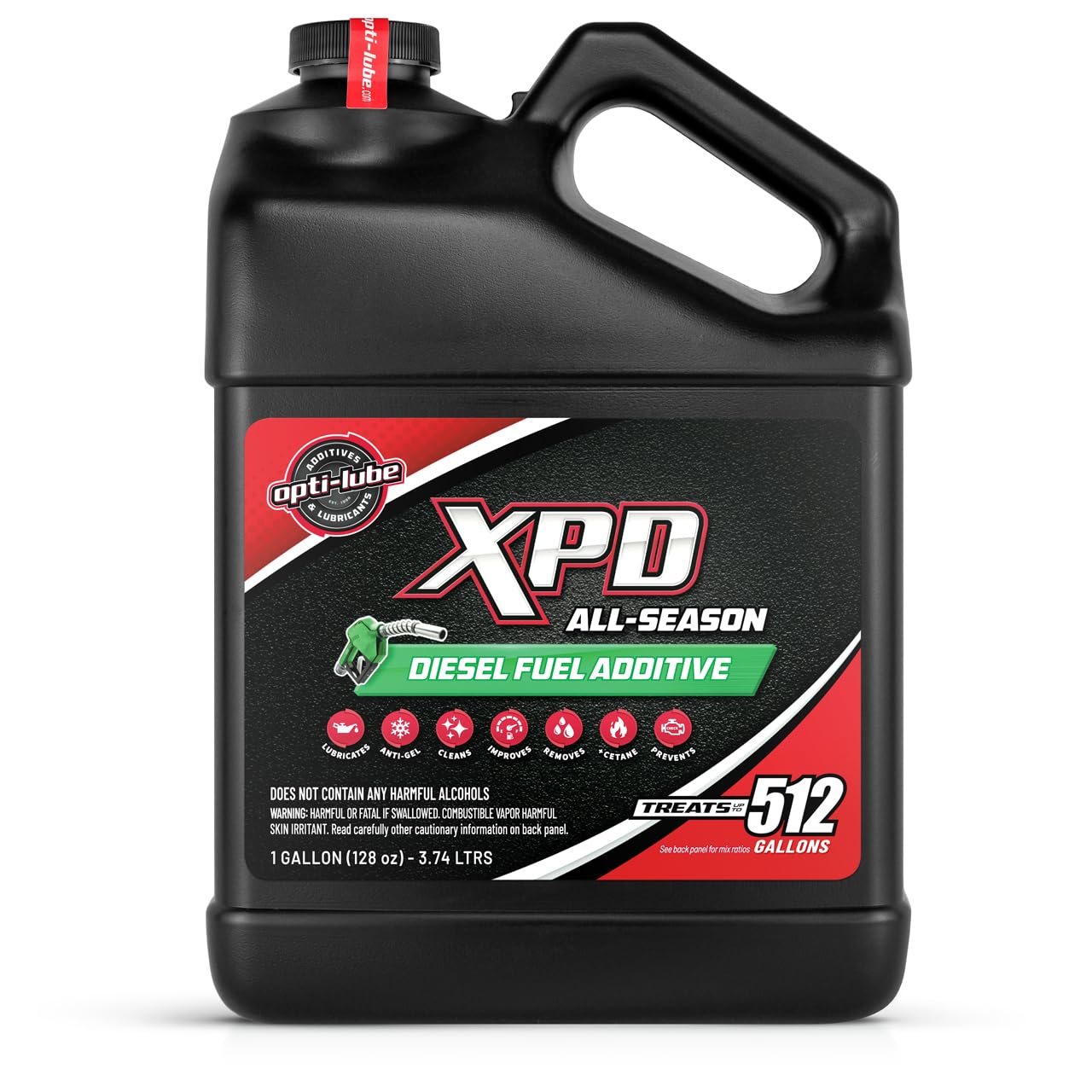
Opti-Lube XPD has earned the top lubricity rating from independent testing at the South Texas Research Institute, making it the benchmark for diesel fuel additive performance in wear protection. This independent validation carries weight for owners of modern high-pressure common rail systems where fuel lubricity directly impacts CP4 pump longevity. Beyond lubrication, the XPD formula includes detergents that clean injectors and reduce deposit formation throughout the combustion system, which indirectly reduces the particulate load on the DPF.
The treatment ratio of 1 gallon to 512 gallons of diesel yields a per-gallon cost that is among the lowest in the premium additive category, making it economically viable for high-volume users. The formula includes anti-gel protection down to -10 degrees Fahrenheit, demulsifiers for water separation, and storage stabilizers that more than double standard diesel shelf life. Owners of 6.7 Powerstroke and 20-year-old Duramax platforms report consistent performance benefits across widely different engine generations.
While Opti-Lube XPD is not marketed exclusively as a DPF cleaner, its combustion improvement and deposit control properties contribute to reduced soot generation and longer intervals between forced regenerations. The product functions best as a preventative maintenance tool rather than a remedial treatment for already-blocked filters. For owners who prioritize fuel system protection and want DPF benefits as a secondary outcome, this represents a comprehensive single-bottle solution.
What works
- Independent testing confirms #1 lubricity improvement rating
- Low per-gallon treatment cost for bulk users
- Comprehensive formula includes anti-gel and water demulsifier
What doesn’t
- Gallon jug is a large commitment for single-vehicle owners
- Not positioned as a dedicated DPF cleaner — results are secondary
7. Hot Shot’s Secret Fuel Duo

Hot Shot’s Secret separates DPF maintenance into two distinct chemical actions with their Fuel Duo kit: Diesel Extreme for high-concentration cleaning and Everyday Diesel Treatment for ongoing maintenance. The two-bottle approach allows owners to execute an initial deep clean followed by sustained protection without switching products. This dual-phase strategy aligns with real-world maintenance patterns where an initial deposit problem requires aggressive treatment before transitioning to prevention.
The Diesel Extreme component has demonstrated effectiveness in resolving injection-related noise issues in GMC 2500HD Duramax 6.6L engines, with owners reporting restored engine and turbo response after four weeks of regular use. The Everyday Diesel Treatment serves as a continuous lubricity improver and deposit preventer, designed for use at every fill-up. Together, the pair addresses both existing contamination and future accumulation, covering the full spectrum of DPF maintenance needs.
Commercial fleet operators and owners of multiple diesel vehicles benefit from the kit’s versatility, as the same two products can be used across different engine platforms with consistent results. The combination approach reduces the guesswork involved in selecting between aggressive purge treatments and mild maintenance additives. For owners who prefer a structured maintenance protocol rather than single-shot solutions, the Fuel Duo provides a clear before-and-after treatment framework.
What works
- Two-bottle system separates deep cleaning from ongoing maintenance
- Proven results on Duramax and other high-pressure common rail engines
- Sustained use restores engine response and reduces injection noise
What doesn’t
- Requires commitment to two different dosing schedules
- Higher entry cost for the complete kit versus single-bottle options
8. Stanadyne Performance Formula 38566 (2 Pack)

Stanadyne’s Performance Formula has been a reference standard in diesel fuel additive technology for over a decade, and the two-pack of half-gallon jugs delivers the highest treatment volume in this lineup. The formulation is OEM-approved and widely recommended by diesel injection system manufacturers, which speaks to its compatibility with precision fuel system components. The 640-gallon combined treatment capacity makes this the most economical choice for high-mileage operators who value consistency in their additive regimen.
The chemistry targets four critical areas: cetane improvement for better combustion, lubricity restoration for ULSD fuel, emissions reduction through cleaner burn, and horsepower recovery. Independent testing shows average fuel economy improvements of 4% with potential gains up to 9.6% depending on engine condition and operating environment. Owners of 6.7 Powerstroke engines specifically note the CP4 pump protection benefits, a critical consideration given the vulnerability of these units to low-lubricity fuel.
With a customer rating of 4.8 stars across 874 reviews, Stanadyne’s formulation has accumulated more verified feedback than most competitors in this category. The decade-long production history provides confidence in formulation stability and supply chain reliability. For fleet operators or owners of multiple diesel vehicles, the bulk packaging reduces the per-treatment cost while maintaining the same chemistry that has earned trust across millions of miles of real-world operation.
What works
- OEM-approved formulation trusted by injection system manufacturers
- Bulk packaging delivers lowest per-treatment cost in the lineup
- Proven CP4 pump protection for high-pressure common rail engines
What doesn’t
- Two-pack volume is excessive for single-vehicle household use
- General performance formula lacks DPF-specific catalytic action
9. Stanadyne Performance Formula 38564 (4 Bottles)

This four-bottle configuration of Stanadyne’s Performance Formula provides the same trusted chemistry as the bulk pack in a format designed for distribution across multiple vehicles or staggered maintenance schedules. Each 8-ounce bottle treats up to 40 gallons of diesel, making a single bottle suitable for most light-duty truck tanks. The compact bottle size also makes this version practical for storage in a vehicle’s tool kit or for use during long-distance travel where fuel quality may vary.
The formulation includes the same cetane improver, lubricity restorer, and corrosion preventative found in the larger jugs, ensuring consistent protection regardless of packaging format. Owners specifically note the product’s effectiveness in cold weather operation and its compatibility with exhaust aftertreatment systems, including DPF and SCR components. The split-pack format allows owners to test the product on one vehicle before committing to bulk purchases for their entire fleet.
Stanadyne’s aftertreatment-safe certification is particularly relevant for DPF maintenance, as some fuel additives contain metallic compounds that can accelerate filter ash loading. The ash-free formulation ensures that any combustion byproducts from the additive itself do not contribute to DPF clogging. With a 4.7-star customer rating and strong category ranking at number 20 in Diesel Additives, this represents a low-risk entry point into a proven additive platform.
What works
- Convenient multi-pack format for multiple vehicles or staggered use
- Ash-free formulation prevents additional DPF loading
- Proven performance with strong category sales ranking
What doesn’t
- Smaller bottles offer higher per-ounce cost than bulk options
- Not specifically marketed as a DPF cleaner — general performance formula
10. Star Tron Super Concentrated Diesel Formula
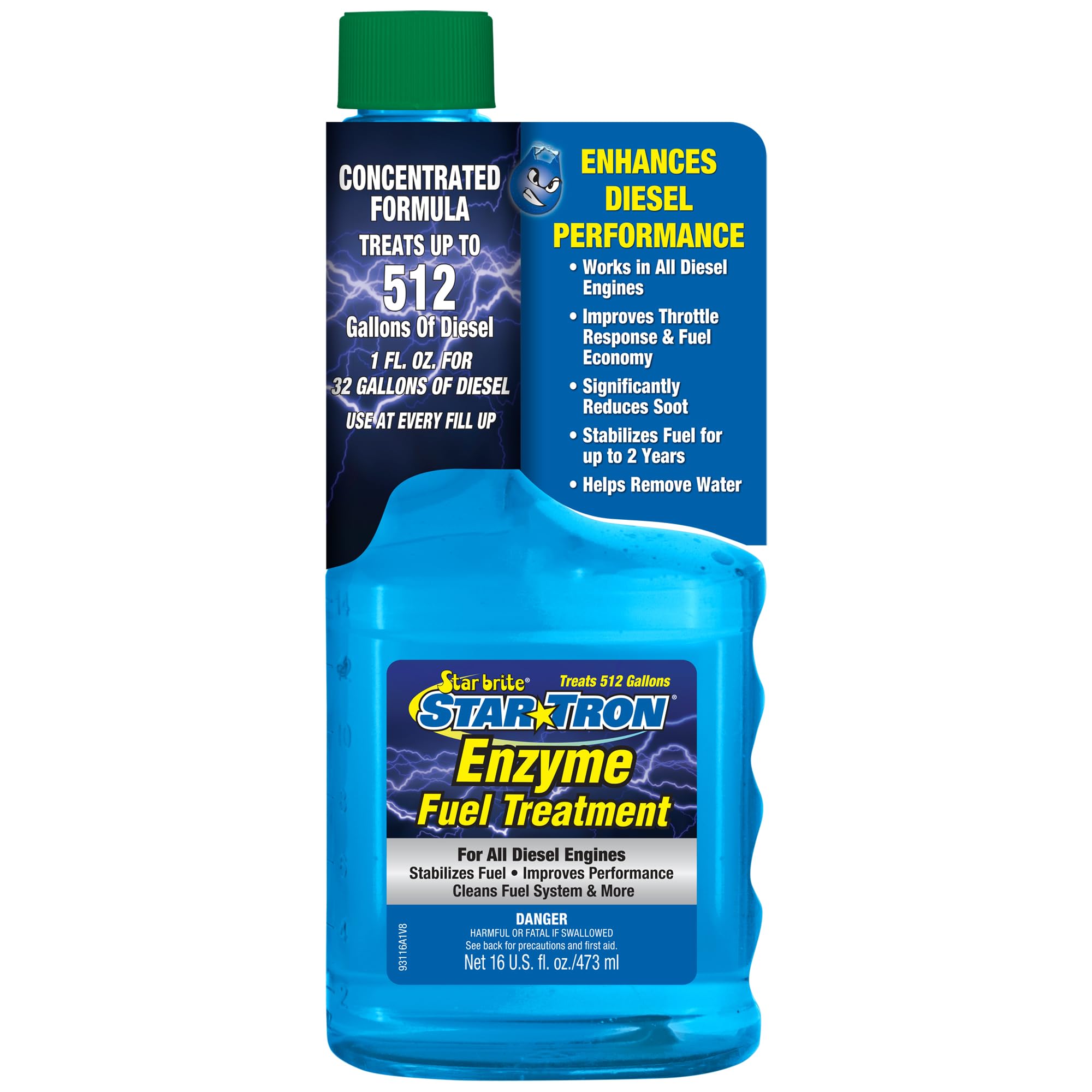
Star Tron takes a unique approach to diesel fuel treatment with its enzyme-based formula, which biologically targets the compounds that form gum, varnish, and injector deposits. Rather than relying solely on chemical solvents, the enzyme technology continuously breaks down deposit precursors during fuel storage and engine operation. This mechanism is particularly effective for seasonal equipment and vehicles that experience extended periods of inactivity, where fuel degradation commonly leads to injector fouling and combustion inefficiency.
The super-concentrated formulation — 1 ounce treats 32 gallons of diesel — provides one of the highest treatment ratios in this category, reducing storage space requirements and per-use dosing complexity. The water-dispersal technology transforms moisture into submicron droplets that are safely eliminated during combustion, reducing the risk of microbial growth in the fuel system. Owners report fuel economy improvements of approximately 5% over several months of consistent use, along with smoother idle and reduced carbon buildup on exhaust components.
While Star Tron does not market itself as a dedicated DPF cleaner, its fuel stabilization and deposit prevention properties contribute to cleaner combustion and reduced soot generation. The formula is compatible with gasoline engines as well, making it a versatile option for households that operate both diesel and gas equipment. For owners who prioritize fuel storage stability and injector cleanliness alongside DPF health, the enzyme-based approach offers a different chemical pathway than conventional petroleum-based additives.
What works
- Enzyme technology targets deposit precursors during fuel storage
- Ultra-concentrated formula minimizes storage and dosing effort
- Effective water dispersion reduces microbial growth risk
What doesn’t
- Enzyme mechanism operates slowly — not for immediate DPF blockage
- General fuel treatment lacks DPF-specific catalytic soot burning
11. Wynn’s Diesel Particulate Filter Regenerator
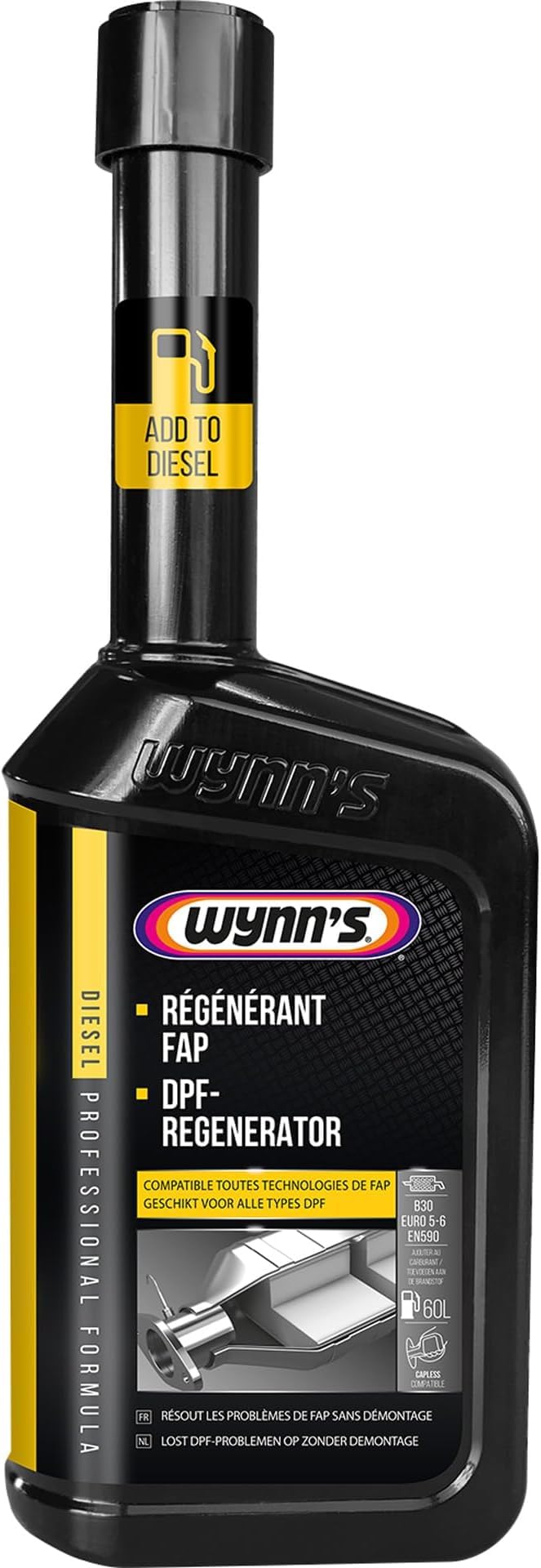
Wynn’s DPF Regenerator is formulated for professional use, targeting blocked particulate filters through chemical regeneration rather than mechanical removal. The 500-milliliter treatment works by reducing the combustion temperature of trapped soot, allowing the filter to burn off accumulated particulate matter at lower exhaust temperatures than would normally be required. This chemistry is designed to recover partially blocked filters without dismantling the exhaust system, potentially avoiding the labor and parts costs associated with filter replacement.
Owner-reported data from commercial van applications shows measurable increases in regeneration intervals after treatment: one documented case showed the interval extending from 384 miles to 462 miles between regenerations, representing a 20% improvement. Injector balance readings and idle fuel consumption also showed positive trends following treatment. The product is intended as a single-shot professional application rather than a continuous maintenance additive, which makes it best suited for vehicles that have already begun showing symptoms of DPF restriction.
Wynn’s positions this product as a cost-avoidance tool for fleet maintenance, where the cost of a single treatment is a fraction of the labor involved in manual filter cleaning or replacement. The 4.4-star customer rating across 756 reviews indicates broad satisfaction, though results depend heavily on the degree of filter blockage — heavily ash-loaded filters may still require physical cleaning. For owners seeking a chemical intervention before committing to filter replacement, this represents a targeted solution with a strong track record in professional workshops.
What works
- Chemical regeneration avoids DPF removal and associated labor costs
- Demonstrated increase in regeneration interval after treatment
- Strong professional workshop adoption with 750+ verified reviews
What doesn’t
- Single-shot treatment may require multiple applications for severe blockage
- Professional application recommended for consistent results
Hardware & Specs Guide
Catalytic Soot Burn Temperature
The primary mechanism of DPF additives is the reduction of soot ignition temperature within the filter. Quality formulations lower the combustion threshold from approximately 1,100°F to between 700°F and 800°F, enabling passive regeneration during normal driving conditions. Products that specify this catalytic action in their technical data tend to perform more consistently across different engine platforms and driving cycles.
Treatment Ratio and Active Concentration
Treatment ratios vary dramatically — from 1 ounce treating 32 gallons to 64 ounces treating 300 gallons. Higher concentration ratios generally indicate more potent active ingredient packages, but they also increase the risk of overdosing in small fuel tanks. The ideal treatment frequency depends on driving patterns: short-haul urban operators benefit from more frequent dosing, while highway drivers can extend intervals between treatments.
Lubricity Improvement and Cetane Boost
Secondary specifications that directly impact DPF health include lubricity improvement percentage and cetane number increase. ASTM D6079 testing provides standardized lubricity data, with improvements of 40% or more considered effective for CP4 pump protection. Cetane boosts of 4 to 8 points improve combustion completeness, reducing the raw soot output that loads the DPF.
Ash Content and Aftertreatment Compatibility
Ash-free formulations are critical for DPF longevity, as metallic ash from additive combustion accumulates permanently in the filter substrate. Products certified as aftertreatment-safe will specify zero ash content or list compatibility with DOC, DPF, SCR, and DEF systems. Non-ash-free additives may provide short-term cleaning benefits at the cost of long-term filter loading.
FAQ
How does a DPF clean additive actually work?
Can a DPF additive clear a check engine light?
How often should I use a DPF additive?
Are DPF additives safe for all diesel engines?
What is the difference between a fuel additive and a DPF purge fluid?
Final Thoughts: The Verdict
For most buyers, the dpf clean additive winner is the Power Service Diesel Injector & DPF Flush because its REGENEXTEND technology and single-tank cleaning capability address the root causes of DPF blockage in one comprehensive treatment. If you want cold-weather protection and cetane improvement alongside DPF maintenance, grab the Archoil AR6300. And for maximum lubricity and lowest per-mile treatment cost across large fuel volumes, nothing beats the Opti-Lube XPD.

Certification: BSc in Mechanical Engineering
Education: Mechanical engineer
Lives In: 539 W Commerce St, Dallas, TX 75208, USA
Md Amir is an auto mechanic student and writer with over half a decade of experience in the automotive field. He has worked with top automotive brands such as Lexus, Quantum, and also owns two automotive blogs autocarneed.com and taxiwiz.com.