Cold starts, clogged filters, and fuel that turns to gel in freezing temperatures — these are the realities of neglecting your diesel’s chemical health during winter. A proper additive doesn’t just treat the fuel; it reconditions the entire fuel system, protecting injectors, pumps, and the DPF from the deposits and moisture that degrade performance.
I’m Amir — the founder and writer behind Four Wheel Ask. My analysis focuses on the chemical engineering behind each formulation, scrutinizing real-world test data for cetane improvement, lubricity gains, and cold-flow protection to separate true performance from marketing claims.
Whether you drive a light-duty pickup, a heavy-duty rig, or an RV that sits for months, the right formula determines how your engine behaves when conditions turn adverse. This guide breaks down the most effective treatments to trust, so you can confidently choose the best diesel coolant additive for your specific driving environment and engine demands.
How To Choose The Best Diesel Coolant Additive
Selecting the right treatment is about matching chemistry to your driving conditions. A commuter in a mild climate has different priorities than an overlander who stores a truck for six months. Focus on three critical areas: cold-flow protection, combustion quality, and system cleanliness.
Anti-Gel Capability vs. Pour Point Depressants
Not all winter treatments work the same way. True anti-gel additives modify wax crystal formation in diesel fuel, keeping it fluid at temperatures as low as -40°F. Pour point depressants only lower the temperature at which fuel stops flowing, but they don’t always prevent filter-clogging gelling. Look for additives that specifically claim ASTM D6371 Cold Filter Plugging Point (CFPP) improvement — that’s the number that matters when the gauge hits zero.
Cetane Improvement for Modern HPCR Engines
High-pressure common rail (HPCR) injectors demand consistent fuel ignition. Pump diesel often sits around 40–45 cetane, but many modern engines run optimally between 48 and 52. A cetane booster that raises the number by 6–8 points reduces ignition delay, cuts clatter, and helps the engine fire more easily in cold weather without excessive white smoke.
Lubricity and the CP4 Pump Problem
Ultra-low-sulfur diesel (ULSD) has poor natural lubricity, which accelerates wear in precision fuel pumps — especially the vulnerable Bosch CP4 found in many Cummins, Duramax, and Powerstroke trucks. Additives tested to ASTM D6079 (HFRR) that show a wear scar reduction of 30% or more are essential for protecting these components from premature failure.
Quick Comparison
On smaller screens, swipe sideways to see the full table.
| Model | Category | Best For | Key Spec | Amazon |
|---|---|---|---|---|
| Archoil AR6300 | Winter Treatment | Anti-gel and cetane boost | 43% lubricity improvement | Amazon |
| Star Tron Diesel Formula | Fuel Stabilizer | Storage and water dispersion | Treats 32 gallons per oz | Amazon |
| Lucas Oil Diesel Deep Clean | System Cleaner | DPF and injector cleaning | 32% PM reduction | Amazon |
| Red Line Supercool | Coolant Additive | Powersports coolant protection | Pre-mixed 64 oz | Amazon |
| Ford Genuine VC-8 | OEM Additive | Ford diesel coolant top-up | 16 oz bottle | Amazon |
In‑Depth Reviews
1. Archoil AR6300 Winter Diesel Treatment
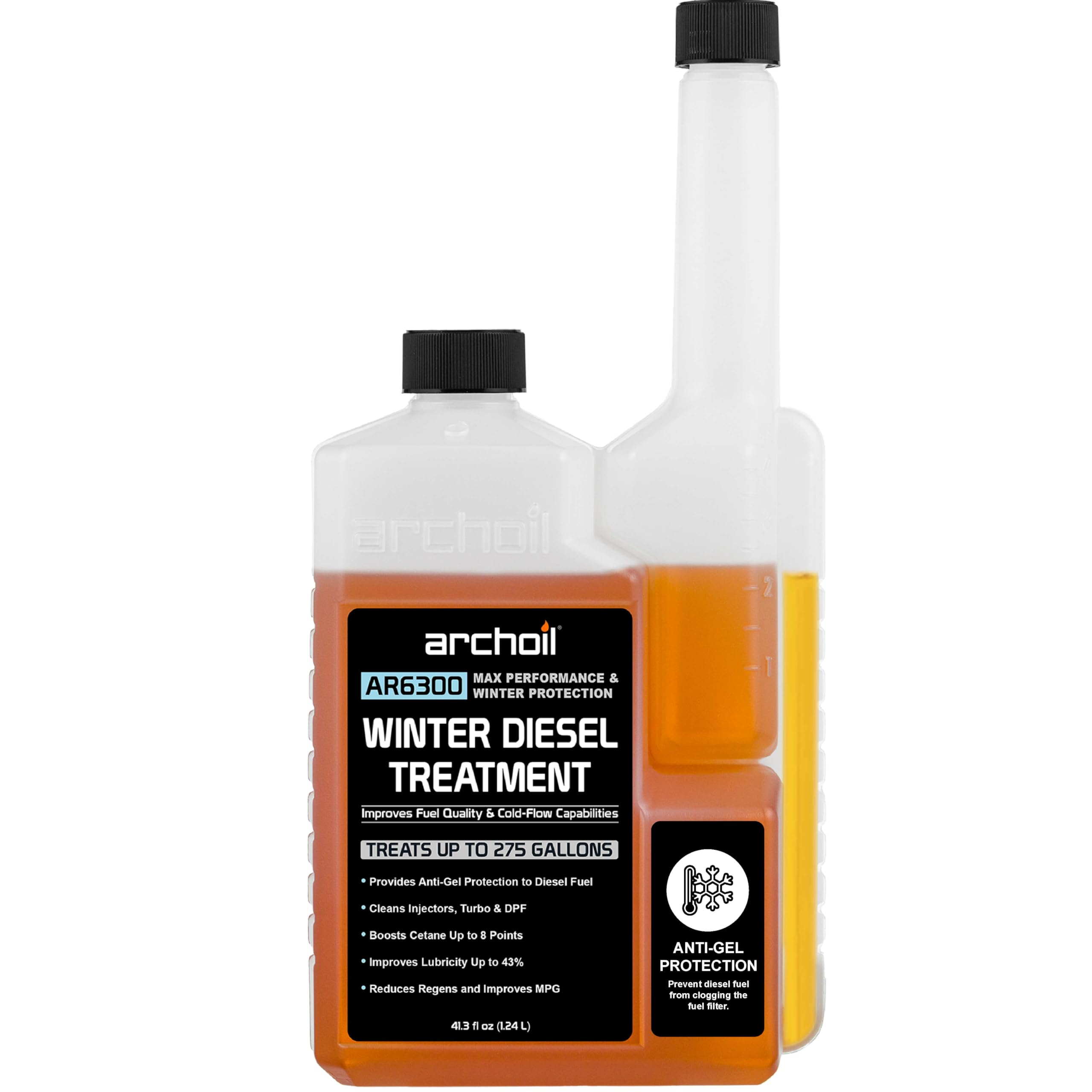
The Archoil AR6300 is the most complete winter diesel treatment we tested. It combines a strong anti-gel component that prevents wax crystallization down to severe sub-zero temps with a cetane booster that can raise pump diesel by up to 8 points — enough to smooth out cold starts and reduce the shudder common in high-pressure common rail engines. The 41 oz bottle treats a generous 275 gallons, making it a cost-effective choice for heavy users.
Beyond cold-weather performance, the AR6300 delivers a measured 43% improvement in lubricity under ASTM D6079 testing. This is crucial for protecting CP4 injection pumps, which are notoriously susceptible to scuffing from low-lubricity ULSD. The inclusion of a detergent package further cleans injector deposits, restoring spray patterns that degrade over time from poor fuel quality.
We also appreciate that Archoil designed this as a seasonal rotation product — use the AR6300 in winter for its anti-gel properties, then switch to AR6500 the rest of the year. The bottle includes a long neck and measuring chamber, which makes treatment at each fill-up simple and precise, with no spill risk.
What works
- Strong anti-gel for extreme cold
- 43% lubricity gain protects CP4 pumps
- Treats 275 gallons per bottle
What doesn’t
- Seasonal formula requires switching to AR6500 in summer
- Measuring chamber feels slightly bulky for tight fuel necks
2. Star Tron Super Concentrated Diesel Formula
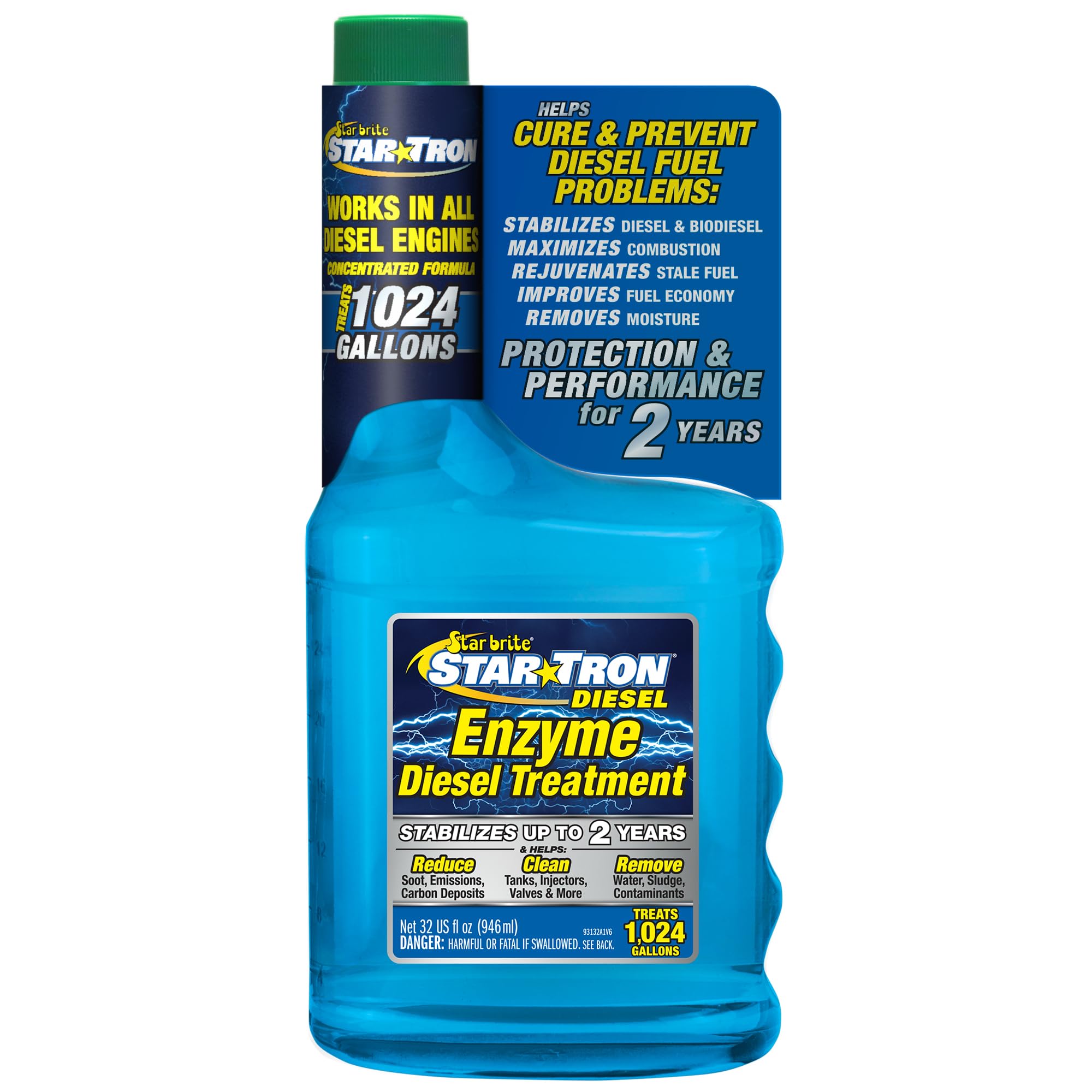
Star Tron takes a different approach, focusing on fuel stabilization and water management rather than extreme cold flow. Its enzyme-based formula breaks down water in diesel into submicron droplets that can be safely burned off during normal engine operation, which prevents the microbial growth that creates sludge and clogged filters in stored vehicles.
This makes the Star Tron an ideal choice for seasonal equipment like boats, RVs, and generators that sit for months between uses. It preserves fuel quality for up to two years, preventing the gum and varnish formation that can seize injectors and gum up pumps. The 32 oz bottle is highly concentrated — just 1 oz treats 32 gallons, so a single bottle goes a very long way.
While it doesn’t offer the dramatic cetane boost or anti-gel protection of the Archoil, the Star Tron excels at keeping an entire fuel system clean and dry over long storage periods. Testers consistently report easier restarts after winter layup, with reduced smoke and smoother idle compared to untreated fuel.
What works
- Enzyme-based water dispersion prevents microbial growth
- Preserves fuel up to 2 years in storage
- Extremely concentrated — 1 oz treats 32 gallons
What doesn’t
- No cetane boosting for cold starts
- Not a dedicated anti-gel for severe winter
3. Lucas Oil 10873 Diesel Deep Clean

If your diesel feels gutless, has a clogged DPF, or requires increasingly frequent regenerations, Lucas Oil Diesel Deep Clean is the targeted remedy. This 64 oz concentrate is formulated to dissolve and remove the hard carbon deposits that accumulate in the exhaust gas recirculation system, turbo, and diesel particulate filter over tens of thousands of miles.
The most impressive claim is a 32% reduction in particulate matter emissions, which directly translates to less frequent regenerations and extended DPF lifespan. This isn’t a maintenance top-up — it’s a corrective treatment for engines that have already built up significant deposits. The cleaning agents also target injectors, dissolving varnish and restoring proper spray patterns that improve fuel atomization and combustion efficiency.
Lucas recommends using this full-time for maximum MPG and performance, though the 64 oz bottle is sizable enough that occasional users will get many treatments. It’s designed for universal fit across all diesel vehicles, including modern HPCR-equipped trucks, and the formula is safe for all emission systems when used as directed.
What works
- 32% PM reduction protects DPF
- Dissolves hard carbon deposits in injectors and turbo
- Full-time use improves fuel economy
What doesn’t
- No anti-gel or winter protection
- Large bottle may be excessive for light users
4. Red Line 80205 Supercool Extreme Powersports Coolant

Red Line’s Supercool is distinct from the fuel additives above — this is a coolant system additive designed specifically for motorcycles, ATVs, and karts. It’s pre-mixed with purified, deionized water and a proper percentage of WaterWetter, meaning no mixing or measuring is required. Simply drain your old coolant, pour this in, and get improved heat transfer and corrosion protection.
The formula reduces rust, electrolysis, and lubricates water pump seals — a common failure point in liquid-cooled powersports engines. It’s compatible with all modern aluminum, cast iron, copper, brass, and bronze cooling systems, and can be safely mixed with any standard antifreeze or coolant without causing chemical incompatibility.
For riders who track their bikes or ride aggressively in hot conditions, the enhanced heat transfer from the WaterWetter component can reduce peak cylinder head temperatures by 10–20°F. This directly counters the thermal stress that causes warpage in aluminum heads and gasket failures in high-compression engines.
What works
- Pre-mixed with WaterWetter — no prep needed
- Lubricates water pump seals to prevent leaks
- Reduces peak head temps in high-load conditions
What doesn’t
- Only for liquid-cooled powersports engines, not heavy-duty trucks
- Not a fuel additive — strictly cooling system
5. Ford Genuine VC-8 Diesel Cooling System Additive

For Ford diesel owners, this is the definitive factory-spec optional additive. The Ford Genuine VC-8 is designed to replenish the corrosion inhibitors and pH buffers that deplete over time in the cooling system. It replaces both the fluorescent green V119 and the older yellow Motorcraft WSS-M97B51-A1 formulations, simplifying inventory for DIYers and fleets alike.
The 16 oz bottle is small because it’s concentrated. A single bottle is typically enough to treat a standard cooling system once a year during maintenance. It’s not a universal fit product — this is specifically engineered for aluminum and cast iron cooling systems found in Ford Powerstroke diesels, ensuring optimal compatibility with gasket materials and water pump seals.
While it lacks the extreme cold-flow enhancement or combustion improvements of fuel-based additives, the VC-8 plays a critical role in preventing electrolysis damage in the radiator and heater cores. Many Ford owners report that regular use eliminates the premature water pump seal leaks and radiator pinholes that plague neglected cooling systems.
What works
- Factory-spec for Ford Powerstroke cooling systems
- Prevents electrolysis and pinhole leaks
- Replaces older Ford formulas in one dose
What doesn’t
- Limited to Ford diesel applications
- Small bottle won’t last full year if system is already degraded
Hardware & Specs Guide
ASTM D6079 Lubricity (HFRR)
This test measures the wear scar diameter created by a moving ball on a stationary disc lubricated with treated fuel. A smaller scar means better protection for injection pumps. The Archoil AR6300 achieves a 43% reduction in wear scar diameter, which is critical for preventing scuffing in CP4 pumps that are known to fail catastrophically on low-lubricity ULSD. Always check for HFRR test data — if a product doesn’t publish it, the lubricity claim is unsubstantiated.
Cetane Number Improvement
Cetane measures ignition quality of diesel fuel. Pump diesel typically sits between 40–45, while modern HPCR engines perform optimally at 48–52. A cetane booster like the one in Archoil AR6300 can lift the number by up to 8 points, reducing ignition delay, knocking, and white smoke during cold starts. If you live in a cold climate or run a tuned truck, paying for a cetane boost of 6+ points makes a noticeable difference in drivability.
FAQ
Can I use a winter diesel treatment year round?
How much additive should I use per tank?
Will a coolant additive fix a blown head gasket?
Final Thoughts: The Verdict
For most buyers, the best diesel coolant additive winner is the Archoil AR6300 because it delivers a complete winter package — strong anti-gel, 43% lubricity improvement, and a cetane boost of up to 8 points — all in one bottle that treats 275 gallons. If you store a vehicle for extended periods, grab the Star Tron Diesel Formula for its enzyme-based water dispersion and two-year fuel stabilization. And for a diesel that’s already loaded with DPF deposits and poor regen cycles, nothing beats the Lucas Oil Diesel Deep Clean for dissolving carbon and cutting particulate matter by 32%.

Certification: BSc in Mechanical Engineering
Education: Mechanical engineer
Lives In: 539 W Commerce St, Dallas, TX 75208, USA
Md Amir is an auto mechanic student and writer with over half a decade of experience in the automotive field. He has worked with top automotive brands such as Lexus, Quantum, and also owns two automotive blogs autocarneed.com and taxiwiz.com.