Sliding toward a stopped car at a snowy intersection is the moment you realize cheap cables aren’t a plan. Real Class S chains dig into packed ice and give you back control when your tires have none. Choosing the wrong set means either a brutal installation in a blizzard or chains that rattle loose on the highway — neither is acceptable.
I’m Amir — the founder and writer behind Four Wheel Ask. I’ve analyzed hundreds of traction devices, cross-referencing SAE classifications, link thicknesses, and real owner feedback to separate the sets that actually perform from those that just look the part.
Whether you’re driving a sedan through mountain passes or an SUV across flat Midwest ice, the right set changes everything. This guide breaks down the best class s tire chains based on real-world build quality, installation speed, and durability.
How To Choose The Best Class S Tire Chains
Class S chains are built for passenger cars and SUVs with limited wheel-well clearance. The wrong set rubs against suspension components or the inner fender — expensive damage you can avoid by understanding three key factors.
Link Design and Profile Height
Cable-style Class S chains sit lower on the tire than traditional ladder links, giving you the clearance needed for tight wheel wells. Full-envelope mesh designs offer more surface contact for ice breaking but add height. Measure your available clearance before buying — if you have less than 10 mm, stick with cable or low-profile twist-link patterns.
Material Grade and Link Thickness
Alloy steel and manganese steel are the two materials you will see. Manganese steel handles repeated ice impacts without cracking, while basic carbon steel works for occasional use. Look for links at least 6 mm thick on heavy-duty sets; thinner links around 4 mm are fine for sedans but wear faster on heavier SUVs.
Tensioning System
Manual chains require stopping to retighten after driving a few hundred feet. Auto-tensioning ratchets or spring-loaded systems keep the chain snug against the tire without you crawling out in the cold. If you drive mixed conditions where bare pavement appears between snow patches, automatic tension is a huge time saver.
Quick Comparison
On smaller screens, swipe sideways to see the full table.
| Model | Category | Best For | Key Spec | Amazon |
|---|---|---|---|---|
| Auto Fixing Snow Chains HPK-1545 | Premium | Low-clearance sedans | 12 mm links, auto-tension | Amazon |
| LoJok HKN110 | Premium | Universal SUV fit | Alloy steel, 1-min install | Amazon |
| SCITOO QG2228CAM | Premium | Light trucks and SUVs | Manganese steel, 15-20 inch | Amazon |
| FENCARCIO KN130 | Mid-Range | Easy one-pull fit | Manganese alloy, backstop lock | Amazon |
| TireChain.com 1942-21 | Mid-Range | Smooth quiet highway ride | Cable link, SAE Class S | Amazon |
| Arbnic KN130 | Mid-Range | Ice breaking on SUVs | Mesh + square steel links | Amazon |
| URLINE KN110 | Entry-Level | Budget emergency use | Alloy steel, universal | Amazon |
In‑Depth Reviews
1. Auto Fixing Snow Chains HPK-1545
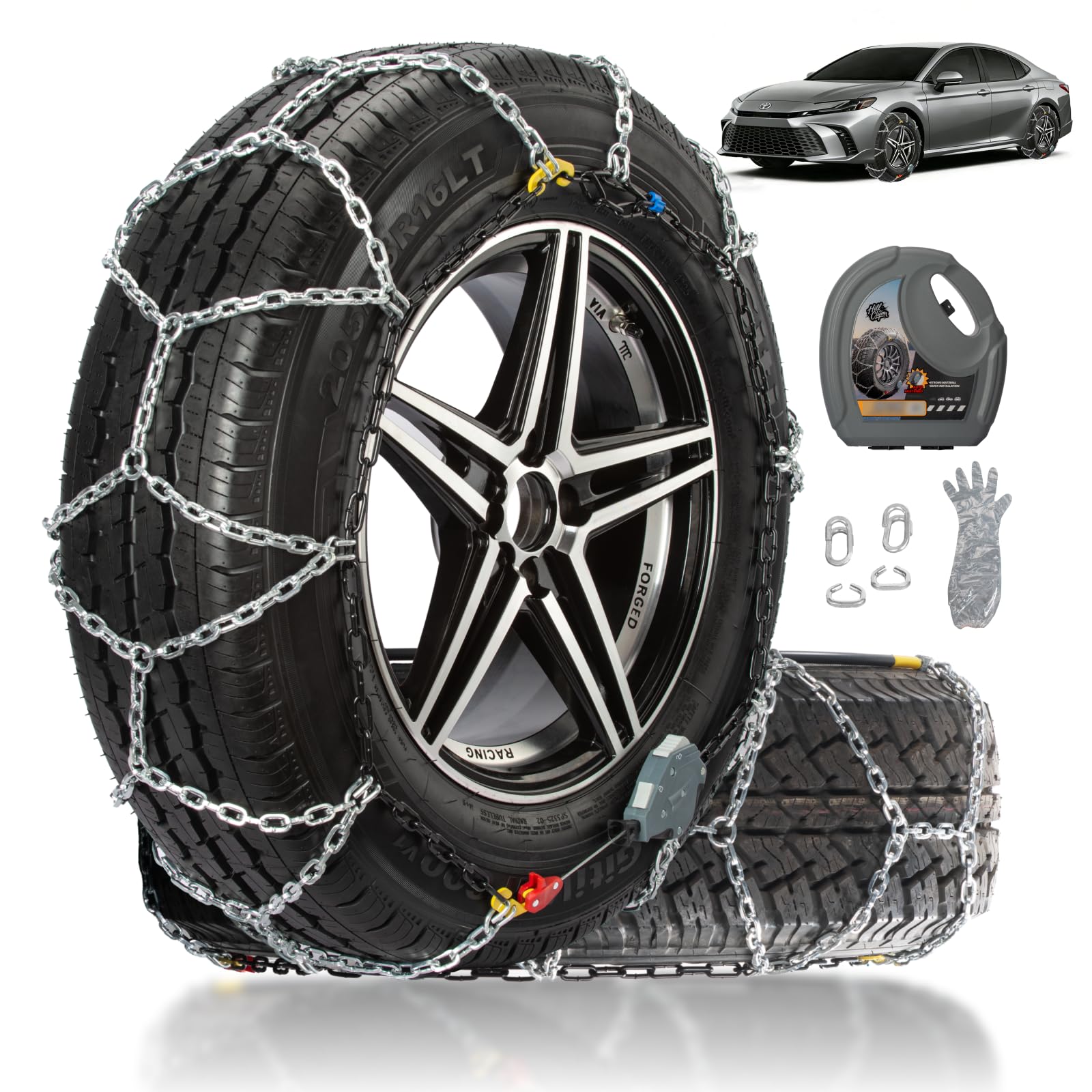
The HILLCLYM HPK-1545 uses 12 mm alloy steel links — noticeably thicker than most Class S offerings. That thickness directly translates to better ice-breaking force when you hit a patch of glare ice. The auto-tensioning system eliminates the mandatory stop-and-retighten routine that cheaper chains require after the first fifty feet of driving.
This set carries SAE Class S certification and meets European EN 16662-1 standards, which means it has been tested for low-clearance vehicles. The design fits tire sizes where traditional ladder chains would scrape the inner fender. Installation involves laying the chain flat and pulling it over the tread — no jack, no moving the car.
Included gloves and a hard storage box make this a complete emergency kit. The 1-year warranty covers manufacturing defects, though the manganese-alloy construction should survive multiple seasons of regular winter driving. The 30 mph speed limit is typical for Class S chains, and the auto-tension holds firm even at that limit.
What works
- Thick 12 mm links break ice reliably
- Auto-tensioning removes re-tightening hassle
- Meets official SAE Class S standards
What doesn’t
- Heavier than cable-style alternatives
- Must confirm tire size fitment before purchase
2. LoJok HKN110
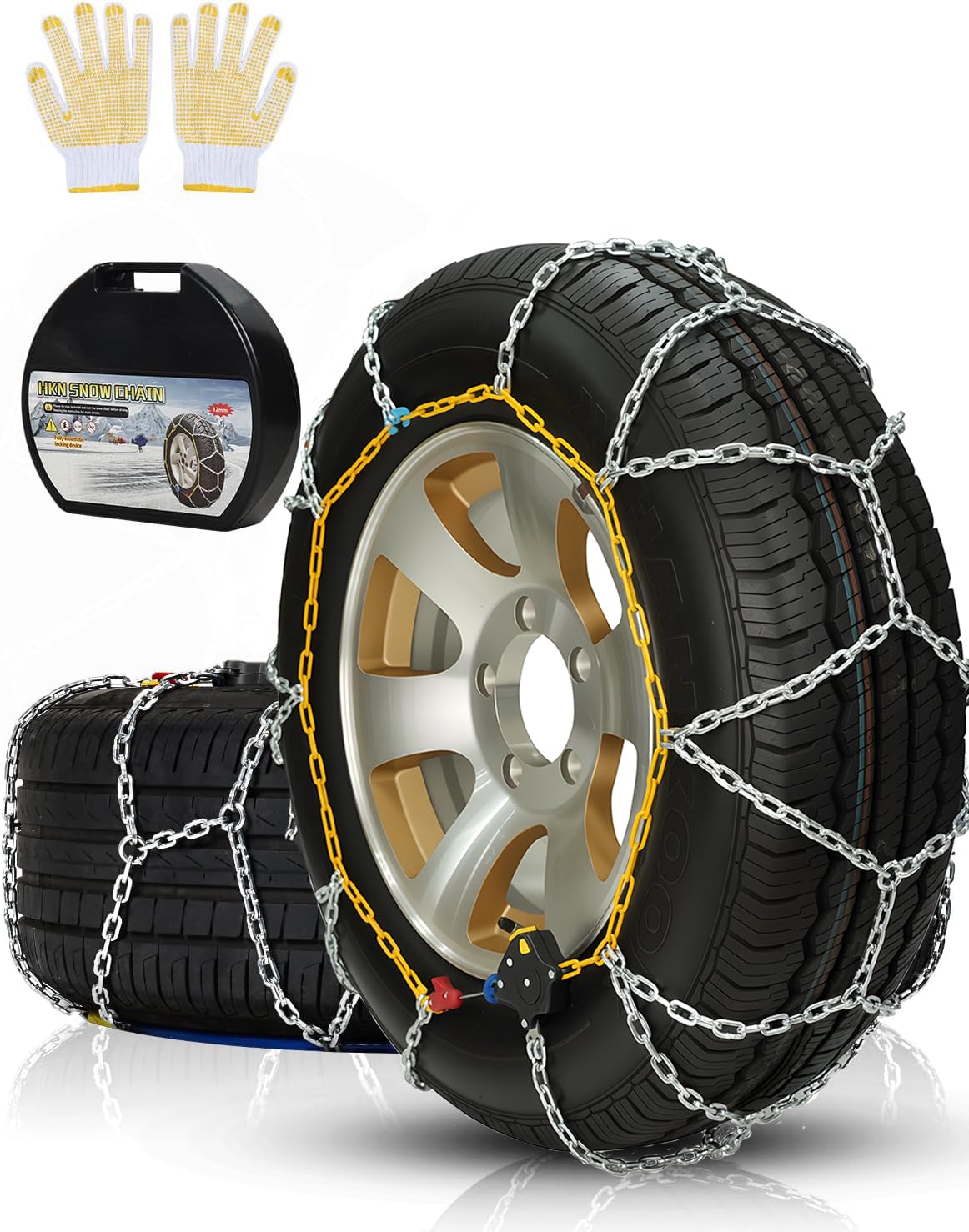
The LoJok HKN110 is built around a universal-fit philosophy — the alloy steel links and reinforced cross-bars adapt to most passenger cars, SUVs, and pickups. The 1-minute installation claim holds up because the chain uses a pretensioned loop design that you simply drape over the tire and tighten with the included pull straps.
Packaged with a compact storage case and work gloves, this set is designed to live in your trunk all winter. The 0.75-inch link thickness provides enough bite for snow and moderate ice without adding the weight of full manganese chains. It works on wheel sizes from 14 inches upward, covering a wide range of sedans and crossovers.
Owner feedback consistently highlights the ease of roadside installation — you do not need to drive onto the chains or use a jack. The 1-year warranty adds peace of mind for occasional users who only need chains a few times per season. The 30 mph speed limit applies, and the self-tensioning system keeps the fit snug during those short low-speed stretches.
What works
- Genuine 1-minute install without tools
- Compact case fits easily in any trunk
- Works across multiple vehicle types
What doesn’t
- Not as aggressive on thick ice as 12 mm chains
- Glove quality is basic
3. SCITOO QG2228CAM
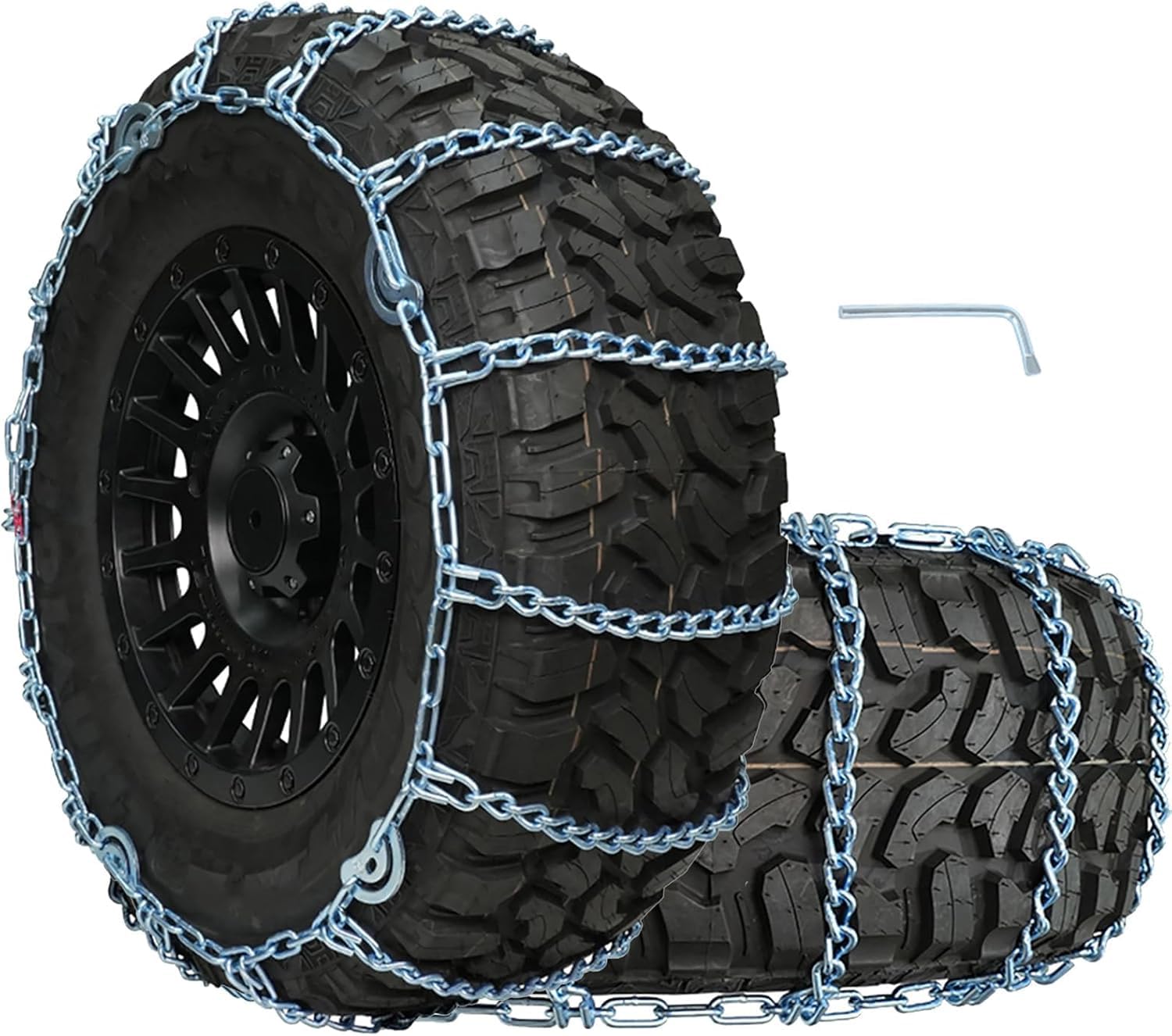
The SCITOO QG2228CAM is built from thick manganese alloy steel, which resists the cracking that plagues cheaper carbon steel chains after repeated impacts. It covers tire widths from 225 mm up to 295 mm and fits rim diameters from 15 to 20 inches — one of the broadest size ranges in this list. The auto-fixing ratchet system tightens and centers the chain without manual adjustment.
Installation takes about 1 minute once you understand the ratchet mechanism. The chain uses a mechanical tensioner that maintains consistent pressure across the tread face, which improves ice-breaking performance compared to passive tension designs. The 40 km/h speed limit (about 25 mph) is slightly lower than some competitors, but the manganese construction compensates with a longer service life.
At nearly 12 pounds for the pair, these are heavy chains — that weight translates to durability but also means more effort during installation. They are best suited for light trucks and larger SUVs where the extra link mass helps break through packed snow. The 1-year manufacturer warranty covers defects, and the universal fit pattern works on standard passenger vehicles as well.
What works
- Extremely wide tire size compatibility
- Manganese steel resists cracking
- Auto-tension ratchet system works well
What doesn’t
- Very heavy at nearly 12 pounds
- 40 km/h limit is conservative
4. FENCARCIO KN130
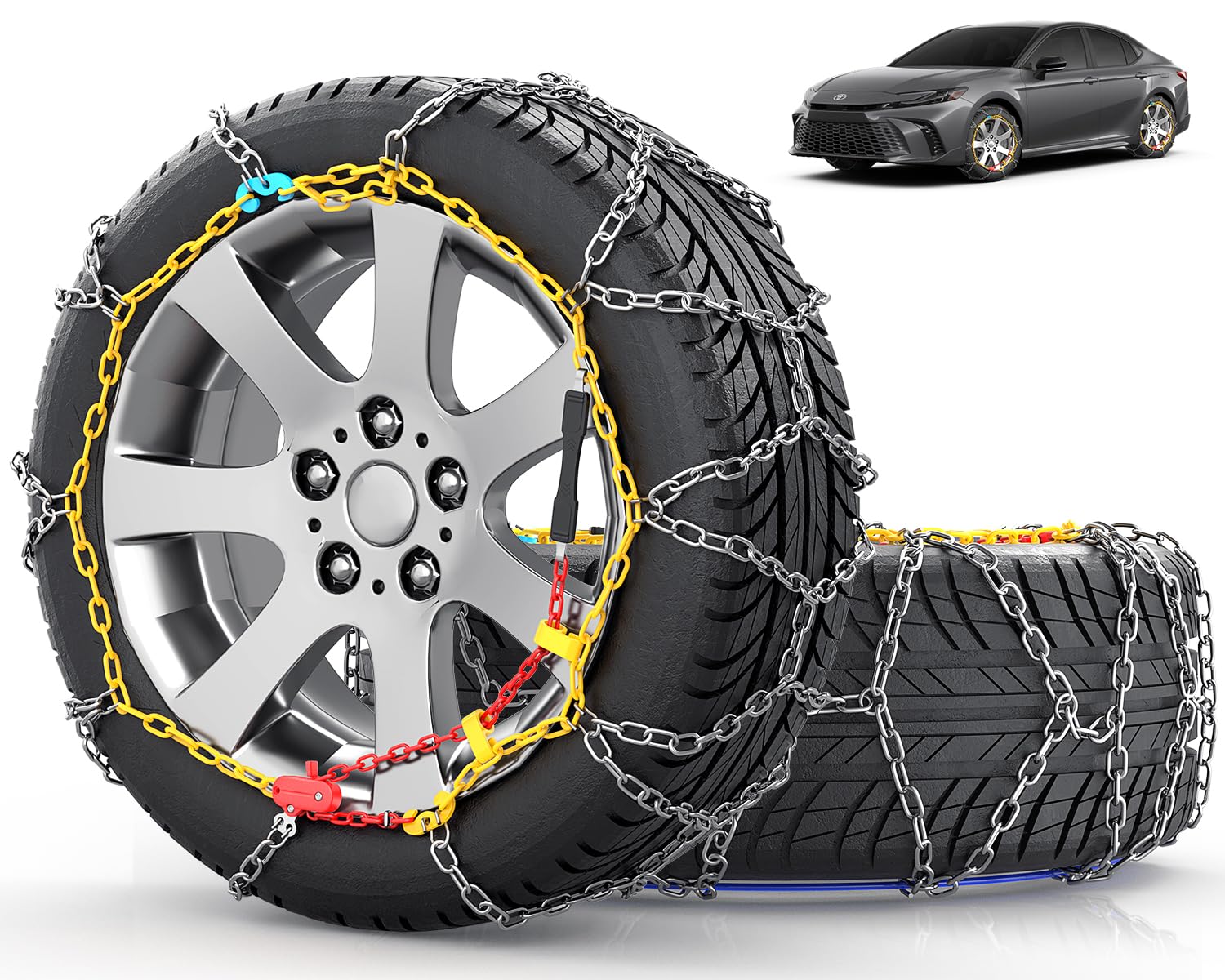
The FENCARCIO KN130 uses a one-pull fit design that simplifies installation for drivers who are not mechanical. You spread the chain on the ground, drive onto it, and pull the tension strap until the backstop lock engages. The manganese alloy steel construction provides ice-breaking performance that exceeds basic cable chains.
This set is engineered for compact cars, sedans, and SUVs with standard tire sizes. The backstop lock is the standout feature — it keeps the chain tight without requiring you to crouch down and manually adjust links. The storage case keeps everything organized, and the included replacement buckles add long-term value if a tension tab wears out.
The warranty specifically excludes damage from driving above 50 km/h (36 mph) or using the chains on dry pavement for extended periods — standard limitations that apply to almost all Class S products. The 5.25 kg weight (about 11.5 pounds) is comparable to other mid-range alloy steel sets. These chains are best for drivers who want reliable traction without the complexity of ladder-style chains.
What works
- One-pull installation is genuinely quick
- Backstop lock prevents loosening
- Includes spare buckles for longevity
What doesn’t
- Warranty has strict speed and use conditions
- Heavier than cable-style options
5. TireChain.com 1942-21

The TireChain.com 1942-21 is a cable-link design specifically built for Class S vehicles with tight wheel-well tolerances. Instead of bulky ladder links, it uses a woven cable side chain with twist-link cross members that provide traction while sitting noticeably lower on the tire profile. This makes it the right choice for cars where even 10 mm of extra chain height causes rubbing.
This set fits 225/65R17 tires and is designed for on-road highway use where chain laws mandate traction devices but road conditions are mostly wet snow rather than deep powder. The cable-link construction produces a much smoother and quieter ride than traditional chains, which matters on long stretches where you encounter alternating patches of snow and bare pavement.
The 7-pound weight is significantly lighter than alloy steel sets, making installation less physically demanding. The 90-day warranty covering manufacturer defects is shorter than most competitors, but the cable design is inherently less prone to the fatigue cracking that affects welded steel links. These chains are not intended for aggressive off-road recovery or deep mud.
What works
- Cable design fits ultra-tight clearances
- Much quieter than link chains on pavement
- Lightweight and easy to handle
What doesn’t
- Only fits one specific tire size
- 90-day warranty is minimal
6. Arbnic KN130
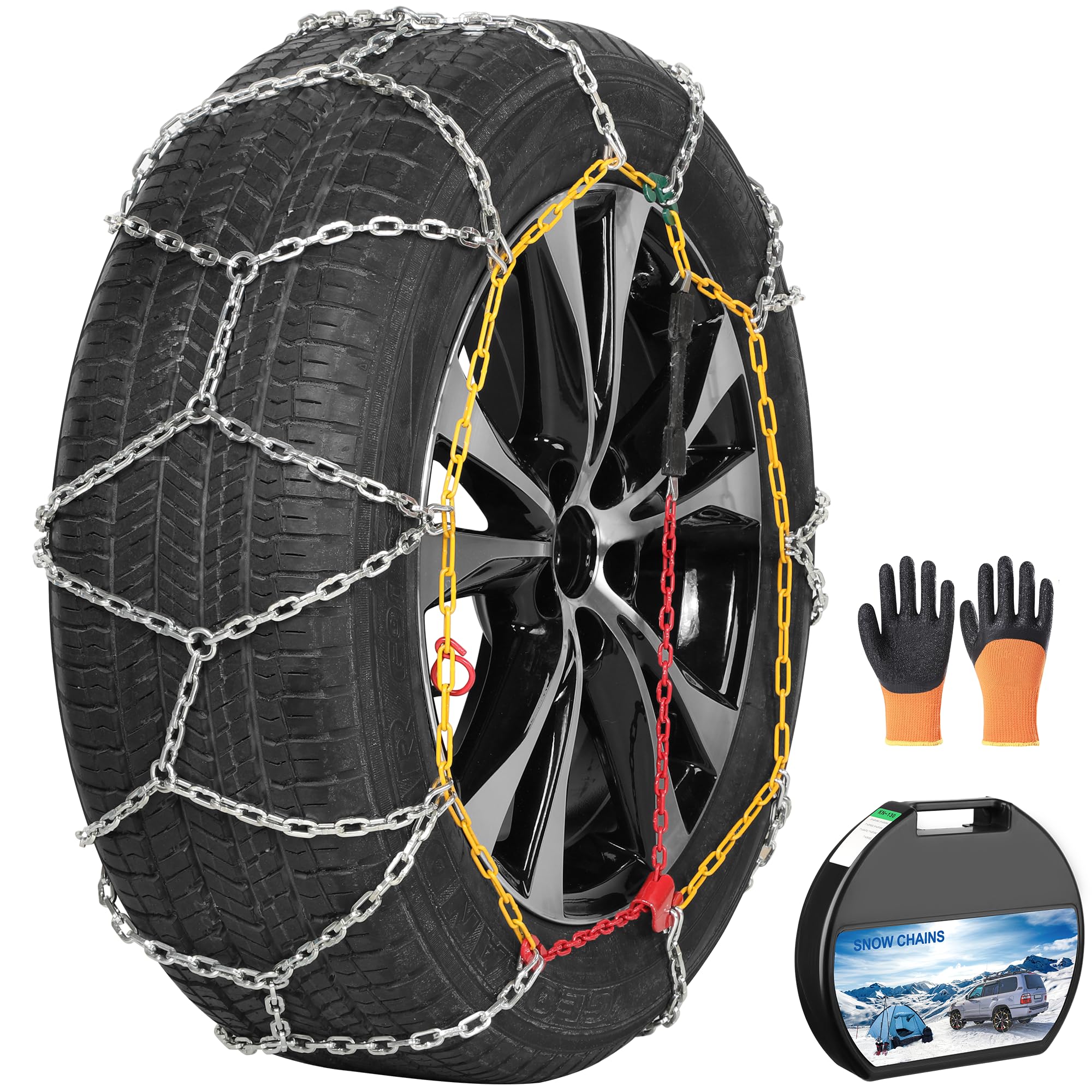
The Arbnic KN130 combines a full-envelope mesh pattern with square steel cross links — a configuration that maximizes surface contact for ice breaking. The high-temperature carburizing treatment hardens the metal, reducing wear when driving over gritty snow pack. The included gloves and storage case make this a turnkey emergency set.
It fits over 20 tire sizes ranging from 205/80R16 to 275/40R18, covering a broad swath of passenger cars and crossovers. The square-link design creates sharp edges that bite into ice more effectively than round links. Installation requires no jack or special tools, though the mesh pattern adds a bit of time compared to simple cable chains.
The 90-day warranty is shorter than premium competitors, but the carbon steel construction with surface hardening offers decent longevity for seasonal use. The 9.7-pound weight is moderate — heavier than cables but lighter than the thickest manganese sets. These chains are a strong middle-ground option for drivers who want mesh-level traction without spending for premium alloys.
What works
- Square links provide aggressive ice bite
- Broad tire size compatibility
- Hardened steel resists premature wear
What doesn’t
- Mesh design takes longer to install
- 90-day warranty is limited
7. URLINE KN110
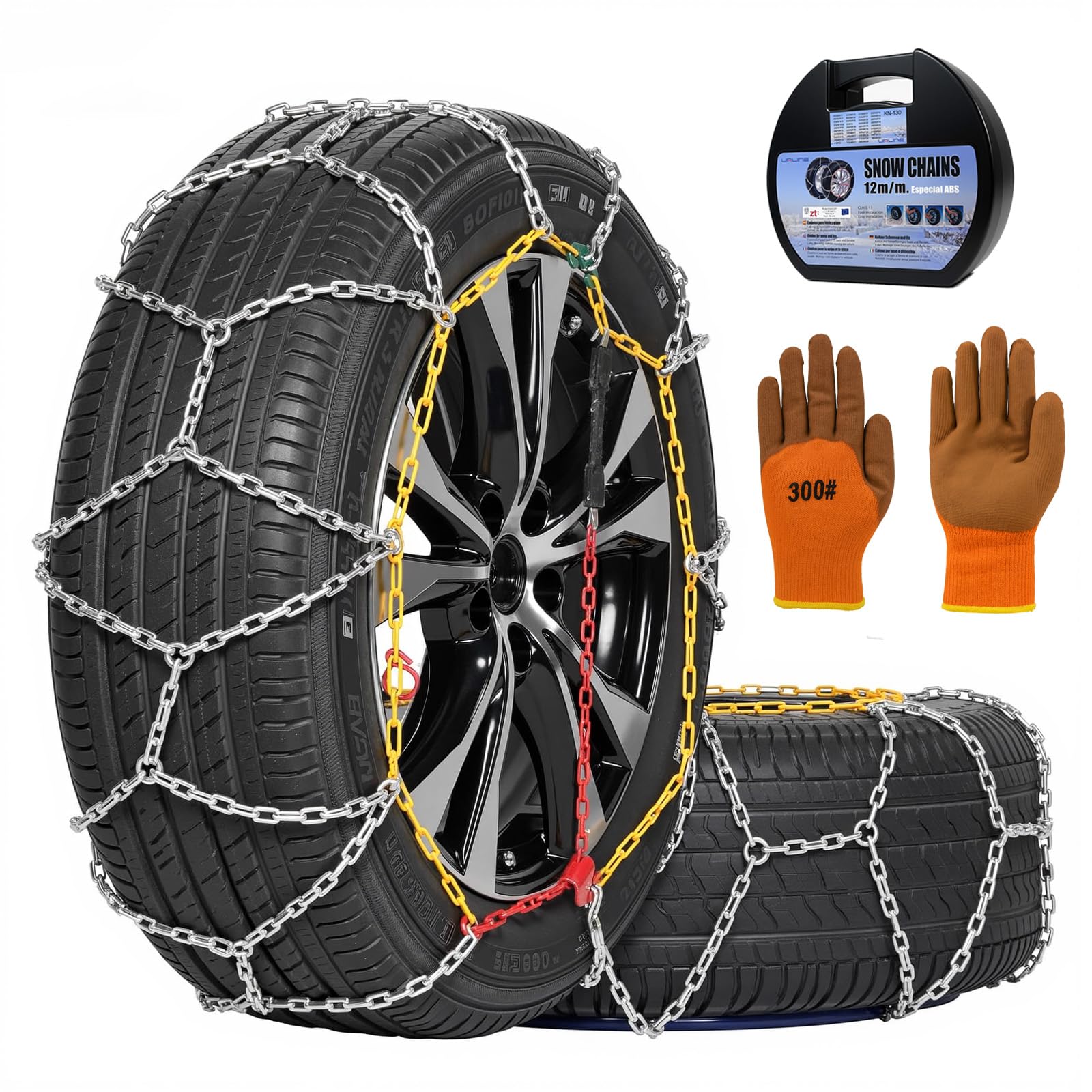
The URLINE KN110 is an entry-level alloy steel chain set designed for emergency roadside use. It is the lightest and most affordable option in this comparison, making it a reasonable choice for drivers who only face snow a few days per year and want a basic safety net in the trunk. The universal fit claim covers most standard passenger tires, though fitment varies by wheel well geometry.
Installation is straightforward — lay the chain flat, drive onto it, and secure the tension straps. The alloy steel construction provides adequate grip on snow and light ice, but the thinner links are more susceptible to deformation under heavy loads or aggressive driving. The compact storage profile is a genuine advantage for small trunks or cargo areas.
The 1-year warranty is better than several mid-priced competitors, but the overall build quality reflects the budget tier. These chains work best as a secondary set for emergencies rather than a primary winter solution. Drivers who face regular mountain commuting or extended ice patches should invest in a heavier-duty set.
What works
- Very affordable entry price
- Compact and easy to store
- 1-year warranty for a budget set
What doesn’t
- Thinner links wear faster on ice
- Not suited for aggressive or repeated use
Hardware & Specs Guide
Link Thickness and Material
Link diameter directly determines how much force the chain can transfer to the tire before breaking. Standard Class S chains use 4-6 mm links. Heavy-duty options like the HILLCLYM HPK-1545 use 12 mm links. Manganese steel withstands repeated cold-impact stress better than basic carbon steel, which tends to crack after multiple seasons on rough ice.
Class S Clearance Requirements
SAE Class S designation means the chain profile is low enough to fit vehicles with minimal wheel-well clearance. Most Class S sets sit below 10 mm above the tire tread. Cable-link designs offer the lowest profile, while mesh and ladder patterns add height. Measure the gap between your tire and the nearest suspension or fender component before selecting a chain type.
Tensioning Mechanisms
Passive chains rely on initial tightening and loosen as the tire rotates and compresses the links. Auto-tensioning systems use ratchets or spring-loaded cams that take up slack automatically. For Class S vehicles where you may install chains in tight spaces, auto-tension eliminates the need to reach behind the wheel for manual retightening.
Link Pattern Types
Ladder-style chains run straight cross links across the tread — simple and effective on snow but rougher on ice. Full-envelope mesh wraps the entire tread face for maximum contact. Twist-link cables weave a diamond pattern that balances traction and ride comfort. Choose mesh for ice-dominant conditions and cable for mixed snow-and-pavement routes.
FAQ
What does Class S mean on tire chains?
Can I use Class S chains on my truck?
How fast can I drive with Class S tire chains?
Do I need chains on all four tires?
Final Thoughts: The Verdict
For most buyers, the best class s tire chains winner is the HILLCLYM HPK-1545 because the 12 mm auto-tensioning links deliver superior ice-breaking force in a low-clearance package certified to SAE standards. If you want a lightweight set for tight wheel wells and highway snow conditions, grab the TireChain.com 1942-21 cable chains. And for budget-conscious emergency preparedness, nothing beats the URLINE KN110 for the price.

Certification: BSc in Mechanical Engineering
Education: Mechanical engineer
Lives In: 539 W Commerce St, Dallas, TX 75208, USA
Md Amir is an auto mechanic student and writer with over half a decade of experience in the automotive field. He has worked with top automotive brands such as Lexus, Quantum, and also owns two automotive blogs autocarneed.com and taxiwiz.com.