Your feet and ankles are the primary interface with your motorcycle’s controls, yet they remain the most vulnerable in a slide or impact. A well-engineered boot does more than complete an aesthetic; it anchors your stance, absorbs punishment from rocks and pavement, and can mean the difference between a bruised ego and a shattered tibia. Selecting a pair requires looking beyond surface style to scrutinize sole rigidity, closure security, and material integrity under duress.
I’m Amir — the founder and writer behind Four Wheel Ask. My work focuses on dissecting product specifications, evaluating construction methodologies, and synthesizing real-world owner testimonials to determine what truly holds up on the road or trail. I analyze market trends and aggregate long-term feedback to separate marketing claims from proven durability.
This analysis cuts through the catalog noise to examine nine distinct contenders across various riding disciplines and investment tiers. Selecting the ideal pair requires weighing materials, safety ratings, and fit precision to find best custom motorcycle boots that deliver uncompromising confidence on every ride.
How To Choose The Best Custom Motorcycle Boots
Selecting a boot is a compromise between protection, flexibility, and climate suitability. Understanding the core functional categories helps narrow the field before considering brand or budget.
Assess Your Primary Riding Environment
Street and cruiser riding prioritizes foot comfort and walkability, often using full-grain leather with reinforced toe boxes. Adventure and dual-sport boots require a stiffer sole for peg grip and a higher shaft for debris protection, while motocross boots demand maximum rigidity and impact absorption via a hinged chassis. Using a touring boot for track days leaves you under-protected, just as a race boot on a long street ride will punish your ankles over miles of stop-and-go traffic.
Evaluate Upper Materials and Construction
Full-grain leather offers superior abrasion resistance and conforms to the foot over time, but it requires maintenance and is heavier. Microfiber and textile blends reduce break-in time and weight while offering consistent water resistance, though they rarely match leather’s long-term structural integrity. Pay close attention to critical stitch density and whether high-wear areas like the toe and heel feature layered reinforcements or bonded TPU sliders.
Understand Closure and Adjustment Systems
Traditional laces provide a precise fit but can snag or loosen. Zippers offer convenience but are a common failure point if not shielded by a leather storm flap. Ratcheting buckles deliver secure, glove-friendly adjustability and are standard on off-road boots, but they add cost and weight. The best systems combine a secure primary closure with a secondary retention method to ensure the boot stays on during a crash.
Prioritize Safety Features and Certifications
Look for built-in ankle protectors, reinforced shanks, and non-slip soles. CE certification indicates the boot has passed standardized impact and abrasion tests. A boot with a flexible ankle might be comfortable to walk in, but it will not provide the torsional resistance needed to prevent spiral fractures in a high-speed fall. Evaluate whether the boot includes toe sliders and replaceable parts, which extend its usable life after inevitable contact with pavement or rocks.
Quick Comparison
On smaller screens, swipe sideways to see the full table.
| Model | Category | Best For | Key Spec | Amazon |
|---|---|---|---|---|
| Harley-Davidson Distortion | Cruiser | Style & Comfort | Full-Grain Leather | Amazon |
| O’Neal Sierra Pro WP | Adventure | Versatile Traction | Waterproof, Hiking Sole | Amazon |
| Alpinestars Tech 7 | Enduro | Protective Performance | Drystar Liner, TPU Shin | Amazon |
| Gaerne SG22 | Motocross | Premium Comfort | Italian Leather, Flex System | Amazon |
| SiDI Crossfire 3 | Motocross | Professional MX | Replaceable Parts, Hinge | Amazon |
| MSR Adventure Boots | Dual-Sport | Calf Fit & Durability | Calf High, Rugged Sole | Amazon |
| Frye Campus 14L | Lifestyle | Heritage Style | Full-Grain Leather, Stacked Heel | Amazon |
| Alpinestars Tech 10 | Motocross | Elite Protection | Ankle Brace, Chassis | Amazon |
| Harley-Davidson Jason Engineer | Engineer | Value & Utility | Steel Toe, Synthetic Leather | Amazon |
In-Depth Reviews
1. Harley-Davidson Men’s Distortion Boot
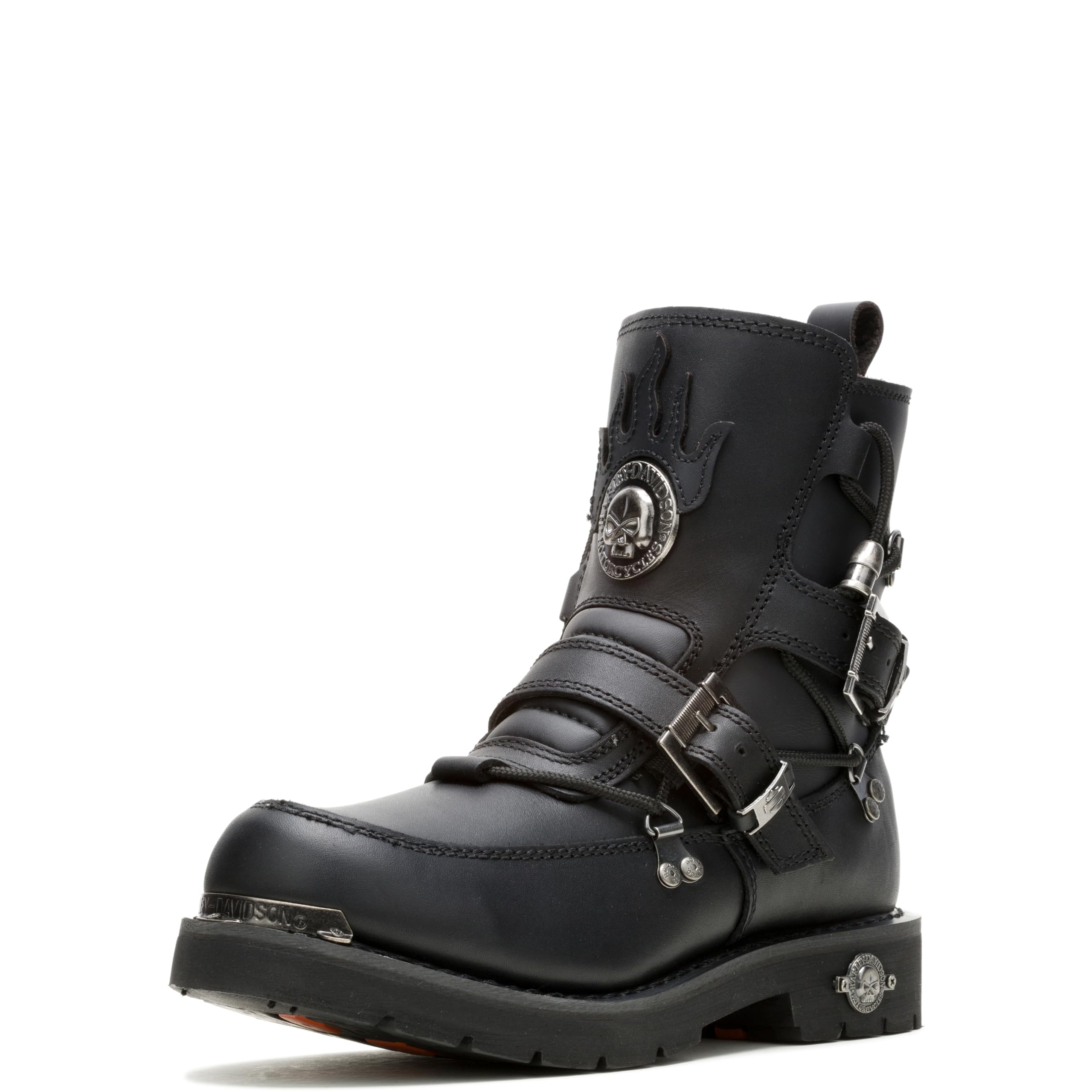
The Distortion boot is a strong contender for riders who want classic cruiser aesthetics with minimal break-in. The full-grain leather upper shows consistent quality in the stitching and the round toe profile fits well under controls without a bulky feel. Owner feedback indicates the boot holds up well to vibration and provides surprising relief for those with lower back or sciatica issues during longer rides.
Fit tends to run slightly large, with many riders ordering a half-size down for a precise fit. The ankle height is compatible with most straight-leg jeans, though tucked jeans may struggle under the top edge. The interior lining and cushioned insole offer decent comfort for short walks, but this remains primarily a riding boot rather than an all-day walking shoe.
The main durability concern centers on the side zipper, which several owners report failing when subjected to lateral stress during removal. This is a critical wear point to monitor, as a broken zipper compromises the boot’s usability. For riders willing to manage the zipper carefully, the Distortion delivers a clean look and solid foundational protection at a sensible investment.
What works
- Comfortable right out of the box with minimal break-in required
- Full-grain leather construction with consistent stitching quality
- Classic silhouette that pairs naturally with cruiser-style riding
What doesn’t
- Side zipper is a known failure point if handled roughly
- Ankle shaft is too tall for some riders to tuck jeans inside
- True walking comfort is limited; it is primarily a riding boot
2. O’NEAL Sierra PRO WP Boot 11

The O’Neal Sierra Pro WP fills a specific niche for the adventure and touring rider who wants off-road capable protection without sacrificing walkability. The hybrid upper combines full-grain leather with suede microfiber and TPU reinforcements, offering a good balance of flexibility and abrasion resistance. The hiking-style sole provides excellent traction on loose terrain, making it a legitimate dual-purpose boot for riders who need to push or hike their bike.
Owner reports consistently highlight the comfortable fit for riders with flat, wide feet, noting that the boot accommodates orthotic insoles without pressure points. The mid-calf height and reasonably slim profile fit easily under adventure pants, and the metal quick-action buckles provide secure closure even with gloved hands. The nylon inner sole with a steel shank adds a layer of structural support without excessive weight.
While the boot is marketed as waterproof, several riders note that treating the leather with a dubbing product is necessary to maintain full water resistance in sustained heavy rain. The boot is not designed for aggressive motocross use, and riders who push hard in rocky terrain have reported that the overall structure lacks the rigidity needed for extreme impacts. For its intended adventure touring segment, it represents a solid intersection of comfort and protection.
What works
- Excellent out-of-box comfort for wide and flat feet
- Hiking-style sole provides superior traction off the bike
- Easy on and off with robust metal quick-action buckles
What doesn’t
- Not sufficiently rigid for aggressive off-road or motocross use
- Waterproofing requires additional treatment for heavy rain
- Some initial squeaking from the sole during walking
3. Alpinestars Men’s Tech 7 Enduro Boots

The Tech 7 is a benchmark in the enduro boot segment, offering a contoured chassis that balances articulation with impact protection. The TPU shin plate and dual-density ankle protector extend coverage without creating the bulk of a full motocross boot, making it a strong choice for technical trail riding. Owners report that the boot feels supportive without being overly restrictive, providing good feedback for precise shifter and brake control.
Fit feedback indicates the boot runs slightly large in the toe box, which is beneficial for riders with wider forefeet. The Drystar membrane is intended to provide waterproofing, but multiple long-term users report water intrusion through the top strap area, particularly during stream crossings or sustained rain. This is a critical consideration for riders who prioritize dry feet on multi-day trips.
Crash protection is a standout feature, with several accounts of the boot absorbing serious impacts during low-speed and moderate-speed falls without transferring trauma to the foot or ankle. The buckles and closure system have held up well in these incidents. Riders who need guaranteed waterproofing should look elsewhere, but those who value protective performance and comfort for aggressive enduro riding will find the Tech 7 a capable choice.
What works
- Excellent impact protection with proven crash survival records
- Comfortable fit for wider feet with minimal break-in needed
- Good articulation for trail riding and control feedback
What doesn’t
- Drystar membrane does not guarantee reliable long-term waterproofing
- Bulky shin guard can interfere with pants fitting over the boot
- Some units show glue seepage and finish inconsistencies
4. Gaerne SG22 Mens Boot
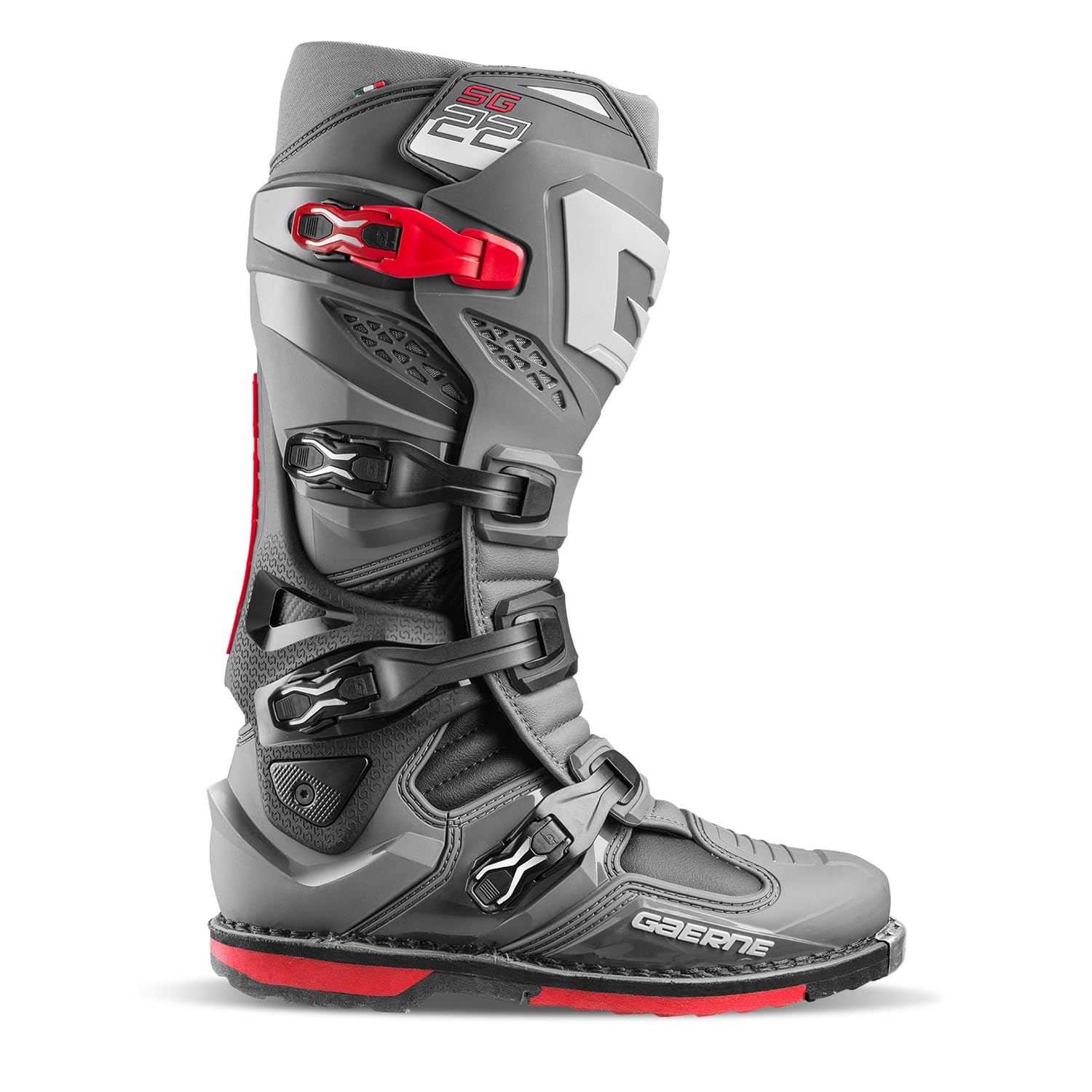
The Gaerne SG22 represents the pinnacle of Italian boot craftsmanship, using premium full-grain leather that molds to the foot exceptionally well. The Flex System provides controlled ankle movement while maintaining torsional rigidity, making these boots notably comfortable for walking compared to other motocross-specific options. Owner feedback consistently praises the build quality, noting that the leather and buckles show minimal wear even after a full season of riding.
Fit is reported to be true to size with little break-in required, though riders with narrow feet may find the heel cup slightly roomy. The boot offers excellent arch support and a secure feel on the pegs. However, the SG22 is not designed to be waterproof, and owners report that feet get wet quickly when riding through puddles or in sustained rain. Seal Skin socks are a common workaround for wet conditions.
The high purchase price is justified by the replaceable components and the protective performance. Riders who have crashed in the SG22 report that the boot effectively managed impact forces without compromising ankle integrity. The squeaking during walking is a minor annoyance that fades with use. For riders seeking a premium motocross boot that offers genuine walking comfort, the SG22 sets a high benchmark.
What works
- Superior leather quality that breaks in quickly and molds to the foot
- Flex System allows for natural walking motion without sacrificing protection
- Excellent arch support and secure peg feel out of the box
What doesn’t
- Not waterproof; feet get wet in puddles or rain
- High cost may be prohibitive for casual riders
- Some squeaking noise during walking, especially when new
5. SiDI Offroad Motorcycle Boots Crossfire 3

The SiDI Crossfire 3 is a professional-grade motocross boot designed for riders who demand maximum protection and serviceability. The dual-hinge system provides exceptional ankle support while maintaining the flexibility needed for clutch work and body positioning. Owner feedback from serious off-road riders indicates that these boots survive impacts that would destroy lesser boots, including a documented 50mph deer impact where the rider walked away without injury.
Sizing accommodates riders with wide feet and large calves, with the adjustable buckles providing ample range for a secure fit. The toe box is noticeably thicker than some competitors, which may require a shift lever adjustment to maintain proper feel. The boot’s construction allows for the replacement of soles, buckles, straps, and sliders, which significantly extends its service life compared to boots that must be discarded when components wear out.
The break-in period is more involved than with entry-level boots, but owners report that the comfort level increases substantially once the boot conforms to the leg. The addition of Superfeet insoles is a common modification for riders needing extra arch support. The Crossfire 3 is a substantial investment, but its repairability and proven crash protection make it a logical choice for riders who log serious hours in challenging terrain.
What works
- Exceptional protection with a proven track record in serious crashes
- Fully serviceable with replaceable soles, buckles, and sliders
- Adjustable fit accommodates wide feet and large calves
What doesn’t
- Thicker toe box may require shifter adjustment for proper feel
- Break-in period is more demanding than standard boots
- High initial cost even compared to other premium options
6. MSR Adventure Boots

The MSR Adventure Boot targets the growing dual-sport segment with a focus on calf fit and all-day comfort. The sizing chart is notably accurate for accommodating larger calf circumferences, a detail that many adventure boots overlook. The full-grain leather upper shows quality craftsmanship, and the sole provides good traction for pushing a bike through rough sections.
Owner feedback from riders who have logged substantial miles reports that the boots are comfortable for both riding and short hikes, though they are not fully broken in until several hundred miles. The waterproofing has held up well for riders using a dubbing treatment, with no reports of leaks during creek crossings or heavy rain. The mid-calf height offers good protection without restricting movement.
The primary concern from long-term users is the durability of the buckles, which are considered the weakest component of the design. While they function well for normal use, riders who crash or snag them on obstacles report that the buckles can bend or break. Overall, the MSR Adventure Boot offers a compelling mix of fit, comfort, and value for the adventure touring crowd.
What works
- Excellent fit for riders with wide calves based on accurate sizing chart
- Quality leather construction with good waterproofing after treatment
- Comfortable for both riding and moderate off-bike hiking
What doesn’t
- Buckles are the weakest structural point and prone to damage
- Warm in hot weather conditions due to the thick leather
- Requires a break-in period before reaching full comfort
7. Frye Campus 14L Tall Leather Boots

The Frye Campus 14L is a heritage boot that predates modern motorcycle-specific safety gear, but its construction quality and aesthetic appeal have kept it relevant for riders who prioritize classic style. The full-grain Montana leather is substantial and develops a unique patina over time, with many owners reporting a decade or more of service life. The stacked leather heel and supportive sole provide a stable platform for foot controls.
Fit considerations are critical with this boot. The calf circumference is narrow, and it increases with shoe size, which can create a poor fit for riders with slim legs in larger sizes. The boot runs slightly long, and the heel is wide enough that some riders require thick wool socks to prevent heel lift. It is best suited for casual riding where protection from abrasion is the primary concern rather than impact resistance.
While the Frye Campus lacks the armor and certifications of dedicated riding boots, its all-leather construction provides inherent abrasion resistance, and the tall shaft offers calf coverage that shorter boots cannot match. Riders looking for a boot that transitions from the bike to dinner without looking technical will appreciate the Campus 14L, provided they can achieve a proper fit through careful sizing.
What works
- Heritage-quality full-grain leather that lasts for years with proper care
- Timeless aesthetic that works on and off the motorcycle
- Tall shaft provides good calf coverage for wind and debris
What doesn’t
- Narrow calf circumference limits fit options for many riders
- Lacks modern impact armor and safety certifications
- Heel can be loose, requiring thick socks for a secure fit
8. Alpinestars Tech-10 Boots
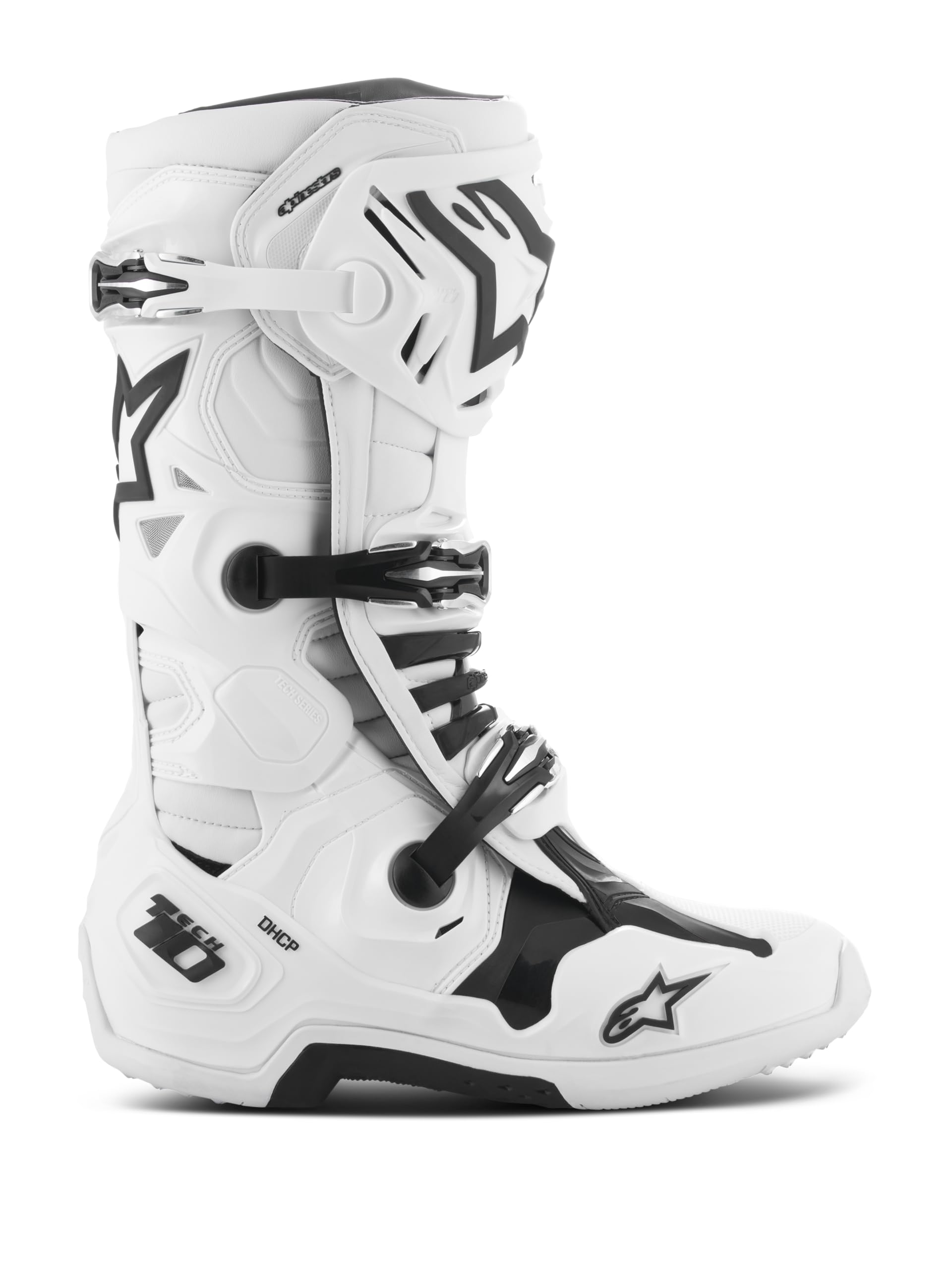
The Alpinestars Tech 10 is the flagship motocross boot, incorporating an advanced ankle brace system that allows natural articulation while preventing hyperextension and excessive lateral movement. The boot chassis is designed to work as a unified protective structure, transferring impact forces away from the foot and ankle. Owner feedback from professional and serious amateur riders consistently rates the Tech 10 as the gold standard for impact absorption and crash protection.
Fit out of the box is snug, with riders reporting that the boot initially feels very stiff and provides minimal feel of the controls. After approximately 20 hours of riding, the boot breaks in and allows for much better feedback without compromising protection. The sizing is true to foot length, and the closure system provides a secure, customized fit around the calf and shin.
The primary drawbacks are the high cost, the weight, and the initial stiffness, which can be frustrating during the break-in period. The white plastic outer shell is also prone to yellowing over time. For riders who demand the highest level of ankle protection for competitive motocross or aggressive off-road riding, the Tech 10 remains the definitive choice, provided they are willing to endure the break-in process.
What works
- Industry-leading ankle brace system prevents hyperextension
- Exceptional overall impact and abrasion protection
- Customizable fit with a secure closure system
What doesn’t
- Very stiff initially with a long, demanding break-in period
- Heavier than many competing motocross boots
- White plastic outer yellows with sun and exposure
9. Harley-Davidson Footwear Men’s Jason St Engineer
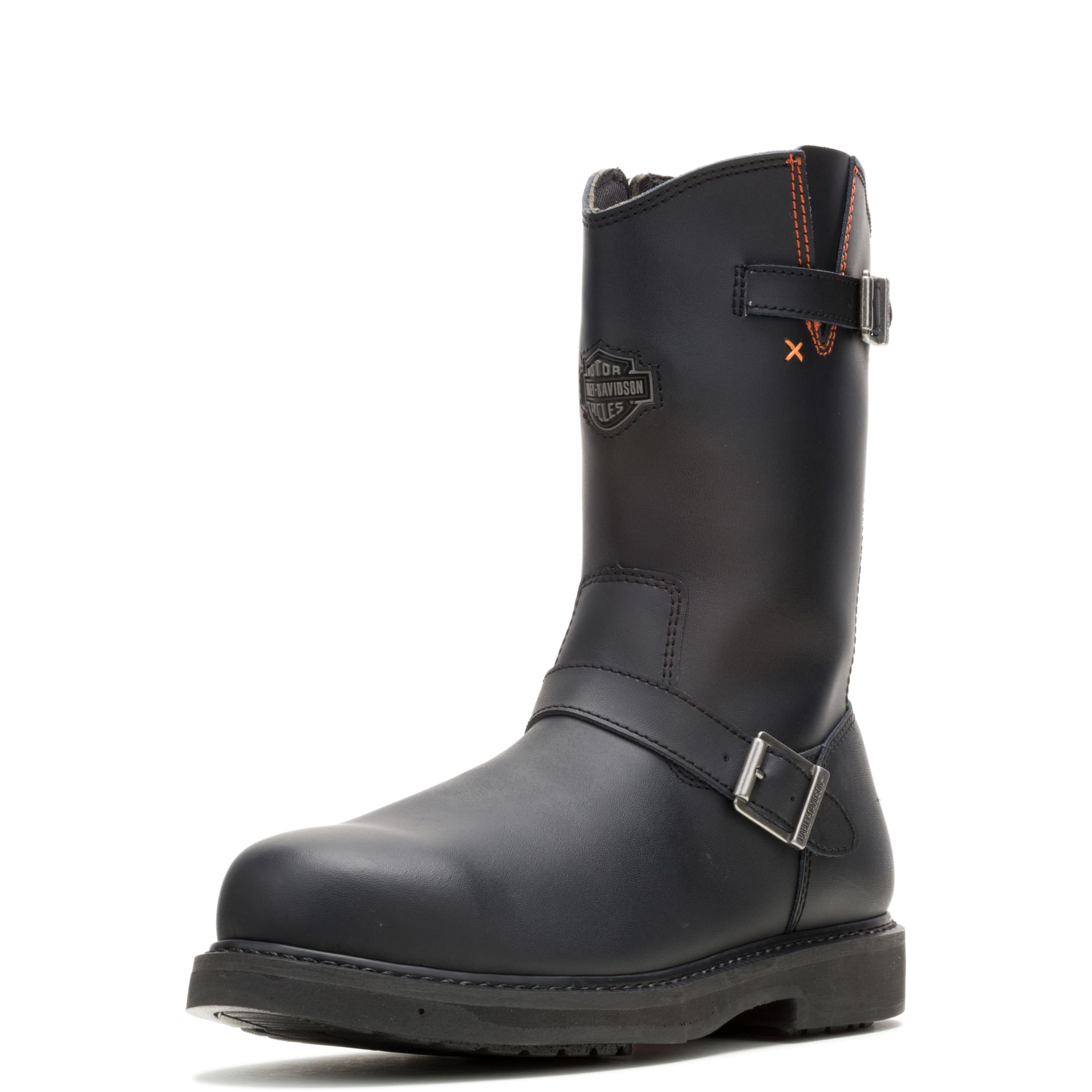
The Jason St Engineer boot offers a classic work-boot aesthetic with a steel toe and a mid-calf shaft designed for compatibility with jeans and riding gear. The synthetic leather construction keeps the weight down and the cost accessible, though it lacks the long-term structural integrity of full-grain leather. The zipper closure on the inner side makes it convenient to put on and take off, a feature appreciated by riders who use boots daily.
Fit is a significant consideration, as the boot runs large. Owners consistently recommend ordering at least a full size down from standard sneaker sizing to achieve a proper fit. The wide fit provides good toe room, and the arch support is reported to be excellent for all-day comfort. The sole provides good traction on wet pavement, making it a functional choice for commuting and casual riding.
Quality control is a concern, with some owners receiving boots that show premature wear or material separation. The synthetic leather is not as abrasion-resistant as natural hide, and the boot is best viewed as a budget-friendly entry point rather than a long-term investment. Riders who prioritize protection and durability will want to look at full-leather options, but those on a tight budget will find the Jason St Engineer a functional and convenient boot.
What works
- Steel toe offers solid protection for the forefoot
- Zipper closure makes for easy on and off
- Comfortable arch support for all-day wear
What doesn’t
- Synthetic leather lacks long-term durability and abrasion resistance
- Runs large; sizing down is usually required
- Quality control inconsistencies reported in long-term use
Hardware & Specs Guide
Upper Materials Explained
Full-grain leather is the gold standard for abrasion resistance and conforms to the foot over time, but it requires regular conditioning and is heavier. Microfiber uppers are lighter, dry faster, and often have better consistent waterproofing, though they rarely match the long-term structural integrity of quality hide. Synthetic leather is a budget compromise that works for casual use but should not be trusted for high-speed protection.
Sole Construction and Shank
The sole determines how much vibration and impact transfers to the foot. A stiff sole with a steel or nylon shank provides better peg grip and protects against rock strikes, but it compromises walking comfort. A flexible hiking-style sole, like the one on the O’Neal Sierra Pro, is better for dual-sport riders who hike their bikes. The tread pattern also dictates performance on loose surfaces versus pavement.
Closure and Retention Systems
Ratcheting buckles are the most secure for off-road riding, offering micro-adjustability and easy use with gloves. Zippers are convenient but are a structural weak point unless protected by a leather flap. Laces provide the most precise fit but can snag on pegs or controls. The best boots combine a primary closure with a secondary retention system, such as a top strap or Velcro band, to ensure the boot stays on in a crash.
Safety Certifications and Armor
CE certification means the boot has been tested for impact and abrasion resistance under European standards. Look for boots with integrated ankle protectors, reinforced toe boxes, and shin plates. A hinged ankle brace system, like the one in the Alpinestars Tech 10, provides the highest level of torsional protection but adds weight and cost. The level of protection should match the risk: a cruiser boot needs less armor than a motocross boot.
FAQ
How should custom motorcycle boots fit compared to regular shoes?
Are adventure-style motorcycle boots suitable for walking?
How do I break in stiff leather or race-spec motorcycle boots?
Final Thoughts: The Verdict
For most buyers, the custom motorcycle boots winner is the Harley-Davidson Distortion Boot because it balances classic style with protective full-grain construction and immediate comfort. If you need serious off-road protection and maximum impact resistance, grab the Alpinestars Tech 10 or the serviceable SiDI Crossfire 3. And for the adventure touring rider looking for walkability and versatile traction, nothing beats the O’Neal Sierra Pro WP.

Certification: BSc in Mechanical Engineering
Education: Mechanical engineer
Lives In: 539 W Commerce St, Dallas, TX 75208, USA
Md Amir is an auto mechanic student and writer with over half a decade of experience in the automotive field. He has worked with top automotive brands such as Lexus, Quantum, and also owns two automotive blogs autocarneed.com and taxiwiz.com.