A worn chain silently destroys your cassette and chainrings long before it ever snaps. Catching elongation early with a reliable gauge saves hundreds on drivetrain replacement parts and keeps your shifting crisp every ride. The difference between a precision tool and a loose gauge is the gap between preventive maintenance and costly repairs.
I’m Amir — the founder and writer behind Four Wheel Ask. My buying guides come from cross-referencing hundreds of owner reports, studying material specifications, and comparing real-world accuracy data across every major chain checker available today.
The right tool depends on your chain type, riding frequency, and how much precision you need for consistent maintenance intervals. After analyzing dozens of owner reports and technical specifications, I assembled this guide to help you find the best chain checker for bike for your workshop.
How To Choose The Best Chain Checker For Bike
A chain checker is a simple tool, but small differences in design, material, and measurement method directly affect how reliably you catch wear. Understanding a few key factors will help you pick a gauge that fits your drivetrain and maintenance style.
Understanding Chain Wear Percentages
Most chain checkers measure elongation at 0.5%, 0.75%, and 1.0%. A reading of 0.5% indicates early wear and is a good point to start monitoring. At 0.75%, replacement is recommended for most multi-speed chains to prevent accelerated cassette and chainring wear. The 1.0% mark is the absolute limit — beyond this point, you risk damaging your entire drivetrain. Some premium checkers include all three marks, while budget options may offer only one or two.
Build Quality and Material Choices
Chain checkers are typically made from aluminum alloy, stainless steel, or carbon steel. Stainless steel offers the best corrosion resistance and dimensional stability over time. Aluminum alloy models are lightweight and affordable but may wear faster with heavy use. The precision of the gauge pins and the rigidity of the body directly affect repeatability — a flimsy checker can give false positives or miss wear entirely.
Compatibility With Your Drivetrain
Not all chain checkers work with every chain speed. Some tools are designed for 5- to 12-speed chains, while others are optimized for specific ranges. SRAM AXS 12-speed chains, for example, require a checker approved for that platform. Always verify that the tool you choose supports your chain pitch and pin spacing to avoid inaccurate readings or damage to the chain.
Quick Comparison
On smaller screens, swipe sideways to see the full table.
| Model | Category | Best For | Key Spec | Amazon |
|---|---|---|---|---|
| Park Tool CC-4.2 | Chain Wear Checker | Accurate wear measurement | 0.5%/0.75%/1.0% go/no-go | Amazon |
| SHIMANO TL-CN42 | Chain Wear Indicator | Precision measurement | 3-pin accurate design | Amazon |
| TerchPilet Premium | Chain Wear Checker | Wide compatibility | Aluminum/steel build | Amazon |
| Pedro’s Chain Checker Plus II | Chain Wear Checker | Versatile functionality | 0.5%/0.75% + hook tool | Amazon |
| KMC Easy Chain Checker | Chain Wear Checker | Quick inspection | Instant read design | Amazon |
| Birzman Chain Wear Indicator | Chain Wear Indicator | Corrosion resistance | Stainless steel, 3 levels | Amazon |
| CYCLO Tools Chain Wear Indicator | Chain Wear Indicator | Simple operation | 0.75%/1.0% sides | Amazon |
| HOUSON Bicycle Chain Tester | Chain Wear Checker | Budget-friendly start | Aluminum alloy | Amazon |
| CYCEARTH Chain Wear Indicator | Chain Wear Gauge | Compact design | TL-2.8 rotating gauge | Amazon |
| Ryaco Bike Chain Tools Set | Tool Kit | Multi-tool value | 3 tools in one kit | Amazon |
| Park Tool TM-1 Spoke Tension Meter | Spoke Tension Meter | Wheel building | Mechanical gauge | Amazon |
In‑Depth Reviews
1. Park Tool CC-4.2 Bicycle Chain Wear Checker

Park Tool’s CC-4.2 eliminates the guesswork with a precision go/no-go design that measures wear at 0.5%, 0.75%, and 1.0% on all 1/2-inch pitch chains. It is compatible with 5- to 13-speed drivetrains, including SRAM AXS 12-speed, making it one of the most versatile checkers in this category. Owner feedback consistently highlights how the gauge prevents premature chain replacement by avoiding the false positives common with cheaper two-point tools.
The tool uses a three-point contact design that isolates pin wear from roller wear, giving a truer reading of actual chain stretch. Cyclists who track their maintenance intervals report that the CC-4.2 helps them extend cassette life significantly. Several long-term reviews note that this checker pays for itself after one or two correctly timed chain swaps.
Build quality is what you expect from Park Tool — precise machining, rigid steel construction, and a limited lifetime warranty. The go/no-go format makes interpretation straightforward: if the gauge drops in, replace the chain. For home mechanics and shop users alike, this is the benchmark that other chain checkers are measured against.
What works
- Three-point design eliminates roller wear interference
- Compatible with nearly every chain speed on the market
- Limited lifetime warranty backs long-term use
What doesn’t
- Higher upfront cost than entry-level options
- Go/no-go format lacks incremental readout
2. SHIMANO TL-CN42 Chain Wear Indicator

Shimano’s TL-CN42 is widely regarded as one of the most accurate chain wear checkers available, thanks to its unique three-pin structure that engages the chain consistently. Independent testing from Zero Friction Cycling ranked it among the top tools for minimizing measurement variability. The gauge is precision laser-cut from thick stainless steel, giving it a rigid feel that inspires confidence every time you drop it onto a chain.
Owner reports note that the TL-CN42 allows slightly more wear before indicating replacement compared to some competitors, which aligns with Shimano’s engineering philosophy of maximizing component life. This tool is especially favored by mechanics who service a mix of road, mountain, and gravel bikes. The gauge measures 0.5%, 0.75%, and 1.0% wear with clear laser-etched markings that remain legible after years of use.
The stainless steel construction resists corrosion from chain lubricants and degreasers, and the tool feels substantial in hand without being bulky. While the price is higher than basic checkers, the build quality and repeatability justify the investment for anyone who maintains multiple bikes or works in a shop environment. It is a precision instrument designed to deliver consistent readings across thousands of checks.
What works
- Three-pin design delivers exceptional measurement consistency
- Thick stainless steel resists corrosion and wear
- Trusted by professional mechanics worldwide
What doesn’t
- Price point is steep for casual home mechanics
- Not compatible with some older chain designs
3. TerchPilet Premium Bike Chain Checker Tool
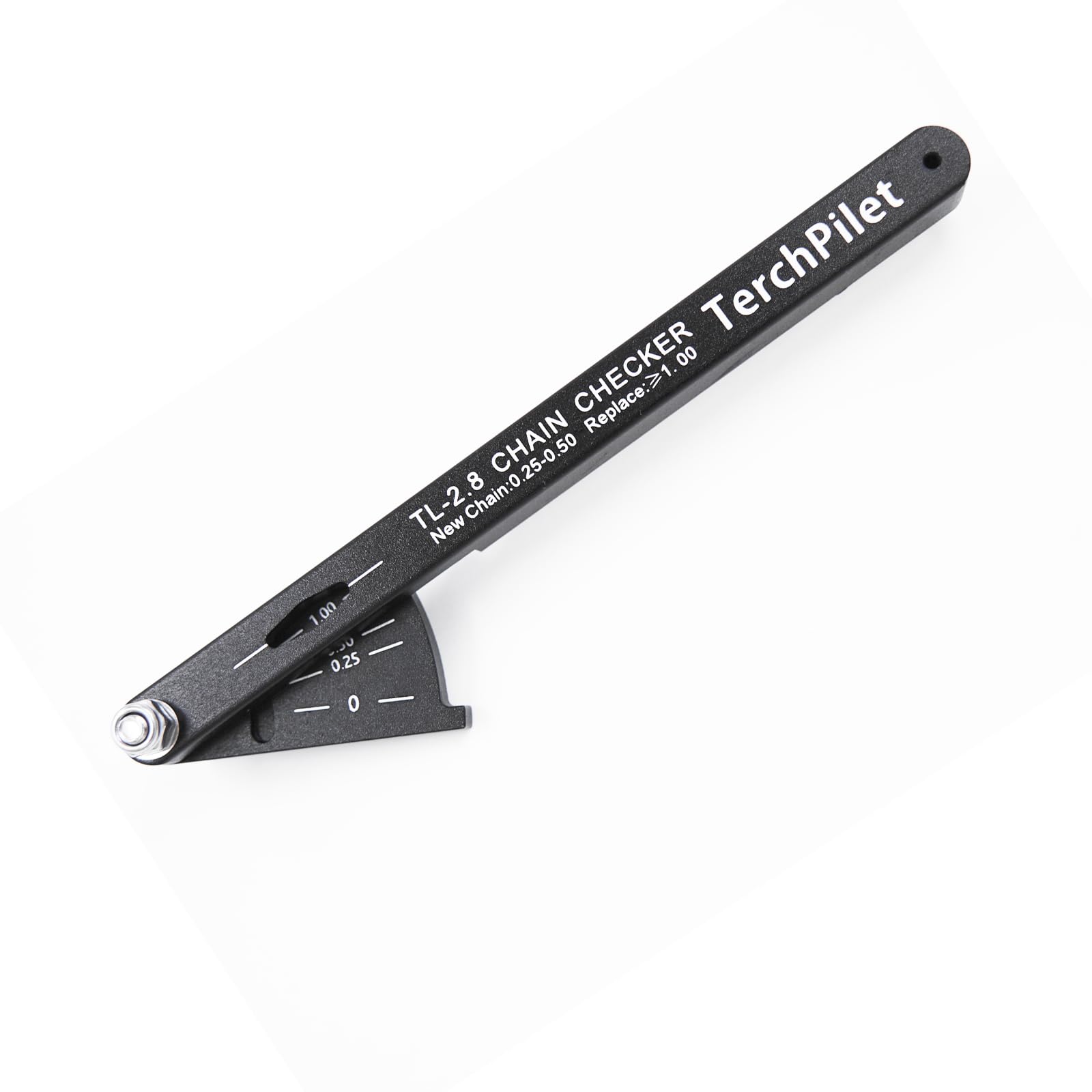
TerchPilet’s chain checker covers every common chain type from single-speed to 12-speed, including Shimano, SRAM, KMC, and Campagnolo drivetrains. The body is made from a combination of premium aluminum alloy and steel, giving it a solid feel without excessive weight. Owners highlight the included replacement guide as a helpful reference for deciding when to replace based on riding conditions and chain type.
The tool measures wear at 0.5%, 0.75%, and 1.0%, with clear markings that are easy to read even in low light. Several user reviews note that the gauge reads new chains at around 0.25%, which is normal due to the small clearance needed for smooth operation. This baseline reading helps owners track wear progression over time rather than relying on a single pass-fail check.
Compact and lightweight, this checker fits easily into a saddle bag or toolbox without taking up space. The aluminum alloy construction keeps the cost reasonable while maintaining dimensional stability. For cyclists who want a reliable, universal checker that covers modern drivetrains without breaking the budget, this is a strong contender.
What works
- Works with all major chain brands and speeds
- Compact size for portable storage
- Clear, easy-to-read wear markings
What doesn’t
- Aluminum may wear faster than steel with heavy use
- Not as widely tested as legacy brands
4. Pedro’s Chain Checker Plus II

Pedro’s Chain Checker Plus II stands out because it combines a precision laser-cut wear gauge with a built-in chain hook tool and chainring nut wrench. The primary wear checker measures 0.5% and 0.75% using a three-point contact design that properly isolates pin wear from roller deflection. SRAM has approved this tool for use on EAGLE 12-speed chains, giving it credibility for modern mountain bike drivetrains.
The integrated chain hook is surprisingly useful for holding chain ends together during installation or removal, saving you from fishing for a separate tool. Owners appreciate the added functionality, especially when doing trailside repairs with limited gear. The laser-cut construction ensures the gauge pins stay within specification for accurate repeatability over time.
Made from metal with a corrosion-resistant finish, this tool is built to survive workshop conditions. The compact form factor fits easily into a jersey pocket or hip pack. For cyclists who want a checker that does double duty as a chain tool, this design-forward option delivers tangible everyday utility beyond simple wear measurement.
What works
- Integrated hook tool adds real workshop value
- Approved for SRAM EAGLE 12-speed chains
- Three-point design minimizes false readings
What doesn’t
- Only includes 0.5% and 0.75% marks
- Hook tool adds bulk compared to bare gauges
5. KMC Easy Chain Checker Tool
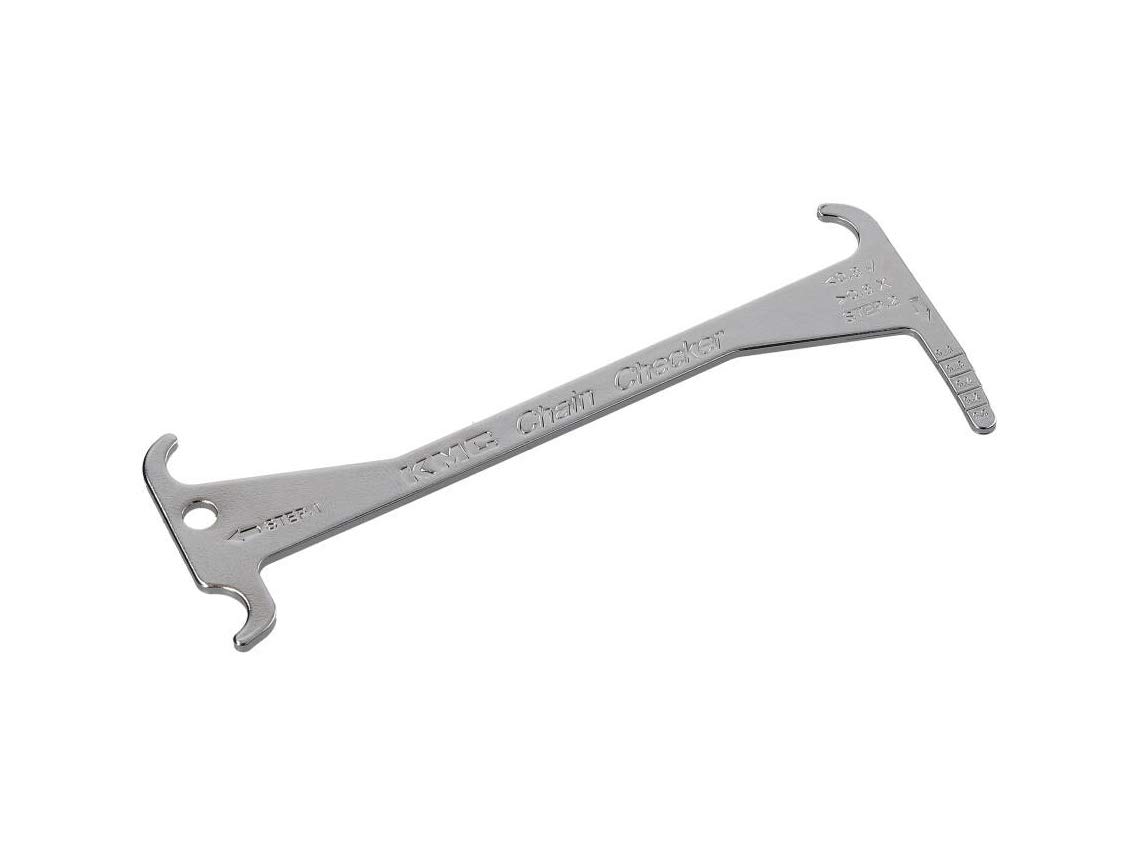
KMC is one of the largest chain manufacturers in the cycling industry, and their Easy Chain Checker benefits directly from that engineering pedigree. The tool is designed to show chain condition instantly with a simple drop-in mechanism, making it accessible for riders who do not want to interpret graduated scales. It works with chains from any brand, not just KMC, and is compatible with single-speed through 12-speed drivetrains.
Owner reviews consistently praise the tool for its simplicity and reliability. European cyclists in particular note that the gauge feels precise and well-made, with several calling it a must-have item for any bike toolkit. The compact design stores easily, and the single-function focus means there is no confusion about how to use it.
At an accessible price point, this checker delivers professional-grade accuracy without the premium markup. KMC’s reputation for quality control ensures that each unit meets consistent specifications. For riders who want a no-fuss tool from a brand that literally makes chains, this is a logical and trustworthy choice.
What works
- Made by a leading chain manufacturer with deep engineering expertise
- Simple drop-in design requires no interpretation
- Compact and portable for on-the-go checks
What doesn’t
- Limited to pass-fail check without incremental readout
- Plastic components in some versions may wear over time
6. Birzman Chain Wear Indicator
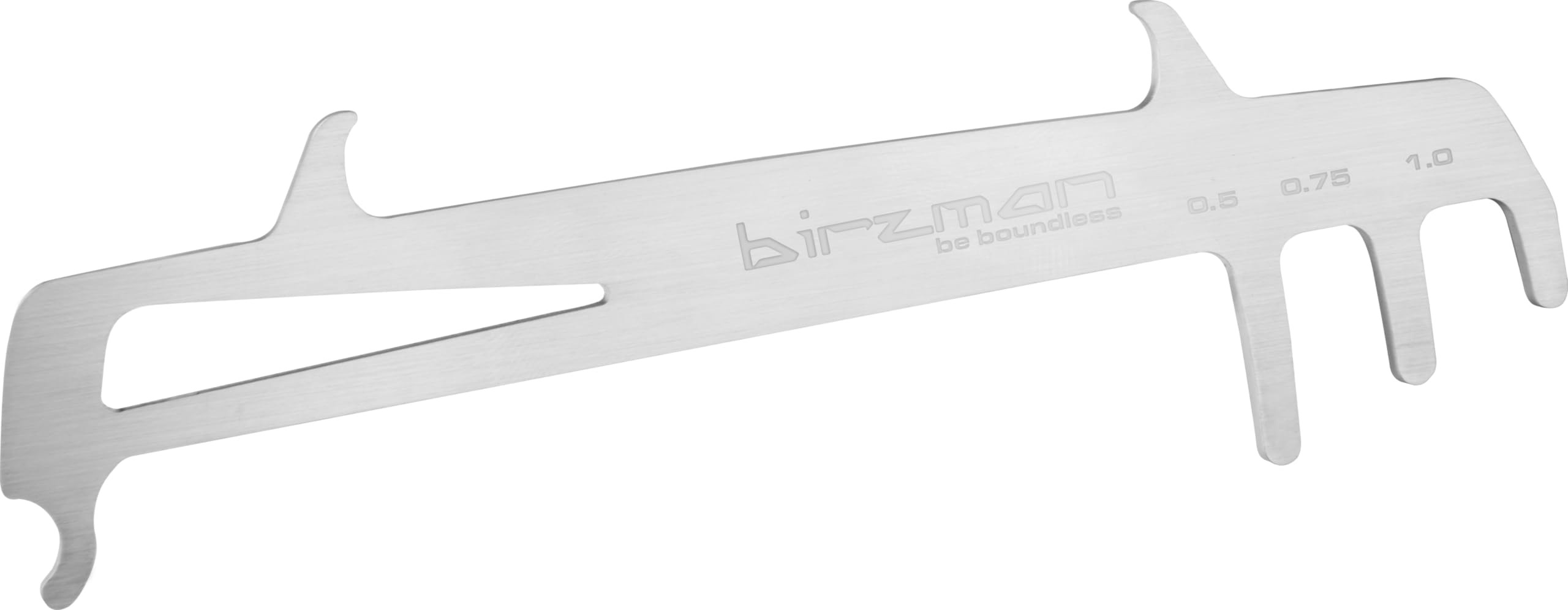
Birzman’s Chain Wear Indicator is CNC machined from stainless steel, offering superior rigidity and corrosion resistance compared to aluminum alloy competitors. The tool measures wear at three distinct levels — 0.5%, 0.75%, and 1.0% — giving the user a clear picture of chain condition rather than a simple pass-fail result. The upgraded chemical resistance makes it suitable for workshop environments where degreasers and solvents are in regular use.
Owners describe the tool as precise and easy to use, with the three-step measurement providing useful granularity for tracking wear progression. Some users note that the manufacturing process leaves sharp edges, so handling care is advised. The stainless steel construction ensures the gauge will not warp or lose calibration over time, even with frequent use.
This indicator is ideal for cyclists who want a durable, long-lasting tool that will still be accurate years down the road. The premium material choice adds weight but also adds confidence in every reading. For those who prefer metal tools that feel substantial in hand, the Birzman delivers a satisfying experience.
What works
- CNC-machined stainless steel for maximum durability
- Three wear levels provide detailed chain condition data
- Chemical resistant finish stands up to solvents
What doesn’t
- Sharp edges reported on some units
- Heavier than aluminum alternatives
7. CYCLO Tools Chain Wear Indicator
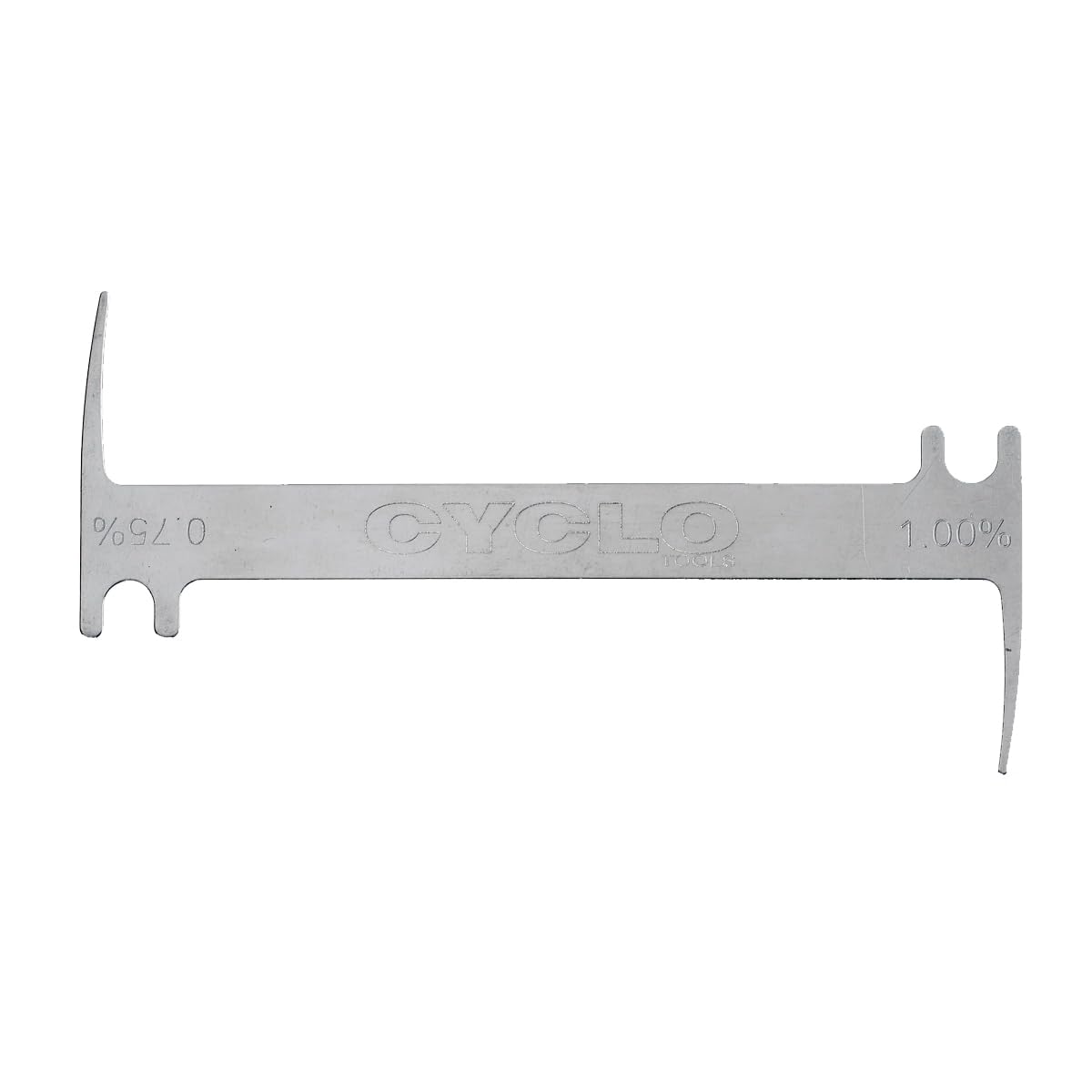
CYCLO Tools offers a straightforward chain wear indicator that measures 0.75% elongation on one side and 1.0% when flipped to the other. This simple dual-measurement approach gives the user a clear replacement threshold without overcomplicating the process. The tool is made from metal with a silver finish, providing adequate durability for regular home maintenance.
Owner feedback highlights the tool’s ease of use and universal compatibility with 6- to 9-speed chains. European cyclists in particular appreciate the clear reading and robust build quality. The indicator is designed to be slotted directly into the chain, and the user simply checks whether the gauge drops in fully to determine wear status.
For riders who want a no-nonsense tool that focuses on the most critical replacement points, this design keeps things simple. The metal body holds up well to regular handling, and the compact size stores easily. It is a practical choice for cyclists who prefer minimalism in their tool kit.
What works
- Simple two-side design covers critical wear thresholds
- Metal construction offers reliable durability
- Compact and easy to store
What doesn’t
- Does not measure 0.5% early wear
- Best suited for 6- to 9-speed chains
8. HOUSON Bicycle Chain Tester
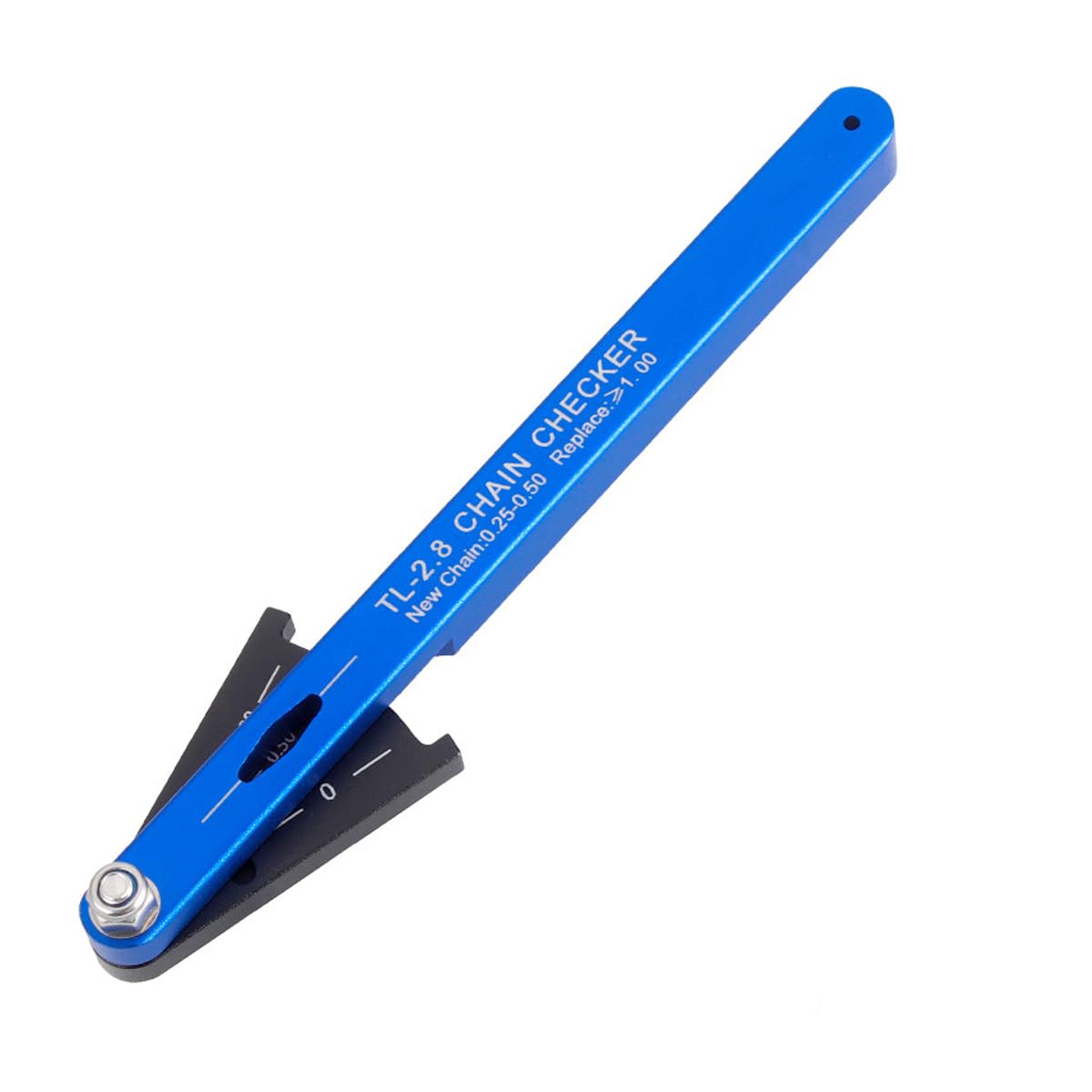
HOUSON’s chain tester offers a budget-friendly entry point for cyclists who want to start monitoring chain wear without a significant investment. Made from aluminum alloy, the tool is lightweight and compact enough to carry as a travel tool. It measures wear at both 0.75% and 1.0%, giving clear replacement guidance for preventative maintenance.
Owner reviews describe the tool as easy to use and read, with several noting that it performs as well as more expensive options from established brands. The blue anodized finish adds a touch of visual appeal, and the construction feels adequately robust for occasional use. Users appreciate having a clear visual indicator of when a chain needs replacement.
For home mechanics with a single bike or casual riders, this tester provides the essential function at a minimal cost. The small size means it can live in a saddle bag without adding noticeable weight. While it may not survive heavy daily shop use, for personal maintenance it gets the job done reliably.
What works
- Very affordable entry point for chain wear monitoring
- Lightweight and portable for travel
- Clear 0.75% and 1.0% wear indicators
What doesn’t
- Aluminum may wear faster with frequent use
- Lacks 0.5% early wear measurement
9. CYCEARTH Bicycle Chain Wear Indicator Gauge
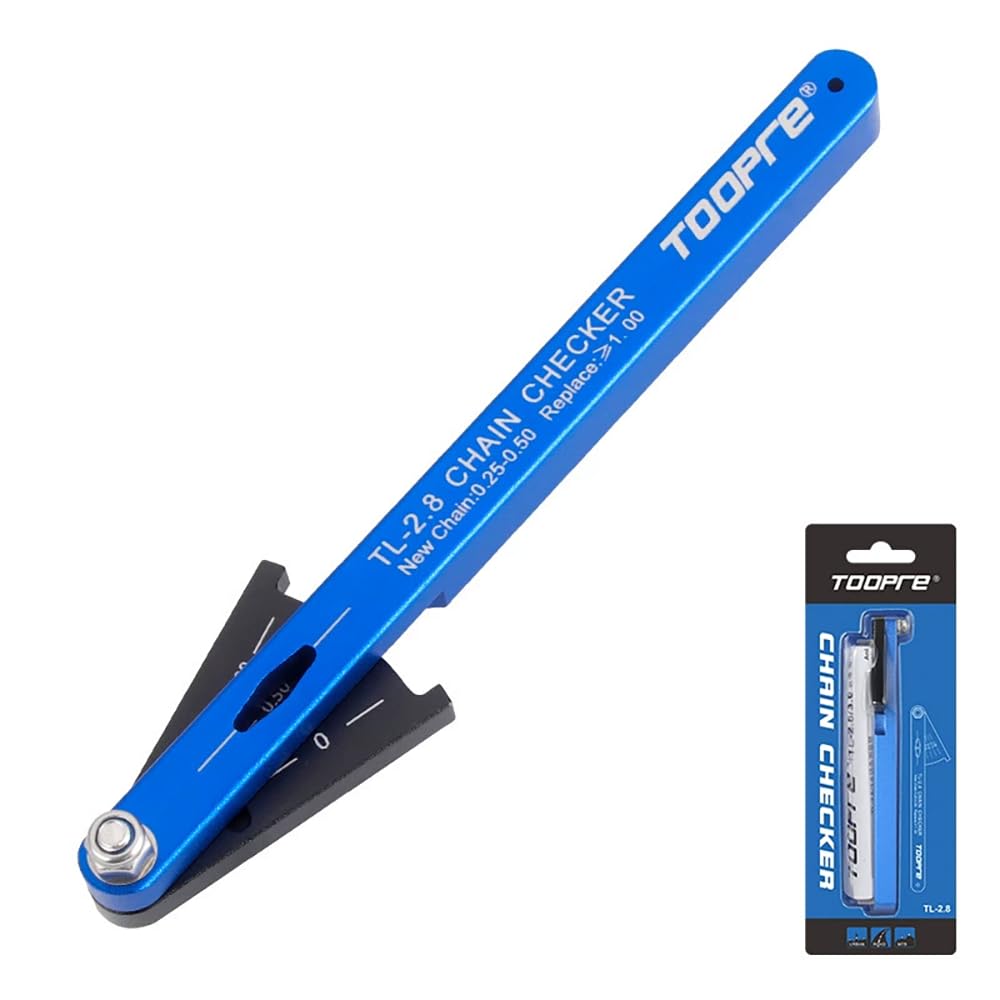
CYCEARTH’s TL-2.8 chain wear indicator uses a rotating gauge design that provides a clear numeric readout of chain elongation. The tool is made from durable aluminum alloy and includes a manual with guidelines for interpreting readings. Users are advised to reset the gauge to zero before each measurement and to push the rotating gauge gently until it stops to avoid needle deformation.
Owner reviews note that the tool works just as well as more expensive versions from established brands, making it a smart budget pick. Several users highlight the importance of taking a baseline reading on a new chain, as TL-2.8 typically shows 0.25% on a fresh chain due to normal link clearance. This baseline approach allows riders to track wear progression accurately over time.
The lightweight design makes it easy to carry on rides, and the rotating gauge provides a more detailed readout than simple go/no-go tools. For DIY mechanics who want to quantify wear rather than rely on a pass-fail check, this indicator offers useful granularity at a very accessible price point.
What works
- Rotating gauge provides numeric wear readout
- Lightweight and easy to carry
- Baseline reading capability for tracking wear
What doesn’t
- Requires careful handling to avoid needle damage
- Aluminum construction less durable than steel
10. Ryaco Bike Chain Tools Set

Ryaco’s kit bundles three essential chain tools — a link plier, a chain cutter, and a chain inspection caliper — into one package, offering exceptional value for home mechanics. The chain inspection caliper works as a wear indicator, helping you determine when replacement is needed. All tools are made from carbon steel with a rust-proof coating, providing durability that exceeds what the low bundle price would suggest.
Owner feedback overwhelmingly highlights the value proposition, with many users admitting they had never worked on a bike chain before purchasing this kit. The tools are described as easy to use, with the link plier making quick work of master link removal and installation. Several long-term reviews note that the tools hold up well for occasional use, though heavy shop use may accelerate wear.
The kit is compatible with 7- to 10-speed chains, covering most recreational bikes. Rubber-coated handles on the pliers provide a non-slip grip, and the included replacement pin adds convenience. For cyclists who need chain tools beyond just a wear checker, this all-in-one solution saves money and ensures you have the right tool for each job.
What works
- Three essential tools in one affordable kit
- Carbon steel construction with rust-proof coating
- Ergonomic rubber-coated plier handles
What doesn’t
- Tools may wear faster with frequent professional use
- Limited to 7- to 10-speed chain compatibility
11. Park Tool TM-1 Spoke Tension Meter

The Park Tool TM-1 is a specialized spoke tension meter designed for wheel building, truing, and diagnosing wheel issues. While not a chain checker, it earns a place here because maintaining proper wheel tension is equally critical to drivetrain health for the serious cyclist. The mechanical gauge measures spoke deflection under load and uses an included conversion chart to translate readings into kilogram-force values for nearly any spoke material, diameter, or shape.
Owner reviews from home wheel builders and professional mechanics praise the TM-1 for its durability and consistent readings. Users describe the process of tensioning wheels with this tool as similar to tuning a guitar — it takes patience, but the results are transformative. Several reviews note that the tool paid for itself after one wheel build by eliminating the need for shop service.
The TM-1 comes with a printed conversion table and a limited lifetime warranty. It is larger than expected but built to survive workshop conditions. For cyclists who build or maintain their own wheels, this tool is indispensable for achieving even, repeatable spoke tension that keeps wheels true and durable over thousands of miles.
What works
- Provides accurate, repeatable spoke tension readings
- Covers nearly all spoke types and sizes
- Limited lifetime warranty from Park Tool
What doesn’t
- Significant investment for casual home mechanics
- Not a chain wear tool — separate purchase required
Hardware & Specs Guide
Go/No-Go vs. Graduated Gauges
Go/no-go checkers simply drop into the chain and indicate replacement at a fixed wear point. They are fast and foolproof but offer only binary feedback. Graduated gauges, such as rotating or stepped indicators, show incremental wear levels so you can track progression over time. Choose go/no-go for speed and simplicity; choose graduated for data-driven maintenance.
Material and Build Quality
Stainless steel offers the best corrosion resistance and dimensional stability, making it ideal for long-term accuracy. Aluminum alloy is lighter and cheaper but can wear faster with repeated use. Carbon steel with a rust-proof coating strikes a balance between durability and cost. The precision of the gauge pins and the rigidity of the body directly affect whether your readings are trustworthy.
Three-Point vs. Two-Point Design
Two-point checkers measure chain roller-to-roller distance, which can include roller wear and give false positives. Three-point checkers isolate pin wear from roller wear by contacting the chain at the roller and the inner plate simultaneously. The three-point design generally provides more accurate readings and is preferred by professional mechanics.
Compatibility and Speed Range
Not all chain checkers support every drivetrain speed. Some are optimized for 5- to 12-speed chains, while others top out at 10-speed. SRAM AXS 12-speed and some Campagnolo chains require specific tool approvals. Always verify that the checker you choose matches your chain pitch and pin spacing to avoid inaccurate measurements or damage.
FAQ
How often should I check my bike chain for wear?
What do the 0.5%, 0.75%, and 1.0% readings mean?
Can I use the same chain checker for different speed chains?
Is a more expensive chain checker worth the investment?
What happens if I ride with a worn chain?
Final Thoughts: The Verdict
For most buyers, the best chain checker for bike winner is the Park Tool CC-4.2 because it combines precise three-point measurement, broad compatibility from 5- to 13-speed chains, and the backing of a limited lifetime warranty from the most trusted name in bike tools. If you want the absolute highest measurement accuracy and build quality, grab the SHIMANO TL-CN42. And for riders who value integrated utility alongside wear checking, nothing beats the Pedro’s Chain Checker Plus II with its built-in hook tool for chain work.

Certification: BSc in Mechanical Engineering
Education: Mechanical engineer
Lives In: 539 W Commerce St, Dallas, TX 75208, USA
Md Amir is an auto mechanic student and writer with over half a decade of experience in the automotive field. He has worked with top automotive brands such as Lexus, Quantum, and also owns two automotive blogs autocarneed.com and taxiwiz.com.