A dirt bike helmet’s weight is the first thing that separates a great day of riding from a neck-burning slog through the whoops. Every ounce saved above your shoulders translates directly into less fatigue, sharper cornering vision, and the ability to keep your head up through the final moto. That’s why the move to a carbon fiber shell isn’t just about looks—it’s a fundamental shift in how a helmet feels when the track gets rough.
I’m Amir — the founder and writer behind Four Wheel Ask. My research process involves cross-referencing impact certification standards like DOT, ECE 22.06, and SNELL, analyzing shell materials from 3K to 6K carbon weaves, and studying hundreds of owner reports on fitment and long-term durability for off-road helmets.
If you’re looking for a lid that blends neck-saving light weight with serious impact protection, this guide breaks down the real-world performance of the best carbon fiber dirt bike helmet models on the market right now.
How To Choose The Best Carbon Fiber Dirt Bike Helmet
Choosing a carbon fiber dirt bike helmet is different from picking a standard polycarbonate shell. You are paying for a specific weight reduction and a different kind of impact energy management. These are the most important factors to consider before you hand over your cash.
Shell Material and Carbon Weave Type
Not all carbon fiber is the same. Standard 3K carbon weave offers a solid balance of strength and cost, commonly found in mid-range helmets. Premium 6K carbon fiber uses a tighter, more complex weave that provides higher tensile strength and allows the manufacturer to use less material to achieve the same protection, resulting in a lighter shell. Look for the specific weave type, as it directly correlates with the final weight of the helmet.
Safety Certifications Stack Up
A carbon fiber dirt bike helmet should always carry at least DOT FMVSS 218 and ECE 22.06 certifications. The ECE 22.06 standard is particularly important because it includes rotational impact testing, which standard DOT does not. The top tier of helmets also add SNELL 2020 approval, which requires an even higher energy absorption threshold. Never compromise on certifications—the carbon shell is only as good as the EPS liner and the standard it meets.
Ventilation and Airflow Design
Off-road riding generates intense body heat, and a helmet that traps that heat will drain your energy faster than any weight penalty. Look for helmets with multiple front intake vents, a channeled EPS liner that directs air over the top of your head, and rear exhaust vents that use negative pressure to pull hot air out. The number of vents matters, but the path the air travels through the helmet is what determines actual cooling performance.
Weight Target and Neck Fatigue
A standard polycarbonate dirt bike helmet weighs somewhere between 3.4 and 4 pounds. A true carbon fiber helmet should bring that down to 2.8 to 3.2 pounds depending on the size and certification level. Every quarter-pound reduction below 3.2 pounds is noticeable during a long day of standing up through braking bumps. If you ride enduros or spend more than two hours at a time on the bike, prioritizing weight is a smart move.
Quick Comparison
On smaller screens, swipe sideways to see the full table.
| Model | Category | Best For | Key Spec | Amazon |
|---|---|---|---|---|
| Alpinestars SM3 Solid | Polycarbonate | Entry-level protection | 4.85 lbs | Amazon |
| Fox Racing V1 MIPS | ABS/ EPS | Budget MIPS safety | 1 lb | Amazon |
| ILM 861C 3K Carbon | Full Face | Street/ dirt hybrid | 5.05 lbs | Amazon |
| ScorpionEXO Covert FX Carbon | Full Face | Street fighter style | 2.9 lbs | Amazon |
| LS2 Dragon Carbon | Full Face | Pinlock visibility | 2.82 lbs | Amazon |
| ScorpionEXO R1 Air Carbon | Full Face | Sport riding | 3.05 lbs | Amazon |
| Shoei VFX-EVO | Off-Road | Pure motocross | 3.36 lbs | Amazon |
| Bell Moto-10 Spherical MIPS | Off-Road | Pro-level protection | 3.53 lbs | Amazon |
In‑Depth Reviews
1. Bell Moto-10 Spherical MIPS Helmet

This is the helmet that pro-level motocross athletes like Eli Tomac trust on the gate, and the tech inside explains why. The Bell Moto-10 uses a segmented 3K carbon shell paired with Spherical Technology powered by Mips. That spherical design allows the outer shell and inner EPS liner to rotate independently during an angled impact, which directly reduces rotational forces transmitted to the brain. That feature alone makes it a serious safety upgrade over helmets that only manage linear impacts.
The Thermal Exchange Airflow System is a standout for off-road use. The flying bridge visor incorporates intake vents that force air directly into the shell, while the rear exhaust ports use the low-pressure zone behind the rider to extract hot air. Owner feedback consistently notes that the fit is secure without being punishing, though some find the intermediate oval shape runs slightly long. The padded segmented shell brings the DOT configuration to 1600 grams, which is competitive for a helmet with SNELL 2020 and ECE certifications stacked together.
Where this helmet truly earns its place is in the confidence it provides when you’re pushing hard on a rough track. The combination of a premium carbon shell, two world-class rotational impact systems, and extreme airflow makes it the benchmark for what a modern off-road flagship should be. The only real barrier is the investment, but for riders who prioritize protection above all else, it delivers exactly what it promises.
What works
- Spherical MIPS provides excellent rotational impact management
- Flying bridge visor design forces air directly into the shell for cooling
- Triple certified with DOT, SNELL 2020, and ECE standards
What doesn’t
- Intermediate oval fit may not suit round head shapes
- Premium price point is a significant investment
2. Shoei VFX-EVO Off-Road Motorcycle Helmet

Shoei built the VFX-EVO as a dedicated off-road helmet, and every design detail reflects that singular focus. The shell is constructed from a proprietary fiberglass and EPS blend rather than carbon fiber, which means it comes in at 3.36 pounds—heavier than the carbon competition but with a fit and finish that Shoei is famous for. The ventilation system here is aggressive: extra front intake vents feed into a channeled EPS liner that moves air across the entire crown, and the enlarged neck outlet vent creates a strong negative pressure draw to pull heat out.
The Emergency Quick Release System (E.Q.R.S.) is a thoughtful safety addition that allows emergency personnel to remove the cheek pads from the outside without pulling the helmet off the rider’s head. Riders consistently praise the Shoei fit, which tends to run true to size and accommodates an intermediate oval head shape with consistent pressure. The expanded rib shapes across the back of the shell provide better grip for goggle straps, which is a small detail that off-road riders will appreciate when those straps slip on other helmets.
If forced air ventilation and a proven shell design are your top priorities over carbon weight savings, the VFX-EVO is hard to beat. The fiberglass shell is tough and has a long track record of durability. Owners swapping from lower-tier brands frequently report that the VFX-EVO feels noticeably quieter and better balanced than anything they have worn before, even if the scale number is higher than a pure carbon lid.
What works
- Exceptional flow-through ventilation for hot off-road conditions
- Emergency Quick Release System for safer post-crash care
- Consistent, high-quality fit that Shoei owners trust
What doesn’t
- Fiberglass shell is heavier than carbon fiber alternatives
- Premium pricing despite not using carbon material
3. ScorpionEXO R1 Air Carbon Full Face Helmet

The ScorpionEXO R1 Air Carbon packs serious track-focused tech into a sub-3.1-pound package. The shell uses resin-infused TCT-U 3K carbon fiber, which gives it that tight woven look and aircraft-grade impact dispersal properties. What sets this helmet apart in the mid-premium segment is the Airfit inflation system built into the cheek pads. A small cheek pump allows you to inflate the pads for a race-fit snugness on the track or deflate them for long touring days, giving you two helmets in one.
The venturi-effect ventilation system uses adjustable dual ram-air intakes on the front that feed into deep channels in the EPS liner. The spoiler-integrated exhaust vents pull heat out from the back of the shell, and owner reviews frequently mention that this helmet stays cool even when pushing hard on hot pavement. The EllipTec II quick-release shield mechanism provides a solid seal against the gasket, and the included Dark Smoke MaxVision Pinlock shield with anti-fog insert is a genuine value add that most competitors reserve for separate purchase.
This helmet is a strong choice for riders who split time between spirited canyon rides and longer tours. The ability to customize the cheek pad fit with the Airfit system means you can dial in exactly how snug the helmet feels without swapping hardware. The speaker pockets are generous enough for most Bluetooth systems. The main trade-off is that this is a full-face street-oriented design, not a pure motocross helmet with a visor peak and goggle channel.
What works
- Airfit inflation system allows custom cheek pad fit without tools
- Comes with a Dark Smoke Pinlock-ready shield and anti-fog insert
- Resin-infused TCT-U carbon shell provides excellent impact dispersal
What doesn’t
- Street-oriented full face design, not ideal for pure motocross
- Three shell sizes needed to fit XS to 3XL range
4. LS2 Dragon Carbon Full Face Helmet
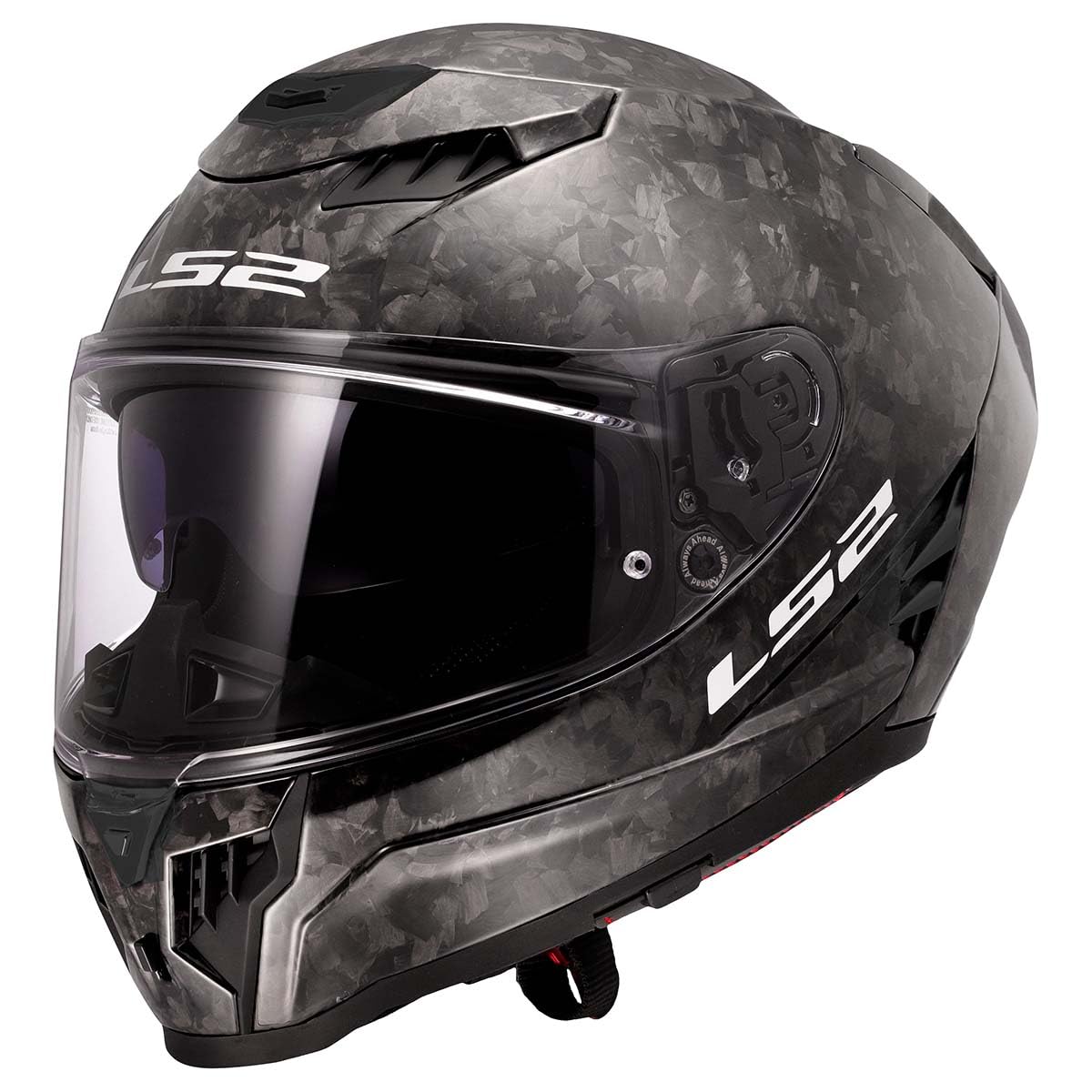
The LS2 Dragon Carbon stands out because it uses a 6K carbon fiber weave, which is a step up in material quality from the 3K shells found on many competitors in this price bracket. That 6K weave allows the shell to achieve a weight of just 1280 grams plus or minus 50 grams, which translates to roughly 2.82 pounds. That puts it among the lightest helmets in this entire lineup, neck-and-neck with the ScorpionEXO Covert FX Carbon and the ILM 861C.
The included Pinlock 120 MaxVision visor system is a premium touch. The anti-fog insert uses a quick-release mechanism, and the integrated sun shield adds versatility for changing light conditions when you are on the trail. The X-STATIC silver liner is treated with anti-microbial properties and has laser-cut foam for a precise fit. LS2 uses three shell sizes across the size range, which helps avoid the “one big shell with thick padding” problem that makes smaller sizes look disproportionate and feel bulky.
This helmet comes DOT certified and the multi-density EPS liner provides tiered impact absorption. The double D-ring chin strap is a classic security feature that dirt riders will appreciate. The main catch is that the Dragon is a full-face street-oriented shell, not a dedicated motocross design. If you need a goggle peak and a chin bar designed for a more vertical riding position, you may want to look at a pure off-road helmet instead.
What works
- Ultra-light 6K carbon fiber shell at roughly 2.82 pounds
- Premium Pinlock 120 MaxVision visor included in the box
- X-STATIC silver liner with moisture-wicking and anti-microbial properties
What doesn’t
- Street-oriented full face design, not built for pure motocross use
- Large shell sizes may still feel heavier than smaller sizes
5. ScorpionEXO Covert FX Carbon Full Face Helmet
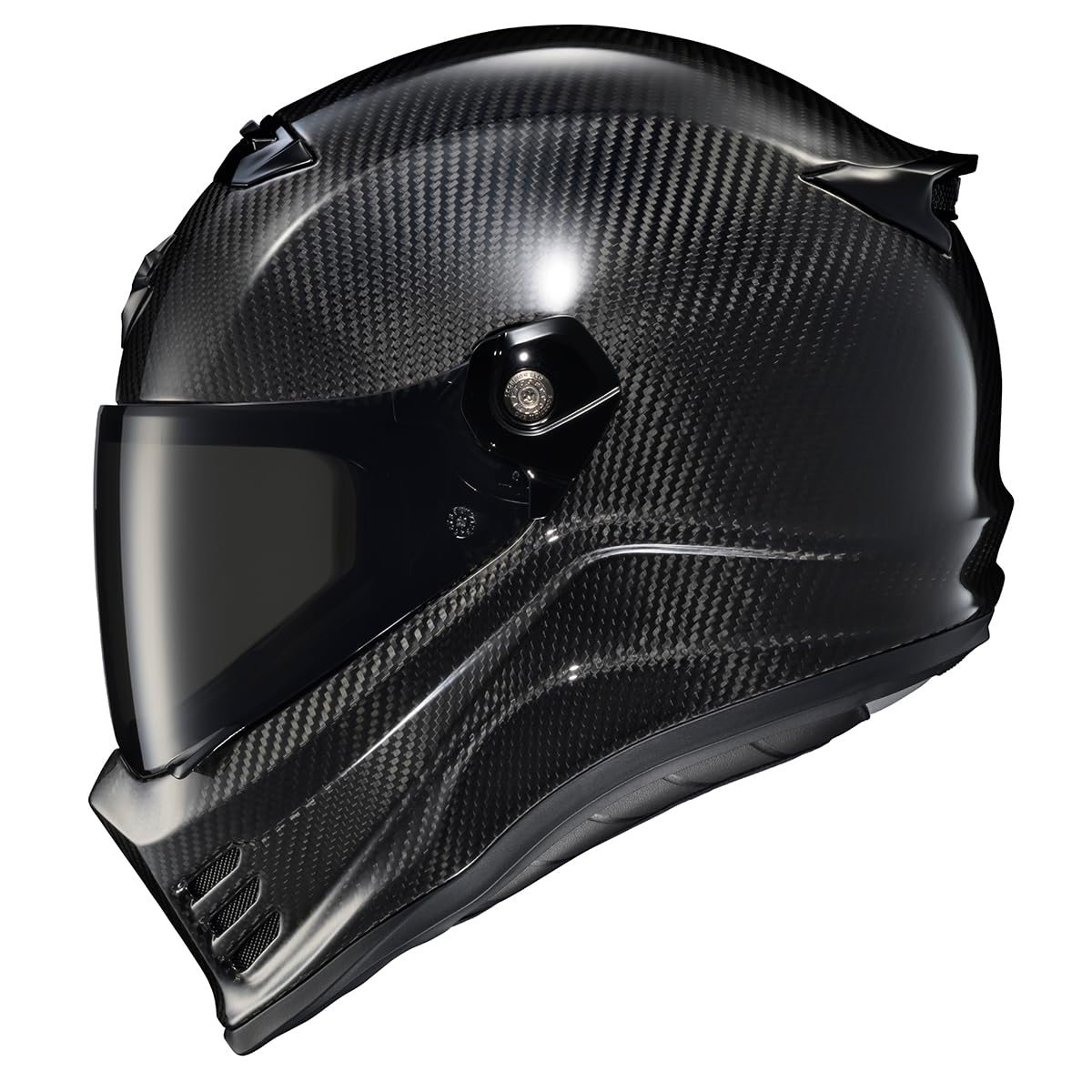
The ScorpionEXO Covert FX Carbon takes a street fighter aesthetic and wraps it in a true TCT-U 3K carbon fiber shell that weighs in at just 2.9 pounds in a size medium. That weight makes it one of the lightest options in the mid-range segment, and owner reviews consistently confirm that the weight reduction is immediately noticeable compared to any polycarbonate street helmet. The CAD-refined aerodynamics help reduce lift at highway speeds, which is a nice bonus for riders who commute on a naked bike.
The aero-tuned ventilation uses a large top intake that pulls air in and a dual-position mouth vent that lets you choose between defroster mode and full ventilation. The KwikWick C liner fabric is moisture-wicking and the KwikFit cheek pads are sculpted to accommodate eyeglasses, which is a rare and welcome feature for riders who need to wear prescription glasses under their helmet. The included dark smoke Everclear fog-free shield is a solid addition from the factory, though some owners note that the shield ratchet system takes a few tries to get used to.
This helmet is certified to both DOT and ECE 22.06 standards, which is the current generation of European safety testing that includes rotational impact evaluation. The 5-year warranty adds peace of mind. The biggest limitation for dirt bike riders is the lack of a visor peak. If you are looking for a helmet that works for both street riding and occasional soft-roading, this is a great fit. For hardcore motocross, you will want a dedicated off-road shell with a goggle channel.
What works
- Extremely light TCT-U carbon shell at just 2.9 pounds
- KwikFit cheek pads are designed to accommodate eyeglasses
- Dual-position mouth vent gives defroster and full airflow options
What doesn’t
- Street fighter design lacks a visor peak for motocross use
- Shield ratchet system has a learning curve for first-time users
6. ILM 861C Carbon Fiber Full Face Helmet

The ILM 861C is a full-face helmet with a 3K carbon fiber shell that offers a genuine carbon build at an accessible price point. The shell is paired with a multi-density EPS foam liner that meets both FMVSS 218 and DOT safety standards. The dual visor system is the headline feature here—an outer clear visor with Pinlock EVO pins and a retractable inner sun visor that drops down at the flick of a lever. This setup eliminates the need to carry a separate dark shield for bright days.
The metal quick-release strap system is a nice safety detail that allows for fast removal in an emergency. The interior cheek pads are removable and washable, and the shell includes a rear spoiler that doubles as a passive vent to extract warm air. The fit leans toward a neutral shape, which works for most riders, but the liner can feel snug initially before breaking in. The rear wing adds aerodynamic stability at speed, though it does make the overall package slightly heavier than a pure round-shell design.
This helmet is marketed for motorcycle, motocross, ATV, and dirt bike use, but the full-face street design with the dual visor is better suited for sport touring and street riding. If you are looking for a carbon fiber helmet that works for commuting and weekend canyon runs without breaking the budget, this is a solid option. Off-road purists will miss the goggle peak and the more aggressive ventilation of a dedicated dirt helmet.
What works
- Genuine 3K carbon fiber shell at a budget-friendly price point
- Dual visor system includes a retractable inner sun shield
- Metal quick-release chin strap for emergency removal
What doesn’t
- Street touring design is not ideal for dedicated off-road riding
- Shell weight is higher than premium carbon options
7. Fox Racing V1 Motocross Dirt Bike Helmet
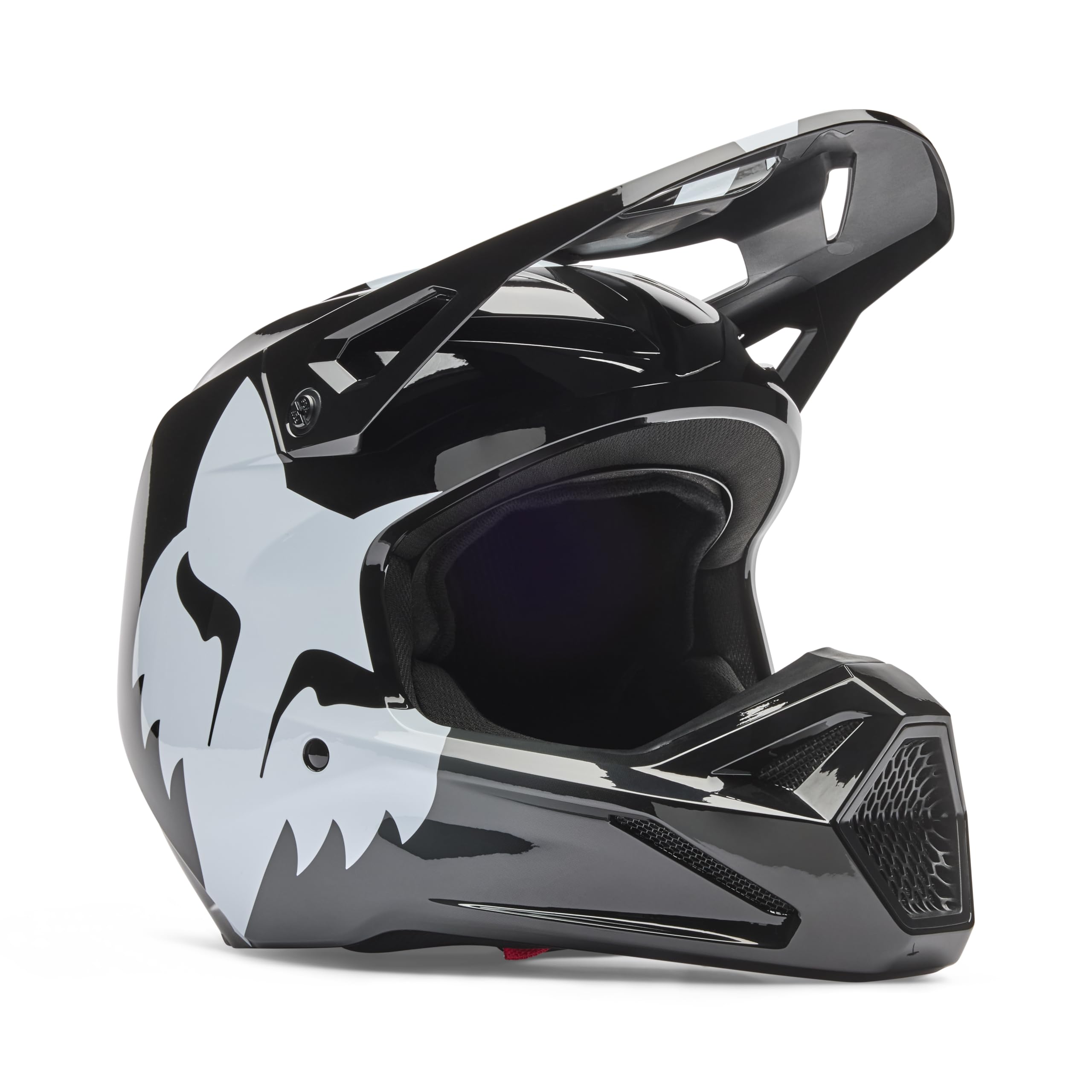
The Fox Racing V1 MIPS is a significant step forward for the entry-level motocross helmet segment. While the shell is made from ABS and EPS rather than carbon fiber, the inclusion of the Multi-Directional Impact Protection System (Mips) at this price point is what makes it worth considering. The low-friction layer sits between the helmet and the head, allowing the helmet to rotate slightly on impact, which reduces rotational forces that can cause brain injury.
This helmet meets both DOT FMVSS 218 and ECE 22.06 standards, which is a strong safety certification stack for the money. The aerodynamic shape is designed to reduce drag, and the double ring closure system is the standard for off-road security. Owner reviews consistently call out the comfortable interior padding and the secure fit during aggressive riding. The main point of friction is sizing—the V1 runs small, and multiple buyers have noted that going up a full size from your usual measurement is necessary to avoid a pressure headache.
For a rider on a tighter budget who still wants MIPS rotational protection and dual certifications, the Fox V1 is a smart choice. The weight is significantly higher than any carbon helmet on this list, and the ABS shell does not offer the same impact dispersal or neck-saving lightness as a woven carbon shell. But if safety certifications matter more to you than the material of the shell, this helmet delivers where it counts.
What works
- MIPS rotational impact protection at an entry-level price
- Dual DOT and ECE 22.06 certification for global safety standards
- Comfortable interior padding that holds up to aggressive trail use
What doesn’t
- ABS shell is heavy compared to any carbon fiber helmet
- Sizing runs small, often requiring a full size up from normal
8. Alpinestars SM3 Solid Motocross Helmet
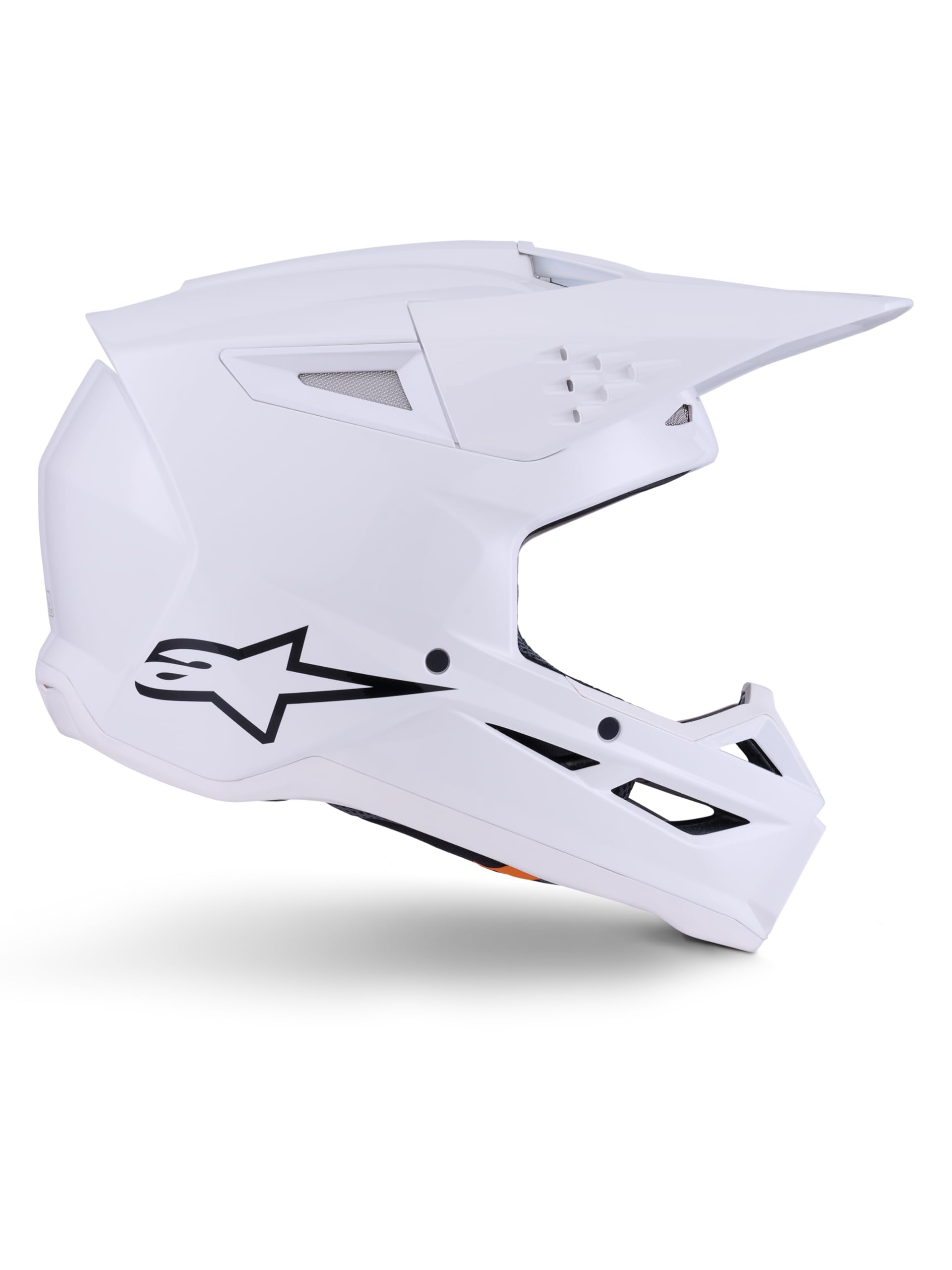
The Alpinestars SM3 Solid enters the market as a dedicated motocross and off-road helmet built around a thermo-injected polycarbonate shell. The variable thickness shell construction is designed to manage impact energy, and it meets both ECE 22.06 and DOT certification standards. This gives riders a modern safety certification without the premium price tag of a carbon shell. The weight comes in at about 4.85 pounds, which is heavier than the carbon competition but standard for a polycarbonate off-road helmet.
The interior padding is removable and washable, and the shell is engineered to be goggle-ready with stable positioning during aggressive riding. Alpinestars focused on reducing rider fatigue with an optimized shell shape that minimizes unnecessary bulk. The ventilation is adequate for trail riding and shorter motos, though the flow is not as aggressive as the high-end dedicated off-road helmets. The clean gloss white colorway is a classic look that pairs well with any gear.
This is a functional entry-level helmet for newer riders or those who need a budget-friendly lid for occasional use. The lack of carbon fiber means you are giving up the weight savings and impact dispersal properties of a woven shell. For a rider who is just getting into the sport and wants a properly certified, no-frills motocross helmet, the SM3 does the job. Riders looking for a significant weight reduction should save up for a carbon option.
What works
- Meets both ECE 22.06 and DOT certifications for modern safety
- Removable and washable interior padding for easy maintenance
- Clean design with goggle-ready shell for off-road use
What doesn’t
- Heavier polycarbonate shell lacks the weight savings of carbon fiber
- Ventilation is adequate but not as aggressive as premium off-road helmets
Hardware & Specs Guide
3K vs 6K Carbon Fiber Weave
3K carbon refers to bundles of 3,000 filaments per tow, creating a standard weave that balances cost and strength. 6K carbon uses 6,000 filament tows, allowing manufacturers to achieve higher tensile strength with fewer layers, resulting in a lighter shell. Most premium off-road helmets like the Bell Moto-10 use a 3K or segmented 3K weave, while the LS2 Dragon uses 6K to hit its 1280-gram target. The weave type directly affects impact dispersal, not just the cosmetic pattern.
MIPS and Spherical Technology
MIPS stands for Multi-directional Impact Protection System and consists of a low-friction layer that allows the helmet to rotate up to 10-15mm relative to the head during an angled impact. Bell’s Spherical Technology is a more advanced implementation that uses a ball-and-socket design between two EPS liners, allowing controlled rotation in any direction. Both systems target rotational acceleration forces that can cause diffuse axonal injuries. Any helmet targeting serious off-road safety should include one of these systems.
ECE 22.06 vs DOT FMVSS 218
DOT FMVSS 218 is the minimum US safety standard, testing linear impact at two drop heights on a flat anvil and a hemispherical anvil. ECE 22.06, the current European standard, adds oblique impact testing that measures rotational forces, tests at multiple impact speeds, and evaluates retention system strength at different angles. A helmet certified to ECE 22.06 has passed a more rigorous battery of tests than a DOT-only lid. The ideal certification stack for a dirt bike helmet is DOT plus ECE 22.06, or DOT plus SNELL 2020.
FAQ
Is a carbon fiber dirt bike helmet worth the extra money over a polycarbonate model?
Can I use a carbon fiber street helmet for motocross riding?
How do I determine the correct shell size for my head shape?
What does the Pinlock system do and why does it matter for dirt riding?
Final Thoughts: The Verdict
For most serious off-road riders, the best carbon fiber dirt bike helmet is the Bell Moto-10 Spherical MIPS because it combines a genuine carbon shell with Spherical MIPS rotational protection and elite-level ventilation in a package trusted by motocross champions. If you want the lightest feel for your neck at a more accessible price, grab the ScorpionEXO Covert FX Carbon. And for a pure off-road machine with aggressive ventilation and emergency release features, nothing beats the Shoei VFX-EVO.

Certification: BSc in Mechanical Engineering
Education: Mechanical engineer
Lives In: 539 W Commerce St, Dallas, TX 75208, USA
Md Amir is an auto mechanic student and writer with over half a decade of experience in the automotive field. He has worked with top automotive brands such as Lexus, Quantum, and also owns two automotive blogs autocarneed.com and taxiwiz.com.