A failing radiator doesn’t announce itself until the temperature gauge pins into the red. By then, the damage to gaskets, heads, and blocks is often already done. Selecting the right replacement isn’t just about matching dimensions — it’s about understanding core construction, tank materials, and how your specific engine configuration demands certain cooling characteristics.
I’m Amir — the founder and writer behind Four Wheel Ask. I’ve spent years analyzing cooling system specifications, cross-referencing OEM fitment data, and aggregating owner-reported reliability patterns across hundreds of radiator models to separate genuine quality from marketing claims.
Whether you drive a compact sedan or a full-size SUV, the right cooling system upgrade keeps your engine running at its optimal temperature range. Weighing material quality, core design, and vehicle-specific fitment ensures you find the best car radiator for reliable long-term cooling performance.
How To Choose The Best Car Radiator
Selecting a radiator involves more than picking a part that looks like the old one. Core design, tank material, cooler integration, and dimensional accuracy all determine whether your engine stays cool under load or creeps toward overheating. A well-chosen radiator delivers consistent performance for years, while a poor match can lead to chronic cooling issues and premature failure.
Core Construction and Tank Materials
Radiator cores are typically aluminum with plastic (PA66 GF30) tanks or fully welded aluminum. The aluminum-and-plastic design is the most common OE-style configuration, offering a balance of weight savings, corrosion resistance, and cost efficiency. All-aluminum welded radiators provide greater durability and heat transfer but often come at a premium. The plastic tank material should be reinforced nylon (PA66 GF30) for strength and resistance to thermal cycling cracks.
Fitment and Vehicle Compatibility
Exact fitment is non-negotiable. One millimeter off on inlet or outlet placement, tank width, or mounting tab location can turn a simple swap into a fabrication project. Always cross-reference OEM part numbers, verify engine displacement, transmission type, and cooling-package options (tow package, heavy-duty cooling, etc.). Using the Amazon Confirmed Fit tool or consulting compatibility charts before ordering saves substantial time and frustration.
Cooling Efficiency, Row Count, and Fin Density
Single-row cores handle most daily-driven passenger vehicles adequately, while two-row or three-row designs increase cooling capacity for towing, mountainous terrain, or high-performance applications. High-density multi-louvered fins maximize surface area for heat dissipation. A thicker core with more rows isn’t always better if the coolant flow rate or fan system isn’t matched — balance is key.
Transmission and Engine Oil Cooler Integration
Many modern radiators include an integrated transmission oil cooler (TOC) and occasionally an engine oil cooler (EOC). If your vehicle has an automatic transmission, a radiator with a built-in TOC is typically required unless you run an external cooler. Some vehicles also route engine oil cooling through the radiator. Verify whether your specific configuration needs these integrated circuits before selecting a model.
Quick Comparison
On smaller screens, swipe sideways to see the full table.
| Model | Category | Best For | Key Spec | Amazon |
|---|---|---|---|---|
| KAX CU13723 | Premium | Full-Size GM Trucks & SUVs | 1-in Core, Multi-Louver Fins | Amazon |
| Spectra Premium CU2370 | Premium | Chevy / GMC Silverado | TOC+EOC, 34-1/16″ Core | Amazon |
| Denso 221-3102 | Premium | OE-Grade Replacement | Painted Exterior, Front Mount | Amazon |
| Readair RRAD13007 | Performance | GM Lambda Platform (Traverse, Acadia, Enclave) | 3.6L V6, 4WD/AWD/FWD | Amazon |
| Readair for Nissan 720 | Value | Classic Nissan Trucks 1983-1986 | TOC Included, Direct Fit | Amazon |
| Denso 221-3223 | Mid-Range | Compact Fitment Applications | Lightweight, Center Mount | Amazon |
| TRQ RDA82718 | Mid-Range | Toyota Camry 2.4L / 2.5L | DIY Video Support, Direct Fit | Amazon |
| DWVO for Ford Explorer | Mid-Range | Ford Explorer 4.0L / 4.6L | TIG-Welded, PA66 Tanks | Amazon |
| Autoshack RK1116 | Budget | Dodge Grand Caravan / Chrysler Town & Country | 1-Row, 14.4 lbs | Amazon |
| Auto Dynasty for HHR | Budget | Chevy HHR 2006-2011 | T-6061 Aluminum, TOC | Amazon |
| AUTOSAVER88 for Accent | Budget | Hyundai Accent 1.6L | Lightweight, 5.73 lbs | Amazon |
In‑Depth Reviews
1. KAX CU13723 Engine Radiator
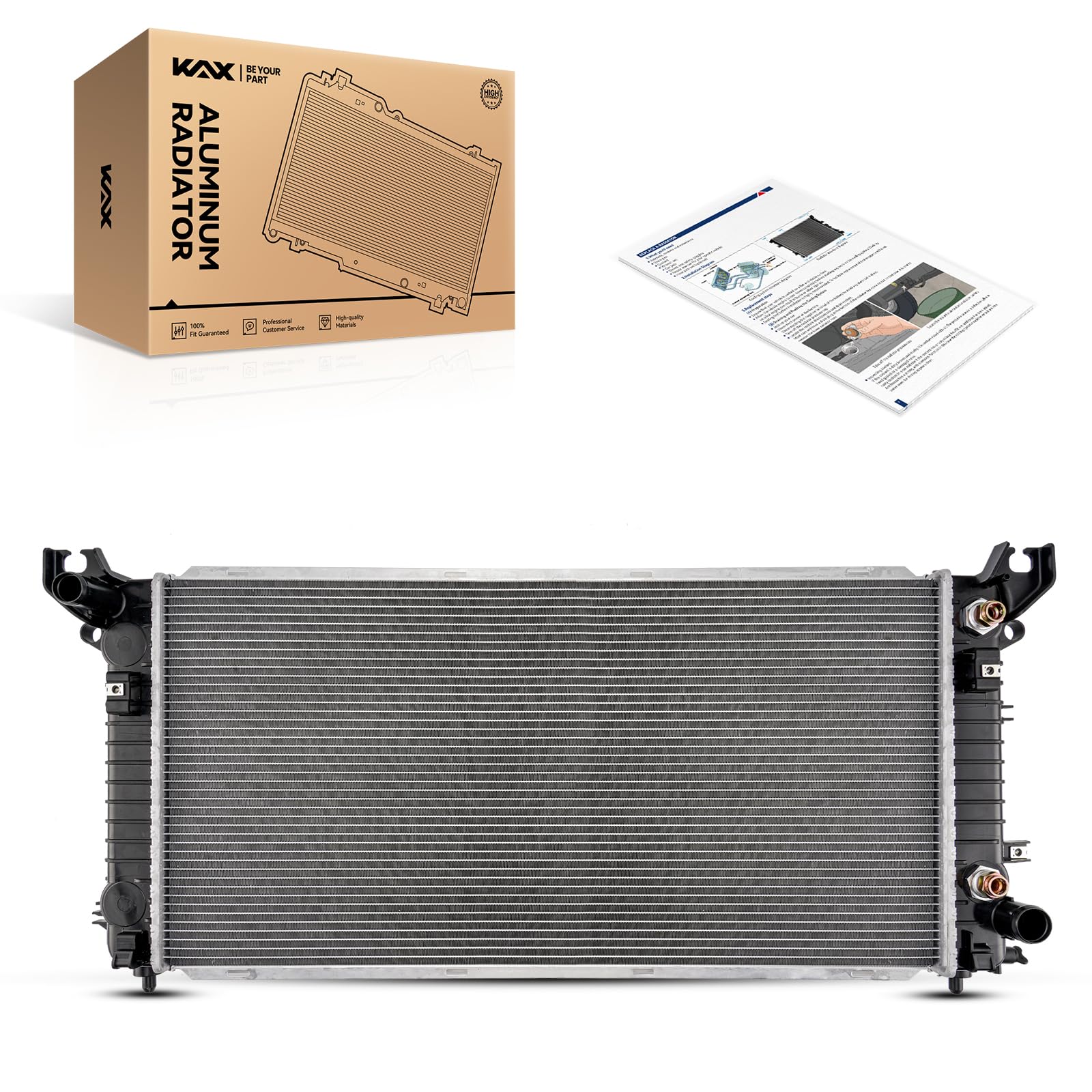
KAX engineered the CU13723 as a direct-fit replacement for a wide range of full-size GM trucks and SUVs, including the 2016-2018 Silverado 1500, Sierra 1500, Tahoe, Suburban, Yukon, and Escalade. The core dimensions measure 1 inch thick by 17-1/4 inches wide and 34 inches tall, with an inlet diameter of 1-5/16 inches and an outlet of 1-9/16 inches. Multiple OEM cross-references — CU13723, 84208890, 84208350, 23378655, and others — confirm its compatibility with both 5.3L and 6.2L V8 configurations.
Construction uses high-density multi-louver fins paired with high-grade plastic tanks and an aluminum core. Every unit undergoes leak testing, pressure testing, and aging/durability validation under the IATF16949 quality management system. The packaging includes reinforced foam corner protection and multilayer cardboard to prevent shipping damage, a detail that matters for a part this large. KAX backs the radiator with a two-year quality assurance policy.
Owner feedback consistently highlights the straightforward bolt-in installation and the noticeable improvement in temperature stability under towing loads. The CU13723 represents a strong balance of build quality, coverage breadth, and warranty confidence for anyone maintaining a GMT K2XX-platform vehicle.
What works
- Extensive OEM part number cross-referencing ensures fitment accuracy
- IATF16949 quality certification adds manufacturing traceability
- Robust packaging reduces risk of transit damage
What doesn’t
- Does not include a radiator cap
- Professional installation recommended for proper sealing
2. Spectra Premium CU2370 Radiator

Spectra Premium has been a recognized name in the aftermarket cooling space for years, and the CU2370 reflects that legacy with a design aimed at Chevrolet Silverado, GMC, and Cadillac applications. This model incorporates both a transmission oil cooler (TOC) and an engine oil cooler (EOC), making it suitable for vehicles that route engine oil through the radiator for thermal management. The core measures 34-1/16 inches in height and uses high-density multi-louvered fins to enhance heat transfer.
The unit is built as a direct OE replacement with drop-in fitment and includes an accessory pack to streamline installation. Rigorous testing under extreme weather conditions supports the reliability claims, and the extensive OEM cross-reference list — spanning over 60 part numbers including 22840115, 52473445, 15252624, and 15797138 — demonstrates the breadth of coverage. Spectra Premium’s manufacturing standards aim to match OE fit, form, and function without compromise.
Long-term owner reports indicate that the CU2370 holds up well in punishing environments, including frequent towing and high-mileage fleet use. The inclusion of both TOC and EOC circuits eliminates the need for additional external coolers in factory-configured vehicles, simplifying the replacement process. For those seeking a radiator that mirrors the original equipment specifications closely, this is a compelling option.
What works
- Integrated TOC and EOC for comprehensive cooling
- Extensive OEM cross-referencing for fitment confidence
- Drop-in design with included accessory pack
What doesn’t
- Heavier than some aluminum-only alternatives
- May require verification of cooler line routing
3. Denso 221-3102 Radiator

Denso is a tier-one OE supplier, and the 221-3102 radiator leverages that manufacturing pedigree. Designed as a vehicle-specific direct replacement, this model features a painted exterior finish that resists corrosion and matches the look of factory-installed units. The front-mount position and center inlet/outlet configuration suit a range of applications where OE-grade precision is the priority.
The construction uses materials and processes aligned with Denso’s global production standards, which supply cooling components to major automakers. At 5 pounds, this radiator is notably lightweight, reflecting efficient core design without sacrificing structural integrity. The part number 2213102 cross-references to multiple OEM applications, though specific vehicle fitment should always be verified before ordering.
Feedback from owners who value OE-level fit and finish often points to Denso’s consistency in dimensional accuracy. The painted coating provides an extra layer of protection against road debris and moisture, which is beneficial in regions with heavy salt usage. For buyers who prioritize manufacturer reputation and clean integration over aftermarket flash, the 221-3102 delivers predictable, hassle-free replacement.
What works
- OE supplier build quality and materials
- Lightweight design simplifies handling during installation
- Corrosion-resistant painted finish
What doesn’t
- Limited to specific vehicle fitment applications
- No integrated oil coolers for TOC or EOC
4. Readair RRAD13007 Radiator
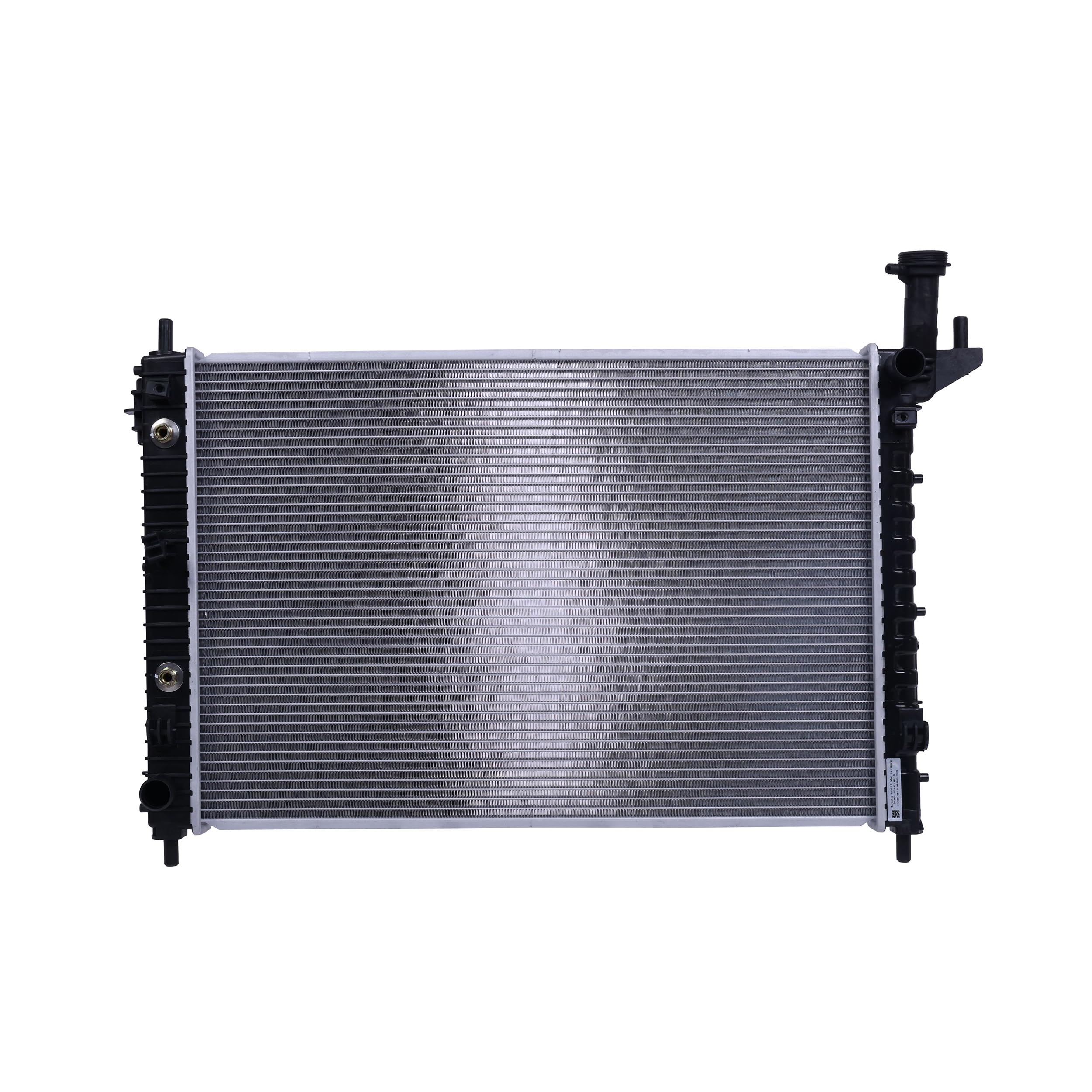
Readair designed the RRAD13007 specifically for GM’s Lambda platform vehicles: the Chevrolet Traverse (2009-2017), GMC Acadia (2007-2017), Buick Enclave (2008-2017), and Saturn Outlook (2007-2010), all equipped with the 3.6L V6 in FWD, AWD, and 4WD configurations. Advanced welding techniques and high-quality materials form the core of this radiator’s construction, with an emphasis on sealing integrity and stable cooling performance over time.
The unit weighs 14 pounds and measures 39 x 5 x 28 inches, reflecting the substantial core needed to cool a large crossover SUV. Readair markets the improved cooling efficiency as a contributor to better fuel economy during extended highway driving, since the engine operates closer to its ideal temperature window. The two-year return and exchange policy for non-human-caused damage provides a safety net for buyers.
Owner reports indicate that this radiator addresses a known weak point in the Lambda platform, where original radiators can become brittle with age at the plastic tank seams. The reinforced construction and leak-tested assembly give owners confidence when replacing a component that sits in a challenging front-engine bay position. This is a focused solution for a specific, popular vehicle family.
What works
- Vehicle-specific design for GM Lambda crossovers
- Advanced welding enhances long-term sealing
- Two-year after-sales protection plan
What doesn’t
- Limited compatibility outside the listed GM models
- Heavier weight complicates DIY handling
5. Readair Radiator for Nissan 720 (1983-1986)
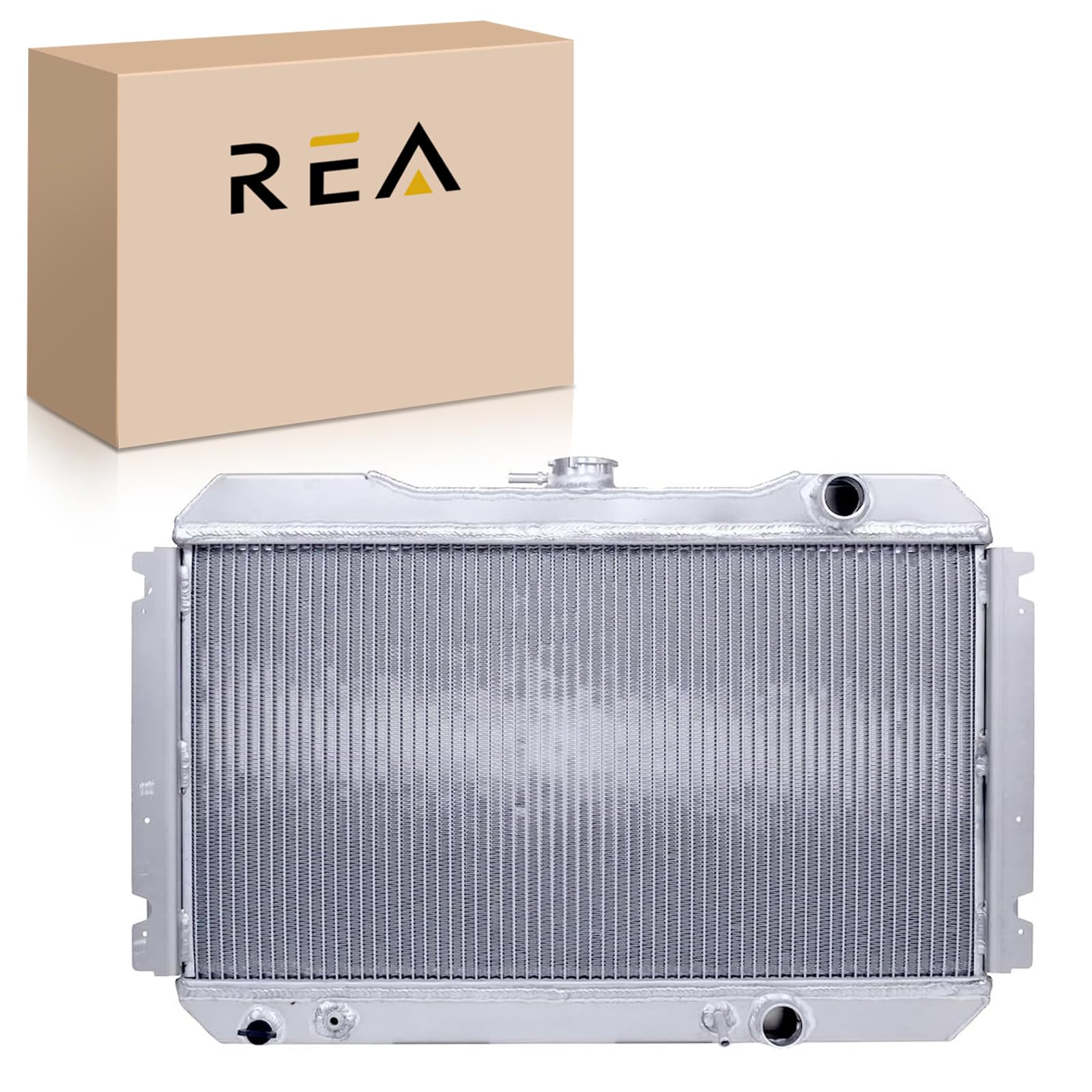
Owners of the Nissan Datsun 720 pickup from 1983 to 1986 face a shrinking pool of reliable cooling parts. Readair addresses that gap with a direct-fit radiator compatible with the 2.4L four-cylinder engine across Base, Deluxe, and Sport Truck trims. The core measures 13-2/5 inches high by 24-7/10 inches wide and 1-3/10 inches thick, with both inlet and outlet diameters at 1-2/5 inches. A brass transmission oil cooler is integrated for automatic transmission applications.
Construction pairs an aluminum core with TIG-welded end tanks made from PA66 GF30 reinforced plastic, the same material grade used in many OE applications. A treated coating is applied to resist corrosion, and each unit undergoes leak testing before shipment. The two-year unlimited-mileage guarantee adds reassurance for owners of these aging trucks, where parts availability is already limited.
Community feedback from Nissan 720 forums highlights the importance of verifying whether the vehicle has an automatic or manual transmission, as the TOC circuit is only needed for automatics. The radiator bolts in with no modifications required, making it a strong choice for preservation-minded owners who want to keep these 1980s workhorses on the road without chasing down NOS parts.
What works
- Direct fit for a hard-to-find classic truck application
- Brass TOC provides reliable transmission cooling
- Two-year unlimited-mileage warranty
What doesn’t
- Limited to 1983-1986 Nissan 720 models
- Radiator cap sold separately
6. Denso 221-3223 Radiator
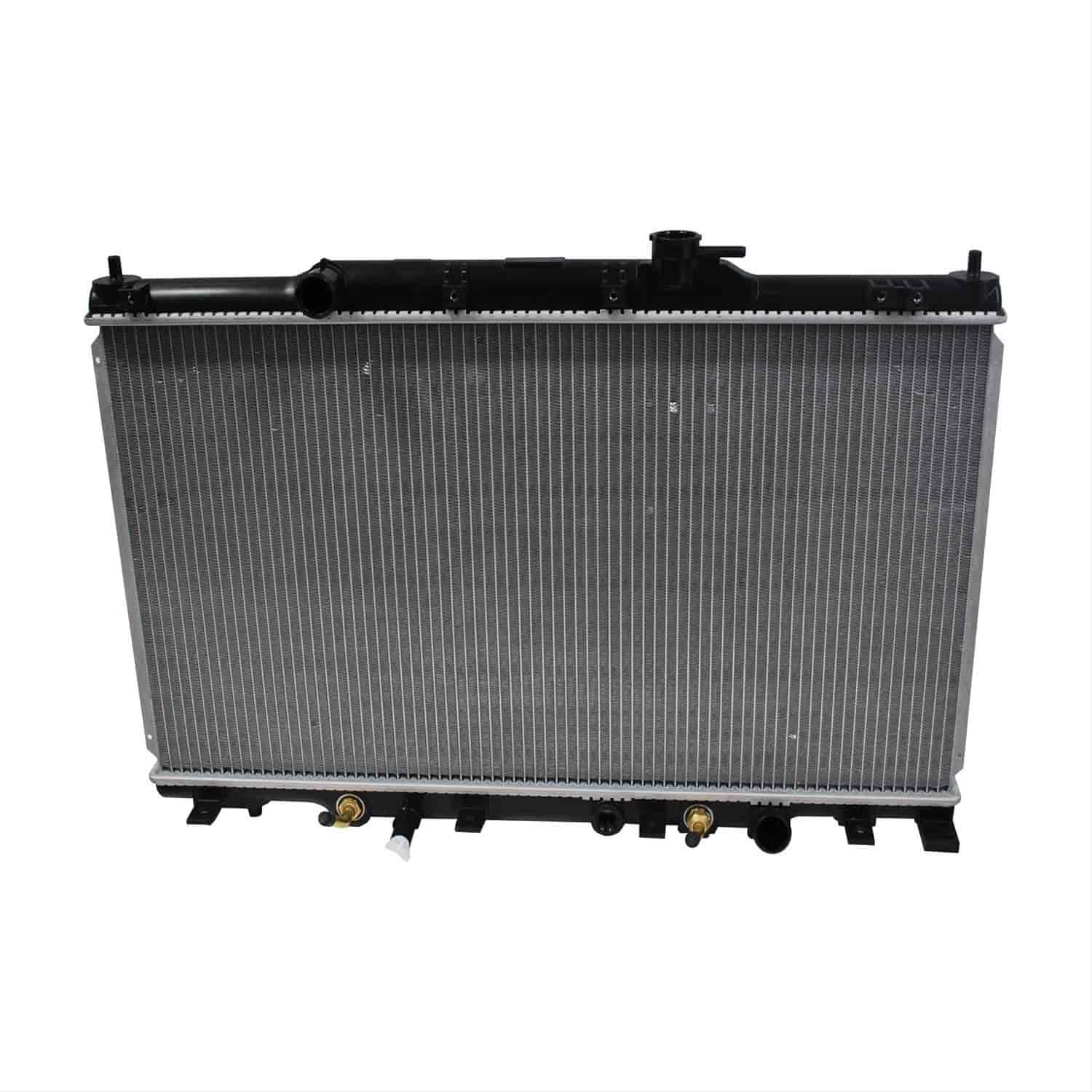
Denso’s 221-3223 radiator serves applications where a compact core and center-mounted inlet/outlet configuration are required. As a vehicle-specific replacement from an OE-tier manufacturer, this model prioritizes dimensional precision and material consistency. The painted exterior provides corrosion resistance while maintaining a factory-clean appearance under the hood.
Weighing only 5 pounds, the 221-3223 is among the lighter options in this lineup, which simplifies handling during installation. The cooling core is designed for efficient heat rejection in vehicles with moderate thermal loads, making it suitable for daily-driven sedans and compact cars rather than heavy-towing or high-performance applications. Denso’s Indonesian production facility follows the same quality protocols as the company’s global plants.
Owner experiences reflect satisfaction with the plug-and-play nature of the replacement, particularly when cross-referencing the OEM part number 221-3223 against the vehicle’s original equipment. The radiator’s lightweight construction does not imply fragility — the core and tank assembly meets Denso’s internal durability standards. For drivers seeking a straightforward, no-surprises swap with a trusted brand badge, this model delivers.
What works
- Trusted OE supplier brand reputation
- Lightweight for easy installation
- Corrosion-resistant painted finish
What doesn’t
- No integrated transmission or engine oil cooler
- Best suited for lighter-duty cooling demands
7. TRQ RDA82718 Radiator for Toyota Camry
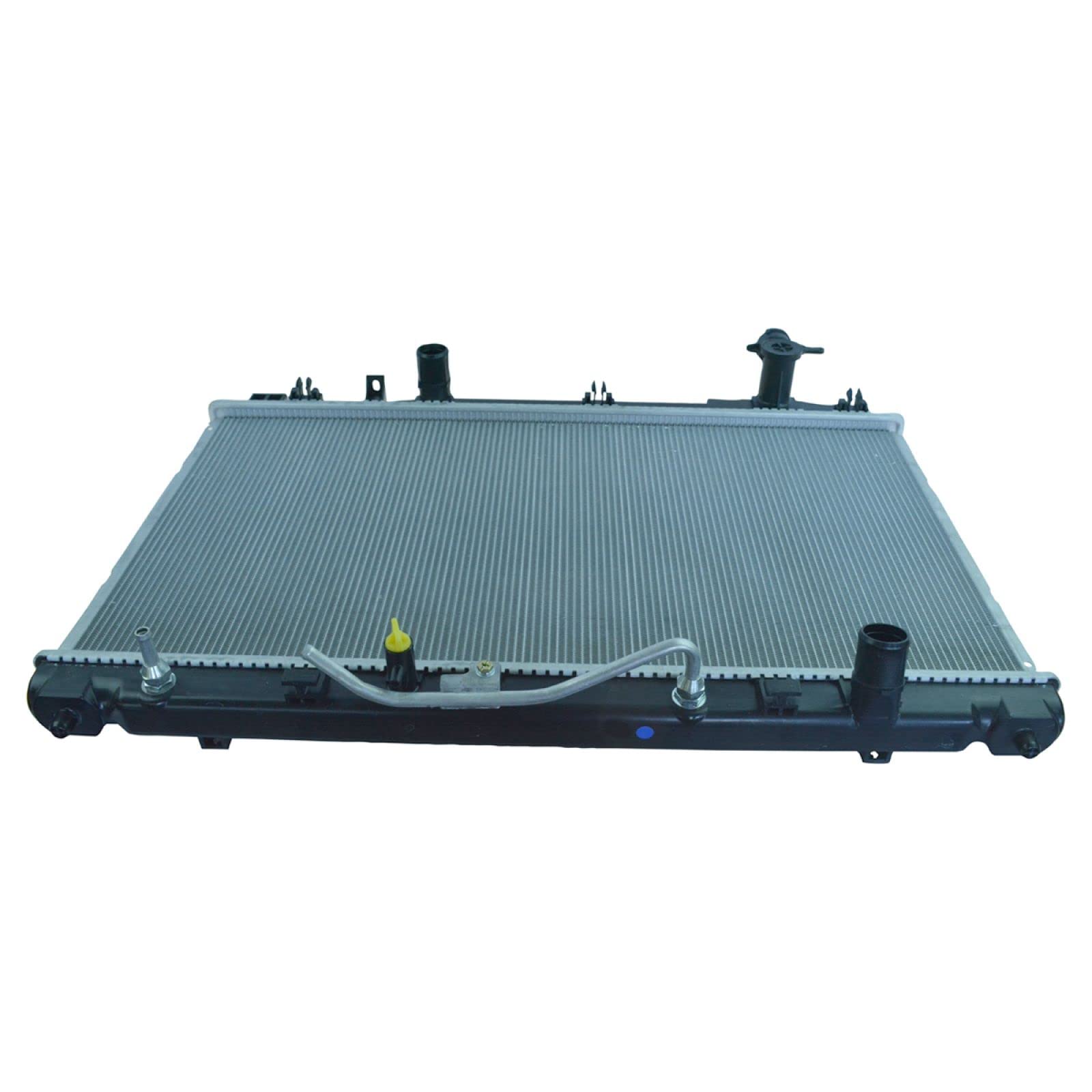
TRQ has built a reputation around direct-fit replacement parts backed by an extensive library of DIY installation videos, and the RDA82718 radiator for the Toyota Camry continues that approach. This model fits US-built Camry models from 2007-2009 with the 2.4L L4, 2010-2011 Camry with the 2.5L L4, and 2007-2009 Camry Hybrid (FHEV) with the 2.4L L4, all without the tow package. Cross-reference numbers include 16400-0H210, 164000H240, 1640028640, CU2917, and TO3010312.
The unit comes pre-assembled as a direct OE replacement, meaning no modifications or adapters are needed for installation. TRQ’s 25-year presence in the aftermarket parts space supports the compatibility claims, and the Amazon Garage confirmed-fit feature provides an additional verification layer. The brand’s video-first approach to DIY support is genuinely useful for first-time radiator swappers who benefit from seeing the procedure before starting the job.
For Camry owners, the cooling demands of the 2.4L and 2.5L engines are well understood, and this radiator addresses them with appropriate core sizing and material selection. The absence of a tow package requirement means this is the standard-duty version, not a heavy-duty upgrade. Those towing with a Camry — rare as that may be — should verify whether the factory heavy-duty cooling option changes the radiator specification.
What works
- Free DIY video support simplifies installation
- Direct OE fit with no modifications required
- Backed by 25 years of TRQ aftermarket experience
What doesn’t
- Only for non-tow-package Camry configurations
- No transmission oil cooler for towing applications
8. DWVO Radiator for Ford Explorer (2002-2006)
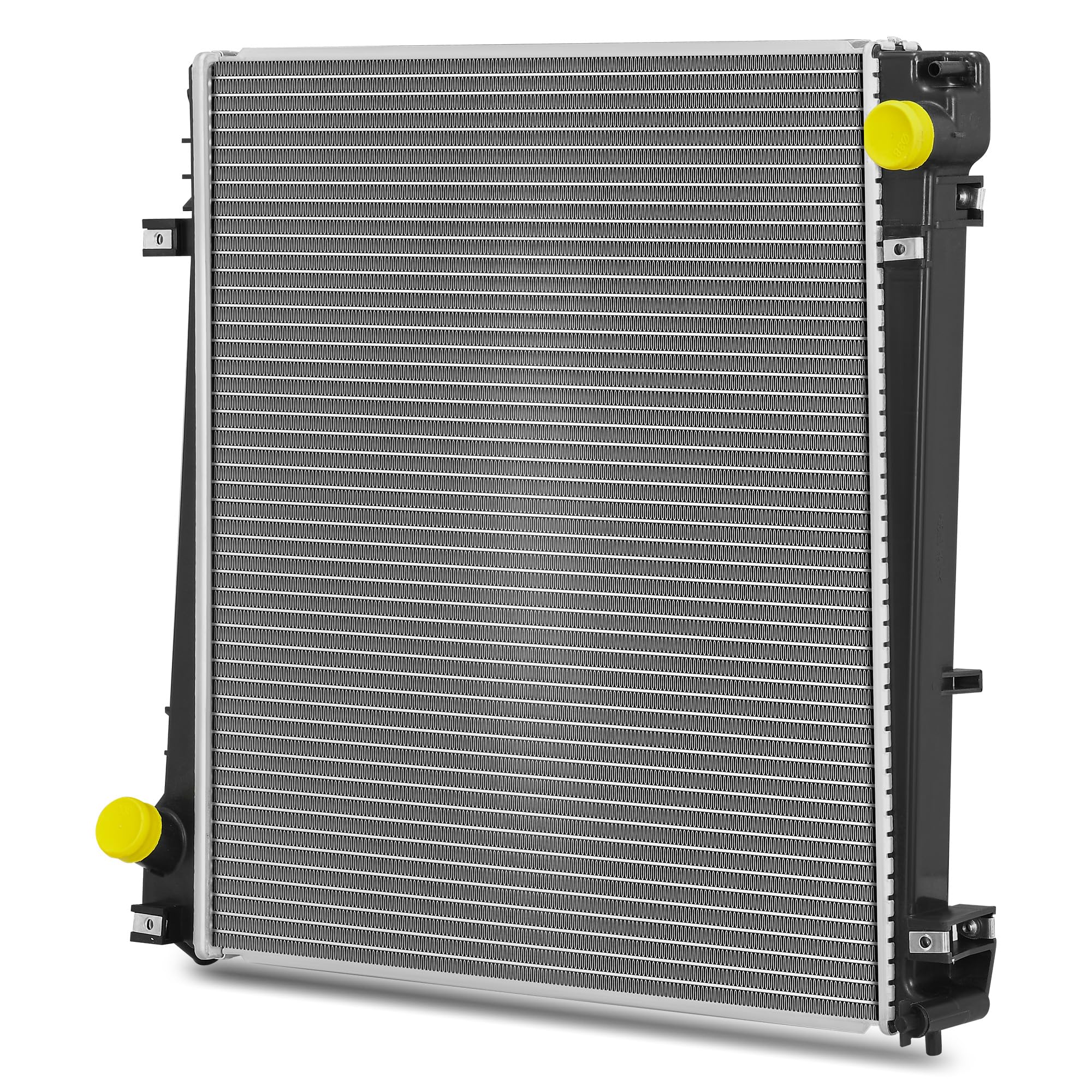
The DWVO radiator targets a specific and popular application: the 2002-2006 Ford Explorer and 2004-2005 Mercury Mountaineer with 4.0L V6 or 4.6L V8 engines. OEM cross-references include 1L2H8005DC, 1L2Z8005DC, FO3010146, and CU2342. Construction combines a TIG-welded aluminum core with PA66 GF30 glass-reinforced nylon inlet and outlet tanks, a material specification that matches what many OE suppliers use for durability against thermal cycling.
A treated anti-corrosion coating is applied to the assembly, and each unit passes a leak test before packaging. One unique detail: the package includes two drain petcocks of different lengths — 7 cm and 5.4 cm — so the installer can select the correct fit for their specific vehicle configuration. This attention to variation in the Explorer/Mountaineer platform saves a trip to the parts store mid-installation. Fixed foam in four corners of the box prevents bending during shipping.
Owner reports on this generation of Explorer note that radiator failure is often caused by plastic tank cracking at the seam, particularly in warmer climates. The PA66 GF30 material upgrade and TIG-welded core address that failure mode directly. For owners of this era of Ford SUV, this radiator offers a thoughtful package that accounts for real-world failure patterns and installation quirks.
What works
- Two included drain petcocks for fitment flexibility
- TIG-welded core with PA66 GF30 reinforced tanks
- Anti-corrosion coating protects against moisture
What doesn’t
- Radiator cap not included
- Professional installation strongly recommended
9. Autoshack RK1116 Radiator for Dodge & Chrysler

Autoshack’s RK1116 is a budget-oriented radiator designed for the Dodge Grand Caravan and Chrysler Town & Country from 2005-2007, both with FWD V6 3.3L and 3.8L engines. The core measures 16.06 inches wide by 30.31 inches tall with a single-row configuration, and the construction uses an aluminum core with plastic tanks — the standard formula for cost-effective replacements. Automatic transmission models are covered, though the radiator does not include an integrated engine oil cooler.
Weighing 14.4 pounds, the RK1116 feels substantial for a single-row unit. OEM cross-references include 2795, 41-2795A, and CU2795. Buyers must verify year, make, model, engine, and cooling-package details before ordering, as even minor variations in the Grand Caravan platform can affect fitment. The radiator cap is not included, which is consistent with many aftermarket radiators at this level.
For owners of these Chrysler minivans, the RK1116 represents a functional replacement that maintains adequate cooling for daily driving duties. The single-row core is sufficient for standard operation but may struggle under sustained heavy load or extreme ambient temperatures. This is a sensible choice for those on a tight budget or for vehicles used primarily for around-town family hauling rather than towing or mountain driving.
What works
- Affordable direct-fit for Chrysler minivans
- Aluminum core with plastic tanks meets OE style
- Multiple OEM part number cross-references
What doesn’t
- Single-row core limits heavy-duty cooling capacity
- Radiator cap must be purchased separately
10. Auto Dynasty Radiator for Chevy HHR (2006-2011)
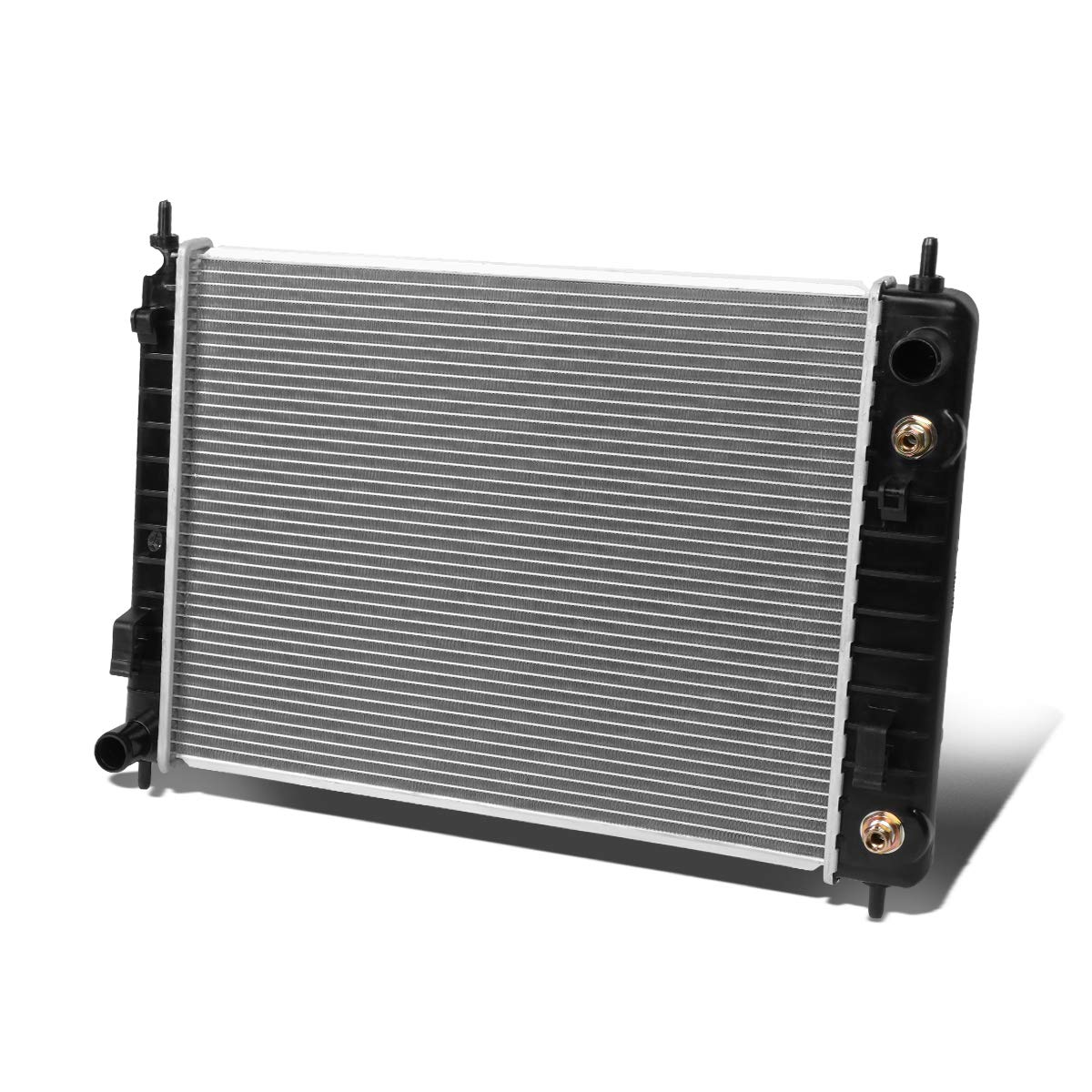
Auto Dynasty engineered this radiator as a direct-fit replacement for the Chevy HHR from 2006-2011, covering both automatic and manual transmission models. The core is constructed from T-6061 aluminum — a step up in material quality compared to generic aluminum alloys — and features a single-row configuration with core dimensions of 21-5/8 inches wide, 17-5/16 inches high, and 7/8 inches thick. A transmission oil cooler (TOC) is integrated for automatic transmission applications.
The lightweight design weighs only 9 pounds, making it one of the easier radiators to maneuver during installation. Reinforced PVC materials supplement the aluminum core for added wearing resistance, and the direct bolt-on fitment requires no drilling or modification. OEM part cross-references include 22727322, 2219017, 15940326, and CU2850. The inverter cooler design aims to improve engine cooling efficiency by increasing coolant capacity relative to the stock unit.
HHR owners report that the single-row core provides adequate cooling for the 2.2L and 2.4L engines in normal driving conditions. The inclusion of a TOC at this price point is notable, as many budget radiators omit it or charge extra. Those towing or driving in extreme heat may want a dual-row upgrade, but for daily commuting and errand-running, this radiator delivers reliable performance without overspending.
What works
- T-6061 aluminum core offers superior material quality
- Integrated transmission oil cooler at a budget price
- Lightweight design simplifies installation
What doesn’t
- Single-row core limited for heavy-duty use
- No engine oil cooler option
11. AUTOSAVER88 Radiator for Hyundai Accent (2006-2011)
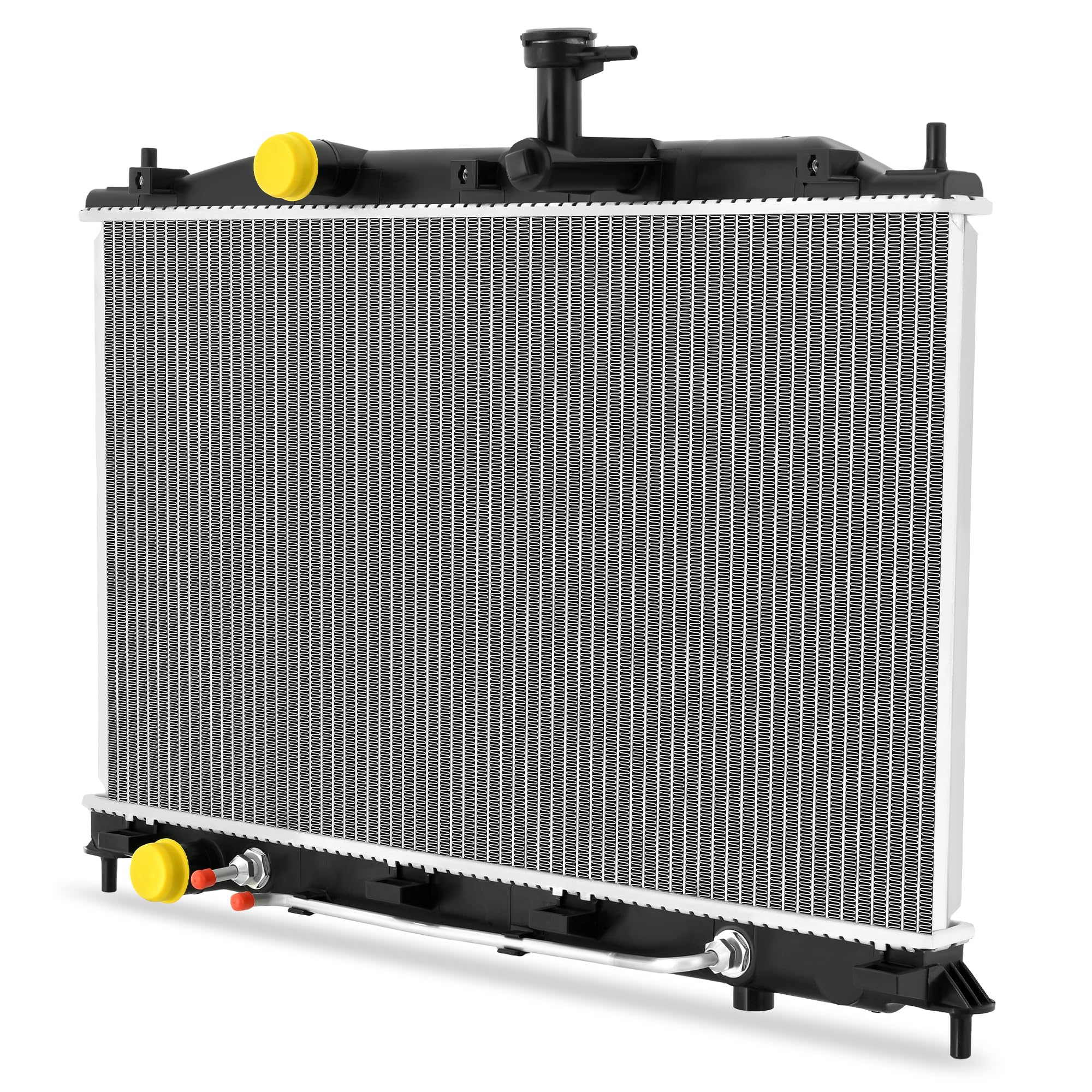
AUTOSAVER88 developed this radiator for the 2006-2011 Hyundai Accent with the 1.6L L4 engine and also covers the 2006-2012 Dodge Attitude 1.4L and 1.6L variants. OEM cross-references include 253101E000 and 253101E150. The construction uses a high-grade plastic tank paired with an aluminum core, and each unit undergoes leak testing before leaving the factory. High-density multi-louvered fins aim to maximize cooling efficiency in both hot and cold weather extremes.
Weighing just 5.73 pounds, this is the lightest radiator in the entire lineup, reflecting the compact dimensions of the Accent’s cooling package. The direct-fit design is standard for the segment, with no modifications required for installation. AUTOSAVER88 includes a user manual in the package, though the radiator cap is not included. Professional installation is recommended, particularly for those unfamiliar with cooling system bleeding procedures.
Hyundai Accent owners working with a limited budget will find this radiator meets the basic cooling needs of the 1.6L engine. The lightweight aluminum core and plastic tank combination is serviceable for city commuting and moderate highway use. Given the low price point, the inclusion of leak testing and high-density fins represents good value. Those seeking enhanced cooling for modified engines or extreme conditions should consider a dual-row alternative.
What works
- Leak-tested at the factory for quality assurance
- Lightweight and easy to handle during installation
- High-density fins improve heat dissipation
What doesn’t
- No radiator cap included
- Single-row core limits extreme-duty capacity
Hardware & Specs Guide
Core Materials and Tank Construction
Most aftermarket radiators use an aluminum core with plastic tanks, typically PA66 GF30 glass-reinforced nylon. This combination offers good heat transfer with resistance to thermal cycling cracking. Premium all-aluminum welded radiators eliminate the plastic-to-metal gasket joint entirely, reducing leak paths but increasing cost. The aluminum grade matters — T-6061 is a higher-strength alloy compared to generic 3003-series aluminum and is preferred for structural integrity in the core and mounting brackets.
Row Count and Fin Density
Single-row radiators serve most passenger cars and light-duty trucks adequately, with sufficient surface area for typical driving conditions. Dual-row and triple-row cores increase the coolant volume and heat rejection capacity, making them suitable for towing, high-performance builds, or extreme ambient temperatures. Fin density, measured in fins per inch (FPI), directly affects heat transfer — higher density increases surface area but can restrict airflow, requiring compatible fan systems for optimal performance.
Inlet and Outlet Configuration
Inlet and outlet diameters, positions (top, bottom, side), and orientation vary significantly between vehicle platforms. Common diameters range from 1-3/8 inches to 1-9/16 inches. Misalignment of even a few millimeters can prevent hose installation or cause stress on the radiator neck. Always cross-reference the OEM part number and verify the inlet/outlet locations against the original radiator before purchasing, as year-to-year changes within the same model are common.
Cooler Integration (TOC and EOC)
Many modern radiators integrate a transmission oil cooler (TOC) passage within the coolant tank. Vehicles with automatic transmissions typically require this circuit to maintain proper transmission fluid temperature. Some platforms also route engine oil through the radiator via an engine oil cooler (EOC) circuit. Not all aftermarket radiators include both, so verify your vehicle’s specific configuration. Missing an integrated cooler means adding an external unit or selecting a different radiator.
FAQ
What does a single-row versus dual-row radiator mean for my vehicle?
Should I replace my radiator cap at the same time?
How do I verify fitment before ordering a radiator?
Can I install a radiator myself, or should I hire a professional?
How often should a car radiator be replaced?
Final Thoughts: The Verdict
For most buyers, the best car radiator winner is the KAX CU13723 because it combines IATF16949-certified build quality, extensive GM full-size truck coverage, and a two-year warranty at a competitive price point without compromising core construction. If you need integrated transmission and engine oil cooling in a time-tested package, the Spectra Premium CU2370 delivers OE-style reliability with decades of aftermarket backing. And for owners of the Nissan 720 or classic GM Lambda crossovers who value vehicle-specific engineering and long-term support, the Readair units provide specialized coverage you will not find from generic suppliers.

Certification: BSc in Mechanical Engineering
Education: Mechanical engineer
Lives In: 539 W Commerce St, Dallas, TX 75208, USA
Md Amir is an auto mechanic student and writer with over half a decade of experience in the automotive field. He has worked with top automotive brands such as Lexus, Quantum, and also owns two automotive blogs autocarneed.com and taxiwiz.com.