An erratic idle that dips, surges, or stalls isn’t just annoying — it’s a signal that your engine’s idle air control system is struggling to maintain the balance between air and fuel when your foot is off the gas. The component responsible lives on or near the throttle body, and when it fails, every stoplight becomes a guessing game.
I’m Amir — the founder and writer behind Four Wheel Ask. I’ve spent years studying market trends, analyzing OEM and aftermarket specifications, and compiling owner-reported data on idle control components to separate the parts that actually restore smooth operation from those that cause more diagnostic headaches.
After evaluating build quality, specs, and extensive owner feedback, the best car idle control valve delivers a consistently smooth, surge-free idle without the hassle of repeat replacements.
How To Choose The Best Car Idle Control Valve
Selecting the right IAC valve involves more than matching a part number. The valve’s internal construction, pintle stroke length, sealing method, and connector design all influence how accurately the engine computer can regulate bypass air at idle. A mismatch here means the ECU compensates unnecessarily, throwing off the air-fuel ratio and triggering trouble codes.
Understanding IAC Valve Construction
The core of any IAC valve is a solenoid-driven pintle that moves in and out of a bypass air passage. Metal-bodied valves typically dissipate heat better than polymer-bodied units, which can soften or warp over time under hood temperatures. The pintle tip material — often a phenolic resin or soft metal — determines how well the valve seals when fully closed, directly affecting cold-start behavior and hot-idle stability.
OEM vs Aftermarket Fitment
OEM-branded valves from suppliers like Motorcraft or Delphi are engineered to match the exact current draw and pintle stroke parameters that the factory ECU expects. Aftermarket valves sometimes use a generic pintle profile or different coil resistance, leading to idle hunting or a check-engine light. Checking the manufacturer part number against your vehicle’s original is the safest way to confirm compatibility.
Electrical Connector and Gasket Condition
The plastic connector housing on an IAC valve can become brittle after years of heat cycling. A cracked connector or corroded terminal creates intermittent contact that mimics a failing valve. Always inspect the wire harness side before replacing the valve. Reusing an old gasket or O-ring between the valve and throttle body introduces a vacuum leak that undermines the new valve’s ability to control idle speed.
Quick Comparison
On smaller screens, swipe sideways to see the full table.
| Model | Category | Best For | Key Spec | Amazon |
|---|---|---|---|---|
| Motorcraft CX1946 | Idle Air Control Motor | OEM-grade Ford replacement | Machined exterior, 7.2 oz | Amazon |
| Delphi CV10012 | IAC Valve | Precise air metering | Threaded inlet, 0.2 lb | Amazon |
| Standard Motor Products AC170 | IAC Valve | Reliable mid-range option | Painted exterior, 0.7 lb | Amazon |
| Delphi CV10011 | IAC Valve | OE-quality flanged fitment | Flanged connector, 0.1 lb | Amazon |
| Standard Motor Products AC176 | IAC Valve | Compact polymer body design | Polymer material, 9.07 g | Amazon |
| Motorcraft CX1867 | Idle Air Control Motor | Premium Ford/Lincoln fit | Machined, 10.2 oz, 28V | Amazon |
| Walker Products 215-2030 | IAC Valve | Budget-conscious replacement | Metal body, 0.01 oz | Amazon |
In‑Depth Reviews
1. Motorcraft CX1946 Idle Air Control Motor

The Motorcraft CX1946 arrives as an idle air control motor, not just a valve assembly, meaning the entire solenoid and pintle mechanism is replaced as a single sealed unit. Machined exterior surfaces resist corrosion and abrasion better than painted or raw-cast alternatives, which matters when the component sits inches from the radiator fan’s heat wash. The internal coil winding is specced to Motorcraft’s original design parameters, so the ECU sees the exact same resistance it expects during idle-learn procedures.
This unit’s primary strength is its service life — the pintle returns to its fully seated position without sticking even after prolonged exposure to carbon blow-by. Owner feedback across Ford truck and SUV forums consistently reports that the CX1946 eliminates the low-RPM surging that generic aftermarket valves often miss. The 7.2-ounce weight reflects the use of a denser solenoid core that holds position more precisely under engine vibration.
Fitment verification is straightforward since Motorcraft publishes the exact vehicle application list. The valve’s stroke length is tuned for Ford’s EEC-V and later PCM strategies, so it responds predictably to both cold fast-idle commands and hot deceleration fuel shut-off transitions. For anyone restoring factory idle behavior on a Ford product, this is the reference standard.
What works
- Sealed motor unit prevents debris ingress into solenoid
- Machined housing resists corrosion in high-heat environments
- Coil resistance matches Ford ECU idle-learn parameters
What doesn’t
- Limited to Ford and Lincoln applications only
- Heavier than some aftermarket alternatives
2. Delphi CV10012 Idle Air Control Valve

Delphi’s CV10012 represents the OE-supplier tier of idle air control — the same engineering house that provides production-line components to several major automakers. The valve is built around a threaded inlet design that screws directly into the throttle body, eliminating the need for a separate mounting gasket in some applications. The machined exterior finish indicates precise post-cast machining tolerances that ensure the pintle bore is concentric with the solenoid axis.
What sets this valve apart is the pintle’s sealing surface geometry. Delphi uses a tapered profile that creates a progressive seal as the pintle closes, reducing the likelihood of air bypass when the ECU commands a fully closed position. This directly affects hot-idle stability after the engine reaches operating temperature, when the idle air requirement drops to its minimum. The internal spring returns the pintle faster than many budget valves, which helps prevent after-run dieseling on engines that tend to run on after shut-off.
Installation reports note that the CV10012’s threaded body seats firmly without cross-threading, and the connector orientation matches factory harness routing on most GM and Chrysler applications. The valve is light at 0.2 pounds, but the metal construction gives it the thermal capacity to withstand repeated heat cycles without the housing warping. For owners who want genuine OE-level calibration, this Delphi valve delivers the pintle positioning accuracy that the ECU relies on.
What works
- Threaded inlet design eliminates gasket alignment issues
- Tapered pintle seal reduces hot-idle air bypass
- OE-supplier heritage ensures correct current draw
What doesn’t
- Limited warranty coverage when purchased through Amazon
- Not compatible with flange-mount throttle bodies
3. Standard Motor Products AC170 Idle Air Control Valve
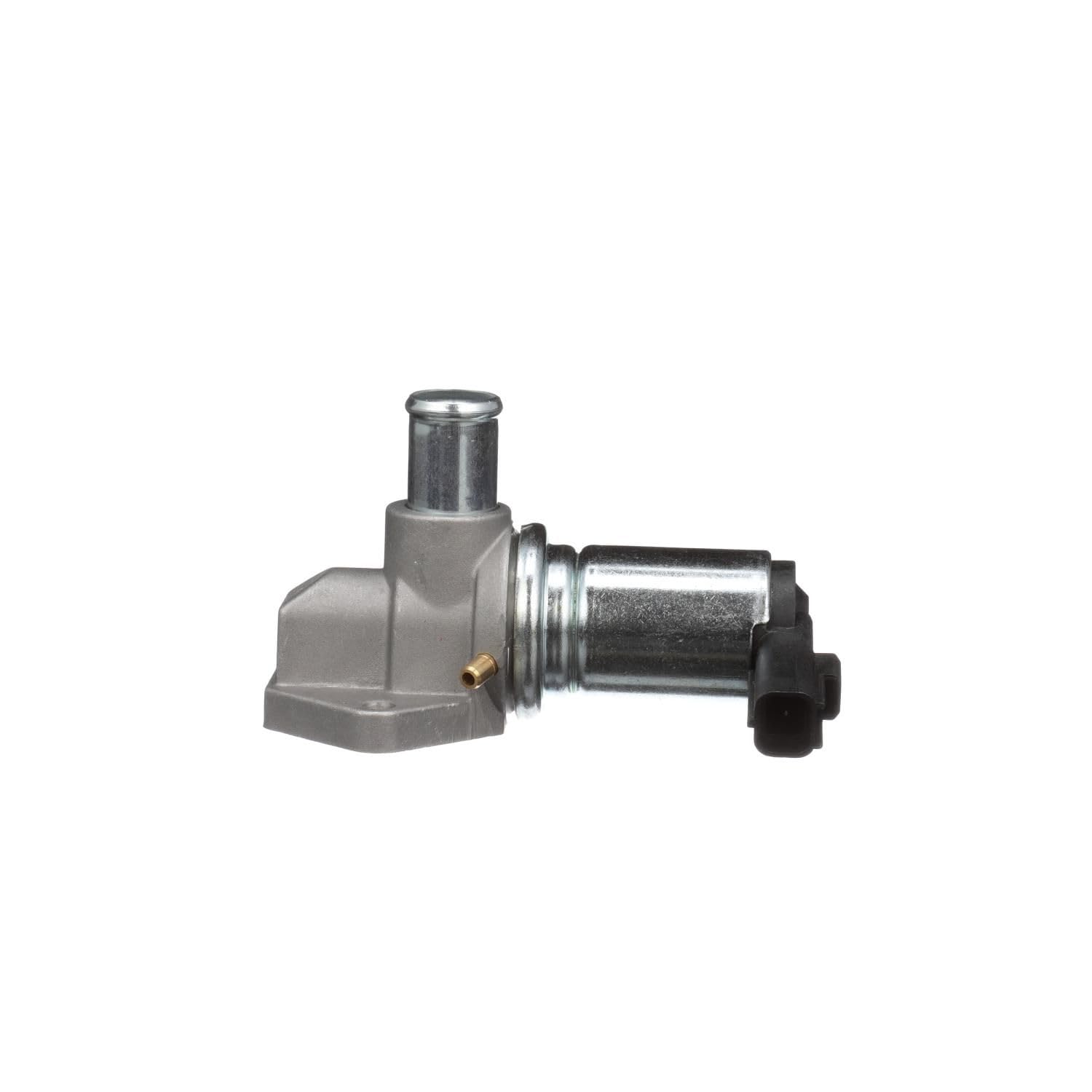
Standard Motor Products has built a reputation in the aftermarket for producing components that split the difference between dealer pricing and no-name valves, and the AC170 fits that profile precisely. The valve uses a painted exterior finish over a cast metal body, which provides a reasonable level of corrosion resistance for daily-driven vehicles in temperate climates. The compression-style connector is identical to the OEM configuration found on many late-90s through mid-2000s GM and Chrysler engines.
The AC170’s pintle stroke calibration is optimized for engines that use a speed-density fuel management strategy rather than mass-airflow. This matters because speed-density systems rely entirely on the IAC valve to set base idle during closed-throttle deceleration, and an inaccurate stroke length causes the idle to hang before dropping. Owner reports from Chevrolet truck and Jeep applications indicate that the AC170 eliminates the hanging-idle issue that generic valves often introduce.
At 0.7 pounds, the AC170 is noticeably heavier than the Delphi options, which reflects a larger solenoid winding that generates stronger magnetic force to move the pintle against carbon deposits. For engines with higher mileage that have accumulated buildup in the throttle body bore, the extra magnetic force helps the pintle overcome resistance that would stall a weaker solenoid. The included O-ring seals the mounting interface without requiring additional gasket material.
What works
- Stronger solenoid winding overcomes carbon buildup
- Calibrated for speed-density ECU strategies
- Compression connector matches factory harness
What doesn’t
- Painted finish less durable than machined alternatives
- Heavier construction may not fit all mounting locations
4. Delphi CV10011 Idle Air Control Valve

The Delphi CV10011 uses a flanged mounting interface rather than a threaded inlet, making it the correct choice for throttle bodies that accept a bolt-on IAC valve with a gasket between the mating surfaces. The flanged design distributes clamping force evenly across the valve body, reducing the risk of warping from over-torqued fasteners — a common failure point on plastic-bodied valves. The machined exterior finish indicates tight manufacturing tolerances on the flange face, ensuring the gasket seals without needing sealant.
Internally, the CV10011 shares the same pintle taper geometry as the CV10012, delivering the same progressive sealing characteristic that prevents air bypass at fully closed position. The solenoid coil is wound for precise current draw that matches the ECU’s pulse-width modulation strategy, so the valve responds to idle trim adjustments within a single engine cycle. This is particularly beneficial on engines that use electronic throttle control in combination with an IAC valve for cold-start air bypass.
Weighing only 0.1 pounds, the CV10011 is among the lightest all-metal IAC valves available, which reduces vibration stress on the throttle body mounting bosses. The compact dimensions — 2.5 x 2.5 x 3 inches — allow it to fit in tight engine bays where clearance to the intake manifold or firewall is limited. For applications requiring a flanged valve with OE-grade air metering accuracy, the CV10011 is a well-engineered choice.
What works
- Flanged design prevents warping from fastener over-torque
- Lightweight construction reduces throttle body stress
- Progressive pintle seal matches OE idle calibration
What doesn’t
- Requires separate gasket for installation
- Limited warranty through Amazon marketplace
5. Standard Motor Products AC176 Idle Air Control Valve

The Standard Motor Products AC176 uses a polymer (high-temperature plastic) body instead of cast metal, which reduces overall weight to just 9.07 grams while providing adequate heat resistance for most passenger-vehicle applications. The polymer construction is deliberately chosen for applications where the original valve was plastic, as the thermal expansion rate of the polymer housing matches the throttle body’s expansion better than a metal valve would. This prevents the pintle bore from binding as the engine transitions from cold start to operating temperature.
The AC176’s pintle is machined with a smooth surface finish that reduces friction against the polymer bore wall, allowing the solenoid to move it with less current draw. This is a meaningful advantage on older vehicles where the ECU’s driver circuit may have degraded output voltage over time — the lower friction pintle can still achieve full stroke extension when the solenoid current is below specification. The valve’s small physical footprint also makes it suitable for throttle bodies with limited surrounding clearance.
Owner reports across import and domestic applications note that the AC176 resolves surging idle conditions on engines that have already had the throttle body cleaned and gaskets replaced, indicating the valve’s calibration is accurate for a broad range of ECM strategies. The 4-inch inlet connection size matches common GM and Chrysler throttle body ports, and the compression-style connector locks securely without the retaining clip feeling loose. For cost-conscious repairs on high-mileage vehicles, the AC176 delivers durable idle control without over-engineering the solution.
What works
- Polymer body matches throttle body thermal expansion rates
- Low-friction pintle reduces solenoid current requirement
- Compact design fits tight engine bay layouts
What doesn’t
- Polymer body less impact-resistant than metal alternatives
- Limited to lower-mileage applications for best sealing
6. Motorcraft CX1867 Idle Air Control Motor

The Motorcraft CX1867 is the highest-spec idle air control motor in this lineup, built for Ford and Lincoln applications that require the full 28-volt driver circuit capability. The 10.2-ounce unit is noticeably more substantial than the CX1946, with a larger solenoid core that generates higher magnetic force for moving the pintle against heavy carbon deposits. The machined exterior extends to the mounting flange face, which is precision-ground to create a metal-on-metal seal with the throttle body in applications that do not use a separate gasket.
This valve’s 28-volt rating is not a random specification — it indicates that the solenoid winding is designed to operate on the full charging system voltage without overheating, which is a concern on vehicles with higher-output alternators. The longer stroke length of the CX1867 gives the ECU more granular control over bypass air volume, allowing finer idle trim adjustments during A/C compressor engagement and power steering load changes. The pintle return spring is stiff enough to push the pintle closed against intake manifold vacuum at hot idle.
Vehicle fitment for the CX1867 overlaps with the CX1946 but extends to heavier-duty platforms including Ford trucks with the 5.4L and 6.8L engines, where idle stability under accessory load is critical. Owner feedback from fleet maintenance operators highlights the CX1867’s ability to maintain consistent idle speed even after 100,000 miles of service, provided the throttle body bore is periodically cleaned. For owners who prioritize maximum duty cycle capacity and electrical robustness, this Motorcraft valve sets the top benchmark.
What works
- 28-volt solenoid winding handles full alternator output
- Longer stroke provides finer idle air calibration
- Stiff return spring ensures positive pintle closure
What doesn’t
- Higher price point than functionally similar options
- Heavier construction may strain connector terminals
7. Walker Products 215-2030 Fuel Injection Idle Air Control Valve

Walker Products enters the market as a value-focused alternative that still uses a metal body rather than plastic, giving it a durability advantage over ultra-budget valves at a lower entry cost than the OE-branded options. The 215-2030 uses a compression-style connector that fits a wide range of domestic throttle bodies, and the metal housing helps dissipate the heat that builds up around the throttle bore during extended idling in traffic. The pintle is controlled by the same basic solenoid strategy as the premium valves, with the ECU moving the pintle in and out of the bypass opening to regulate airflow.
Functionally, this valve addresses the three common failure symptoms of a bad IAC: stalling when coming to a stop, surging idle when the engine is warm, and a check engine light with IAC circuit codes. The valve’s stroke calibration is set to a middle-range profile that covers multiple vehicle platforms, which means it works well on applications where the original valve had average stroke travel, but may not precisely match engines that require a shorter or longer pintle movement. This is a consideration for owners who want a direct fit without adaptation.
At just 0.01 ounces in reported shipping weight — likely a catalog error referring to the valve core weight — the actual installed weight is typical for a metal IAC valve of this size. The included component is the valve only, so the owner must reuse the existing mounting hardware or purchase new gaskets separately. Walker includes a 1-year manufacturer warranty, providing a basic safety net for the budget-focused buyer. For a quick replacement on a daily driver with moderate mileage, the 215-2030 restores idle function without stretching the repair budget.
What works
- Metal body provides better heat dissipation than plastic valves
- Compression connector fits multiple domestic applications
- 1-year warranty included with purchase
What doesn’t
- Generic stroke calibration may not match all vehicles
- Mounting gasket not included in package
Hardware & Specs Guide
Pintle Design and Operation
The pintle is the mechanical heart of any IAC valve — a tapered needle that extends or retracts to open or close a bypass air passage around the throttle plate. The shape of the pintle tip determines how airflow transitions from fully closed to partially open. A sharp taper provides crisp air metering at low flow but can be sensitive to carbon buildup, while a more gradual taper offers forgiveness at the expense of precise low-flow control. Metal pintles paired with metal seats offer the longest service life but require tighter manufacturing tolerances to avoid air leakage.
Connector and Mounting Types
IAC valves use either a compression-style connector that presses onto a tube on the throttle body or a flanged connector that bolts flat against a machined surface with a gasket between them. Compression-style valves are simpler to install — push on and secure with a clip — but rely entirely on the O-ring for sealing integrity. Flanged connectors use two or three bolts to clamp the valve body to the throttle body, providing a more mechanically robust seal but requiring careful torque application to avoid warping the mounting flange.
FAQ
What are the symptoms of a failing idle air control valve?
Can I clean an IAC valve instead of replacing it?
How do I know which IAC valve fits my vehicle?
Do I need to reprogram the ECU after replacing the IAC valve?
Final Thoughts: The Verdict
For most buyers, the best car idle control valve winner is the Motorcraft CX1946 because it delivers exact OEM calibration for Ford and Lincoln vehicles with a sealed motor unit that resists carbon contamination. If you want the threaded-inlet precision of an OE-supplier component, grab the Delphi CV10012. And for a budget-conscious replacement that still uses a metal body, nothing beats the Walker Products 215-2030.

Certification: BSc in Mechanical Engineering
Education: Mechanical engineer
Lives In: 539 W Commerce St, Dallas, TX 75208, USA
Md Amir is an auto mechanic student and writer with over half a decade of experience in the automotive field. He has worked with top automotive brands such as Lexus, Quantum, and also owns two automotive blogs autocarneed.com and taxiwiz.com.