A corroded battery terminal is the most common cause of a no-start condition that has nothing to do with a dead battery. White, crusty buildup on posts and cable ends creates electrical resistance, robbing your starter of the current it needs. The right cleaning kit solves this permanently — not just by scrubbing away corrosion but by preventing it from returning.
I’m Amir — the founder and writer behind Four Wheel Ask. My evaluation of these kits comes from cross-referencing manufacturer specifications, metallurgy quality, bristle density, chemical formulations, and hundreds of verified owner reports across automotive forums and retailer feedback.
After analyzing brush stiffness, chemical safety, applicator design, and long-term corrosion prevention claims, the best car battery cleaning kit must combine effective mechanical scrubbing with a proven strategy for keeping terminals clean between service intervals.
How To Choose The Best Car Battery Cleaning Kit
Not every kit performs equally because corrosion comes in two forms: dry, crusty sulfate deposits and oily, acidic residue. The best approach combines a mechanical tool for abrasion with a chemical agent for neutralization. Without both, you are only treating half the problem.
Brush Design and Material
Stainless steel bristles resist rust and maintain stiffness far longer than galvanized steel. Dual-ended brushes that combine a post cleaner with a terminal reamer save time and ensure both surfaces are clean. Look for brushes with dense bristle packing — sparse bristles skip over corrosion rather than removing it.
Chemical Cleaner vs. Mechanical Only
A dedicated battery cleaner spray with an acid-neutralizing additive dissolves corrosion that brushing alone cannot reach. Sprays with a color-changing indicator (turns purple in the presence of acid) give visual confirmation that neutralization is complete. Mechanical-only kits work for light surface oxidation but struggle with heavy buildup.
Corrosion Prevention Strategy
Cleaning without prevention guarantees you will repeat the job sooner. Kits that include anti-corrosion felt washers or oil-based terminal protectors add significant long-term value. The best preventive washers are saturated with a non-drying inhibitor that blocks acid fumes from reaching the metal.
Quick Comparison
On smaller screens, swipe sideways to see the full table.
| Model | Category | Best For | Key Spec | Amazon |
|---|---|---|---|---|
| BUXIMN Battery Terminal Cleaner Kit | Mechanical | All-in-one value | Galvanized + stainless steel | Amazon |
| EZ RED 505BTSSHQD | Mechanical | Group 31 batteries | Bent tooth steel shaft | Amazon |
| Semlos Electric Cleaner Spray | Chemical | Residue-free electronics | 14 oz aerosol, quick-dry | Amazon |
| Performance Tool W152C | Mechanical | Drill-powered cleaning | 4-way, drill-compatible | Amazon |
| CRC 05023 Battery Cleaner | Chemical | Acid neutralization | 11 oz, acid indicator | Amazon |
| Lisle 55040 Fuse Puller | Specialty | Fuse terminal cleaning | Mini + ATO blade sizes | Amazon |
| CAIG DeoxIT CL-BCP-04 | Chemical | Conductivity restoration | 118g, brush lid applicator | Amazon |
| OTC 4612 3-Way Cleaner | Mechanical | Top-post precision | Steel blades, tapered ream | Amazon |
| GEARWRENCH 204D | Mechanical | Terminal spreader + cleaner | Plier-type, alloy steel | Amazon |
| NOCO NCP2 B603 | Preventive | Long-term corrosion prevention | 50-pack, oil-based washers | Amazon |
| aqxreight 10-Piece Brush Set | Mechanical | Bulk multi-vehicle use | Stainless steel, dual-sided | Amazon |
In‑Depth Reviews
1. BUXIMN Battery Terminal Cleaner Kit
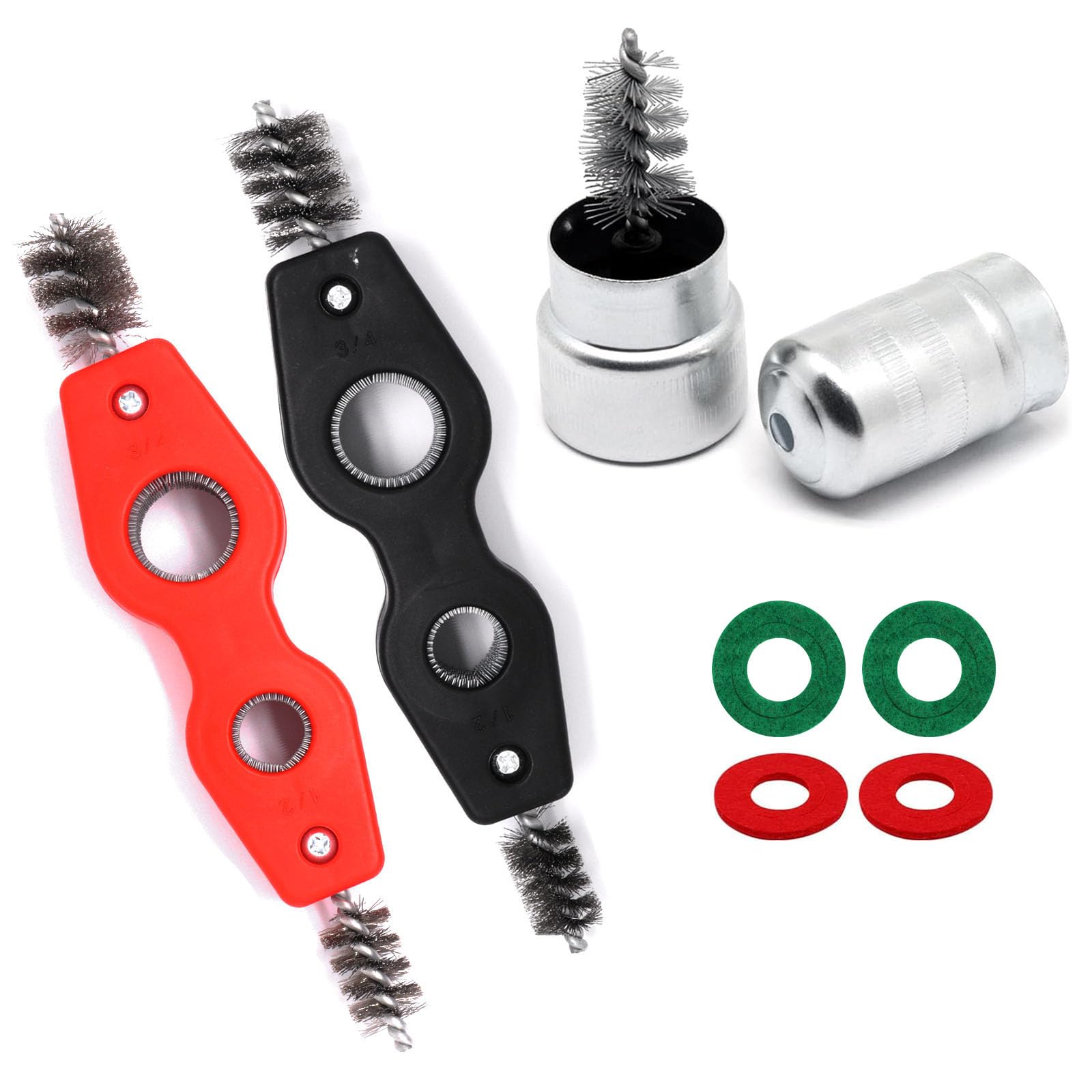
This kit delivers what most budget-oriented clean kits omit: a complete system rather than just a brush. The package includes a galvanized steel wire post brush, two double-ended copper tubing brushes, and four anti-corrosion fiber washers (two red, two green). That combination allows simultaneous cleaning of posts, cable ends, and small terminals without hunting for separate tools.
The post brush features an internal wire brush that deploys after removing the metal cap, making storage safer and bristles less prone to deformation. The stainless steel construction on the tubing brushes resists rust far longer than carbon steel alternatives. Owner feedback highlights the convenience of having everything in one box — no secondary purchases needed for a thorough job.
Where this kit earns its keep is the inclusion of the fiber washers. Placed under the terminal after cleaning, they absorb acid seepage before it reaches the metal. For routine maintenance on family vehicles, this is the most practical all-in-one solution currently available.
What works
- Complete kit with brushes, tubing cleaners, and washers
- Deployable internal brush design protects bristles
- Stainless steel brushes resist corrosion
What doesn’t
- Galvanized wire may shed over heavy use
- No chemical cleaner included for acid neutralization
2. EZ RED 505BTSSHQD Shaft Battery Terminal Cleaner

This is a specialized tool designed specifically for Group 31 batteries, which are common in marine, heavy-duty truck, and RV applications. The bent tooth steel shaft and open center accommodate threaded stud terminals, allowing the tool to fit over the stud and clean the lead surface without removing the nut. This design prevents damage to threads during cleaning.
The quick-disconnect feature integrates into the shaft, making it easy to swap between cleaning and other tasks without losing the tool. The construction is all steel with a metallic gray finish, and the weight is minimal at 0.04 kilograms, meaning it stores easily in a glove box or tool roll. Owner reports consistently note that it fits snugly over stud-type terminals without wobble.
The limitation is clear: if you do not own a Group 31 battery, this tool does not offer the versatility of adjustable or multi-size cleaners. It is a one-trick pony, but that trick is executed with precision.
What works
- Perfect stud-fit for Group 31 terminals
- Quick-disconnect shaft adds convenience
- Steel construction withstands repeated use
What doesn’t
- Only fits Group 31 batteries
- No cable clamp cleaning capability built in
3. Semlos Electric Cleaner Spray for Contact, Battery Terminal
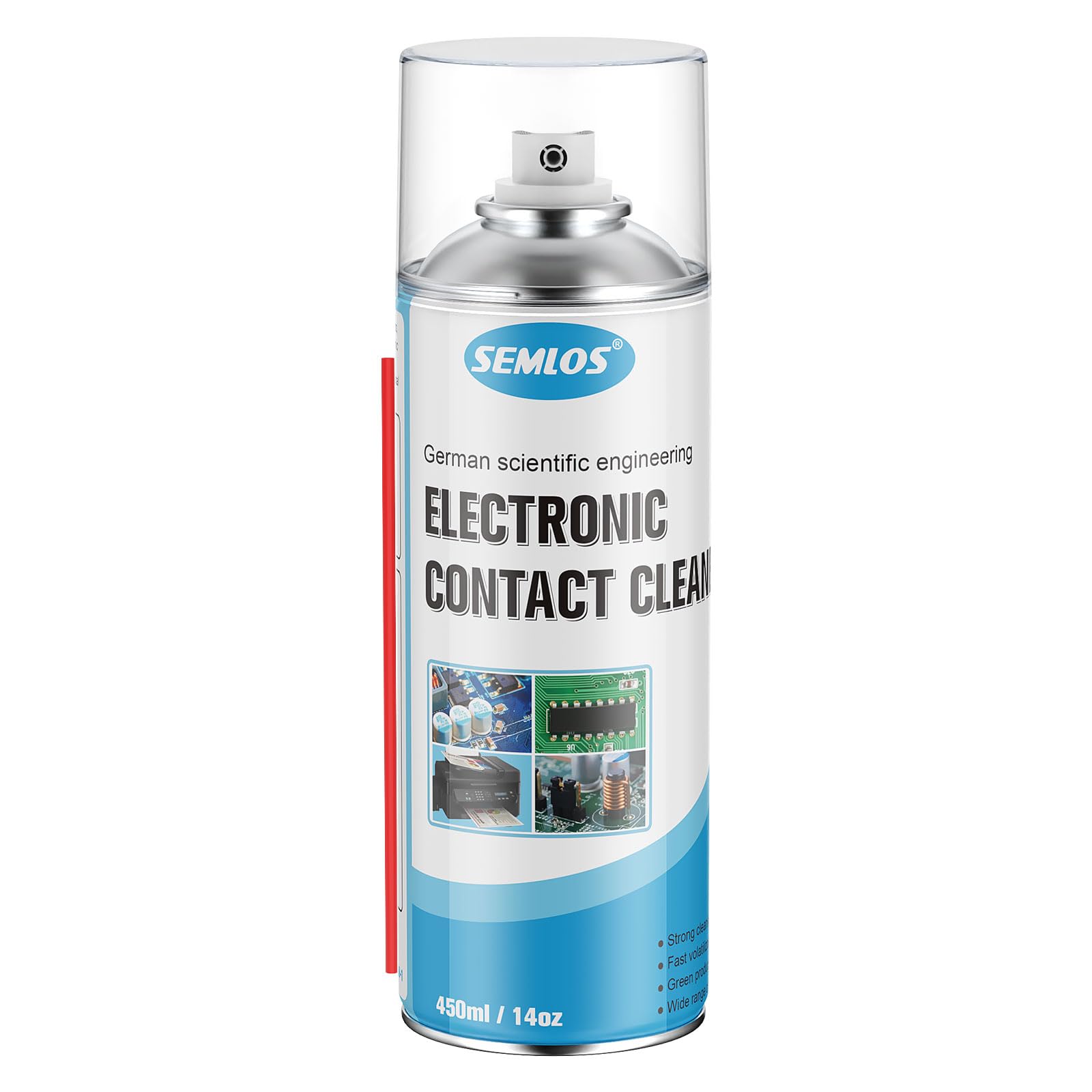
Semlos delivers a professional-grade solvent-based cleaner that targets electronics and battery terminals without leaving residue. The formula is plastic-safe, which matters when spraying near fuse boxes, battery trays, and cable insulation. Many aerosol cleaners contain aggressive solvents that embrittle plastics — Semlos specifically addresses this with a compatible formulation.
The quick-drying characteristic is the standout feature. After spraying, the solvent evaporates rapidly, allowing reassembly and use within minutes. This is critical for drivers who cannot leave a vehicle parked for hours while a cleaner dries. The integrated cap and straw provide directed application, reducing overspray on adjacent components.
Where this product falls short is its lack of an acid-neutralizing indicator. Unlike dedicated battery cleaners that change color to confirm neutralization, this is purely a solvent wash. It removes dirt and oil effectively but does not chemically neutralize residual sulfuric acid.
What works
- Residue-free formula prevents post-cleaning grime buildup
- Plastic-safe for sensitive components
- Quick-drying allows immediate use
What doesn’t
- No acid indicator or neutralizer
- Aerosol can may not be allowed in carry-on luggage
4. Performance Tool W152C Battery Terminal Cleaner
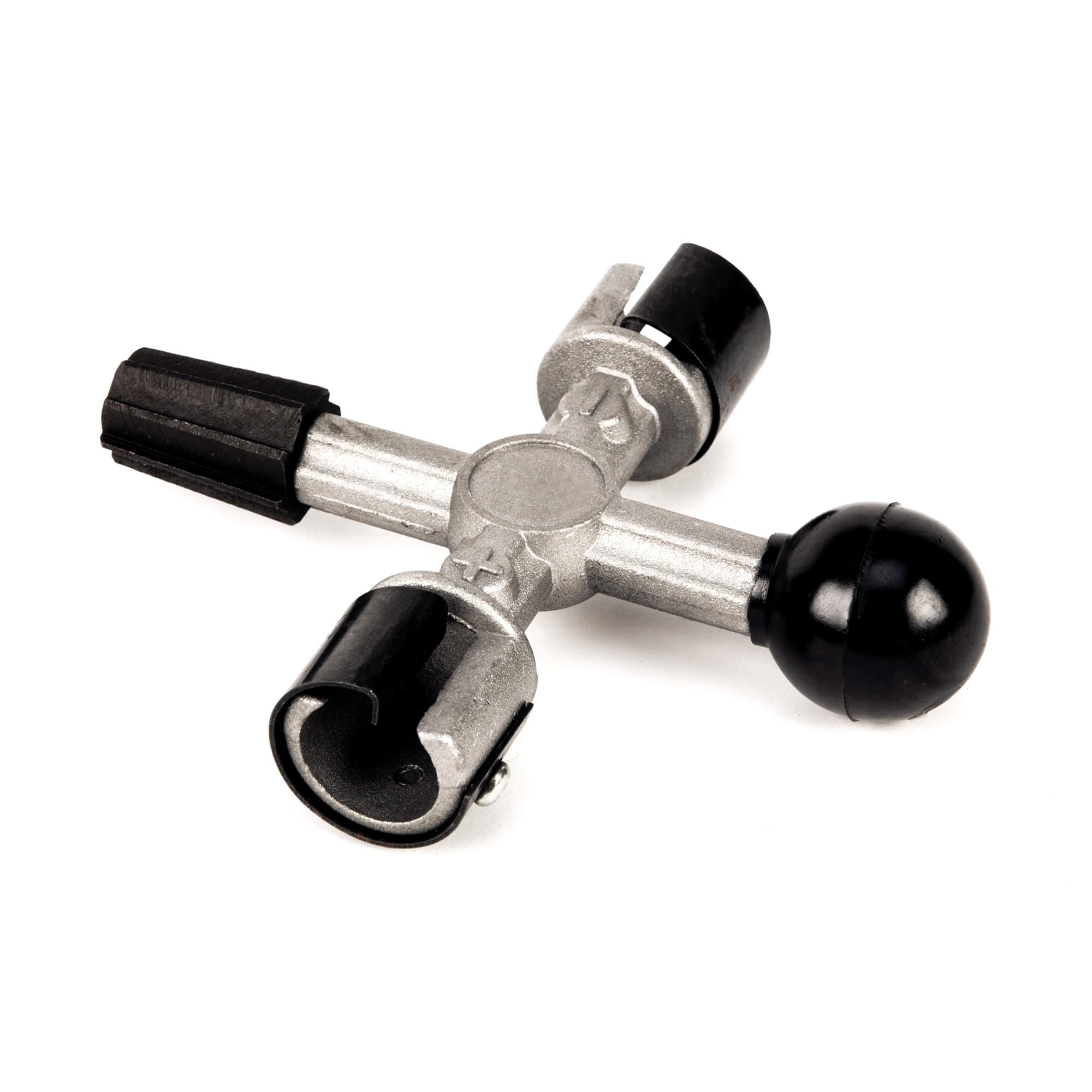
This is a 4-way cleaning head that attaches to a standard drill, converting rotational force into aggressive corrosion removal. The tool has separate cutting surfaces for battery posts and internal cable clamps, each machined to the correct taper. This prevents the common problem of over-reaming posts with hand tools, which can leave them loose in the clamp.
The machined exterior and sturdy construction have kept this model in production since 2005 — a strong indicator of durability. Owner reports from mechanics and fleet managers emphasize that the drill-powered approach reduces cleaning time by roughly 70% compared to manual brushing. The tool works on cars, trucks, boats, and RVs, making it genuinely multi-vehicle compatible.
The trade-off is that you need a drill and a steady hand. Excessive pressure or misalignment can gouge the lead post, creating a poor electrical interface. Users who prefer controlled manual cleaning may find the power tool approach too aggressive.
What works
- Drill-powered for fast, efficient cleaning
- Four cutting surfaces for posts and clamps
- Proven design with decades of production history
What doesn’t
- Requires a drill — not a standalone tool
- Risk of over-cutting if used aggressively
5. CRC 05023 Battery Cleaner with Acid Indicator

CRC is a trusted name in automotive chemicals, and the 05023 formulation includes a built-in acid indicator that changes color when it contacts battery acid. This gives immediate visual confirmation of where acid is present and whether the neutralization process is complete. For safety-conscious DIYers, this feature alone justifies the purchase.
The spray penetrates and lifts corrosion from cables, terminals, cases, and hold-downs, then rinses off with water. The 11-ounce can provides multiple applications, and the formula is designed for both automotive and marine environments. Users report that it handles heavy corrosion that manual brushing alone cannot fully remove.
Note that CRC 05023 is not VOC-compliant for California or OTC, so buyers in those regions need to check local regulations. Additionally, the product is not sold for shipment to Catalina Island. These distribution limits may complicate availability for some users.
What works
- Color-changing acid indicator confirms neutralization
- Penetrates and lifts heavy corrosion
- Rinses clean with water
What doesn’t
- Not VOC-compliant for California or OTC
- Cannot be shipped to Catalina Island
6. Lisle 55040 Fuse Puller & Terminal Cleaner

Lisle focuses on a niche that other kits ignore: cleaning corrosion from blade fuse terminals. The 55040 is a two-piece set that combines a fuse puller and a terminal cleaner, designed for both mini and ATO (standard) blade fuses. Corrosion in fuse sockets causes parasitic draw, intermittent electrical failures, and blown fuses — this tool addresses that directly.
The plastic construction is intentionally non-conductive, eliminating the risk of shorting circuits during cleaning. The puller end removes fuses without breaking the tabs, while the cleaner end abrades corrosion from the socket walls. Owner feedback highlights its value in diagnosing ghost electrical issues that other tools miss.
The limitation is scope: this is not a battery terminal cleaner in the traditional sense. It is a complementary tool for electrical system maintenance. If your primary concern is battery post corrosion, this should be an add-on rather than the main solution.
What works
- Targets overlooked fuse terminal corrosion
- Non-conductive plastic prevents shorts
- Compact size stores in any toolbox
What doesn’t
- Not a primary battery terminal cleaner
- Limited to blade-style fuses only
7. CAIG LABORATORIES DeoxIT Battery Cleaner & Protectant CL-BCP-04

CAIG Laboratories is known in the pro-audio and electronics industries for DeoxIT, a contact cleaner that also improves conductivity. The CL-BCP-04 variant is formulated specifically for batteries and power supplies, with a brush lid applicator that allows precise, controlled application. This is not a spray — it is a liquid applied directly where needed.
The product works on new and old connections, cleaning oxidation and sealing the surface to prevent future corrosion. Owner reports from marine and industrial users note that it stabilizes voltage drop across connections better than standard cleaners. The 118-gram bottle provides many applications, and the non-greasy formula does not attract dirt.
The premium positioning is justified by the chemistry, but the price per application is higher than spray-based alternatives. For a single vehicle used casually, the cost may exceed the benefit. For fleet vehicles, marine electronics, or vehicles in corrosive environments, the investment pays off in reduced connection failures.
What works
- Improves electrical conductivity beyond cleaning
- Brush lid enables precise, waste-free application
- Seals and protects against future oxidation
What doesn’t
- Higher cost per application than aerosol sprays
- Not a mechanical cleaner — requires clean surface first
8. OTC 4612 3-Way Battery Post Cleaner
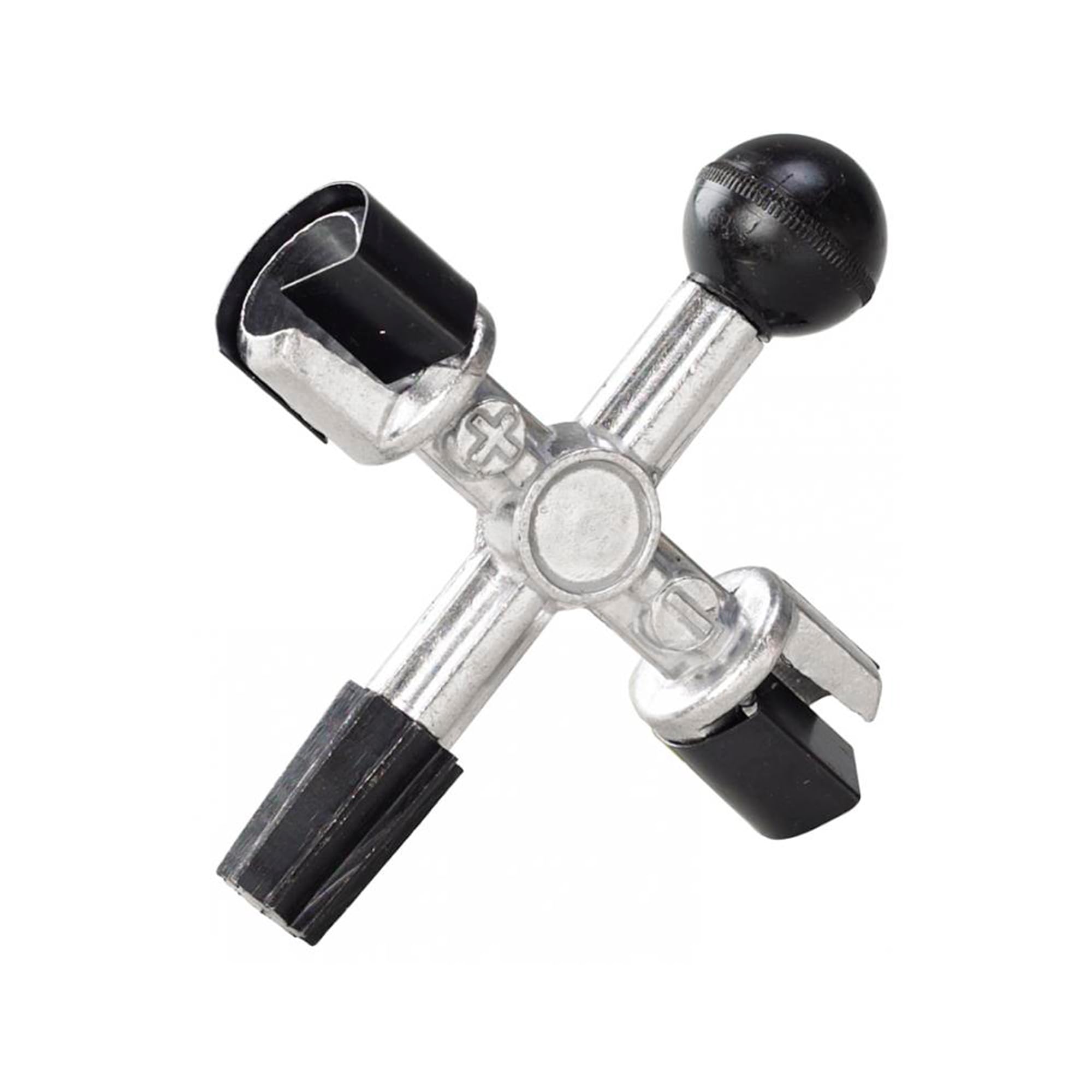
OTC is a professional tool brand, and the 4612 reflects that pedigree. This is a 3-way cleaner with steel blades that simultaneously clean top-post battery terminals and cable clamps. The cleaning heads are marked for positive and negative to ensure correct sizing, and the tapered ream is designed to clean both positive and negative cable clamps without guesswork.
The steel blade construction is significantly more aggressive than wire brushes. It cuts corrosion rather than scrubbing it, making it faster on heavily crusted posts. Owner feedback from professional mechanics indicates that the OTC 4612 handles daily shop use without blade degradation, and the limited lifetime warranty backs that durability.
The downside is the learning curve. The steel blades can gouge lead if the user applies excessive force or uses an incorrect angle. It is best suited for users who understand that cleaning a battery terminal is about removing corrosion, not removing lead.
What works
- Aggressive steel blades cut through heavy corrosion
- Marked positive/negative for correct sizing
- Limited lifetime warranty
What doesn’t
- Risk of gouging lead posts with excessive force
- Requires careful angle control
9. GEARWRENCH Battery Terminal Spreader and Cleaner 204D
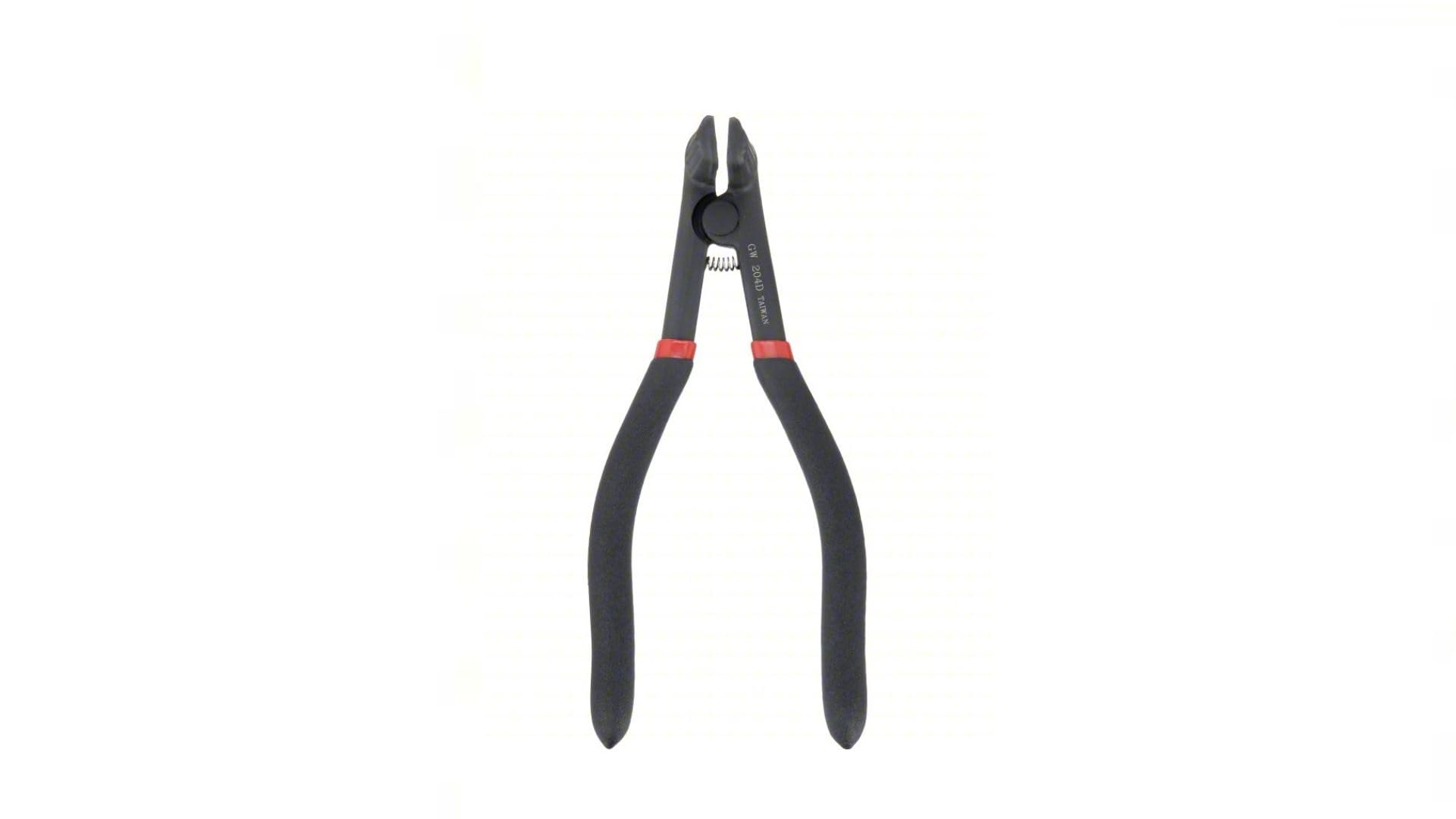
GEARWRENCH solves a problem that brush-style cleaners ignore: cable clamps that have been deformed or squeezed too tight. The 204D is a plier-type tool that spreads the terminal open while simultaneously cleaning the inner surface. This restores the clamp to its correct shape, ensuring a tight interference fit on the battery post.
The alloy steel construction with plastic handles provides enough leverage to open corroded, stubborn clamps without fatigue. The 10-inch length gives good mechanical advantage, and the ergonomic grip padding reduces hand strain during repetitive use. Owner feedback from DIY users emphasizes that the spreading function saves them from having to replace clamps that were previously considered too damaged.
The tool is specialized: it is not a post cleaner. For a complete battery service, you will still need a separate post brush or reamer. The GEARWRENCH excels as the second step in a two-step process — clean the post, then restore the clamp.
What works
- Spreads deformed clamps back to correct shape
- Alloy steel provides durable, long-lasting cutting edges
- Ergonomic handles reduce fatigue
What doesn’t
- Does not clean battery posts — separate tool needed
- Limited to clamp restoration only
10. NOCO NCP2 B603 Oil-Based Battery Terminal Protectors

NOCO is a dominant brand in battery maintenance, and the NCP2 B603 washers represent the gold standard for corrosion prevention. These are oil-based felt washers saturated with a non-drying inhibitor that blocks acid fumes from reaching the terminal. The formula has been in continuous use since 1914, which is a testament to its effectiveness.
The universal design fits both top-post and side-post batteries thanks to a removable inner ring. The 50-pack provides enough washers for years of maintenance across multiple vehicles. Owner feedback consistently reports that terminals treated with these washers remain corrosion-free for the life of the battery, even in harsh environments.
The only catch is that these are purely preventive. They do not clean existing corrosion — the terminal must already be clean before installation. Used as part of a cleaning routine (clean, then install the washer), they virtually eliminate future terminal corrosion.
What works
- Proven oil-based formula blocks acid fumes
- Fits both top-post and side-post batteries
- 50-pack provides exceptional long-term value
What doesn’t
- Does not clean existing corrosion — surface must be clean first
- Oil residue can transfer to hands during installation
11. aqxreight 10-Piece Stainless Steel Battery Terminal Cleaning Brushes
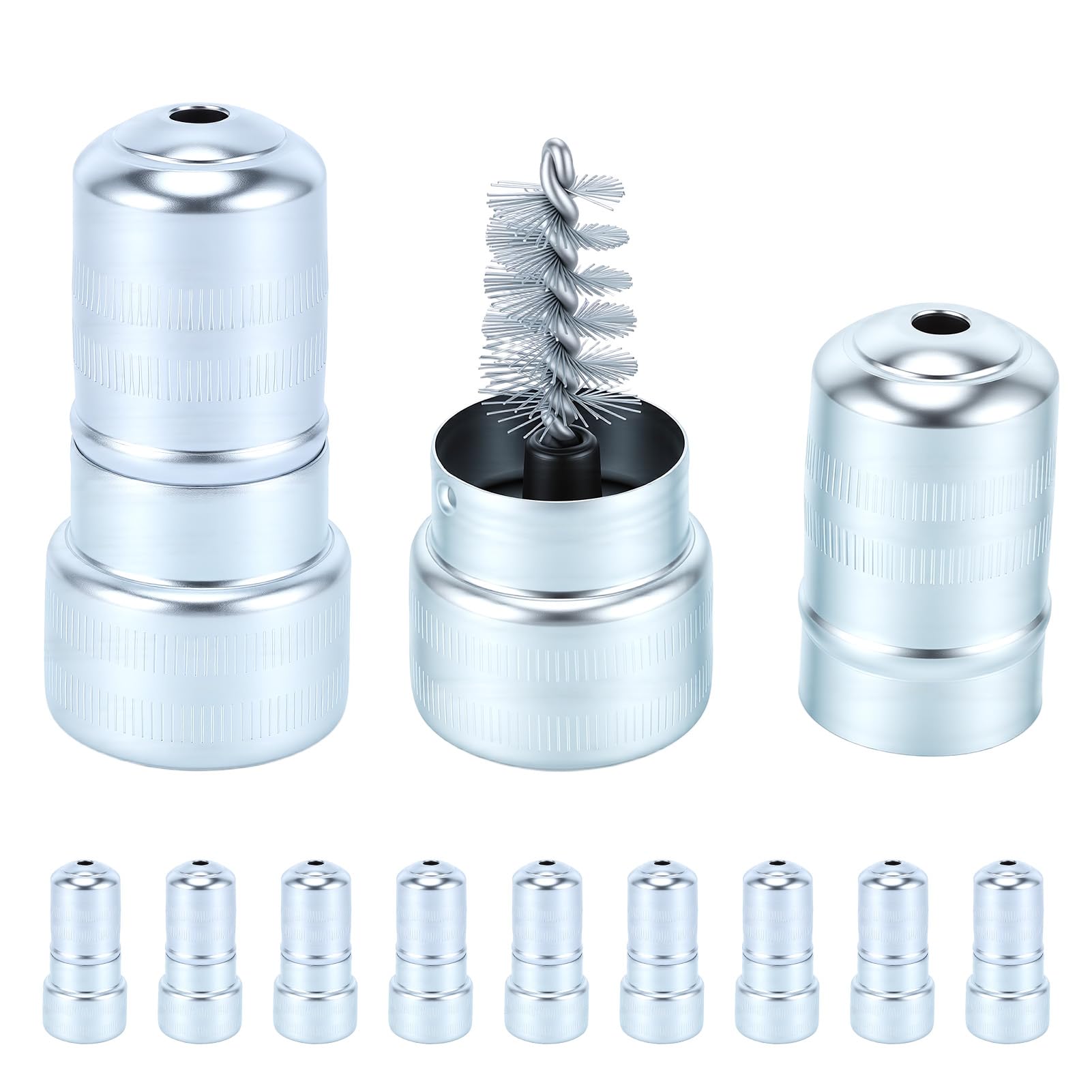
This bulk set from aqxreight provides ten individual stainless steel brushes, making it ideal for fleet owners, multi-vehicle households, or shops that want to keep a brush in every vehicle without transferring tools. Each brush features a dual-sided design with a brush end for scrubbing posts and a scraping edge for stubborn deposits.
The stainless steel bristles resist rust and maintain stiffness far longer than galvanized wire. The ergonomic non-slip handle provides control even with greasy hands, and the compact size stores easily in glove boxes or center consoles. Owner reports highlight the value of having multiple brushes available at all times, eliminating the need to clean a single brush between uses.
The trade-off is that these are general-purpose brushes rather than precision tools. They do not have the tapered fit of dedicated post reamers, so achieving a perfect match on every terminal requires more manual effort. For routine maintenance on standard top-post batteries, they work well — for heavily corroded or odd-sized terminals, a dedicated tool performs better.
What works
- 10-pack provides brushes for every vehicle or tool box
- Stainless steel bristles resist rust and fatigue
- Dual-sided design with brush and scraper
What doesn’t
- General-purpose fit, not precision-tapered
- Scraping edge less effective on very hard crust
Hardware & Specs Guide
Brush Materials
Galvanized steel wire is the most common brush material due to low cost, but it can shed bristles over time and rust if stored wet. Stainless steel brushes cost more but resist corrosion indefinitely and maintain bristle density through repeated use. For heavy-duty or marine applications, stainless steel is the only logical choice. Carbon steel brushes should be avoided — they rust quickly and can transfer contamination to terminals.
Chemical Formulations
Battery cleaners fall into two categories: solvent-based degreasers and acid-neutralizing formulas. Solvent cleaners remove oil, dirt, and light oxidation but do not neutralize sulfuric acid. Acid-neutralizing sprays contain alkaline compounds that chemically react with acid to form harmless salts, with color-changing indicators showing when the reaction is complete. For batteries with visible corrosion, an acid-neutralizing cleaner is mandatory for safe, thorough service.
Felt Washers and Corrosion Preventives
Anti-corrosion washers are made from oil-saturated felt that absorbs acid fumes before they reach the terminal metal. The best washers use a non-drying oil base that remains active for the life of the battery. Dry felt washers provide minimal protection — saturation is the key feature. NOCO’s oil-based formula is the industry benchmark, remaining effective indefinitely when covered by the terminal clamp.
Terminal Reamers and Spreaders
Wire brushes clean the surface, but they cannot restore deformed clamps or ream posts to the correct taper. Dedicated reamers use rotating blades to cut a precise taper on battery posts, ensuring maximum contact area. Terminal spreaders apply mechanical force to open clamps that have been overtightened, restoring their fit without replacement. These tools are essential for restoring a tight, low-resistance connection that brushes alone cannot achieve.
FAQ
How often should I clean my car battery terminals?
Can I use baking soda and water instead of a dedicated cleaner?
Do anti-corrosion washers really work?
Should I disconnect the battery before cleaning?
What is the difference between a terminal cleaner and a post reamer?
Final Thoughts: The Verdict
For most buyers, the best car battery cleaning kit winner is the BUXIMN Battery Terminal Cleaner Kit because it combines mechanical brushes with anti-corrosion washers in a single purchase that covers the full cleaning cycle. If you want chemical assurance with a visual acid indicator, grab the CRC 05023 Battery Cleaner. And for long-term prevention on multiple vehicles, nothing beats the NOCO NCP2 B603 Oil-Based Washers.

Certification: BSc in Mechanical Engineering
Education: Mechanical engineer
Lives In: 539 W Commerce St, Dallas, TX 75208, USA
Md Amir is an auto mechanic student and writer with over half a decade of experience in the automotive field. He has worked with top automotive brands such as Lexus, Quantum, and also owns two automotive blogs autocarneed.com and taxiwiz.com.