Selecting the right exhaust pipe diameter is one of the most debated decisions in any build. A 2 1/4-inch bore hits the sweet spot between scavenging efficiency and backpressure for a broad range of naturally aspirated engines, from small-block V8s to high-compression inline-sixes. But the market is flooded with options that look identical on screen yet differ wildly in wall thickness, alloy composition, and weld integrity.
I’m Amir — the founder and writer behind Four Wheel Ask. My work focuses on exhaust system geometry, material metallurgy, and long-term durability data drawn from thousands of verified owner experiences.
By studying material thickness, weld quality, and real owner feedback, I’ve narrowed down the absolute best choices for any serious best 2 1/4 inch exhaust pipe investment.
How To Choose The Best 2 1/4 Inch Exhaust Pipe
Picking the right pipe starts with understanding three core variables: material composition, wall thickness, and bend quality. Each directly impacts installation ease, sound profile, and how many miles you get before corrosion shows up. Here is what separates a part that fits first try from one that fights you the whole way.
Material Metallurgy
Stainless steel offers the best corrosion resistance and a clean appearance that lasts, but it requires careful welding technique to avoid burn-through on thinner walls. Aluminized steel resists surface rust better than bare mild steel and costs less than stainless, making it a solid middle-ground for daily drivers in dry climates. Mild steel is the easiest to weld and bend but will develop surface rust quickly unless coated with high-temp paint or ceramic finish. Each owner report I reviewed confirms that aluminized tubing holds up well for several seasons when not exposed to heavy road salt.
Wall Gauge and Structural Integrity
Gauge refers to the thickness of the pipe wall — lower numbers mean thicker steel. A 16-gauge wall (roughly 0.065-inch) provides good rigidity without adding excessive weight, and it welds cleanly with MIG or TIG setups. Thinner 18-gauge pipe weighs less but is more prone to denting during installation and can warp under high heat over time. Multiple owner accounts note that 16-gauge tubing maintains its shape better under clamp pressure and resists cracking at weld joints, especially on vehicles with solid engine mounts that transmit more vibration.
Mandrel Bending vs Press Bending
Mandrel-bent pipe maintains a consistent inside diameter through the entire curve, preserving exhaust flow and preventing turbulence. Press-bent or crush-bent pipe pinches at the bend, reducing cross-sectional area and creating a restriction. Every kit reviewed here uses mandrel bends, which is the minimum standard for any performance-oriented build. The smoother the interior radius, the less backpressure you introduce, and the more accurate your tuning will be across the RPM range.
Installation Method
Slip-fit pipes have expanded ends that allow sections to telescope together before welding, which simplifies alignment during mock-up. Weld-on-only pipes require careful measuring and tacking before final welding. Some universal kits include both straight and pre-bent sections that can be arranged to match factory routing or custom layouts. Owners consistently recommend mocking up the entire system with clamps before committing to welds, especially on vehicles with tight clearances around the transmission crossmember or rear axle.
Quick Comparison
On smaller screens, swipe sideways to see the full table.
| Model | Category | Best For | Key Spec | Amazon |
|---|---|---|---|---|
| YOLANDO 16pc Kit | Premium Kit | Complete custom exhaust builds | 16pc, 16-ga mild steel, slip-fit ends | Amazon |
| VEVOR 8pc Kit | Value Kit | Budget full-system replacement | 8pc, galvanized mild steel, 2.25″ OD | Amazon |
| LCGP 48″ Straight | Stainless | Long stainless sections | 48″ x 2.25″, stainless steel, slip-fit | Amazon |
| JEGS 4-ft Aluminized | Aluminized | Rust-resistant straight sections | 48″ x 2.25″, 16-ga aluminized steel | Amazon |
| A-KARCK 30″ Straight | Compact | Short replacement sections | 30″ x 2.25″ OD, stainless steel | Amazon |
| TECTRUC X Pipe | Crossover | Dual exhaust crossover section | 12″ x 2.25″, stainless steel | Amazon |
| TECTRUC Y Pipe | Splitter | Single-to-dual exhaust conversion | 10″ x 2.25″, stainless steel | Amazon |
In-Depth Reviews
1. YOLANDO 16pc Custom Exhaust Kit

The YOLANDO kit delivers sixteen pieces of 16-gauge mild steel tubing with computerized mandrel bends, making it the most complete all-in-one solution for a ground-up exhaust build. Each of the four 48-inch straight sections, four 90-degree pipes, four 45-degree pipes, and four 180-degree U-bends has one expanded end for slip-fit alignment before welding. Owner reports highlight that the steel arrives coated with anti-rust oil, though several note that surface rust appears quickly after installation unless a high-temp paint or ceramic coating is applied.
Welding behavior is consistently praised in customer feedback — the 16-gauge wall handles MIG and TIG heat well without excessive burn-through, even for less experienced fabricators. Multiple builders used this kit to create true dual exhaust systems on long-bed C10 trucks and LS-swapped project cars, often having enough leftover material to fabricate an H-pipe cross-over. The mandrel bends maintain full inner diameter through every curve, which translates to predictable flow dynamics when tuning.
For anyone building a complete exhaust system from scratch, this kit offers the best balance of piece count, material quality, and ease of fabrication. The main trade-off is the mild steel composition — it needs protective coating to stay clean, but the weldability and structural integrity justify the extra step. Budget-conscious builders who want a full system in one box will find this hard to beat.
What works
- Sixteen-piece set covers almost any routing configuration
- Mandrel bends preserve full 2.25-inch inner diameter
- Slip-fit ends simplify mock-up and alignment
What doesn’t
- Mild steel rusts quickly without coating
- Only four straight sections may require additional pipe for long wheelbases
2. VEVOR 8pc Exhaust Pipe Kit
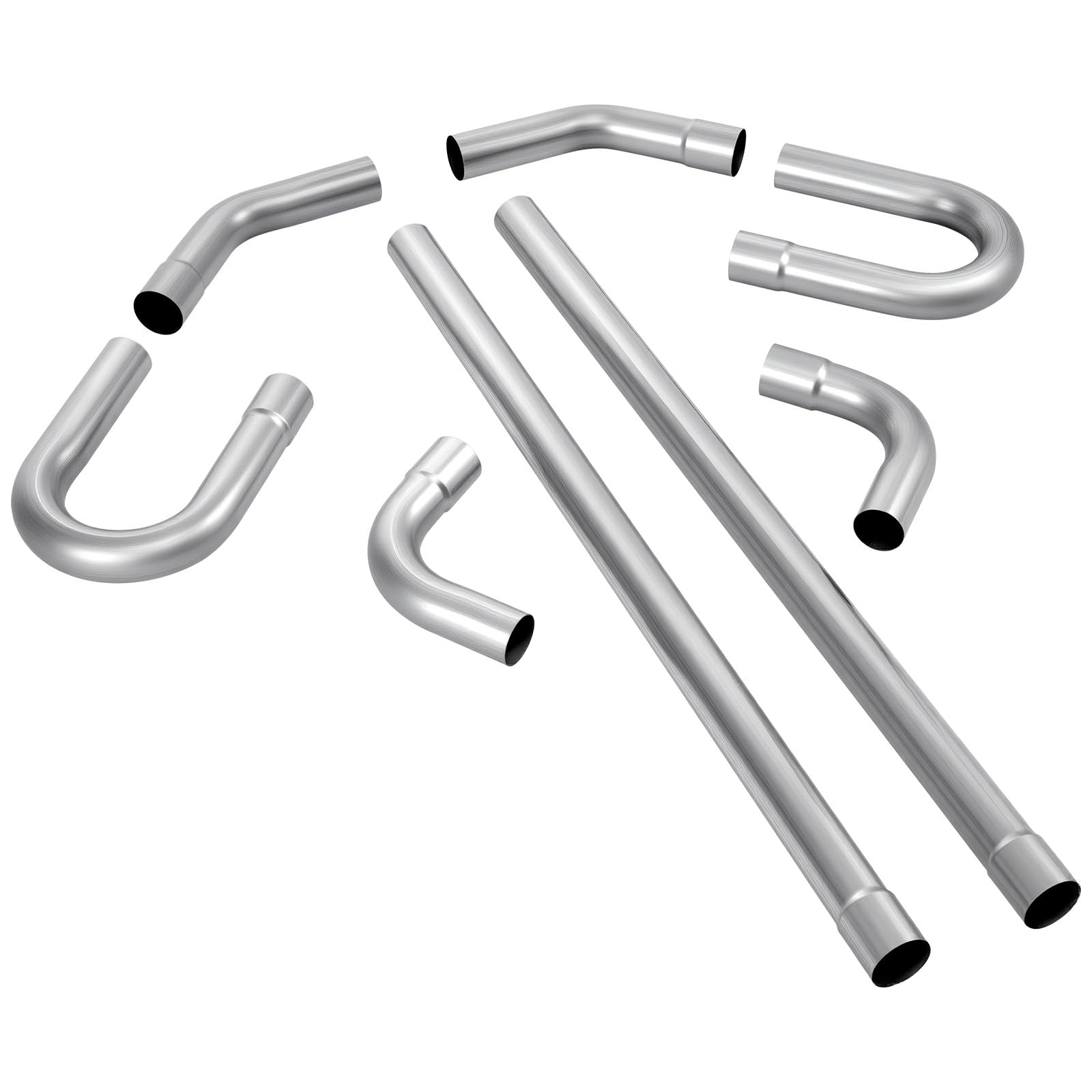
The VEVOR kit provides eight pieces in a thoughtful mix of two straight pipes, two U-bends, two 90-degree sections, and two 135-degree sections, all constructed from galvanized low-carbon steel. The galvanized coating adds a layer of corrosion resistance that outperforms bare mild steel, and the 2.25-inch outer diameter aligns with universal exhaust systems across trucks, sedans, and SUVs. Owner feedback consistently notes the tubing is thick enough to withstand welding heat without warping, and the sliding connectors help achieve a secure fit before final welding.
Multiple buyers used this kit to fabricate custom exhausts for C10 LS swaps and hotrod projects, commenting that none of the bends arrived dented or deformed despite the affordable price point. The packaging from VEVOR drew specific praise for protecting the pipes during transit. Some owners recommend applying grill paint or a high-temp ceramic coating to extend the life of the galvanized finish, especially in regions with road salt or high humidity.
Where the VEVOR kit truly excels is providing enough variety in bend angles to handle most under-vehicle layouts without needing extra pieces. Two straight sections are limiting for longer builds, but the inclusion of 135-degree bends gives routing flexibility that many other budget kits lack. For the builder who needs a complete set of mandrel-bent sections at a reasonable investment, this is a strong contender.
What works
- Galvanized coating offers better rust resistance than bare steel
- Includes 135-degree bends for tighter routing scenarios
- Well-packaged with no damage reported on arrival
What doesn’t
- Only two straight pipes may not be enough for long systems
- Band clamps not included despite owner requests
3. LCGP 48″ Stainless Straight Exhaust Pipe

The LCGP 48-inch straight section is a full stainless steel pipe designed for builders who want long, continuous runs without splices. The 2.25-inch inlet and outlet maintain a consistent inner diameter, and the stainless construction provides superior corrosion resistance compared to aluminized or mild steel alternatives. Owner reports describe the metal as easy to cut with a standard cutoff wheel and weldable with both MIG and TIG setups, noting the wall thickness feels substantial without being overly heavy.
Several buyers used this pipe for non-automotive applications — one fabricated a stove pipe for a stainless hot tub stove, and another used it as a flue pipe for a gas unit heater — which speaks to the material quality and lack of manufacturing defects. The expanded end is designed for slip-fit connections, though some owners mentioned the flare was not fully formed on their unit and required gentle persuasion with a mallet to achieve a snug fit before welding.
For anyone needing a long, uninterrupted stainless section, this pipe delivers reliable material quality at a sensible price. The 48-inch length covers most mid-system spans without coupling, reducing potential leak points. The fitment inconsistency on the flared end is worth noting, but once welded, the pipe holds securely and shows no signs of cracking or distortion under normal operating temperatures.
What works
- Full stainless steel offers long-term corrosion protection
- 48-inch length reduces need for splices and joints
- Cuts and welds cleanly with standard shop tools
What doesn’t
- Flared end may be under-sized on some units
- Limited to straight sections only — no pre-bent options
4. JEGS 4-ft Aluminized Exhaust Tubing
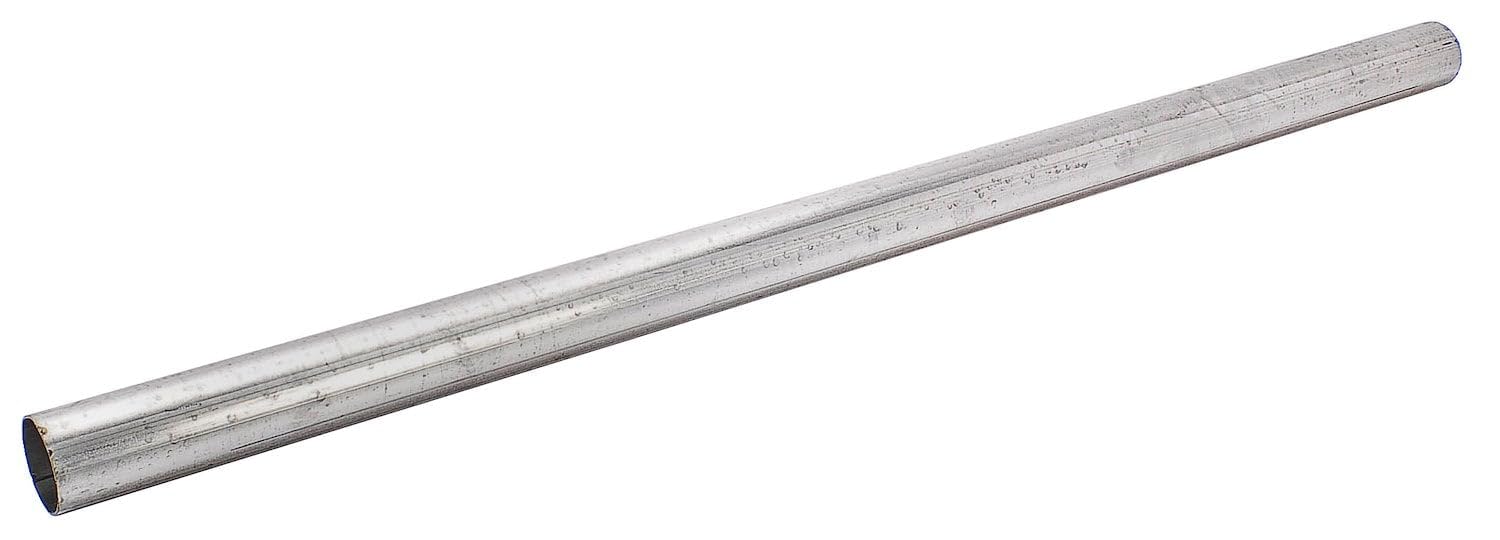
JEGS brings its well-known aftermarket reputation to this 4-foot section of 16-gauge aluminized steel tubing. The aluminized coating provides a meaningful upgrade over bare steel in terms of surface corrosion resistance, while keeping the cost significantly below stainless alternatives. Seam-welded construction helps maintain consistent outer and inner diameter along the entire length, which matters when you are trying to achieve a clean slip-fit or a uniform weld bead around the joint.
Owner feedback describes the pipe as welding nicely with MIG equipment, though a few users noted it was slightly easier to melt through compared to other pipes in the same gauge range — an indication that the aluminized coating can affect heat transfer during welding. The 48-inch length fits most mid-chassis straight runs, and the 2.25-inch outer diameter matches common universal clamps and hangers. Several owners successfully used this for replacement sections on trucks and SUVs where rust had compromised the original pipe.
For those who want better corrosion protection than mild steel without stepping up to full stainless, this JEGS tubing hits a reliable middle ground. The aluminized layer holds up well in dry climates and moderate conditions, though aggressive road salt environments will eventually challenge it. It is a straight section only with no pre-formed bends, so plan your routing accordingly.
What works
- Aluminized finish resists surface rust better than bare steel
- Seam-welded construction maintains consistent diameter
- Good value for a trusted aftermarket brand
What doesn’t
- Coating can make welding slightly more prone to burn-through
- Only available as a straight section with no pre-bent options
5. A-KARCK 30″ Straight Exhaust Pipe
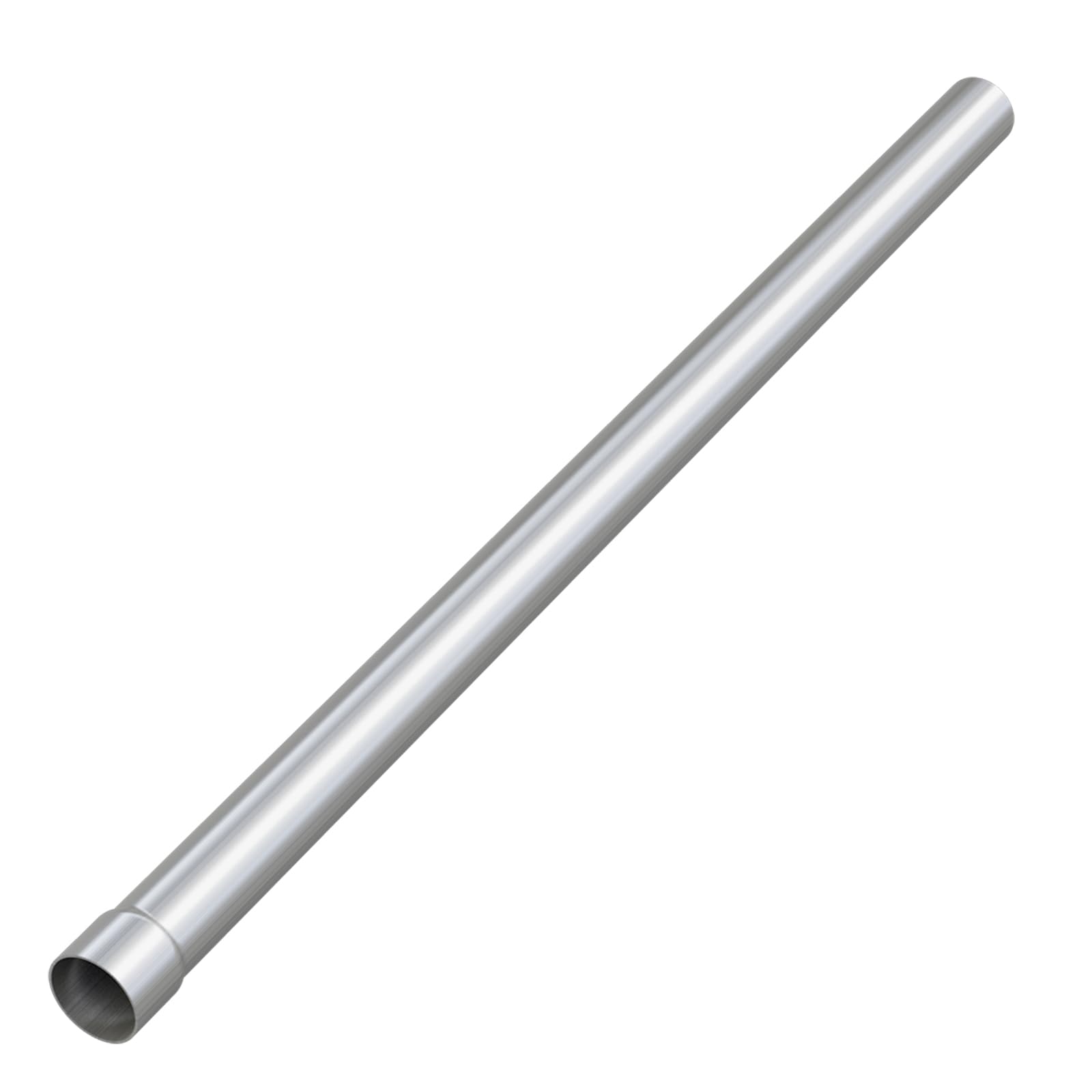
The A-KARCK 30-inch straight section is a compact stainless steel pipe designed for shorter replacement runs or custom fabrication where full 48-inch lengths are excessive. The 2.25-inch outer diameter is paired with flared ends on both sides to simplify slip-fit alignment before welding, and the mandrel construction ensures the inner diameter stays consistent through the entire tube. Owner reports consistently praise the material quality, describing it as a genuinely stainless piece with a clean, polished appearance that resists corrosion well.
Multiple buyers used this pipe for non-exhaust applications — one fabricated a Starlink antenna mount and another used it as a flue pipe — which underscores the dimensional accuracy and structural integrity of the tubing. Some units arrived with minor dents at the ends due to insufficient packaging padding, though the majority of shipments were in good condition. The 30-inch length is long enough to cover most axle-over-frame sections and short enough to fit in tight workspace areas during fabrication.
For anyone needing a shorter stainless section that still offers the same corrosion resistance as longer options, this pipe is a practical choice. The flared ends make alignment straightforward, and the stainless composition means it will outlast the surrounding system in most climates. Just inspect the ends on arrival and be prepared to return if shipping damage occurs.
What works
- Compact 30-inch length fits tight spaces and short runs
- Genuine stainless steel with good corrosion resistance
- Flared ends simplify slip-fit alignment
What doesn’t
- Some units arrived with minor dents from insufficient padding
- Not long enough for full chassis-length straight sections
6. TECTRUC X Pipe 2.25″ Crossover

The TECTRUC X Pipe is a 12-inch-long crossover section with 2.25-inch dual inlets and outlets, designed to balance exhaust pulses in dual systems for smoother power delivery and a cleaner sound. Constructed from polished stainless steel, it offers strong corrosion resistance and a bright finish that holds up well underhood. Owner reports indicate that it fits 2.25-inch exhaust tubing accurately and makes a noticeable difference in low-end and mid-range torque, particularly on V8 applications like the 5.7 Hemi Challenger and Durango.
Several buyers used this X pipe to eliminate the raspy drone that occurs after a muffler or resonator delete, describing the result as an Italian-style engine tone that is slightly quieter but smoother under throttle. The 12-inch overall length is compact enough to fit in tight transmission tunnels and under-floor sections, and the 6.5-inch overall width accommodates standard dual-exit layouts. A few owners noted that the 3-inch OD slip-fit was on the loose side, but clamping and welding resolved the issue without further problems.
For dual-exhaust builders looking to add a crossover without spending a significant amount, this TECTRUC X pipe offers a cost-effective way to improve exhaust scavenging and sound quality. The stainless construction ensures it will not rust out before the rest of the system, and the polished finish adds a clean visual touch. Confirm your inlet and outlet alignment before welding, as the universal fit requires proper positioning.
What works
- Polished stainless steel resists corrosion and looks clean
- Improves exhaust sound and torque on V8 applications
- Compact 12-inch length fits tight under-vehicle spaces
What doesn’t
- Slip-fit can be slightly loose on some 3-inch systems
- Only 12 inches long — may need extension pipes for some layouts
7. TECTRUC Y Pipe 2.25″ Single-to-Dual Adapter

The TECTRUC Y Pipe converts a single 2.25-inch exhaust outlet into dual 2.25-inch outlets, making it the go-to component for trucks and cars transitioning from a single-exit to a true dual setup. The 10-inch overall length keeps the split compact, and the polished stainless steel construction provides the same corrosion resistance and clean appearance as the brand’s X pipe. Customer feedback confirms that the Y pipe is a direct-fit replacement on numerous applications, including 5.7 Hemi vehicles where owners want to split the exhaust after the catalytic converter or muffler.
Reviews highlight that the Y pipe is easy to weld, with the stainless material accepting beads without excessive spatter or warping. Several owners used it in conjunction with the TECTRUC X pipe to create a complete dual system with a crossover, reporting improved throttle response and a deeper exhaust note. The 2.25-inch inner diameter matches standard tubing sizes, and the weld-on design allows for precise positioning before permanent attachment.
For anyone converting a single-exhaust vehicle to duals, this Y pipe provides a solid stainless foundation at a very accessible investment. The universal fit means you will need to measure and cut your existing pipe to integrate it properly, but the dimensional accuracy reported by owners makes the process straightforward. Pair it with straight sections and a crossover for a complete custom exhaust.
What works
- Polished stainless offers long-lasting corrosion protection
- Compact 10-inch design fits tight spaces near the transmission
- Works well alongside X-pipe for a full dual system
What doesn’t
- Weld-on only — no slip-fit option for mock-up
- Universal fit requires precise measurement before cutting
Hardware & Specs Guide
Wall Gauge Explained
Exhaust pipe wall thickness is measured in gauge — a lower number indicates thicker material. Most aftermarket pipes are available in 16-gauge (0.065 inch) or 18-gauge (0.049 inch). The 16-gauge option is the preferred choice for street and performance builds because it offers better resistance to vibration fatigue, denting during installation, and heat distortion. Owners who weld their own systems consistently report fewer burn-through issues with 16-gauge pipe, especially when using MIG equipment with standard settings.
Aluminized vs Stainless Steel
Aluminized steel uses a hot-dipped aluminum-silicon coating that protects against surface rust at a lower cost than stainless. It welds similarly to mild steel but can produce fumes from the coating that require adequate ventilation. Stainless steel (typically 304 or 409 grade) provides superior corrosion resistance but requires higher welding amperage and slower travel speeds to avoid sugaring on the backside of the weld. For daily drivers in dry climates, aluminized offers a practical balance. For show cars, off-road rigs, or salt-belt vehicles, stainless is the clear winner.
Mandrel Bending Integrity
Mandrel bending uses an internal support to prevent the pipe from collapsing during the bend, preserving the full cross-sectional area through the curve. This is critical for maintaining exhaust velocity and preventing turbulence that reduces scavenging efficiency. All kits and pipes reviewed in this guide use mandrel bends. When inspecting a pipe, look for smooth inner surfaces without wrinkling or flat spots — indicators of a proper mandrel process.
Slip-Fit vs Weld-On Connections
Slip-fit pipes feature an expanded bell end that allows the next section to telescope inside, enabling hands-free alignment for tack welding. This simplifies layout and reduces the need for extra clamps during assembly. Weld-on pipes have no expanded end and require precise butting and tacking, which demands more skill but results in a cleaner final joint. Many builders prefer slip-fit for initial layout and then cut off the expanded ends for a fully welded seam once the system is dialed in.
FAQ
What is the difference between 2.25-inch and 2.5-inch exhaust pipe?
Can I weld 16-gauge pipe with a standard 110-volt MIG welder?
How do I prevent rust on mild steel exhaust pipe?
What tools do I need to cut and fit 2.25-inch exhaust pipe?
Final Thoughts: The Verdict
For most buyers, the best 2 1/4 inch exhaust pipe winner is the YOLANDO 16pc Kit because it provides the most complete set of mandrel-bent sections in 16-gauge steel, giving you the material to fabricate almost any routing configuration. If you want a compact crossover to improve dual-exhaust sound and torque, grab the TECTRUC X Pipe. And for a single-to-dual conversion on a budget, nothing beats the straightforward utility of the TECTRUC Y Pipe.

Certification: BSc in Mechanical Engineering
Education: Mechanical engineer
Lives In: 539 W Commerce St, Dallas, TX 75208, USA
Md Amir is an auto mechanic student and writer with over half a decade of experience in the automotive field. He has worked with top automotive brands such as Lexus, Quantum, and also owns two automotive blogs autocarneed.com and taxiwiz.com.