A clear coat marred by chalky mineral deposits is the kind of frustration that turns a weekend wash into a losing battle. Hard water spots aren’t just an eyesore; the calcium and silica left behind after a sprinkler or rain shower can etch into the paint if left untreated, requiring compounding to fix. A dedicated remover chemically breaks down these deposits without the aggressive abrasion of a polish.
I’m Amir — the founder and writer behind Four Wheel Ask. I’ve spent years analyzing chemical formulations, owner-reported results, and real-world durability data across the automotive detailing category to separate the formulas that actually dissolve minerals from those that just smear them around.
After evaluating nearly a dozen contenders by their active chemistry, application ease, and verified owner feedback, this guide focuses entirely on the best automotive water spot remover for different levels of etching, surface types, and user skill.
How To Choose The Best Automotive Water Spot Remover
Not all water spot removers are created equal. A spray that wipes away fresh sprinkler residue can be useless against etched mineral rings that have baked into the clear coat for weeks. Understanding the chemistry and application method is the difference between a restored finish and a wasted afternoon.
Active Chemistry: Acid or Chelating Agent?
The most effective removers use a mild acid — often a blend of citric, phosphoric, or sulfamic acid — to dissolve calcium carbonate and silica deposits. Chelating agents trap metal ions found in hard tap water, preventing them from re-depositing. A formula that lists both an acid and a chelator offers the broadest protection against varied water chemistries.
Viscosity and Dwell Time
A thin spray runs off vertical panels, reducing contact time and requiring more product and elbow grease. Thick gels clinging to doors and quarter panels give the acids more dwell time to break down stubborn scale. Creams offer a physical abrasive suspension for heavy etching, but may require more care on soft clear coats.
Surface Compatibility and Post-Treatment
Some acid-based removers strip wax and ceramic coatings completely, leaving the paint unprotected. If your vehicle has a ceramic coating, look for a pH-neutral or coating-safe formula. Regardless of the remover chosen, always plan to reapply a wax or sealant afterward to prevent immediate re-etching from the next rain event.
Quick Comparison
On smaller screens, swipe sideways to see the full table.
| Model | Category | Best For | Key Spec | Amazon |
|---|---|---|---|---|
| Chemical Guys Heavy Duty Water Spot Remover Gel | Gel | Heavy etching on paint and glass | Thick gel clings to vertical panels | Amazon |
| PROJE’ Water Spot Remover | Spray | Ceramic-coated vehicles | Mild acid safe on clear coats | Amazon |
| DUCKY PRODUCTS Original Water Spot Remover | Spray | Boat, RV, and matte finishes | No wax, biodegradable formula | Amazon |
| Margrey Water Spot Remover Cream | Cream | Glass and chrome restoration | 300 mL cream with mild abrasives | Amazon |
| Gtechniq W9 Water Spot Remover | Spray | Fresh light spotting on ceramic coats | 250 ml, chelates metal ions | Amazon |
In‑Depth Reviews
1. Chemical Guys Heavy Duty Water Spot Remover Gel
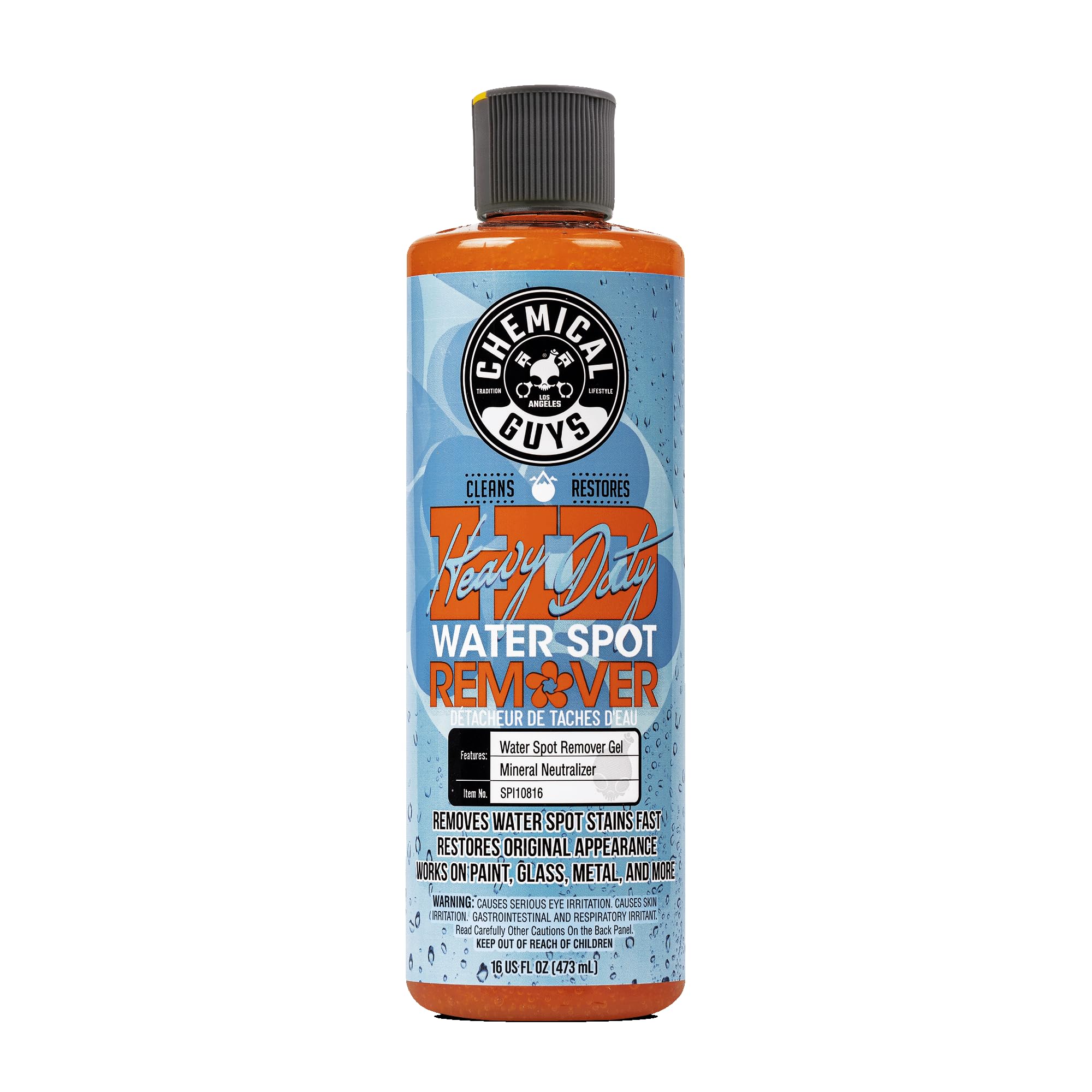
The thick, clingy gel is the standout feature here. Unlike thin sprays that drip off a vertical door panel, this formula stays put, giving the active acids a full dwell window to attack stubborn calcium rings that have etched into clear coat or glass. Owners report it clearing stains in seconds that other products couldn’t touch after multiple passes.
Trusted by detailers since 2016, this gel is built for the worst cases — years of sprinkler exposure on a daily driver, not just a light rain spot. Users caution that it strips wax and ceramic sealants completely, so plan on a full decontamination followed by fresh protection. The trade-off is undeniable chemical aggression where it’s needed.
On shower glass and chrome trim, reviewers saw similarly fast results, making this a dual-purpose household and automotive solution. If your water spots are etched deep enough to catch a fingernail, this is the first product to reach for before considering a machine polish.
What works
- Thick gel clings to vertical surfaces without running
- Dissolves heavy etched stains in seconds
- Effective on paint, glass, chrome, and metal trim
What doesn’t
- Strips wax and ceramic coatings completely
- Requires thorough rinsing to avoid residue on dark paint
2. PROJE’ Water Spot Remover

This spray formula uses a mild acid system specifically designed to penetrate and neutralize alkaline water stains without damaging ceramic coatings or clear coats. It arrives as a pH-balanced solution that breaks down the chalky white residue left by hard water without the aggressive stripping seen in heavy-duty gels.
On a black ceramic-coated hood that had been baking in sprinkler spots for weeks, owners report visible results in a single wipe. The product leaves the surface streak-free and ready for immediate re-coating. However, reviewers note that if you don’t reapply wax or sealant afterward, the paint will lose its hydrophobic beading — the remover does strip the top layer of protection.
Manufactured in California by a brand with 25 years of car care history, the 16-ounce bottle covers several full car treatments. It also works on home glass and stainless steel, making it a versatile pick for garage and household use alike.
What works
- Safe for ceramic-coated vehicles and clear coats
- Fast penetration of chalky alkaline deposits
- Leaves a clean, streak-free finish
What doesn’t
- Strips any existing wax or sealant
- Not suitable for anodized parts
3. DUCKY PRODUCTS Original Water Spot Remover

Developed in 1989, this spray has the longest track record in the category. The non-toxic, biodegradable formula avoids wax and gloss enhancers, making it the recommended choice for matte, flat, and denim finishes where shine additives can ruin the sheen. It sprays on thin and requires a wipe to dissolve mineral deposits.
On boat transoms and chrome exhaust tips, owners report it removes exhaust soot and water spots in one pass. The 32-ounce bottle is the largest in this roundup, offering good value for frequent users. Reviews are split, however, on heavy buildup — constant sprinkler exposure that has etched deep into glass may need multiple applications.
It excels at light, recent spotting and general maintenance. For tree sap and bird droppings, it works as a gentle all-purpose cleaner. If you need a formula that won’t alter the appearance of matte vinyl wraps or flat paint, this is the most straightforward option on the market.
What works
- Safe for matte and flat finishes
- Non-toxic and biodegradable formula
- Large 32-ounce bottle with proven track record
What doesn’t
- Thin formula runs off vertical panels quickly
- Less effective on deep, long-term etched deposits
4. Margrey Water Spot Remover Cream
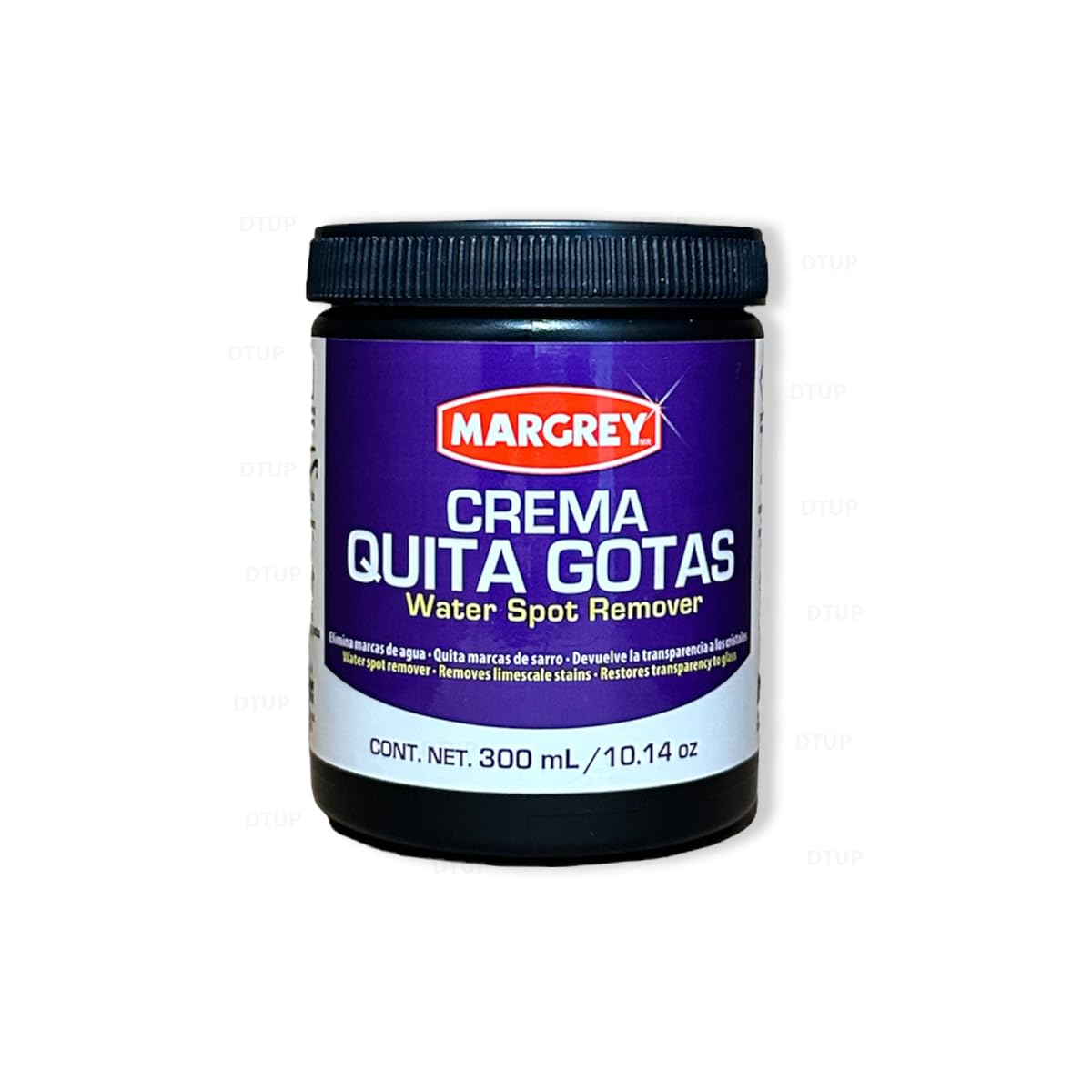
This cream format introduces a mild abrasive suspension alongside chemical action, making it particularly effective on flat glass and chrome surfaces where mechanical polishing can restore transparency. The 300 mL tub is a departure from the spray-and-wipe approach, requiring manual rubbing to work the cream into the stain.
On heavily clouded shower doors and windshield water spots, owners saw immediate clarity improvement. However, multiple verified reviews report micro-scratching on automotive glass when not applied with a very soft applicator — the cream’s abrasives can leave fine swirls if worked too aggressively or with insufficient lubrication.
For non-critical surfaces like chrome trim or stainless steel sinks, the cream is a fast fix for limescale and soap scum. But for daily drivers with soft clear coats, the risk of induced marring makes a chemical-only spray a safer first choice. Use this cream only when a chemical spray has failed and you are comfortable finishing with a polish.
What works
- Excellent on flat glass and chrome
- Cream texture provides physical abrasion for tough scale
- Restores transparency to cloudy windows
What doesn’t
- Can leave micro-scratches on automotive glass
- Requires careful application to avoid swirl marks
5. Gtechniq W9 Water Spot Remover

Gtechniq’s W9 uses a chelating chemistry that traps metal ions (calcium, magnesium) rather than relying on heavy acid etching. This makes it the gentlest option in the lineup, specifically formulated for ceramic-coated paint where maintaining the coating’s integrity is a priority. It is sold as a concentrated formula — a little goes a long way.
Owners consistently report success on light to moderate spotting, describing it as an “excellent between-washes maintenance spray” that prevents buildup. The catch is strictly defined expectations: the W9 is not designed for deeply etched spots that have been baking for months. For those cases, a more aggressive gel like the Chemical Guys offering is required.
The 8.45-ounce bottle is smaller than most competitors, but concentration means it lasts multiple applications. It is also fragrance-free and odor-free, a subtle advantage for those sensitive to strong chemical smells during interior or garage use.
What works
- Gentle chelating action safe for ceramic coatings
- Odor-free and fragrance-free use
- Concentrated formula offers good value per use
What doesn’t
- Not effective on deeply etched or old stains
- Requires multiple applications for moderate spotting
Hardware & Specs Guide
Acid vs. Chelating Chemistry
Acid-based removers (citric, phosphoric, sulfamic) dissolve calcium carbonate and silica by lowering the pH to break the ionic bond between the deposit and the surface. Chelating agents trap metal ions in a molecular claw, preventing re-deposition. Many premium formulas blend both for broad-spectrum mineral removal. A pH reading below 4 indicates significant acid content — effective but aggressive on coatings.
Viscosity and Panel Cling
Viscosity affects contact time. A thin spray with 1–5 centipoise (cP) runs off a door panel within seconds, requiring reapplication. A gel or cream above 50,000 cP stays on vertical surfaces for several minutes, allowing the active ingredients to work without constant reapplication. For hoods and roofs, viscosity matters less, but for side panels, thickness saves time and product.
FAQ
Will an automotive water spot remover damage my ceramic coating?
How do I know if a water spot has etched into my clear coat?
Can I use a water spot remover on vinyl wraps or matte paint?
Final Thoughts: The Verdict
For most buyers, the best automotive water spot remover winner is the Chemical Guys Heavy Duty Water Spot Remover Gel because its thick, clingy formula attacks even deep-etched mineral deposits on paint and glass without running off. If you need a coating-safe option for a ceramic-coated vehicle, grab the PROJE’ Water Spot Remover. And for matte finishes, boat transoms, and a biodegradable non-toxic formulation, nothing beats the DUCKY PRODUCTS Original Water Spot Remover.

Certification: BSc in Mechanical Engineering
Education: Mechanical engineer
Lives In: 539 W Commerce St, Dallas, TX 75208, USA
Md Amir is an auto mechanic student and writer with over half a decade of experience in the automotive field. He has worked with top automotive brands such as Lexus, Quantum, and also owns two automotive blogs autocarneed.com and taxiwiz.com.