Automotive panel replacement used to mean welding, grinding, rust-proofing, and hours of labor. Modern bonding adhesives have rewritten that workflow entirely — replacing hot work with a structural bond that often outperforms welded joints in fatigue testing and corrosion resistance. The trick is knowing which chemistry matches your substrate and repair scenario.
I’m Amir — the founder and writer behind Four Wheel Ask. I’ve spent years studying adhesive formulations, analyzing cure curves, and cross-referencing owner reports to understand which panel bonds hold up under real road conditions and which fail prematurely.
Choosing the right Automotive Panel Glue for your repair prevents bond failure, stops corrosion, and delivers a professional-grade structural result. best automotive panel glue depends on substrate compatibility, working time, and whether you need a flexible or rigid joint.
How To Choose The Best Automotive Panel Glue
Selecting the wrong adhesive leads to joint failure, corrosion entrapment, and a second repair that costs more than the first. Three factors separate a lasting bond from a shop redo.
Substrate Compatibility and Chemistry
Steel, aluminum, fiberglass, SMC, and ABS each require specific adhesive chemistry. Two-part epoxy delivers high shear strength on metal panels and composites. Polyurethane offers flexibility for vibration-prone areas like door skins and roof panels. Acrylic-based formulations bond well to low-energy plastics but lack the thermal range for exterior structural use. Matching the adhesive to the panel material is the single most important decision.
Working Time and Cure Profile
Structural adhesives have a finite open time before they begin to set. Fast-cure formulas reach handling strength in 30 to 60 minutes but leave little room for adjustment. Slower-cure options allow panel alignment and clamping but require longer before the vehicle can leave the shop. For DIY repairs, a 15- to 30-minute working window balances positioning flexibility with reasonable clamp time. Professional shops often prefer faster systems to keep bay turnover high.
Application Method and Tooling
Dual-cartridge systems with static mixing nozzles provide consistent ratio metering and eliminate guesswork. Aerosol adhesives work for trim and fabric but lack the structural capacity for load-bearing panel bonds. Single-component tubes require a caulking gun and are best for seam sealing rather than full panel replacement. Invest in a quality dispensing gun if you plan multiple repairs — inconsistent mix ratio is a primary cause of bond failure.
Quick Comparison
On smaller screens, swipe sideways to see the full table.
| Model | Category | Best For | Key Spec | Amazon |
|---|---|---|---|---|
| Polymix Metal Panel Bond 60 | Two-Part Urethane | Quarter panels, door skins, roof panels | 24-hour full cure, 200mL cartridge | Amazon |
| Buck Panel Bonding Adhesive | Two-Part Epoxy | Structural panel bonding, 08115 replacement | 400mL cartridge, 45-minute cure | Amazon |
| Maxi-Bond Panel Bonding MB-835 | Two-Part Epoxy | Metal, fiberglass, and composite panels | 200mL cartridge, non-sag formula | Amazon |
| SEM 39747 Multi-Purpose Panel Adhesive | Panel Adhesive | Impact-sensitive repairs, long working time | 7 oz can, 24-hour full cure | Amazon |
| 3M General Trim Adhesive 08088 | Aerosol | Carpet, fabric, and plastic trim bonding | 18.1 oz aerosol, 15-minute cure | Amazon |
| LAUCO Dual Cartridge Epoxy Gun | Applicator Tool | Dispensing 200mL dual-cartridge adhesives | Steel construction, 1:1 and 2:1 ratios | Amazon |
| DAP Weldwood Landau Top & Trim | Contact Adhesive | Automotive upholstery, vinyl, foam | 1 gallon, spray-grade, heat resistant | Amazon |
| À LA MAISON CEILINGS Instant Grab | Construction Adhesive | Interior trim, panels, molding | 8-pack tubes, water resistant, paintable | Amazon |
| Tapsi Double Sided Tape | Foam Mounting Tape | Trim, emblems, LED strip lights | 0.4 in x 36 ft, 0.03 in thick | Amazon |
| 105 Adhesive Sealant | Polyether Sealant | Marine, industrial, general sealing | 10.1 oz cartridge, UV resistant | Amazon |
| Berkland Polyurethane Windshield Adhesive | Urethane Adhesive | Windshield, rear window, side glass | 2-pack, 10.5 fl oz each, fast curing | Amazon |
In‑Depth Reviews
1. Polymix Metal Panel Bond 60 Adhesive

Polymix Metal Panel Bond 60 is a two-part urethane formulated specifically for bonding steel and aluminum panels where welding was once the only option. The primary use case — replacing quarter panels, roofs, box sides, van sides, utility vehicle sides, and door skins — aligns directly with collision shop workflow. The self-sealing nature of the cured bond eliminates the need for separate seam sealers, reducing total material cost per repair.
Bonding with urethane avoids several pain points of traditional welding: no internal panel or gasket removal, no heat distortion requiring metal reshaping, no grinding of weld spots, no need to disconnect the vehicle’s electronic system, and no rust-protection primer on the bonded area. The 24-hour full cure delivers a structural joint that distributes stress across the entire bond line rather than concentrating it at weld points.
Each cartridge includes two mixing nozzles, and the 200mL volume covers a typical quarter-panel installation. The material remains workable long enough for panel alignment but firms up within hours to handling strength. For shop owners and serious DIY enthusiasts seeking a genuine weld alternative, this formulation delivers proven results on both steel and aluminum substrates.
What works
- Eliminates heat distortion and grinding work entirely
- Self-sealing bond removes need for additional seam sealer
- Proven on both steel and aluminum body panels
What doesn’t
- Requires a dual-cartridge dispensing gun sold separately
- Full cure takes 24 hours before sanding or painting
2. Buck Panel Bonding Adhesive

Buck Panel Bonding Adhesive positions itself as a direct replacement for 3M 08115, a well-known OEM-grade panel bond epoxy. The two-part formula cures at room temperature in approximately 45 minutes — significantly faster than many 24-hour systems — making it attractive for shops that need to cycle vehicles quickly. The 400mL cartridge provides roughly double the volume of standard 200mL systems, covering larger panels or multiple repairs from a single cartridge.
The epoxy formulation bonds steel, aluminum, plastic, fiberglass, and composite panels, giving it broad substrate compatibility for collision repair. Chemical and water resistance ensure the bond line holds up against road salt, moisture, and underhood fluids. Three static mixing nozzles are included, and the cartridge works with standard 1:1 dispensing guns.
OEM recommendation language in the product positioning suggests it meets or exceeds manufacturer specifications for structural panel bonding. The fast cure at room temperature eliminates the need for heat lamps or accelerated curing methods. For professionals who want a familiar 08115-compatible epoxy with faster throughput, this is a strong candidate.
What works
- 45-minute cure at room temperature speeds shop throughput
- Broad substrate compatibility across metals and composites
- Large 400mL cartridge reduces per-repair cartridge waste
What doesn’t
- Premium price point compared to smaller-format alternatives
- Requires a 1:1 dual-cartridge gun for proper dispensing
3. Maxi-Bond Panel Bonding Adhesive MB-835
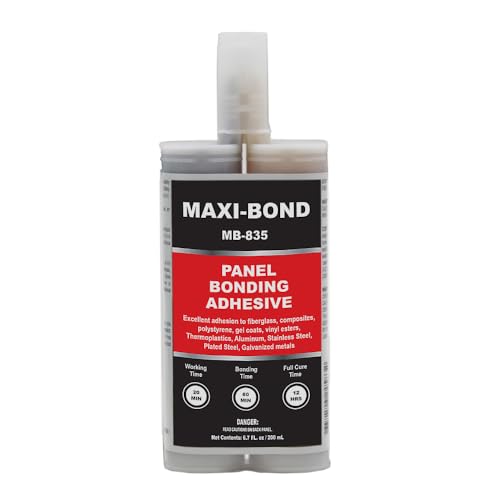
Maxi-Bond MB-835 is a two-part epoxy system engineered for OEM-quality bonding of automotive panels and composite assemblies. The non-sag formula stays in place on vertical and contoured surfaces without dripping or running — a critical feature for door skins, roof panels, and quarter-panel installations where gravity works against a uniform bond line. The 200mL dual cartridge includes static mixing nozzles for air-free, consistent dispensing.
Substrate compatibility covers steel, aluminum, fiberglass, plastic, and composite materials, making it a versatile choice for body shops handling mixed-material repairs. The high-viscosity paste consistency fills gaps and maintains contact pressure even on irregular panel surfaces. The clear cure color keeps the bond line discreet under paint.
Positioned primarily for collision repair and fabrication work, the MB-835 delivers structural strength suitable for load-bearing panel joints. The 200mL volume handles individual panel replacements efficiently, and the static mixing nozzle design prevents ratio errors that cause incomplete curing. For shops that need a reliable, no-drip epoxy for vertical applications, this is a proven formulation.
What works
- Non-sag formula holds vertical surfaces without running
- High-viscosity paste fills irregular panel gaps effectively
- Clear cure provides a discreet bond line under paint
What doesn’t
- Limited to 200mL volume for larger panel jobs
- Requires precise mixing nozzle attachment for proper ratio
4. SEM 39747 Multi-Purpose Panel Adhesive
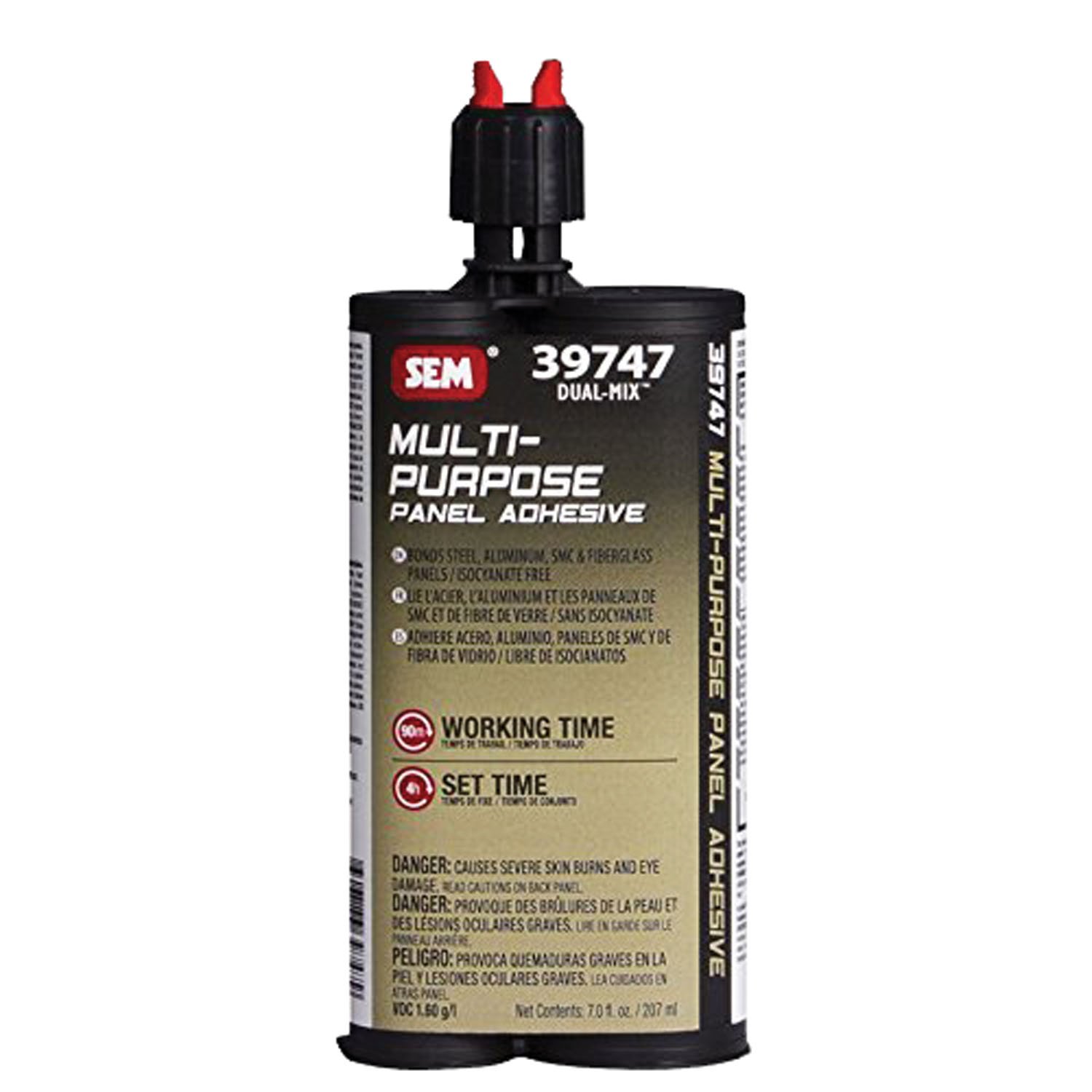
SEM 39747 is a multi-purpose panel bond adhesive packaged in a 7-ounce can rather than a dual-cartridge format. The extended working time gives technicians ample room to position and clamp panels before the material sets — a meaningful advantage for complex assemblies where multiple alignment adjustments are necessary. Higher impact force resistance suits structural areas that experience road vibration and stress.
The black adhesive cures to a full bond in 24 hours and is compatible with fiberglass and metal substrates. The can format allows application without a dispensing gun, though achieving consistent bead shape requires steady hand pressure. SEM is a well-established brand in automotive refinishing, and this product carries the same formulation pedigree as their OEM-adjacent repair materials.
For repair work that demands relaxed positioning timelines — custom fabrication, multi-panel alignments, or one-off installations — the longer working window reduces the risk of the adhesive setting before final positioning. The impact resistance rating adds confidence for panels exposed to door-slamming and road debris.
What works
- Long working time allows careful panel positioning
- Higher impact resistance for structural areas
- No dispensing gun required for application
What doesn’t
- 7-ounce volume is small for large panel replacements
- Manual application makes consistent bead size difficult
5. 3M General Trim Adhesive 08088

3M 08088 General Trim Adhesive is an aerosol formula designed for bonding carpet, fabric, and plastic trim to metal surfaces. The clear-drying property keeps the bond line invisible on visible trim installations, and the aerosol format enables quick coverage of large surface areas. Heat and water resistance make it suitable for interior and exterior trim applications that experience temperature swings and moisture exposure.
The adhesive cures in approximately 15 minutes, allowing fast assembly of trim panels, headliners, and upholstery. The spray pattern provides even coverage without pooling, though overspray masking is necessary for precision work. 3M specifies industrial and occupational use, reflecting the solvent-based formulation’s performance requirements.
This adhesive is not a structural panel bonder — it is a trim and fabric adhesive optimized for lightweight trim retention. For door panel upholstery, carpet backing, and plastic trim clips, the 08088 delivers reliable hold with quick turnaround. Its clear cure and aerosol convenience make it a shop staple for non-structural interior work.
What works
- Clear drying eliminates visible bond lines on trim
- Fast 15-minute cure speeds interior assembly work
- Even spray coverage prevents adhesive pooling
What doesn’t
- Not suitable for structural panel bonding applications
- Overspray control requires careful masking
6. LAUCO Dual Cartridge Epoxy Gun
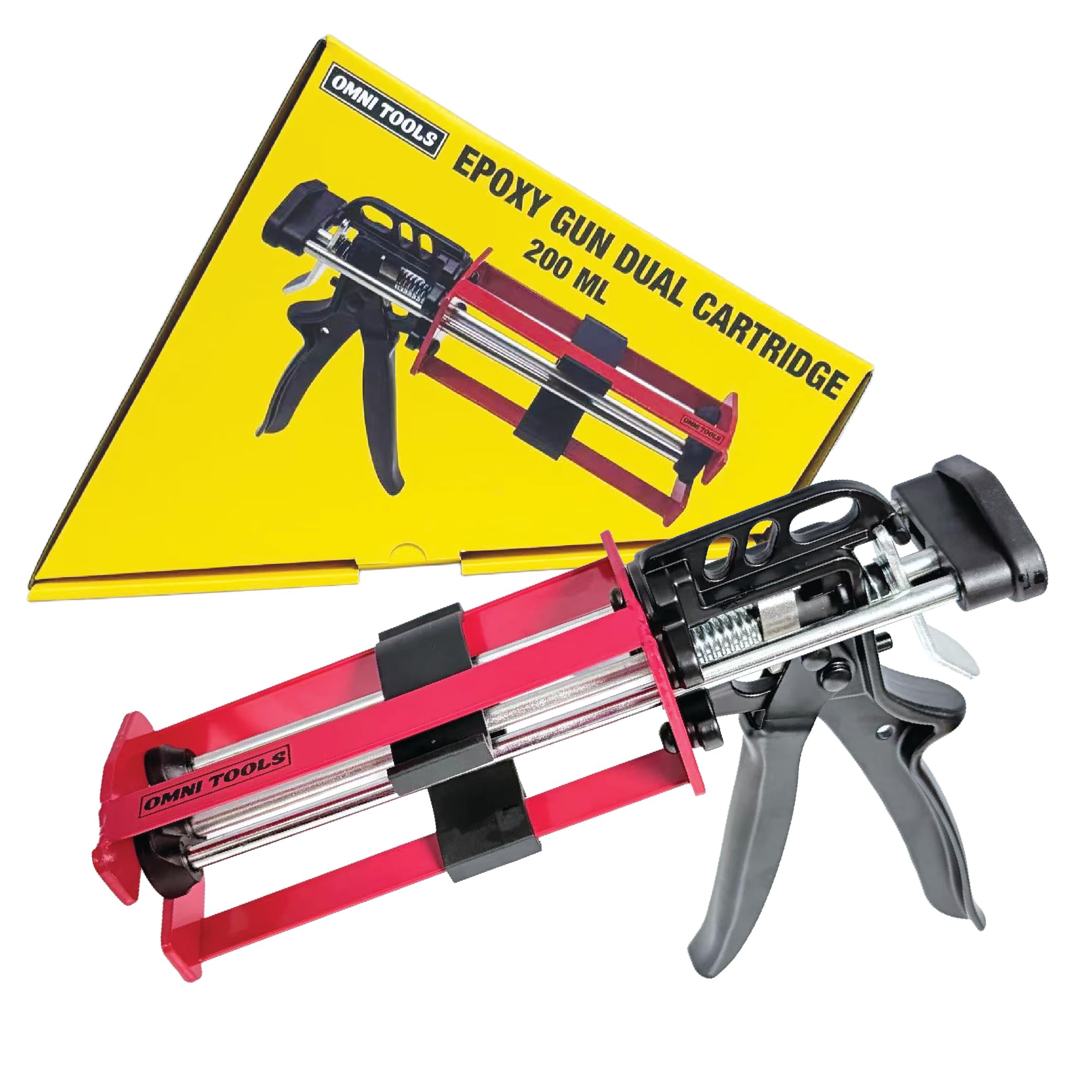
The LAUCO Dual Cartridge Epoxy Gun is a heavy-duty manual applicator built for 200mL and 215mL dual-component cartridges with 1:1 and 2:1 mix ratios. Structural steel construction ensures consistent dispensing pressure over repeated use cycles, unlike plastic-body guns that flex and cause uneven flow. The ergonomic grip reduces hand fatigue during longer dispensing sessions — a real consideration when applying multiple panel bond cartridges in a single shift.
Compatibility covers most two-part panel bonding adhesives, structural epoxies, fillers, and plastic repair compounds. The gun accepts standard static mixing nozzles for clean, cross-contamination-free material mixing. For body shops and DIY enthusiasts who regularly use cartridge-based adhesives, owning a dedicated dispensing gun eliminates the inconsistency of handheld squeeze methods.
This applicator is a tool, not an adhesive, but it is arguably the most important component in achieving a correct bond line. A mismatched or poor-quality gun delivers an inconsistent mix ratio, which directly causes incomplete curing and bond failure. For anyone serious about panel bonding, the LAUCO gun is the right foundation investment.
What works
- Steel construction provides consistent dispensing pressure
- Compatible with 1:1 and 2:1 cartridge ratios
- Ergonomic grip reduces fatigue during extended use
What doesn’t
- Does not include static mixing nozzles
- Manual operation requires two hands for full leverage
7. DAP Weldwood Landau Top & Trim HHR
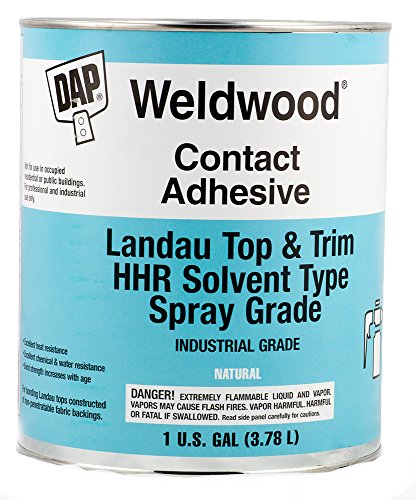
DAP Weldwood Landau Top & Trim HHR is a solvent-type spray-grade contact adhesive formulated for automotive upholstery, foam, and vinyl materials. The permanent bond resists high heat and water exposure, making it suitable for convertible tops, landau roof covers, and interior trim panels that face direct sunlight and moisture. The gallon-size container provides generous coverage for multiple upholstery projects.
Application requires spraying onto both surfaces, allowing the solvent to flash off before pressing the pieces together for an immediate bond. This contact-bond mechanism means repositioning is not possible once the surfaces meet — alignment must be precise on the first attempt. Heat resistance prevents bond softening in parked-vehicle summer conditions.
Interior and exterior use versatility makes the Weldwood formula a staple for automotive upholstery shops. The natural color dries clear, preventing staining on light-colored fabrics and vinyl. For headliner repairs, seat cover installation, and vinyl roof work, this contact adhesive delivers the heat and humidity resistance those applications demand.
What works
- High heat resistance prevents bond failure in summer heat
- Gallon size provides excellent value for multiple repairs
- Suitable for both interior and exterior upholstery work
What doesn’t
- Contact bond requires precise first-attempt alignment
- Solvent formulation requires adequate ventilation during use
8. À LA MAISON CEILINGS Instant Grab Adhesive
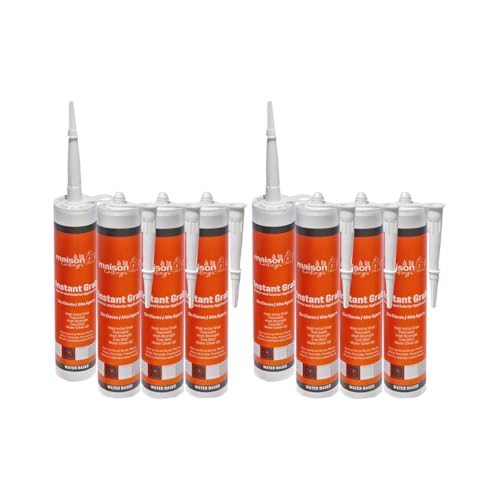
À LA MAISON CEILINGS Instant Grab adhesive is a high-strength, water-resistant formula designed for ceiling tiles, wall panels, and crown molding. While not primarily marketed for automotive use, the substrate compatibility — wood, drywall, tile, ceramic, concrete, and metal — opens the door for certain interior vehicle panel applications where a strong, paintable bond is needed. The quick-bond formula reduces clamp time on interior trim installations.
Each tube applies smoothly with a standard caulking gun, and the paintable surface allows color matching to interior panels. Weather resistance suits the adhesive for use in vehicles that experience temperature and humidity variation, though it is not formulated for the structural loads of exterior body panels. The 8-pack provides enough material for multiple interior projects or a full van conversion.
Cleanup before curing requires only standard methods, and the low-odor formula is safer for indoor use compared to solvent-based alternatives. For RV interior paneling, van conversion wallboard, or non-structural interior trim bonding, this adhesive offers a practical, water-resistant solution with paint-ready convenience.
What works
- Paintable surface blends seamlessly with interior panels
- 8-pack provides excellent volume for multi-panel projects
- Water-resistant bond suits humid vehicle environments
What doesn’t
- Not designed for structural automotive panel bonding
- Requires a caulking gun for application
9. Tapsi Double Sided Tape Heavy Duty
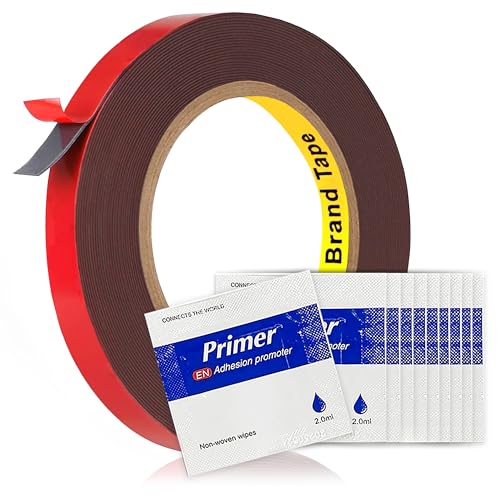
Tapsi Double Sided Tape offers automotive-grade foam mounting tape in a 0.4-inch by 36-foot roll with a 0.03-inch thickness profile. The high-bond acrylic foam core holds car trim, moldings, emblems, and LED strip lights on plastic, metal, and painted surfaces. The slim profile ensures a flush fit without visible gaps — important for exterior trim that needs to look factory-installed.
Ten adhesion promoters are included to improve grip on low-energy and textured materials like ABS, rubber, and matte plastics commonly found on dashboards, door trims, and interior panels. The viscoelastic foam absorbs vibration and movement, reducing stress on the adhesive bond line and preventing trim pieces from loosening over time. Heat and weather resistance allow the tape to survive summer temperatures, winter cold, and repeated car washes.
Installation is truly no-drill — cut, peel, and stick for fast upgrades to trim and lighting. The tape removes cleanly with heat when needed, leaving no residue on properly prepared surfaces. For emblem attachment, side-molding installs, and LED strip mounting, this tape provides a clean, vibration-resistant solution without the mess of liquid adhesives.
What works
- Vibration-absorbing foam core prevents loosening over time
- Includes adhesion promoters for difficult plastic surfaces
- Clean removal with heat leaves no residue
What doesn’t
- Not suitable for structural or load-bearing panel bonds
- Surface prep is critical for long-term hold on plastics
10. 105 Adhesive Sealant – Marine/Industrial Grade
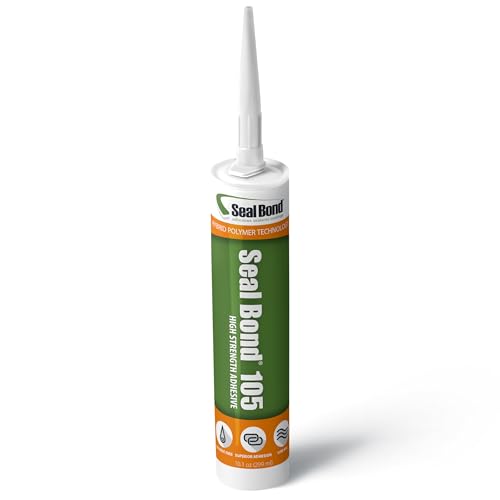
The 105 Adhesive Sealant from Seal Bond is a high-performance polyether formula engineered for marine, industrial, and automotive sealing applications above the waterline. The UV-resistant formulation withstands prolonged sun exposure without cracking or degrading — a common failure point for standard silicone sealants used on exterior trim and body seams. The 450 PSI tensile strength provides structural integrity for non-load-bearing panel bonds.
Available in black or white, the one-component formula requires no primer and applies easily with standard caulking tools. The non-flammable, solvent-free, and isocyanate-free composition makes it safer for use in enclosed shop environments where ventilation may be limited. Fast cure with no shrinkage ensures the sealant fills gaps completely without pulling away from the substrate during curing.
Compatibility with concrete, fiberglass, plastic, and wood extends its usefulness beyond automotive into trailer repair, fiberglass boat panels, and industrial equipment. The flexible cured seal accommodates thermal expansion and vibration without cracking. For above-the-waterline sealing and non-structural panel bonding, this polyether formula outperforms standard silicone in UV resistance and long-term flexibility.
What works
- UV resistant formulation prevents sun-induced degradation
- Non-flammable and solvent-free for safer indoor use
- Zero shrinkage ensures complete gap filling
What doesn’t
- Not designed for structural automotive panel bonding
- Full cure takes 7 days for maximum strength
11. Berkland Polyurethane Windshield Adhesive 2-Pack

Berkland Polyurethane Windshield Adhesive is a fast-curing, OEM-quality urethane formula designed for bonding windshields, rear windows, and side glass on cars, trucks, SUVs, and RVs. The polyurethane chemistry reaches handling strength in hours rather than days, allowing vehicles to return to service faster than with slower-curing alternatives. The cured seal remains flexible without shrinking or cracking — critical for maintaining a watertight glass installation over the life of the vehicle.
Each cartridge loads into a standard caulking gun, requiring no proprietary dispensing tools. The 2-pack provides enough material for one full windshield installation plus a spare cartridge for future jobs or multiple vehicles. Included disposable nitrile gloves and a spreader tool support professional-grade application without additional purchases.
The adhesive bonds glass to metal, fiberglass, and painted surfaces with permanent, flexible adhesion that holds through temperature swings, road vibration, and weather exposure. The Berkland product comes from a family-owned American business, and the 2-pack format is practical for shops that want a backup cartridge ready. For windshield replacement and auto glass repair, this polyurethane formula delivers OEM-level performance at a accessible price point.
What works
- Fast-curing formula reaches handling strength in hours
- Flexible cured seal prevents water leaks and cracking
- 2-pack provides a spare cartridge for future repairs
What doesn’t
- Limited to glass bonding applications, not body panels
- Requires a standard caulking gun for dispensing
Hardware & Specs Guide
Bond Strength and Substrate Compatibility
Structural automotive panel adhesives are rated by tensile shear strength, measured in pounds per square inch. Two-part epoxies typically deliver 2,500–4,500 PSI on steel and aluminum, while polyurethane formulations offer slightly lower strength but superior flexibility for vibration-prone panels. Always verify substrate compatibility before purchase — some epoxy formulations struggle with SMC and ABS, while urethanes bond well to painted surfaces and glass. Acrylic foam tapes are not structural adhesives and should only be used for trim and emblem attachment below load-bearing thresholds.
Curing Time and Working Window
Cure profiles divide adhesives into fast-cure (30–60 minutes to handling strength) and slow-cure (4–24 hours). Fast-cure systems reduce shop downtime but require rapid panel positioning without adjustment. Slow-cure formulations allow hours of repositioning but demand longer clamp times. Temperature directly affects cure speed — most urethanes and epoxies cure faster above 70°F and slow significantly below 50°F. Full chemical cure typically takes 24 hours regardless of handling strength, and sanding or painting before full cure can compromise the bond.
Application Tools and Dispensing Systems
Dual-cartridge adhesives require a dispensing gun with matching ratio capability — most automotive panel bonders use 1:1 or 2:1 systems. Static mixing nozzles are mandatory for two-part chemistries; hand-mixing introduces air bubbles and ratio errors that cause bond failure. Aerosol adhesives work for trim and fabric but cannot deliver the uniform bond line thickness needed for structural joints. For single-component tubes, a standard caulking gun with smooth plunger action ensures consistent bead application without air pockets.
Environmental Resistance
Automotive panel adhesives must withstand temperature cycling from -40°F to 180°F, UV exposure, road salt, moisture, and vibration fatigue. Polyurethane and epoxy formulations both offer good chemical resistance, but epoxies generally provide better moisture barrier properties. UV resistance varies significantly — standard epoxies degrade under prolonged sunlight unless painted, while some polyether sealants are formulated specifically for UV stability. For exterior panel bonds, always topcoat with automotive paint to protect the adhesive from UV degradation.
FAQ
Can panel bonding adhesive replace welding entirely?
How do I prepare surfaces before applying panel glue?
What is the difference between epoxy and polyurethane panel adhesive?
How long should I clamp panels after applying adhesive?
Can I paint over cured panel adhesive?
Final Thoughts: The Verdict
For most buyers, the best automotive panel glue winner is the Polymix Metal Panel Bond 60 because it eliminates welding heat distortion, self-seals the joint, and provides proven bond strength on both steel and aluminum body panels. If you need a faster cure with OEM compatibility, grab the Buck Panel Bonding Adhesive. And for non-structural trim and emblem attachment, nothing beats the convenience of the Tapsi Double Sided Tape with its vibration-absorbing foam core and included adhesion promoters.

Certification: BSc in Mechanical Engineering
Education: Mechanical engineer
Lives In: 539 W Commerce St, Dallas, TX 75208, USA
Md Amir is an auto mechanic student and writer with over half a decade of experience in the automotive field. He has worked with top automotive brands such as Lexus, Quantum, and also owns two automotive blogs autocarneed.com and taxiwiz.com.