Every tenth of a second on an autocross course is a battle between your tire’s contact patch and the pavement’s friction limit. The difference between a clean run and a cone-spinning correction often comes down to your choice of rubber, not horsepower. Picking the wrong set means fighting understeer, overheating sidewalls, or scrubbing speed that no amount of driver talent can fully recover.
I’m Amir — the founder and writer behind Four Wheel Ask. I’ve spent years analyzing tire compound data, tread pattern engineering, and the real-world wear characteristics that autocross competitors rely on to shave time between the cones.
After digging into grip ratings, sidewall stiffness, wet-weather evacuation channels, and treadwear warranties across the market, I’ve identified the tires that actually deliver on their performance promises. This guide breaks down the best autocross tires for drivers who care about precise turn-in, consistent lateral grip, and predictable breakaway at the limit.
How To Choose The Best Autocross Tires
Autocross tires live in a different performance envelope than daily-driver all-seasons. You need a compound that reaches operating temperature quickly, a tread pattern that resists squirm during hard transitions, and a construction that maintains shape through sustained lateral loads. Here are the three factors that separate a trophy contender from a mid-pack finisher.
Compound and UTQG Treadwear Rating
For autocross, lower UTQG numbers (200 or below) indicate softer compounds that generate higher grip once warm. A 200-treadwear summer tire like the Continental ExtremeContact Sport 02 provides sticky rubber without wearing out in a single season. Higher ratings (400+) sacrifice cornering force for longevity — acceptable for street driving but a penalty in competition.
Sidewall Construction and Stiffness
Autocross demands quick transitions — a tire with a soft, compliant sidewall will feel vague during slaloms and generate delayed steering response. Look for tires with reinforced sidewall designs or “extra load” (XL) load ranges that resist folding under hard cornering. The Firestone Firehawk Indy 500 uses wide shoulder blocks and stiff sidewalls specifically to maintain dynamic cornering geometry.
Tread Pattern and Water Evacuation
Even on dry courses, morning dew or a light drizzle can make the surface slick. Tires with continuous center ribs (like the Nitto NT555RII) maximize dry contact area. Wide circumferential grooves (like the Yokohama Advan Sport A/S Plus) improve wet traction without sacrificing too much dry grip. Choose based on your local climate and typical event conditions.
Quick Comparison
On smaller screens, swipe sideways to see the full table.
| Model | Category | Best For | Key Spec | Amazon |
|---|---|---|---|---|
| Continental ExtremeContact Sport 02 | Summer Performance | High grip with long tread life | 30,000-mile treadwear warranty | Amazon |
| Firestone Firehawk Indy 500 225/40R18 | Ultra-High Summer | Wet and dry cornering confidence | Pulse Groove water evacuation | Amazon |
| Firestone Firehawk Indy 500 245/40R17 | Ultra-High Summer | Responsive steering feel | Wide shoulder block stiffness | Amazon |
| Michelin Pilot Sport AS 4 | All-Season UHP | All-weather dual-duty use | Dynamic Response Technology | Amazon |
| Yokohama Advan Sport A/S Plus | All-Season Performance | Reduced road noise for daily driving | Four-pitch tread variation | Amazon |
| Nitto NT555RII | Drag Radial | Drive axle launch traction | Twin center rib contact patch | Amazon |
| Hoosier Racing Drag Tire 28.0/10.5R15 | Racing Slick | Maximum race-day grip | Multiple-ply sidewall construction | Amazon |
| Mickey Thompson ET Street S/S P275/60R15 | Street/Strip Radial | DOT-legal strip performance | R2 compound minimal burnout | Amazon |
| Mickey Thompson ET Street S/S P295/55R15 | Street/Strip Radial | Wider footprint for big power cars | Redistributed tread void design | Amazon |
In‑Depth Reviews
1. Continental ExtremeContact Sport 02

The Continental ExtremeContact Sport 02 represents the sweet spot for serious autocross competitors who need a tire that can survive daily driving while delivering race-day response. Its SportPlus Technology compound generates strong lateral grip without requiring a long warm-up lap — critical when you only get three or four runs per event. The asymmetric tread pattern keeps the contact patch stable during heavy braking zones and tight pivot cones alike.
What sets this tire apart from other 200-treadwear options is the 30,000-mile tread life warranty. That means you can run a full season of weekend events plus weekday commuting without watching the shoulder blocks chunk away. The water evacuation channels are aggressive enough to handle damp morning courses without sacrificing the dry grip that wins trophies.
ROUSH Performance and the AMG Driving Academy both spec this tire for their track programs, which tells you the compound and construction have passed professional-level scrutiny. For a mid-range buy that punches above its weight in transitional response, this is the benchmark in the autocross space.
What works
- Outstanding dry and wet braking distances
- 30,000-mile warranty rare in this grip class
What doesn’t
- Not ideal for deep snow or freezing temps
- Slightly heavier than pure race rubber
2. Firestone Firehawk Indy 500 225/40R18

The Firestone Firehawk Indy 500 in the 225/40R18 size delivers ultra-high summer performance at a price that makes it accessible for drivers building their first dedicated autocross set. Its wide shoulder blocks resist squirm during the slalom, and the proprietary Pulse Groove technology channels water away from the contact patch so you can push hard even on damp concrete.
The improved wet compound reduces stopping distance by 20% compared to the previous generation — a measurable safety and performance gain when morning dew turns a fast sweeper into a low-grip zone. The 23-pound weight per tire keeps unsprung mass manageable, which helps the suspension maintain compliance over rough pavement transitions.
With a load capacity of 1,389 pounds in the XL construction, you can run aggressive camber settings without worrying about sidewall collapse during high-G sweepers. This is the tire that gives budget-conscious competitors a legitimate shot at class podiums without sacrificing steering precision.
What works
- Pulse Groove technology offers class-leading wet evacuation
- Stiff shoulder blocks hold line through tight transitions
What doesn’t
- Tread noise is noticeable on highway drives
- Limited fitment for 18-inch wheels only
3. Firestone Firehawk Indy 500 245/40R17
The 245/40R17 variant of the Firehawk Indy 500 brings the same Pulse Groove water evacuation and wide shoulder stiffness to a popular 17-inch fitment that many Miata, BRZ, and Focus ST drivers run. The slightly lower 91 load index (1,356-pound capacity) keeps the tire light at 22.3 pounds, which helps rotational inertia and allows quicker directional changes between cones.
On a typical 60-second autocross course, the improved wet rubber compound provides a 20% shorter stopping distance compared to earlier Firehawk Wide Oval designs. That translates into braking later into corners without triggering the ABS cycle — a major confidence booster in damp conditions. The 24.7-inch overall diameter keeps gearing close to stock for most compact platforms.
This size is particularly effective for cars that need responsive turn-in without excessive tread squirm. The SL load range suits lighter vehicles where harsh sidewall compliance isn’t an issue, and the ultra-high summer compound reaches peak grip within a single run.
What works
- Excellent wet braking performance from improved compound
- Great steering response in 17-inch fitment
What doesn’t
- Standard load range may not suit heavy track cars
- No tread life warranty like premium competitors
4. Michelin Pilot Sport AS 4 245/40ZR17
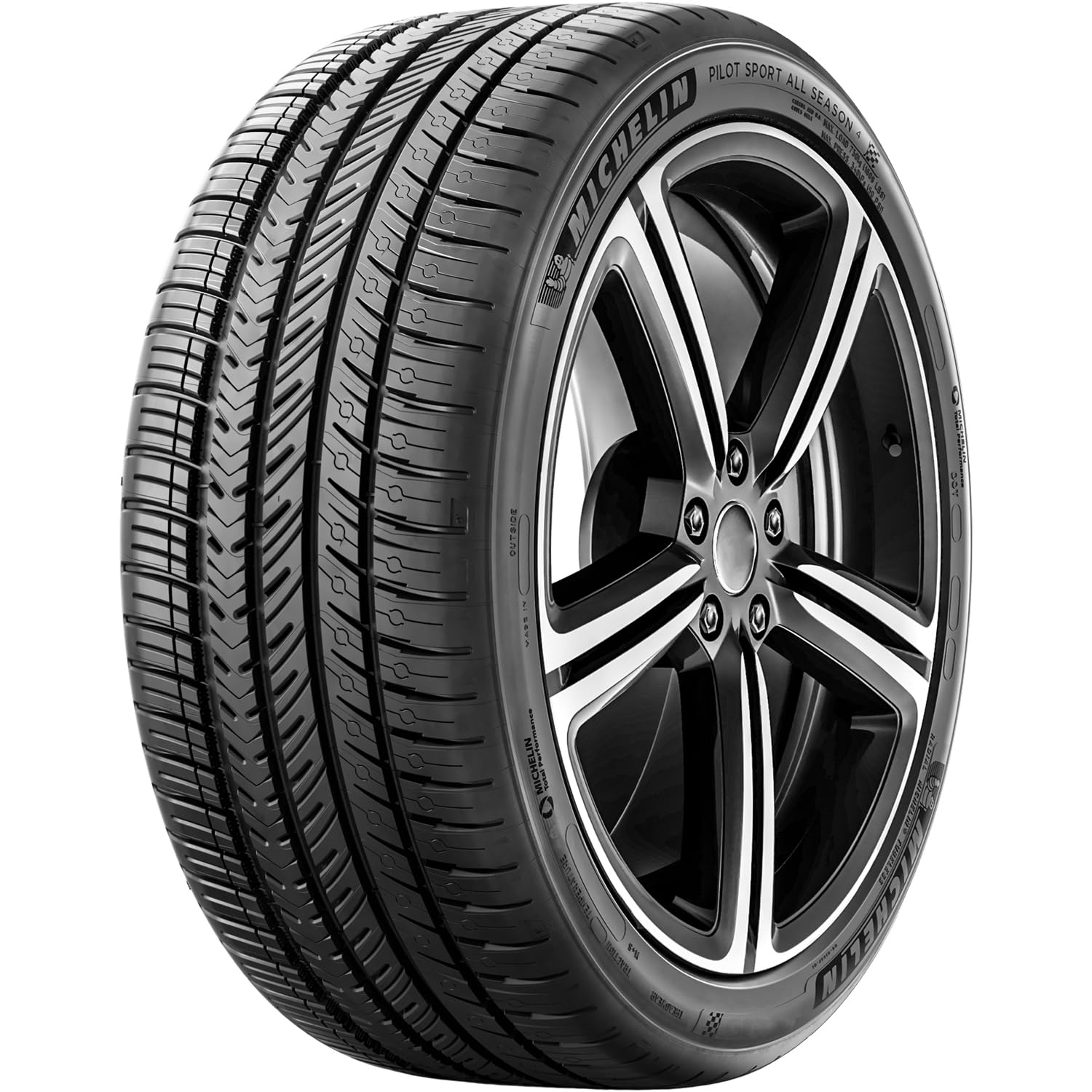
The Michelin Pilot Sport All Season 4 is a supercar-certified tire that bridges the gap between cold-weather safety and warm-weather grip for autocross drivers who need a single set for everything. Its Dynamic Response Technology distributes forces and temperatures evenly across the tread, which reduces uneven wear — a common issue when aggressive camber settings are used at events.
The asymmetric tread pattern delivers exceptional wet and dry grip, and the XL construction supports 1,521 pounds per tire, making it suitable for heavier coupes and sedans. At 24 pounds, it’s not the lightest option, but the trade-off is a tread life that far exceeds any 200-treadwear summer, saving you from buying a new set every season.
This tire shines for drivers who participate in autocross as part of a broader motorsport hobby — you can drive to the event in rain, run competition laps, and drive home confidently. It won’t match pure summer rubber on peak grip, but for a dual-duty setup, the compromises are minimal.
What works
- Excellent tread life for an ultra-high performance tire
- Genuine snow and wet weather capability
What doesn’t
- Peak lateral grip is lower than dedicated summers
- Premium pricing for all-season compound
5. Yokohama Advan Sport A/S Plus 245/40R17

The Yokohama Advan Sport A/S Plus is built for drivers who want a competent autocross tire without living with constant road drone. The four-pitch tread variation breaks up harmonic noise, making it one of the quietest options in this category. For competitors who also log highway miles to reach remote event sites, this is a significant comfort advantage over chunkier summer treads.
The Z grooves and wavy sipes create biting edges that improve traction in wet and cool conditions — useful when your region sees mixed-weather events. The flatter contour profile and advanced compound also reduce uneven wear, helping the tire maintain its performance edge longer than cheaper all-seasons. The XL load rating handles 1,521 pounds, supporting larger sedans and coupes with ease.
Optimized sidewall construction gives this tire crisp turn-in response, though it won’t match the ultimate grip of a pure summer tire. For a mid-range all-season that does double duty as an autocross tire and daily driver, the Advan Sport A/S Plus offers a compelling balance of NVH control and cornering performance.
What works
- Exceptionally quiet for a performance tire
- Reduces uneven wear with advanced compound
What doesn’t
- Not as sticky as dedicated summer tires
- Sidewall feels softer under extreme loads
6. Nitto NT555RII P305/45R17

The Nitto NT555RII is a drag radial optimized for the drive axle, but its large twin center ribs create a continuous contact patch that many autocross drivers find useful for sustained cornering. The modified sidewall construction improves launch stability, which translates into more predictable rotation when you’re powering out of hairpins. At 31 pounds, it’s heavier than a typical summer tire, but the 1,874-pound load capacity supports high-torque applications.
This tire is designed to pair with the NT555G2 on the non-drive axle, giving you a matched set that balances rear grip with front-end steering response. The 305mm section width provides a massive footprint for cars with wide fenders and aggressive offset wheels. On a heavy, powerful platform, the NT555RII can lay down lap times that thinner tires cannot match.
Be aware that this is a niche tire — it shines on the drive axle of rear-wheel-drive cars with ample power. For lighter, lower-horsepower autocross cars, the extra grip may not be worth the weight and rolling resistance penalty.
What works
- Huge contact patch for maximum grip off corners
- Modified sidewall improves launch and transition stability
What doesn’t
- Heavy construction affects overall handling balance
- Intended for drive axle use only
7. Hoosier Racing Drag Tire 28.0/10.5R15
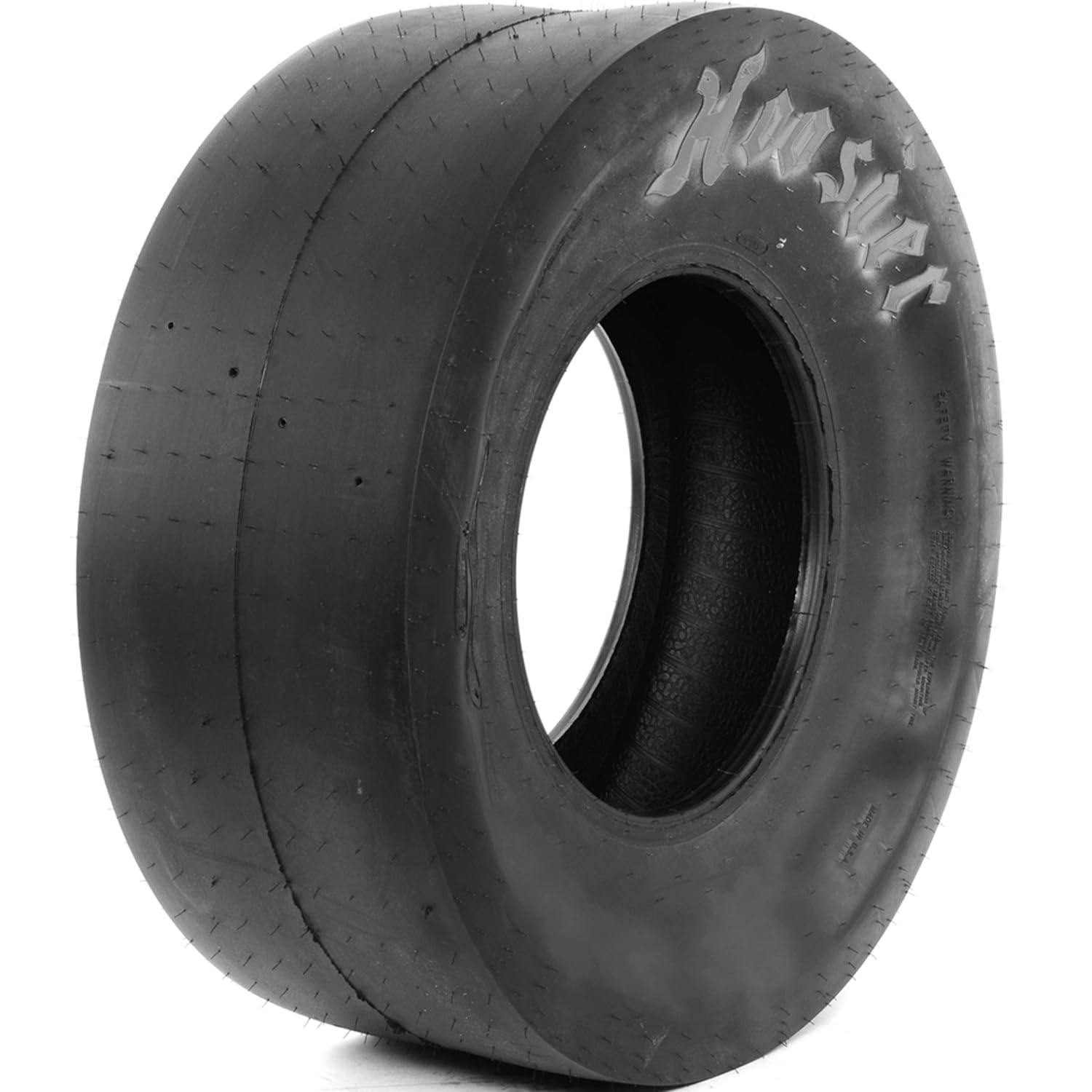
The Hoosier Racing Drag Tire in the 28.0/10.5R15 size is a purpose-built competition tire designed for maximum traction at the expense of street manners and tread life. The multiple-ply sidewall construction allows this tire to handle extreme side loads during hard launches and high-speed cornering. At 31 pounds, it’s on the heavy side, but the compound is engineered to reach operating temperature quickly for short-duration events.
This is the tire you buy when you have a dedicated trailer and your car rarely sees public roads. The tread pattern is minimal — it’s designed to evacuate heat rather than water, so wet performance is virtually nonexistent. For dry autocross courses where every tenth matters, the grip level from this Hoosier compound is as close to a true racing slick as you can get with DOT credentials.
The 28-inch diameter works well for cars that can accommodate a tall sidewall without rubbing. Expect rapid tread wear even in optimized alignment setups, and plan for replacement mid-season if you run frequent events.
What works
- Race compound delivers maximum dry grip
- Multiple-ply sidewall handles extreme loads
What doesn’t
- Zero wet weather capability
- Short tread life requires frequent replacement
8. Mickey Thompson ET Street S/S P275/60R15

The Mickey Thompson ET Street S/S in P275/60R15 uses the proven R2 compound that delivers outstanding straight-line traction with minimal burnout required. For autocross applications, this means you can spend more energy focusing on the course and less on tire prep. The redistributed tread void increases the contact area, providing a larger footprint for improved dry traction during corner exits.
This tire carries DOT certification for street use, so you can legally drive to and from events. The tubeless construction eliminates the cost and hassle of inner tubes while maintaining a leak-free seal. With a 2,149-pound load capacity, it easily supports heavy muscle cars and large sedans that see competitive use.
The trade-off is limited wet grip — the R2 compound is optimized for dry conditions, and standing water will trigger hydroplaning quickly. For dry, warm-weather events on smooth surfaces, the Mickey Thompson ET Street S/S transforms a street car into a serious competitor.
What works
- R2 compound offers exceptional dry grip with minimal burnout
- DOT-legal for street driving without a trailer
What doesn’t
- Poor wet traction and hydroplaning risk
- Rapid tread wear in aggressive alignment setups
9. Mickey Thompson ET Street S/S P295/55R15
The wider P295/55R15 version of the Mickey Thompson ET Street S/S is built for cars that need the maximum rubber under the rear arches. The same R2 compound and redistributed tread void design as the P275 but with an even larger contact patch. At 34 pounds per tire and a 28-inch diameter, this is a substantial tire that requires adequate suspension clearance and power to work effectively.
For autocross competitors with high-torque engines or forced-induction setups, the extra 20mm of width provides a measurable improvement in corner exit traction. The DOT certification means you can still drive to events legally, though the 30-day warranty is a strong signal that this is a competition-focused product rather than a long-life street tire. The tubeless construction remains leak-free even with aggressive camber.
The downside is the obvious one: at 34 pounds, this tire adds significant unsprung weight and rotational mass. It’s best suited for cars with the power and suspension to exploit the grip, rather than lightweight platforms where every pound hurts acceleration and braking.
What works
- Massive section width for high-horsepower applications
- R2 compound requires minimal burnout for traction
What doesn’t
- Heavy weight impacts braking and turn-in response
- Narrow fitment range requires wide fenders
Hardware & Specs Guide
UTQG Treadwear Rating
The Uniform Tire Quality Grading system assigns a number that indicates expected tread life relative to a baseline of 100. For autocross, tires with ratings between 200 and 340 offer the best balance of grip and durability. Below 200, you get maximal stickiness but rapid wear. Above 400, you sacrifice cornering force for longevity — suitable for street commuters but a measurable penalty in competition.
Sidewall Load Range (SL vs XL)
Standard Load (SL) tires are designed for normal passenger car use and are lighter, which reduces unsprung mass. Extra Load (XL) tires feature reinforced sidewalls that support higher inflation pressures and resist folding during extreme cornering. For autocross cars running aggressive camber or heavy curb weights, XL construction provides more consistent steering feedback and prevents sidewall rollover.
FAQ
What tire pressure should I run for autocross?
Can I use all-season tires for autocross?
How do I know if my tires are overheating during a run?
Final Thoughts: The Verdict
For most buyers, the best autocross tires winner is the Continental ExtremeContact Sport 02 because it combines race-ready grip from its SportPlus Technology compound with a 30,000-mile warranty that makes it practical for dual-duty use. If you want a tire with exceptional wet weather evac for damp morning courses, grab the Firestone Firehawk Indy 500. And for dedicated competitors running high-torque cars on dry tracks, nothing beats the Mickey Thompson ET Street S/S for maximizing corner exit traction.

Certification: BSc in Mechanical Engineering
Education: Mechanical engineer
Lives In: 539 W Commerce St, Dallas, TX 75208, USA
Md Amir is an auto mechanic student and writer with over half a decade of experience in the automotive field. He has worked with top automotive brands such as Lexus, Quantum, and also owns two automotive blogs autocarneed.com and taxiwiz.com.