Automatic transmission fluid is the lifeblood of any modern slushbox, and choosing the wrong spec can turn a silky-smooth gearbox into a shuddering money pit. OEMs formulate these fluids with precise friction modifiers, viscosity curves, and additive packages that aftermarket blends rarely replicate — which is why a flush with the wrong ATF often leads to premature clutch wear or harsh shift flares within a few thousand miles.
I’m Amir — the founder and writer behind Four Wheel Ask. I have spent countless hours analyzing technical data sheets, cross-referencing OEM part numbers, and aggregating long-term owner feedback across multiple vehicle platforms to understand what separates a transmission-saving fluid from a costly misstep.
Matching the exact fluid specification to your transmission type prevents wear and ensures smooth shifting — this guide evaluates the top best atf oil options for informed buyers.
How To Choose The Best ATF Oil
Automatic transmissions rely on precisely calibrated hydraulic circuits and clutch-pack friction characteristics. Using a fluid that deviates from the OEM’s specification can alter shift timing, reduce torque converter lockup efficiency, and accelerate wear on seals and bands. Understanding three core factors helps narrow the field to fluids that genuinely protect your gearbox.
OEM Specification and Approvals
Every major transmission manufacturer issues its own fluid standard — Dexron, Mercon, ATF WS, Type T-IV, DW-1, and TES 668 are among the most common. These specs define viscosity at operating temperature, friction coefficient curves, anti-shudder durability, and oxidation resistance. A fluid labeled “universal” or “multi-vehicle” often compromises on one of these parameters to cover a wider range, which can lead to marginal shift quality or reduced seal life in a transmission that demands a specific friction profile.
Friction Modifiers and Shift Feel
The friction modifier package is what determines how firmly or smoothly the clutch packs engage. Fluids designed for slip-controlled lockup torque converters require a higher and more stable coefficient of friction over the life of the fluid. Heavy-duty commercial transmissions, such as those requiring Allison TES 668, demand a different friction envelope than a passenger-car unit calling for Mercon LV. Selecting a fluid that matches the intended friction curve prevents both harsh engagement and clutch glazing.
Base Oil Type and Thermal Stability
Automatic transmission fluids use either conventional hydroprocessed mineral oils or full synthetic base stocks. Synthetics offer superior resistance to thermal breakdown — a critical advantage in high-load applications such as towing, stop-and-go traffic, or performance driving. Oxidation causes viscosity increase and sludge formation, which can clog valve bodies and restrict fluid flow. High-viscosity-index base oils also maintain consistent film strength across a wider temperature range, ensuring reliable hydraulic pressure in both cold starts and extreme heat.
Quick Comparison
On smaller screens, swipe sideways to see the full table.
| Model | Category | Best For | Key Spec | Amazon |
|---|---|---|---|---|
| Honda 08200-9008 DW-1 | OEM Premium | Honda/Acura vehicles requiring DW-1 or ATF-Z1 | Factory-approved DW-1 formulation, 2-quart package | Amazon |
| Castrol TranSynd 668 | Synthetic | Allison commercial/HD transmissions | Full synthetic, Allison TES 668, 1-gallon | Amazon |
| Motorcraft XT10QLVC | OEM Spec | Ford/Lincoln/Mercury requiring Mercon LV | MERCON LV, high-viscosity-index base oils | Amazon |
| Mobil 55221 3309 | Synthetic Blend | Volvo, Toyota, and other 3309-spec applications | 3309 spec, controlled friction, oxidation resistance | Amazon |
| Toyota 00279-000T4-0 | OEM | Toyota/Lexus requiring Type T-IV | Genuine Toyota T-IV, OE-spec friction profile | Amazon |
In‑Depth Reviews
1. Genuine Honda 08200-9008 ATF DW-1 (2 Quarts)

Honda’s DW-1 formulation is the direct replacement for the earlier ATF-Z1 specification and represents the manufacturer’s latest friction-tuning strategy for its five- and six-speed automatic transmissions. Owner reports consistently note that this fluid restores factory shift smoothness in vehicles that have been running aftermarket or multi-vehicle fluids, particularly in models prone to torque converter shudder. The 2-quart package provides enough fluid for most drain-and-fill services on inline-four and V6 Honda applications.
From a technical standpoint, DW-1 uses a precisely calibrated friction-modifier package that balances clutch-holding capacity with smooth apply — a difficult compromise that generic ATFs rarely achieve. The fluid incorporates anti-shudder additives designed specifically for the lockup torque converters used in Honda’s parallel-shaft transmissions. Oxidation resistance is strong enough to maintain consistent viscosity across the recommended 30,000-mile drain interval in moderate driving conditions.
Long-term owner data from high-mileage Accord and CR-V forums shows that consistent DW-1 use correlates with extended transmission life well beyond 150,000 miles, especially when paired with regular filter servicing. The only practical limitation is that this fluid is not spec’d for non-Honda applications, meaning owners of mixed fleets need separate inventory. For anyone who drives a Honda or Acura, this is the benchmark fluid that every alternative must match.
What works
- Factory-approved DW-1 formula eliminates spec guesswork
- Restores smooth shifts in transmissions that have drifted from OEM calibration
- Strong oxidation resistance supports extended drain intervals
What doesn’t
- Not suitable for non-Honda/Acura transmissions
- 2-quart size requires multiple bottles for full system flush
2. Stone River Products Castrol TranSynd 668 (1 Gallon)

Castrol TranSynd 668 is formulated to meet the demanding Allison TES 668 specification, which governs fluid performance in commercial-duty transmissions used in buses, delivery trucks, and heavy tow vehicles. The full-synthetic base stock provides exceptional thermal and oxidative stability — a critical property when transmission sump temperatures routinely exceed 220 degrees Fahrenheit under load. Independent lab data confirms that TranSynd maintains its viscosity profile and friction characteristics well beyond the standard drain interval.
This fluid delivers improved gear protection through a robust anti-wear additive package combined with extended anti-shudder durability that prevents torque converter clutch chatter over time. Corrosion and foaming resistance are also addressed with dedicated inhibitors, which is particularly important in high-mileage commercial powertrains where moisture ingress is more likely. The 1-gallon container provides enough capacity for most single-axle Allison applications.
Fleet maintenance records show that TranSynd 668 extends clutch-pack life and reduces valve-body deposit formation compared to previous-generation fluids, making it a popular choice for operators who prioritize uptime. The primary drawback is its narrow application window — this fluid is not intended for passenger-car transmissions that call for Dexron or Mercon specs. For commercial or heavy-duty towing applications requiring TES 668 approval, this is the fluid that sets the standard.
What works
- Full-synthetic base resists thermal breakdown under sustained load
- Allison TES 668 approval guarantees correct friction calibration
- Excellent anti-wear and anti-shudder durability in high-mileage service
What doesn’t
- Overkill for standard passenger-car transmissions
- Gallon size may be excessive for smaller sump capacities
3. Motorcraft XT10QLVC Mercon LV (1 Quart)
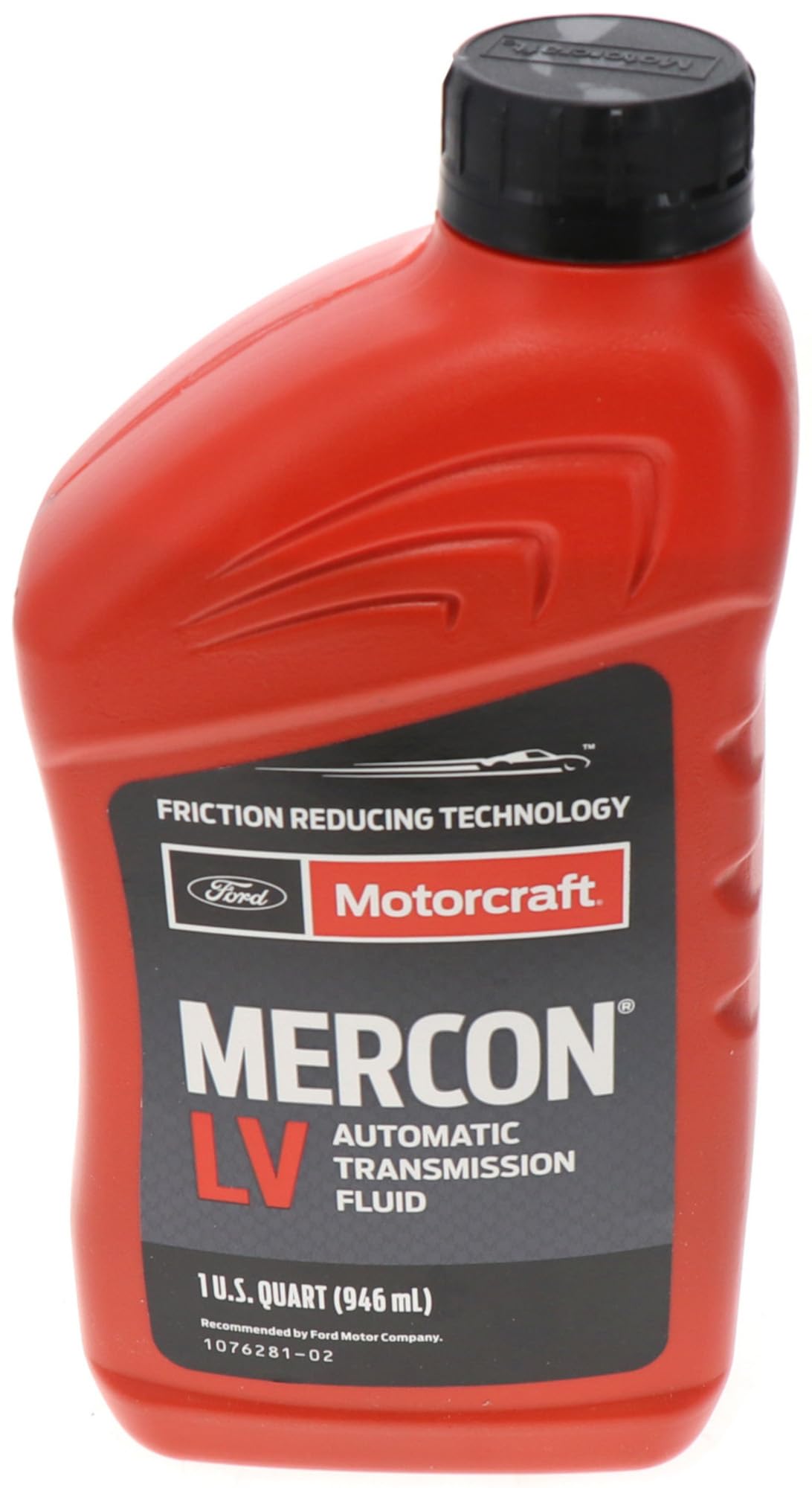
Motorcraft XT10QLVC is the factory-fill fluid for Ford vehicles that require Mercon LV — a low-viscosity specification used in the 6R80, 6F35, and 10R80 transmissions found in F-150, Mustang, Explorer, and many other models. The fluid is dyed red for easy leak detection and formulated with high-viscosity-index hydroprocessed base oils that maintain stable film strength across a wide temperature range. Owner feedback indicates that this fluid delivers crisp, consistent shifts even in cold climates where thicker fluids can cause delayed engagement.
The additive package is engineered specifically to prevent transmission shudder in lockup torque converters — a known failure mode in earlier Ford automatics when serviced with non-approved fluids. Mercon LV also includes rust and corrosion inhibitors, anti-foam agents, and a shear-stable viscosity modifier that resists permanent viscosity loss over the drain interval. Motorcraft specifies this fluid for applications where Mercon V, Mercon SP, or other older specs are not compatible, so cross-checking the owner’s manual is essential.
Extended owner reports from Ford truck and SUV forums show that consistent use of Mercon LV correlates with reduced valve-body wear and fewer solenoid malfunctions, especially in vehicles used for towing. The primary limitation is the narrow application envelope — this fluid is not backward-compatible with earlier Mercon V transmissions, nor is it suitable for non-Ford platforms. For any Ford or Lincoln vehicle that calls for Mercon LV, this is the reference fluid that delivers reliable OEM-spec performance.
What works
- OEM-spec Mercon LV formulation ensures correct friction and viscosity
- Red dye aids visual leak detection during routine inspection
- Strong shear stability helps maintain shift quality over the drain interval
What doesn’t
- Not compatible with older Mercon V or Mercon SP applications
- Limited to Ford/Lincoln platforms requiring this specific spec
4. Mobil 55221 3309 Automatic Transmission Fluid (1 Quart)

Mobil’s 55221 3309 is formulated to meet the JWS 3309 specification used by Volvo, Toyota, and several other Asian and European automakers in their four- and five-speed automatic transmissions. The fluid uses synthetic-blend base oils combined with a controlled-friction additive package that delivers smooth power transfer across normal ambient temperature ranges. Owner reports from Volvo P2-platform and Toyota Aisin-Warner transmissions indicate that this fluid restores quiet operation and eliminates gear-hunt behavior in units that have been serviced with incorrect fluids.
The additive package is designed to control transmission shudder — a symptom that often arises when the coefficient of friction drifts out of spec due to fluid aging or incompatibility. Mobil 55221 also includes anti-wear chemistry that helps extend gear and bearing life, along with oxidation inhibitors that maintain fluid properties over longer service intervals. The quart container is convenient for periodic top-ups or single drain-and-fill cycles on most passenger cars.
Long-term owner data from enthusiast communities shows that this fluid holds up well in both daily commuting and moderate performance driving, with consistent shift quality reported past the recommended change interval. The main limitation is its focused specification range — it is not suitable for transmissions that require Dexron VI, Mercon V, or other modern low-viscosity standards. For owners of vehicles that call for 3309, this fluid delivers reliable protection at a practical price point.
What works
- Direct match for JWS 3309 applications from Volvo and Toyota
- Controlled friction properties eliminate shudder and gear hunt
- Blended base oils balance oxidation resistance with cost efficiency
What doesn’t
- Not backward-compatible with older or newer fluid specs
- 1-quart size requires multiple units for full system flush
5. Toyota 00279-000T4-0 Lexus ATF Type T-IV (1 Quart)

Toyota’s 00279-000T4-0 is the factory-endorsed fluid for vehicles requiring Type T-IV automatic transmission fluid, including many Toyota and Lexus models from the early 2000s through the 2010s. This OEM fluid delivers the exact friction characteristics and viscosity profile that Aisin-Warner transmissions were designed around, which directly affects shift timing and torque converter lockup feel. Owner feedback consistently notes that genuine T-IV eliminates the hesitant shifting and occasional flaring that can appear when universal fluids are used.
From a formulation perspective, Type T-IV uses a specific blend of base oils and friction modifiers that maintain stable clutch engagement across the operating temperature range. The additive package includes anti-wear agents and oxidation inhibitors that help protect valve bodies and planetary gear sets over extended service intervals. Toyota specifies this fluid for numerous applications, including the A340, A650, and A750 series transmissions found in Tacoma, Camry, and LS models.
High-mileage owner reports from Toyota enthusiast forums indicate that consistent T-IV fluid use correlates with fewer solenoid issues and longer transmission life in vehicles that are serviced on schedule. The primary limitation is that Type T-IV is gradually being superseded by Toyota’s WS (World Standard) fluid in newer models, so buyers must verify compatibility with their specific model year. For older Toyota and Lexus vehicles that call for T-IV, this is the genuine OEM fluid that removes all specification doubt.
What works
- Genuine Toyota formulation eliminates aftermarket compatibility risks
- Restores proper shift timing in T-IV-spec transmissions
- Proven long-term reliability in high-mileage Toyota/Lexus vehicles
What doesn’t
- Not suitable for models requiring Toyota WS or other newer specs
- Limited to Toyota and Lexus applications with T-IV designation
Hardware & Specs Guide
Viscosity and Fluid Film Strength
Automatic transmission fluids are graded by their kinematic viscosity at 100 degrees Celsius, typically ranging from 5 to 8 centistokes for modern low-viscosity formulas such as Mercon LV and Toyota WS. Higher-viscosity fluids like Dexron III (roughly 7.5 cSt) provide thicker hydrodynamic films but can increase drag and reduce fuel economy. The correct viscosity ensures that hydraulic circuits maintain adequate pressure for clutch and band apply without excessive internal leakage past valve spools and seal rings.
Friction Coefficient and Shudder Control
Friction modifiers control the static and dynamic coefficient of friction at the clutch pack interface. A fluid with too high a static friction can cause harsh engagement or “garage shift” clunk, while too low a dynamic friction allows clutch slippage under load. ATF formulations include friction-duration additives that maintain a stable mu curve across thousands of clutch apply cycles, preventing the shudder that occurs when the friction coefficient varies during torque converter lockup.
Oxidation Resistance and Fluid Life
Oxidation stability is measured by how well the fluid resists viscosity increase and acid formation when exposed to heat and air over time. Base oil quality — Group II hydroprocessed, Group III synthetic, or Group IV PAO — directly affects oxidation resistance. Additive packages include phenolic and amine antioxidants that extend fluid life, along with dispersants that keep sludge and varnish suspended rather than depositing on valve-body surfaces. Higher oxidation resistance supports longer drain intervals under severe service conditions.
Anti-Wear and Extreme Pressure Protection
Phosphorus-based anti-wear additives such as zinc dialkyldithiophosphate (ZDDP) form protective films on gear teeth, bearing surfaces, and pump components. In heavy-duty transmissions, additional extreme-pressure additives may be required to prevent scuffing under high torque loads. The correct balance of anti-wear chemistry is critical in transmissions with planetary gear sets that experience high contact pressures during towing or performance driving, where insufficient protection leads to pitting and eventual failure.
FAQ
What happens if I use the wrong ATF specification in my transmission?
Can I mix two different ATF brands if they meet the same OEM spec?
How often should I change my ATF in normal driving conditions?
Is synthetic ATF always better than conventional ATF?
Final Thoughts: The Verdict
For most buyers, the best atf oil winner is the Genuine Honda 08200-9008 DW-1 because it delivers factory-spec friction tuning and proven long-term durability for Honda and Acura transmissions at a reasonable service cost. If you need a fully synthetic fluid for a heavy-duty Allison application, grab the Castrol TranSynd 668. And for an affordable OEM-spec option that covers a wide range of Ford vehicles, nothing beats the Motorcraft XT10QLVC Mercon LV.

Certification: BSc in Mechanical Engineering
Education: Mechanical engineer
Lives In: 539 W Commerce St, Dallas, TX 75208, USA
Md Amir is an auto mechanic student and writer with over half a decade of experience in the automotive field. He has worked with top automotive brands such as Lexus, Quantum, and also owns two automotive blogs autocarneed.com and taxiwiz.com.