Fogged-up car windows aren’t just an annoyance — they’re a genuine visibility hazard that turns every morning commute and sudden rain shower into a guessing game. The root cause is temperature differential and trapped cabin moisture, but the fix doesn’t require running the defroster at full blast or wiping with a dry rag that just smears the haze around. The right treatment changes how moisture behaves on the glass, keeping it from condensing into that dangerous film.
I’m Amir — the founder and writer behind Four Wheel Ask. I’ve spent years analyzing automotive surface chemistry, windshield coatings, and interior detailing products to understand what actually prevents fog formation versus what just claims to.
After examining dozens of formulations and reading hundreds of owner reports, these are the most effective options for keeping your view clear. This guide will help you find the best anti fog solution for car windows that actually lasts.
How To Choose The Best Anti Fog Solution For Car Windows
Not all anti-fog products work the same way. Some rely on a chemical surfactant that absorbs moisture, while others form a hydrophobic layer that prevents condensation from sticking. The choice depends on whether you need a quick wipe-down or a long-lasting treatment that survives several days of temperature swings.
Surfactant vs. Hydrophobic Coating
Surfactant-based sprays lower the surface tension of water, causing it to spread into a thin, transparent sheet rather than forming fog droplets. These work well for immediate use but can wear off after a few days. Hydrophobic coatings, on the other hand, repel water entirely, causing it to bead and roll away. These last longer but require more careful application and curing time.
Application Method and Residue
An anti-fog solution is only as good as its application routine. Aerosol sprays offer even coverage and require minimal wiping, while liquid drops or pump sprays need a microfiber cloth to spread the formula evenly. Products that leave a ghostly haze or oily residue on the glass will impair night driving visibility and defeat the purpose of the treatment.
Compatibility with Tinted Windows
Ammonia is the primary enemy of window tint film. Many glass cleaners contain ammonia to cut through grime, but repeated use will bubble and discolor tint. A true anti-fog solution for cars should be ammonia-free and tint-safe, preserving both the film and the clarity of the glass underneath.
Quick Comparison
On smaller screens, swipe sideways to see the full table.
| Model | Category | Best For | Key Spec | Amazon |
|---|---|---|---|---|
| Rain-X Glass Treatment & Anti-Fog Combo | Spray + Wipe | Long-lasting fog prevention | Hydrophobic barrier coating | Amazon |
| Invisible Glass 91164-3PK Aerosol | Aerosol Spray | Streak-free daily cleaning | Ammonia-free foam formula | Amazon |
| AstroAI Windshield Cleaner Tool | Tool Kit | Reaching awkward dashboard corners | Telescoping handle 15.9-21in | Amazon |
| Boat Juice 2in1 Cleaner & Anti-Fog | Marine Spray | High-humidity marine environments | 16oz 2-in-1 formula | Amazon |
| Evelots Car Windshield Chamois Sponge | Physical Sponge | On-the-go fog removal without chemicals | 5 x 3.25 x 1.5 inch sponge | Amazon |
In‑Depth Reviews
1. Rain-X Glass Treatment & Anti-Fog Combo

The Rain-X combo delivers a true hydrophobic barrier that prevents moisture from forming a continuous fog layer on the glass. Unlike surfactant sprays that merely spread the water out, this coating forces condensation to bead into tiny droplets that evaporate quickly or get swept away by airflow. Users consistently report that a single application lasts multiple weeks through temperature swings and daily driving.
The application process requires a bit of patience — you need to apply the treatment, let it haze, then buff it off completely with a clean microfiber cloth. Any residual film left on the glass can cause a slight rainbow effect under certain lighting, but a thorough buff eliminates this. The two-bottle system (glass treatment plus anti-fog) covers both beading and fog prevention.
Tint-safe and ammonia-free, it works on front windshields, side windows, and rear glass without risking damage to aftermarket film. The only downside is that the anti-fog component wears slightly faster than the rain-repellent treatment, so reapplication of the anti-fog bottle may be needed mid-season for those in humid climates.
What works
- Long-lasting hydrophobic barrier resists fog for weeks
- Combo kit treats rain repellent and anti-fog in one purchase
- Safe on tinted windows with no ammonia
What doesn’t
- Requires careful buffing to avoid residual film
- Anti-fog component wears faster than rain treatment
2. Invisible Glass 91164-3PK Premium Aerosol
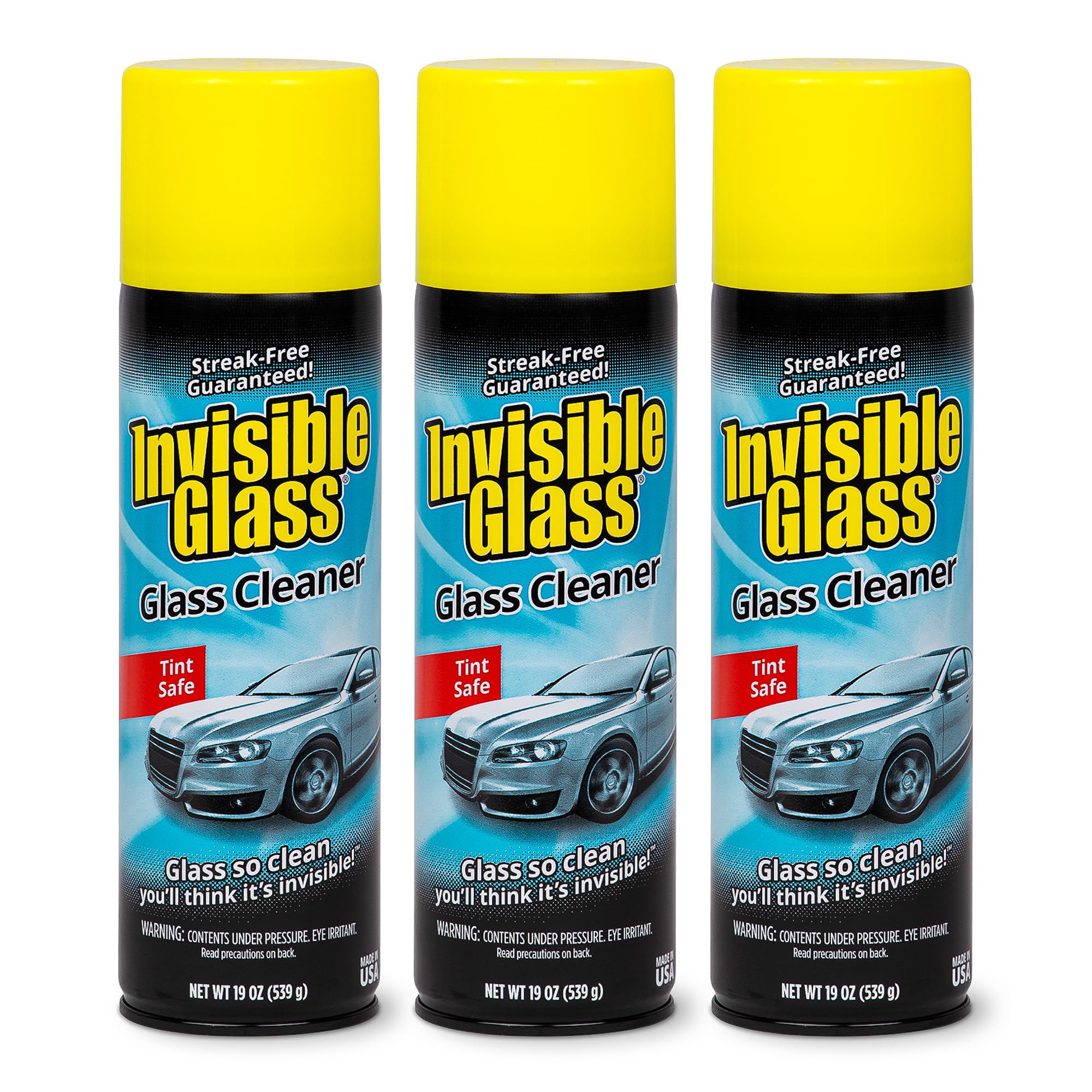
Invisible Glass is the top-selling aerosol glass cleaner in the automotive space, and for good reason — its clear-dry foam formula contains no soaps, scents, or dyes that leave behind the ghosting that makes fog worse. The unique foam consistency clings to vertical glass surfaces without dripping, scrubbing away road grease and fingerprint oils that attract condensation.
This is primarily a cleaner rather than a dedicated anti-fog coating, but the value here is that clean, oil-free glass is the prerequisite for any anti-fog treatment to bond properly. Users who pair this as a pre-clean step before applying a coating like Rain-X report dramatically better performance and longer life from the coating. Straight out of the can, it eliminates the residue that previously held moisture on the glass.
The pack of three 19-ounce cans provides enough volume to clean every window in a sedan multiple times over. It is fully safe for tinted windows and stainless steel surfaces. The aerosol nozzle delivers a tight spray pattern that reduces overspray onto the dashboard, which is a common frustration with trigger sprayers.
What works
- Zero residue or streaky films left behind
- Foam clings to vertical glass without dripping
- Ammonia-free and safe for factory and aftermarket tint
What doesn’t
- Not a dedicated anti-fog coating — requires separate treatment for fog prevention
- Aerosol cans cannot be refilled or reused
3. AstroAI Windshield Cleaner Tool
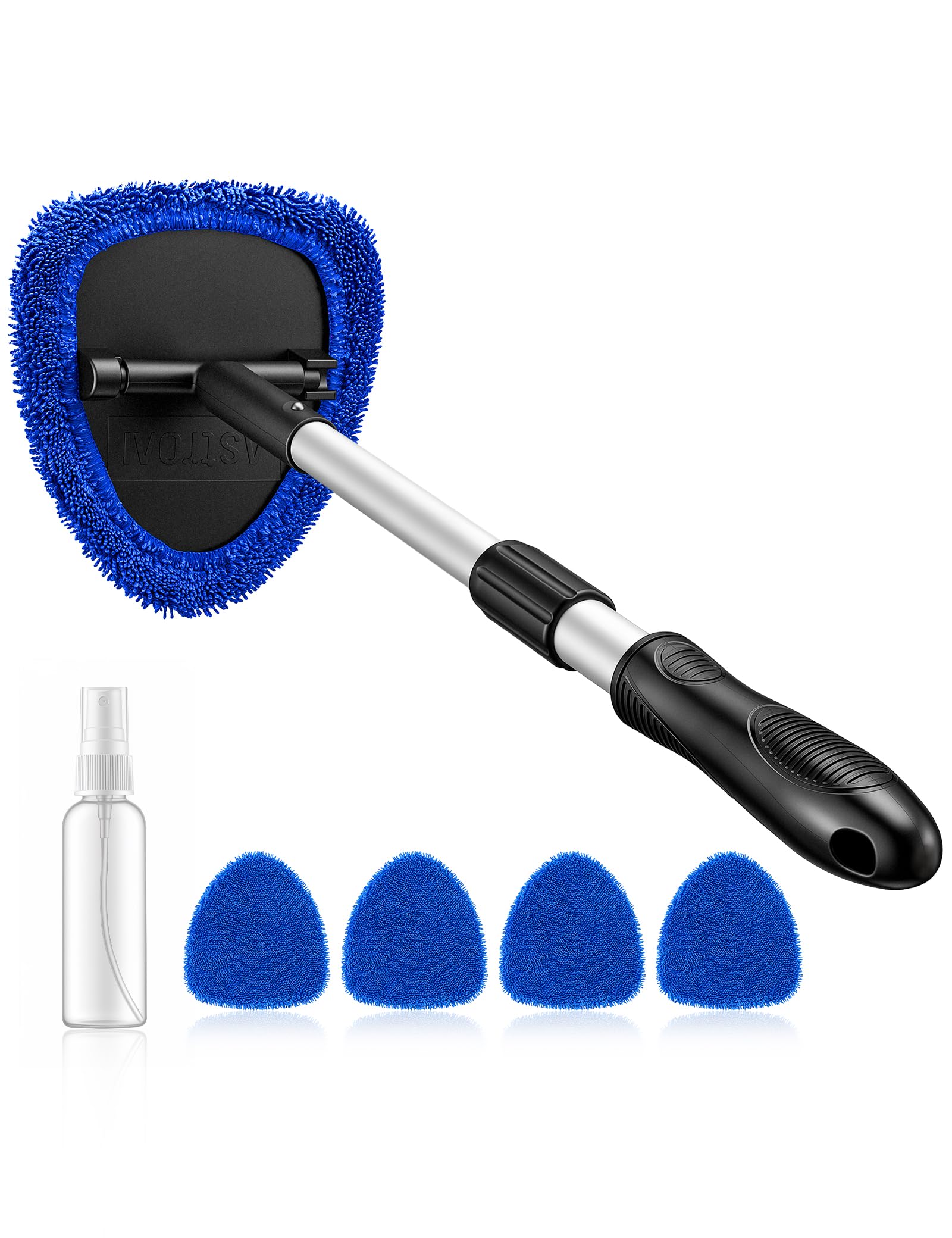
The AstroAI tool addresses the physical challenge that makes inner windshield fog so persistent — you cannot reach the lower corners of the glass without contorting your body and smearing the haze into a bigger mess. The telescoping handle extends from 15.9 to 21 inches, and the 180-degree rotating head lets the microfiber pad apply even pressure across the entire glass surface.
It comes with four high-density reusable microfiber pads and a 60ml spray bottle, making it a complete kit for fog removal without requiring any chemical treatment. The microfiber material absorbs the moisture that causes fog, and because the pads are machine-washable, you get dozens of uses before needing to replace them. This is a purely physical solution — no surfactants, no coatings.
For drivers who want to avoid chemicals altogether or need a quick interior detailing between full treatments, this tool delivers. The pads pick up the oily film that accumulates on the inside windshield over time, which is often the hidden trigger for fog formation. The only catch is that using it dry on a heavily soiled window can push dirt around rather than absorbing it.
What works
- Reaches lower windshield corners without awkward bending
- Reusable microfiber pads are machine washable
- Comes with storage bag and spray bottle
What doesn’t
- Does not apply a chemical anti-fog barrier
- Pads may smear heavy grime if used dry initially
4. Boat Juice 2in1 Boat Glass Cleaner & Anti-Fog Spray
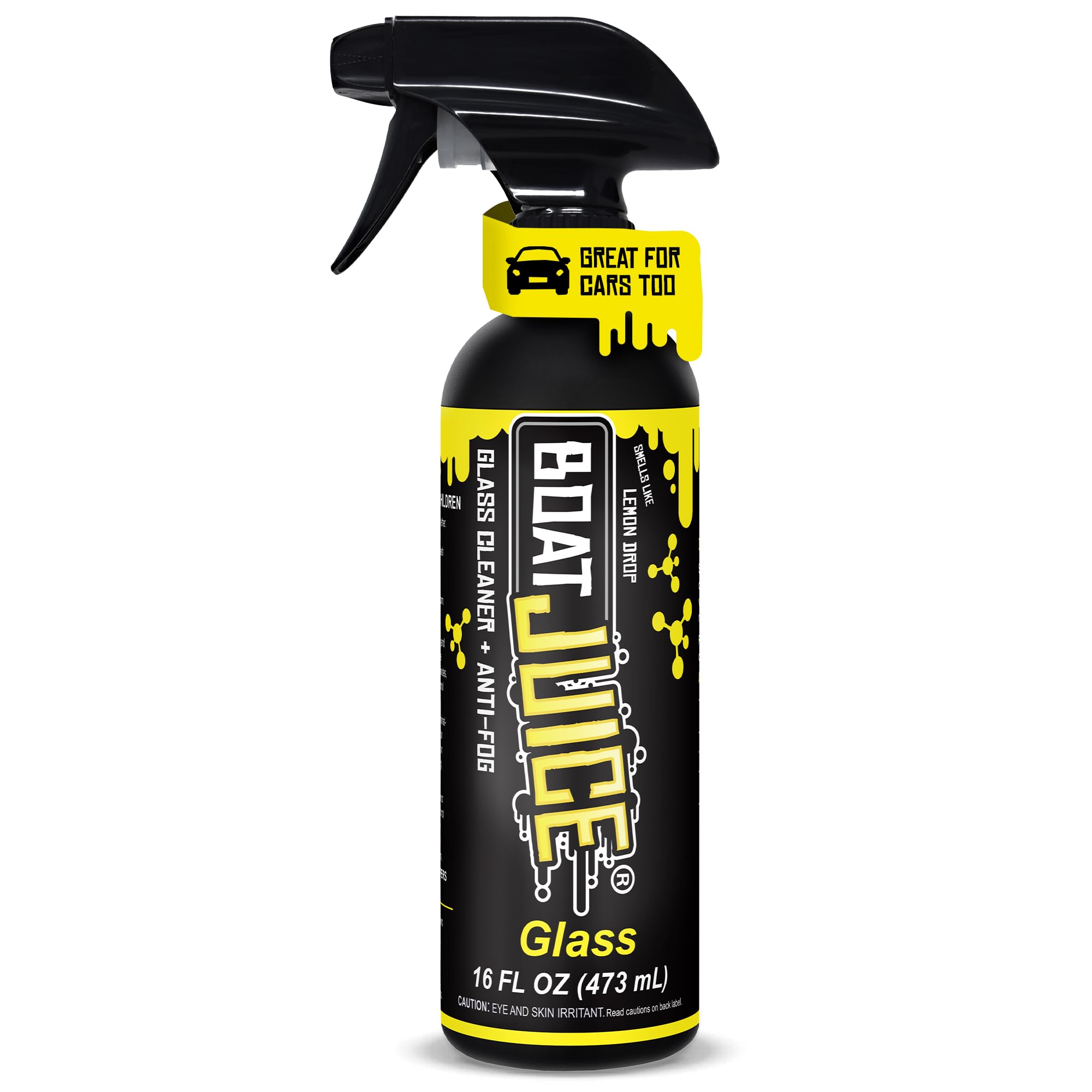
Boat Juice was engineered for the extreme humidity and salt-spray conditions of marine environments, which makes it an overachiever for automotive use. The 2-in-1 formula combines a glass cleaner with a built-in anti-fog barrier, so a single spray and wipe step removes dirt while depositing the fog-resistant layer. The lemon drop scent is a nice sensory upgrade over chemical-smelling alternatives.
In car interiors, this spray cuts through the greasy film that builds up from off-gassing plastics and skin oils, leaving a surface that resists condensation for several days. Users who tested it in high-humidity climates report that the fog-defeating effect lasts through at least three or four mornings of heavy dew before needing a re-spray. It is completely ammonia-free and safe for tinted windows and even isinglass boat enclosures.
The 16-ounce bottle is smaller than the bulk aerosol packs, but the pump sprayer gives precise control over how much product you use, reducing waste. The trade-off is that the anti-fog layer is less durable than the hydrophobic barrier from a dedicated coating product like Rain-X, making this ideal for weekly maintenance rather than a set-and-forget treatment.
What works
- Cleans and deposits anti-fog barrier in one step
- Ammonia-free with a pleasant lemon scent
- Effective in extreme humidity conditions
What doesn’t
- Anti-fog layer requires reapplication every few days
- Smaller bottle size compared to aerosol options
5. Evelots Car Windshield Chamois Sponge, 4-Pack
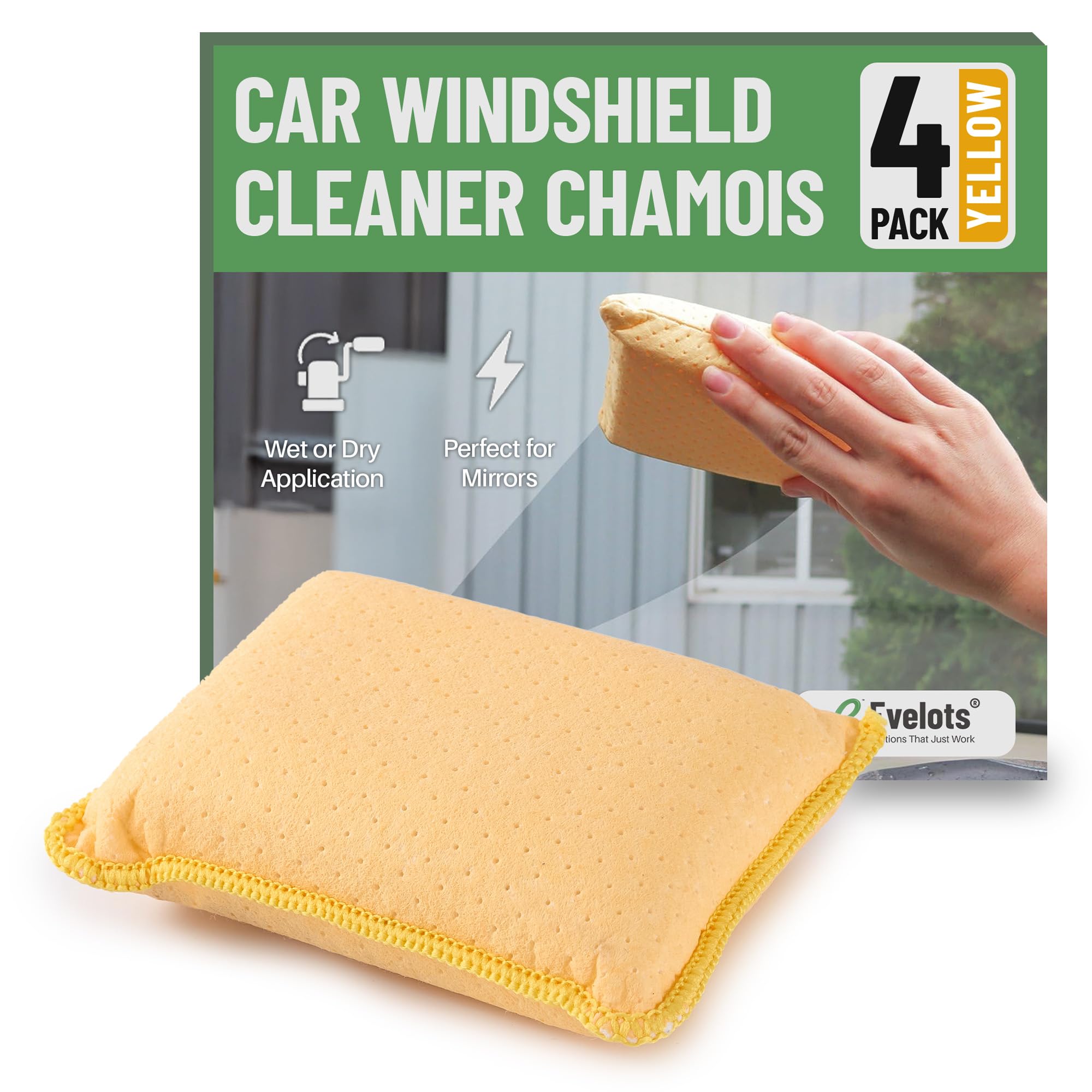
The Evelots chamois sponges are the simplest anti-fog tool you can keep in your glove box — a dry synthetic sponge that absorbs the moisture layer before it turns into dense fog. Each sponge measures 5 inches by 3.25 inches by 1.5 inches thick, small enough to tuck into a door pocket or center console. No chemicals, no spray, no drying time.
When the windshield starts to fog during a cold morning, a single wipe across the affected area clears the view instantly. The material absorbs the trapped cabin moisture rather than pushing it around. Users report that a quick pass right before driving eliminates the wait time for the defroster to work. The sponge can be used wet or dry, and it is machine washable for dozens of cycles.
The limitation is obvious: this is a reactive solution, not a preventative one. It removes existing fog but does not prevent new fog from forming as the temperature difference persists. For drivers in climates where fog is a rare nuisance rather than a daily battle, these sponges offer the fastest and cheapest fix. Four sponges in a pack means one for each car plus spares.
What works
- Instant fog removal without any chemicals or sprays
- Compact size fits in any glove box or door pocket
- Machine washable and reusable
What doesn’t
- Only removes fog reactively — does not prevent future fogging
- Not effective on heavily soiled glass without a cleaning agent
Hardware & Specs Guide
Hydrophobic vs. Hydrophilic Chemistry
Hydrophobic coatings cause water to bead up and roll off the glass surface, making them effective against rain and light fog. Hydrophilic treatments spread water into an invisible sheet, preventing the formation of light-scattering droplets that cause fog. For interior car glass, hydrophilic surfactants are generally more effective because they keep the surface optically clear even when condensation occurs.
Microfiber Density and Grip
Microfiber pads are rated by GSM (grams per square meter). Higher GSM (300–400) traps more moisture and holds cleaning solution better, while lower GSM (200–250) is better for final buffing to remove residue. The AstroAI kit uses high-density pads that fall in the 300+ range, which gives them good water absorption capacity without leaving lint behind.
FAQ
How often should I reapply an anti-fog spray to my car windshield?
Can I use an anti-fog solution on my car’s side mirrors?
Will anti-fog spray damage my window tint?
Final Thoughts: The Verdict
For most buyers, the anti fog solution for car winner is the Rain-X Glass Treatment & Anti-Fog Combo because its hydrophobic barrier delivers weeks of fog-free driving with a single application. If you want a streak-free cleaner that preps the glass perfectly before applying a coating, grab the Invisible Glass Premium Aerosol. And for a quick, chemical-free fog fix that lives in your glove box, nothing beats the Evelots Chamois Sponge 4-Pack.

Certification: BSc in Mechanical Engineering
Education: Mechanical engineer
Lives In: 539 W Commerce St, Dallas, TX 75208, USA
Md Amir is an auto mechanic student and writer with over half a decade of experience in the automotive field. He has worked with top automotive brands such as Lexus, Quantum, and also owns two automotive blogs autocarneed.com and taxiwiz.com.