A fat tire electric bike that costs four figures can still deliver quality if you know where factory spending actually goes — the frame welds, the cell brand in the battery pack, the gauge of the brake rotors. Most budget-class models cut corners on one of those three, and that single compromise determines whether the bike lasts two seasons or five. I sorted through dozens of sub-thousand-dollar platforms to find the ones where the engineering priorities match what a practical buyer actually needs.
I’m Amir — the founder and writer behind Four Wheel Ask. My approach to e-bike analysis focuses on cross-referencing component specifications with long-term owner feedback to identify consistent failure points, real-world range claims, and build quality patterns that the marketing copy never mentions.
After analyzing hundreds of owner reports and spec sheets, I’ve identified the best affordable fat tire electric bike models that deliver the best value and performance without hiding critical compromises.
How To Choose The Best Affordable Fat Tire Electric Bike
Fat tire e-bikes occupy a unique position in the market — they promise off-road capability, snow-and-sand traction, and a commanding riding position, all while staying accessible to riders who don’t want to spend luxury-vehicle money. The challenge is that the affordable segment forces trade-offs in motor quality, battery capacity, and component durability. Understanding which trade-offs are acceptable and which break the deal is the difference between a smart purchase and a regret.
Motor Power and Torque Delivery
Peak power numbers (often advertised as “1800W peak” or “9000W peak”) capture short bursts of energy, not sustained output. What matters more for daily riding is the nominal continuous power rating and the torque measured in Newton-meters (Nm). A motor producing 85–110 Nm of torque will climb moderate hills without straining, while anything below 60 Nm will struggle on inclines with a heavier rider. Hub motors dominate this price bracket, and that is fine — they require less maintenance than mid-drive units — but pay attention to whether the motor is geared or direct-drive. Geared hub motors offer better hill-climbing at the cost of slightly higher wear.
Battery Capacity and Real-World Range
Battery specs are measured in watt-hours (Wh), which is the product of voltage (V) and amp-hours (Ah). A 48V 17.5Ah battery equals 840 Wh; a 48V 25Ah battery equals 1200 Wh. Marketing range claims (up to 85 miles) almost always assume the lightest rider on flat ground at the lowest pedal-assist level with zero throttle use. Real-world range under mixed throttle-and-pedal use is typically 40–60 percent of the advertised number. Prioritize models with UL 2849 or UL 2271 certification, which verifies that the battery management system protects against overcharge, over-discharge, and thermal runaway.
Frame Material, Suspension, and Weight
Aluminum alloy frames dominate the affordable segment for good reason — they offer a favorable strength-to-weight ratio without the cost of carbon fiber. High-carbon steel frames are heavier (often adding 10–15 pounds) and prone to rust if the paint chips. Full suspension (front fork plus rear shock) improves comfort on trails but adds weight and maintenance complexity; a quality front suspension fork alone is sufficient for most commuters and light trail riders. Fat tires (4.0–5.0 inches wide) provide natural shock absorption at lower pressures, so a rigid frame with good tires can still be comfortable.
Braking Systems and Stopping Confidence
Hydraulic disc brakes deliver consistent stopping power with less hand effort than mechanical disc brakes, especially in wet conditions or on long descents where brake fade becomes a factor. At the affordable end, many bikes spec mechanical disc brakes with 180 mm rotors, which stop adequately but require more frequent cable adjustments. Four-piston hydraulic brakes, like those found on the Wallke Titan X1, are rare at this price point and indicate a serious investment in rider safety. Regardless of type, ensure replacement pads and rotors are readily available and not proprietary.
Quick Comparison
On smaller screens, swipe sideways to see the full table.
| Model | Category | Best For | Key Spec | Amazon |
|---|---|---|---|---|
| Aipas M1 Pro | Fat Tire Ebike | All-Around Value | 1800W Peak, 48V 17.5Ah, 85 Mi Range | Amazon |
| Jasion Thunder | Fat Tire Ebike | Power & Range | 1800W Peak, 48V 18Ah, 80 Mi Range | Amazon |
| Gotrax R7 | Fat Tire Ebike | City Commuting | 750W Motor, 48V 10.4Ah, 20″ Tires | Amazon |
| XVYOOYVX Dual Motor | Dual Motor Ebike | Extreme Power | 9000W Peak, 1972Wh, 47 MPH | Amazon |
| Wallke Titan X1 | Fat Tire Ebike | Premium Build | 3800W Peak, 1440Wh, Carbon Fiber | Amazon |
| KAIJIELAISI AWD | AWD Ebike | All-Terrain Grip | 4000W Peak, 48V 22.4Ah, Dual Motor | Amazon |
| GLOBALKEEP Folding | Folding Ebike | Portability | 48V 25Ah, Folding Frame, UL2849 | Amazon |
| Aipas M2 Pro | Fat Tire Ebike | Off-Road Capability | 1800W Peak, 48V 17.5Ah, Dual Suspension | Amazon |
| Cendouk C5PRO | Dual Motor Ebike | Top Speed | 9000W Peak, 52V 34Ah, 47 MPH | Amazon |
In‑Depth Reviews
1. Aipas M1 Pro
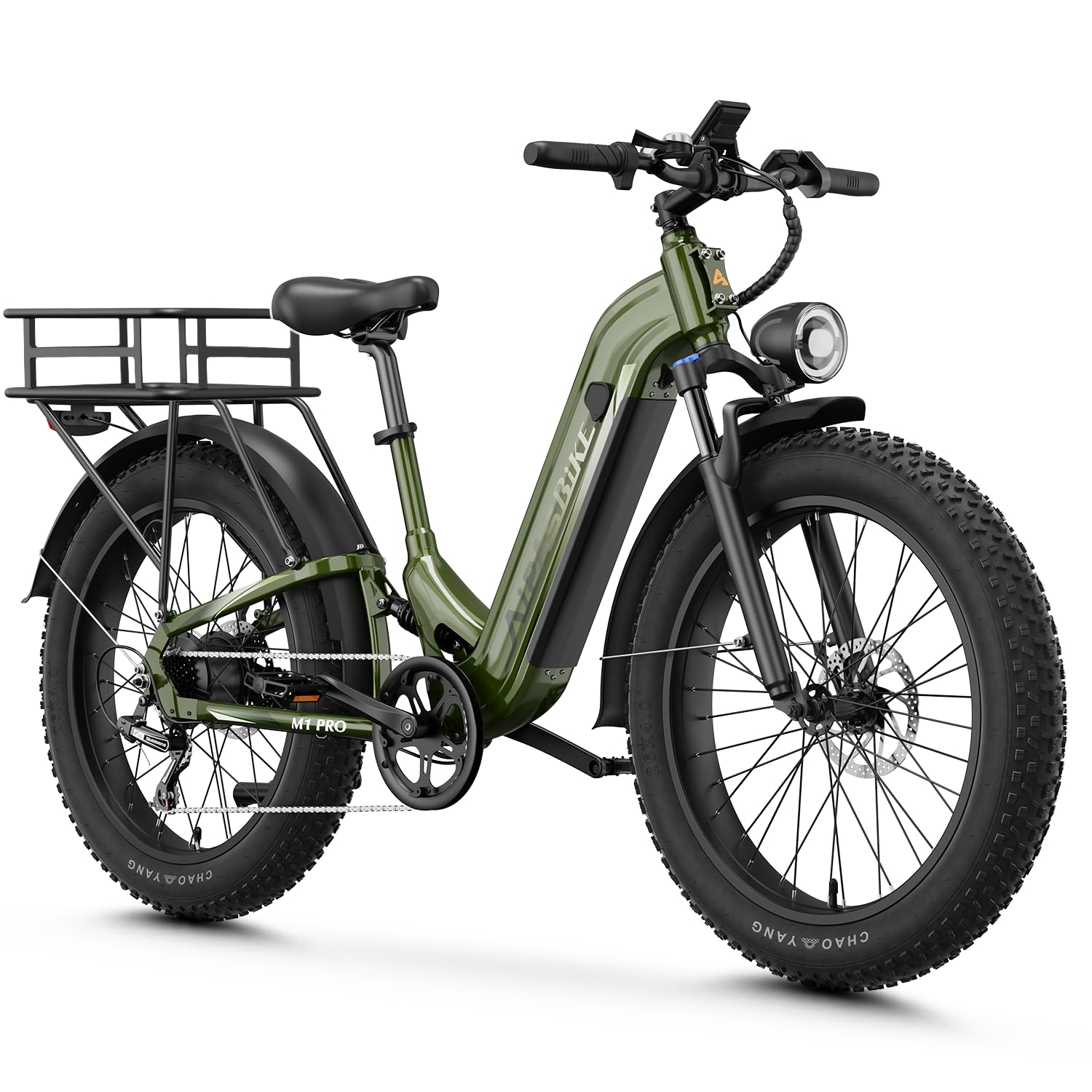
The Aipas M1 Pro strikes the hardest-to-find balance in this category: it delivers genuine off-road capability with its 1800W peak motor and 110 Nm of torque, yet keeps the price at a point where the value proposition is impossible to ignore. Owner reports consistently highlight the 36 MPH top speed and 85-mile advertised range as realistic under mixed riding conditions, with several verified buyers noting that the bike handles steep inclines and loose terrain without the motor straining or overheating. The step-through frame design also broadens accessibility for shorter riders or those who prioritize easy mounting and dismounting.
The 48V 17.5Ah removable battery provides enough capacity for a full day of mixed commuting and trail riding, and the LCD display with USB charging port adds practical convenience for navigation or phone charging on the go. The dual suspension system — lockable front fork plus rear shock — smooths out washboard trails and potholed pavement alike, though the high-carbon steel frame adds noticeable heft compared to aluminum alternatives. Assembly is straightforward, with multiple reviewers reporting less than an hour from box to first ride.
Where the M1 Pro makes its strongest case is in the consistency of positive long-term feedback — owners report hundreds of miles without electrical failures or battery degradation, which is unusual at this price tier. The 180 mm mechanical disc brakes stop adequately but require more hand strength than hydraulic units, and the bike’s weight (around 75 pounds) makes lifting it onto a rack or carrying it up stairs a two-person job. For riders seeking a do-everything fat tire e-bike that doesn’t cut corners on the powertrain, this is the benchmark.
What works
- Powerful 1800W peak motor with genuine hill-climbing torque
- Full dual suspension provides comfort on rough terrain
- Step-through frame and adjustable saddle fit a wide height range
What doesn’t
- Mechanical disc brakes require more hand effort than hydraulic systems
- High-carbon steel frame adds significant weight
2. Jasion Thunder
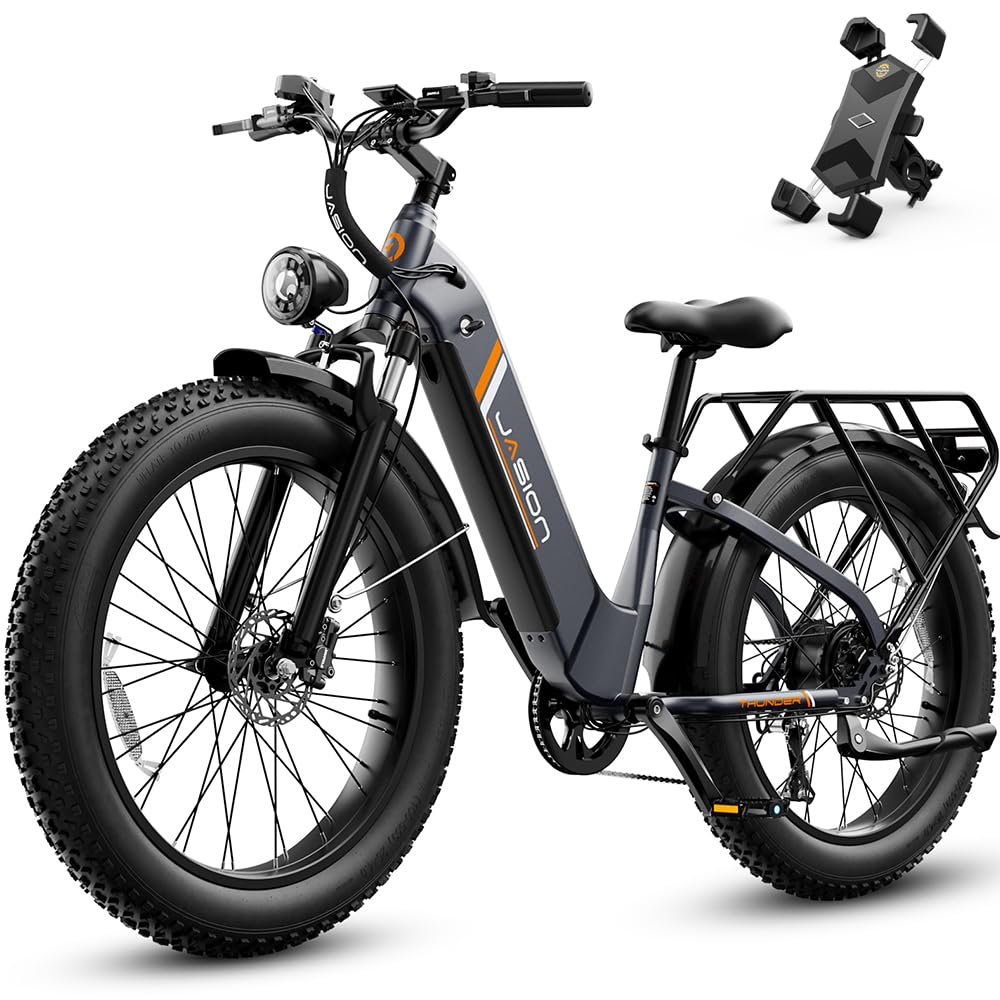
The Jasion Thunder positions itself as a long-range performer with a 48V 18Ah battery that owners consistently report delivers 50–60 miles of real-world range under mixed throttle-and-pedal use — close to the advertised 80-mile claim when using lower assist levels. The 1800W peak motor produces 85 Nm of torque, which is sufficient for moderate hill climbs and quick acceleration from a stop. The 26-inch by 4-inch fat tires provide excellent flotation on sand, snow, and gravel, and the 400-pound load capacity means this bike can carry a passenger or heavy cargo without handling degradation.
One standout feature is the inclusion of hydraulic disc brakes at this price point — a rarity that delivers consistent, low-effort stopping power even in wet conditions. The smart display with Bluetooth connectivity allows riders to track mileage, speed, and battery health through a mobile app, and the remote security lock adds a layer of theft deterrence that is uncommon in this segment. Assembly is minimal, with the bike arriving almost fully assembled and requiring only handlebar, pedal, and seat installation.
Owner reviews are overwhelmingly positive, with particular praise for the build quality and the responsiveness of the twist-grip shifter paired with the 7-speed Shimano drivetrain. The primary caveat comes from legal classification — multiple owners note that the bike’s speed capability (over 28 MPH) may require registration and insurance in certain states, so verifying local regulations before purchase is essential. The seat comfort is adequate for shorter rides but may need upgrading for all-day use.
What works
- Hydraulic disc brakes provide excellent stopping power with minimal hand effort
- 400-pound load capacity allows passenger or heavy cargo use
- Bluetooth-enabled smart display with remote security lock
What doesn’t
- Speed capability may require registration in some states
- Stock seat is adequate but not plush for long days
3. Gotrax R7
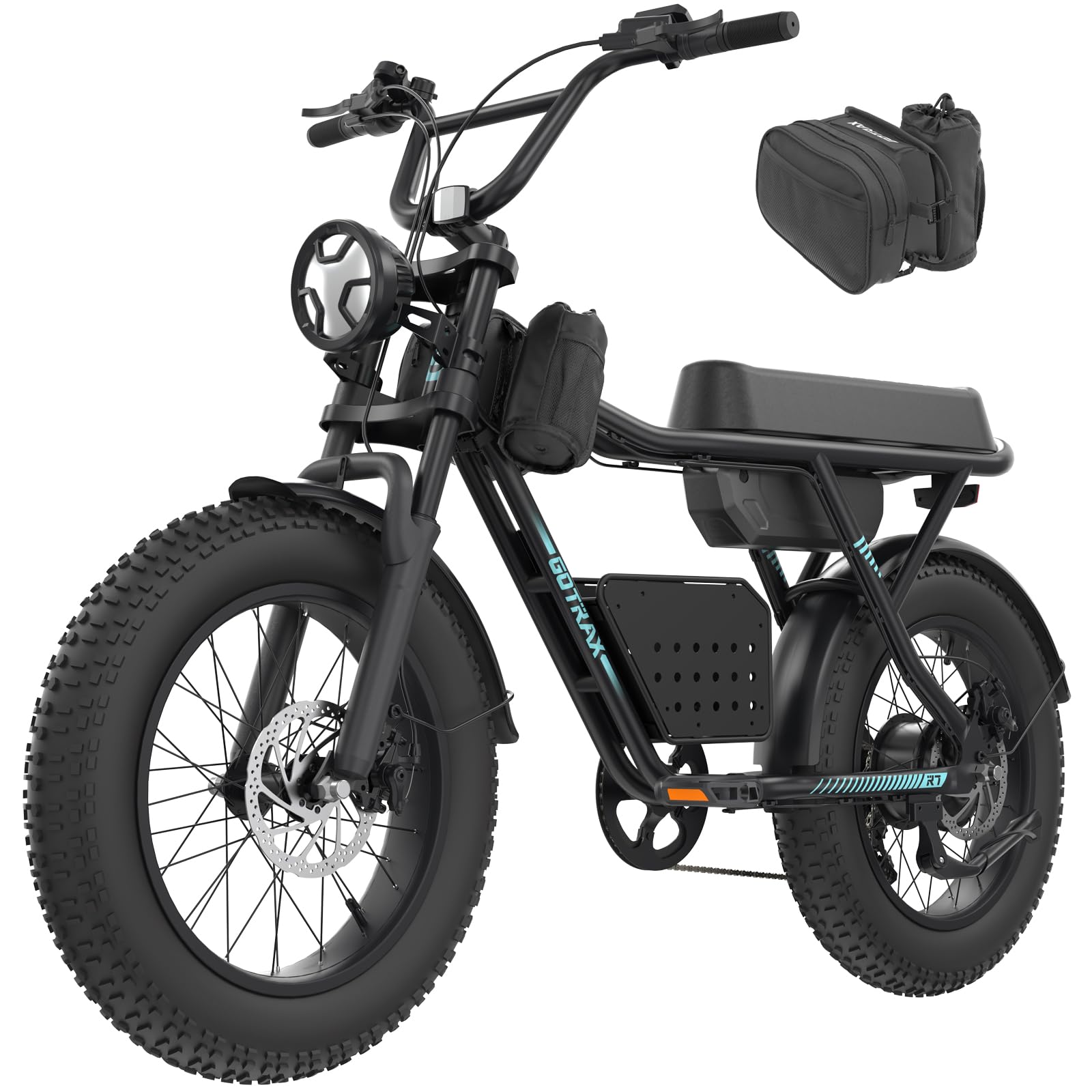
The Gotrax R7 takes a more measured approach to power — a 750W motor with a 25 MPH top speed — and focuses instead on ride refinement and practical utility. The 20-inch by 4-inch fat tires paired with a front suspension fork deliver a noticeably plush ride on urban pavement, gravel paths, and packed dirt, and the oversized padded saddle enhances comfort for riders who plan to spend hours in the saddle. The included front basket and frame bag add genuine cargo capacity without requiring aftermarket accessories, making this a strong contender for grocery runs and daily commuting.
The UL 2849 certification provides independent verification that the electrical system — including the 48V 10.4Ah battery and charger — meets safety standards for thermal management and overcharge protection, a consideration that matters for indoor charging. The 7-speed gearing and 5-level pedal assist give riders fine-grained control over effort and speed, and the LCD display presents speed, distance, and battery level clearly even in direct sunlight. Assembly is straightforward thanks to 90 percent pre-assembly, with most owners reporting a 20–30 minute setup time.
Where the R7 compromises is in outright power and range — the 750W motor is adequate for moderate hills but will struggle on steep, sustained inclines, and the 10.4Ah battery limits real-world range to roughly 25–35 miles under throttle use. The alloy steel frame is durable but heavy, and some owners report difficulty finding repair information for rear-wheel removal after a flat tire. For urban riders who prioritize comfort, utility, and safety certification over peak speed, this is a thoughtfully designed package.
What works
- Excellent ride comfort from 20-inch fat tires and front suspension
- Included basket and frame bag add genuine utility
- UL 2849 certified for safe indoor charging
What doesn’t
- 750W motor struggles on steep, sustained hills
- Limited real-world range of 25–35 miles under throttle
4. XVYOOYVX Dual Motor
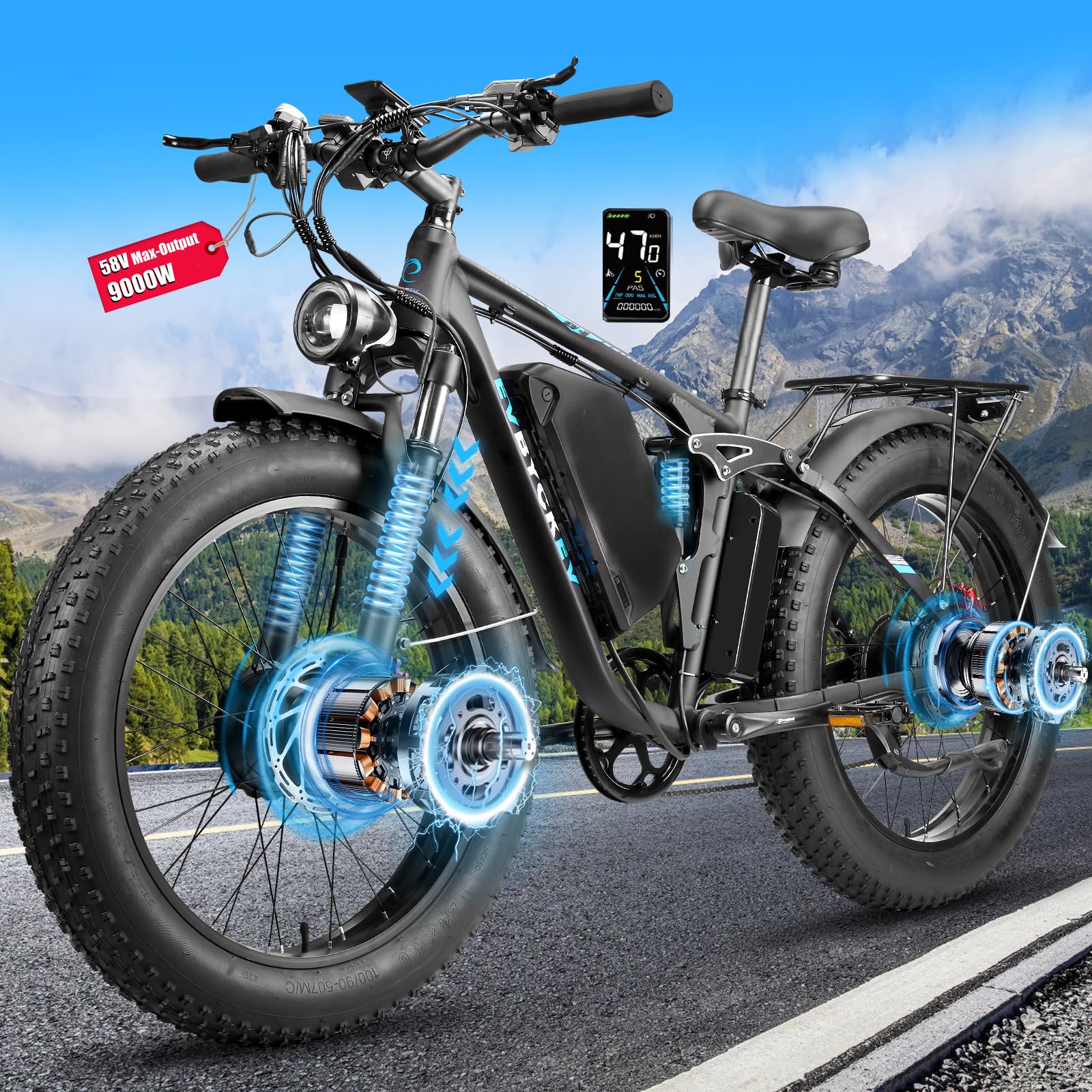
The XVYOOYVX Dual Motor ebike represents a significant step up in performance capability, with a combined peak output of 9000W from its dual motors and an extraordinary 220 Nm of torque that enables it to climb 45-degree slopes and reach speeds of 47 MPH. The 1972Wh battery pack — one of the largest in this roundup — provides a claimed range of 35–105 miles depending on riding mode, and the 24-inch by 4-inch fat tires offer a nimble, responsive feel that balances trail agility with street stability. This is not a casual cruiser; it is a high-performance machine built for riders who want motorcycle-like acceleration from an e-bike platform.
The full suspension system combines lockable front forks with a rear hydraulic shock, and the high-intensity ventilated seat further reduces fatigue on rough terrain. The 6061 aluminum alloy frame keeps weight manageable relative to the power output, and the included 600-lumen LED headlight provides genuine nighttime visibility rather than the token glow found on most budget bikes. Assembly is 90 percent pre-completed, and the LCD display interface is intuitive enough for beginners despite the bike’s advanced capabilities.
Owner feedback emphasizes the sheer thrill of the acceleration and the bike’s ability to maintain high speeds on long grades without noticeable power fade. The primary drawbacks are the lack of a detailed user manual — several owners noted that setup and tuning required YouTube video guidance — and the fact that tires may need upgrading for riders who push the bike to its top speed regularly. The 12-month warranty and lifetime technical support provide reasonable peace of mind, though the bike’s complexity means that DIY repairs are more involved than on single-motor platforms.
What works
- Dual motors deliver genuine 47 MPH top speed with 220 Nm torque
- Massive 1972Wh battery provides class-leading range
- Full suspension and 6061 aluminum frame absorb rough terrain
What doesn’t
- User manual lacks detail, requiring external video guidance
- Stock tires may not be adequate for sustained high-speed riding
5. Wallke Titan X1
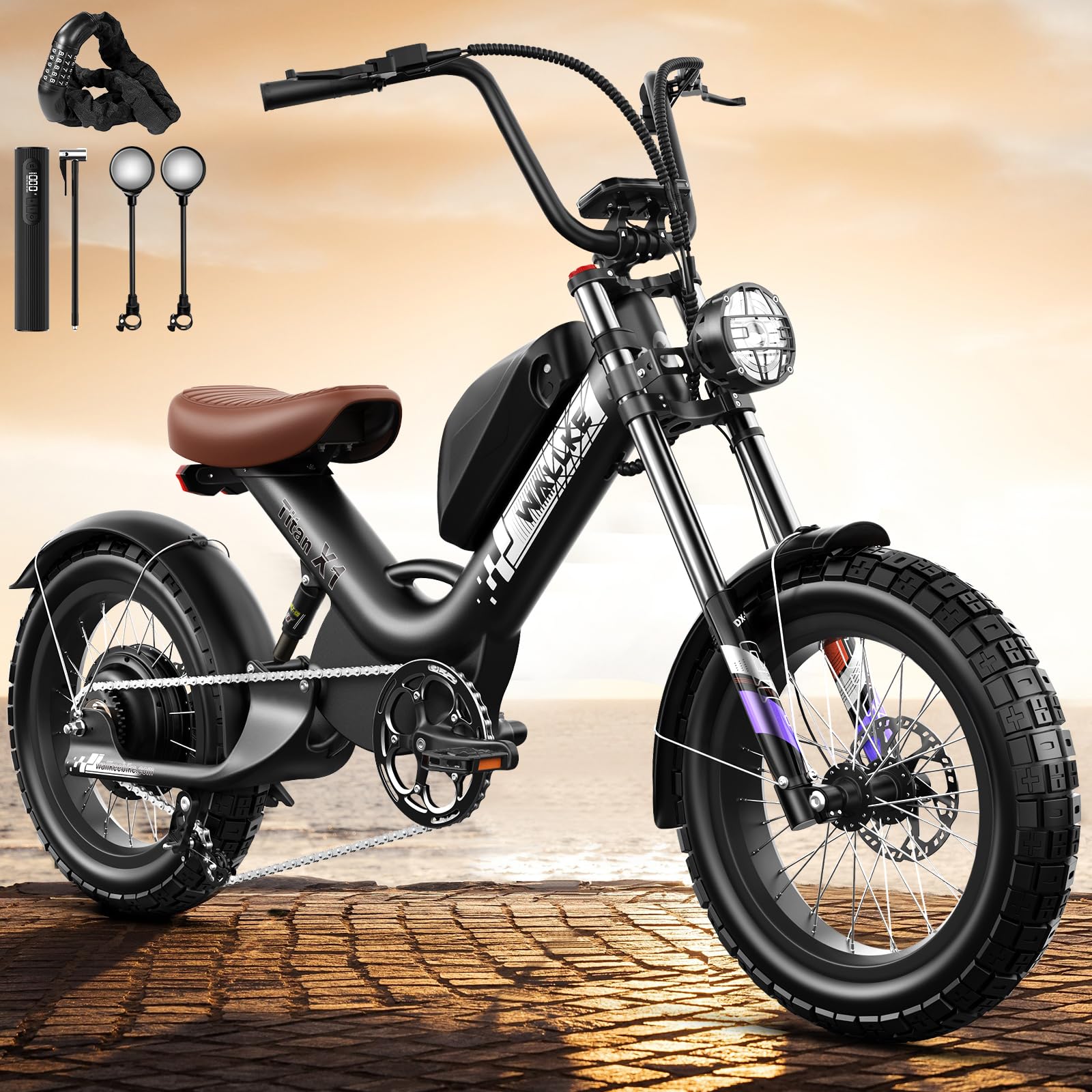
The Wallke Titan X1 is the only bike in this roundup with a genuine aerospace-grade carbon fiber monocoque frame, which drops the total weight to 86 pounds — significantly lighter than steel-framed competitors with similar power output. The peak 3800W brushless hub motor delivers 96 Nm of torque and accelerates from 0 to 35 MPH in approximately 10 seconds, placing it in a performance tier that rivals motorcycles in the low-displacement class. The 1440Wh removable battery, composed of UL 2271-certified lithium-ion cells with a 30A BMS, provides a real-world range of 50–80 miles under mixed riding conditions.
The braking system is another standout: motorcycle-grade four-piston hydraulic calipers with 203 mm rotors front and rear deliver fade-free stopping power even under maximum load at full speed. The full suspension — adjustable hydraulic front forks and rear shock — combined with 20-inch by 5-inch puncture-resistant fat tires, offers a ride quality that is noticeably more planted and controlled than anything else in this price bracket. The Harley-Davidson-inspired design language gives the Titan X1 a distinctive presence that draws attention, and the smart LCD display keeps all critical data visible at a glance.
Owner reports consistently praise the build quality, the genuine 40 MPH top speed, and the battery longevity, with several riders noting that the Titan X1 handles steep mountain roads and loose terrain without the instability that plagues lighter, less powerful bikes. The downsides include mirrors that are too short for effective rear visibility, a seat that some riders find firm for all-day use, and a price point that, while justified by the carbon fiber construction, pushes beyond what most buyers consider “affordable.” For riders who want premium materials and genuine motorcycle-grade components, this is the clear choice.
What works
- Carbon fiber frame reduces weight without sacrificing strength
- Four-piston hydraulic brakes with 203 mm rotors provide exceptional stopping power
- 5-inch puncture-resistant tires offer unmatched stability
What doesn’t
- Stock mirrors provide poor rear visibility
- Price point exceeds the typical “affordable” threshold
6. KAIJIELAISI AWD

The KAIJIELAISI AWD distinguishes itself with a genuine all-wheel-drive system that engages a second motor on the front wheel, providing traction on loose or slippery surfaces that single-motor bikes simply cannot match. The combined peak output of 4000W (2000W per motor) with 85 Nm of torque allows this bike to tackle 40-degree inclines and power through snow, sand, and mud without the rear wheel spinning out. The 48V 22.4Ah battery with 1104 Wh capacity delivers a realistic range of 30–50 miles depending on whether the rider uses single or dual motor mode.
The 21-speed gear system provides a wide range of gearing options for both pavement and trail use, and the adjustable handlebars allow riders to fine-tune their riding position. The dual hydraulic disc brakes provide confident stopping power even when the bike is loaded near its capacity, and the UL 2849-certified removable battery includes key-lock security and weather-resistant sealing. Assembly is straightforward, with the bike arriving 85 percent pre-assembled and requiring only basic tool work.
Owner feedback highlights the transformative effect of the front motor on snow and ice — riders report feeling significantly more stable and controlled compared to rear-drive-only bikes. The primary reliability concern involves the derailleur, which multiple owners note is made of soft metal that can bend during rear-wheel removal if not handled carefully. The bike is heavy at 103 pounds, which makes transporting it without a ramp or lift challenging, and the return process is reportedly difficult if assembly has been completed. For riders who need all-wheel traction for winter commuting or soft-terrain riding, this is a compelling option.
What works
- All-wheel-drive system provides exceptional traction on snow and loose terrain
- Dual hydraulic disc brakes stop confidently under load
- 21-speed gearing offers wide range for varied terrain
What doesn’t
- Derailleur uses soft metal prone to bending during wheel removal
- 103-pound weight makes transport and lifting difficult
7. GLOBALKEEP Folding Ebike
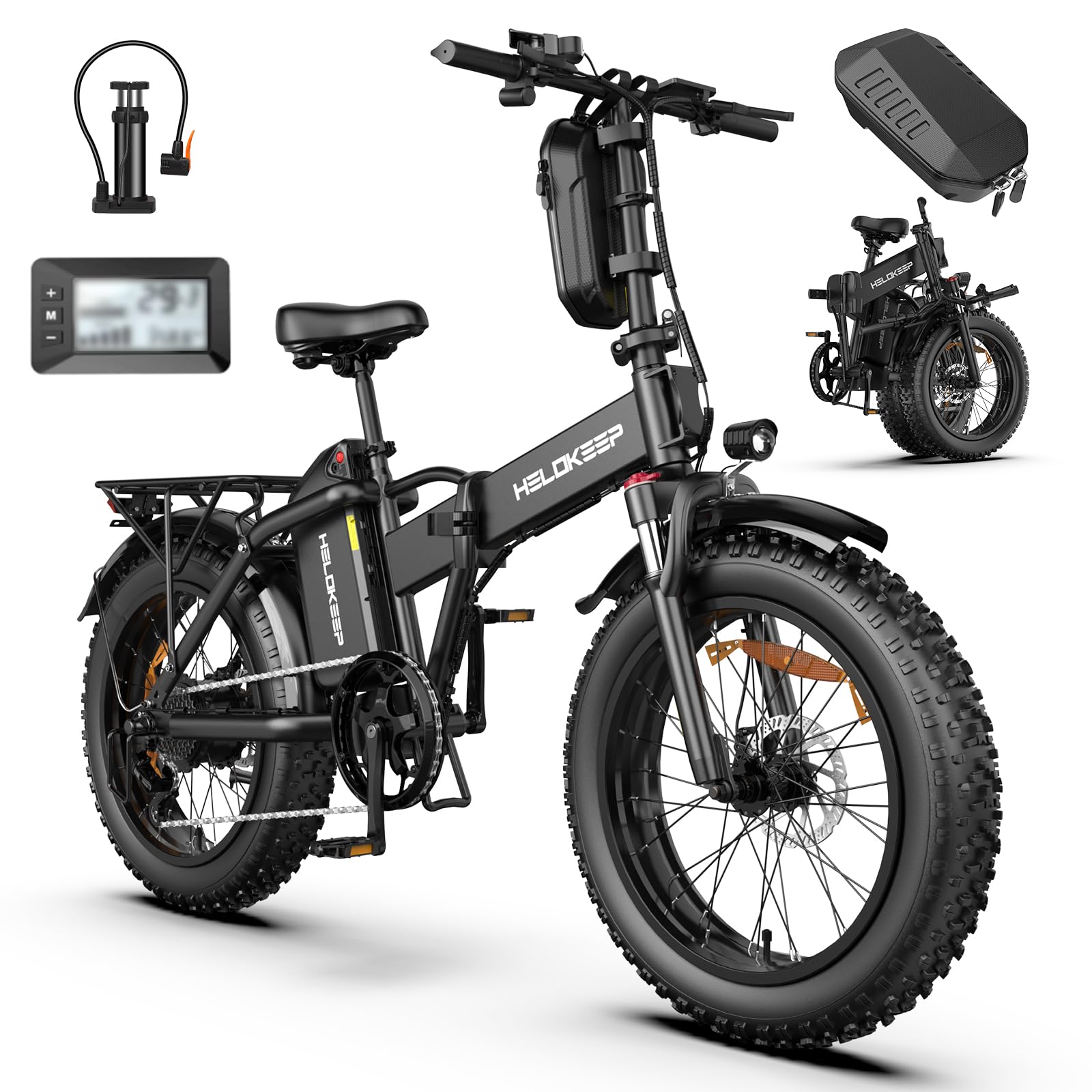
The GLOBALKEEP folding e-bike prioritizes battery capacity and portability in a single package — the 48V 25Ah battery (1200 Wh) is the largest in this roundup by energy content, providing a claimed range of 25–100 miles that owners report translates to 50–75 miles under reasonable pedal-assist use. The 20-inch fat tires provide stability on varied surfaces while keeping the folded package compact enough to fit in most car trunks or SUV cargo areas. The folding frame is reinforced with a sturdy locking mechanism that feels secure when deployed, and the adjustable seat and front fork suspension help compensate for the shorter wheelbase that folding bikes typically have.
The UL 2849 certification adds a layer of safety verification that is especially relevant for a folding bike, where the battery and electrical system are subjected to more frequent handling and transport. The included rear cargo rack expands the bike’s utility for grocery runs or carrying gear, and the twist-grip shifter paired with the mid-drive motor assist provides smooth power delivery. Assembly is notably easy — owners report completion in under an hour with the included tool kit.
Where the GLOBALKEEP falls short is in the accuracy of its product specifications — multiple owners report discrepancies between the listed weight (significantly heavier than advertised) and the battery configuration, and the folding mechanism on some units develops a sticky release pin that requires lubrication or adjustment. The 30 MPH top speed is genuine, but the bike’s geometry feels less stable at high speeds than a traditional full-size frame, and the instruction manual provides minimal guidance for troubleshooting. For urban commuters who need a bike that folds for apartment storage or car transport, the battery capacity alone makes this a strong value play.
What works
- Massive 1200 Wh battery provides class-leading range potential
- Folding frame fits in car trunks for easy transport
- UL 2849 certified for electrical safety
What doesn’t
- Product specifications have documented inaccuracies
- Folding mechanism can develop sticky release pin issues
8. Aipas M2 Pro
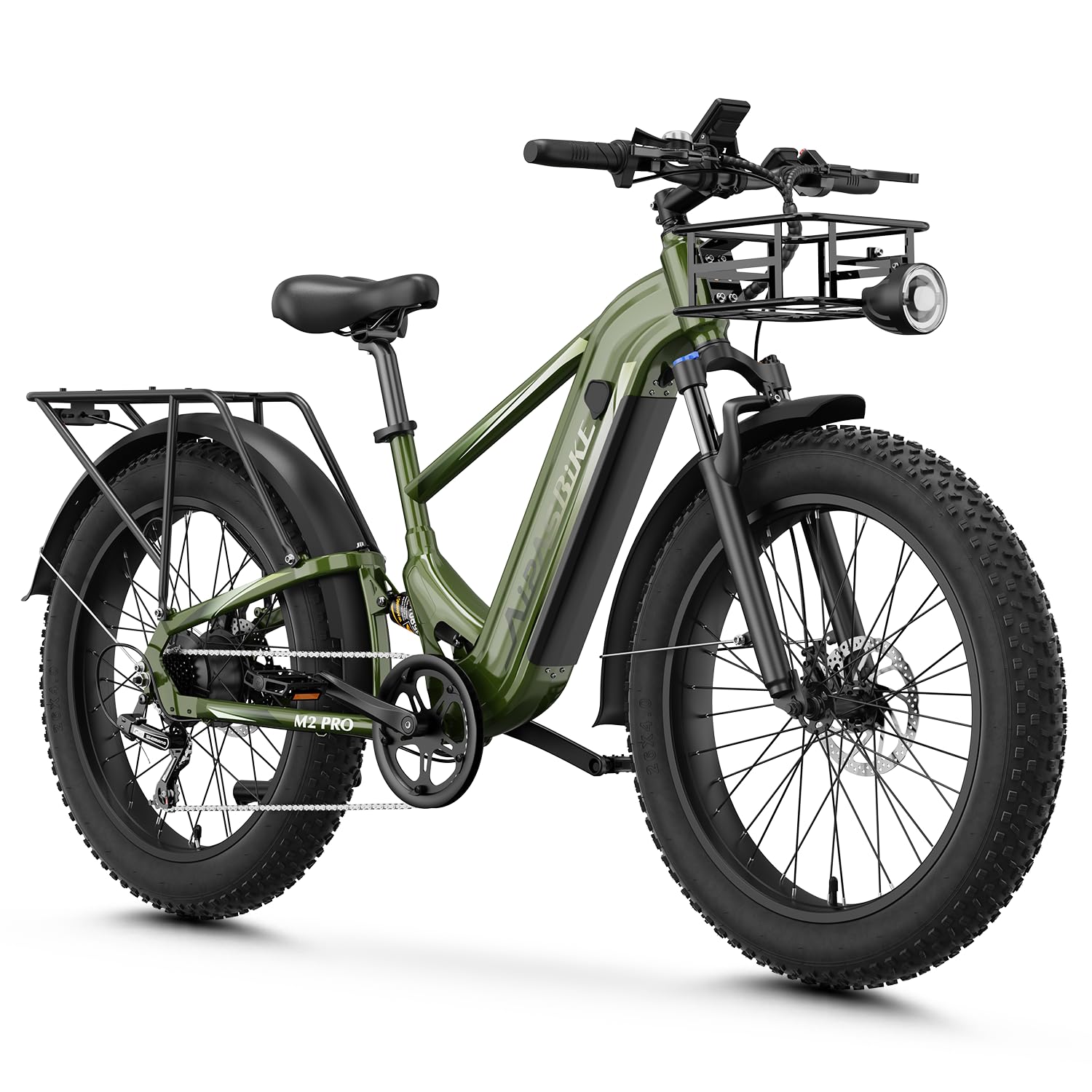
The Aipas M2 Pro shares the same core powertrain as the M1 Pro — an 1800W peak motor with 110 Nm of torque and a 48V 17.5Ah battery — but wraps it in a traditional eMTB frame with a more aggressive geometry aimed at off-road enthusiasts. The 26-inch by 4-inch fat tires pair with a lockable front suspension fork and rear shock absorber to create a dual-suspension platform that handles rocky trails and root-crossed paths with composure. The claimed 36 MPH top speed and 85-mile range mirror the M1 Pro, and owner reports confirm similar real-world performance metrics.
The M2 Pro’s aluminum alloy frame represents a meaningful upgrade over the high-carbon steel used on some competitors at this price point — it saves roughly 5–8 pounds while providing better corrosion resistance. The integrated display with USB charging port, front and rear lights, and a horn adds practical safety features, and the 5 riding modes (including cruise control and walk booster) give riders flexibility across different scenarios. The 7-speed drivetrain shifts cleanly, and the 180 mm disc brakes provide adequate stopping power for trail use.
Owner feedback emphasizes the bike’s comfortable, car-like ride quality on pavement — one reviewer described it as a “Cadillac” on streets — but notes that the suspension tuning is better suited to casual trail riding than aggressive mountain biking. The bike is heavy (around 75 pounds), and riders under 5 feet 7 inches may find the standover height challenging. The derailleur adjustment is sensitive out of the box, and some owners recommend a professional tune-up after the first 50 miles. For riders who want the M1 Pro’s power in a more traditional mountain-bike frame, this is the logical alternative.
What works
- Aluminum alloy frame reduces weight and improves corrosion resistance
- Dual suspension provides a plush, comfortable ride on varied terrain
- Integrated lights and horn enhance safety without aftermarket parts
What doesn’t
- Suspension tuning is not aggressive enough for serious mountain biking
- Standover height may be too tall for shorter riders
9. Cendouk C5PRO
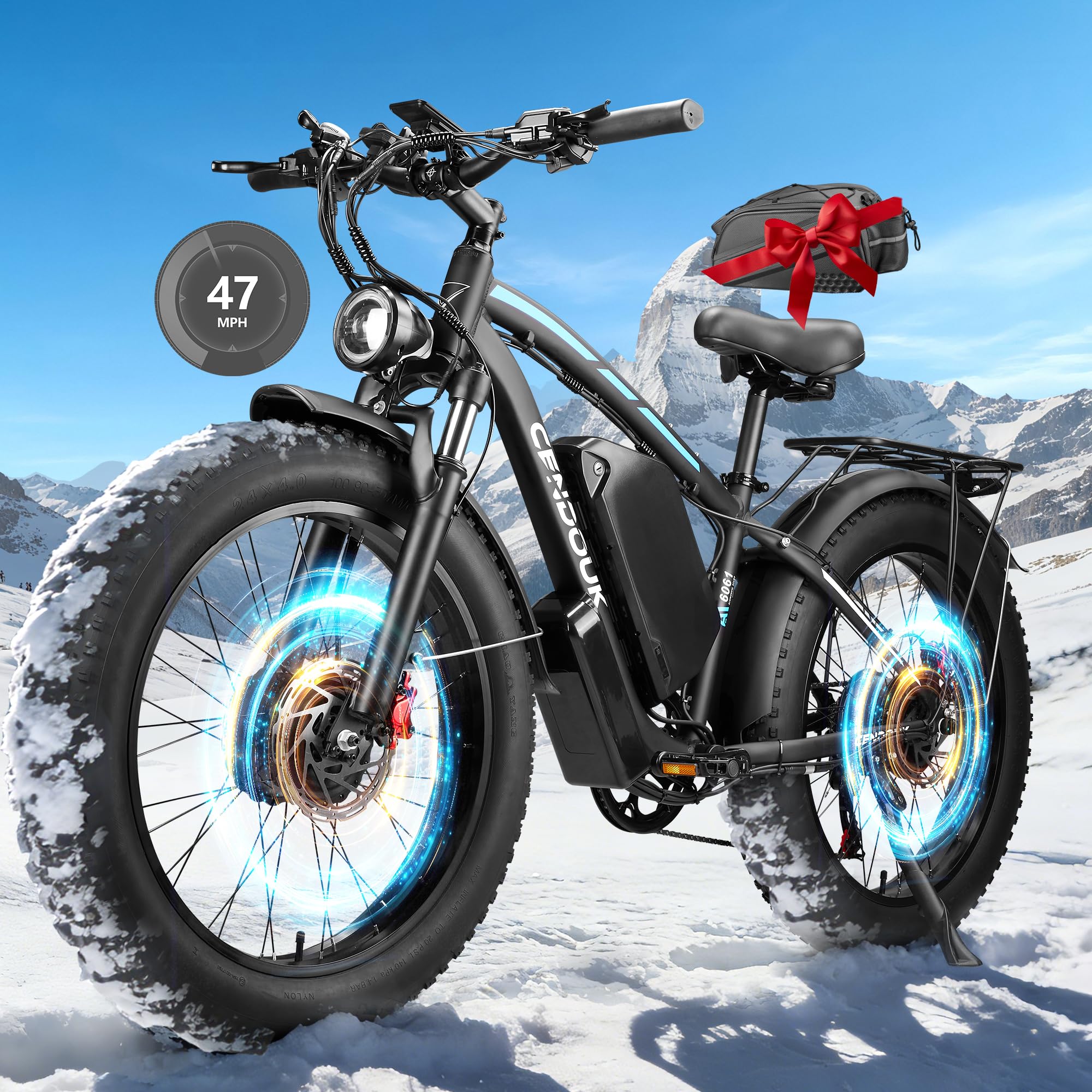
The Cendouk C5PRO is built around a 52V 34Ah battery (1768 Wh) and dual motors with a combined peak output of 9000W, making it one of the most powerful and longest-range platforms in this roundup. The 220 Nm of torque enables 45-degree hill climbs and a top speed of 47 MPH, and the 24-inch by 4-inch fat tires provide a balanced blend of agility and stability. Owners consistently report real-world speeds of 37–42 MPH depending on rider weight and terrain, with the battery delivering 30–40 miles in dual-motor mode and significantly more when using single-motor pedal assist.
The aluminum alloy frame keeps the weight manageable for the power output, and the front suspension fork with an ergonomic rubber throttle handle and faux leather seat prioritizes rider comfort during long sessions. The smart LCD display shows real-time speed, battery level, and distance, and the included rear cargo rack and fenders add utility for commuting. Assembly is 90 percent pre-completed, though the instruction manual is generic and lacks model-specific details, requiring owners to seek guidance from video tutorials for features like LCD configuration and speed limit adjustment.
Where the C5PRO generates the most enthusiasm is in its value-for-power ratio — multiple owners describe it as an “absolute beast” that outperforms bikes costing significantly more, with particular praise for its hill-climbing ability and stable high-speed handling. The downsides include a confusing instruction manual that fails to cover basic operation and charging procedures, and some owners note that the advertised features (hydraulic brakes, rear suspension) are not present on the delivered unit, replaced by cable-actuated disc brakes that still perform adequately. For riders who prioritize peak power and battery capacity and are comfortable figuring out setup details independently, the C5PRO delivers extraordinary capability.
What works
- Dual 9000W peak motors provide genuine 40+ MPH performance
- 52V 34Ah battery delivers exceptional range in single-motor mode
- Stable high-speed handling with confident hill-climbing torque
What doesn’t
- Instruction manual is generic and lacks model-specific guidance
- Some delivered units have feature discrepancies versus listing
Hardware & Specs Guide
Motor & Battery
The motor is the heart of any fat tire e-bike, and the affordable segment offers a wide spectrum from 750W commuter motors to 9000W peak dual-motor systems. Continuous torque (measured in Nm) is a more reliable indicator of real-world climbing ability than peak wattage — look for at least 80 Nm for moderate hills and 110 Nm or more for steep terrain. Battery capacity measured in watt-hours (Wh) determines range: 500–700 Wh suits short commutes, 800–1200 Wh supports all-day riding, and anything above 1400 Wh enables multi-day trips without recharging. UL 2849 or UL 2271 certification is a non-negotiable safety marker that confirms the battery management system protects against thermal runaway.
Frame & Build
Aluminum alloy is the preferred frame material in this category for its balance of strength, weight, and corrosion resistance. High-carbon steel frames are heavier and require more maintenance to prevent rust but often cost less and feel more durable under heavy loads. Carbon fiber, as seen on the Wallke Titan X1, offers the best weight savings but pushes the price beyond the typical affordable range. The frame geometry — step-through versus traditional diamond frame — affects accessibility and standover height, an important consideration for shorter riders or those with limited mobility. Folding frames add versatility for storage and transport but introduce additional hinge points that require periodic inspection and maintenance.
Tires & Suspension
Fat tires (4.0 to 5.0 inches wide) are the defining feature of this category, providing flotation on soft surfaces and natural shock absorption at lower pressures. The 26-inch diameter is the most common and offers a good balance of rollover capability and acceleration; 20-inch wheels provide quicker handling and a lower standover height but roll less smoothly over obstacles. The 24-inch size found on some high-performance models splits the difference. Suspension systems range from rigid forks (relying entirely on tire compliance) to full dual suspension with adjustable damping. Front suspension alone is sufficient for most riders; rear suspension adds comfort on technical trails but also adds weight, complexity, and maintenance.
Braking & Safety
Hydraulic disc brakes are the gold standard for fat tire e-bikes, offering consistent stopping power with minimal hand effort regardless of weather or load. Mechanical disc brakes are common at lower price points and stop adequately but require periodic cable adjustments and more hand strength to actuate. Rotor size matters — 180 mm rotors provide sufficient heat dissipation for most riding, while 203 mm rotors (as found on the Wallke Titan X1) offer fade-free performance under repeated hard braking. Integrated lighting systems (headlight, taillight, turn signals) are increasingly common and significantly improve visibility, especially on models that offer a horn or audible warning. Reflective sidewall tires and pedal reflectors provide additional passive safety for nighttime riding.
FAQ
How much should I spend on a fat tire electric bike?
How long does the battery last on a fat tire e-bike?
Do I need a license or registration for a fat tire e-bike?
Can I ride a fat tire e-bike in the snow or on the beach?
How difficult is assembly for an affordable fat tire e-bike?
Final Thoughts: The Verdict
For most buyers, the best affordable fat tire electric bike winner is the Aipas M1 Pro because it combines genuine 1800W peak power, 110 Nm of torque, full dual suspension, and a step-through frame at a price that undercuts competitors with similar specs — all backed by consistently positive long-term owner feedback. If you want maximum battery range and portability, grab the GLOBALKEEP folding e-bike with its massive 1200 Wh battery and space-saving frame. And for uncompromising power and premium construction, nothing beats the Wallke Titan X1 with its carbon fiber frame, four-piston hydraulic brakes, and genuine 40 MPH capability.

Certification: BSc in Mechanical Engineering
Education: Mechanical engineer
Lives In: 539 W Commerce St, Dallas, TX 75208, USA
Md Amir is an auto mechanic student and writer with over half a decade of experience in the automotive field. He has worked with top automotive brands such as Lexus, Quantum, and also owns two automotive blogs autocarneed.com and taxiwiz.com.