A worn or failing belt tensioner pulley introduces a persistent chirp, wobble, or growl that no amount of belt dressing will silence. More than a noise nuisance, a compromised pulley allows belt slack that reduces alternator output, power-steering assist, and A/C cooling efficiency while accelerating wear on every driven accessory. Choosing a replacement that restores proper tension and runs quietly for tens of thousands of miles requires looking past flashy packaging and focusing on bearing grade, arm material, and damping design.
I’m Amir — the founder and writer behind Four Wheel Ask. I specialize in analyzing automotive component specifications, reviewing build quality data, and aggregating long-term owner feedback to identify which parts deliver real reliability.
This guide compares seven replacement assemblies across material quality, bearing smoothness, and real-world fitment reports so you can confidently select the right best accessory belt tensioner pulley for your vehicle.
How To Choose The Best Accessory Belt Tensioner Pulley
Selecting a replacement tensioner pulley goes beyond matching the year and engine size. The three factors below separate a part that bolts on and disappears from one that causes repeat failures or annoying belt noise within months.
Bearing Quality and Sealing
The bearing is the heart of any pulley. A sealed double-row ball bearing with a metal or rubber contact seal resists water, salt, and abrasives far better than an open or shielded design. Premium bearings from manufacturers such as NSK, NTN, or SKF (or equivalent OE-grade units) exhibit almost no axial play and spin with a smooth, silent rotation. Budget pulleys often use generic bearings with loose tolerances that generate noise after a few thousand miles.
Arm Construction and Damping
The tensioner arm must maintain a constant force on the belt despite engine vibration and thermal cycling. Steel or cast-iron arms provide superior fatigue resistance compared to stamped sheet metal. A friction-dampening mechanism—either a spring-loaded torsion damper or a hydraulic unit—prevents the arm from oscillating at resonance, which can cause belt flutter and premature component wear. Inspect the pivot bushing as well; bronze or PTFE-lined bushings outlast bare aluminum-on-steel interfaces.
Fitment Accuracy and OEM Interchange
Even a few millimeters of offset in the pulley plane will throw belt alignment and lead to edge wear or squealing. The most reliable aftermarket tensioner assemblies match not only the bolt pattern and arm length but also the exact pulley offset and flange profile of the original part. Cross-referencing OEM part numbers before purchase is the single most effective way to avoid returning a part that “almost” fits. Always check the Amazon Fitment Filter and read compatibility notes from verified buyers who own the same vehicle.
Quick Comparison
On smaller screens, swipe sideways to see the full table.
| Model | Category | Best For | Key Spec | Amazon |
|---|---|---|---|---|
| ACDelco Gold 38108 | Assembly | GM trucks & SUVs, long-term reliability | OE-grade bearing, steel arm, direct fit | Amazon |
| Gates 38006 | Pulley Only | Ford/Lincoln V8s, noise-free operation | Steel/thermoplastic, 76 mm OD, premium bearing | Amazon |
| A-Premium (Toyota/Lexus) | Assembly | Camry, Avalon, Highlander, RX350 | 70 mm pulley, 8 mount holes, V-ribbed | Amazon |
| Dorman 419-633 | Pulley Only | Honda & Acura 1.8L/2.0L, DIY replacement | 8.5 oz, center position, OE cross-reference | Amazon |
| A-Premium (Honda) | Assembly | Civic 2012-2015, HR-V, Acura ILX | 65 mm pulley, 17 mm bore, steel arm | Amazon |
| TUCAREST 38137 | Assembly | Ford Ranger, Explorer V6, Mazda B4000 | OE-spec spring, torsional damping, metallic finish | Amazon |
| Duolctrams 39385 | Assembly | Honda Civic 2006-2015, budget-friendly swap | Replaces 3117051BH01, 2.48 lb, vibration damper | Amazon |
In‑Depth Reviews
1. ACDelco Gold 38108 Drive Belt Tensioner Assembly with Pulley

ACDelco Gold stands as a tier-one supplier to General Motors, and the 38108 assembly reflects that heritage in every manufacturing detail. The arm is constructed from heavy-gauge steel with a phosphate coating that resists corrosion far longer than painted alternatives. Owner reports consistently highlight the bearing smoothness out of the box — no roughness, no axial play, just a silent spin that translates directly to a quiet engine bay.
Cross-reference data shows this unit replaces multiple OEM numbers including 88909598 and fits a broad range of GM trucks, SUVs, and sedans from the late 1980s through the mid-2000s. The damping mechanism uses a torsion spring paired with a friction washer stack to eliminate belt flutter at idle and under load. Verified buyers on C/K-series pickups and GMT800 SUVs note that installation is straightforward with basic hand tools and that the pulley alignment matches factory spec exactly.
Long-term feedback gathered from forum discussions indicates that this tensioner routinely surpasses 60,000 miles without developing noise or losing tension. While the price sits above entry-level offerings, the per-mile cost is actually lower when you factor in the extended service interval and the reduced risk of a roadside failure. For anyone who plans to keep their vehicle for more than a couple of years, this is the most cost-effective choice in the segment.
What works
- Bearing quality matches or exceeds OE standards
- Consistent belt tension across temperature extremes
- Broad GM vehicle coverage with precise alignment
What doesn’t
- Premium pricing compared to budget alternatives
- Limited application range outside GM platforms
2. Gates 38006 Drive Align Belt Drive Idler/Tensioner Pulley

Gates has built its reputation on belt drive systems, and the 38006 pulley carries that engineering focus into a compact, high-quality component. The combination of steel and thermoplastic construction yields a part that is both lightweight and resistant to the chemical and thermal aggression found under the hood. The 76 mm outer diameter with a 30.5 mm width makes it suitable for a wide range of Ford, Lincoln, and GM applications where the original tensioner accepts a separate pulley.
Multiple verified buyers report that this pulley eliminated chronic belt squeal on Ford Expedition and F-150 platforms where the OE bearing had worn. The bearing is manufactured to meet or exceed OE speed and load ratings, and the included mounting hardware covers several popular fitments. A notable design detail is the smooth backside profile that accommodates serpentine belt routing without edge interference.
One caveat mentioned by Honda Odyssey owners is that the flange profile differs slightly from the factory pulley, preventing reuse of the original dust shield. This does not affect function but is worth noting if you are particular about retaining OE splash protection. Overall, the Gates 38006 represents a well-engineered pulley that prioritizes bearing quality and material durability at a reasonable price point.
What works
- Premium bearing eliminates noise in most applications
- Rust and chemical resistant materials
- Includes hardware for multiple vehicle fitments
What doesn’t
- Flange shape differs from OE on some Honda models
- Pulley only — not a full tensioner assembly
3. A-Premium Belt Tensioner Assembly with Pulley (Toyota/Lexus)

The A-Premium tensioner assembly for Toyota and Lexus V6 applications covers one of the broadest vehicle ranges in this comparison: Camry, Avalon, Highlander, Sienna, RAV4, Venza, plus the Lexus ES350, IS250, and RX350 across multiple generations. The 70 mm pulley diameter and 33.3 mm width are engineered to match the factory belt path exactly, and the V-ribbed profile maintains proper grip on the belt without slip or edge wear.
Owner feedback from Toyota forums indicates that the assembly weight and casting quality feel comparable to the original Denso unit. The included hardware uses Grade 8 bolts, and the spring-loaded tension arm provides consistent damping across the full range of arm travel. Several buyers on Camry and RAV4 platforms noted that installation requires removing the engine mount on certain models, but the fit is exact once the mount is reinstalled.
A small but vocal minority of buyers experienced a hex-head failure during installation where the aluminum relief hole stripped under torque. This appears to be a batch-specific issue, but it warrants caution when tightening. Backed by a one-year unlimited-mileage guarantee, this assembly offers strong value for Toyota/Lexus owners who want a complete drop-in replacement without paying dealer pricing for an OEM unit.
What works
- Extensive Toyota/Lexus V6 coverage
- Heavy-duty casting matches OE weight and feel
- One-year guarantee provides peace of mind
What doesn’t
- Hex-head relief hole can strip if over-torqued
- Engine mount removal required on some models
4. Dorman 419-633 Accessory Drive Belt Tensioner Pulley

Dorman brings over a century of automotive aftermarket experience to the 419-633 pulley, and the engineering DNA shows in the small details. The pulley is machined from a single piece of steel with a black oxide finish that withstands the thermal cycles common in engine compartments. At just 8.5 ounces, it is notably lighter than many competitors, which reduces rotating mass on the accessory drive system.
Compatibility spans Honda Civic, CR-V, Element, and Acura RSX and Integra models across multiple engine families. The OEM cross-reference list includes over twenty factory numbers, making it easy to verify fitment before ordering. Verified buyers on a 1998 Civic and a 2000 Integra GSR both reported that the pulley stopped a loud bearing growl and fit the manual tensioner arm without modification.
One buyer received a unit that appeared to be a returned part with visible corrosion, though a reorder resolved the issue. Dorman’s quality control has generally improved in recent years, but inspecting the part upon arrival is wise. For DIY owners working on Honda or Acura vehicles who need a reliable pulley without buying a full tensioner assembly, the Dorman 419-633 is a solid, affordable solution.
What works
- Lightweight steel design with corrosion-resistant finish
- Extensive OEM part number cross-reference
- Proven fitment on multiple Honda/Acura engines
What doesn’t
- Inconsistent packaging quality on some units
- Pulley only — does not include tensioner arm
5. A-Premium Belt Tensioner Assembly with Pulley (Honda)
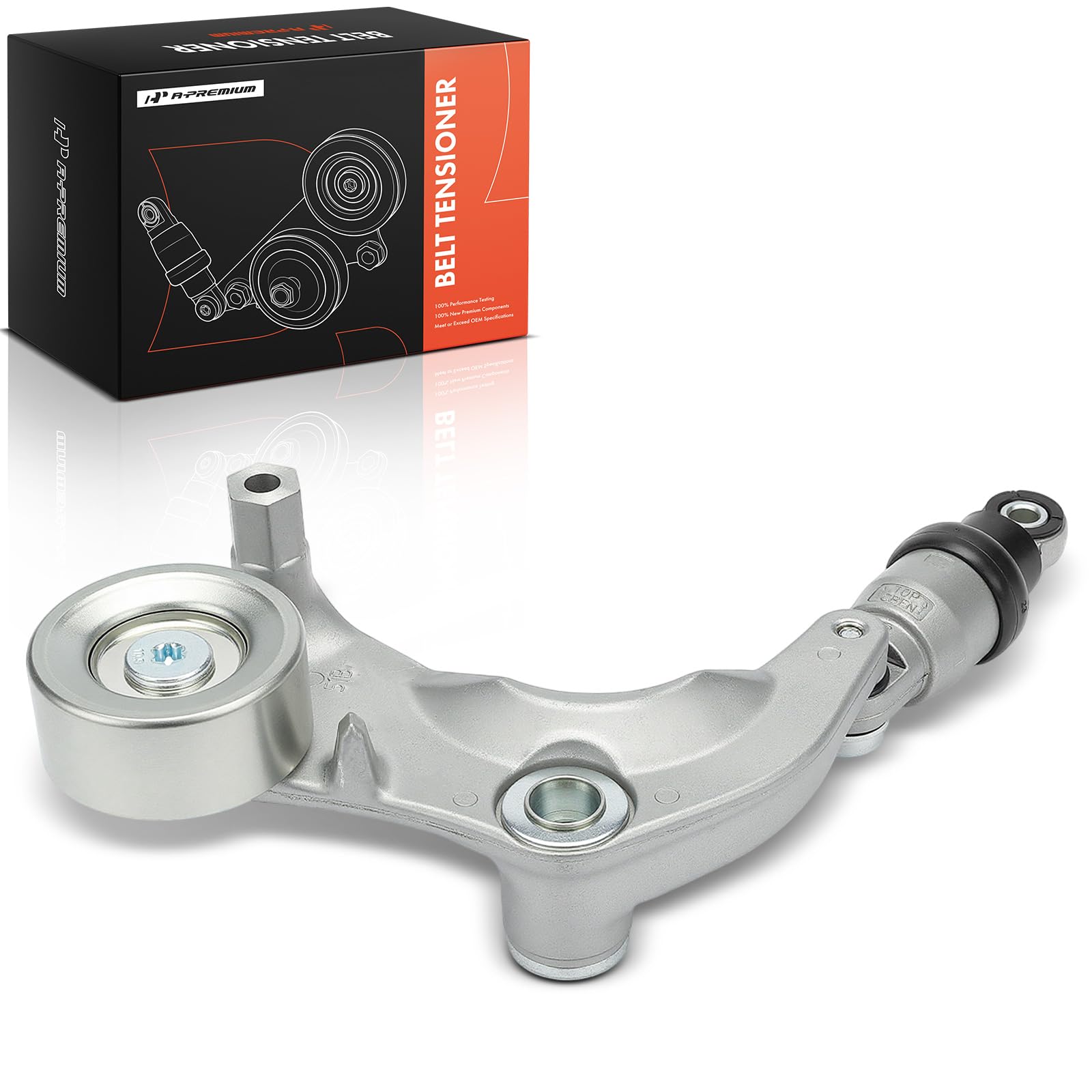
This A-Premium assembly targets the Honda Civic 2012-2015, HR-V 2016-2022, and Acura ILX 2013-2015 — all equipped with the 1.8L or 2.0L four-cylinder engines. The 65 mm pulley diameter and 17 mm bearing bore match the factory specifications, and the steel tensioner arm provides the necessary rigidity to maintain belt tension without flexing under load.
Owner reports on the Civic 1.8L platform are overwhelmingly positive, with multiple buyers noting that the assembly eliminated a rattling tensioner and restored quiet accessory drive operation. The damping system controls belt oscillation effectively at both idle and cruising RPMs. The one-year unlimited-mileage guarantee is a strong confidence signal for a part at this price tier.
A notable failure case involved the hex-head relief hole shearing off during installation, which mirrors feedback on the Toyota A-Premium unit. This appears to be a design weakness in the aluminum relief casting rather than a systemic quality issue. If you can apply careful torque management during installation, this assembly delivers reliable performance at a compelling price for Honda owners.
What works
- Direct fit for Honda 1.8L and 2.0L engines
- Good damping control reduces belt noise
- Competitive pricing with warranty coverage
What doesn’t
- Hex-head relief prone to stripping under torque
- Some units show casting flash that requires cleanup
6. TUCAREST 38137 Accessory Drive Belt Tensioner Pulley Assembly
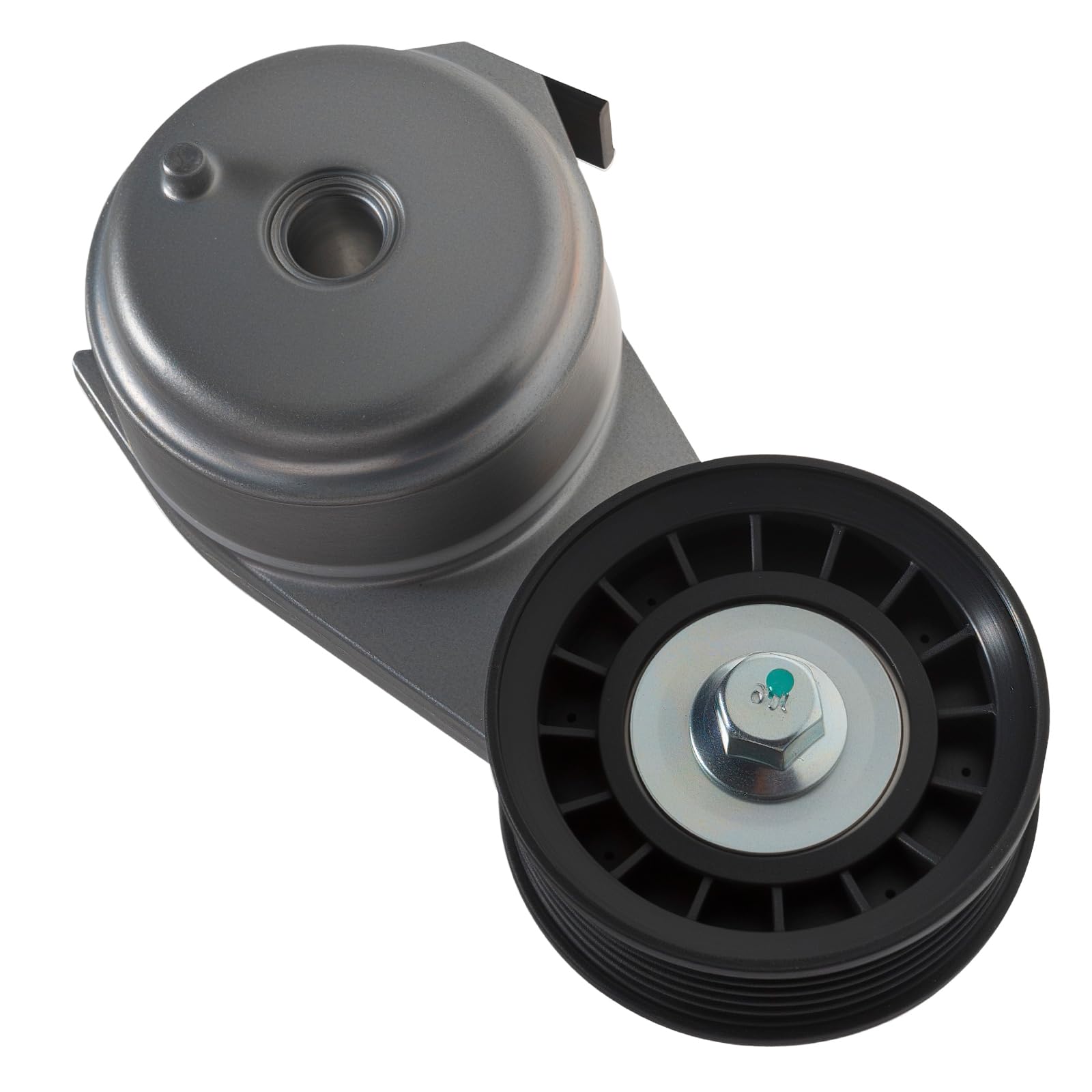
TUCAREST positions the 38137 assembly as an OE-spec replacement for Ford Explorer (2000-2010), Ranger (2001-2011), and Mazda B4000 platforms equipped with the V6 4.0L engine. The torsional round spring design is intended to provide consistent tension while absorbing accessory drive vibrations that can cause belt noise.
Verified buyer feedback shows a high satisfaction rate for fitment and function, with several owners reporting that the part solved their belt noise problem and held up well over several months of use. The metallic finish and overall heft of the unit feel similar to the factory tensioner. The manufacturer performs quality checks throughout production, which is a positive sign at this price level.
The primary concern raised by a single verified buyer is that the aluminum relief hole for the 3/8-inch drive is soft and prone to stripping if too much force is applied during tension release. This is a common issue across budget tensioner assemblies and can be mitigated by using the correct size breaker bar and applying steady, even pressure. For owners of these Ford/Mazda V6 trucks who want a functional replacement without overspending, the TUCAREST is a viable option.
What works
- Accurate fitment for Ford/Mazda V6 applications
- Torsional spring damping reduces accessory noise
- Multiple quality checks during production
What doesn’t
- Aluminum relief hole is soft and can strip
- Limited long-term durability data beyond several months
7. Duolctrams 39385 Automatic Belt Tensioner and Pulley Assembly

The Duolctrams 39385 assembly covers a popular Honda application range: Civic 2006-2015, HR-V 2016-2018, and Acura ILX 2013-2015 with the 1.8L or 2.0L engines. It replaces OEM numbers 3117051BH01, 31170R0A015, and several others, making cross-referencing straightforward. The unit includes a vibration damping system designed to extend the life of the belt and attached accessories.
Buyer feedback is consistently positive on fit and function, with multiple verified purchasers noting that the part installed easily and performed identically to higher-priced alternatives. The 2.48-pound weight suggests a steel arm with a zinc-plated finish that offers decent corrosion resistance for the price tier. For half the cost of a dealer replacement, this assembly has satisfied many Civic owners.
One 2009 Civic owner reported that a protruding lip on the casting interfered with the tension release piston, requiring a simple modification with a cut-off wheel to clear the interference. This appears to be a minor casting tolerance issue rather than a design flaw, but it is worth inspecting the part before full installation. If you are comfortable with basic fitment checks and occasional minor adjustments, the Duolctrams 39385 offers the lowest entry price for Honda owners needing a complete tensioner assembly.
What works
- Excellent price for a complete tensioner assembly
- Direct replacement for popular Honda engines
- Positive owner feedback on noise elimination
What doesn’t
- Casting lip may require minor clearance modification
- Long-term durability not yet established
Hardware & Specs Guide
Pulley Dimensions and Bearing Standards
Pulley outer diameter (OD) typically ranges from 60 mm to 80 mm, with the most common sizes being 65 mm, 70 mm, and 76 mm. The bearing bore (inner diameter) is almost always 17 mm for modern accessory drive pulleys, though some older applications use 15 mm or 20 mm. The bearing itself should be a double-row sealed ball bearing rated for continuous operation at engine compartment temperatures up to 120°C. Sealed bearings with a nitrile rubber contact seal provide the best protection against water ingress and road grit.
Tensioner Arm Materials and Damping
Arms are manufactured from stamped steel, cast iron, or forged aluminum. Cast iron offers the best vibration damping but adds weight; stamped steel is lighter but can fatigue over time. The damping mechanism is either a coil spring with a friction washer (most common) or a hydraulic cartridge. Friction-damped tensioners rely on a precisely machined bushing at the pivot point — bronze or PTFE-lined bushings outlast bare steel-on-steel interfaces by a significant margin and maintain consistent tension as they wear.
FAQ
What are the symptoms of a failing belt tensioner pulley?
Can I replace just the pulley or do I need the whole tensioner assembly?
How often should the accessory belt tensioner pulley be replaced?
Why does my new tensioner pulley still make noise after installation?
Final Thoughts: The Verdict
For most buyers, the best accessory belt tensioner pulley winner is the ACDelco Gold 38108 because it combines OE-grade bearing quality, a robust steel arm, and proven long-term reliability across a wide GM vehicle range. If you need a precision pulley for a Ford or Lincoln truck, the Gates 38006 delivers premium bearing performance at a mid-range price. And for Toyota and Lexus V6 owners who want a complete assembly with extensive model coverage, the A-Premium unit offers the best balance of fitment accuracy and value.

Certification: BSc in Mechanical Engineering
Education: Mechanical engineer
Lives In: 539 W Commerce St, Dallas, TX 75208, USA
Md Amir is an auto mechanic student and writer with over half a decade of experience in the automotive field. He has worked with top automotive brands such as Lexus, Quantum, and also owns two automotive blogs autocarneed.com and taxiwiz.com.