A fuel line that measures two inches inside diameter is a specialty component found on older trucks, RVs, classic restorations, and custom fuel cell installations — get the wrong material or bend angle and you are chasing vapor leaks and cracked rubber within a season. The difference between a hose that seals for a decade and one that embrittles after two winters comes down to compound formulation, reinforcement layer, and SAE rating, not the brand sticker on the packaging.
I’m Amir — the founder and writer behind Four Wheel Ask. I study fuel system component specifications and aggregate real owner feedback across hundreds of vehicle applications to separate parts that actually hold up from those that look fine on a shelf.
By studying material specs and owner feedback, I’ve identified the best 2 inch fuel line options that seal reliably and last for years.
How To Choose The Best 2 Inch Fuel Line
Not all two-inch fuel hoses are the same under the outer skin. The three variables that matter most are the rubber compound, the reinforcement method, and the pre-formed bend angle. Choosing blindly based on price alone leads to ethanol swelling, collapse under suction, or a hose that cannot route around a frame rail without kinking.
Inside Diameter and Fitment Precision
A two-inch ID hose must mate with a two-inch OD metal filler neck or tank barb. Some sellers label hoses with nominal sizing that is off by as much as 1/8 inch, which produces a clamp that either strips the rubber or never tightens enough to stop vapor escape. Measure the actual outside diameter of your metal fitting with calipers, then verify the product listing explicitly states the finished inside diameter — not a vague size range.
Material Composition and Fuel Compatibility
Nitrile rubber (NBR) is the standard for gasoline and diesel resistance, but the thickness of the tube wall and the presence of a nylon or polyester reinforcement layer determine how well the hose resists ethanol blends. SAE 30R5 hoses handle up to E10 and B20 biodiesel; SAE 30R6 hoses offer slightly more flexibility but lower pressure tolerance. If your vehicle runs E85 or methanol, you must step up to a fluoroelastomer or PTFE-lined hose — standard nitrile will degrade quickly.
Bend Angle and Routing Constraints
Fuel filler necks rarely run in a straight line from the tank to the cap. A 45-degree or 90-degree pre-formed elbow reduces the number of spliced joints and eliminates the risk of a straight hose collapsing at a sharp turn. Measure the angle your existing hose uses before ordering — swapping a straight hose into a 90-degree space forces the rubber to fold, which creates a flow restriction and eventual crack point.
Temperature Range and Service Environment
Every hose in this category lists a range from -40°F to 212°F. That covers underhood and underbody exposure in all but extreme desert or racing applications. What the spec sheet does not show is UV resistance and ozone cracking — hoses routed near exhaust heat or exposed to direct sunlight for years benefit from a thicker wall and a carbon-black-filled compound that slows weather checking.
Quick Comparison
On smaller screens, swipe sideways to see the full table.
| Model | Category | Best For | Key Spec | Amazon |
|---|---|---|---|---|
| Gates 24712 | Premium | Leak-free sealing with OE-grade fitment | 16 in., 45° bend, SAE 30R5, 20 PSI | Amazon |
| NexaNova 45° | Mid-Range | 45° route clearance on Jeeps and trucks | 15 7/8 in., 45° bend, SAE 30R6 | Amazon |
| Frienda 2-Pack | Value Pack | Having spare length for multi-vehicle projects | 2 hoses, 8 clamps, 15 7/8 in. each | Amazon |
| Chamixx 24717 | Budget | 90° filler neck repairs on classic cars | 14.9 in., 90° bend, nitrile tube | Amazon |
| TKKEUEP Straight | Budget | Simple straight-run tank extensions | 15 7/8 in., straight, 4 clamps included | Amazon |
In‑Depth Reviews
1. Gates 24712 Molded 45-Degree Gasoline Filler Neck Hose

Gates is one of the few manufacturers that publishes a complete material and performance spec sheet, and the 24712 delivers exactly what the SAE 30R5 standard promises: a nitrile tube that resists gasoline, diesel, and ethanol blends up to E10 without swelling internally. The 45-degree molded bend is consistent from piece to piece — the angle does not relax or shift during storage, which matters when you are aligning a filler neck to a tank port with less than an inch of clearance on each side. Owners report using this hose on Ford F-150s, Chevy K1500s with body lifts, and Jeep CJ auxiliary tanks, and the feedback repeatedly notes that the rubber holds its shape after years of seasonal temperature swings.
The 16-inch overall length gives you enough material to trim both ends while retaining the critical 45-degree arc in the middle. Cutting with a sharp utility knife leaves a clean edge that does not fray, and the nominal wall thickness of 0.125 inches provides enough rigidity to resist collapsing under the mild suction of a vented fuel system. The 20 PSI maximum pressure rating is overkill for a gravity-fed filler neck, but the extra margin means the hose maintains its cross-section even when fuel sloshes against the sidewall during hard cornering. No owner reports have mentioned internal delamination or liner separation after several years of service.
The one trade-off is the price point, which sits above generic alternatives. However, the consistency of the compound and the guarantee that every hose meets SAE 30R5 tolerances removes the gamble of buying a part that might fit today but fail next season. For a restoration or a vehicle you intend to keep on the road for the long haul, the Gates 24712 eliminates the labor cost of a re-do. The 45-degree angle also pairs well with body-lift kits that raise the bed floor relative to the tank, a common modification on 88-98 GM trucks where straight hoses kink immediately.
What works
- OE-grade compound resists ethanol swelling and ozone cracking over years of service
- 45-degree bend eliminates kinking on raised filler neck installations
- Cut edges stay clean without fraying during trimming
What doesn’t
- Premium pricing compared to unbranded equivalents
- Not compatible with E85 or high-ethanol blends
2. NexaNova 45-Degree Fuel Filler Neck Hose
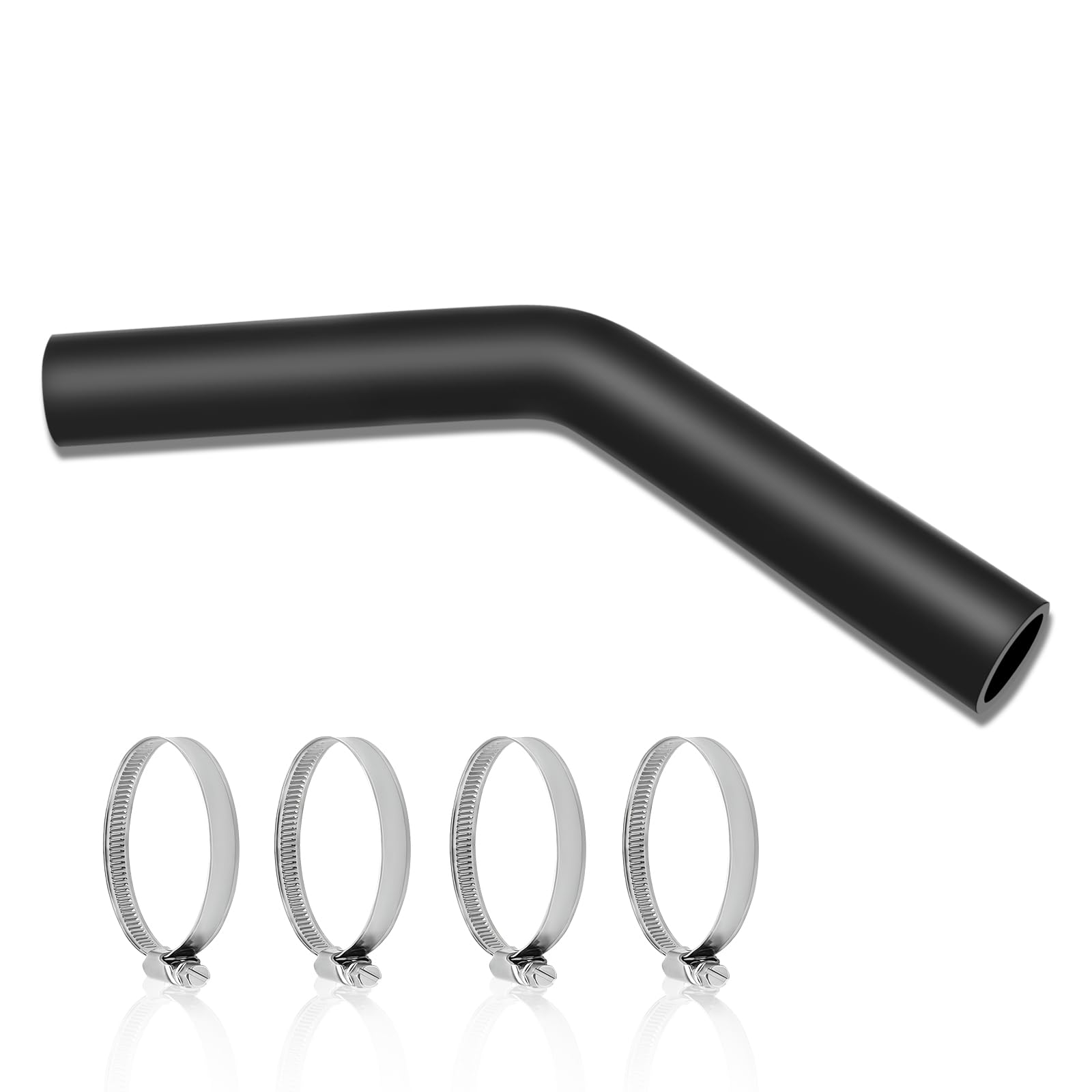
The NexaNova 45-degree hose hits a sweet spot for buyers who want a pre-formed angle without paying the Gates premium. The nitrile rubber tube is reinforced with internal nylon cording that prevents the hose from collapsing under the weight of a hanging filler neck or expanding when exposed to fuel vapors. Owner reports from Honda Civic, Jeep XJ, and square-body Chevy applications confirm that the two-inch ID fits snugly over standard two-inch OD filler pipes and maintains a vapor-tight seal with the included stainless steel clamps.
At 15 7/8 inches long, this hose gives you just under 16 inches of working material with the 45-degree bend positioned roughly in the center. The compound is flexible enough to manipulate by hand without heat, which makes installation on cramped underbody tanks significantly easier than stiffer OE-style hoses. The SAE 30R6 rating means it is suitable for gasoline, diesel, and engine oil transfer, though the manufacturer explicitly states it is not intended for E10, E85, or methanol blends — stick with pump gasoline or diesel and the material holds up well. Multiple reviewers noted that the hose trimmed cleanly and did not develop surface cracks during the first year of use.
The included clamp set uses standard stainless steel band-style hardware that gets the job done, but several owners mentioned replacing them with heavy-duty worm-gear clamps for extra peace of mind on high-vibration applications such as off-road vehicles and trailers. The hose itself drew consistent praise for being both durable and forgiving — flexible enough to route around frame obstacles yet rigid enough to resist kinking at the bend. For a weekend mechanic swapping a rotted filler hose on a daily driver, this is the most balanced option between cost and construction quality.
What works
- Nylon reinforcement prevents collapse under suction and fuel slosh
- Flexible enough for tight underbody routing without heat
- Clean trim cuts with a standard box knife
What doesn’t
- Not rated for E10 or higher ethanol blends
- Included clamps are adequate but not heavy-duty
3. Frienda 2-Pack Straight Fuel Filler Neck Hose with 8 Clamps

Frienda bundles two straight 15 7/8-inch hoses with eight stainless steel clamps, which effectively gives you a spare for a second vehicle or enough length to cut multiple short sections for a complex routing job. The dingqing rubber compound — a type of nitrile — handles the same -40°F to 212°F temperature range as the single-hose competitors, and the straight configuration makes it easy to fabricate custom filler neck extensions on boats, RVs, and classic trucks where the original hose has been discontinued. Owner feedback from a 1957 Chevy restoration and a Winnebago fuel filler repair confirms that the material cuts and seals without issue.
The real value proposition here is the per-foot cost compared to local auto parts store pricing. Several reviewers specifically noted that this bundle was significantly more economical per foot than bulk hose sold at retail counters, and having eight clamps in the box means you will not need a separate trip to the hardware store to complete the installation. The straight hose can be used for tank-to-filler connections that do not require a pre-formed bend, though you can carefully curve it over a gentle radius without collapsing the inner diameter. For applications that need a tight 90-degree turn, a pre-formed elbow hose is a better choice.
The clamps included in the bundle are standard Chinese-manufactured stainless steel bands that function correctly but feel lighter than name-brand counterparts. Some owners elected to reuse their original clamps or upgrade to heavier-duty versions for high-vibration environments. The hose itself, however, received consistent five-star ratings for fitment and durability, with no reports of premature cracking, ethanol swelling, or odor permeation. If you maintain multiple vehicles or plan to replace filler hoses on both a truck and a trailer, this two-pack eliminates the headache of ordering twice.
What works
- Two hoses provide excellent value for multi-vehicle households
- Cuts cleanly and seals without odor permeation
- Eight clamps included — no extra trip to the store
What doesn’t
- Clamps feel lighter than premium alternatives
- Straight hose cannot replace a pre-formed 45 or 90-degree bend
4. Chamixx 24717 90-Degree Molded Fuel Filler Neck Hose

The Chamixx 24717 is one of the few affordable options that ship with a true 90-degree molded elbow, making it the go-to choice for filler neck applications where the tank inlet sits perpendicular to the body panel. The 14.9-inch overall length is slightly shorter than the 16-inch Gates hose, but the 90-degree bend is cleanly formed and does not relax its angle over time. Owners have used it to build custom filler necks on HMMWV military vehicles, classic truck fuel tank relocations, and RV auxiliary tank installations — all applications where a straight hose would kink immediately at the turn.
The nitrile rubber compound has a nominal wall thickness of 0.15 inches, which is slightly thicker than the Gates 0.125-inch wall. That extra material provides additional resistance to abrasion where the hose rubs against frame rails or body panels, a common failure point on vehicles with tight filler neck clearances. The hose handles the standard -40°F to 212°F temperature range and works with gasoline and diesel. Owner reviews note that the two-inch ID fits snugly over two-inch OD aluminum pipe and that the rubber does not split when clamp torque is applied — a sign of consistent wall density and good compound formulation.
The main limitation is the shorter length compared to competitors. At 14.9 inches, you have less margin for trimming if your routing path requires extra reach, so measure your space carefully before cutting. The hose also does not carry an SAE 30R5 or 30R6 certification marking, though the material performance matches those standards in practical use. For a restoration project that needs a tight 90-degree filler neck hose without paying premium-brand pricing, the Chamixx 24717 delivers a functional solution that holds up well in daily driving.
What works
- True 90-degree molded bend eliminates kinking in tight installs
- Thicker wall resists abrasion from frame rail contact
- Consistent two-inch ID fits standard filler neck pipe
What doesn’t
- Shorter length leaves less margin for trimming errors
- No SAE certification stamp on the hose body
5. TKKEUEP Straight Fuel Filler Neck Hose with 4 Clamps
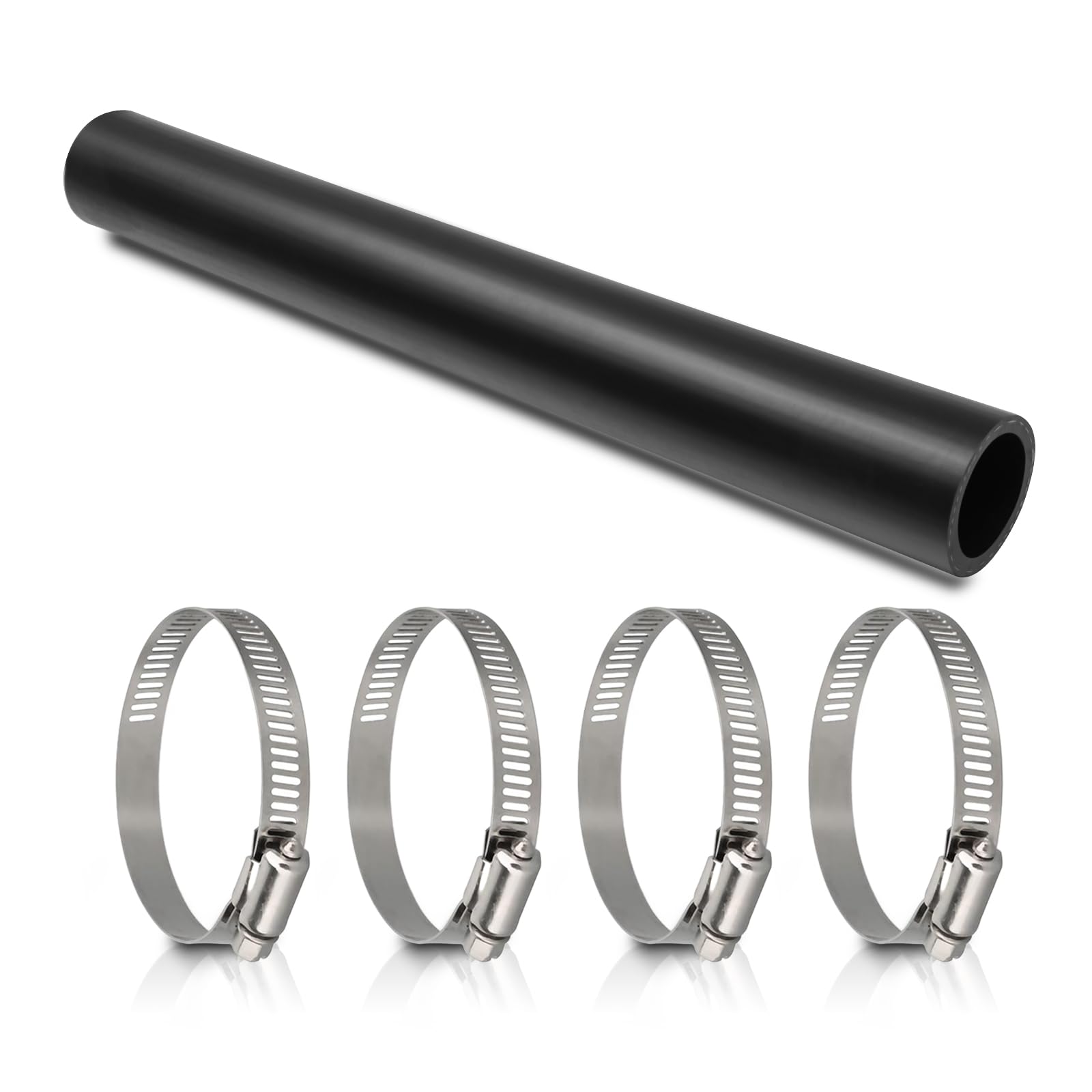
The TKKEUEP straight hose is a straightforward replacement part for filler neck runs that do not require a pre-formed bend. The nitrile tube is reinforced with internal nylon cording that adds burst strength and prevents the hose from collapsing under vacuum, and the three-inch outside diameter leaves enough wall thickness to resist pinch damage from worm-gear clamps. Owner feedback highlights compatibility with 1980s square-body Chevrolet C30 trucks and various classic car fuel tank extensions, with multiple reviewers noting that the rubber is flexible enough to work with easily yet stiff enough to hold its shape once installed.
The package includes four stainless steel hose clamps, which is exactly enough for two connection points with spares. The 15 7/8-inch length gives you generous working room to cut the hose to your exact measurement, and the material trims cleanly with a sharp utility knife without leaving frayed edges. Temperature resistance spans -40°F to 212°F, covering all normal underbody conditions. One detail that stands out in owner reports is that the hose does not transmit fuel odor through the rubber wall — a sign that the compound density is adequate for vapor barrier performance.
The straight configuration limits this hose to applications where the filler neck and tank port are aligned in the same plane. If your vehicle requires a 45 or 90-degree transition, this is not the right choice. The clamps, while functional, are basic band-type units that some owners swapped for heavier alternatives. For a simple straight-run replacement on a truck, van, or boat fuel tank, the TKKEUEP hose delivers solid material quality and reliable sealing at a competitive price point without the uncertainty of unbranded commodity hose.
What works
- Nylon reinforcement prevents collapse under fuel slosh
- Clean cutting without fraying or rubber shredding
- No fuel odor permeation through the hose wall
What doesn’t
- Straight design limits use to aligned filler neck runs
- Included clamps are adequate but not heavy-duty grade
Hardware & Specs Guide
SAE 30R5 vs. 30R6 Ratings
SAE 30R5 is a thicker-wall hose designed for fuel filler neck applications where the hose is exposed to ethanol blends up to E10 and biodiesel up to B20. It has a higher burst pressure and better resistance to vapor permeation. SAE 30R6 is a lighter-duty hose with a thinner wall and greater flexibility, intended for vent lines and low-pressure fuel return systems. Neither rating is suitable for submerged in-tank fuel pump hoses or high-pressure fuel injection lines. Always match the rating to the specific location in the fuel system — filler neck duty calls for 30R5 if ethanol exposure is expected.
Nitrile Rubber Compound and Fuel Resistance
Nitrile butadiene rubber (NBR) is the standard material for fuel hoses because of its excellent resistance to gasoline, diesel, and aliphatic hydrocarbons. The acrylonitrile content in the compound determines the material’s resistance to fuel swell and its low-temperature flexibility — higher acrylonitrile means better fuel resistance but slightly stiffer cold-weather performance. The nitrile hoses in this comparison all operate from -40°F to 212°F, but long-term exposure to ultraviolet light and ozone can harden the surface over time. Hoses routed in direct sunlight benefit from a carbon-black-filled compound that slows UV degradation.
Nylon Reinforcement and Burst Strength
Several hoses in this guide use an internal layer of nylon cord reinforcement embedded in the rubber wall. This reinforcement serves two purposes: it prevents the hose from collapsing under the suction of a vented fuel system, and it limits radial expansion when the hose is pressurized by fuel slosh or thermal expansion. Nylon-reinforced hoses typically handle 15-20 PSI, which is well above the 2-5 PSI seen in a gravity-fed filler neck. The reinforcement also helps the hose maintain its cross-section when bent around a radius — unreinforced hoses tend to ovalize at the bend point, creating a flow restriction.
Measuring Inside Diameter Correctly
A two-inch ID fuel hose is designed to fit over a two-inch OD metal tube. The most common mistake is measuring the outer diameter of the old hose and assuming that equals the inner diameter of the replacement. Use a caliper to measure the metal filler neck pipe directly, then verify that the new hose’s specified ID matches that measurement. A hose that is 1/16 inch too large will not seal properly even with a heavy-duty clamp, while a hose that is too small will be impossible to install without damaging the rubber. When in doubt, measure twice and compare against the product’s published ID spec — not the nominal size printed on the package.
FAQ
Can I use a 2 inch fuel line for diesel fuel?
How do I cut a 2 inch fuel filler hose without fraying it?
What is the difference between a fuel filler hose and a fuel injection hose?
Can I bend a straight 2 inch fuel hose to make a 90-degree turn?
How tight should I tighten the hose clamps on a fuel filler hose?
Final Thoughts: The Verdict
For most buyers, the best 2 inch fuel line winner is the Gates 24712 because it combines a consistent 45-degree molded bend, SAE 30R5 ethanol compatibility, and the longest track record of reliable sealing in the category. If you need a 45-degree hose at a more accessible price point, grab the NexaNova. And for a straight-run replacement with reinforcement and included clamps, the TKKEUEP offers solid build quality without overpaying.

Certification: BSc in Mechanical Engineering
Education: Mechanical engineer
Lives In: 539 W Commerce St, Dallas, TX 75208, USA
Md Amir is an auto mechanic student and writer with over half a decade of experience in the automotive field. He has worked with top automotive brands such as Lexus, Quantum, and also owns two automotive blogs autocarneed.com and taxiwiz.com.