A brake line failure is not a slow-motion problem — it is a sudden, zero-warning event. Choosing the right 3/16-inch tubing means weighing corrosion resistance, burst strength, and ease of fabrication against your specific vehicle and climate. The wrong pick can lead to leaks under pedal pressure or early rust-out in salt-belt winters.
I’m Amir — the founder and writer behind Four Wheel Ask. I have spent years dissecting product catalogs, cross-referencing SAE compliance data, and analyzing owner-reported durability across thousands of brake line installs to understand what actually holds up.
Whether you are restoring a classic truck or replacing rotted lines on a daily driver, finding the best 3/16 brake line comes down to material composition, wall thickness consistency, and fitting compatibility for your specific application.
How To Choose The Best 3/16 Brake Line
Picking the right brake line tubing means looking beyond the outer diameter. Wall thickness, material composition, and included fittings determine whether your install goes smoothly or turns into a return headache. Below are the three factors that separate a safe, long-lasting line from a future failure.
Material: Copper‑Nickel vs. Steel Coatings
Copper-nickel alloys resist corrosion aggressively — ideal for rust-prone regions. Zinc-plated and copper-coated steel lines cost less but rely on a surface layer that can be compromised during bending or flaring, exposing bare steel to moisture. For a permanent fix on a daily driver, copper-nickel offers the best lifecycle value.
Wall Thickness and Burst Pressure
A standard 3/16-inch brake line wall is around 0.028 inches. Thicker walls (0.0625 inches) increase burst resistance but reduce flexibility — you may need a bender to avoid kinking. Always match the wall spec to your vehicle’s original equipment specification to ensure proper flare seating.
Fitting Compatibility and Kit Completeness
Inverted flare nuts come in several thread pitches: 3/8-24, 7/16-24, 1/2-20, and 9/16-18. Most passenger cars use 3/8-24. A kit that includes unions and a range of nut sizes saves a trip to the parts store. Verify that your existing fittings or new nuts match before cutting the coil.
Quick Comparison
On smaller screens, swipe sideways to see the full table.
| Model | Category | Best For | Key Spec | Amazon |
|---|---|---|---|---|
| 4LIFETIMELINES Copper-Nickel 25 ft | Copper-Nickel | Long-term corrosion resistance | 0.028 in wall, 25 ft coil | Amazon |
| smseace 26-Piece Kit with Tools | Kit with Tools | First-time installer convenience | Zinc-plated, includes bender & flarer | Amazon |
| smseace 2-Set Kit with Unions | Zinc-Plated | Dual-axle projects with spare unions | 0.0625 in wall, 2 × 25 ft rolls | Amazon |
| MuHize Copper-Coated 25 ft Kit | Copper-Coated Steel | Budget-friendly with easy bending | 0.028 in wall, 16 fittings included | Amazon |
| Vkinman Zinc-Coated Steel 25 ft | Zinc-Coated Steel | Entry-level replacement on a strict budget | Zinc-coated, steel coil only | Amazon |
In‑Depth Reviews
1. 4LIFETIMELINES Copper-Nickel 3/16″ Brake Line Tubing Coil 25 ft

This copper-nickel alloy coil eliminates the primary failure mode of steel brake lines: rust from the inside out. The non-magnetic material resists corrosion even when moisture sits inside the line, making it a genuine set-and-forget solution for daily drivers in salt-belt states. The 0.028-inch wall thickness matches OEM specifications for most passenger cars and light trucks, and the tubing bends easily by hand without kinking when using a proper bender.
Owner feedback consistently highlights the straightforward flaring process — the alloy work-hardens less than steel, so double flares seat cleanly with standard tools. The lifetime warranty adds long-term confidence, though it requires correct installation to remain valid. Some users note that the coil memory is mild, making it easier to route along the frame rail compared to stiffer zinc-coated alternatives.
For a project where you want to run new lines once and never revisit them, this copper-nickel coil represents the strongest material choice in the segment. The 25-foot length covers most single-axle runs with some spare, and the SAE compliance ensures compatibility with standard inverted flare fittings.
What works
- Superior corrosion resistance compared to any coated steel line
- Bends and flares with minimal effort using standard tools
- Lifetime warranty backs the alloy’s durability claim
What doesn’t
- No fittings included — you must purchase nuts separately
- Premium material cost is higher than steel options
2. smseace 26-Piece Brake Line Kit with Bender, Flare Tool & Cutter

This kit bundles the tubing, fittings, a 3-in-1 pipe bender, a single-flare tool, and a cutter into one package — a practical solution for someone who does not already own brake line tools. The zinc-plated steel tubing offers reasonable corrosion resistance for dry-climate vehicles, and the included flare tool handles multiple pipe diameters from 3/16 up to 5/8 inch, adding versatility beyond this single project.
The 180-degree bender works cleanly on the 3/16-inch line, reducing the risk of kinked bends common when forming by hand. Included fittings cover the most common 3/8-24 thread pitch, plus two unions for splicing. Owners report that the zinc coating holds up well during bending as long as the bender pads are clean, though any deep scratch in the plating can become a rust initiation point.
For a first-time brake line installer, having all the consumables and tools in one box removes the frustration of piecing together separate purchases. The trade-off is that the single-flare tool produces a 45-degree flare, which may not meet every vehicle’s original double-flare specification — confirm your application before committing.
What works
- All-in-one kit saves tool purchasing hassle
- Bender and cutter produce clean, repeatable results
- Fittings included cover common thread sizes
What doesn’t
- Single-flare tool may not suit vehicles requiring double flares
- Zinc coating can chip at sharp bend points
3. smseace 2-Set Brake Line Kit 25 ft × 2 with Unions & 32 Fittings
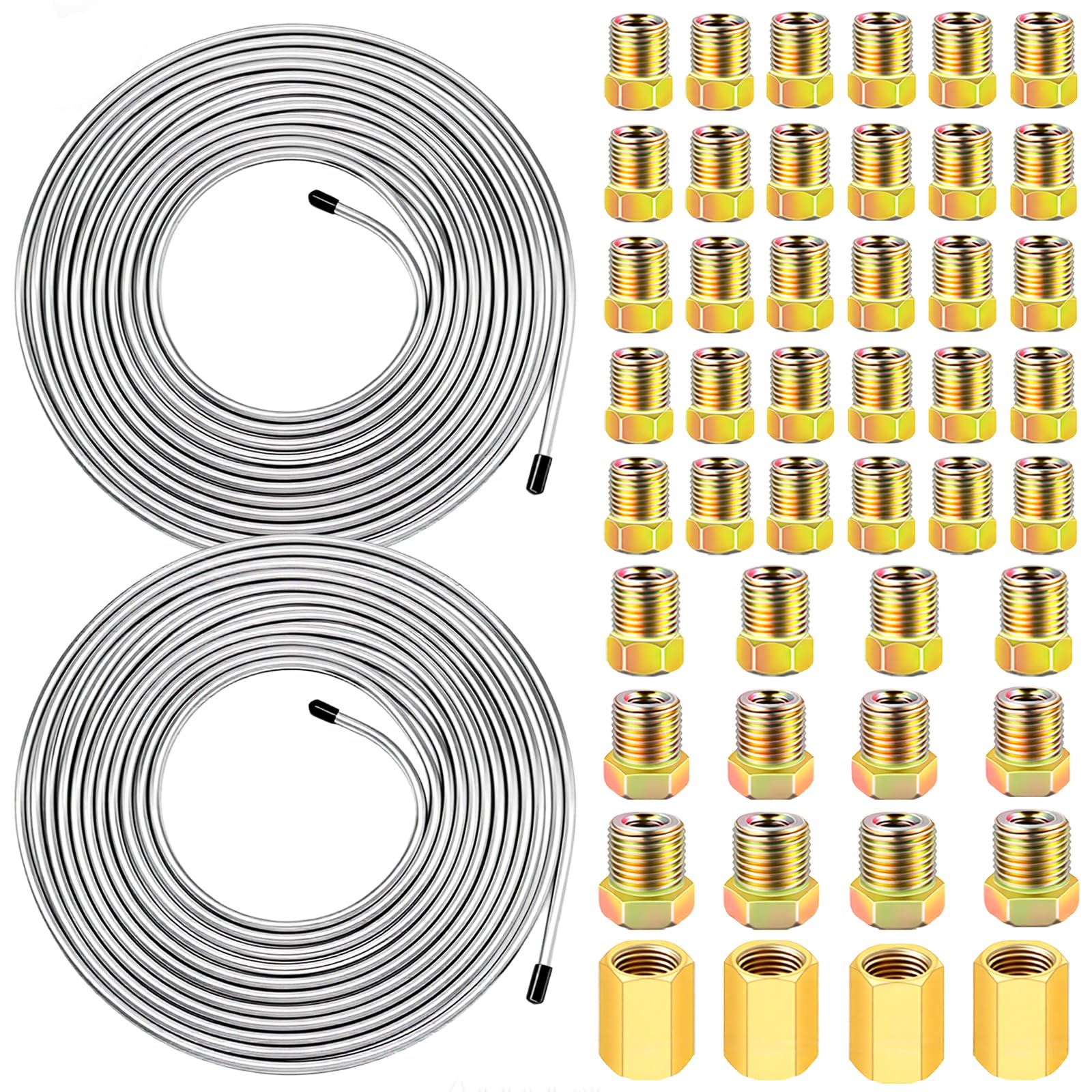
This package delivers two full 25-foot rolls of zinc-plated 3/16-inch tubing along with a comprehensive assortment of inverted flare nuts and four brass unions. The 0.0625-inch nominal wall thickness is notably heavier than the standard 0.028-inch wall, providing extra burst protection for high-pressure or commercial applications. The thicker wall does reduce flexibility — a quality bender is strongly recommended to avoid kinking during tight frame-rail routing.
The included fitting selection covers 3/8-24, 7/16-24, 1/2-20, and 9/16-18 thread pitches, plus four unions for splicing sections. This range is especially useful for mixed-application projects where the master cylinder end uses a different thread than the wheel cylinder. Owners who swapped all four corners on a single vehicle appreciated having spare nuts without a second trip to the store.
The brass unions resist corrosion better than steel versions, which is relevant if you need to join line sections in an area exposed to road salt. The two-roll format covers a full vehicle with some left over for future repairs, though the added weight and thicker wall make this kit more suited to a workshop bench than a roadside emergency kit.
What works
- Thick 0.0625-inch wall provides extra burst margin
- Brass unions included for corrosion-resistant splicing
- Extensive fitting assortment covers multiple thread sizes
What doesn’t
- Thicker wall is harder to bend by hand without kinking
- Zinc coating may wear at contact points during bending
4. MuHize 3/16″ Copper-Coated Brake Line Kit 25 ft with 16 Fittings
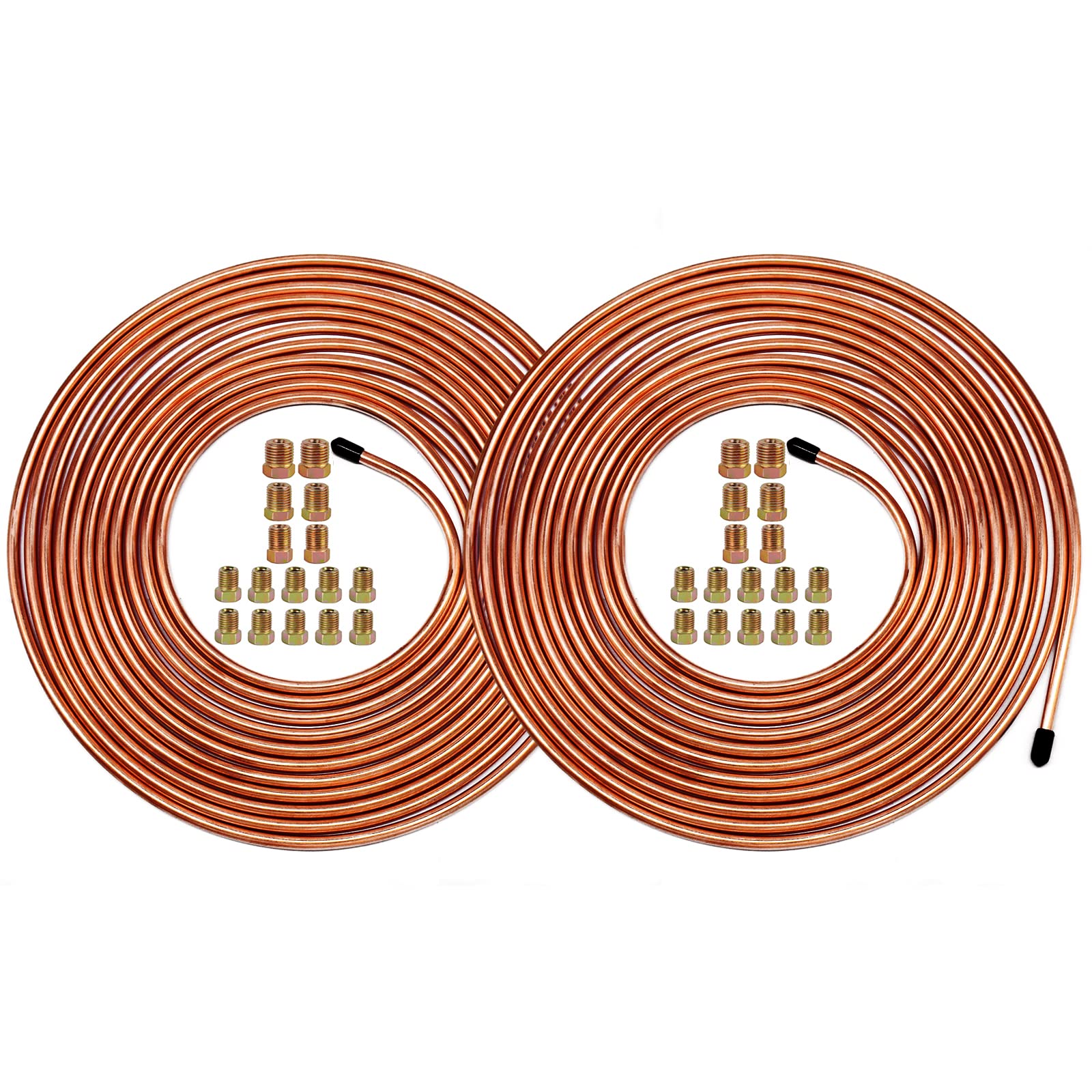
The MuHize kit uses copper-coated steel tubing — a middle-ground material that offers better surface corrosion resistance than bare or zinc-coated steel while keeping costs below copper-nickel alloys. The copper layer is applied over a steel core, so the structural strength remains steel-like while the exterior resists oxidation. The 0.028-inch wall thickness matches standard OEM specs, and users report that the tubing bends easily by hand for gentle curves.
The included fitting pack provides 16 inverted tube nuts across four common thread sizes: 3/8-24, 7/16-24, 1/2-20, and 9/16-18. This range covers most domestic and import applications, though the quantity skews heavily toward 3/8-24 nuts, which is appropriate for mainstream vehicles. The lack of unions in the kit means you need additional parts if you plan to splice sections.
Owner feedback is generally positive on the flaring process — the copper coating helps the flare seat smoothly without galling. However, if the copper layer is scratched through to steel during installation, the exposed area can rust. This makes clean bending technique and careful handling more important than with copper-nickel tubing. A solid choice for budget-conscious builders in moderate climates.
What works
- Copper coating improves surface corrosion resistance over plain steel
- Easy hand bending for moderate-radius curves
- Fitting variety covers four common thread pitches
What doesn’t
- Copper layer can be scratched, exposing steel to moisture
- No unions included for line splicing
5. Vkinman 3/16″ Zinc-Coated Steel Brake Line Tubing Roll 25 ft
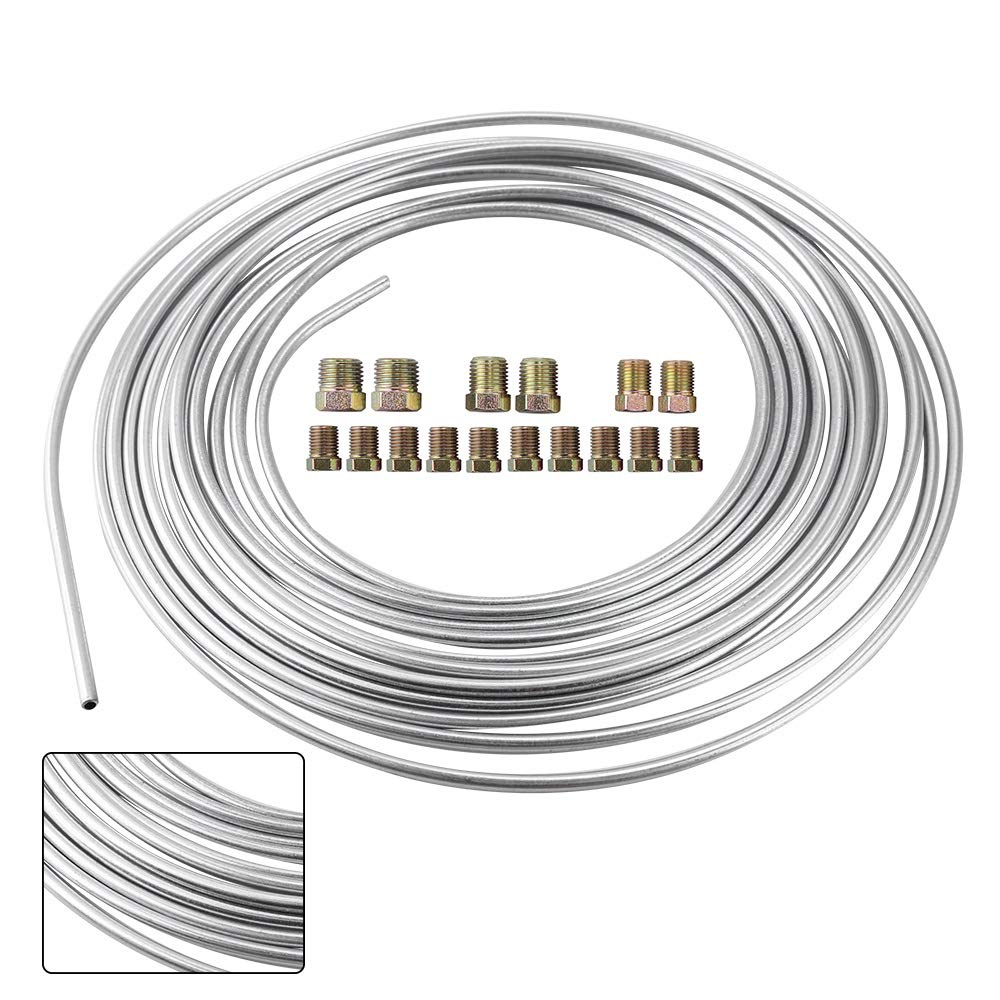
This entry-level coil from Vkinman is bare zinc-coated steel tubing — the most economical option in the lineup. It includes no fittings, tools, or unions, so the final cost depends on your existing inventory of nuts and flaring equipment. The 0.028-inch wall thickness is standard, and the steel core provides familiar bending characteristics for anyone who has worked with OE lines.
The zinc coating offers moderate protection in dry climates but is the thinnest corrosion defense among the products reviewed. Any bending that cracks or flakes the plating creates a direct path for moisture to reach the steel substrate, accelerating rust from the outside in. Owners in humid or salt-belt regions should plan to apply an additional anti-corrosion coating if using this product.
For someone who already owns a flaring kit and a bender, and just needs raw tubing for a short-run replacement on an older vehicle not expected to last another decade, this coil delivers the lowest upfront investment. It is a no-frills utility option rather than a long-term solution, best reserved for projects where cost is the overriding constraint.
What works
- Lowest entry cost for a 25-foot coil
- Standard wall thickness works with typical flaring tools
- Familiar steel bending behavior for experienced DIYers
What doesn’t
- Zinc coating provides minimal long-term corrosion protection
- No fittings or unions included in the package
Hardware & Specs Guide
Burst Pressure vs. Wall Thickness
A 3/16-inch brake line with a 0.028-inch wall typically bursts around 8,000–10,000 psi, far above the 1,500–2,000 psi a hydraulic brake system generates. Thicker 0.0625-inch walls raise the burst threshold but reduce flexibility — the line work-hardens faster and requires a bender for any bend under a 2-inch radius. Always match wall thickness to your vehicle’s factory spec to ensure proper flare seating.
Inverted Flare Nut Thread Standards
The four common thread pitches for 3/16-inch brake line nuts are 3/8-24 (most passenger cars), 7/16-24 (some Ford and older imports), 1/2-20 (certain trucks and rear axles), and 9/16-18 (heavy-duty applications). Using the wrong thread pitch can strip the mating port or cause a leak under pressure. Verify thread size by test-fitting the nut onto the component before flaring the tube.
FAQ
Can I use 3/16 brake line for fuel or transmission systems?
What is the difference between single-flare and double-flare on 3/16 brake line?
How do I prevent 3/16 brake line from kinking when bending?
Final Thoughts: The Verdict
For most buyers, the best 3/16 brake line winner is the 4LIFETIMELINES Copper-Nickel coil because it eliminates the corrosion risk entirely and carries a lifetime warranty. If you need an all-in-one kit with tools for a first-time install, grab the smseace 26-Piece Kit. And for a budget replacement where corrosion is not a primary concern, the Vkinman zinc-coated coil gets the job done with the lowest upfront cost.

Certification: BSc in Mechanical Engineering
Education: Mechanical engineer
Lives In: 539 W Commerce St, Dallas, TX 75208, USA
Md Amir is an auto mechanic student and writer with over half a decade of experience in the automotive field. He has worked with top automotive brands such as Lexus, Quantum, and also owns two automotive blogs autocarneed.com and taxiwiz.com.