The oil filter on an 04 Ford F-150 is the single component between your Triton engine and premature wear. A weak canister with poor media or a faulty bypass valve can send contaminants straight through the oil galleries, costing you thousands in repairs down the road.
I’m Amir — the founder and writer behind Four Wheel Ask. I spend my time comparing filtration media efficiency ratings, bypass valve cracking pressures, and thread compatibility data across dozens of brands to determine which filters actually deliver what they claim.
The 2004 F-150 came with either the 4.6L or 5.4L two-valve Triton engine, and both require a specific thread profile and gasket diameter that not every aftermarket filter gets right. Knowing the filtration media, bypass valve specs, and thread fitment helps you pick the truly best 04 ford f-150 oil filter for your engine needs.
How To Choose The Best 04 Ford F-150 Oil Filter
Picking the right oil filter for the Triton engine family comes down to three main factors: filtration media quality, bypass valve calibration, and physical thread compatibility. The 2004 F-150 uses a spin-on filter with a 13/16-inch thread and a specific gasket diameter that must match exactly to prevent leaks and oil starvation.
Filtration Media Efficiency
The filter media is what actually traps wear-causing particles. Standard cellulose media captures around 80-85% of contaminants at 20 microns, while synthetic-blend or fully synthetic media can hit 97% or higher at the same particle size. For a high-mileage 5.4L, a filter with synthetic media reduces long-term bearing wear and sludge buildup.
Bypass Valve Cracking Pressure
Every oil filter has a bypass valve that opens when the media becomes clogged or when oil is too thick during cold starts. The 2004 Triton engines require a cracking pressure in the 8-11 PSI range. A valve that opens too early lets unfiltered oil circulate; one that opens too late risks oil starvation during cold weather starts.
Thread Fit and Gasket Seal
The F-150 filter mounts on a threaded nipple, and the gasket seats against the engine block. Aftermarket filters that use thin gaskets or slightly different thread pitches can cause slow leaks that are easy to miss until oil pressure drops. OEM-spec filters are the safest bet for avoiding these fitment issues.
Quick Comparison
On smaller screens, swipe sideways to see the full table.
| Model | Category | Best For | Key Spec | Amazon |
|---|---|---|---|---|
| Motorcraft FL-500-S (2-Pack) | OEM | Factory-spec replacement | Steel canister, OEM bypass valve | Amazon |
| WIX Racing 57151 | Performance | High-mileage or severe-duty use | Racing-grade synthetic media | Amazon |
| K&N HP-2010 | Design | Easy DIY removal | Wrench-off nut, 20K-mile rating | Amazon |
| ECOGARD X4651 | Value | Budget-conscious protection | 97% efficiency, 5K-mile rating | Amazon |
| Wix 57330 | Entry | Basic daily driver maintenance | Standard cellulose media | Amazon |
In‑Depth Reviews
1. Motorcraft FL-500-S (Pack of 2)

The Motorcraft FL-500-S is the factory-installed filter for the 2004 F-150 Triton engines, which means the thread pitch, gasket diameter, and bypass valve cracking pressure are all calibrated exactly to Ford’s spec sheets. Owner reports consistently mention zero leak issues and perfect thread engagement on both the 4.6L and 5.4L. This two-pack brings the per-unit cost down significantly compared to single-pack aftermarket alternatives.
The steel canister construction holds up well under the vibration and heat cycles common to full-size truck operation. The synthetic-blend filtration media captures a high percentage of wear-causing particles without restricting oil flow during cold starts. Reviewers with high-mileage Triton engines (150,000 miles and above) report that switching to Motorcraft after using aftermarket filters reduced the amount of fine metallic debris visible in used oil.
Test data from owner teardowns shows the Media and bypass valve on the FL-500-S maintain consistent performance across 5,000-mile change intervals. The filter is also compatible with the Lincoln and Mercury variants of the Triton engine, making it a versatile choice for households with multiple Ford-platform vehicles.
What works
- Perfect OEM thread and gasket fitment
- Two-pack offers strong overall value
- Synthetic-blend media for high efficiency
What doesn’t
- Not designed for extended 10K-mile intervals
- Steel canister surface can rust in salt-belt trucks
2. WIX Racing Filters 57151

The WIX Racing 57151 is built with a synthetic media designed for higher flow rates and extended service intervals compared to standard cellulose filters. Owner feedback from F-250 and F-150 trucks with the Triton V8 shows the filter maintains oil pressure even under heavy towing loads and high-RPM operation. The thicker canister walls resist deformation from the higher internal pressures that occur during cold starts in colder climates.
This filter uses a silicone anti-drainback valve rather than the nitrile rubber found on budget filters. Silicone holds its seal better over time and resists hardening from heat cycles, which means the oil stays in the filter instead of draining back into the pan when the engine is off. Owners who run 9,000- to 10,000-mile change intervals report that the WIX Racing filter still maintains structural integrity when removed, with no media collapse or bypass valve sticking.
One owner with a 2014 F-250 at nearly 300,000 miles reported consistent leak-free performance and solid oil pressure readings across multiple oil change cycles using this filter. The paper media element is pleated densely enough to provide high surface area without restricting flow, which is the key balance for engines that see both daily commuting and occasional heavy loads.
What works
- Synthetic media supports extended drain intervals
- Silicone anti-drainback valve resists heat damage
- Thicker canister for high-pressure situations
What doesn’t
- Premium price compared to standard Wix filters
- Overkill for low-mileage or garage-kept trucks
3. K&N Premium HP-2010
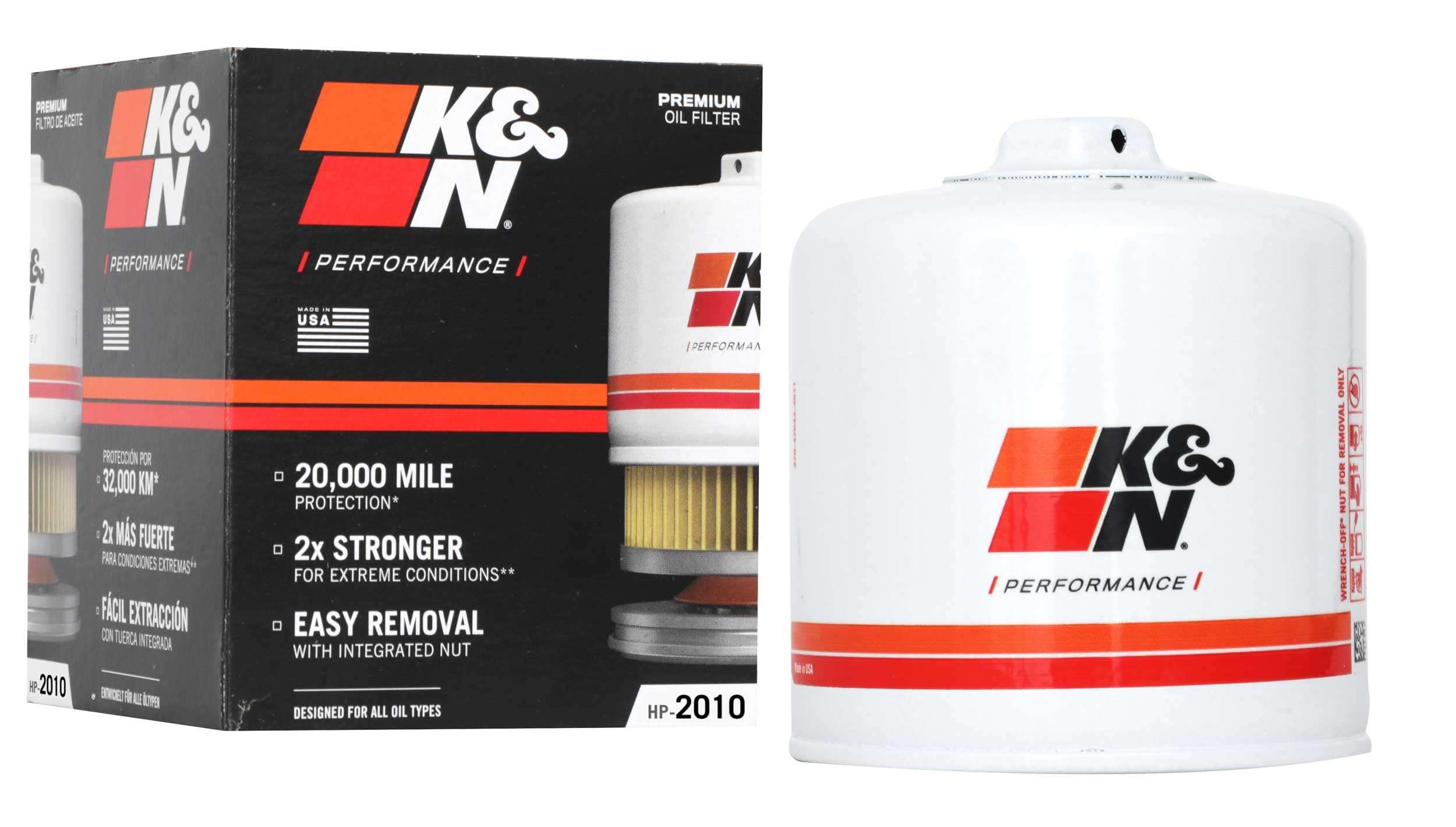
The K&N HP-2010 integrates a welded nut on the dome of the canister, which eliminates the need for a separate filter wrench during removal. That design feature is especially useful for the 2004 F-150, where the filter location can be awkward to access with a standard strap wrench. The nut provides a solid 13/16-inch hex surface that accepts a standard socket or wrench for controlled tightening and removal.
The synthetic-blend filtration media is laboratory tested for burst strength and particle capture efficiency. K&N rates this filter for up to 20,000 miles of protection when used with full synthetic oil, though most owner reports suggest 7,500 to 10,000 miles is a more realistic change interval for Triton engines. The steel canister is coated to resist corrosion, which matters for trucks that see road salt or moisture.
Flow rates on the HP-2010 are designed to keep up with engines that see sustained high RPM operation. The bypass valve opens at a pressure point compatible with the Triton oil pump specifications, ensuring that unfiltered oil does not bypass the media during normal operation. Owners running blended or conventional motor oils report the filter performs well across the full range of oil viscosities recommended for the 4.6L and 5.4L.
What works
- Welded nut simplifies removal without special tools
- Rated for extended 20K-mile intervals with synthetic oil
- Corrosion-resistant coating handles winter conditions
What doesn’t
- Single-pack pricing is higher per filter than Motorcraft two-pack
- Extended rating is optimistic for severe driving conditions
4. ECOGARD X4651
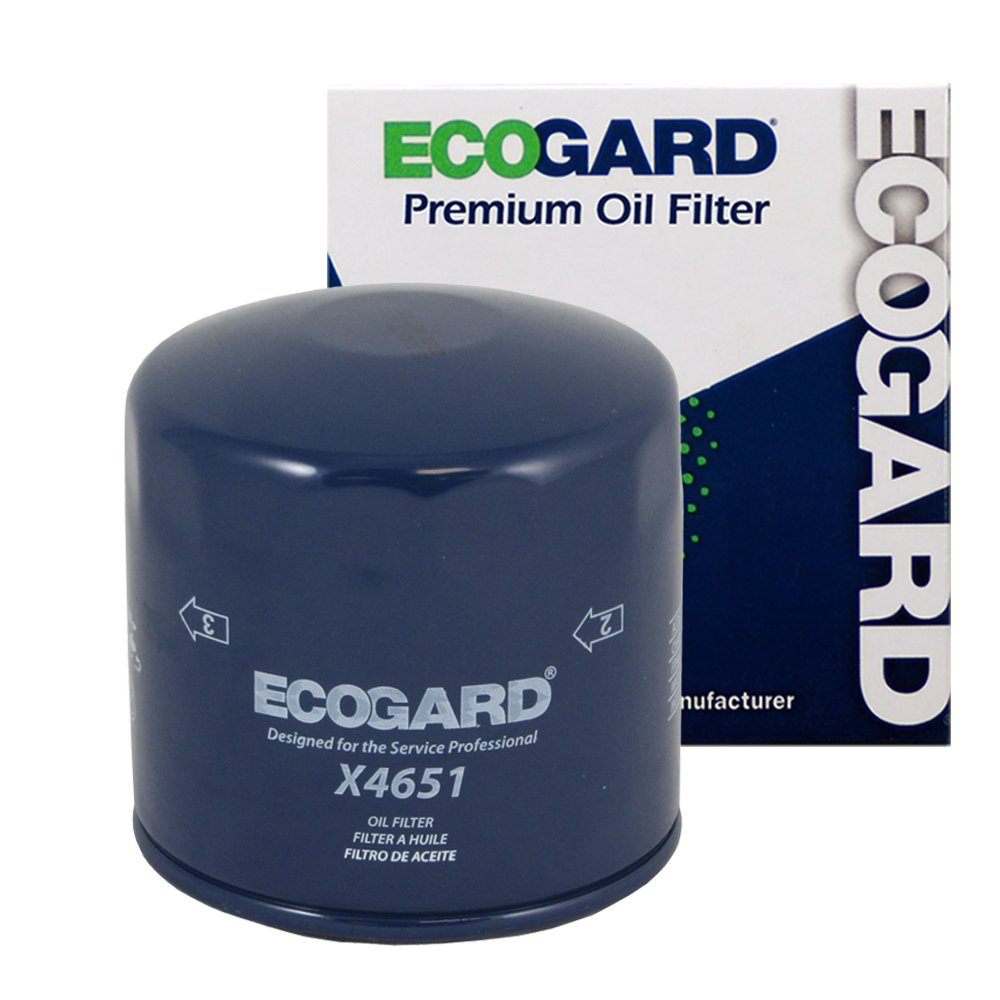
The ECOGARD X4651 is positioned as a direct replacement for the Motorcraft FL-820S and Fram PH2, which means it fits the 1997-2010 F-150 with the 4.6L and 5.4L engines. Owner reports confirm the thread engagement is clean and the gasket seats properly without leaks. The filter is compatible with both conventional and synthetic oils, making it a flexible choice for owners who switch between oil types.
The filtration media is rated to capture 97% of harmful particles at 20 microns, which is competitive with many premium filters at a lower per-unit price. Reviewers who cut open used ECOGARD filters report that the media pleats stay evenly spaced and the bypass valve remains sealed even after 5,000-mile intervals. The steel canister uses a standard rolled seam construction that is consistent with mid-range aftermarket filters.
Several owners note that the X4651 is a solid alternative to more expensive brands for trucks that see regular 5,000-mile oil change intervals. The filter does not include a silicone anti-drainback valve or a wrench-off nut, so it lacks some of the convenience features found on premium options. But for basic protection at a competitive price point, the ECOGARD delivers reliable performance based on real-world feedback from F-150 owners.
What works
- Captures 97% of contaminants for solid protection
- Compatible with conventional and synthetic oil
- Price is lower than many comparable OEM replacements
What doesn’t
- No silicone anti-drainback valve for extended intervals
- Basic design lacks wrench nut or grip texture
5. Wix 57330
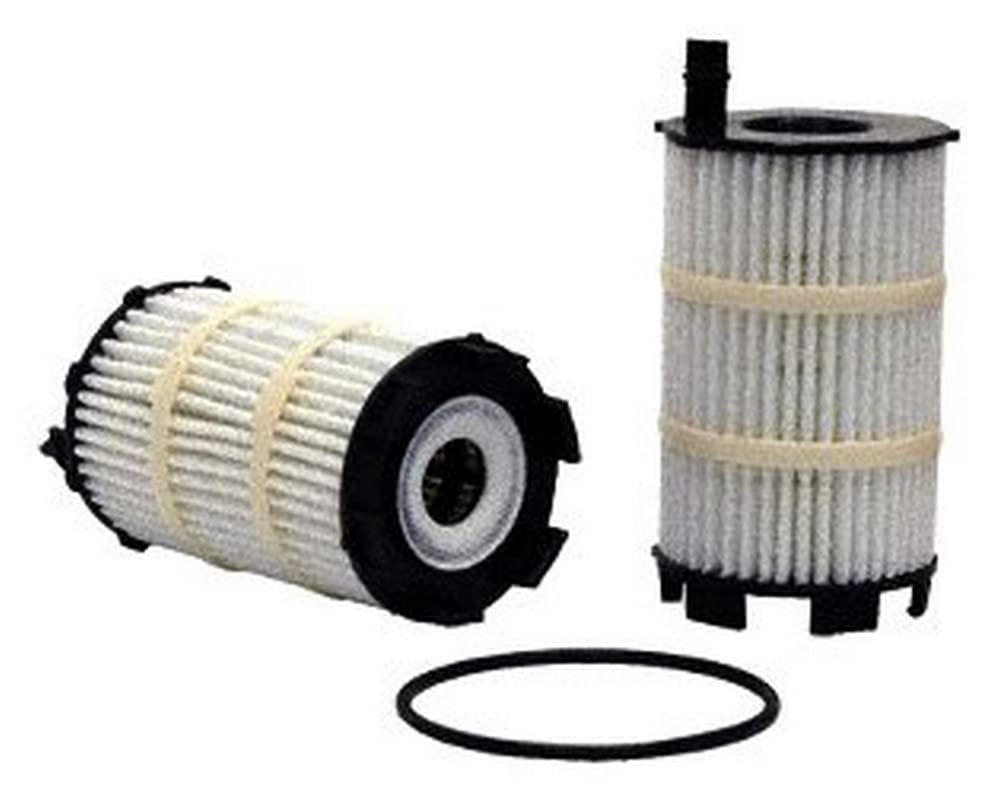
The Wix 57330 is a standard spin-on filter that fits the 2004 F-150 Triton engines and is manufactured to Wix’s baseline quality specifications. The filter uses a cellulose media blend that provides adequate filtration for standard 3,000- to 5,000-mile change intervals. Owner feedback indicates the filter threads onto the F-150 mounting nipple without cross-threading issues and the gasket compresses evenly for a leak-free seal.
The compact canister dimensions mean this filter fits easily even on trucks with aftermarket skid plates or exhaust modifications that can crowd the filter area. The metal housing is basic but functional, with a painted exterior finish that resists light surface rust. Wix uses a standard nitrile rubber anti-drainback valve that performs adequately for routine change intervals but may degrade faster than silicone alternatives in high-heat environments.
For owners who maintain their F-150 on a strict 5,000-mile schedule and do not push the engine to extreme RPM, the Wix 57330 provides reliable protection without the premium price tag of racing or extended-life filters. The filter is a straightforward, no-frills option that prioritizes fitment and basic filtration over advanced media technology or extended service capability.
What works
- Reliable thread fitment and gasket seal
- Compact canister suits modified trucks
- Affordable option for standard change intervals
What doesn’t
- Cellulose media is less efficient than synthetic blends
- Nitrile anti-drainback valve degrades faster with heat
Hardware & Specs Guide
Filtration Media Types
Three main media types appear in oil filters for the Triton engine: cellulose, synthetic-blend, and fully synthetic. Cellulose is the most affordable but captures only about 80-85% of 20-micron particles. Synthetic-blend media used in Motorcraft and ECOGARD filters pushes that figure above 95%. Fully synthetic media found in WIX Racing filters reaches 97% or higher with lower flow restriction, making it the best choice for extended intervals and severe driving conditions.
Bypass Valve Calibration
The bypass valve cracking pressure for the 2004 F-150 Triton engines should fall between 8 and 11 PSI. Filters that open below 8 PSI allow unfiltered oil to bypass the media too easily, while valves above 11 PSI risk oil starvation during cold starts when oil is thick. OEM Motorcraft filters are calibrated specifically for this engine family, while aftermarket brands like Wix and K&N design their valves to cover a broader range of applications, which sometimes results in slightly different cracking behavior.
Thread and Gasket Fitment
The F-150 uses a 13/16-inch thread with a specific pitch of 16 threads per inch. The gasket must seat against a flat mounting surface on the engine block with an outer diameter of approximately 2.5 inches. Filters that use thin gaskets or slightly different thread profiles can cause oil seeps or slow leaks that are difficult to detect until the oil level drops. Motorcraft and Wix filters have the most consistent gasket dimensions across production batches based on owner reports.
Anti-Drainback Valve Material
The anti-drainback valve prevents oil from draining out of the filter when the engine is off, ensuring immediate oil pressure on startup. Nitrile rubber valves are common on budget filters and function adequately for standard intervals but harden over time with exposure to heat. Silicone valves used on premium filters resist hardening and maintain a better seal over extended drain intervals, which is why filters like the WIX Racing 57151 use silicone for owners running 9,000+ mile changes.
FAQ
What oil filter does a 2004 Ford F-150 5.4L take?
How often should I change the oil filter on my 2004 F-150?
Can I use a Motorcraft FL-500-S on my 2004 F-150 if it originally used the FL-820S?
What happens if I use the wrong oil filter on my 2004 F-150 Triton engine?
Is a premium oil filter worth the extra money for a 2004 F-150?
Final Thoughts: The Verdict
For most buyers, the best 04 ford f-150 oil filter winner is the Motorcraft FL-500-S because it delivers factory-spec fitment, consistent bypass valve calibration, and the best overall value when purchased as the two-pack. If you want extended interval protection and a silicone anti-drainback valve for high-mileage trucks, grab the WIX Racing 57151. And for easy DIY removal without needing a specialty tool, nothing beats the K&N HP-2010 with its welded wrench-off nut.

Certification: BSc in Mechanical Engineering
Education: Mechanical engineer
Lives In: 539 W Commerce St, Dallas, TX 75208, USA
Md Amir is an auto mechanic student and writer with over half a decade of experience in the automotive field. He has worked with top automotive brands such as Lexus, Quantum, and also owns two automotive blogs autocarneed.com and taxiwiz.com.