When your Ford F-150’s temperature gauge starts creeping past the halfway mark, you’re not just looking at an inconvenient breakdown — you’re risking a warped cylinder head, a blown head gasket, or a seized engine. The radiator is the single most critical component keeping your truck’s 5.0L V8, 3.5L EcoBoost, or 2.7L engine alive under load. Choosing the wrong replacement can mean poor cooling capacity, mismatched transmission cooler fittings, or a unit that fails within a year.
I’m Amir — the founder and writer behind Four Wheel Ask. I’ve spent years analyzing aftermarket automotive cooling system data, comparing core thickness measurements, tank material ratings, and seal tolerances across dozens of Ford F-150 radiator models to separate the units that actually maintain consistent operating temps from the ones that don’t.
Whether you’re towing a trailer in summer heat or daily-driving in stop-and-go traffic, the ford f-150 radiator you choose directly affects your engine’s longevity, transmission health, and overall reliability.
How To Choose The Best Ford F-150 Radiator
Selecting the right radiator for your F-150 isn’t about picking the most expensive option or the one with the most reviews. You need to match the radiator’s physical dimensions, cooling capacity, and transmission cooler configuration to your specific model year and engine. A 2011 5.0L truck uses a different radiator than a 2015 2.7L EcoBoost, and mixing them up leads to mounting headaches or overheating.
Core Thickness and Row Count
The core thickness — measured in inches — directly determines how much heat the radiator can shed. Standard F-150 radiators typically use a 5/8-inch to 7/8-inch core. Models with the heavy-duty towing package often require a thicker core to handle the extra heat from engine load and transmission fluid. Row count (1-row vs 2-row) also matters: a single-row radiator with a thick core can outperform a thin 2-row unit because thicker tubes carry more coolant volume per pass.
Transmission Cooler Integration
Nearly every Ford F-150 radiator sold after 2004 includes an integrated transmission fluid cooler housed inside the radiator tank. If your truck has a factory towing package, the transmission cooler fittings inside the radiator must match your truck’s cooler line size. Some aftermarket radiators ship with universal adapters that need to be swapped out. Verify that your chosen unit includes a built-in transmission cooler unless you’re running an external cooler setup.
Plastic Tank vs. All-Aluminum Construction
Most OEM-style F-150 radiators use PA66 GF30 plastic tanks crimped onto an aluminum core. This design is lighter and cheaper to produce, but the plastic-to-metal seal is the most common failure point over time. All-aluminum radiators with TIG-welded tanks eliminate that failure mode entirely but tend to cost more and sometimes require bracket modifications for a proper fit. For pure longevity on a daily driver, a premium all-aluminum unit with a matching shroud is the better long-term investment.
Quick Comparison
On smaller screens, swipe sideways to see the full table.
| Model | Category | Best For | Key Spec | Amazon |
|---|---|---|---|---|
| TRQ RDA80006 | Premium | Late-model F-150 without HD trailer package | 1-row aluminum core | Amazon |
| Readair RRAD13225 | Premium | 2011-2015 3.7L/5.0L models | 11 lbs, direct-fit OEM | Amazon |
| PHILTOP CU13510 | Premium | 2015-2016 F-150 without HD trailer package | IATF16949-certified core | Amazon |
| Readair RRAD2818 | Mid-Range | 2005-2008 F-150 4.2L/4.6L/5.4L | Advanced welded sealing | Amazon |
| AUTOSAVER88 Rdmd550105 | Mid-Range | 2015-2016 F-150 V6/V8 | High-density louvered fins | Amazon |
| Readair BL3Z8005C compatible | Mid-Range | 2011-2014 F-150 5.0L/3.5T | 7/8-inch core thickness | Amazon |
| TRQ ECA62536 Coolant Reservoir | Budget | 1999-2003 F-150 coolant reservoir replacement | 3.99 lbs, direct-fit reservoir | Amazon |
In‑Depth Reviews
1. TRQ RDA80006 Radiator
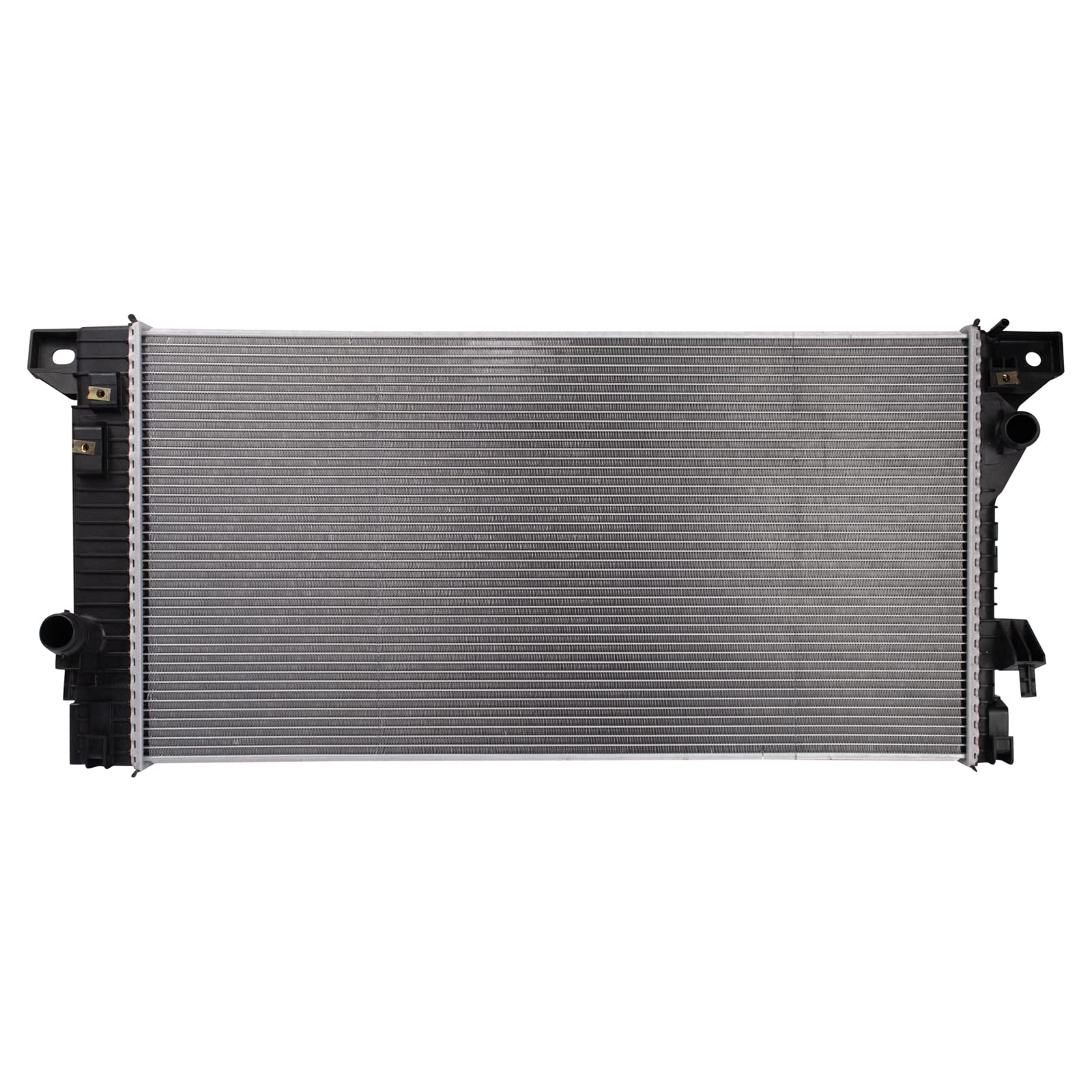
The TRQ RDA80006 is engineered specifically for 2015-2017 F-150 models with the 2.7L, 3.5L, or 5.0L engine, excluding the heavy-duty trailer package. Its single-row aluminum core is thick enough to handle standard cooling loads while keeping overall weight under 16.4 pounds, which simplifies handling during a DIY swap. The factory-style PA66 tank and crimped seal match OEM construction closely, ensuring the transmission cooler lines bolt up without adapters.
What sets this unit apart is the packaging quality — the radiator arrives wrapped in cardboard and foam, so the cooling fins arrive straight and undamaged. The fan shroud clips are pre-installed, saving you from hunting down trim pieces mid-installation. Real owner feedback confirms a direct bolt-in experience on both the 3.5L EcoBoost and 5.0L V8, with no reports of misaligned mounting tabs or leaking tank seals out of the box.
If you’re replacing a factory radiator on a 2015-2017 F-150 that didn’t leave the lot with the heavy-duty cooling option, this TRQ unit delivers OEM-level performance at a fraction of the dealership cost. The included transmission cooler lines are properly sized, and the aluminum core sheds heat efficiently enough to keep the engine at 195°F even during summer towing at moderate load.
What works
- Perfect direct-fit for standard cooling F-150 models
- Exceptional packaging prevents fin damage during shipping
- Pre-installed shroud clips reduce install time
What doesn’t
- Does not fit models with factory heavy-duty trailer package
- Single-row core may be insufficient for extreme towing applications
2. Readair RRAD13225 Radiator
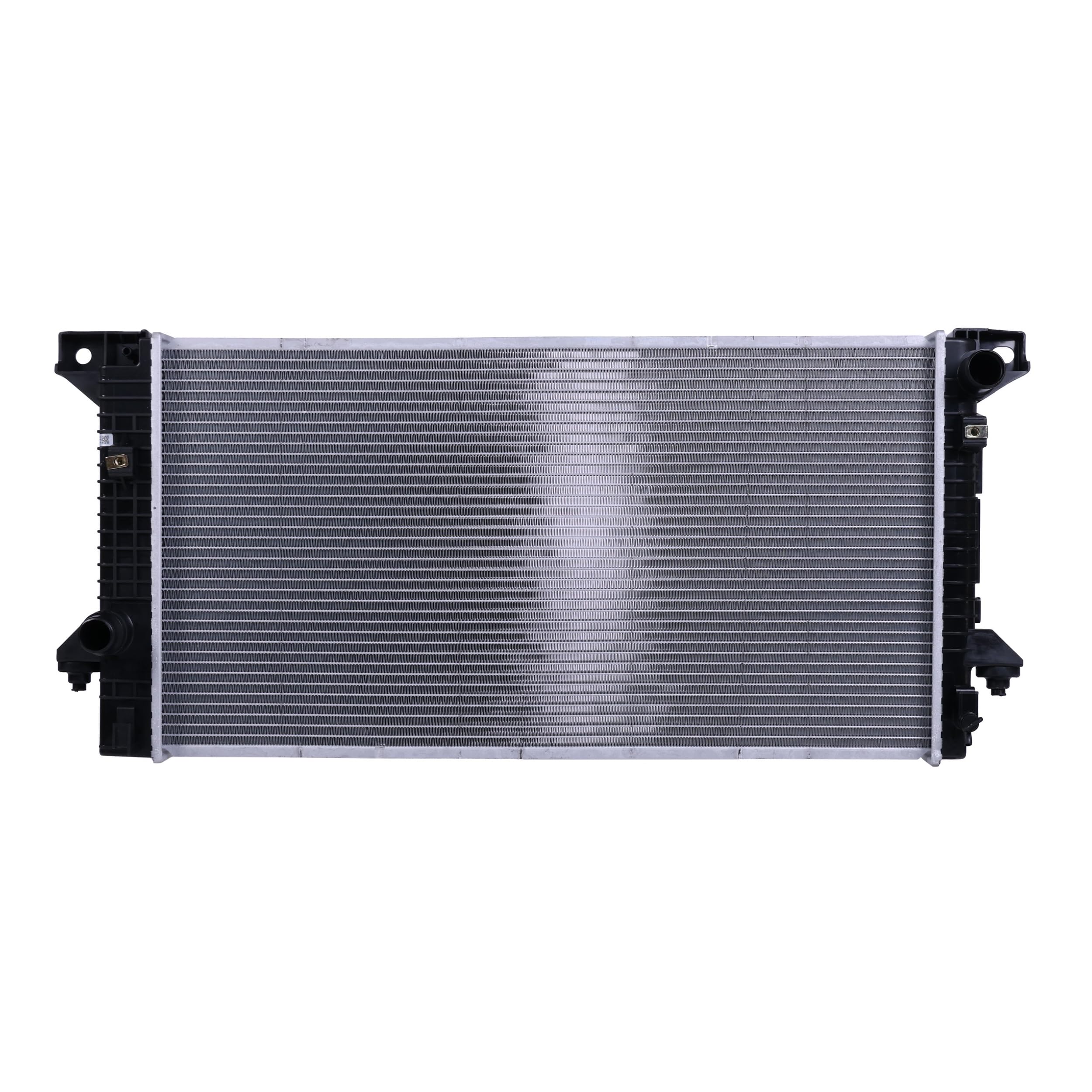
The Readair RRAD13225 is built for the 2011-2015 F-150 with the 3.7L V6 or 5.0L V8, aligning with OEM part numbers FO3010303, BL3Z8005A, and CU13225. At just 11 pounds, it’s noticeably lighter than many alternatives in its class, thanks to the aluminum core mated with plastic tanks. The advanced welding technique on the core-to-tank joint is designed to prevent the stress cracks that commonly form around the inlet and outlet necks on cheaper radiators.
Owners consistently report that this unit fits without modification, with the transmission cooler lines connecting directly to the factory fittings. The core dimensions measure approximately 31 inches wide by 20 inches tall, matching the factory envelope exactly. The two-year return policy adds confidence for buyers who are doing their first radiator swap and want a safety net in case of fitment surprises.
For F-150 owners with a 3.7L or 5.0L engine from the 2011-2015 generation, this Readair radiator offers a compelling balance of weight savings, OEM-grade sealing, and straightforward installation. The lighter weight makes it easier to maneuver into position alone, and the core thickness is adequate for standard driving conditions including light towing.
What works
- Lightweight design simplifies solo installation
- Matches OEM dimensions and mounting points precisely
- Two-year return policy for non-human-caused damage
What doesn’t
- Plastic tanks are a potential long-term failure point
- Not designed for heavy-duty towing scenarios
3. PHILTOP CU13510 Radiator
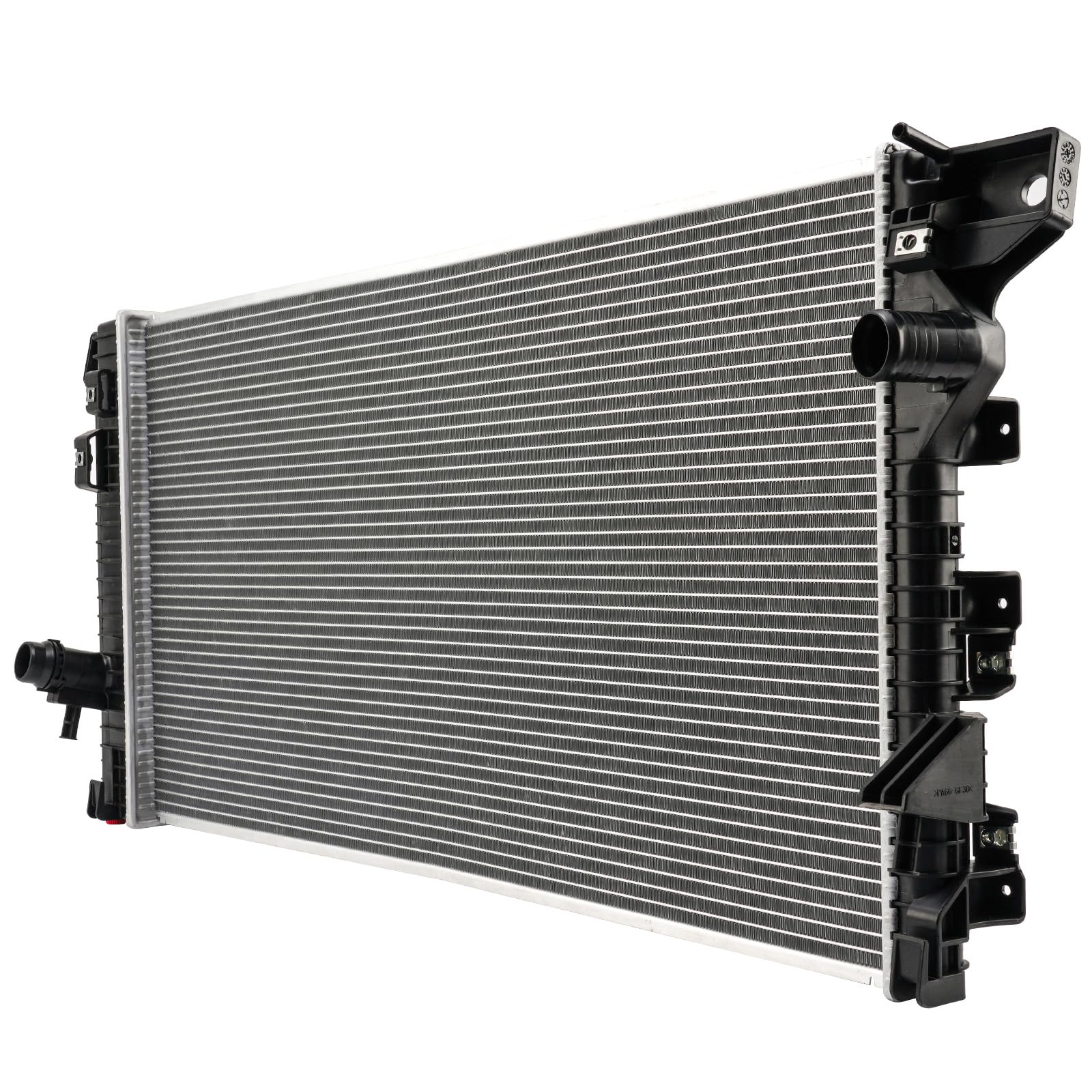
The PHILTOP CU13510 is specifically calibrated for the 2015-2016 F-150 across all engine options (2.7T, 3.5T, 3.5L, 5.0L) as well as the 2018-2021 Lincoln Navigator. Its IATF16949 certification — an automotive quality management standard — indicates a manufacturing process that’s stricter than typical aftermarket parts. The high-density aluminum core uses multi-layer cooling fins to maximize surface area for heat rejection without increasing overall dimensions.
Installation feedback from owners highlights that the unit comes with a color-illustrated instruction booklet, the core is individually wrapped in cardboard inside the box, and the bolt holes align perfectly with factory brackets. One critical detail: the OEM fan shroud uses a coarse-thread 10mm bolt into plastic, while the PHILTOP uses a fine-thread 10mm bolt that screws into a captured nut — you’ll need to swap your existing bolts or source new ones of the correct thread pitch.
For owners of 2015-2016 F-150s without the heavy-duty towing package, the PHILTOP CU13510 delivers certified manufacturing quality and a cooling fin density that outpaces most generic replacements. The slight bolt thread difference is a minor inconvenience, but the overall fitment and cooling performance justify the position in the premium tier.
What works
- IATF16949 certified manufacturing quality
- Excellent packaging with individual core wrapping
- High-density fins maximize cooling efficiency
What doesn’t
- Fan shroud bolts require different thread pitch than OEM
- Not compatible with heavy-duty cooling package models
4. Readair RRAD2818 Radiator
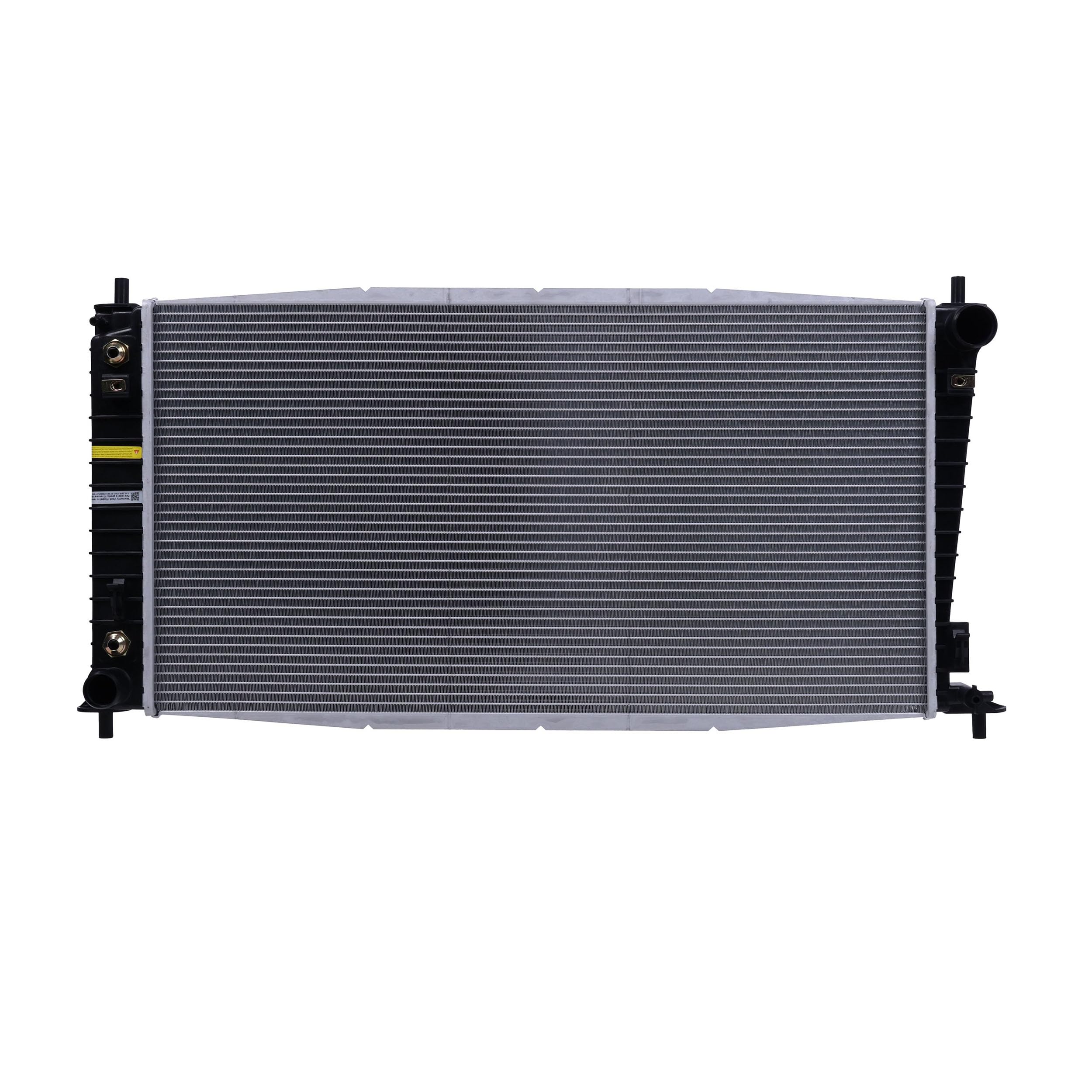
The Readair RRAD2818 covers the older-generation Ford F-150 from 2005-2008, including the 4.2L V6, 4.6L V8, and the 5.4L Triton V8, plus the 2004-2006 Expedition and 2005-2008 Navigator. It’s a direct-fit unit that uses advanced welding techniques on the core-to-tank joints to maintain a consistent seal under the thermal cycling that these older engines are known for. The 4-pound weight is surprisingly light because this radiator uses a thin aluminum core with plastic tanks.
Owner reports confirm that the transmission cooler line fittings match the factory configuration without needing adapters. The unit is packaged with extra cardboard support around the fins, which prevents bending during shipping — a common issue with radiators this wide. One note from a buyer who installed it on a 2005 Expedition 5.4L Triton: the drain plug is plastic and requires careful tightening to avoid stripping the threads.
If you’re keeping an older 2005-2008 F-150 on the road, the Readair RRAD2818 offers a cost-effective path to restoring proper cooling without modifying brackets or hoses. The core thickness is adequate for the 5.4L Triton’s heat output under normal driving, though heavy towing with the 5.4L may push it to its limit on hot days.
What works
- Direct-fit for 2005-2008 F-150 4.2L/4.6L/5.4L
- Transmission cooler lines connect without adapters
- Well-packaged to prevent shipping damage
What doesn’t
- Plastic drain plug is fragile and easy to overtighten
- Thin core may struggle under heavy towing with 5.4L
5. AUTOSAVER88 Rdmd550105 Radiator
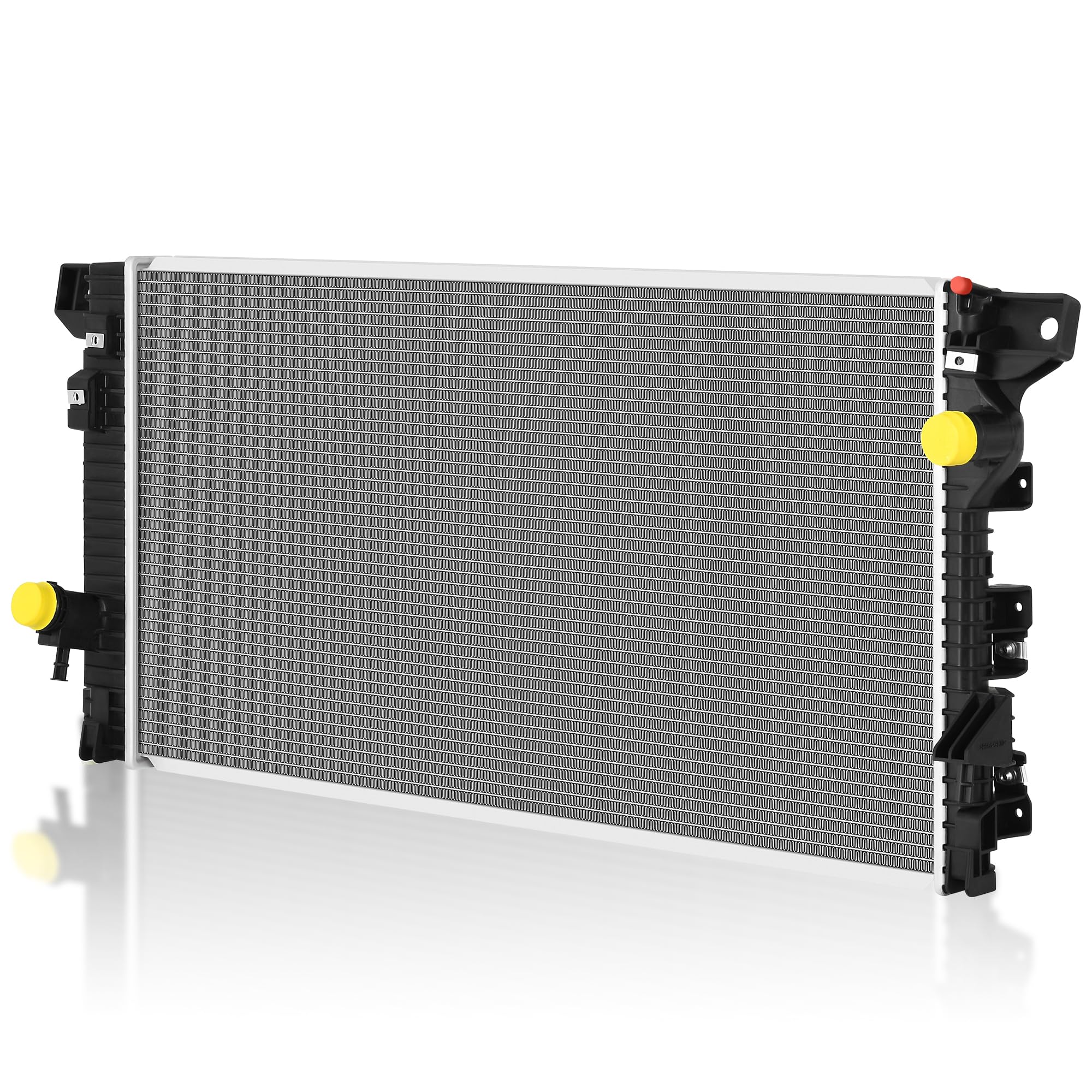
The AUTOSAVER88 Rdmd550105 is designed for the 2015-2016 Ford F-150 with the V6 2.7L, 3.5L, or V8 5.0L engines, along with the 2018-2021 Lincoln Navigator. It references OEM part numbers FL3Z8005B and FO3010334, meaning it’s meant to replace the factory radiator without any modification. The core uses high-density multi-louvered fins that increase the surface area for heat transfer compared to basic flat-fin designs.
At 16 pounds, this unit has a solid feel and the aluminum core resists deformation better than thinner alternatives. Owners report that the 2-hour DIY install is achievable with basic hand tools and a YouTube tutorial. The radiator cap is not included, so you’ll need to reuse your existing cap or buy a new one separately. The tank-to-core seal on this unit uses a crimped design with a gasket that’s been leak-tested at the factory.
For a 2015-2016 F-150 owner who wants a reliable replacement without overspending, the AUTOSAVER88 delivers a high-density fin core with proven leak resistance. The missing radiator cap is a minor hassle, but the overall fitment and cooling performance on the 5.0L V8 and 3.5L EcoBoost are consistent with the mid-range price point.
What works
- High-density louvered fins improve heat rejection
- Factory leak-tested before shipping
- Direct bolt-on with no modifications required
What doesn’t
- Radiator cap not included
- Some owners report the core feels thin compared to OEM
6. Readair BL3Z8005C Compatible Radiator
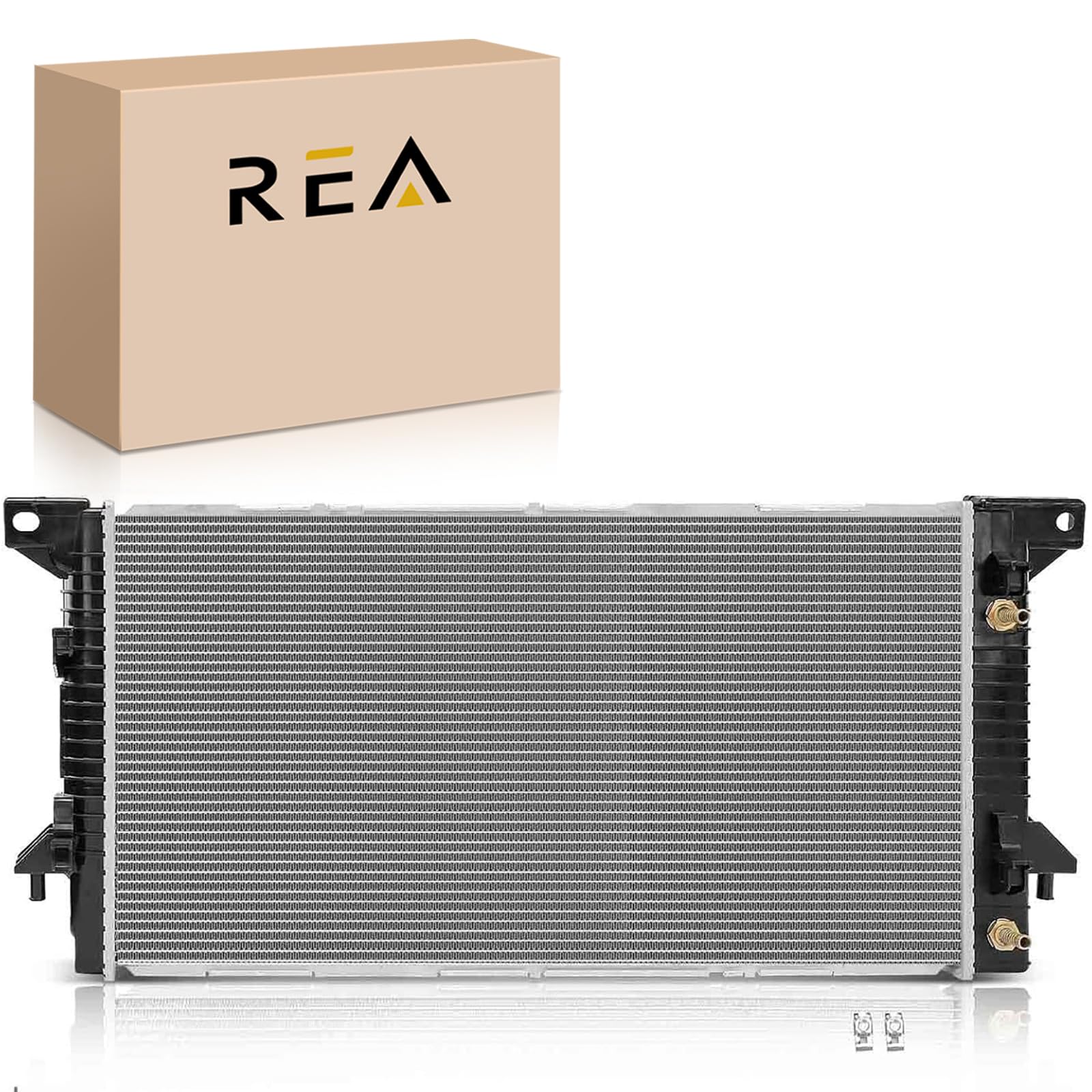
This Readair unit is designed for the 2011-2014 F-150 with the 5.0L V8, 3.5T EcoBoost, or 3.7L V6, as well as the 2015-2016 Expedition and 2015-2017 Navigator. The core measures 31-1/2 inches tall, 16-7/16 inches wide, and 7/8-inch thick — the thicker core is a key spec for handling the 3.5L EcoBoost’s heat output when under boost. A brass transmission oil cooler is integrated into the tank, and both the inlet and outlet are 1-1/2 inch diameter.
The unit uses PA66 GF30 plastic tanks paired with TIG-welded aluminum core joints, which is a hybrid construction that tries to combine plastic tank affordability with welded core durability. Owners installing this on 2012-2014 F-150 5.0L models report that the included adapters in the transmission cooler connection holes need to be removed before connecting factory lines — a step that’s easy to miss if you don’t read the instructions carefully.
For 2011-2014 F-150 owners with the 5.0L or 3.5T engine, this Readair radiator offers a 7/8-inch core that’s thicker than the standard aftermarket replacement. The two-year unlimited-mileage guarantee adds protection, but the adapter removal step adds a minor complexity to an otherwise straightforward installation.
What works
- 7/8-inch core thickness handles EcoBoost heat well
- Brass transmission oil cooler included
- Two-year unlimited-mileage guarantee
What doesn’t
- Transmission line adapters must be removed before installation
- Plastic tanks still a potential long-term failure point
7. TRQ ECA62536 Coolant Reservoir
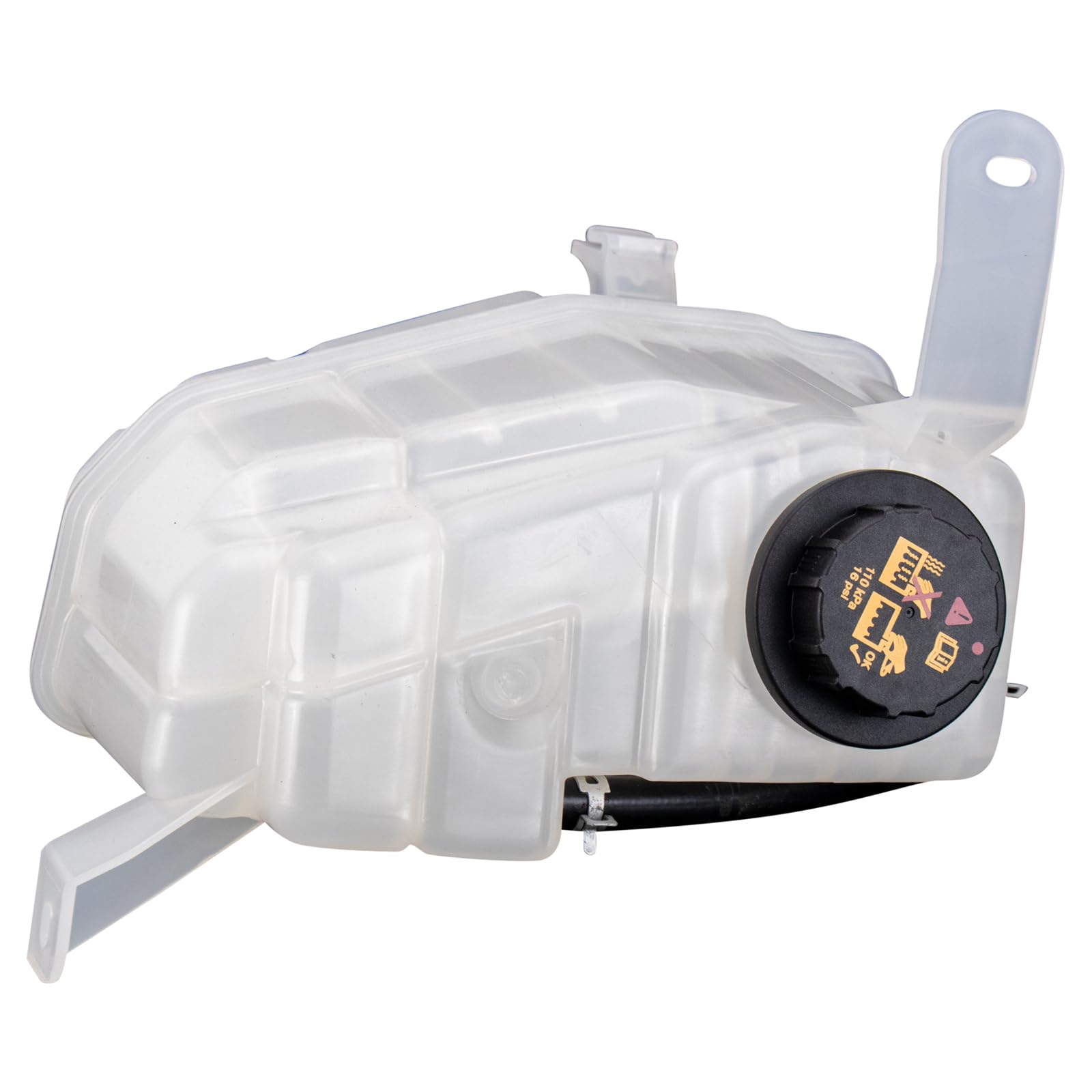
The TRQ ECA62536 is a coolant reservoir expansion tank, not a full radiator — it’s the plastic overflow bottle that sits beside the radiator on 1999-2003 F-150 models with the 4.2L, 4.6L, or 5.4L engine, as well as the 1997-2002 Expedition and 1998-2002 Navigator. The tank is machined from high-grade plastic that exactly matches the factory shape and mounting points. It weighs just under 4 pounds and takes about 15 minutes to swap using a pair of pliers and a flathead screwdriver.
This is a direct fix for a cracked or leaking overflow tank, which is a common failure on early-2000s Ford trucks due to heat cycling near the radiator. Owner feedback confirms that the tank fits the factory bracket perfectly and the hose barb accepts the original overflow hose without needing clamps larger than stock. The TRQ brand includes access to a library of DIY installation videos, which is particularly helpful if you’re unfamiliar with cooling system bleeding procedures.
If your older F-150 is losing coolant through a cracked reservoir rather than the radiator itself, this TRQ tank is a budget-friendly solution that restores the cooling system’s expansion capacity. Just be clear that this is not a radiator replacement — it’s a companion part that addresses the secondary failure point in the cooling system.
What works
- Perfect fit for 1999-2003 F-150 models
- 15-minute installation with basic tools
- Includes access to TRQ’s DIY video library
What doesn’t
- Only a coolant reservoir — does not replace a leaking radiator
- Limited to 1997-2003 model years only
Hardware & Specs Guide
Core Thickness and Row Configuration
The core thickness is the physical distance between the front and back of the radiator’s cooling matrix. Standard F-150 radiators range between 5/8-inch and 1-inch. A thicker core holds more coolant, which increases the thermal mass available to absorb engine heat. Row count (1-row vs 2-row) indicates how many tubes run across the core. A single thick tube flows more volume at lower restriction than two thin tubes, which is why many premium aftermarket radiators use a single-row design with a thick core.
Transmission Cooler Integration
Most F-150 radiators include a built-in transmission fluid cooler housed in the bottom tank. The cooler consists of a brass or aluminum tube loop that transmission fluid passes through before returning to the transmission. When selecting a replacement, verify that the transmission line fittings match your truck’s configuration — some radiators ship with universal adapters that must be swapped to match your model. Trucks with factory heavy-duty towing packages may use larger-diameter cooler lines.
Plastic Tank vs. All-Aluminum Construction
Plastic tank radiators use PA66 GF30 (glass-fiber-reinforced nylon) tanks crimped onto an aluminum core with a rubber gasket. This is the OEM standard for F-150 radiators and is cheaper to manufacture. The failure point is the crimped seal, which can leak after repeated thermal expansion cycles. All-aluminum radiators have tanks welded directly to the core, eliminating the gasket failure mode. They typically cost more and weigh more but offer greater long-term reliability for trucks kept past 150,000 miles.
Heavy-Duty vs. Standard Cooling Package
Ford offered two radiator configurations for the F-150: standard cooling and heavy-duty towing package cooling. The heavy-duty radiator has a thicker core (often 1-inch vs 5/8-inch), and sometimes a second row of tubes, to handle the additional heat from towing. When replacing your radiator, you must match the replacement to your truck’s original cooling package — installing a standard radiator on a heavy-duty truck will lead to overheating under load. Check your truck’s VIN or original build sheet if you’re unsure.
FAQ
How do I know if my F-150 has the heavy-duty cooling package?
Can I install a 2-row radiator in place of the factory 1-row radiator?
What causes the plastic tank to crack on an F-150 radiator?
Do I need to replace the radiator cap when installing a new radiator?
Can a 2015 Ford F-150 2.7L EcoBoost use the same radiator as a 5.0L model?
Final Thoughts: The Verdict
For most buyers, the ford f-150 radiator winner is the TRQ RDA80006 because it combines OEM-grade fitment with a thick single-row aluminum core that handles standard cooling loads reliably, and it includes pre-installed shroud clips that make the swap faster. If you need a premium option for a 2011-2015 5.0L or 3.7L truck without overspending, grab the Readair RRAD13225. And for 2005-2008 F-150 owners keeping an older 5.4L Triton on the road, nothing beats the direct-fit simplicity of the Readair RRAD2818.

Certification: BSc in Mechanical Engineering
Education: Mechanical engineer
Lives In: 539 W Commerce St, Dallas, TX 75208, USA
Md Amir is an auto mechanic student and writer with over half a decade of experience in the automotive field. He has worked with top automotive brands such as Lexus, Quantum, and also owns two automotive blogs autocarneed.com and taxiwiz.com.