A radiator cap that can’t hold its rated pressure turns your cooling system into a ticking time bomb — overheating, coolant loss, and warped heads follow fast. That 16 PSI rating isn’t just a number; it’s the precise clamping force that raises your coolant’s boiling point and keeps your engine from cooking itself on a hot day or under load.
I’m Amir — the founder and writer behind Four Wheel Ask. I’ve analyzed hundreds of cooling system components, comparing seal designs, spring rates, and material quality across aftermarket and OEM-level parts to separate the caps that seal reliably from the ones that bleed pressure early.
Whether you’re chasing an old pinhole leak or upgrading a tired stock cap, locking in a strong seal matters. This guide breaks down the top contenders for the 16 psi radiator cap category — parts that actually hold their rated pressure and fit a standard filler neck without drama.
How To Choose The Best 16 PSI Radiator Cap
Not all 16 PSI caps are created equal. While the pressure number looks the same on the box, the internal spring rate, seal compound, and vent mechanism determine whether your cooling system actually sees that pressure — or bleeds off early and lets the engine run hot.
Open vs. Closed System Compatibility
Your radiator cap interacts with the overflow tank. Open-system caps have a rubber seal plate and a spring-loaded vent valve that lets coolant flow in and out of the recovery tank as the engine heats and cools. Closed-system caps (non-recovery) lack the vent feature and are used on older radiators without an overflow bottle. Most modern cars use an open system, so verify which design your filler neck requires before buying.
Spring Material and Seal Longevity
A stainless steel or corrosion-resistant spring maintains its calibrated tension over thousands of heat cycles. Zinc-plated or bare steel springs can lose tension after repeated exposure to hot coolant and steam, causing the cap to open below 16 PSI. The rubber seal gasket should be EPDM or silicone-based — not basic Buna-N — for long-term resistance to ethylene glycol and high underhood temperatures.
Filler Neck Fit and Clocking
Standard filler necks use a specific tang pattern and depth. A cap that doesn’t seat fully or clock correctly (the handle orientation when fully tightened) can fail to seal against the filler neck seat. Caps designed as vehicle-specific fitments rather than universal usually have tighter dimensional tolerances and better seal consistency.
Quick Comparison
On smaller screens, swipe sideways to see the full table.
| Model | Category | Best For | Key Spec | Amazon |
|---|---|---|---|---|
| Stant 10330 | Premium | Reliable daily driver seal | Lev-R-Vent recovery valve | Amazon |
| Moroso 63316 | Premium | Performance build accuracy | Steel spring, USA-made | Amazon |
| Gates 31336 | Mid-Range | OE-style replacement | Vehicle-specific fit | Amazon |
| Gates 31518 | Mid-Range | Versatile multi-vehicle cap | Heavy-gauge metal body | Amazon |
| Spectre 4338 | Mid-Range | Custom show look | Triple chrome-plated steel | Amazon |
In‑Depth Reviews
1. Stant Radiator Cap, Black (10330)
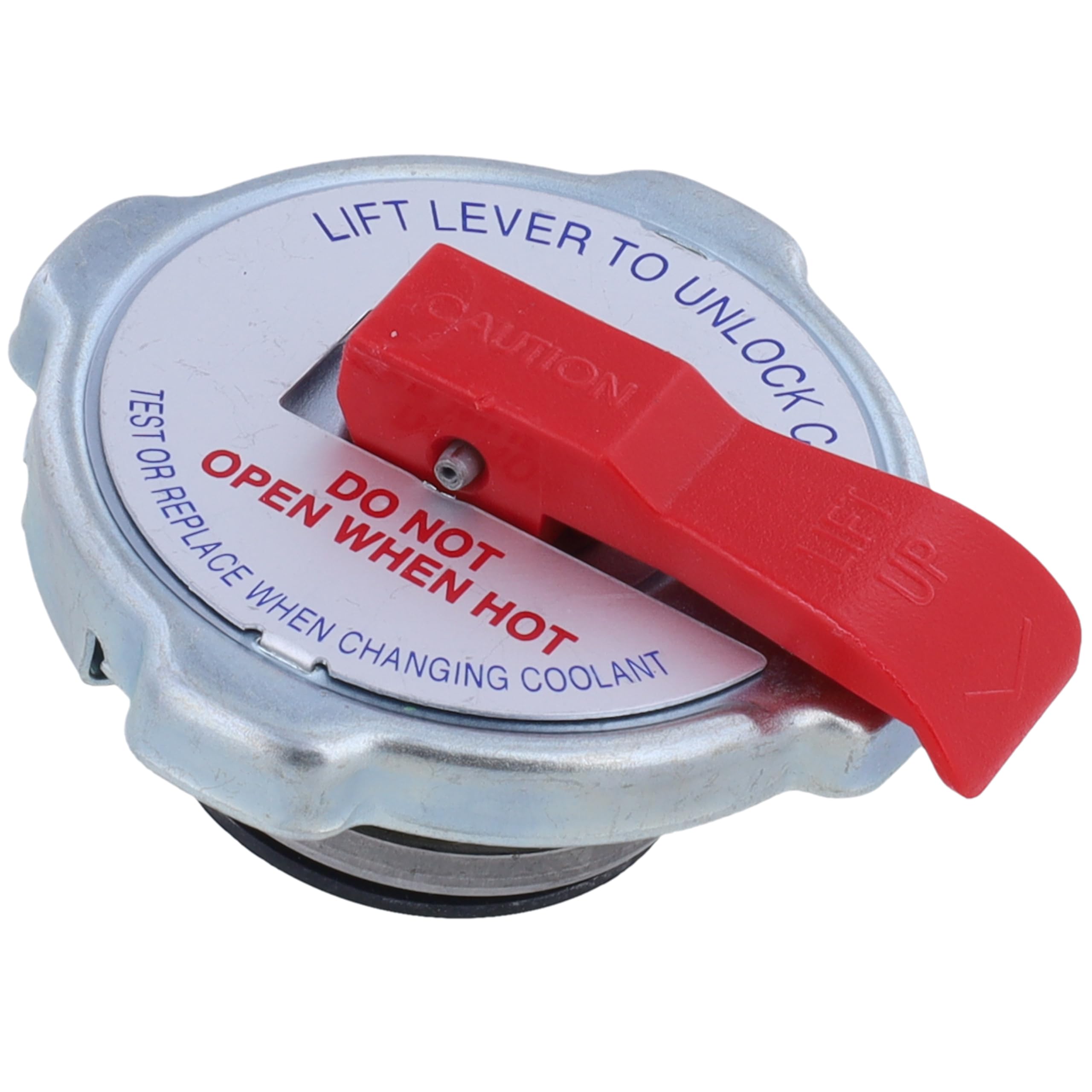
The Stant 10330 is the benchmark cap in the 16 PSI space. Its Lev-R-Vent design uses a lever-operated release valve that makes safe pressure relief simple — no more wrestling a hot cap off a pressurized system. The black phenolic handle resists heat transfer and stays grippy even with sweaty hands, and the cap works on both open and closed cooling systems without modification.
Multiple verified buyers confirm it seals at the rated pressure with zero early venting. One tester noted the relief valve handle feels a little flimsy compared to all-metal designs, but the actual sealing performance and pressure hold are consistent across thousands of installations. The rubber gasket seats firmly against standard filler necks and pulls coolant back from the overflow tank as intended.
For a daily driver, project truck, or weekend toy, this cap delivers trustworthy pressure control at a mid-range price point. The 1-year manufacturer warranty adds peace of mind. If you want the one cap that fits nearly any standard neck and holds 16 PSI without surprises, this is the pick.
What works
- Works with open and closed cooling systems
- Lev-R-Vent lever makes safe pressure release easy
- Consistent 16 PSI hold verified by multiple users
What doesn’t
- Relief valve handle feels less robust than metal alternatives
- Black finish can show wear with frequent handling
2. Moroso 63316 16 lbs. Radiator Cap

Moroso builds this cap with a steel spring that stays accurate over time — critical for performance engines where a 2 PSI bleed can push coolant temps past the safe zone. Tested by one owner on a cooling system pressure tester: the cap started bleeding just above 16 PSI and settled around 14.5 PSI, which is well within spec for a mechanical spring valve.
The cap fits standard-size filler necks, but enthusiasts swapping engines (especially LS swaps) report it clocks correctly and seals immediately with no leaks. The chrome-plated steel body resists corrosion better than painted or bare-metal caps, and the included packaging suggests Moroso takes quality control seriously. Made in the USA, which matters for buyers who prefer domestic manufacturing.
At a premium price point, this cap is overkill for a stock daily driver that just needs a functional seal. It shines in modified builds, track cars, or any situation where consistent pressure tolerance directly affects engine survival. If your cooling system can’t afford to guess on spring fatigue, Moroso delivers the precision.
What works
- Steel spring holds accurate pressure over heat cycles
- Corrosion-resistant chrome finish
- Manufactured in the USA with tight tolerances
What doesn’t
- Premium cost compared to entry-level caps
- Not ideal for closed non-recovery systems
3. Gates 31336 Radiator Cap

Gates is a trusted name in cooling system components — hoses, thermostats, and caps — and the 31336 follows that OE-style engineering. This cap is a vehicle-specific fit, meaning the tangs, depth, and seal profile match the original equipment dimensions closely. That reduces the chance of a loose seal or improper clocking that can plague universal caps.
The machined silver finish is functional rather than flashy, but the sealing performance holds up against heat cycling better than some budget caps. The included funnel is a thoughtful addition for topping off coolant without spills, though serious DIYers may already have their own. At an entry-level price, you get Gates’ quality control and a cap designed for a precise fit rather than a one-size-fits-all approach.
This cap works best for owners who want a direct OE replacement without guessing fitment. Verify your vehicle’s compatibility through Gates’ application guide before buying — if it lists your model, you can install it and forget it. For the price, it’s hard to beat the combination of brand reliability and dimensional precision.
What works
- Vehicle-specific fit ensures proper seal and clocking
- Gates is a long-standing OE-quality brand
- Includes funnel for easy coolant top-offs
What doesn’t
- Fitment is limited to specific vehicle applications
- Silver finish is purely utilitarian
4. Gates 31518 Safety Release Radiator Cap
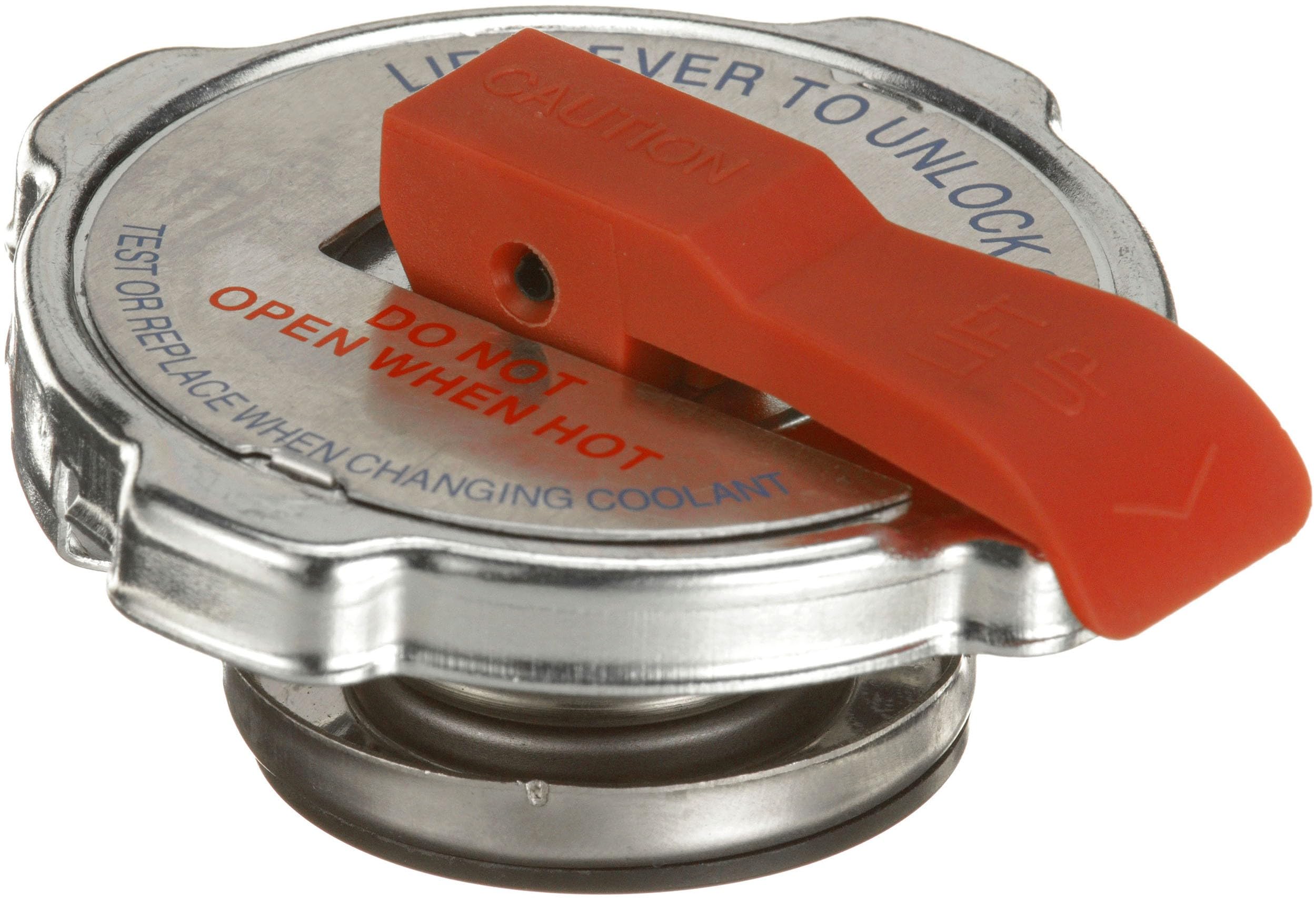
Gates designed the 31518 as a versatile heavy-duty cap that covers a wide range of pressures, including 16 PSI, making it a flexible option if you switch between vehicles or run a cooling system that needs some tolerance range. The corrosion-resistant heavy-gauge metal construction resists the pitting and seal-groove degradation that cheaper stamped caps develop after a few seasons.
This cap works with both open systems and applications without coolant recovery — an important feature if your rig doesn’t have an overflow tank. The red color is a visual bonus for distinguishing pressure caps at a glance under the hood. Multiple verified buyers report it seals tightly on standard filler necks with no coolant weep from the gasket edge.
The trade-off: because it covers multiple pressure ratings, some users find it doesn’t deliver the same pressure-specific consistency as a single-rated cap. If you need a cap for one vehicle and want pinpoint 16 PSI accuracy, a dedicated cap like the Stant 10330 may be a better fit. But for a shop spare, farm truck, or multi-vehicle household, this Gates cap earns its keep.
What works
- Heavy-gauge metal construction resists corrosion
- Works with or without coolant recovery systems
- Red color makes pressure rating easy to identify
What doesn’t
- Not optimized for a single exact pressure rating
- May not seal as precisely as vehicle-specific caps
5. Spectre Performance 4338 Hex Style Radiator Cap

The Spectre 4338 brings a distinct hex-style visual design that stands out under the hood. The triple chrome-plated steel body is more about aesthetics than function — it looks sharp on hot rods, custom builds, or any engine bay where dress-up counts. Rated for 14–18 PSI systems, it covers the 16 PSI range, but the pressure tolerance is broader than a dedicated single-rated cap.
One critical note: Spectre explicitly states this cap is not designed for closed (non-recovery) systems. If your radiator has no overflow tank connection, this cap will not pull coolant back during the cool-down cycle. The machined finish and twist-on closure fit standard filler necks, and the included cap-only packaging keeps it simple.
Functionally, it seals adequately for a show-and-go application, but buyers looking for precise 16 PSI regulation should note the wider pressure window. The 3-month warranty is shorter than competitors. This cap fits best when appearance matters as much as sealing — on a weekend cruiser or garage queen, it’s a fine choice. For a daily driver that demands exact pressure control, look at the Stant or Moroso.
What works
- Triple chrome plating gives a polished custom look
- Hex-style design stands out from standard round caps
- Fits standard filler necks without adapters
What doesn’t
- Not compatible with closed cooling systems
- Broad pressure range reduces precise 16 PSI accuracy
- Short 3-month warranty compared to competitors
Hardware & Specs Guide
Spring Calibration and Material
The spring inside the cap determines the exact PSI at which the valve opens to relieve pressure. Stainless steel springs resist fatigue from repeated heating and cooling cycles better than basic carbon steel. A cap that uses a steel spring — like the Moroso 63316 — tends to maintain its calibration longer than caps with uncoated spring wire. Cheap seals and weak springs can cause the cap to start venting at 12–13 PSI, effectively lowering your coolant’s boiling point.
Recovery System Valve Design
Open-system caps have a secondary rubber seal and a vent valve that allows coolant to be sucked back from the overflow tank as the engine cools. This valve is spring-loaded and must seal when the system is pressurized but open under vacuum. Closed-system caps omit this valve entirely. The Stant 10330’s Lev-R-Vent mechanism combines the pressure relief and recovery valve into one lever-operated assembly that makes safe removal easier than a standard twist-off cap.
Gasket and Sealing Surface
The rubber gasket that presses against the filler neck seat is the first line of defense against pressure loss. EPDM rubber holds up better against ethylene glycol coolant, ozone, and temperature extremes than basic nitrile (Buna-N). A damaged or mismatched gasket is the most common cause of a cap that looks fine but won’t hold pressure. Always inspect the gasket for flatness and compression marks before installation.
Filler Neck Compatibility
Standard radiator filler necks use a specific depth and tang pattern — typically the “A” size for most domestic and Asian vehicles. Even if the cap says 16 PSI, the tangs must lock into the neck’s ramps fully for the rubber seal to compress against the seat. Vehicle-specific caps like the Gates 31336 match these dimensions precisely. Universal caps can leave a gap if the neck depth or tang width doesn’t align.
FAQ
Can I use a 16 PSI cap if my stock cap was a lower pressure rating?
How do I test whether my 16 PSI cap is actually holding pressure?
What does the lever on a Lev-R-Vent radiator cap do?
Final Thoughts: The Verdict
For most buyers, the 16 psi radiator cap winner is the Stant 10330 because it combines proven pressure hold, open/closed system compatibility, and the user-friendly Lev-R-Vent lever at a fair price. If you want a cap built for performance builds with a steel spring that holds calibration, grab the Moroso 63316. And for a budget-friendly OE-style replacement that fits your specific vehicle, nothing beats the Gates 31336.

Certification: BSc in Mechanical Engineering
Education: Mechanical engineer
Lives In: 539 W Commerce St, Dallas, TX 75208, USA
Md Amir is an auto mechanic student and writer with over half a decade of experience in the automotive field. He has worked with top automotive brands such as Lexus, Quantum, and also owns two automotive blogs autocarneed.com and taxiwiz.com.