The difference between a transmission that shifts like new and one that hesitates, shudders, or slips often comes down to the fluid in the pan. Using the wrong viscosity or friction modifier package can turn crisp gear changes into a mushy, unpredictable experience, especially as temperatures climb. That is why matching the exact Dexron specification your vehicle demands is a non-negotiable step in preventative maintenance.
I’m Amir — the founder and writer behind Four Wheel Ask. I break down transmission fluid chemistries, viscosity grades, and additive packages by analyzing technical data sheets and long-term owner reports to separate marketing claims from real-world performance.
Whether you are topping off a daily driver or performing a full drain-and-fill on a high-mileage truck, finding the right best dexron automatic transmission fluid keeps shift quality consistent and extends the life of your valve body and clutches.
How To Choose The Best Dexron Automatic Transmission Fluid
Selecting the correct fluid is not just about picking any red liquid off the shelf. Modern automatic transmissions rely on specific frictional properties, thermal stability, and viscosity profiles to engage clutches and control shift timing. A mismatch can cause harsh engagement, premature wear, or even torque converter shudder.
Dexron Generation: III vs VI vs Mercon LV
Dexron III is a legacy spec intended for older GM transmissions and many Toyota models that call for Dexron III. Dexron VI is the current standard with a lower viscosity for improved fuel economy and better thermal management. Mercon LV is Ford’s equivalent low-viscosity fluid. Do not assume backwards compatibility — Dexron VI is backward-compatible in many, but not all, applications where Dexron III was originally specified.
Synthetic vs Conventional Base Oils
Full synthetic Dexron fluids offer superior oxidation resistance, higher viscosity index, and better low-temperature pumpability. They resist shearing down in viscosity over time, which means shift quality stays consistent longer between drain intervals. Conventional fluids may work for low-mileage seasonal vehicles but degrade faster under sustained heat load.
Additive Package and Friction Characteristics
The friction modifier package determines how smoothly the clutches engage. Fluids designed for high-performance or severe-duty use often include additional anti-wear additives, seal conditioners, and detergents that keep the valve body free of sludge. Checking that the fluid meets an explicit OEM specification — not just the Dexron brand name — ensures the frictional curve matches your transmission’s shift programming.
Quick Comparison
On smaller screens, swipe sideways to see the full table.
| Model | Category | Best For | Key Spec | Amazon |
|---|---|---|---|---|
| Mobil 103529 Dexron-VI | Full Synthetic | Modern GM and select Ford transmissions | Dexron VI, Viscosity Grade 5W-30 | Amazon |
| Mannol Dexron VI MN8207-1 | Universal Synthetic | Multi-vehicle fleet and heavy-duty use | Full Synthetic, Flash Point 92°C | Amazon |
| Toyota Genuine 00718ATF00 | OEM Dexron III | Toyota and older GM vehicles needing Dexron III | Dexron III, 1 Quart | Amazon |
| Motorcraft XT10QLVC | Mercon LV | Ford and Lincoln vehicles requiring Mercon LV | Mercon LV, Flash Point 421°F | Amazon |
| ACDelco Gold 10-9240 | Dexron III | Budget maintenance for older GM models | Dexron III (H), 1 Quart | Amazon |
In‑Depth Reviews
1. Mobil 103529 Dexron-VI Automatic Transmission Fluid

Mobil’s Dexron VI fluid sets a high bar for thermal and oxidative stability in modern electronically controlled transmissions. The full synthetic base resists viscosity shear better than conventional blends, maintaining consistent shift feel even after extended highway heat cycles. Its 5W-30 viscosity grade ensures strong cold-start pumpability, reducing wear on the torque converter and valve body during winter warm-ups.
The additive package is optimized to prevent shudder and clutch chatter, a common complaint with fluids that lose friction-modifying properties over time. Mobil also adds deposit-control chemistry that keeps the valve body free of varnish and sludge, which is critical for maintaining precise shift timing as mileage accumulates. This fluid meets the Dexron VI specification, making it a direct fit for most GM vehicles built after 2006 as well as many Ford and Chrysler applications that specify a low-viscosity ATF.
Some users report that the fluid performs exceptionally well in tow vehicles and trucks that generate high transmission temperatures, where lesser fluids tend to foam or break down. It does not come in a multi-pack configuration, so larger drain-and-fill jobs require multiple quart bottles, but the performance per quart justifies the cost for those who prioritize reliability over the lowest per-bottle price.
What works
- Exceptional thermal and oxidation resistance for its price tier
- Excellent cold-flow properties for winter starts
- Deposit-control additives keep valve body clean
What doesn’t
- Not backward-compatible with older Dexron III applications
- Single-quart bottles only — no bulk or case option on listing
2. Mannol Dexron VI MN8207-1 Universal Gearbox Oil
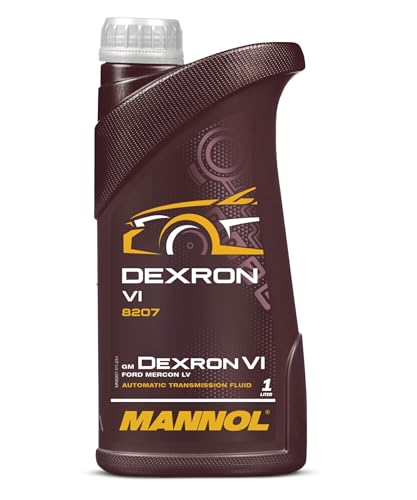
Mannol’s approach with this universal fluid is consolidation — one bottle covers Dexron VI, Mercon V/LV, and several other major ATF specs, which is a real time-saver for shops and owners managing multiple vehicles. The full synthetic formulation delivers a high viscosity index that keeps the fluid fluid at extremely low temperatures while maintaining a stable film at operating temp, reducing the risk of metal-on-metal contact in the gear train.
The friction modifier package is tuned to provide consistent engagement across different clutch material types, which means it can switch between a GM 6L80 and a Ford 6R80 without requiring seasonal fluid changes. Users report a noticeable reduction in cold-morning shift hesitation after a full flush, along with quieter transmission operation. The additive package also includes seal compatibilizers that prevent swelling or hardening of fluoroelastomer seals, a common source of after-service drips.
One trade-off with universal formulations is that they may not deliver peak frictional performance in a specific transmission compared to a dedicated OEM fluid. For heavy-duty towing or high-performance applications where precise shift timing is critical, some experts prefer a single-spec fluid. However, for daily driving and multi-vehicle maintenance, this is a solid choice that simplifies inventory.
What works
- Covers multiple OEM specs in one bottle, reducing guesswork
- Excellent low-temperature fluidity down to –45°C
- Seal-friendly chemistry reduces post-service leaks
What doesn’t
- May lack the optimized friction curve of a single-spec fluid
- 1-liter bottle is slightly less volume than a US quart
3. Toyota Genuine Fluid 00718ATF00 Dexron III Transmission Fluid

Toyota’s genuine Dexron III fluid is the factory-specified fluid for millions of older Toyota and Lexus models, as well as many GM vehicles from the early 2000s that require the legacy Dexron III spec. The formulation is engineered to provide the specific frictional characteristics that Toyota transmissions expect, which helps maintain smooth part-throttle shifts and positive lock-up feel. It is a conventional base oil blend, not full synthetic.
Because this fluid does not carry the Dexron VI low-viscosity spec, it should not be used in modern GM six-speed or eight-speed transmissions that explicitly require Dexron VI. It does, however, work well in simple four-speed automatics and older robust units where the higher viscosity helps reduce internal leakage and maintain line pressure. Users with high-mileage Toyota Aisin transmissions often report noticeably quieter operation and firmer shift engagement compared to aftermarket generic Dexron III fluids.
The main limitation is thermal resistance — conventional Dexron III fluids degrade faster under sustained heavy loads than modern synthetic Dexron VI fluids. For stop-and-go urban driving in temperate climates, this is rarely an issue, but for towing, mountain driving, or high-performance use, a synthetic upgrade is advisable. It is also a pricier option per quart than many universal fluids, but the peace of mind of using factory-spec fluid in a Toyota is worth the premium for OEM-focused owners.
What works
- Exact OEM specification for Toyota and Lexus automatics
- Delivers consistent shift feel in four-speed transmissions
- Seal compatibility is proven over millions of miles
What doesn’t
- Conventional base — lower thermal resistance than synthetics
- Not suitable for Dexron VI applications
- Higher per-quart cost than comparable aftermarket fluids
4. Motorcraft XT10QLVC Mercon Lv Automatic Transmission Fluid
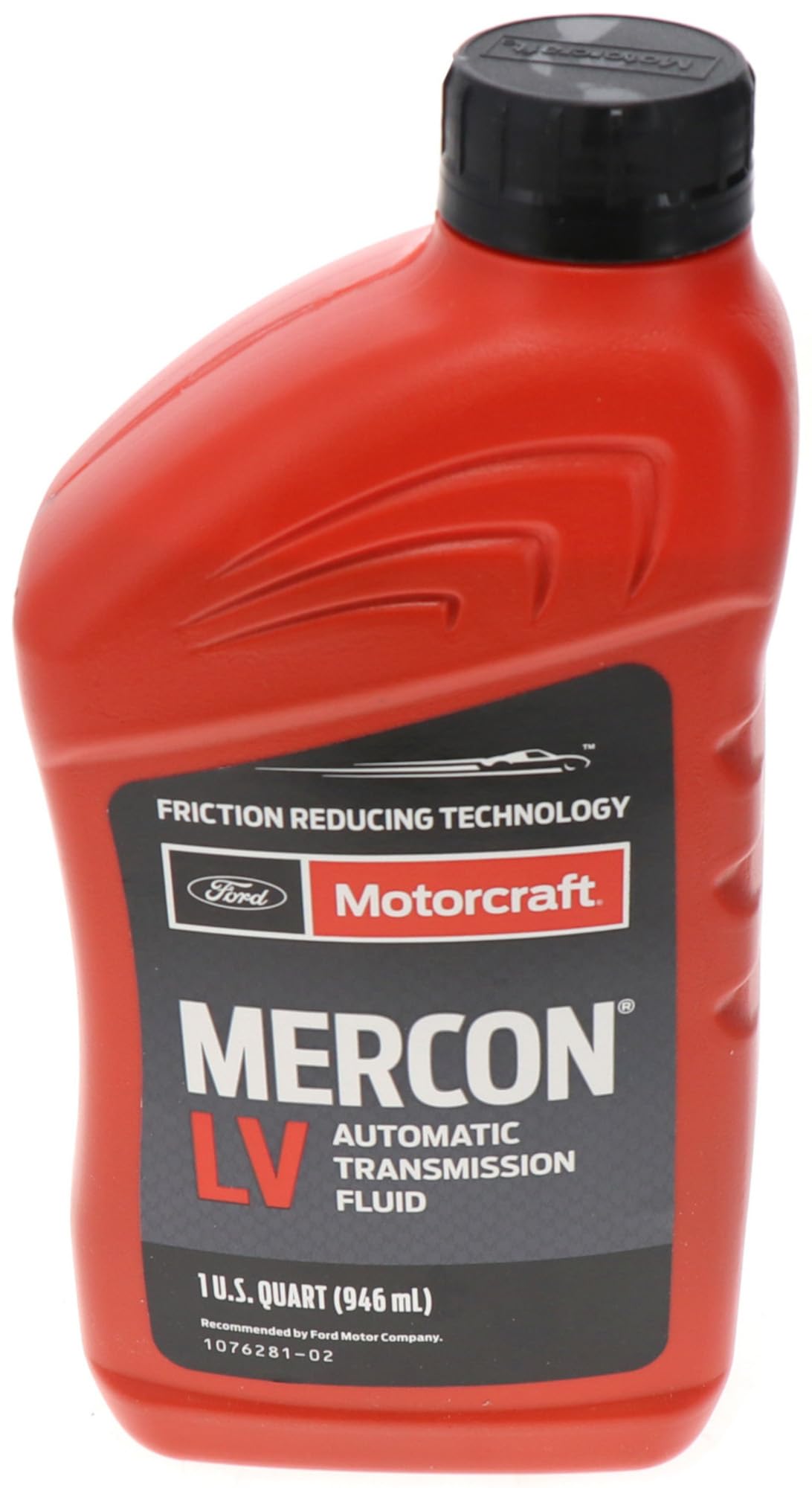
Motorcraft’s Mercon LV is the factory-recommended fluid for a broad range of Ford and Lincoln vehicles, including the popular 6R80 and 10R80 transmissions. It is a premium-quality hydroprocessed fluid, not a true full synthetic, but it delivers excellent performance in electronically controlled units that require low-viscosity fluid for shift precision and fuel economy. The fluid is dyed red for easy leak identification.
The high viscosity index and advanced additive package provide good thermal and oxidation stability, helping to prevent varnish and sludge buildup in the transmission’s internal passages. Users frequently note smoother shift quality and reduced transmission noise after switching from a generic alternative. The fluid also includes rust and corrosion inhibitors that protect internal components during long periods of inactivity.
The critical point here is to ensure your vehicle requires Mercon LV specifically — this fluid is not interchangeable with Mercon V or Dexron VI in all applications. Using it in a transmission that calls for Dexron VI may result in improper frictional properties. Additionally, the hydroprocessed base does not offer quite the same shear stability as a full synthetic, so the fluid may degrade slightly faster under extreme heat conditions. For the vast majority of Ford and Lincoln daily drivers, however, this is a reliable OEM-grade choice.
What works
- Designed specifically for Ford Mercon LV transmissions
- Excellent rust and corrosion protection
- Red dye simplifies leak detection
What doesn’t
- Not a true full synthetic base oil
- Not compatible with Dexron VI or Mercon V applications
5. ACDelco Gold 10-9240 Type III (H) Automatic Transmission Fluid
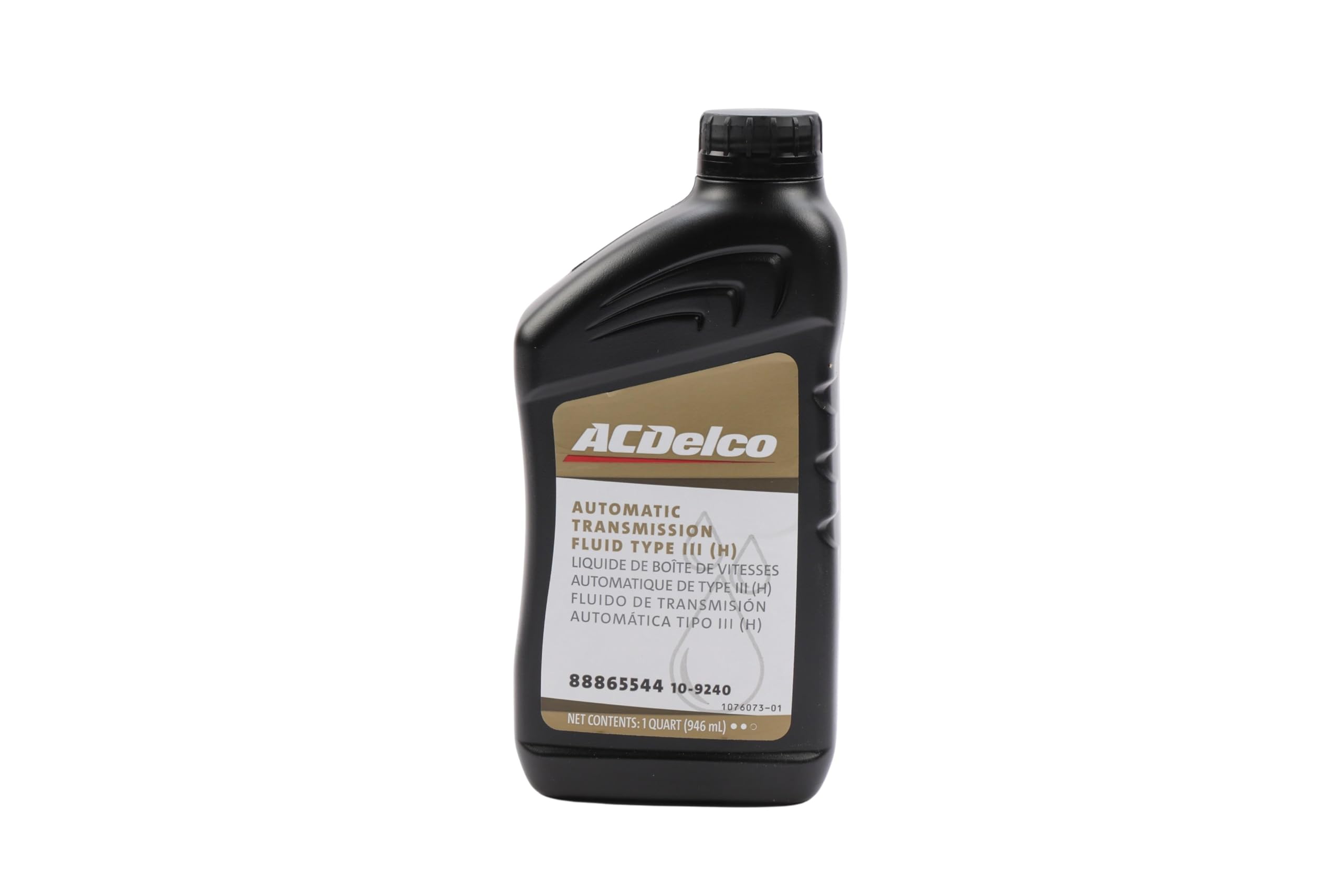
ACDelco Gold Type III (H) is a solid budget-oriented option for older GM vehicles that originally specified Dexron III. It is formulated to protect metal surfaces from wear and includes seal conditioners that help gaskets remain flexible, reducing the risk of leaks after a fluid change. This fluid is a conventional blend designed for standard duty cycles, not extreme heat conditions.
Users who have performed drain-and-fills on 4L60E, 4L80E, and earlier THM transmissions report that the fluid provides acceptable shift quality for daily driving, with no adverse effects on clutch engagement. The fluid also helps enhance transmission cooling function by maintaining consistent viscosity. For vehicles used primarily for commuting or light hauling, this fluid gets the job done at a cost-effective price point.
The downside is that this fluid lacks the thermal resistance and detergent chemistry of a synthetic Dexron VI. It is not suitable for modern high-stall torque converter applications or severe-duty towing. Users who push their vehicles hard may experience shorter fluid life and earlier onset of shift degradation. For the low-budget refresh on a secondary vehicle or project car, however, it is perfectly functional.
What works
- Budget-friendly choice for older GM automatic transmissions
- Seal conditioners help prevent post-service leaks
- Supports normal driving conditions without issue
What doesn’t
- Conventional base lacks high-temperature resilience
- Not recommended for severe-duty use or towing
Hardware & Specs Guide
Viscosity Grade
The SAE J300 viscosity grade (e.g., 5W-30 for Mobil Dexron VI) determines low-temperature pumpability and high-temperature film strength. A lower winter rating ensures the fluid flows quickly to the torque converter and valve body in cold weather, preventing dry starts. Higher hot viscosity helps maintain hydraulic pressure in worn transmissions, but may reduce fuel economy slightly.
Flash Point
Flash point (measured in °F or °C) indicates the temperature at which the fluid begins to vaporize and potentially form combustible fumes. A higher flash point — such as 421°F for Motorcraft Mercon LV — signals better thermal stability and resistance to breakdown under sustained heat load. This is especially relevant for transmissions that see heavy towing or mountainous driving.
FAQ
Can I use Dexron VI in a transmission originally spec’d for Dexron III?
How often should I change Dexron transmission fluid under normal driving?
Final Thoughts: The Verdict
For most buyers, the best dexron automatic transmission fluid winner is the Mobil 103529 Dexron-VI because it combines proven full synthetic stability, excellent cold-flow characteristics, and a robust deposit-control package at a reasonable price point. If you need a single fluid for multiple vehicles in your garage, grab the Mannol Dexron VI MN8207-1. And for a dedicated OEM-refresh in a classic Toyota, nothing beats the Toyota Genuine 00718ATF00.

Certification: BSc in Mechanical Engineering
Education: Mechanical engineer
Lives In: 539 W Commerce St, Dallas, TX 75208, USA
Md Amir is an auto mechanic student and writer with over half a decade of experience in the automotive field. He has worked with top automotive brands such as Lexus, Quantum, and also owns two automotive blogs autocarneed.com and taxiwiz.com.