A failing radiator in a 2009 Honda Accord doesn’t give much warning. One morning the temp gauge sits steady, and by afternoon you’re watching it climb past the midpoint while stuck in traffic, wondering if you’ll make it home without warping the cylinder head. The cooling system on the eighth-generation Accord is a closed loop that lives under constant pressure, and when the plastic tank on an original radiator finally cracks or the aluminum core clogs, the result is immediate steam, lost coolant, and an engine that begs you to shut it down.
I’m Amir — the founder and writer behind Four Wheel Ask. My research focuses on cross-referencing OEM fitment data, core dimensions, tank material quality, and long-term owner feedback to find which aftermarket replacements hold pressure best under real driving conditions rather than just looking right on paper.
After sorting through seven compatible replacements for the 2.4L I4 engine, the top contenders stand apart by build density, leak-test standards, and how well they replicate the factory thermal exchange rate. This guide breaks down the best options for a 2009 honda accord radiator so you can swap with confidence.
How To Choose The Best 2009 Honda Accord Radiator
Choosing a replacement radiator for a 2009 Accord means verifying compatibility with the 2.4L I4 engine, checking tank and core construction, and confirming the included OEM reference numbers match your exact VIN range. A mismatch in inlet diameter or mounting tab position will turn a one-hour job into an all-day headache.
Core Construction and Row Count
The 2.4L K24 engine generates moderate heat under normal driving but spikes quickly under sustained load or stop-and-go traffic. A single-row aluminum core with high-density louvered fins matches the factory thermal rejection rate without adding unnecessary weight. Double-row cores exist but can reduce airflow velocity through the condenser and affect AC performance in the eighth-generation chassis.
Plastic Tank vs All-Aluminum
Most direct-fit replacements for the 2009 Accord use a PA66 GF30 reinforced nylon tank crimped to an aluminum core. These replicate the original design and withstand the 16-psi cap pressure well. All-aluminum welded tanks eliminate the plastic-to-metal gasket seam entirely, reducing leak risk, but require careful thermal expansion matching and often cost more without delivering meaningful cooling gains for a daily-driven 2.4L.
OEM Part Number Verification
The factory radiator for the 2009 Accord 2.4L carries OEM numbers 19010R70A51 and 19010R70A53. Any replacement listing these references as a direct cross is engineered to match the inlet and outlet diameter, mounting bracket positions, and transmission cooler line routing. Ignoring OEM cross-reference data is the most common reason for returns in this category.
Quick Comparison
On smaller screens, swipe sideways to see the full table.
| Model | Category | Best For | Key Spec | Amazon |
|---|---|---|---|---|
| TRQ RDA82905 | Premium | DIY video-assisted install | 1-row aluminum core | Amazon |
| KAX CU2990 | Mid-Range | Best leak-test coverage | PA66 GF30 tank, 2yr warranty | Amazon |
| Nilight RAD971 | Mid-Range | 116% pressure-leak tested | Highest weight: 11.68 lbs | Amazon |
| Denso 221-3200 | Premium | OE supplier pedigree | Metal construction, 5 lbs | Amazon |
| Denso 2213229 | Premium | Compact direct-fit option | Painted exterior finish | Amazon |
| ITOPUP RK1203 | Budget | Full aluminum core value | Fit: Accord & Crosstour | Amazon |
| AUTOSAVER88 ATRD1078 | Budget | OE-standard entry pick | High-density louvered fins | Amazon |
In‑Depth Reviews
1. TRQ RDA82905
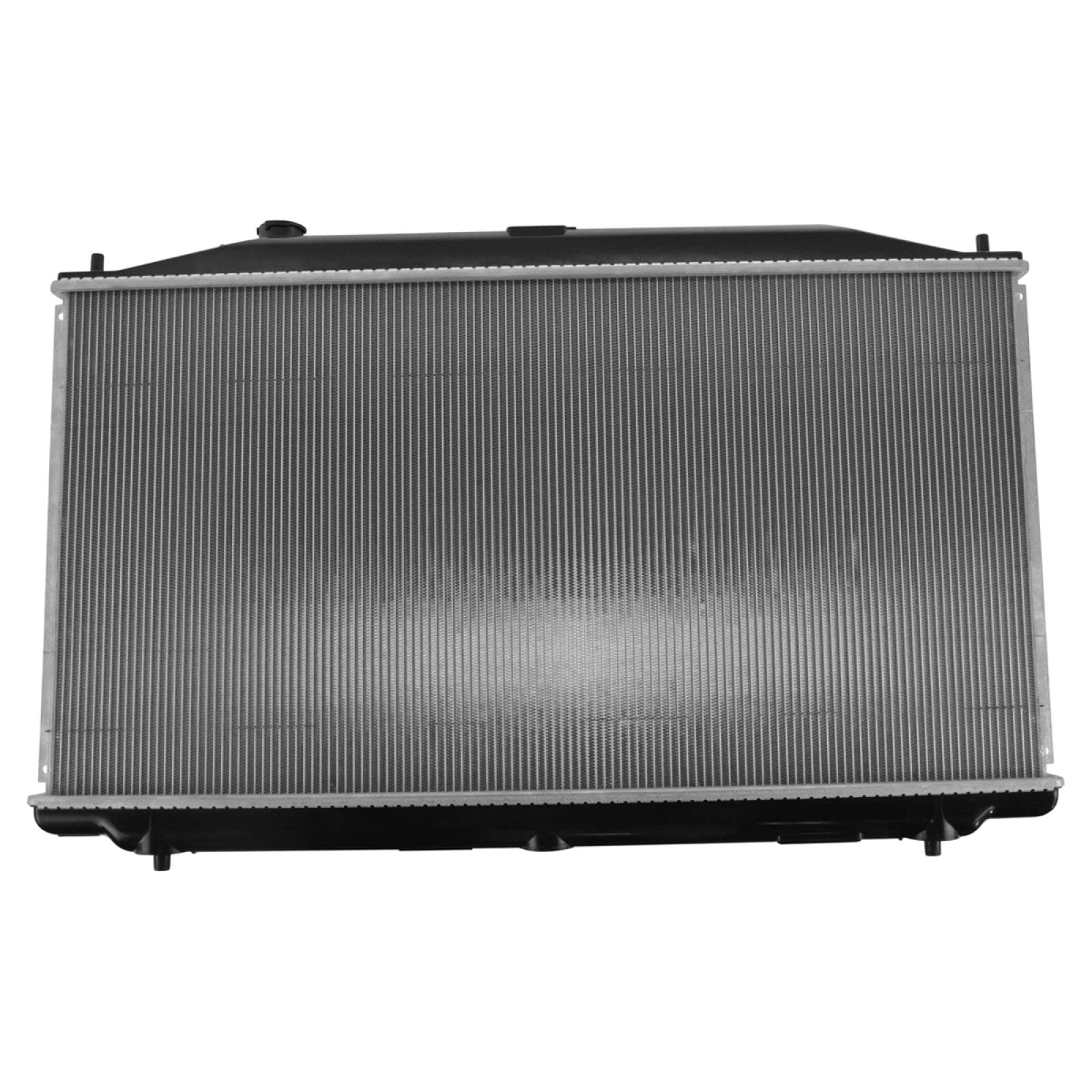
TRQ has been in the direct-fit replacement game for over 25 years, and the RDA82905 reflects that maturity. It cross-references OEM numbers 19010R70A51, 19010R40A52, and CU2990, covering the 2008-2012 Accord 2.4L and 2012-2015 Crosstour. The single-row aluminum core with louvered fins replicates the factory heat rejection curve, so the electric fan cycles normally rather than running constantly.
What sets this unit apart is the accompanying DIY video library. TRQ filmed the actual radiator swap for the eighth-generation Accord, showing the exact bleeder screw location and hose clamp orientation. For a first-timer working in the driveway, that visual walkthrough removes the guesswork from burping the cooling system afterward.
The machined exterior finish resists road salt and debris impact better than a painted surface, and the pre-assembled design includes the transmission cooler line fittings already torqued. Owners report the core holds pressure at 16 psi without weeping from the tank crimp seams, even after seasonal temperature swings. The only preparation needed is transferring the old cap and lower isolators from the factory unit.
What works
- Direct-fit with no modification needed for the 2.4L
- Extensive DIY video support reduces install errors
- Core maintains stable coolant temps under AC load
What doesn’t
- Higher price tag versus budget options
- No radiator cap included
2. KAX CU2990
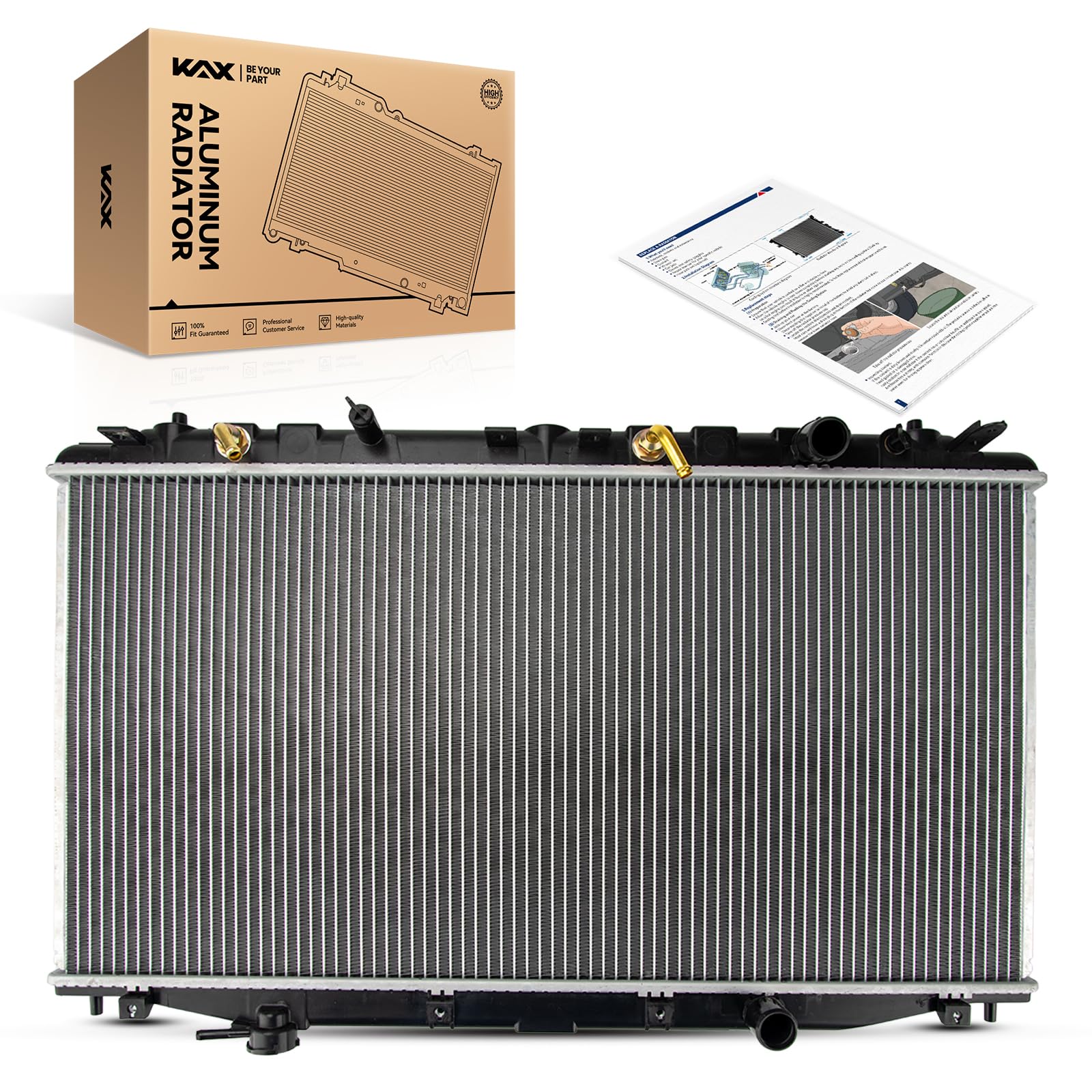
KAX engineered the CU2990 around the specific thermal load of the K24 engine, using a PA66 GF30 nylon tank that resists cracking better than standard polypropylene at high pressure. The aluminum core measures 30-7/16 inches wide by 15-3/4 inches tall with a 5/8-inch core thickness, matching the factory surface area exactly. Precision TIG welding on the tube-to-header joints eliminates the cold-solder weak points found on cheaper imports.
The leak test protocol here is rigorous: every unit passes IATF16949 quality management inspection and is individually pressure-tested before packaging. The reinforced packaging uses multi-layer cardboard with foam corner blocks and bubble columns, so the radiator arrives with the cooling fins straight and the inlet tubes undamaged. Cross-referencing 15 OEM numbers including 19010R40A62 and 19010R40A01 means this covers both the early and late VIN splits within the 2009 model year.
Two-year warranty coverage is generous for this price tier, covering tank seam failure and core clogging from debris. The one catch is that the inlet and outlet both measure 1-1/4 inches, so the factory upper and lower hoses connect without adapter sleeves. Professional installation is recommended because the drain plug torque spec is critical on the PA66 tank threads.
What works
- Tank material resists pressure-cycle cracking
- IATF16949 certified manufacturing quality
- TIG-welded core joints for leak resistance
What doesn’t
- Heavier core adds 2 lbs versus some competitors
- No cap included in the package
3. Nilight RAD971

Nilight pushes beyond the industry-standard 100 percent leak check by testing every radiator at 116 percent of rated system pressure. For a 2009 Accord running a 16-psi cap, that means the core and tank seals see over 18.5 psi during inspection. The extra margin catches micro-cracks in the plastic tank crimp zone that might only open under sustained highway heat soak.
The unit weighs 11.68 pounds, notably heavier than the 9.8-pound average among the competitors, indicating a denser core fin pack and thicker tank walls. Precision-folded and louvered aluminum fins maximize surface area without restricting airflow through the condenser. Owners who replaced rotted factory units report a noticeable improvement in AC vent temperature after the swap because the denser core pulls more heat out of the refrigerant loop.
Fitment covers the 2008-2012 Accord 2.4L and 2012-2015 Crosstour 2.4L, with direct cross to 19010R70A51 and 19010R70A53. The ABS plastic tanks use an aluminum core, replicating the factory hybrid construction. No cap is included, so budget for a new OEM-style 16-psi cap during the job. The added heft may make single-person lifting slightly more awkward, but the payoff is a radiator that handles repeated thermal cycles without tank deformation.
What works
- Over-pressure leak test catches hidden defects
- Dense core improves heat transfer and AC performance
- Heavy-duty tank walls resist distortion
What doesn’t
- 11.68 lbs makes one-person handling harder
- No cap included
4. Denso 221-3200

Denso supplies original equipment cooling components to Honda, so the 221-3200 carries the same engineering DNA as the factory radiator that shipped from the plant. The all-metal construction eliminates the plastic-to-aluminum seam entirely, removing the most common failure point on OEM-style radiators. At 5 pounds, this is the lightest unit in the lineup because the thinner-gauge aluminum core sacrifices some structural mass for thermal response.
The gas-specific fitment targets the 2.4L I4 directly, and the machined finish provides a clean surface that seals immediately against the factory gaskets without chasing leaks. Vehicle-specific fitment means no universal brackets or shims are required — the mounting tabs align perfectly with the eighth-generation Accord core support. Denso’s 30-day warranty is shorter than the competition, which reflects the brand’s confidence that the unit will not fail within normal use rather than a lack of durability.
The trade-off for the OE pedigree is a cooling core that is more susceptible to debris damage than a thicker aftermarket option. Owners who drive on gravel roads or through heavy leaf fall should consider installing a grille screen to protect the exposed fins. For a garage-kept daily driver replacing a failed OEM radiator, this is the closest you can get to factory-original performance without a dealership visit.
What works
- Authentic OE supplier manufacturing quality
- All-metal construction eliminates tank seam failures
- Ultra-light at 5 pounds for easy handling
What doesn’t
- 30-day warranty is shorter than competitors
- Thin core fins are vulnerable to debris impact
5. Denso 2213229

The 2213229 variant from Denso uses a painted exterior finish instead of bare machined aluminum, which adds a layer of corrosion resistance in regions that use road salt during winter months. The paint also reduces light reflection off the radiator surface, which can marginally help the AC condenser shed heat in direct sun. This model has been on the market since 2010, giving it a long track record of fitment consistency across the 2008-2012 range.
Center-position mounting aligns with the factory radiator location, and the vehicle-specific fitment eliminates any guesswork with the lower isolator bushings. The core dimensions are slightly more compact than the aftermarket alternatives, which makes sense for a unit designed to Honda’s original thermal envelope. Owners who prioritize longevity over raw cooling capacity gravitate toward this for the OEM-grade paint adhesion that prevents edge corrosion.
The 5-pound weight matches the 221-3200, keeping the swap manageable for a single person. The painted surface does require care during installation to avoid scratching the coating before the radiator is secured. If the budget allows, pairing this with a genuine Honda cap ensures the cooling system maintains the correct pressure curve from day one.
What works
- Painted finish resists corrosion from road salt
- Long production history with proven fitment
- Lightweight design simplifies one-person installation
What doesn’t
- Paint can scratch during installation
- Slightly less core surface area than aftermarket options
6. ITOPUP RK1203
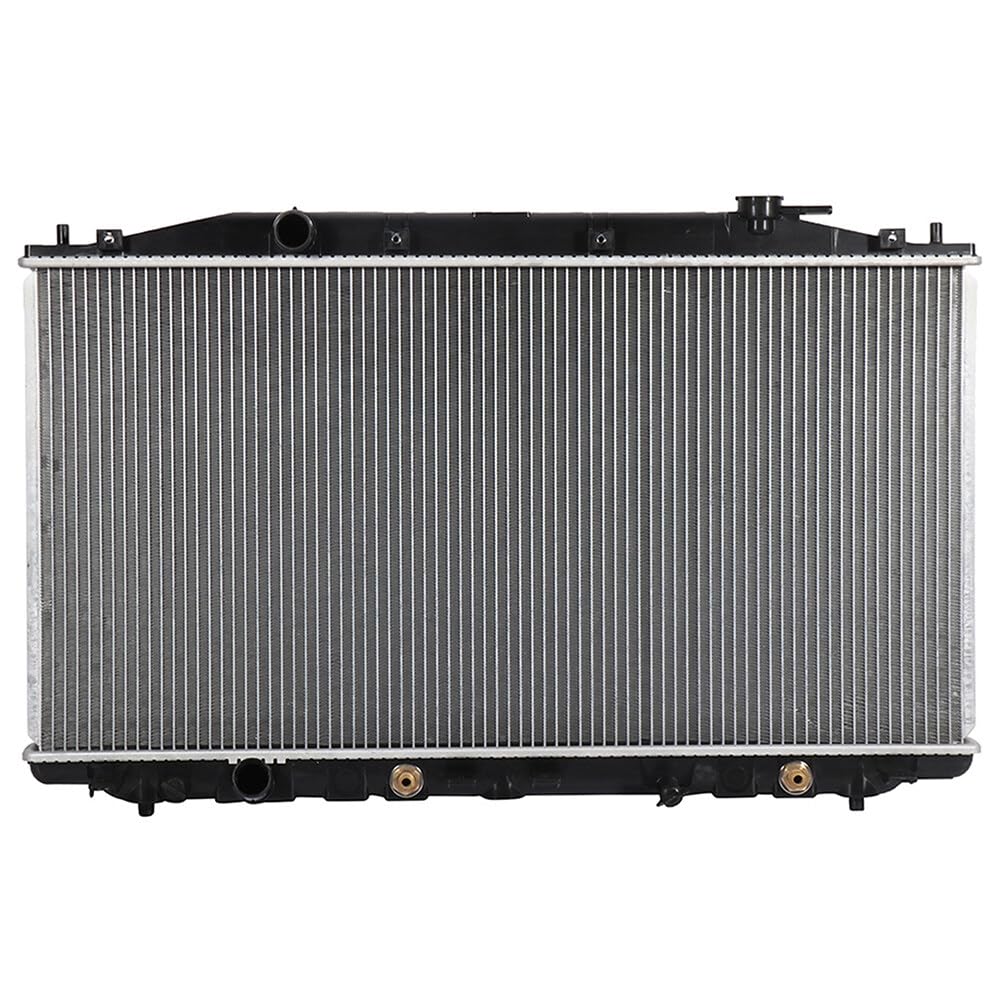
ITOPUP delivers a full aluminum core with a brushed exterior finish at a price point that makes it the strongest value in this category. The core dimensions measure 25.2 x 22.24 x 5.51 inches, fitting the 2008-2012 Accord and 2012-2015 Crosstour engine bays without bracket modification. The brushed surface hides minor handling scuffs better than painted or polished finishes, which is useful for a DIY swap where the radiator may slide across the core support during installation.
The precision fin design uses tighter fin spacing than some entry-level radiators, increasing the total heat transfer surface area per square inch. Owners driving the 2.4L in hot climates report that the electric fan cycles on and off at the expected intervals rather than running continuously during city driving. The aluminum construction also sheds weight compared to a copper-brass original, though the unit still comes in at 9.9 pounds due to the dense core pack.
The main compromise is the build documentation: the manual is minimal and does not include torque specs for the transmission cooler line fittings. First-time swappers should reference a factory service manual or the TRQ video library for the bleeding procedure. For the budget-conscious owner who wants aluminum cooling capacity without upgrading to a full race-style radiator, this hits the sweet spot.
What works
- Full aluminum core improves cooling efficiency
- Brushed finish hides installation scuffs
- Excellent value for the core density offered
What doesn’t
- Minimal installation instructions included
- No cap or bleeder kit in the package
7. AUTOSAVER88 ATRD1078

AUTOSAVER88 built the ATRD1078 to OE standard dimensions, making it the simplest entry point for a 2009 Accord owner replacing a radiator that has already failed. The high-density multi-louvered fin array matches the factory fin count, so the thermal rejection rate stays within the parameters the ECU expects. The plastic tank and aluminum core hybrid design follows the same architecture as the original, keeping the swap familiar for anyone who has changed an Accord radiator before.
Every unit passes a pre-shipment leak test, and the high-grade plastic tank material resists UV degradation better than early aftermarket replacements that would turn brittle after three years of sun exposure. The package measures 34 x 22.5 x 6.25 inches, which is standard for this category, and the foam inserts prevent fin damage during transit. Cross-references to OEM 19010R70A51 and 19010R70A53 cover both the early and late 2009 production split.
The omission of a radiator cap is consistent with the rest of the field, but the lack of any included hardware such as drain plug washers or O-rings means you need to source those separately. Professional installation is recommended, especially for the transmission cooler line quick-disconnects that can break if the retention clip is not released properly. For a straightforward replacement with predictable fitment, this delivers exactly what the spec sheet promises.
What works
- OE-standard dimensions for predictable fitment
- High-density fins match factory cooling curve
- Leak-tested before shipping
What doesn’t
- No cap, washers, or O-rings included
- Plastic tank may not outlast all-metal designs
Hardware & Specs Guide
Core Thickness and Row Design
The 2009 Accord 2.4L radiator uses a single-row core with a 5/8-inch thickness. This design provides enough surface area to shed heat from the 2.4-liter engine under full load without creating excessive air resistance through the condenser coil. Double-row cores add weight and can reduce AC condenser airflow velocity, causing higher discharge temperatures at the vents in stop-and-go traffic.
Plastic Tank Material: PA66 GF30
PA66 GF30 is a 30-percent glass-fiber-reinforced nylon that withstands higher burst pressure than standard polypropylene tanks. Radiators made with this material resist deformation from repeated thermal expansion cycles, which is the primary cause of tank-to-core seam leaks after 50,000 miles. Unreinforced plastic tanks can develop hairline cracks at the crimp edge under sustained 16-psi pressure.
Inlet and Outlet Diameter
The 2009 Accord 2.4L uses a 1-1/4-inch inlet and outlet diameter on both the upper and lower hose connections. Any replacement must match this dimension exactly, or the hose clamp will not seat correctly and can blow off under pressure. Measure the factory hose inner diameter before purchasing to confirm compatibility with the replacement unit’s ports.
Transmission Cooler Line Routing
All 2009 Accord 2.4L radiators with automatic transmissions include an integrated cooler in the lower tank. The cooler has two barbed fittings that accept the rubber transmission cooler lines. The fittings must point toward the driver side and align with the factory hard lines that run along the frame rail, or the hose will kink and restrict fluid flow to the transmission.
FAQ
What is the OEM part number for a 2009 Honda Accord 2.4L radiator?
Can I use a radiator from a 2008 Accord on my 2009 model?
Do I need to replace the radiator cap at the same time?
Final Thoughts: The Verdict
For most buyers, the 2009 honda accord radiator winner is the TRQ RDA82905 because it combines a direct-fit single-row aluminum core with the industry’s best DIY video support, making the swap accessible even for first-time owners. If you want maximum leak-test assurance and tank durability, grab the KAX CU2990 with its two-year warranty and PA66 GF30 tank. And for a no-compromise budget choice that still delivers full aluminum core cooling, the ITOPUP RK1203 offers the best value in the lineup without sacrificing fitment precision.

Certification: BSc in Mechanical Engineering
Education: Mechanical engineer
Lives In: 539 W Commerce St, Dallas, TX 75208, USA
Md Amir is an auto mechanic student and writer with over half a decade of experience in the automotive field. He has worked with top automotive brands such as Lexus, Quantum, and also owns two automotive blogs autocarneed.com and taxiwiz.com.