A weak or failing brake light relay leaves you invisible to the driver behind you, turning a routine deceleration into a rear-end collision risk. Choosing the wrong relay introduces intermittent brake light failures, dim output with LED conversions, or the dreaded hyper-flash that makes your turn signals look like a strobe light.
I’m Amir — the founder and writer behind Four Wheel Ask. I’ve analyzed hundreds of automotive relay specifications, cross-referenced owner feedback across Ford, GM, and universal platforms, and studied the actual amperage tolerances and contact materials that separate a one-season relay from a decade-long performer.
This guide breaks down the five strongest candidates for the brake light relay market by examining contact current ratings, coil voltage stability, plug compatibility, and real-world durability so you can pick the exact unit your vehicle needs without guessing.
How To Choose The Best Brake Light Relay
A brake light relay might look like a simple black box, but its internal construction dictates whether your brake lights fire instantly every time or slowly degrade into intermittent failure. Three factors separate a reliable unit from a headache: contact material, current rating headroom, and form-factor compatibility with your vehicle’s fuse panel.
Contact Material: Silver vs. Copper vs. Silver Alloy
The contact points inside the relay carry the full current load each time you press the brake pedal. Pure copper contacts arc and pit over time, increasing resistance until the relay fails to close completely. Silver-alloy contacts, like those used in ACDelco Professional relays, resist oxidation and maintain consistent conductivity through hundreds of thousands of cycles. If you plan to run LED bulbs that demand clean switching, silver contacts are a non-negotiable upgrade.
Current Rating and Headroom
A brake light relay’s contact current rating (17A, 20A, 30A, or 40A) must exceed the combined draw of your brake light bulbs. A standard incandescent setup pulls roughly 5–8A total. Adding LED bulbs drops that draw below 2A. A relay rated at 17A handles stock configurations fine, but a 30A or 40A relay provides extra thermal margin that extends lifespan in hot engine bays. Never undershoot — a relay running at 90% of its rated capacity runs hot and fails early.
Plug Compatibility and Form Factor
Brake light relays come in multi-purpose 4-pin or 5-pin formats, plus vehicle-specific flasher modules like EP27. A standard SPDT (single pole double throw) 5-pin relay with a common, normally open, and normally closed circuit works for most universal brake light installations. However, if you drive a Ford from the late 90s or 2000s, the dedicated EP27 flasher relay plugs directly into the factory socket with zero wire splicing. Always check your vehicle’s relay diagram before ordering — the wrong pin configuration won’t fire the brake lights regardless of the relay’s quality.
Quick Comparison
On smaller screens, swipe sideways to see the full table.
| Model | Category | Best For | Key Spec | Amazon |
|---|---|---|---|---|
| NEW XP 60X +60 Brake Flasher | Universal LED | Multi-pattern brake flashing | 60W, 3-pattern sequence | Amazon |
| ACDelco Professional D1741C | Multi-Purpose | OE-grade general replacement | 17A, silver contacts | Amazon |
| Nilight 50003R 5-Pack | SPDT 5-Pin | Bulk wiring projects | 40A, includes harnesses | Amazon |
| EP27 LED Flasher Relay | Ford Specific | Ford F-Series LED conversion | 20A, plug-and-play | Amazon |
| GROBARPART 5-Pin Flasher | Ford OEM Fit | Budget Ford replacement | 13.5A, copper contacts | Amazon |
In‑Depth Reviews
1. NEW XP 60X +60 Brake Flasher

The Stop-Alert XP 60X distinguishes itself from standard relays by offering three distinct flash patterns — rapid, slow, and steady — that grab the attention of trailing drivers during hard braking. Its 60W capacity handles both LED and incandescent loads, making it a universal upgrade that works on cars, trucks, and motorcycles without modifying the factory wiring beyond the relay socket swap. The waterproof enclosure ensures the internal electronics survive under-hood moisture and road spray that would corrode an unprotected standard relay.
Installation requires professional-level wiring because the unit does not use a standard plug-and-play relay base — you must connect the included wires to your brake light circuit and secure the module with 3M tape. The pre-programmed controller inside the XP 60X automatically reverts to a solid brake light during steady stops, so you get the safety benefit of pulsing attention-grabbing flashes without annoying drivers behind you in traffic. The heavy-duty construction feels noticeably denser than typical automotive relays, which aligns with the claim of 140% more power handling than ordinary brake flashers.
For drivers who want maximum rear-end collision prevention through visible brake light modulation, the XP 60X delivers a performance edge that a passive relay cannot match. The trade-off is complexity — this is not a simple relay swap, and owners comfortable with basic wiring and relay sockets will get the most out of its pattern programmability. The adhesive mounting pad holds securely on flat metal surfaces inside the trunk or under the seat, but verify clearance before permanent placement.
What works
- Three distinct flash patterns adapt to traffic conditions
- Waterproof housing withstands under-hood moisture
- Compatible with both LED and incandescent bulb types
- Universal fit suits almost any 12V vehicle
What doesn’t
- Requires professional-level wiring installation
- Bulkier than a standard relay module
2. ACDelco Professional D1741C Multi-Purpose Relay
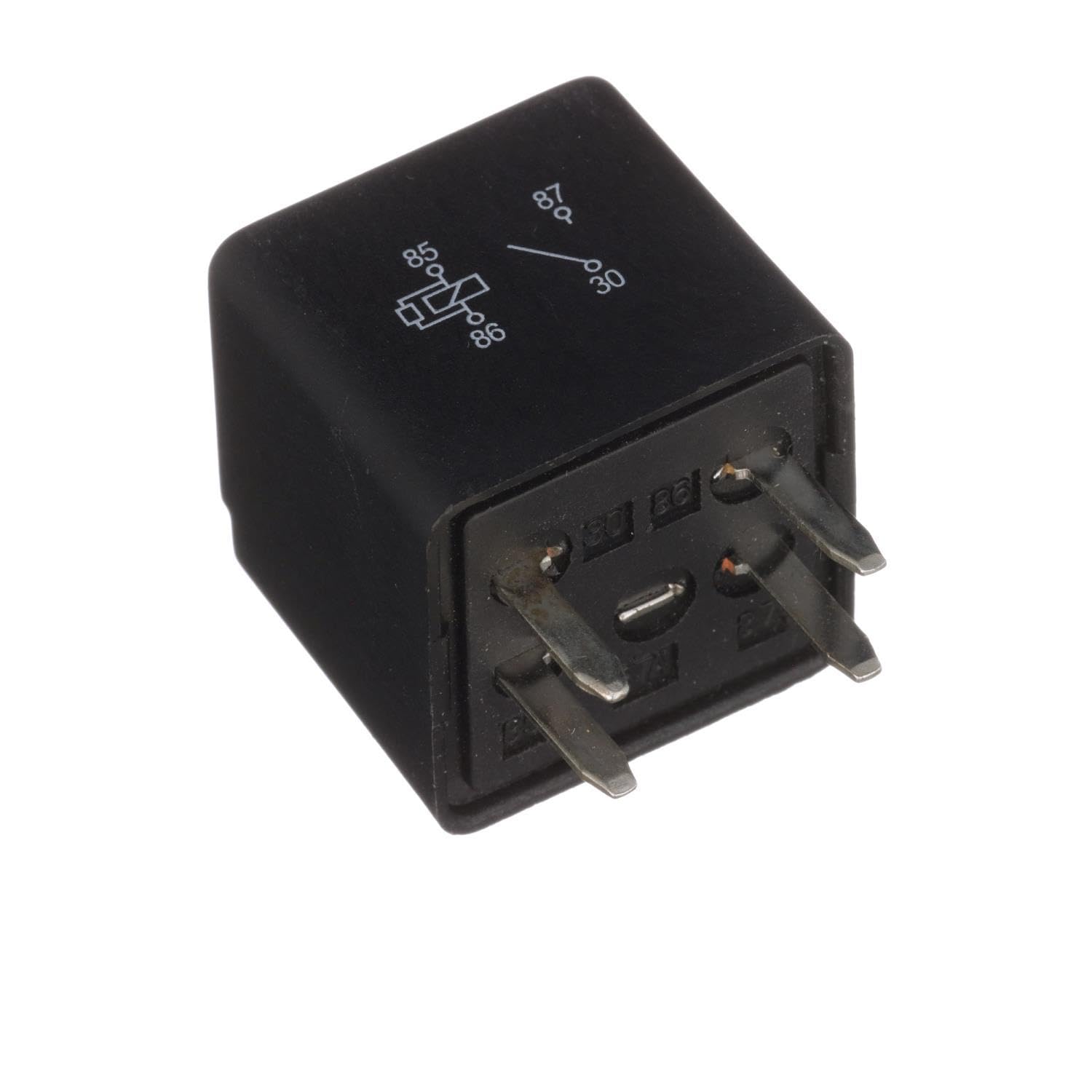
The ACDelco Professional D1741C represents the gold standard for OE-grade multi-purpose relays used in brake light circuits and dozens of other automotive applications. Its silver-alloy contact material resists oxidation far better than standard copper contacts, maintaining low resistance through hundreds of thousands of switching cycles inside hot, vibrating engine compartments. The 17-amp contact current rating provides adequate headroom for stock incandescent brake light systems while staying within the safe operating range of most factory fuse boxes.
This relay uses a screw-type connector instead of blade terminals, which adds installation effort but creates a mechanically locked connection that will not vibrate loose over rough roads. The compact form factor — 3.6 x 2.2 x 1.7 inches — fits into standard relay sockets, though the screw terminals may require adapting if your vehicle uses a plug-in harness. ACDelco’s reputation with GM and Ford fleets means this relay has been validated across extreme temperature ranges and high-vibration environments that destroy generic relays within months.
Owners who prioritize long-term dependability over flashy features will appreciate that the D1741C simply works every time the brake pedal is pressed. The absence of any LED-specific circuitry means it pairs well with incandescent bulbs but may allow hyper-flash if you have converted your entire lighting system to LED. For a drop-in replacement that restores factory-like brake light performance and lasts years, the ACDelco Professional line remains the benchmark.
What works
- Silver-alloy contacts resist oxidation and pitting
- Screw terminals prevent vibration-induced disconnection
- OE-grade quality validated by fleet testing
- Compact size fits standard relay mounting locations
What doesn’t
- Screw connectors require wiring effort
- No LED hyper-flash prevention circuitry
3. Nilight 50003R 5-Pin SPDT 5-Pack
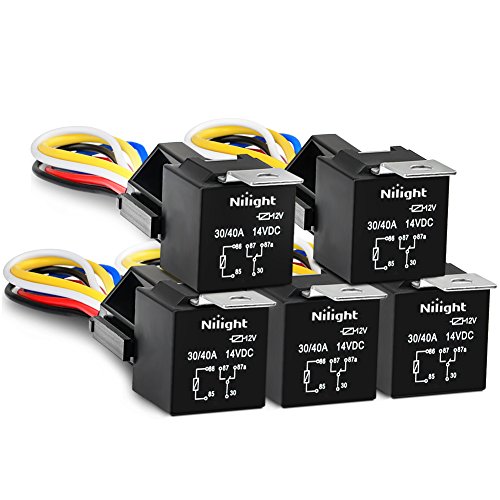
Nilight’s 50003R five-pack delivers exceptional value for buyers wiring multiple brake light circuits or building custom lighting systems from scratch. Each relay in the pack offers a 40-amp normally open and 30-amp normally closed contact rating, providing massive headroom that keeps the relay running cool even under sustained load. The silver-copper contact material splits the difference between pure silver longevity and copper conductivity, giving a solid middle-ground for most automotive and off-road lighting needs.
The included interlocking relay sockets with pre-attached 5-color wiring harnesses eliminate the need to buy separate connectors or crimp terminals. The male-female slot design ensures the relay clicks firmly into the socket without wiggle, preventing the intermittent connection that plagues cheap relay-and-socket combinations. Nilight backs this set with a two-year warranty, which signals confidence given the aggressive price point for a five-pack of 40A-capable relays.
Where this set falls short for brake-specific use is the absence of any LED flash control or pattern programming — these are basic SPDT switches that simply close the circuit. If you need a relay that prevents LED hyper-flash or adds brake light modulation, look elsewhere. But for standard brake light switching, auxiliary light bars, or as a stock of spare relays for future projects, the Nilight pack is the most cost-effective option on this list, especially if you are wiring multiple accessories.
What works
- Five relays with harnesses for multi-project savings
- 40A rating provides substantial thermal headroom
- Interlocking socket design prevents loose connections
- Two-year warranty backs the purchase
What doesn’t
- No LED hyper-flash prevention
- Basic SPDT switching only
4. EP27 LED Flasher Relay for Ford

The AMFRNE EP27 flasher relay is a dedicated LED conversion module designed specifically for Ford trucks and SUVs from the 1997–2010 era, including the F-150, Super Duty F-250 through F-550, Ranger, and Explorer Sport Trac. Unlike a general-purpose relay, the EP27 contains electronic timing circuitry that maintains correct flash rate even when the vehicle’s bulb load drops dramatically after switching to LED turn signals and brake lights. This is the exact cure for the hyper-flash problem that plagues LED conversions on Ford vehicles where the factory flasher expects the higher current draw of incandescent bulbs.
Installation is a pure plug-and-play operation — the EP27 fits directly into the factory 5-pin flasher socket without cutting wires or adding load resistors. The 20-amp contact current rating easily handles the combined load of LED brake lights, turn signals, and hazard lights without overheating. Silver contact material ensures reliable switching through the wide temperature swings common in Ford engine compartments, from freezing winter starts to summer desert heat.
Owners converting their Ford’s entire rear lighting to LEDs will find the EP27 solves both the brake light switching and the turn signal flash rate in one module. The limitation is strict vehicle compatibility — this relay will not fit GM, Ram, or import vehicles that use different flasher pin configurations or socket shapes. For Ford owners upgrading to LEDs, this is the single most effective component to eliminate hyper-flash without resorting to bulky resistors.
What works
- Direct plug-and-play fit for select Ford models
- Electronically regulates LED flash rate
- No load resistors required for LED conversions
- Silver contacts for reliable long-term switching
What doesn’t
- Limited to Ford 5-pin flasher sockets only
- 20A rating may be marginal for high-power auxiliary lights
5. GROBARPART 5-Pin Turn Signal Flasher for Ford

The GROBARPART 5-pin flasher relay targets budget-conscious Ford owners who need a direct replacement for a failed factory flasher without paying premium prices for silver-contact modules. This relay replaces a large number of OEM part numbers including F65B-13350-AA and 5C3T-13350-AA, covering Ford F-150, F-250, F-350 Super Duty, Expedition, Explorer, Mustang, and Ranger models from the mid-1990s through early 2010s. Its copper contact material keeps manufacturing costs low, but the trade-off appears in long-term durability compared to silver-alloy contacts.
The relay uses a quick-connect terminal design and includes a DIN rail mounting bracket for secure installation in the factory fuse panel. At 13.5 amps, its current rating is the lowest on this list, adequate for stock incandescent bulbs but leaving minimal headroom. If you add higher-wattage bulbs or auxiliary lighting through the same circuit, the relay may run hot and accelerate contact wear. The copper contacts will oxidize faster than silver in humid conditions, but for a simple replacement in a dry climate where the original lasted years, this relay represents a solid budget option.
Ford owners who have not converted to LEDs and want a no-frills flasher that matches the factory flash rate will find the GROBARPART works as advertised. The 1-year warranty provides basic protection, and the wide vehicle coverage means it likely fits your Ford without needing to look up additional adapters. For anyone planning LED upgrades later, the EP27 flasher is a better long-term investment, but for keeping a stock Ford lighting system running, this relay does the job.
What works
- Compatible with many Ford models from 1995–2014
- Includes DIN rail mount for secure installation
- Quick-connect terminals simplify replacement
- Budget-friendly entry price point
What doesn’t
- Copper contacts oxidize faster than silver alloys
- 13.5A rating offers limited headroom
Hardware & Specs Guide
Contact Current Rating vs. Bulb Load
A brake light relay’s main job is to handle the electrical load of your brake light bulbs without overheating or welding its contacts shut. Incandescent bulbs draw roughly 2A per bulb at 12V, so a typical two-bulb brake circuit runs at 4A total. LED bulbs drop that to under 0.5A each. A relay rated at 17A to 40A provides a safety margin of 4x to 10x, keeping internal temperatures low and preventing the contact points from arcing during repeated brake pedal presses in stop-and-go traffic. Undersized relays running near their current limit generate heat that accelerates spring fatigue and contact erosion.
Contact Material: Silver vs. Copper
Silver-alloy contacts offer the lowest electrical resistance and highest oxidation resistance of any common relay contact material. Pure copper contacts develop a surface oxide layer over months of exposure to under-hood moisture, which increases resistance and causes the relay to switch inconsistently. Silver contacts maintain their conductivity through years of service, making them the preferred choice for brake light circuits where instant, reliable switching is a safety requirement. The trade-off is cost — silver-contact relays typically cost more than copper-contact units. For vehicles driven in humid, coastal, or snowy environments, silver contacts are worth the premium.
FAQ
Can I use a standard 5-pin SPDT relay for LED brake lights?
What happens if my brake light relay has too high an amp rating?
Final Thoughts: The Verdict
For most buyers, the brake light relay winner is the NEW XP 60X +60 Brake Flasher because it adds an active safety layer by modulating your brake lights into attention-grabbing patterns without sacrificing steady-light operation in normal traffic. If you want a pure plug-and-play solution for a Ford LED conversion, grab the EP27 LED Flasher Relay. And for maximum long-term durability with traditional bulbs and professional wiring, nothing beats the ACDelco Professional D1741C.

Certification: BSc in Mechanical Engineering
Education: Mechanical engineer
Lives In: 539 W Commerce St, Dallas, TX 75208, USA
Md Amir is an auto mechanic student and writer with over half a decade of experience in the automotive field. He has worked with top automotive brands such as Lexus, Quantum, and also owns two automotive blogs autocarneed.com and taxiwiz.com.