Choosing the wrong adhesive for automotive carpet or upholstery work turns a simple repair into a peeling, bubbling mess that leaves you redoing the job in a matter of weeks. Heat buildup inside a parked vehicle, moisture from wet shoes, and constant foot traffic all test the bond in ways a general-purpose glue simply cannot handle.
I’m Amir — the founder and writer behind Four Wheel Ask. I have spent years aggregating owner feedback, analyzing chemical formulations, and comparing real-world durability data across hundreds of automotive adhesive products to separate lasting solutions from temporary fixes.
After researching hundreds of adhesive specs and user reports, the best automotive carpet adhesive delivers heat resistance, bond strength, and ease of use.
How To Choose The Best Automotive Carpet Adhesive
Automotive carpet adhesive must withstand interior cabin temperatures that can exceed 160°F on a summer day, resist moisture from spills and humidity, and maintain flexibility so the bond does not crack under vibration. General-purpose adhesives lack the thermal stability and elastic recovery required for vehicle use, which is why choosing a formulation engineered for automotive conditions matters.
Solvent-Based vs Water-Based Formulations
Solvent-based adhesives, such as those using SBR latex or neoprene rubber, offer higher initial tack and better resistance to heat and moisture. They are ideal for vertical applications like door panels and headliners where immediate grab prevents sagging. Water-based options produce lower fumes and are safer for enclosed spaces, but they typically require longer clamping or drying time and are better suited for horizontal floor applications.
Application Method and Working Time
Aerosol sprays provide precise, controlled application for trim and headliner work, while trowel-grade adhesives in cans are better for large carpet sections. Working time — the window between application and when the bond sets — varies from 15 minutes to several hours. Fast-setting formulas demand confidence and speed; slower-curing options give you room to reposition materials but require longer clamping.
Heat and Moisture Resistance Ratings
Vehicle interiors experience extreme thermal cycling. Look for adhesives explicitly rated for high-heat environments — many premium contact adhesives can withstand continuous exposure above 200°F. Water resistance is equally critical for floor applications where snow, rain, or spills are common. Products labeled for outdoor or marine use typically offer the best moisture protection.
Quick Comparison
On smaller screens, swipe sideways to see the full table.
| Model | Category | Best For | Key Spec | Amazon |
|---|---|---|---|---|
| 3M General Trim Adhesive 08088 | Aerosol | Trim & Carpet Bonding | 15 min cure, clear drying | Amazon |
| DAP Weldwood Landau Top & Trim | Contact | High-Heat Upholstery | 1 Gal, 24 hr full cure | Amazon |
| 3M Headliner & Fabric Adhesive (2-Pack) | Aerosol | Headliner Restoration | 30-60 min dry, two cans | Amazon |
| Roberts 3085 Multipurpose | Paste | Interior Flooring | Solvent-free, Zero VOC | Amazon |
| DAP Weldwood All-Weather Outdoor | Solvent | Outdoor Carpet & Turf | Quart, weather resistant | Amazon |
In‑Depth Reviews
1. 3M General Trim Adhesive 08088

The 3M General Trim Adhesive 08088 is an aerosol formulation engineered specifically for bonding carpet fabric and plastic to metal surfaces inside vehicles. It dries to a clear film that remains virtually invisible on finished work, which matters when adhesive seeps around edges or gets applied near visible trim lines. The 15-minute full cure time is among the fastest in this category, allowing you to complete interior repairs without prolonged clamping or waiting.
Heat and water resistance are where this adhesive truly separates itself from budget alternatives. User reports consistently describe successful bonds holding up through extreme summer cabin temperatures on door panels, rear deck shelves, and kick panels. The fan-spray nozzle delivers an even, controlled pattern that reduces overspray and waste, though the aerosol format means you need to mask adjacent areas carefully. Several owners noted that a single can covered an entire set of seat covers on classic British sports cars without running out mid-project.
The industrial-use-only labeling is worth paying attention to — this is not a craft adhesive meant for school projects. The solvent fumes are potent and require a well-ventilated workspace, preferably with the garage door open and a fan pulling air. For automotive enthusiasts restoring interiors or replacing worn carpet sections, the 08088 provides professional-grade holding power that outlasts the vehicle itself.
What works
- Exceptional bond strength on metal and plastic
- Dries clear for invisible repair lines
- Fast 15-minute cure speeds up projects
What doesn’t
- Strong fumes require heavy ventilation
- Labeled for industrial use only
- Aerosol can be harder to control on large flat areas
2. DAP Weldwood Landau Top & Trim Contact Adhesive
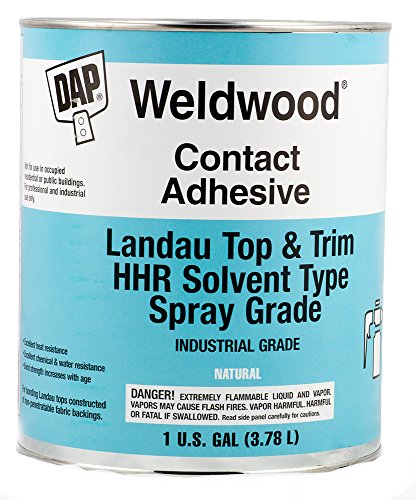
The DAP Weldwood Landau Top & Trim is a solvent-type contact adhesive delivered in a full-gallon format, designed for automotive upholstery work that demands a permanent, high-heat-resistant bond. This is the same family of adhesive that professional upholstery shops have relied on for decades when installing vinyl roofs, landau tops, and heavy-grade carpet. The natural tan color blends acceptably with most interior substrates, though it does not dry completely clear like some aerosol alternatives.
Owner feedback highlights the adhesive’s ability to hold foam-backed carpet and vinyl securely on vertical panels even in vehicles parked under direct sun. The 24-hour full cure time is longer than spray options, but the resulting bond is correspondingly more permanent. Users report successful applications on boat carpet, door panel inserts, and full headliner replacements. Several reviews note that using a siphon-feed paint gun at around 45 PSI produces the most even coverage for large jobs, though a brush or roller works for smaller sections.
The gallon size makes this a better fit for someone tackling a full interior restoration rather than a single patch repair. The solvent base is highly flammable and produces strong fumes that demand respiratory protection and a workspace isolated from ignition sources like water heaters or pilot lights. For buyers who value long-term durability over quick application convenience, the Weldwood Landau & Trim delivers a bond that does not soften or creep under sustained heat exposure.
What works
- Extremely high heat resistance for interior use
- Permanent bond that holds vinyl and foam securely
- Gallon quantity covers full interior projects
What doesn’t
- Long 24-hour cure requires patience
- Highly flammable with strong solvent odor
- Not ideal for small spot repairs
3. 3M Headliner & Fabric Adhesive (Pack of 2)

The 3M Headliner & Fabric Adhesive comes as a two-pack of 18.1-ounce aerosol cans purpose-built for bonding automotive headliners to metal and plastic roof panels. The formula dries clear and sets within 30 to 60 minutes, giving you a reasonable work window without forcing you to hold materials in place all day. The adjustable nozzle lets you dial in spray width, which is useful when working around dome light cutouts or sunroof openings.
Customer reviews consistently emphasize that this adhesive produces professional-looking results even for first-time users, provided they work methodically. The spray pattern has been described as resembling spider webs — it lays down a fine, tacky film that grabs fabric on contact. Multiple owners reported successfully completing full headliner replacements in sedans and SUVs using just the two cans. Several reviewers noted that the bond resists sagging even in high-humidity climates and during summer heat waves.
The biggest caveat comes from the adhesive’s aggressive grab: once the fabric touches the substrate, repositioning is nearly impossible without tearing the material. This is not a forgiving formula, and beginners are advised to practice on scrap material first. A few users mentioned that YouTube tutorials downplay the difficulty, leading to wrinkled installations on their first attempt. If you have steady hands and a measured approach, however, this 3M two-pack delivers headliner results that look factory-original.
What works
- Two cans provide ample coverage for most vehicles
- Dries clear with no visible residue
- Resists moisture, heat, and sagging long-term
What doesn’t
- Very aggressive tack leaves no room for repositioning
- Fast setting can overwhelm inexperienced users
- Aerosol overspray requires careful masking
4. Roberts 3085 Multipurpose Adhesive

The Roberts 3085 is an SBR latex-based, solvent-free adhesive that comes in a one-gallon can and is formulated for interior residential and commercial flooring applications. While it is not specifically marketed as an automotive product, a significant number of owners have used it successfully for automotive carpet installation in cabin floors and trunk areas where low odor and zero VOCs are beneficial. The white paste consistency spreads easily with a trowel and remains workable for about 30 minutes before setting.
Reviewers report that a single gallon covers roughly 92 square feet when applied in a thin layer, making it a cost-efficient option for full interior carpet replacements. The lack of solvent fumes means you can work in a closed garage without respiratory discomfort, which is a meaningful advantage over solvent-based alternatives. The bond forms reliably on concrete, plywood, and properly prepared surfaces, and the fast-setting nature allows floor panels to be walked on after about 30 minutes.
The limitations are clear: this adhesive is designed for horizontal installations and is not recommended for vertical panel work where immediate grab is required. It also lacks the high-heat resistance of solvent-based contact cements, so it is not suitable for headliners, door panels, or any application exposed to direct sun through glass. For trunk floor carpet or underlayment where heat exposure is moderate and VOCs are a concern, the Roberts 3085 offers respectable performance at a reasonable entry point.
What works
- Solvent-free with zero VOCs for safe indoor use
- Good coverage at roughly 92 sq ft per gallon
- Fast setting allows quick return to service
What doesn’t
- Not rated for high-heat automotive interior zones
- Poor initial tack for vertical or overhead applications
- Messy trowel application compared to aerosol sprays
5. DAP Weldwood All-Weather Outdoor Carpet Adhesive

The DAP Weldwood All-Weather Outdoor Carpet Adhesive is a solvent-based formula designed to bond outdoor carpet and artificial turf to a variety of surfaces, including wood, concrete, and plastic. Its primary claim to fame is the ability to form a strong bond even when applied to damp pressure-treated lumber, a scenario where water-based adhesives would fail immediately. The quart size is practical for smaller projects like marine trailer bunks, boat decking, or entryway mats.
Owner feedback emphasizes the adhesive’s tenacious grip — several reviewers describe using it on wet wood straight out of the pressure-treating process and achieving a hold that survived both stapling and heavy use. The solvent base produces a strong odor that dissipates over a couple of days, and the product remains tacky long enough to allow repositioning of the carpet or turf before the final bond sets. Users who applied it on boat vinyl decking reported excellent results with working time extending well past 30 minutes in moderate temperatures.
The main drawbacks are the vague application instructions — the phrase “wait until the product grows legs” is the official guidance on tack time, which can be confusing for first-time users. The quart container is also relatively small for larger projects, and several customers expressed a desire for a gallon option. For anyone needing a weather-resistant bond that holds up to rain, UV exposure, and physical abrasion, the DAP All-Weather delivers reliable outdoor performance that justifies its position in this lineup.
What works
- Bonds effectively to damp or wet wood surfaces
- Excellent weather and water resistance
- Long working time allows careful positioning
What doesn’t
- Vague instructions on proper tack timing
- Quart size is small for larger flooring jobs
- Strong solvent fumes require ventilation
Hardware & Specs Guide
Adhesive Types
Solvent-based adhesives (SBR latex, neoprene rubber) deliver higher initial tack and superior heat and moisture resistance, making them the standard for automotive interior and exterior applications. Water-based or solvent-free formulations produce lower fumes and are safer for enclosed workspaces, but they typically require longer clamping time and perform best on horizontal surfaces with moderate thermal loads.
Application Methods
Aerosol spray adhesives offer precise, controlled application with minimal waste and are ideal for vertical panel work, headliners, and trim pieces. Trowel-grade paste adhesives provide thicker coverage for large floor areas but require more cleanup effort and produce a messier application. Contact adhesives applied with a brush or roller give the most control over coverage thickness for full interior restorations.
Cure Times
Fast-setting aerosol adhesives can reach full bond strength in 15 minutes, allowing same-day reassembly of interior panels. Contact cements typically require 30 minutes to several hours of drying time before the surfaces can be joined, followed by a full 24-hour cure for maximum heat resistance. Temperature and humidity directly affect cure speed — cooler conditions extend dry time while warm, dry air accelerates it.
Heat Resistance Ratings
Premium solvent-based contact adhesives can withstand continuous exposure above 200°F without softening or losing bond integrity. Water-based adhesives generally degrade above 150°F, which can lead to delamination in vehicles parked in direct sun. Always verify the continuous service temperature rating of any adhesive before using it on headliners, dash panels, or rear deck shelves that experience direct solar radiation.
FAQ
Can I use outdoor carpet adhesive for automotive interior carpet?
How do I remove old carpet adhesive before applying new glue?
What is the best way to apply aerosol adhesive to a headliner?
How long does automotive carpet adhesive typically last before needing replacement?
Is aerosol or trowel-grade adhesive better for car floor carpet?
Final Thoughts: The Verdict
For most buyers, the best automotive carpet adhesive winner is the 3M General Trim Adhesive 08088 because it combines professional-grade bond strength, clear drying, and fast cure time in an easy-to-use aerosol format that suits everything from door panel carpet to trim repairs. If you need extreme heat resistance for upholstery or vinyl roof work, the DAP Weldwood Landau Top & Trim delivers a permanent bond that withstands the harshest interior environments. And for budget-friendly interior floor carpet installation with minimal fumes, the Roberts 3085 offers solid performance at an accessible entry point.

Certification: BSc in Mechanical Engineering
Education: Mechanical engineer
Lives In: 539 W Commerce St, Dallas, TX 75208, USA
Md Amir is an auto mechanic student and writer with over half a decade of experience in the automotive field. He has worked with top automotive brands such as Lexus, Quantum, and also owns two automotive blogs autocarneed.com and taxiwiz.com.