When measuring parts, gaps, or material thickness, the difference between a reliable reading and a guessing game comes down to the tool in your hand. Dial calipers offer a mechanical advantage that digital alternatives sometimes compromise with battery drift and LCD lag.
I’m Amir — the founder and writer behind Four Wheel Ask. My approach to tool selection involves weeks of cross-referencing manufacturer spec sheets against verified owner feedback to identify which models deliver consistent repeatability and which ones skip quality control.
Whether you are sizing fasteners, checking brake rotor thickness, or setting up a mill, choosing the right instrument matters more than most shoppers realize. Understanding what separates a reliable from a frustrating best dial caliper tool is essential before adding one to your workshop.
How To Choose The Best Dial Caliper Tool
A dial caliper is a precision mechanical instrument that relies on a gear-driven needle rather than a digital display. The right choice depends on understanding how accuracy, build quality, and readability affect your daily measuring tasks. Below are the key factors that separate a tool that earns its place in your drawer from one that frustrates every time you reach for it.
Accuracy & Resolution Ratings
Most dial calipers in the mid to premium range advertise accuracy of ±0.001 inches with a resolution of 0.001 inches per graduation. This level of precision suits machining, reloading, and automotive work where thousandths matter. Budget units sometimes quote the same spec but lack the quality control to deliver it consistently across the full measuring range. Look for models that include a calibration certificate or have verified repeatability data from owner communities.
Build Material & Slide Smoothness
Stainless steel is the standard for dial calipers because it resists corrosion and maintains dimensional stability. The beam and slider must be hardened and precision ground to prevent binding or play. A smooth thumb roller with positive engagement and a locking screw that holds position without damaging the beam are hallmarks of a well‑designed tool. Avoid models with plastic components in the slide mechanism — they wear quickly and introduce slop.
Dial Readability & Bezel Adjustment
A large 1.5‑inch dial with high‑contrast markings reduces eye strain during repeated measurements. The bezel should rotate smoothly and lock securely so you can zero the needle at any position without backlash. Some dials include both decimal and fractional scales; this helps if you switch between machining and woodworking tasks. Shock‑proof construction protects the delicate gear train if the tool is dropped — a valuable feature for shop use.
Quick Comparison
On smaller screens, swipe sideways to see the full table.
| Model | Category | Best For | Key Spec | Amazon |
|---|---|---|---|---|
| Accusize P920‑S216 | Precision | Shop accuracy & repeatability | 6″ range · ±0.001″ · hardened steel | Amazon |
| PEC Tools 1332‑4110 | Premium | Industrial workshop use | 6″ range · ±0.001″ · shock‑proof dial | Amazon |
| Fowler 52‑008‑707‑0 | Performance | Machinist & pro measurement | 6″ range · 0.001″ grad · knurled lock | Amazon |
| Clockwise Tools DDLR‑0605 | Value | Budget‑friendly precision | 6″ range · ±0.001″ · double shock proof | Amazon |
| Frankford Arsenal 516503 | Design | Ammo reloading & brass work | 6″ range · ±0.001″ · stainless body | Amazon |
| iGaging 100‑164 | Practical | Dual‑scale decimal & fraction work | 6″ range · 0.01″ / 1/64″ · stainless steel | Amazon |
| SE 780DC | Entry | Home garage & light DIY | 6″ SAE · ±0.001″ · shockproof dial | Amazon |
In‑Depth Reviews
1. Accusize Industrial Tools P920‑S216

The Accusize P920‑S216 delivers a hardened stainless steel beam with precision‑ground and micro‑lapped measuring faces that maintain flatness over years of use. Its satin chrome finish resists glare, and the engraved graduations remain legible even after repeated cleaning. The adjustable bezel includes a locking screw, so zero does not wander once set — a detail often missing from cheaper competition.
Owner feedback consistently highlights the smooth slide action and repeatability within the claimed ±0.001‑inch tolerance. Several long‑term users note that the thumb wheel has a slight rattle, but this does not affect measuring accuracy. The fitted foam case offers adequate protection for drawer storage, though the lid pad is noticeably softer than the bottom insert.
For the machinist or serious hobbyist who needs a reliable secondary caliper or a primary tool on a lean budget, the Accusize balances build quality and precision at a very attractive price. It earns the top spot because it delivers professional‑grade repeatability without the premium brand markup.
What works
- Hardened and micro‑lapped faces for long‑term flatness
- Adjustable bezel with locking screw holds zero reliably
- Satin chrome finish enhances readability in bright conditions
What doesn’t
- Thumb wheel has a slight audible rattle during use
- Case lid foam is softer than ideal for heavy‑duty transport
2. PEC Tools 1332‑4110 0‑6″ Dial Caliper
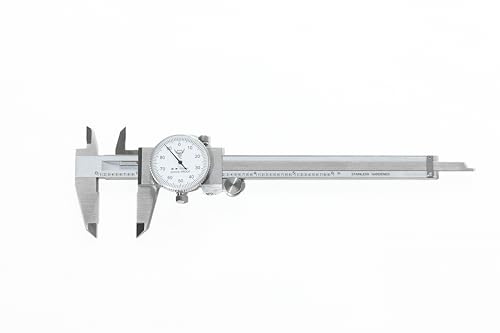
The PEC Tools dial caliper features a shock‑proof gear mechanism inside a 1.5‑inch dial, protecting the delicate needle movement from accidental drops and vibration common on a busy shop bench. The beam is made from hardened stainless steel that resists corrosion, and the knurled thumb roller provides consistent grip even with oily fingers. A locking screw on the slider helps hold measurements steady during transfer.
Users report that the caliper feels solid and well‑balanced in hand, with smooth travel across the full 6‑inch range. A small number of owners have noted a slightly scratchy feel straight from the box, which typically resolves with a light application of instrument oil. The fitted plastic case is basic but functional, keeping the tool secure during storage.
This caliper suits industrial workshop environments where durability and shock resistance matter more than decorative extras. The build quality aligns with tools costing considerably more, making it a strong contender for anyone who needs a trustworthy shop companion without paying for a heritage brand badge.
What works
- Genuine shock‑proof dial gear train for drop protection
- Hardened stainless steel beam resists wear and corrosion
- Knurled roller provides secure grip even with oily hands
What doesn’t
- Some units arrive with slightly scratchy slide movement
- Carrying case is basic without custom foam cutouts
3. Fowler 52‑008‑707‑0 Premium Dial Caliper

The Fowler 52‑008‑707‑0 is a full stainless steel dial caliper with a black dial face and crisp 0.001‑inch graduations that stand out clearly under task lighting. The knurled lock screw engages firmly without distorting the beam, and the thumb‑operated fine adjustment roller enables one‑handed operation when you need both hands free for the workpiece. The beam is etched with 0.10‑inch markings for quick visual reference.
Experienced machinists who have compared Fowler against legacy brands note that this model holds zero reliably and repeats within tolerance across repeated measurements. Some owners mention that the thumb wheel requires a deliberate push to engage, which prevents accidental movement but may feel stiff at first. The included fitted case provides secure transport storage.
This caliper targets the professional user or serious DIY machinist who expects precise, repeatable measurements and appreciates a tool that feels substantial. Fowler has a long history in precision instruments, and this model continues that reputation with modern manufacturing at a price that undercuts older American‑brand equivalents.
What works
- High‑contrast black dial with clear 0.001″ markings
- Knurled lock screw holds position without damaging the beam
- Fine‑adjustment roller enables smooth one‑handed operation
What doesn’t
- Thumb roller can feel stiff before break‑in
- Some units require gentle handling to maintain zero
4. Clockwise Tools DDLR‑0605 Pro Dial Caliper
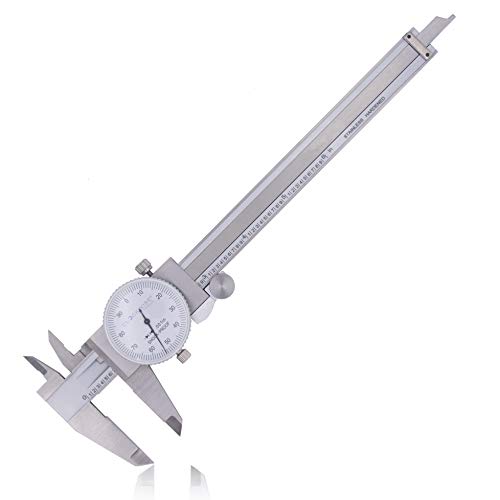
The Clockwise Tools DDLR‑0605 features a double shock‑proof design that cushions the dial mechanism from impact on both sides of the bezel, making it one of the more resilient options in its price tier. The solid stainless steel beam is polished for smooth sliding, and each unit ships with a manufacturer calibration certificate verifying ±0.001‑inch accuracy before it leaves the factory. Four‑way measurement capability covers inside, outside, depth, and step tasks.
Long‑term owners report that the caliper holds its accuracy well past the two‑year mark without developing measurable slop in the slide. The high‑contrast dial layout is simple and uncluttered, with a low‑opacity logo that does not distract from the reading. A small number of users have noted that the bezel rotates a bit more freely than ideal, but it has not caused zero drift in practice.
This model is an excellent choice for the home shop owner or weekend fabricator who wants verified precision without spending into premium territory. The included calibration certificate adds confidence that budget alternatives lack, and the double shock proofing provides extra peace of mind for less‑than‑pristine storage environments.
What works
- Double shock‑proof dial provides excellent impact protection
- Includes a manufacturer calibration certificate for traceability
- Clean, high‑contrast dial layout reduces reading errors
What doesn’t
- Bezel rotates a little more freely than preferred
- Zero adjustment ring lacks a positive locking detent
5. Frankford Arsenal 516503 Dial Caliper
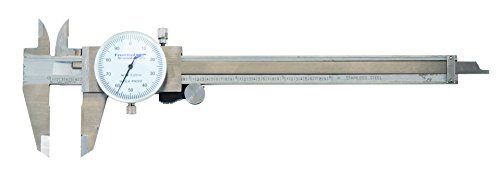
The Frankford Arsenal dial caliper is purpose‑built for ammunition reloading, with a 6‑inch measurement range that suits case length, neck diameter, and overall cartridge dimensions. The stainless steel body resists powder residue and cleaning solvents, while the large dial face makes readings easy to see under bench lighting. Accuracy is rated at ±0.001 inch, matching the precision needed for loading consistent ammunition.
Reloaders who have used this caliper for extended sessions appreciate the easy zero adjustment and the fact that it never needs batteries — one less variable when setting up a press. Some owners note that the included case is basic but serviceable, and a few have commented that the bezel can shift position if bumped during use. The overwhelming majority report that the tool holds calibration well across hundreds of measurements.
If your primary measuring tasks revolve around ammunition, brass, and firearm components, the Frankford Arsenal caliper delivers targeted utility without overcomplicating the interface. The design choices reflect a clear understanding of what reloaders actually need: reliable accuracy, chemical resistance, and straightforward operation.
What works
- Stainless steel construction withstands reloading chemicals
- Large dial face is easy to read under bench lighting
- No batteries required for reliable measurements
What doesn’t
- Bezel can shift if accidentally bumped during use
- Case quality is adequate but not exceptional for the price
6. iGaging 100‑164 Dial Caliper
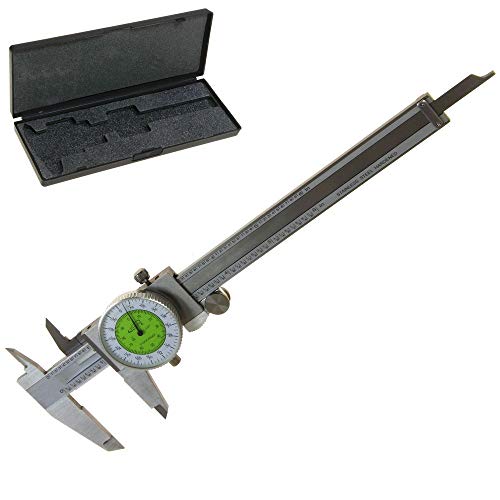
The iGaging 100‑164 separates itself from the pack with a dual‑scale dial that displays both decimal inches (0.01″ resolution) and fractional inches (1/64″ resolution). This eliminates the need to mentally convert between systems when you are switching between machining and woodworking tasks. The stainless steel beam provides a solid foundation, and the thumb wheel enables fine adjustments without losing your reference point.
Owners describe the caliper as heavier and more robust than expected for its price bracket, with smooth slide operation that belies its affordable positioning. A few users have observed slight zero creep after repeated measurements, though this appears to be unit‑specific rather than a design flaw. The adjustable bezel is convenient for quick zero setting but can loosen over time on some examples.
This caliper is well suited for the generalist who moves between decimal and fractional work regularly — woodworkers, metal fabricators, and DIY enthusiasts will appreciate not having to convert every reading. It fills a genuine niche that digital calipers and single‑scale dial models simply cannot match.
What works
- Dual decimal and fractional scale eliminates mental conversion
- Heavier stainless steel construction feels more substantial than expected
- Smooth slide operation at a very accessible price point
What doesn’t
- Some units exhibit slight zero creep over multiple measurements
- Bezel zero ring can loosen with frequent adjustment
7. SE 3‑Way 780DC Shockproof Steel Dial Caliper
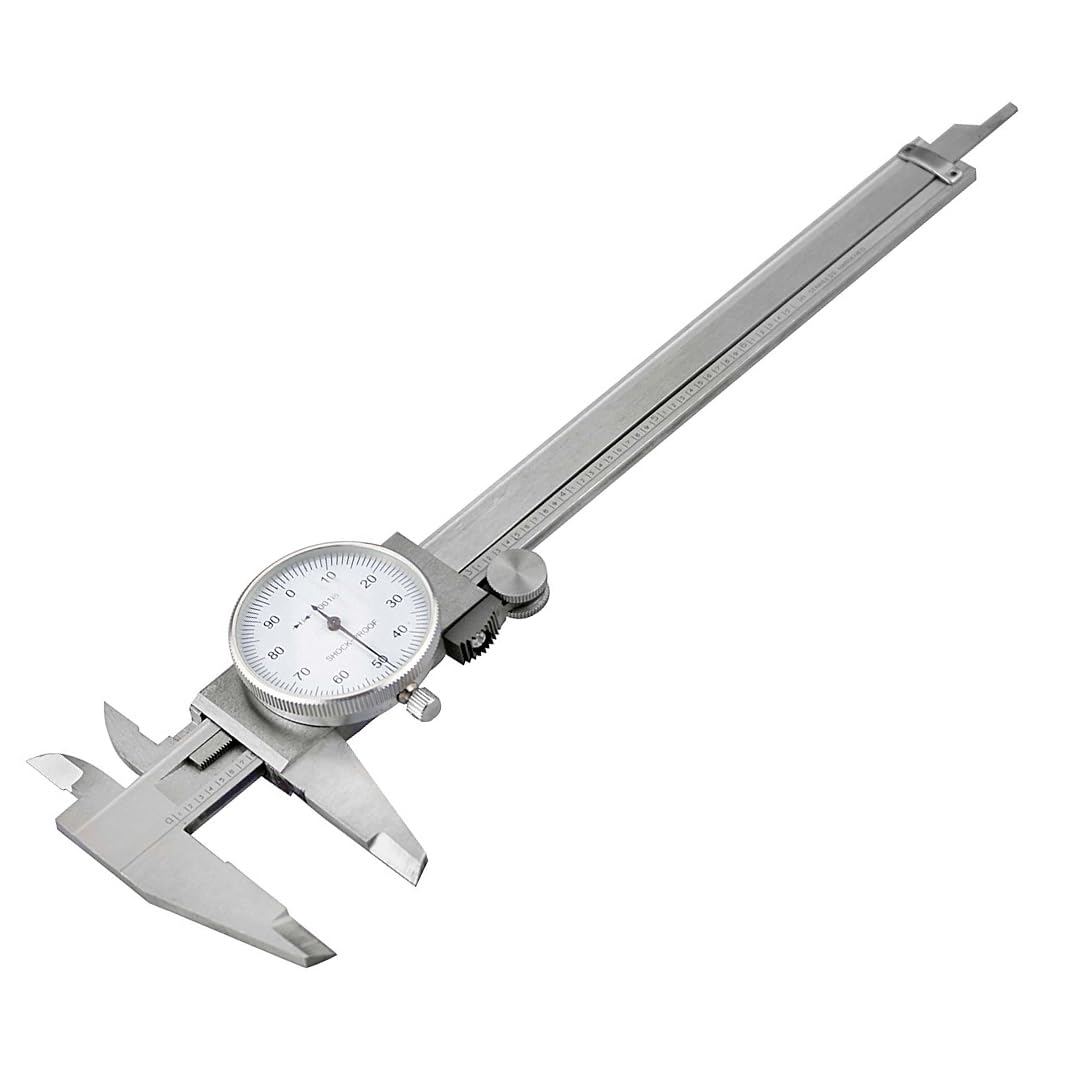
The SE 780DC offers a 0‑to‑6‑inch SAE measurement range with a shockproof dial housed in an alloy steel body — a rare combination at this entry price. The 1.5‑inch dial provides decent readability, and the precision thumb roller plus zero adjustment dial cover the standard four measurement modes: external, internal, depth, and step. Finger traction on the beam improves grip during repeated use.
Owner experiences vary noticeably with this model. Many report that it is surprisingly accurate, with one user measuring a scalp hair at 0.002 inches and confirming the tool matches reference standards. Others have received units with loose shim screws or gritty slide feel that required adjustment out of the box. The hard protective case with foam inserts is a welcome inclusion at this level, but quality control appears inconsistent.
If your budget is tight and you are willing to inspect and potentially adjust the tool upon arrival, the SE 780DC can serve capably for light garage and household measuring tasks. It is best viewed as an entry‑level option that rewards careful buyers with decent performance, but not as a tool for critical machining work.
What works
- Deadly accurate when it arrives properly adjusted
- Shockproof dial adds durability for casual use
- Hard protective case with foam inserts included
What doesn’t
- Inconsistent quality control — some units need immediate adjustment
- Shim screws and slider can be loose or gritty from the factory
Hardware & Specs Guide
Accuracy & Resolution
All seven calipers in this guide advertise a resolution of 0.001 inches per graduation, with most claiming an overall accuracy of ±0.001 inch across the full 6‑inch range. The iGaging is the outlier with 0.01‑inch and 1/64‑inch resolution, trading fine granularity for dual‑scale convenience. In practice, the difference between ±0.001″ and ±0.01″ matters most when working to tight tolerances — for woodworking and general fitment checks, the coarser scale is perfectly adequate.
Material & Build Quality
Stainless steel is the dominant material across the premium and mid‑range options, with the Accusize, PEC, Fowler, Clockwise, Frankford Arsenal, and iGaging all using hardened stainless beams. The SE 780DC uses alloy steel, which is less corrosion‑resistant but lowers the entry price. Look for precision‑ground and micro‑lapped measuring faces on higher‑tier models — these maintain flatness far longer than as‑cast surfaces.
Dial Readability & Zero Adjustment
Dial diameter across all models is approximately 1.5 inches, with high‑contrast markings being the key differentiator. The Accusize and Fowler feature adjustable bezels with locking screws, preventing accidental zero shift during use. The Clockwise Tools and Frankford Arsenal use friction‑fit bezels that are easy to adjust but more susceptible to movement if bumped. Shock‑proof construction is featured on the PEC, Clockwise, and SE models, protecting the gear train from impact damage.
Measuring Modes & Ergonomics
Every caliper in this lineup supports the four standard measurement modes: inside diameter, outside diameter, depth, and step. The Fowler and Accusize include knurled lock screws for holding slider position during transfer, while the Clockwise Tools and iGaging rely on friction‑based locking. Thumb rollers are present on all models, with the Fowler and PEC offering the most positive engagement for one‑handed fine adjustment.
FAQ
How does a dial caliper differ from a digital caliper?
What accuracy should I expect from a quality dial caliper?
How do I maintain a dial caliper for long‑term accuracy?
Can I use a dial caliper for metric measurements?
Final Thoughts: The Verdict
For most buyers, the best dial caliper tool winner is the Accusize Industrial Tools P920‑S216 because it pairs hardened steel construction, an adjustable locking bezel, and verified ±0.001‑inch accuracy at a price that undercuts premium competitors by a wide margin. If you want genuine shock‑proof protection for a busy shop environment, grab the PEC Tools 1332‑4110. And for the reloader or dual‑scale generalist, nothing beats the focused design of the Frankford Arsenal or the decimal‑fraction convenience of the iGaging 100‑164.

Certification: BSc in Mechanical Engineering
Education: Mechanical engineer
Lives In: 539 W Commerce St, Dallas, TX 75208, USA
Md Amir is an auto mechanic student and writer with over half a decade of experience in the automotive field. He has worked with top automotive brands such as Lexus, Quantum, and also owns two automotive blogs autocarneed.com and taxiwiz.com.