A sticking window that groans every time you roll it down creates a distraction you shouldn’t have to tolerate. Whether it’s the rear glass that crawls or a driver-side pane that chatters against the seal, the culprit is almost always dried-out lubrication that has turned tacky or washed away. The fix is straightforward — apply the correct lubricant to the track and seal surfaces — but choosing the wrong formula can attract dirt, degrade rubber, or fail after a single rainstorm.
I’m Amir — the founder and writer behind Four Wheel Ask. I’ve spent years analyzing chemical formulations, reviewing owner experiences across dozens of automotive forums, and comparing how different lubricants hold up under real temperature swings and humidity cycles.
After evaluating five top contenders for seal compatibility, temperature resilience, and application precision, the data points clearly to one consistent performer. A focused look at the best car window lubricant eliminates annoying squeaks, protects weather seals, and ensures smooth glass movement in any climate.
How To Choose The Best Car Window Lubricant
Selecting a window lubricant involves more than grabbing the first spray can on the shelf. The wrong chemistry can swell rubber seals, leave a sticky residue that attracts grit, or evaporate within weeks. Focus on three factors to narrow the field.
Lubricant Base: Silicone vs. Petroleum vs. PTFE
Silicone-based products are the safest bet for automotive window systems because they do not attack rubber or vinyl weather stripping. Petroleum-based oils can soften certain seal compounds over time, leading to premature cracking. PTFE (Teflon) sprays offer low friction but can create a dry film that flakes off in high-use tracks. For daily-driven cars, a dedicated silicone grease or spray formulated for rubber compatibility delivers the longest trouble-free interval between applications.
Temperature Range and Weather Resistance
Windows operate in environments that swing from freezing winter mornings to sun-baked summer afternoons. A lubricant with a rated operating range spanning at least -20°F to 200°F ensures the film remains pliable when cold and does not run or evaporate when hot. Products that hold viscosity down to -40°F provide an extra margin for northern climates where seals can stiffen and glass can momentarily bind against the track.
Application Method and Surface Compatibility
Spray aerosols with precision straws reach narrow window channels and tight seal crevices without overspray on painted panels. Grease in a tube allows targeted application to regulator slides and pivot points but requires manual spreading. Consider also whether the lubricant leaves a visible residue — many silicone greases dry clear, while some white lithium pastes can become unsightly on interior door panels. The ideal product matches the application style to the specific window mechanism you are servicing.
Quick Comparison
On smaller screens, swipe sideways to see the full table.
| Model | Category | Best For | Key Spec | Amazon |
|---|---|---|---|---|
| Honda Shin-ETSU Silicone Grease | Grease | OEM-grade rubber seal protection | Silicone grease, 3.5 oz tube | Amazon |
| CRC Electrical Silicone Lubricant | Aerosol | High-temperature electrical and seal use | Dielectric silicone, 400°F rated | Amazon |
| 3-IN-ONE RVcare Slide-Out Silicone Lube | Spray | Rubber seal conditioning and slide lubrication | Silicone spray, UV inhibitors | Amazon |
| PlanetSafe SqueaksGone Lubricant | Oil | Penetrating rust-fix and hinge quieting | Penetrating oil, non-toxic formula | Amazon |
| Slick 50 Supercharged One Lube | Spray | Multi-surface corrosion protection and lubrication | Aerosol spray, rust inhibitor | Amazon |
In‑Depth Reviews
1. Honda Shin-ETSU Silicone Grease
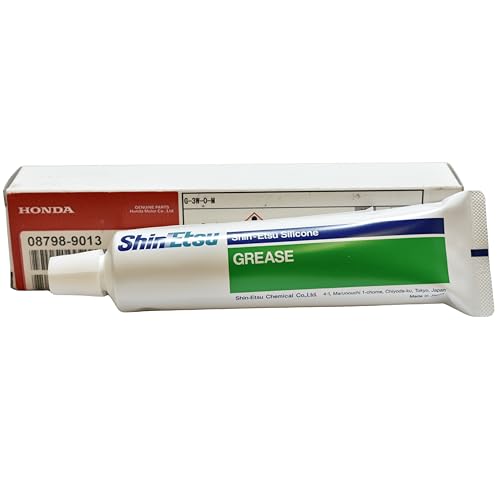
Honda’s Shin-ETSU silicone grease has earned a reputation among dealership technicians and independent mechanics as the reference standard for rubber seal preservation. The 3.5-ounce tube delivers a thick, translucent paste that bonds to weather stripping without running or evaporating, even after repeated door openings and car washes. Owner reports consistently cite multi-year intervals between applications on window seals, sunroof gaskets, and door weather strips with no evidence of rubber swelling or hardening.
Chemically, this is a pure silicone-based grease formulated specifically for the ethylene-propylene rubber compounds used in most automotive sealing systems. It resists wash-off from rain and pressure washers far better than spray-on products, which makes it ideal for the vertical surfaces of window channels where gravity often pulls thinner lubricants downward. The grease also stays pliable across a wide temperature span, meaning seals remain soft in subfreezing conditions and do not become tacky in summer heat.
The main trade-off is application convenience — grease requires manual transfer to a cloth or applicator and cannot reach deep into narrow track channels without disassembly. For owners who prioritize longevity and genuine OEM compatibility over quick-spray convenience, however, this tube remains the most cost-effective long-term solution available. It also works exceptionally well on convertible top seals and trunk gaskets where a thin spray would quickly disappear.
What works
- Exceptional seal compatibility with no rubber swelling reported across years of owner feedback.
- Extremely water-resistant — survives rain and car washes without reapplication.
- Small tube lasts through multiple seal applications due to the thin film required.
What doesn’t
- Grease format requires manual application; cannot spray into tight track channels.
- No precision straw or nozzle included for reaching recessed window guides.
- Price per ounce is higher than aerosol alternatives for the same volume of coverage.
2. CRC Electrical Silicone Lubricant

CRC’s 02094 Electrical Silicone Lubricant bridges the gap between a pure dielectric compound and a practical window seal treatment. The 10-ounce aerosol delivers a thin, uniform film of silicone that penetrates quickly into window channels and around rubber seals without leaving a heavy buildup. The 360-degree valve allows spraying at any angle, which is particularly helpful when treating vertical window guides or overhead sunroof tracks where gravity fights conventional straight-spray cans.
The temperature rating of -40°F to 400°F makes this one of the widest-range formulas in the category. In practice, that means the film remains flexible enough to prevent frozen window seals in northern winters yet stable enough to avoid dripping onto door panels during parked summer exposure. The dielectric properties also make it safe for use on window switch connectors and power regulator harnesses located inside the door cavity where moisture ingress can cause intermittent operation.
Where the CRC formula falls slightly short is in longevity on high-use driver windows. The spray dries to a thin film that can wear away after several hundred full cycles, requiring more frequent reapplication than a thicker grease. For owners who want a versatile spray that works on seals, door hinges, and electrical contacts from a single can, however, this is the most technically complete option. The plastic-safe formulation eliminates worry about damaging interior trim panels.
What works
- Extreme temperature range from -40°F to 400°F covers all climate conditions.
- 360-degree spray valve enables application at any angle inside door cavities.
- Safe on all plastics and rubber compounds commonly used in automotive electrical systems.
What doesn’t
- Thin film requires more frequent reapplication on high-use primary windows.
- No dedicated seal conditioner additives for weather stripping UV protection.
- Aerosol overspray can drift onto glass if not carefully directed with the straw.
3. 3-IN-ONE RVcare Slide-Out Silicone Lube & Seal Conditioner

3-IN-ONE’s RVcare bundle includes separate bottles for slide-out lubrication and rubber seal conditioning, a two-step approach that addresses both the friction points and the material health of window seals. The silicone lube is formulated to dry quickly and leave a waterproof coating on metal, rubber, vinyl, and plastic surfaces, making it effective for window channels, regulator tracks, and door seal contact points. The companion seal conditioner contains UV inhibitors designed to prevent the cracking and fading that sun exposure causes over time.
Each bottle features a Smart Straw that toggles between a precision stream for targeted track application and a fan spray for broad coverage on wide seal surfaces. This dual-mode delivery system is a practical advantage when treating the complex geometry of a window frame where the track requires a narrow stream and the seal benefits from a wider mist. The upper temperature rating of 500°F exceeds anything a window system will ever encounter, confirming the formula’s thermal stability under direct sun on dark interior surfaces.
The main drawback is that this bundle is designed with RV slide-out mechanisms as the primary use case, so some of the marketing focus leans away from automotive window applications. The silicone lube itself performs identically on car window tracks, but the bottle size and spray pattern are calibrated for larger surfaces. For owners of trucks, SUVs, or vehicles with large window areas, the coverage is generous; for compact car windows, the volume may feel excessive relative to the area treated.
What works
- Two-bottle system separates lubrication from seal conditioning for targeted protection.
- UV inhibitors in the conditioner extend weather-strip life by reducing sun damage.
- Smart Straw with stream and fan settings handles both narrow tracks and wide seals.
What doesn’t
- Bundle packaging is sized for RV use; excess volume for standard passenger car windows.
- Seal conditioner must be applied separately, adding an extra step to the process.
- No electrical component compatibility mentioned for power window connectors.
4. PlanetSafe SqueaksGone Lubricant

PlanetSafe’s SqueaksGone takes a different approach by formulating a penetrating oil that works its way into tight clearances where surface-level sprays cannot reach. The 1-ounce bottle contains a non-toxic, eco-friendly oil that excels at freeing corroded or rust-bound window regulator pivots and hinge points. Where silicone products sit on top of the surface, this oil wicks into microscopic gaps and capillary spaces, displacing moisture and breaking the bond between stuck metal components.
Owner reports highlight its effectiveness on older vehicles where window mechanisms have accumulated years of oxidation and dried grease. The formula is advertised as safe for use around the home and workshop, with no harsh chemical odor or propellant gases. This makes it a viable choice for interior applications where the applicator does not want to introduce strong solvent smells into the passenger cabin. It also doubles as a bike chain lube and sewing machine oil, reflecting the broad versatility of the base formulation.
The limitation here is that penetrating oil is not a long-term lubricant for window tracks and rubber seals. Its thin viscosity means it drains away from vertical surfaces faster than a grease or silicone spray, requiring more frequent reapplication for sustained window glide. For the specific use case of freeing a stuck mechanism or quieting a single squeaky hinge, it performs admirably, but it is not a set-and-forget solution for daily window operation across all four doors.
What works
- Excellent capillary action penetrates rusted or seized regulator components.
- Non-toxic and solvent-free formula eliminates harsh chemical smells in the cabin.
- Multipurpose design works on hinges, chains, and small mechanisms beyond windows.
What doesn’t
- Thin oil does not stay on vertical window tracks; drains off quickly compared to grease.
- One-ounce bottle treats only a few mechanisms before depletion.
- Not formulated for rubber seal preservation; may cause swelling on certain compounds.
5. Slick 50 Supercharged One Lube

Slick 50’s Supercharged One Lube is a general-purpose aerosol that covers a wide range of automotive lubrication needs including window track channels, door hinges, and underhood components. The 12-ounce can delivers a fast-drying spray that penetrates into tight spaces and leaves a protective film that resists moisture and inhibits rust formation on metal surfaces. The formula includes corrosion inhibitors that shield exposed regulator hardware from humidity and road salt, which extends the life of the window mechanism beyond the lubrication benefit alone.
The product is positioned as a one-can solution for sticking, squeaking, and binding across multiple material types. It displaces moisture from condensation-prone door cavities and leaves a hydrophobic coating that helps prevent future corrosion. For drivers who want a single aerosol that can handle window tracks, door latches, hood release cables, and even garden tools, the versatility is a practical advantage. The 12-ounce can provides generous coverage for multiple vehicles or extensive treatment sessions.
The compromise surfaces when comparing specialized seal compatibility. This is not a dedicated silicone or rubber-conditioning product — it is a general-purpose lubricant with rust protection as its primary differentiator. On rubber window seals, the formula may not provide the same long-term nourishment as a dedicated silicone grease, and some owner feedback suggests the film attracts dust faster than pure silicone products. For metal window tracks and regulator slides where corrosion is the main enemy, however, it performs reliably for the price.
What works
- Rust-inhibiting formula protects metal regulator components from corrosion.
- Large 12-ounce can covers multiple vehicles or extensive workshop use.
- Multi-surface performance handles window tracks, hinges, and cables from one can.
What doesn’t
- Not formulated specifically for rubber seal preservation or conditioning.
- Film can attract dust and dirt in high-traffic window channels over time.
- Drying properties may leave a lighter coating than dedicated silicone lubricants.
Hardware & Specs Guide
Silicone vs. Oil-Based Formulas
Silicone lubricants form a flexible, water-repellent film that bonds to rubber without causing swelling or hardening. Oil-based formulas penetrate deeper into rusted or seized mechanical parts but can degrade certain seal materials over extended contact. For window systems that rely on both rubber seals and metal regulator slides, a silicone-dominant product offers the best balance of seal safety and friction reduction. Products that mix silicone with PTFE or wax additives can extend cycle life but may leave a visible residue on glass edges.
Temperature Operating Range
A lubricant’s low-temperature viscosity determines whether windows glide smoothly on freezing mornings or bind against stiff seals. Products rated to -40°F maintain pliability far below what most vehicle glass systems will encounter, providing a safety margin for extreme cold snaps. The upper temperature threshold matters less for window tracks — which rarely exceed 180°F — but indicates the formula’s resistance to evaporation and drip when the interior bakes in summer sun. A range spanning at least -20°F to 250°F covers the practical operating window for any passenger vehicle.
FAQ
Can I use WD-40 on car window tracks?
How often should I lubricate my car windows?
Is silicone grease safe for rubber window seals?
What is the best way to apply window lubricant to the track?
Final Thoughts: The Verdict
For most buyers, the best car window lubricant winner is the Honda Shin-ETSU Silicone Grease because it delivers unmatched rubber seal compatibility and multi-year longevity in a genuine OEM formulation. If you want the versatility of a spray that also protects electrical components, grab the CRC Electrical Silicone Lubricant. And for a budget-friendly multi-surface option that fights rust on regulator hardware, nothing beats the Slick 50 Supercharged One Lube.

Certification: BSc in Mechanical Engineering
Education: Mechanical engineer
Lives In: 539 W Commerce St, Dallas, TX 75208, USA
Md Amir is an auto mechanic student and writer with over half a decade of experience in the automotive field. He has worked with top automotive brands such as Lexus, Quantum, and also owns two automotive blogs autocarneed.com and taxiwiz.com.