A delayed or harsh shift often points to a solenoid that no longer moves freely inside the valve body. When hydraulic pressure can’t actuate the spool valve correctly, every gear change feels hesitant or jarring. The right additive can restore that crisp, predictable engagement without pulling the pan off the transmission.
I’m Amir — the founder and writer behind Four Wheel Ask. I analyze drivetrain chemistry data, study owner-reported shift patterns across hundreds of vehicle models, and evaluate how different additive bases affect seal swell, friction response, and long-term valve cleanliness.
Selecting the right best transmission additive for sticking solenoids requires understanding what causes valve body hesitation and which formulas actually work.
How To Choose The Best Transmission Additive For Sticking Solenoids
Not every additive targets the same root cause. Some rely on detergents to dissolve varnish buildup on the solenoid pintle, while others use friction modifiers to reduce stiction between the valve and its bore. Understanding a few key formulation traits helps you match the product to your transmission’s specific symptom.
Friction Modifier vs. Detergent Chemistry
Products built around friction modifiers — often organic esters or molybdenum compounds — reduce the breakaway force needed to move a stuck solenoid. Detergent-based formulas contain solvents that dissolve cooked-on fluid deposits. For a solenoid that clicks but moves slowly, a friction modifier usually works faster. For one that sticks from hard carbon, a detergent approach cleans deeper.
Viscosity Carryover and Seal Compatibility
An additive should blend with your existing fluid without raising the overall viscosity enough to slow clutch engagement. Look for formulas that specify compatibility with Dexron, Mercon, or ATF+4. Seal conditioners such as esters help prevent new leaks from forming when the additive rejuvenates dried-out O-rings around the solenoid bore.
Concentration and Dosing Accuracy
Small 2-oz bottles offer precise dosing for a single flush, while 10-oz or 32-oz bottles are meant to top off a full system. Overdosing a friction-modified additive can cause clutch chatter or delayed lockup. Stick to the manufacturer’s recommended volume per quart of transmission fluid and never exceed it.
Quick Comparison
On smaller screens, swipe sideways to see the full table.
| Model | Category | Best For | Key Spec | Amazon |
|---|---|---|---|---|
| Lubegard 61910 | ATF Supplement | Freeing stuck governors and solenoids | 10 oz, friction-modified formula | Amazon |
| zMAX Transmission Formula | Micro-Lubricant | Reducing varnish and carbon buildup | 6 oz, PTFE-based micro-lubrication | Amazon |
| Lubegard Instant Shudder Fixx | Shudder Eliminator | Torque converter lock-up shudder | 2 oz, concentrated friction modifier | Amazon |
| Rislone High Mileage Stop Slip | Stop Slip Formula | High-mileage slip and leak repair | 32 oz, viscosity improvers and seal conditioners | Amazon |
| EQUALIZER High Performance Lubricant | General Lubricant | External linkage and pivot lubrication | 4 oz, calcium sulfonate formulation | Amazon |
In-Depth Reviews
1. Lubegard 61910 Highly Friction Modified ATF Supplement

The Lubegard 61910 is one of the most widely referenced ATF supplements among transmission rebuilders. Its friction-modified chemistry is designed to free hung-up governors and sticky solenoid valves while also reducing clutch pack chatter. The 10-ounce bottle treats a full transmission capacity, making it a practical one-shot solution for most passenger cars and light trucks.
Owner feedback consistently points to improved shift feel within the first few miles of driving. The formula targets the stiction that causes delayed engagement from cold starts and helps prevent the harsh 1-2 or 2-3 upshifts that often signal solenoid hesitation. Professionals also use it to adjust the frictional characteristics of aftermarket fluids.
The additive also inhibits fluid foaming and oxidation, which extends the usable life of the ATF. For vehicles with 50,000 to 100,000 miles where solenoid symptoms are just beginning to appear, this supplement catches the problem before varnish hardens inside the valve body.
What works
- Effectively frees stuck governors and solenoid valves
- Reduces clutch chatter and torque converter shudder
- Compatible with most modern ATF specifications
What doesn’t
- Not recommended for CVT or Ford Type F transmissions
- Overdosing may cause overly quick lock-up engagement
2. zMAX 51-306 Transmission Formula
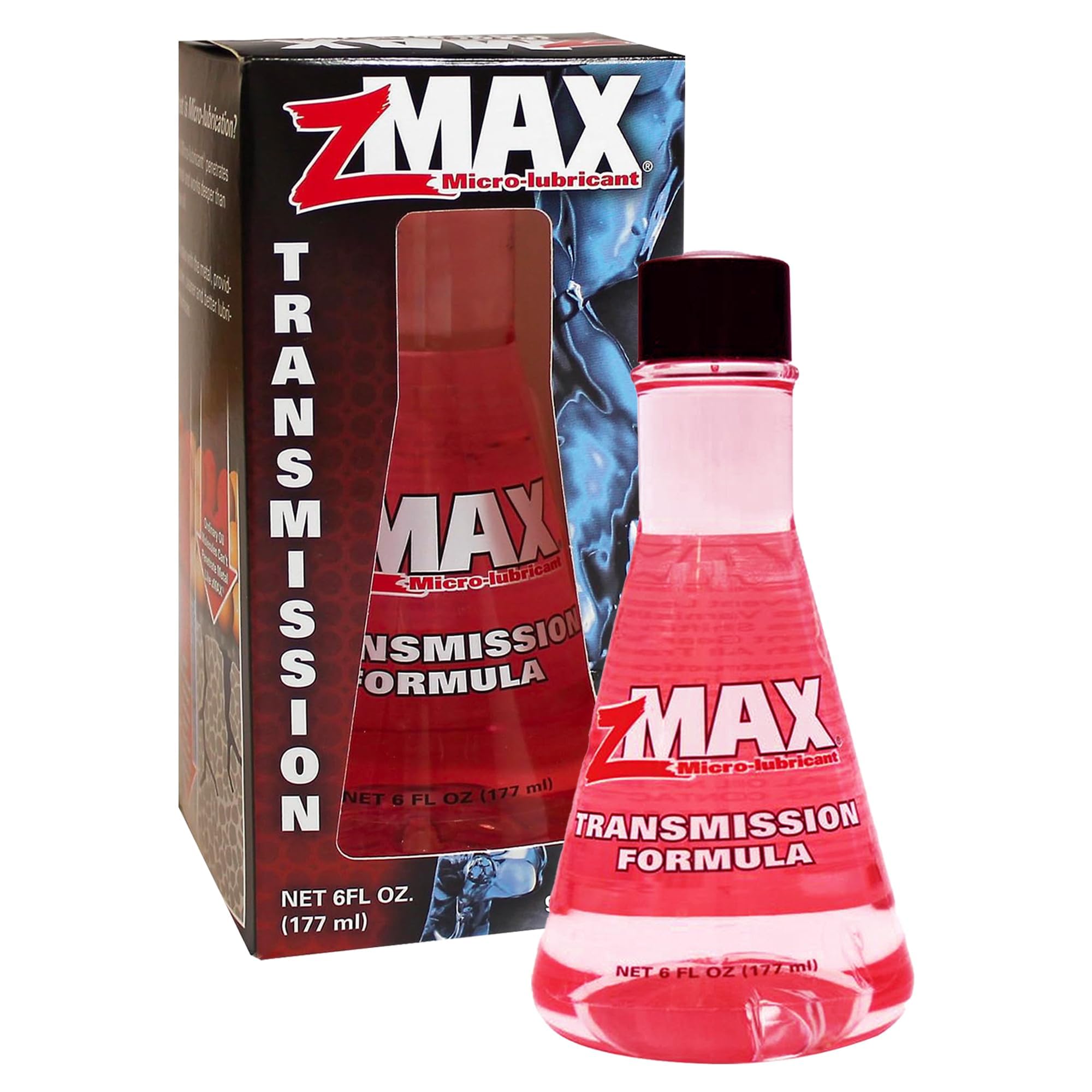
The zMAX Transmission Formula uses a PTFE-based micro-lubrication approach that soaks into metal surfaces at a molecular level. This reduces the friction coefficient inside the valve body and helps solenoids that have become sluggish from varnish or light carbon buildup. The 6-ounce bottle is sized for a single treatment during a fluid change.
Owner reports highlight smoother shifting and a noticeable reduction in gear hunting after adding zMAX to aged fluid. The formula is designed to clean varnish from critical passages while keeping seals supple to prevent fluid loss. It is compatible with both automatic and manual transmissions, though the manufacturer advises against use in CVT units.
zMAX has been on the market for over 80 years and holds a reputation as a trusted preventative maintenance product. Adding it at every fluid change interval helps delay the accumulation of deposits that lead to solenoid sticking in higher-mileage transmissions.
What works
- Micro-lubrication penetrates metal pores for lasting protection
- Cleans varnish from solenoid passages and valve bores
- Keeps seals supple without over-swelling them
What doesn’t
- Not suitable for CVT transmissions
- Works best as a preventative rather than a rescue treatment
3. Lubegard 19610 Instant Shudder Fixx

The Lubegard Instant Shudder Fixx is a concentrated friction modifier engineered specifically to eliminate torque converter lock-up shudder. While its primary target is the converter clutch, the same chemistry reduces the stick-slip behavior that affects solenoid movement inside the valve body. The tiny 2-ounce tube treats a standard transmission sump.
Transmission professionals voted this product as a top solution for shudder complaints. The additive delivers four times less wear than standard ATF alone, which is critical for vehicles where solenoid sticking has already accelerated internal component wear. Owners report that the shudder disappears within a few miles of driving.
This product is not designed as a cleaner, but rather as a precision friction adjuster. For cases where a solenoid is sticking due to friction mismatch rather than hard deposits, the Instant Shudder Fixx offers a rapid, targeted cure without altering the fluid’s base viscosity.
What works
- Eliminates torque converter shudder almost immediately
- Reduces stick-slip friction that affects solenoid movement
- Small bottle allows precise dosing per transmission
What doesn’t
- Not intended for CVT, DCT, or pre-1986 Ford Type F
- Does not clean varnish or carbon deposits
4. Rislone High Mileage Transmission Stop Slip with Leak Repair

Rislone’s High Mileage Stop Slip combines viscosity improvers, anti-wear friction modifiers, and seal conditioners into a single 32-ounce bottle designed for vehicles past the 75,000-mile mark. The formula thickens the fluid slightly to compensate for worn clearances, which can help a sticking solenoid regain enough hydraulic pressure to operate correctly.
Owner reviews emphasize that the additive reduces hard shifting and eliminates the whining noise that sometimes accompanies low fluid pressure from sticky solenoids. The leak repair component helps rejuvenate dried O-rings around the solenoid bore, addressing one of the common root causes of intermittent sticking.
Rislone states compatibility with front-wheel, rear-wheel, all-wheel, and four-wheel drive automatic transmissions. The product is not intended for CVT applications. For a high-mileage vehicle that needs both solenoid assistance and seal conditioning in one pour, this large bottle delivers solid coverage at a practical price point.
What works
- Improves shift smoothness in high-mileage transmissions
- Seal conditioners reduce fluid loss around solenoid O-rings
- Large 32-ounce bottle treats full system capacity
What doesn’t
- Not compatible with CVT transmissions
- Viscosity increase may feel slightly thick in cold weather
5. EQUALIZER 91-00-4250 High Performance Lubricant

The EQUALIZER High Performance Lubricant is built around a calcium sulfonate base that provides extreme-pressure protection and corrosion resistance. While its primary design target is trailer hitch sockets, the same chemistry can be applied to external shift linkage, pivot points, and cable ends that feed into the transmission control system. For solenoid issues caused by binding external hardware, this lubricant clears the mechanical path.
Users familiar with the Equal-i-zer brand appreciate the tacky consistency that stays in place under vibration and moisture exposure. The 4-ounce tube delivers enough product for multiple applications on shift cables, bell crank levers, and kickdown linkage where rust or dirt creates resistance that mimics a failed solenoid.
This product is not a transmission additive in the traditional sense, but sticky solenoids are sometimes misdiagnosed when the real problem is a seized external cable or pivot. Keeping those mechanical connections lubricated with a high-pressure grease helps confirm that the solenoid itself — not the linkage — needs chemical treatment.
What works
- Calcium sulfonate resists water washout and corrosion
- Ideal for external shift linkage and cable pivot points
- Small tube provides multiple application doses
What doesn’t
- Not designed for internal transmission or ATF use
- Targets external mechanical binding, not internal solenoid stiction
Hardware & Specs Guide
Friction Modifiers
These additives reduce the coefficient of friction between the solenoid spool and its bore wall. Organic esters and molybdenum compounds are the most common active ingredients. They work best when the solenoid moves but hesitates, as they lower the breakaway force required to initiate movement. Overuse can cause clutch plates to slip, so follow the labeled dose precisely.
Detergents and Dispersants
Detergent-based formulas rely on solvents to dissolve the varnish and lacquer that form when ATF oxidizes at high temperatures. These deposits build up on solenoid pintles and restrict their travel. Dispersants suspend the dissolved particles in the fluid so they are captured by the filter rather than redeposited. Hard carbon may require multiple treatments.
Seal Conditioners
Seal conditioners contain esters that penetrate and soften dried rubber seals and O-rings. As seals harden around the solenoid bore, they create additional friction that compounds the sticking problem. Conditioners restore suppleness and can stop minor leaks around the solenoid harness connector without requiring pan removal.
Viscosity Index Improvers
Some stop-slip additives use viscosity index improvers to thicken the fluid and reduce leakage past worn solenoid valves. This restores hydraulic pressure but can make cold-weather shifting feel sluggish. Look for products that use shear-stable polymers to maintain viscosity over the full temperature range without breaking down.
FAQ
Can an additive really free a stuck solenoid without pulling the valve body?
How long does it take for a transmission additive to work on a sticking solenoid?
Will a transmission additive fix a solenoid that has already failed electrically?
Can I use a transmission additive in a CVT or dual-clutch transmission?
How often should I add a solenoid-friendly supplement to my transmission fluid?
Final Thoughts: The Verdict
For most buyers, the best transmission additive for sticking solenoids winner is the Lubegard 61910 because its friction-modified formula directly targets the stiction that stops solenoids from moving freely. If you want deep varnish cleaning and micro-lubrication, grab the zMAX Transmission Formula. And for a precise, rapid fix for torque converter shudder that also helps sticky solenoids, nothing beats the Lubegard Instant Shudder Fixx.

Certification: BSc in Mechanical Engineering
Education: Mechanical engineer
Lives In: 539 W Commerce St, Dallas, TX 75208, USA
Md Amir is an auto mechanic student and writer with over half a decade of experience in the automotive field. He has worked with top automotive brands such as Lexus, Quantum, and also owns two automotive blogs autocarneed.com and taxiwiz.com.