A failing fuel pump turns a reliable daily driver into a roadside hazard. The difference between a clean start and a frustrating crank-no-fire scenario often comes down to the quality of the pump sitting outside the tank. Spending on a poorly built unit means risking engine performance and wasting time on premature replacements.
I’m Amir — the founder and writer behind Four Wheel Ask. My work focuses on dissecting build quality, analyzing flow rate claims against real-world data, and aggregating owner feedback across hundreds of aftermarket part reviews.
This guide sorts through seven distinct inline pumps to identify which setups deliver consistent pressure without bleeding your wallet. Finding a trustworthy delivery system for your high-compression build means choosing a reliable best external fuel pump that matches your specific power goals.
How To Choose The Best External Fuel Pump
Selecting the right external pump goes beyond simply matching the old part number. You need to verify the flow curve at your target pressure, confirm the electrical draw, and check compatibility with the fuel type you intend to run. Ignoring these details often leads to lean conditions or a pump that dies prematurely.
Flow Rate versus Pressure
A pump rated for 255 LPH at 43 PSI will flow significantly less at 75 PSI. Always look at the flow rate at your system’s operating pressure, not the advertised maximum. For naturally aspirated engines up to 600 horsepower, a pump in the 255-300 LPH range at 43 PSI is usually sufficient. For forced induction, you will need a higher flow ceiling.
Fuel Compatibility and Material
Not all pumps handle ethanol or high-alcohol blends well. Internal components must resist corrosion from E85. Pumps with brass or stainless steel internals and compatible rubber seals last longer when running aggressive fuels. If you plan to switch between gasoline and race gas, confirm the pump is rated for both.
Quick Comparison
On smaller screens, swipe sideways to see the full table.
| Model | Category | Best For | Key Spec | Amazon |
|---|---|---|---|---|
| JDMSPEED Universal | Budget Universal | Entry-level EFI builds | 135 lph @ 3 bar | Amazon |
| Yinlowa GSL392 Kit | LS Swap Kit | LS engine conversions | 255 lph + 58 PSI reg | Amazon |
| Wrustvnabc 340Lph | High Flow Universal | High-horsepower gasoline builds | 340 lph @ 40 PSI | Amazon |
| OSIAS 380LH | Performance EFI | E85 and high-flow systems | 380 lph @ 43 PSI 13.5V | Amazon |
| TREXFLOW P4070 | Rotary Vane | Low-pressure carbureted setups | 72 GPH, 4-6 PSI | Amazon |
| EVIL ENERGY 300LPH | Premium Universal | Turbo or supercharged builds | 300 lph @ 43 PSI 13.5V | Amazon |
| Quick Fuel 30-125-1 | Heavy Duty | Carbureted race engines | 125 GPH, 14 PSI max | Amazon |
In‑Depth Reviews
1. Yinlowa GSL392 Inline Fuel Pump Kit
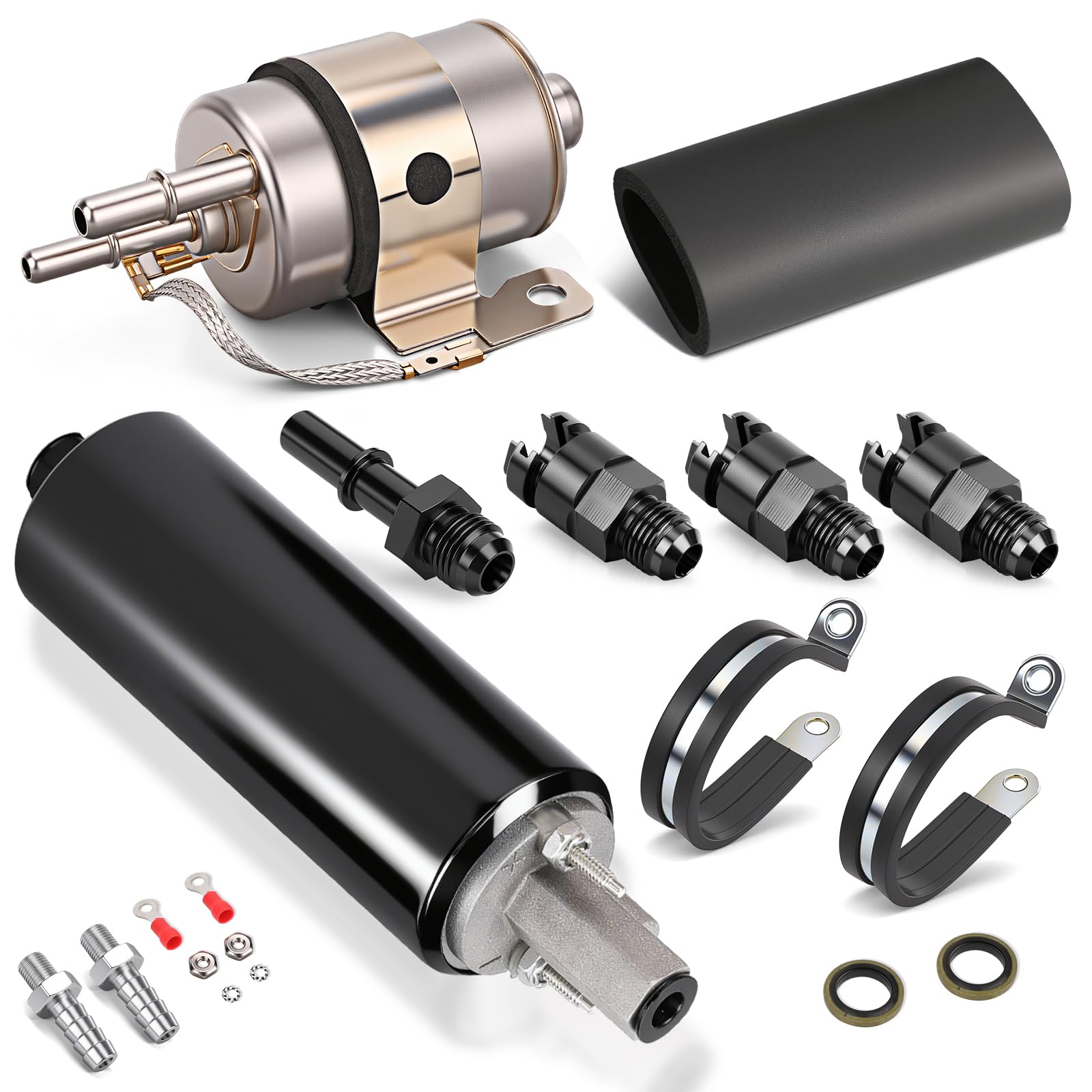
The Yinlowa GSL392 kit bundles a high-pressure inline pump with a 58 PSI fuel filter regulator, simplifying the plumbing for EFI conversions. The pump itself delivers 255 LPH at 80 PSI, making it a solid match for LS swaps and other modern V8 applications. The inclusion of AN-6 adapter fittings reduces the guesswork when connecting to a returnless fuel rail.
Data from owner reports indicates consistent pressure maintenance under heavy load, which is critical for preventing lean spikes during wide-open throttle. The filter/regulator unit replaces several common part numbers, including WIX 33737 and AC Delco variants, meaning replacement service parts are widely available. The metal construction and rubber insulator on the mounting bracket help dampen noise transfer to the chassis.
This kit is designed specifically for returnless systems, so carbureted builds will need a different setup. The included instructions cover the basics, but first-time swappers should verify fuel line sizing before installation. The 12-month warranty and lifetime technical support add peace of mind for a project that demands precision.
What works
- Integrated regulator saves space and simplifies routing
- Strong 255 LPH flow supports 600+ HP builds
- Broad OEM cross-reference for easy parts replacement
What doesn’t
- Not suited for carbureted or low-pressure applications
- Vehicle-specific fit may require bracket modification
2. EVIL ENERGY External Inline Fuel Pump
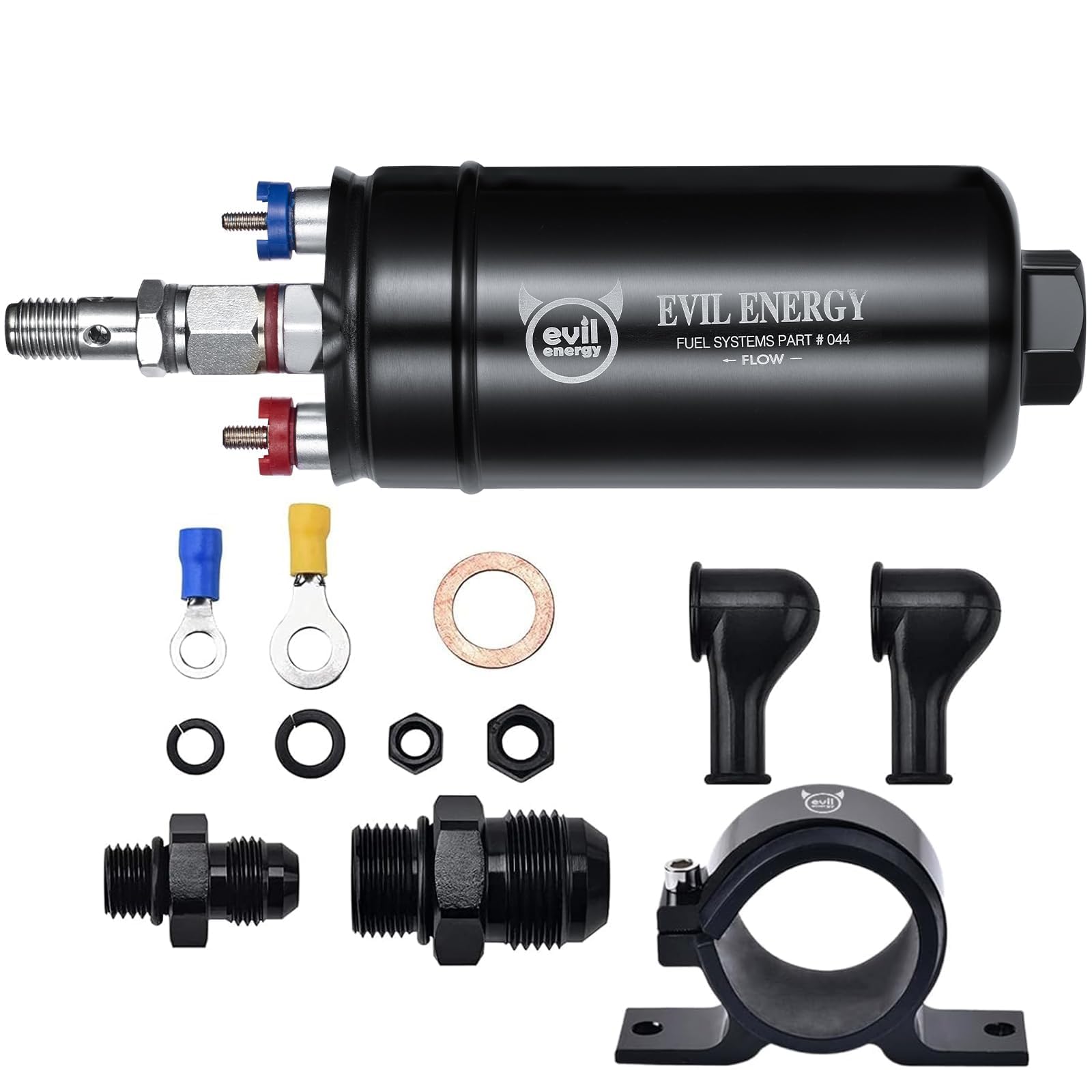
The EVIL ENERGY pump targets the performance EFI crowd with a 300 LPH flow rating at 43 PSI and 13.5 volts. The package includes a 10AN inlet adapter and a 6AN outlet adapter, which lets builders use proper -10 feed lines without extra purchases. The pump body is constructed from metal and feels dense compared to entry-level units.
Owner feedback highlights the consistent flow at higher voltages, making it a strong candidate for boosted applications where fuel demand spikes. The included mounting bracket and rubber connection covers help with a clean installation. The pump is compatible with gasoline and diesel, though E85 users should monitor internal seal longevity over time.
Installation requires mounting the pump below the tank to ensure gravity feed, which is standard practice for any external unit. The user manual is detailed enough for a competent DIYer. The main trade-off is the lack of a built-in regulator, so you will need to supply your own bypass or dead-head system depending on your setup.
What works
- High 300 LPH ceiling at 13.5V for forced induction
- Includes AN adapters for proper feed line sizing
- Solid build quality with vibration dampening parts
What doesn’t
- No integrated pressure regulator required
- Long-term E85 reliability not fully documented
3. OSIAS External Inline Fuel Pump 380LH
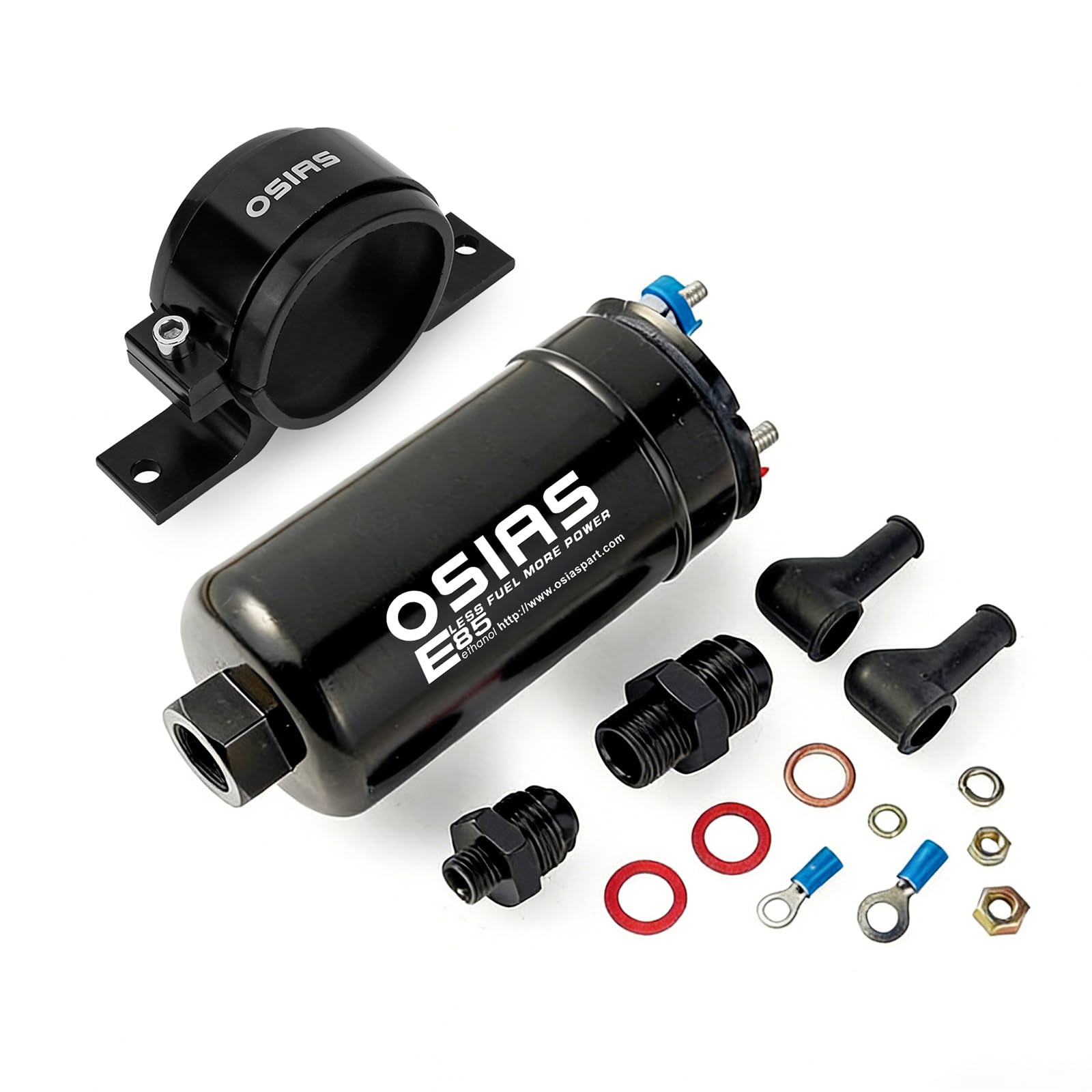
The OSIAS pump advertises a 380 LPH flow rate at 43 PSI when supplied with 13.5 volts, positioning it as one of the highest-flow universal options in this comparison. It uses an AN10 inlet and AN6 outlet, which reduces inlet restriction compared to pumps with smaller ports. This design helps maintain flow volume at higher pressures.
Cross-referencing the part numbers shows this pump is designed around the Bosch 044 platform, a known standard for high-performance fuel systems. The compatibility with E85, race gas, and diesel makes it flexible for builders who switch fuels between seasons. Owner reports indicate the pump runs relatively quiet for its output class when mounted on the included bracket with rubber isolators.
The trade-off for the high flow ceiling is higher current draw, so verifying your wiring gauge and relay capacity is essential. The pump is recommended for installation below the fuel tank level, and the instructions cover that point clearly. For builds targeting over 800 horsepower or extreme boost levels, this unit provides the headroom needed without stepping to a dual-pump setup.
What works
- Top-tier 380 LPH flow supports very high horsepower goals
- AN10 inlet reduces suction restriction
- Broad fuel compatibility across race blends
What doesn’t
- High current draw demands upgraded wiring
- Premium flow rating is voltage-dependent
4. Wrustvnabc 340Lph External Inline Fuel Pump

The Wrustvnabc pump delivers a claimed 340 LPH at 40 PSI and 12 volts, putting it in a strong mid-range flow category. The aluminum body offers a good strength-to-weight ratio, and the design is compact at roughly 7.9 inches long. This unit is strictly for 12V DC EFI systems, so it is not intended for carbureted or mechanical pump replacements.
Fuel compatibility covers gasoline, diesel, E85, and alcohol blends, which gives builders flexibility during tuning changes. The operating temperature range of -68°F to 194°F is generous enough for both cold-start scenarios and hot engine bay conditions. Owner data suggests the pump holds pressure well within its rated spec, though some users note that the inlet and outlet hose barbs are metric-sized, requiring careful hose selection.
The six-month warranty is shorter than some competitors, but the price point positions this as a viable option for a budget-conscious build that still needs substantial flow. Installation instructions are included, and the recommended mounting position below the tank is standard. The pump does not come with a regulator, so plan your fuel system layout accordingly.
What works
- Strong 340 LPH flow for the price tier
- Compact aluminum construction resists corrosion
- Works with a wide range of fuels including E85
What doesn’t
- Metric hose barb sizes may complicate hose sourcing
- Short six-month warranty period
5. TREXFLOW TF P4070 Rotary Vane Pump

The TREXFLOW P4070 takes a different approach with a rotary vane mechanism instead of a conventional gear or impeller design. It operates at a low 4-6 PSI with a free flow of 72 GPH, making it purpose-built for carbureted engines that need steady low-pressure delivery. The pump comes pre-assembled on a metal bracket, which eliminates the scattered-parts frustration common with budget kits.
Build quality is backed by ISO 9001 and IATF 16949 certifications, indicating a consistent manufacturing process. Owners report that the pump runs quieter than a typical mechanical diaphragm pump, with a constant flow rather than an interval pulse. The wiring attachment point has been reinforced with worm clamps and a metal clip to prevent terminal pull-off, a practical improvement over earlier revisions.
Inlet and outlet are 1/4-inch NPS, which matches standard carburetor fuel line fittings without adapters. This pump is not suitable for EFI systems that require high pressure. For street rods, classic muscle cars, and off-road buggies running a carburetor, this is a direct and reliable solution that prioritizes simplicity.
What works
- Pre-assembled bracket saves installation time
- Rotary vane design runs quietly and smoothly
- ISO certified manufacturing for consistent quality
What doesn’t
- Low pressure limits use to carbureted engines
- 1/4-inch NPS ports may need reducing bushings for some setups
6. Quick Fuel 30-125-1 125 GPH Electric Pump
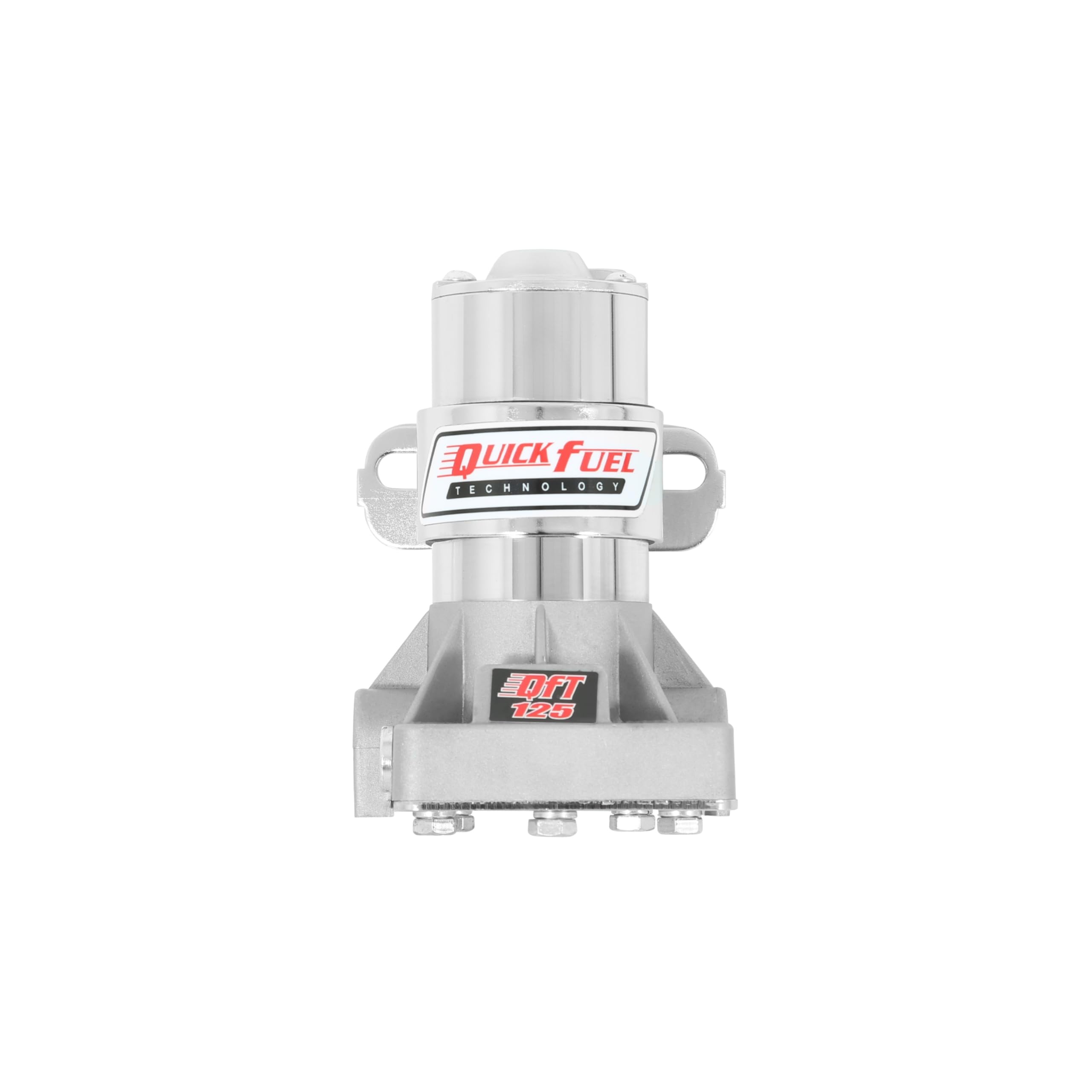
The Quick Fuel 30-125-1 is built with a lightweight steel and aluminum body, prioritizing durability for demanding race environments. It flows 125 GPH with a maximum pressure of 14 PSI, which places it in the high-volume, medium-pressure category ideal for carbureted race engines running pump gasoline. The 3/8-inch NPT inlets and outlets match standard fuel line fittings used in most race cars.
An externally accessible pressure relief valve is a key feature, allowing quick pressure adjustments without disassembling the pump or fuel lines. This is useful when tuning between different track conditions or fuel types. Owner feedback from circle track and drag strip applications indicates the pump withstands vibration well and maintains flow consistency over a full race session.
This pump is gasoline-only, so it will not tolerate ethanol blends or diesel. The price reflects a premium over basic universal pumps, but the build standard and pressure relief valve justify the investment for dedicated race cars. For street-driven vehicles, the lack of E85 compatibility is a limiting factor.
What works
- External pressure relief valve enables quick adjustments
- Durable steel and aluminum frame resists track abuse
- Standard NPT fittings simplify plumbing
What doesn’t
- Gasoline-only compatibility excludes E85 and diesel
- Premium pricing tier for a race-only pump
7. JDMSPEED Universal External In Line Fuel Pump

The JDMSPEED pump is a universal fit unit aimed at low-to-moderate power EFI builds. It uses high-density brass and steel alloy construction, promising corrosion resistance and wear longevity. The flow rate is 135 LPH at 3 bar (roughly 45 PSI), which is adequate for naturally aspirated engines up to around 400 horsepower.
The kit includes a mounting clamp, connection covers, terminals, and gaskets, though no installation instructions are included. As a universal part, you will need to adapt the 1/2-inch push-on inlet and 1/4-inch push-on outlet to your existing fuel lines. Owner discussions online suggest the adjustable pressure range from 0 to 100 psi works best when paired with an external regulator to dial in the exact pressure.
For budget-restricted builds or temporary track day setups, this pump offers a functional stopgap. The lack of instructions and the need for custom adapters push this unit down the list for anyone who values a straightforward install. It works, but it demands more from the installer than the mid-range options above.
What works
- Budget-friendly entry point for EFI fuel delivery
- Brass and steel construction resists internal wear
- Adjustable pressure range with external regulator
What doesn’t
- No installation instructions included
- Push-on fittings limit line size options
Hardware & Specs Guide
Flow Rate (LPH vs GPH)
Flow rate is the volume of fuel the pump can move per hour. Liters per hour (LPH) is the metric commonly used for high-pressure EFI pumps, while gallons per hour (GPH) is typical for low-pressure carburetor pumps. Always cross-reference the flow rating at your target operating pressure—the advertised peak flow is often measured at low pressure and low voltage.
Operating Pressure
EFI systems require 40-60 PSI, while carbureted engines need only 4-9 PSI. A pump designed for high pressure will dead-head or over-power a mechanical regulator if set too low. Conversely, a low-pressure pump cannot supply enough head pressure for a fuel injection system. Match the pump’s pressure range to your fuel delivery architecture exactly.
Body Material and Corrosion Resistance
Aluminum and brass bodies resist corrosion better than plain steel, especially when running ethanol-based fuels. Pumps with internal steel components should be verified for ethanol compatibility. The housing material also affects heat dissipation—aluminum sheds heat faster than steel, which helps with fuel cooling in hot engine bays.
Inlet and Outlet Sizing
Larger inlet fittings reduce suction restriction, which helps prevent cavitation at high flow rates. AN-10 or 1/2-inch inlets are preferred for pumps rated over 300 LPH. Outlet size matters less for pressure, but a consistent diameter from the pump to the fuel rail prevents unwanted pressure drops.
FAQ
Can I use an external fuel pump with a diesel engine?
Why should I mount the pump below the fuel tank?
Do I need a return line with an external fuel pump?
How do I know if my wiring can handle a high-flow pump?
Final Thoughts: The Verdict
For most buyers, the best external fuel pump winner is the Yinlowa GSL392 Kit because it combines a strong 255 LPH pump with a dedicated 58 PSI regulator, simplifying LS swaps and EFI conversions. If you want the highest flow ceiling for E85 or boosted builds, grab the OSIAS 380LH. And for a low-pressure carbureted application, nothing beats the pre-assembled simplicity of the TREXFLOW P4070.

Certification: BSc in Mechanical Engineering
Education: Mechanical engineer
Lives In: 539 W Commerce St, Dallas, TX 75208, USA
Md Amir is an auto mechanic student and writer with over half a decade of experience in the automotive field. He has worked with top automotive brands such as Lexus, Quantum, and also owns two automotive blogs autocarneed.com and taxiwiz.com.