A leaking exhaust joint or mismatched header-to-exhaust connection wastes flow and leaves you chasing noises. Choosing the correct collector reducer or v-band setup avoids those headaches and keeps your build moving forward.
I’m Amir — the founder and writer behind Four Wheel Ask. My research focuses on comparing material grades, flange designs, and real-world owner feedback across dozens of exhaust components to identify which parts actually deliver reliable sealing and consistent fitment.
Whether you’re stepping down from a 3‑inch header to a 2.5‑inch exhaust or staying at 3 inches all the way through, the right collector simplifies installation and prevents future leaks. After reviewing dozens of part numbers and owner reports, I’ve identified the leading choices in the best 3-inch header collector category for your build.
How To Choose The Best 3-Inch Header Collector
The right 3‑inch header collector does more than just connect pipes — it determines how easily your exhaust system comes apart for maintenance and how well it seals under heat cycles. Focus on three factors before buying.
Material and Construction Quality
Stainless steel (T304) offers the best corrosion resistance and weldability for long-term builds. Aluminized steel resists rust at a lower cost but may not last as long in salt-belt climates. Alloy steel is heavy but affordable, often found in budget-friendly pairs. Look for thick flanges — thin flanges warp under heat and cause gasket blowout.
Flange Type and Gasket Compatibility
Three-bolt flanges are standard for most header collectors and work well with copper or aluminum gaskets for a reusable seal. V‑band clamps provide faster removal and more even clamping pressure, ideal for turbo systems or frequent-access joints. Make sure the flange pattern matches your header — some brands use slightly different bolt spacing.
Reducer vs. Full-Diameter Collector
A reducer collector steps down from 3 inches to 2.5 inches, commonly used when mating long-tube headers to a factory or aftermarket exhaust. A full 3‑inch collector maintains diameter throughout, maximizing flow for high-horsepower builds. Measure your header outlet and exhaust pipe OD before ordering — mismatch here is the most common installation mistake.
Quick Comparison
On smaller screens, swipe sideways to see the full table.
| Model | Category | Best For | Key Spec | Amazon |
|---|---|---|---|---|
| Mishimoto MMCLAMP-VA-3 | V‑Band Clamp | Boosted applications & intercooler piping | 3″ aluminum with O‑ring | Amazon |
| Hedman Hedders 21103 | Collector Reducer | Street performance & muscle cars | 3″ inlet to 2.5″ OD, pair, steel | Amazon |
| Patriot Exhaust H7244 | Collector Reducer | Budget builds & daily drivers | 3″ pair, alloy steel | Amazon |
| ROADFORMER RFVBS | V‑Band Kit | Turbo systems & custom fabrication | 3″ OD, 4‑pack, stainless steel | Amazon |
| Wesdon WHCK300250 | Collector Kit | Header‑to‑exhaust conversion | 3″ to 2.5″, 7″ long, includes gaskets | Amazon |
| Wesdon WXPHC300 | Header Collectors | Full 3″ exhaust systems | 3″ to 3″, 12″ long, aluminized steel | Amazon |
| DeepFlow VB-RD | V‑Band Adapter | Reducing 3″ to 2.5″ with v‑band | 3″ to 2.5″ T304 stainless with v‑band | Amazon |
In‑Depth Reviews
1. Mishimoto MMCLAMP-VA-3

The Mishimoto MMCLAMP-VA-3 is a purpose-built v‑band clamp designed for 3‑inch intercooler and intake piping, though its robust construction makes it a strong candidate for exhaust collector duty. The aluminum body keeps weight low while the included O‑ring provides a positive seal under high boost — owner reports confirm reliable performance past 40 psi without leakage. The reusable fabrication nut and self-locking nut simplify install and allow repeated disassembly without thread wear.
What sets this clamp apart from cheaper alternatives is the precision-machined mating surfaces and the included O‑ring groove, which eliminates the need for separate gaskets. The clamp applies even pressure around the entire circumference, reducing the chance of a blowout on high‑heat applications. Several users noted that the fitment is tight on true 3‑inch OD pipe, so measure your tubing before ordering.
The lifetime warranty backs the build quality, and Mishimoto’s customer service is well-regarded in the industry. For a boosted street car or a custom intercooler pipe that also serves as an exhaust joint, this is the most refined option available at this level. It is not the cheapest, but the combination of sealing integrity and warranty support makes it a smart long-term investment.
What works
- O‑ring seal holds over 40 psi without leaks
- Lightweight aluminum with quality machining
- Lifetime warranty adds peace of mind
What doesn’t
- Tight fit on some 3‑inch OD pipes
- Aluminum may gall if over-torqued
- Higher upfront cost than steel clamps
2. Hedman Hedders 21103

The Hedman Hedders 21103 reducer has been a staple in the hot-rod and muscle-car community for years, and for good reason. This pair of steel reducers steps down from a 3‑inch 3‑bolt header flange to a 2.5‑inch OD outlet, making it a direct fit for countless small‑block and big‑block swaps. Owner feedback consistently praises the flange thickness — noticeably heavier than generic parts — which helps collector gaskets live longer without crushing.
Several reviewers installed these on Hooker headers without any modification, noting that the bolt pattern aligned perfectly. The included gaskets are adequate for initial fire-up, though several experienced builders recommend upgrading to copper or aluminum gaskets and grade 8 bolts for a permanent seal. The steel construction welds cleanly and accepts paint well, so integration into an existing exhaust system is straightforward.
The main critique from the community is that the supplied bolts are slightly short for use with lock washers — a minor nuisance that is easily solved by reusing your old hardware or buying longer fasteners. For a street-driven car that sees occasional track time, this reducer delivers reliable sealing without the premium price of a v‑band setup. It is a proven, no‑surprises part that has earned its reputation.
What works
- Thick flanges resist warping and extend gasket life
- Bolt pattern matches most major header brands
- Welds and paints easily for custom installations
What doesn’t
- Supplied bolts are too short for lock washers
- Included gaskets are thin; upgrade recommended
- Steel finish will rust without coating
3. Patriot Exhaust H7244

The Patriot Exhaust H7244 offers a straightforward 3‑inch collector reducer pair that prioritizes function over frills. Made from alloy steel and manufactured in the United States, these reducers bolt directly to standard 3‑bolt header flanges and step down to 2.5‑inch exhaust pipe. The alloy steel construction provides decent strength at a weight that won’t strain your header tubes, and the flange thickness is above average for this price tier.
User reports from builds ranging from a 1972 Cutlass to modern muscle trucks highlight the consistent fitment and the noticeable improvement in collector gasket life compared to thinner budget reducers. The bolt‑on installation requires no modification on most applications, and the pair format means you get a matched set for both sides of the engine. Several owners noted that the reducers sealed immediately with standard gaskets and showed no signs of leakage after several hundred miles.
The trade-off is that alloy steel is more prone to surface rust than stainless, so a coat of high‑temp paint is recommended before installation. The bolts and gaskets are functional but basic — like the Hedman set, upgrading to better fasteners yields more reliable long-term sealing. For a daily driver or weekend cruiser that needs a solid connection without overspending, the Patriot H7244 delivers proven value.
What works
- Excellent fitment on a wide range of vehicles
- Thicker-than-expected flanges for the price
- Made in USA with consistent quality control
What doesn’t
- Alloy steel will rust without paint or coating
- Basic hardware; consider upgrading bolts
- No gaskets included in some batches
4. ROADFORMER RFVBS
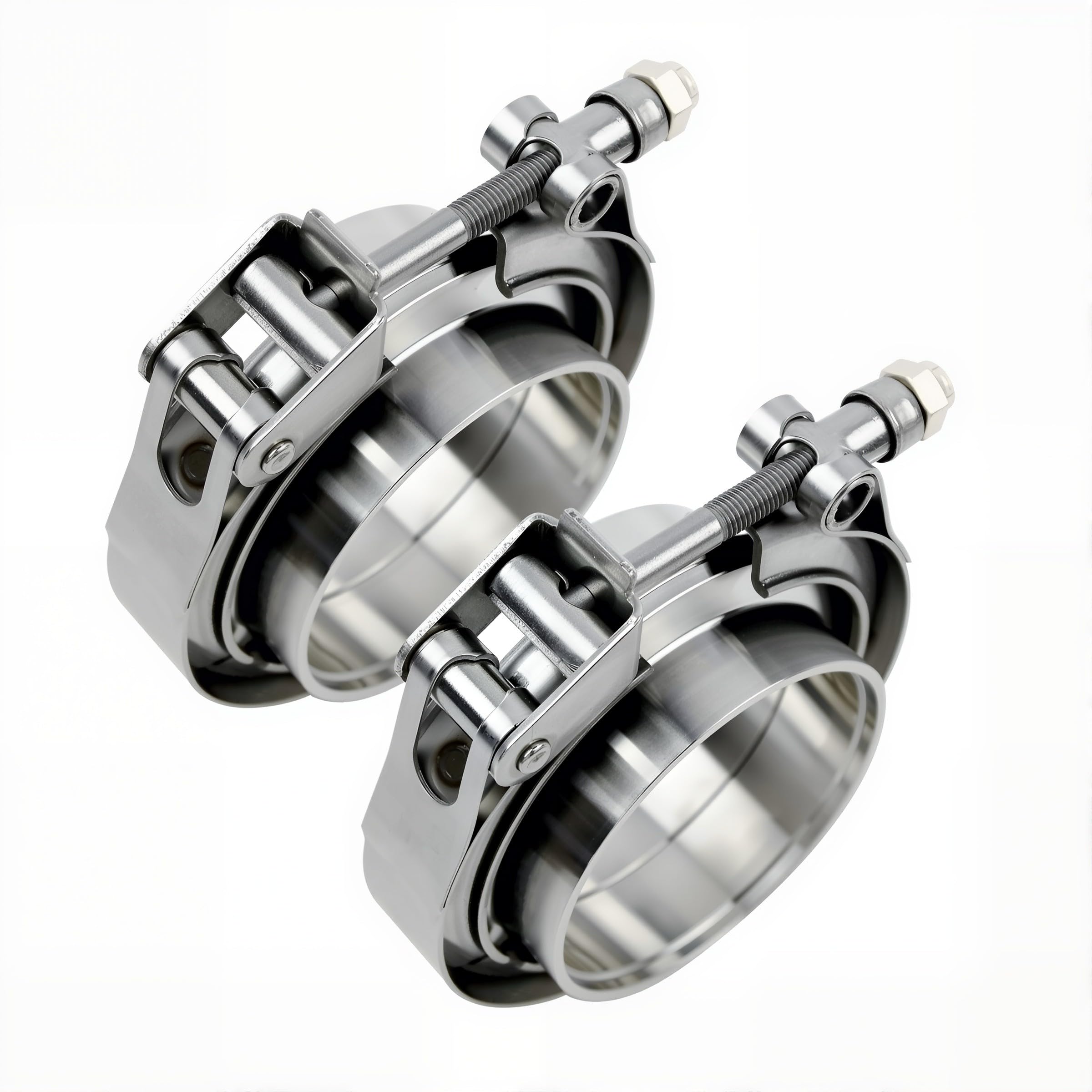
The ROADFORMER RFVBS kit provides four complete v‑band assemblies — each with a male flange, female flange, and clamp — designed for 3‑inch OD pipe. This is a bulk solution for builders tackling multiple joints in a single project, such as a turbocharged system with a downpipe, wastegate, and intercooler connections. The stainless steel construction offers corrosion resistance and the machined sealing lips create a positive stop that reduces installation error.
Owner feedback from custom compound turbo setups and exhaust upgrades highlights the consistent weldability of the flanges and the reliability of the clamp nut — a common failure point on cheaper v‑bands. The self-locking nut and silver-plated T‑bolt resist corrosion and maintain tension through heat cycles. Several users compared these favorably to well-known brands at nearly twice the cost, noting that the sealing performance was identical in real-world use.
The only drawback is the set includes four complete assemblies, which may be more than needed for a simple header-to-exhaust connection. The individual flanges are not sold separately, so you will have extras unless you plan multiple joints. For a comprehensive turbo or fabrication project, this kit provides everything needed at a per‑joint cost that undercuts most competitors.
What works
- Machined sealing lips improve alignment and seal
- Stainless steel resists corrosion and heat
- Excellent value per joint compared to single kits
What doesn’t
- Four assemblies may be excessive for simple builds
- No individual flange replacements available
- Clamp finish may show wear over time
5. Wesdon WHCK300250
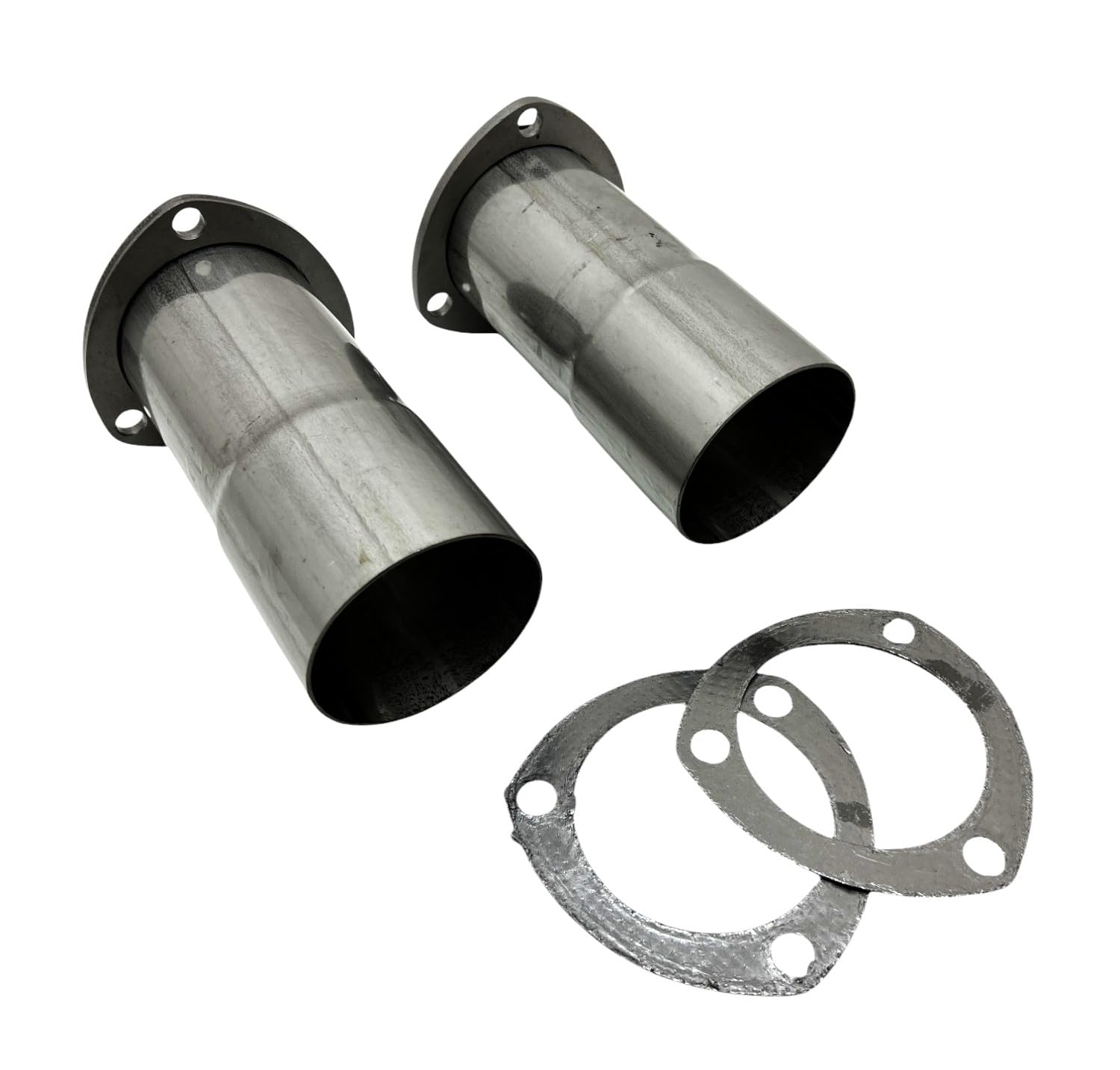
The Wesdon WHCK300250 is a complete collector kit that includes two flanges, two gaskets, and two collector tubes — everything needed to connect a 3‑inch 3‑bolt header to a 2.5‑inch exhaust system. The 7‑inch tube length provides ample room for a clean transition and allows for trimming if your layout requires a shorter section. The steel construction is rugged and weldable, with a milled exterior that accepts paint or ceramic coating without issue.
Users have installed these on Hooker long-tube headers, 1966 Pontiac LeMans builds, and various small‑block swaps, consistently reporting an exact fit and no leakage after installation. The gaskets are on the thin side, as several owners noted, but they sealed adequately for initial use. The collectors can be cut easily with an angle grinder for custom lengths, and the steel welds cleanly with a MIG or TIG setup.
The kit format simplifies ordering — you get matched components rather than piecing together flanges and tubes separately. The value is strong considering the pair includes two complete assemblies with gaskets. For a straightforward header installation that needs a reliable step-down collector, this kit removes guesswork and delivers a clean, professional result.
What works
- Complete kit with flanges, tubes, and gaskets
- 7‑inch length allows trimming for custom fit
- Rugged steel welds and paints easily
What doesn’t
- Gaskets are thin; upgrade recommended for longevity
- Steel will rust without protective coating
- Bolts not included in the kit
6. Wesdon WXPHC300

The Wesdon WXPHC300 is a pair of full‑diameter header collectors that maintain 3 inches from flange to outlet, designed for builds that keep 3‑inch exhaust all the way back. The 12‑inch tube length is noticeably longer than typical reducers, giving installers flexibility to route around chassis obstacles or incorporate merge collectors. The 16‑gauge aluminized steel provides better corrosion resistance than bare steel while remaining easy to weld.
Owner feedback highlights the thick metal and stout feel of these collectors, with several users noting that early production runs had oversized internal welds that interfered with gasket seating. Recent batches appear to have corrected this issue — newer reviews show flat mating surfaces and clean weld profiles that seal properly with standard gaskets. The aluminized coating withstands exhaust heat well and does not flake off during initial heat cycles.
The main consideration is the 12‑inch length, which some builders find excessive for tight engine bays. The collectors can be cut down, but that requires extra work and exposes bare steel at the cut edge. For a truck, muscle car, or any build with generous under‑carriage space, these collectors provide a full‑flow 3‑inch path that supports higher horsepower targets without restriction.
What works
- Long 12‑inch section offers routing flexibility
- 16‑gauge aluminized steel resists corrosion
- Stout construction with improved weld quality
What doesn’t
- 12‑inch length may be too long for tight bays
- Aluminized coating can flake at cut edges
- Early batches had weld quality inconsistencies
7. DeepFlow VB-RD
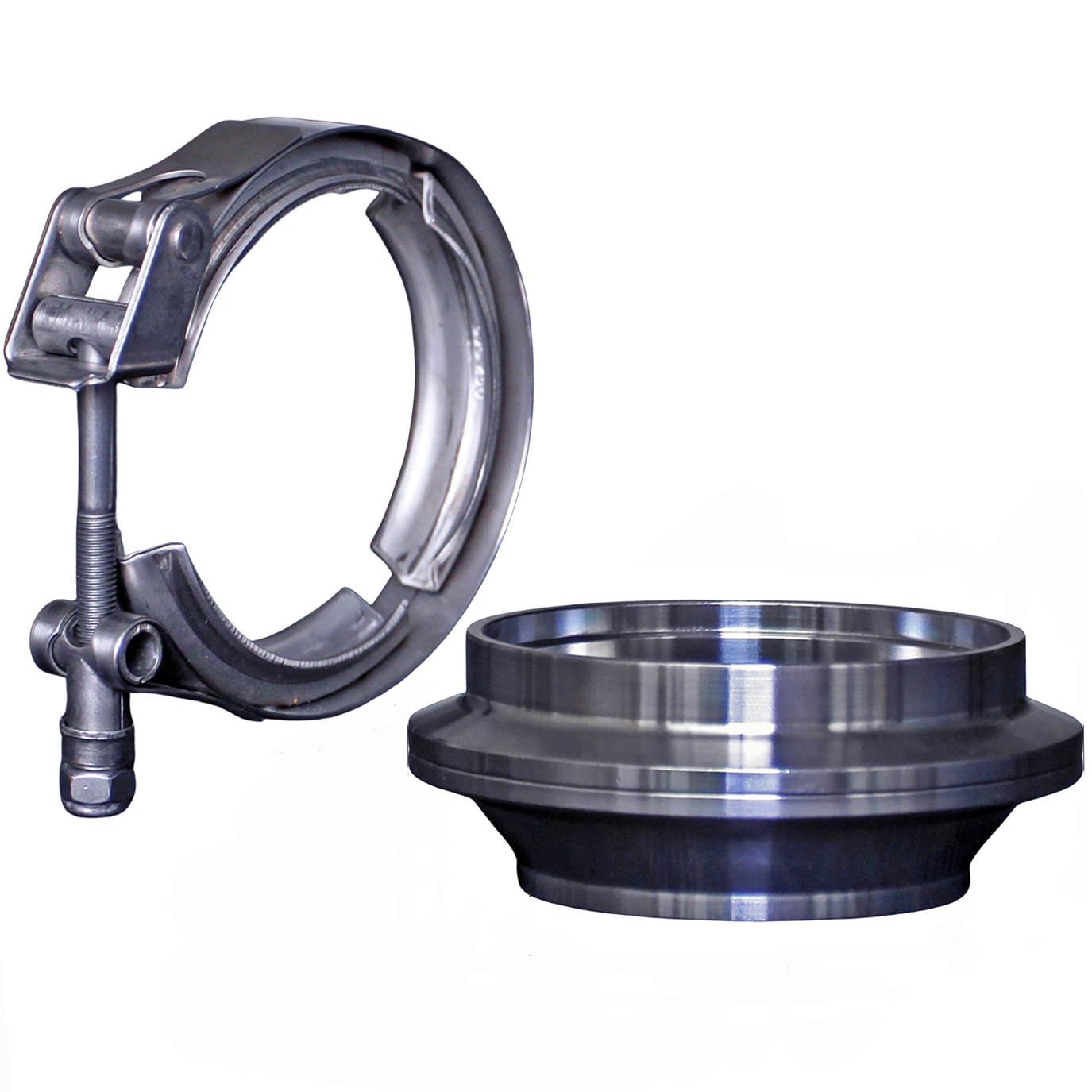
The DeepFlow VB-RD combines a v‑band clamp with a tapered reducer in a single assembly, allowing you to transition from a 3‑inch header to a 2.5‑inch exhaust while gaining the quick‑release convenience of a v‑band. The cone‑shaped transition male flange, standard 3‑inch female flange, and quick‑release clamp are all CNC‑machined from T304 stainless steel — a material choice often reserved for premium components at nearly twice the price.
Real-world installs include shorty headers on Silverado trucks and custom crossovers, with owners praising the smooth taper that maintains exhaust velocity through the reduction. The v‑band design makes future exhaust work — such as transmission swaps or converter changes — significantly faster than dealing with bolted flanges. The included high‑temperature nut and M8 fastener resist galling, a common complaint on budget v‑bands.
The single‑assembly format means you get one complete joint rather than a pair, so two orders are needed for a V8 application. The 6‑month warranty is shorter than competitors, but the T304 construction reduces the risk of premature failure. For a builder who wants the convenience of a v‑band with the flow benefits of a smooth reducer, this is the most cost‑effective way to get both in one package.
What works
- T304 stainless for maximum corrosion resistance
- Integrated reducer and v‑band in one assembly
- Smooth taper maintains exhaust velocity
What doesn’t
- Single assembly requires two orders for V8
- 6‑month warranty is shorter than some options
- V‑band nut can loosen without thread locker
Hardware & Specs Guide
Material Grades Explained
T304 stainless steel offers the highest corrosion resistance and is the preferred material for long-term exhaust components — it welds cleanly and withstands repeated heat cycles without scaling. Aluminized steel provides a good middle ground: it resists rust better than bare steel and costs less than stainless, but the coating can burn off at weld joints. Alloy steel is the most affordable option but requires paint or ceramic coating to prevent surface rust. Flange thickness matters: look for at least 3/8‑inch material to prevent warping under high exhaust temperatures.
V‑Band vs. 3‑Bolt Flanges
V‑band clamps use a single T‑bolt to pull two precision‑machined flanges together, providing even clamping force around the entire circumference. This design allows faster removal and reinstallation — ideal for turbo systems and frequent maintenance. Three‑bolt flanges are the traditional standard for header collectors and use a flat gasket between two flanges. They are more forgiving of minor misalignment and are widely available, but they require more fasteners and take longer to remove. For street cars that rarely see exhaust work, 3‑bolt is sufficient; for boosted or frequently serviced builds, v‑band is the better choice.
Reducer Geometry and Flow
A properly designed reducer uses a smooth, tapered transition from 3 inches to 2.5 inches — this maintains exhaust gas velocity and prevents turbulence that can cost power. Abrupt step‑down reducers create a flow restriction and can cause reversion pulses that hurt street manners. Look for reducers with at least a 3‑inch transition length for street applications; longer transitions (5–7 inches) are better for high‑RPM race engines. The included gasket surface should be flat and clean to ensure a leak‑free seal from the first startup.
Measuring Your Header and Exhaust
Before ordering any collector or reducer, measure both the header flange outlet diameter and the exhaust pipe outer diameter. A 3‑inch header flange typically accepts a 3‑inch OD pipe, but some brands use metric sizing or unique bolt patterns. Measure bolt center‑to‑center distance on the header flange — common spacing is 3.5 inches on a 3‑bolt pattern, but aftermarket headers may vary. If using a v‑band, confirm the male flange OD matches your pipe ID for a proper weld fit. Measuring twice and ordering once saves significant return shipping time.
FAQ
Can I weld a v‑band flange directly to my header collector?
What gasket material works best for 3‑bolt header collectors?
Do I need a reducer if my exhaust pipe is already 3 inches?
How do I prevent exhaust leaks at the collector joint?
Final Thoughts: The Verdict
For most buyers, the best 3-inch header collector winner is the Mishimoto MMCLAMP-VA-3 because it combines precision machining, a reliable O‑ring seal, and a lifetime warranty in a package that handles high boost without leakage. If you want a traditional 3‑bolt reducer with proven muscle‑car fitment, grab the Hedman Hedders 21103. And for a budget‑conscious build that still needs solid performance, nothing beats the Patriot Exhaust H7244 for value per dollar.

Certification: BSc in Mechanical Engineering
Education: Mechanical engineer
Lives In: 539 W Commerce St, Dallas, TX 75208, USA
Md Amir is an auto mechanic student and writer with over half a decade of experience in the automotive field. He has worked with top automotive brands such as Lexus, Quantum, and also owns two automotive blogs autocarneed.com and taxiwiz.com.