Finding a pair of cycling sunglasses that stay put during a long climb, resist fog when you’re breathing hard, and actually protect your eyes from road glare and debris is harder than most riders expect. Many options claim sport performance but fail on ventilation, lens clarity, or long-haul comfort. The wrong pair becomes a constant distraction instead of an asset.
I’m Amir — the founder and writer behind Four Wheel Ask. I’ve spent years analyzing product specifications, build quality reports, and owner feedback across cycling accessories to identify what truly performs on the road.
From budget-friendly kits to premium performance, these are the seven best bike riding shades evaluated for clarity and comfort.
How To Choose The Best Bike Riding Shades
Cycling sunglasses are a performance accessory, not a fashion statement. Lens technology, frame geometry, and ventilation directly affect how well a pair works during sustained effort. Here are the key factors that separate disposable shades from long-term riding companions.
Lens Technology
Polarized lenses cut reflected glare from roads and water, which reduces eye strain on bright days but can make it harder to read cycle computers or spot wet patches. Photochromic lenses automatically adjust tint based on UV exposure, eliminating the need to swap lenses as light conditions change. Interchangeable systems offer dedicated lenses for specific environments but require carrying spares. Each approach has trade-offs in convenience, optical clarity, and cost.
Frame Weight and Ventilation
Every gram matters on long rides. Frames under 30 grams reduce pressure points and make it easier to forget you’re wearing glasses. Ventilation ports or air scoops promote airflow across the inner lens surface, which prevents fogging during steep climbs or sudden stops. A well-ventilated design maintains clear vision without requiring anti-fog sprays.
Coverage and Fit
Wraparound shields offer maximum peripheral coverage and wind protection, making them ideal for high-speed road cycling. Frameless or semi-rimless designs improve upward visibility when riding in the drops. Adjustable nose pads and non-slip temple tips ensure the glasses stay in place despite sweat and road vibration. A proper fit eliminates constant readjustment and keeps the lens aligned with your line of sight.
Quick Comparison
On smaller screens, swipe sideways to see the full table.
| Model | Category | Best For | Key Spec | Amazon |
|---|---|---|---|---|
| Tifosi Vogel SL | Sport Sunglasses | Road cycling & multi-sport | Frameless design, interchangeable lenses | Amazon |
| 100% SPEEDCRAFT | Performance Cycling | High-speed riding | Photochromic shield, 5.5-base cylinder | Amazon |
| Tifosi Sanctum | Lifestyle Sport | Casual & athletic use | Full-frame coverage, versatile style | Amazon |
| KAPVOE K63 | Cycling Goggles | All-condition riding | Photochromic transition lens | Amazon |
| Lamicall 24g | Ultralight Sports | Long-distance comfort | 24g weight, photochromic lens | Amazon |
| X-TIGER 5 Lens | Sports Sunglasses | Versatile outdoor activities | 5 interchangeable lenses, TR90 frame | Amazon |
| KAPVOE K76 | Mountain Bike | Trail riding | TR90 frame, polarized option | Amazon |
In‑Depth Reviews
1. Tifosi Vogel SL Sport Sunglasses

The Tifosi Vogel SL delivers a frameless design that maximizes upward visibility — a critical advantage when riding in the drops. Owner feedback consistently highlights how the lack of an upper frame eliminates the blind spot that many wraparound designs create when you tilt your head forward. The lenses sit close to the face without touching lashes, and the hydrophilic rubber nose piece actually increases grip as you sweat.
Multiple reviewers report using these glasses for years without frame fatigue or lens degradation, which is uncommon at this tier. The interchangeable lens system lets you swap between tinted and clear configurations depending on light conditions. Ventilation is sufficient to prevent fogging during moderate effort, though riders in humid climates note that a brief pause is needed if the pace spikes significantly.
Build quality exceeds what the price suggests. The frames resist flex under repeated use, and the scratch-resistant coating holds up well against regular cleaning. For riders who want one pair that transitions between road cycling, running, and casual wear without looking overly technical, the Vogel SL strikes a rare balance of performance and everyday practicality.
What works
- Exceptional upward visibility thanks to frameless design
- Hydrophilic nose piece grips better when sweating
- Proven long-term durability across seasons of use
What doesn’t
- May fog in high humidity during sustained efforts
- Styling leans heavily toward sport rather than casual
2. 100% SPEEDCRAFT Sport Performance Cycling Sunglasses

The 100% SPEEDCRAFT is built around a 5.5-base cylindrical shield lens that wraps deep into the peripheral zone, giving riders an unobstructed field of view that extends well beyond what standard sport frames provide. The photochromic lens adapts to changing light without requiring a lens swap, which matters on routes that alternate between open sun and tree cover. Lower air scoops actively channel airflow across the inner lens surface to reduce moisture accumulation.
Owner reports emphasize the optical clarity and impact resistance of the polycarbonate lens. The scratch-resistant coating handles regular cleaning without developing micro-scratches that degrade vision over time. At a weight that sits lightly on the face, the frame uses a full-coverage design that blocks wind and debris effectively at speed. The universal fit accommodates a range of face shapes, though riders with narrower faces may find the fit slightly loose without adjustment.
This is a purpose-built piece of equipment for riders who prioritize peripheral vision and don’t want to manage multiple lenses. The photochromic response is fast enough to handle transitional lighting without leaving you squinting or struggling to see. For cyclists who log serious miles in variable conditions, the SPEEDCRAFT offers a level of optical performance that justifies its position in the premium tier.
What works
- Excellent peripheral coverage from 5.5-base shield
- Fast photochromic transition across changing light
- Lower air scoops effectively reduce lens fogging
What doesn’t
- Fit may be loose for narrower face shapes
- Premium pricing reflects dedicated sport use
3. Tifosi Sanctum Sunglasses

The Tifosi Sanctum takes a different approach by blending sport performance with a frame that looks natural off the bike. The full-frame coverage provides a sturdy platform that holds the lens securely without the flex that some frameless designs exhibit over time. Tifosi’s lens technology delivers the same UV400 protection and clarity found in their sport-specific models, wrapped in a package that works for golf, tennis, hiking, and everyday wear.
From a build quality standpoint, the Sanctum uses the same frame-grade materials as the brand’s more aggressive cycling models. The hinges feel precise, and the temple arms maintain tension without pinching. Coverage is generous without feeling oversized, and the lens shape blocks wind effectively during moderate riding speeds. Riders who split time between athletic activities and casual use benefit from a design that doesn’t scream “cycling” when worn off the bike.
The trade-off is that the full-frame design does reduce upward visibility slightly compared to frameless alternatives. Riders who spend extended periods in a low aerodynamic position may find the upper frame edge entering their peripheral zone. For everyone else — especially those who want one pair that handles both road riding and daily life — the Sanctum delivers premium construction and versatile styling that few dedicated sport glasses match.
What works
- Premium frame construction with secure lens retention
- Versatile styling transitions easily off the bike
- Full UV400 protection across all lens options
What doesn’t
- Upper frame reduces visibility in deep aero position
- Lacks interchangeable lens system found on sport models
4. KAPVOE Photochromic Cycling Glasses K63
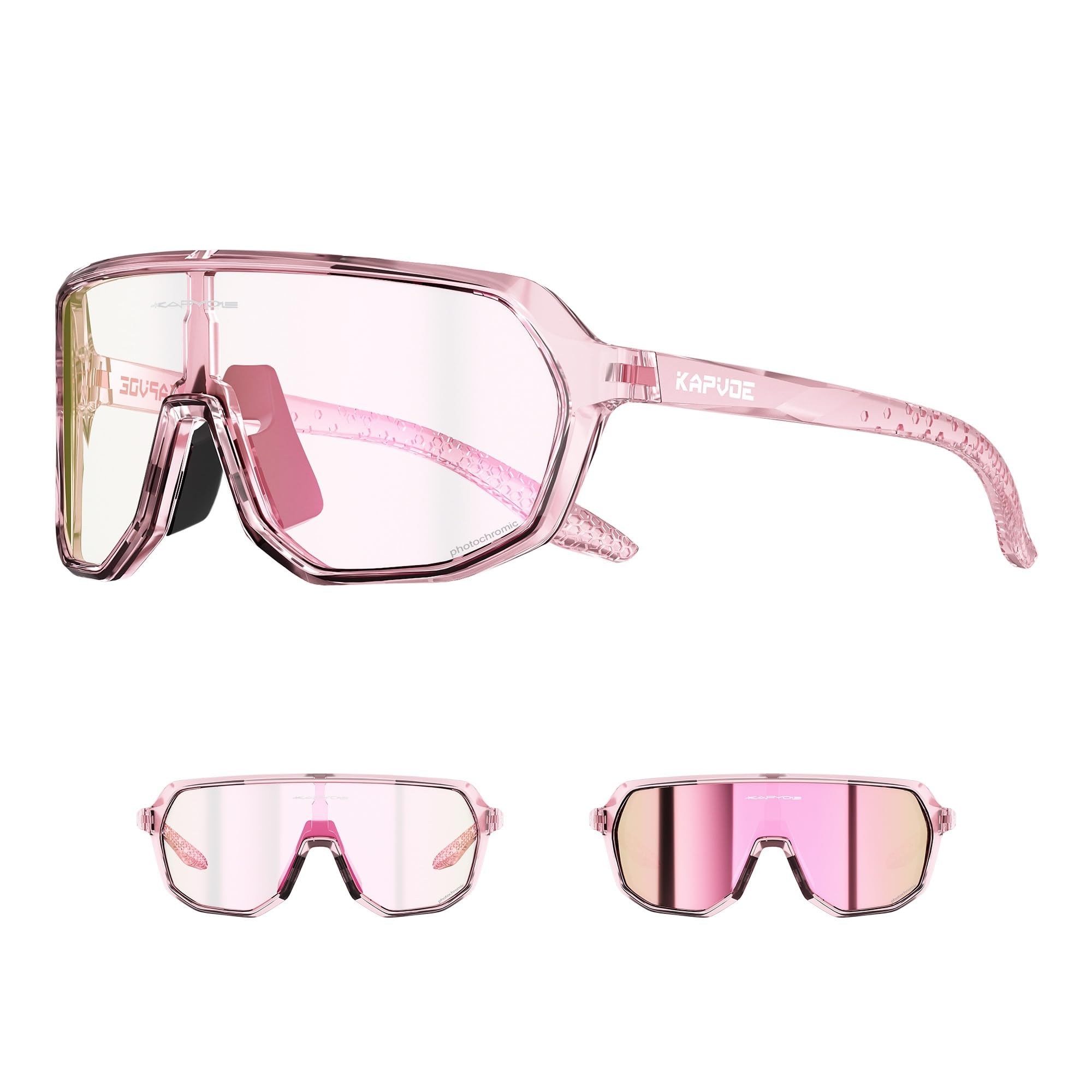
The KAPVOE K63 brings photochromic technology to a price point where most competitors offer only basic tinted lenses. Owner reviews consistently mention how well the transition works across varied light conditions — darkening noticeably in direct sun while remaining clear enough for overcast stretches. The large lens format provides generous coverage that blocks wind and debris effectively, and the ventilation design keeps fogging to a minimum during climbs.
Feedback from mountain bikers is particularly positive, with multiple reports confirming these glasses survive rough trail use without frame damage or lens separation. The lightweight construction means they stay planted even when the terrain gets choppy. Riders in the five-foot-six to five-foot-ten range report an excellent fit with no pressure points behind the ears or on the nose bridge. The lens tint level is moderate rather than aggressive, which suits riders who want protection without heavily darkening their view.
Some users note that the tint may be too light for extreme desert or snow conditions where maximum light reduction is needed. The frame size is generous, which gives excellent coverage but may overwhelm smaller face shapes. For riders who primarily encounter temperate or mixed lighting conditions and want photochromic convenience without paying a premium, the K63 delivers strong performance at a fraction of the cost of flagship alternatives.
What works
- Effective photochromic transition across varied light
- Large lens format with good ventilation
- Durable enough for mountain bike trail use
What doesn’t
- Maximum tint may be too light for extreme sun
- Large frame can overwhelm smaller face shapes
5. Lamicall 24g Polarized Sports Sunglasses
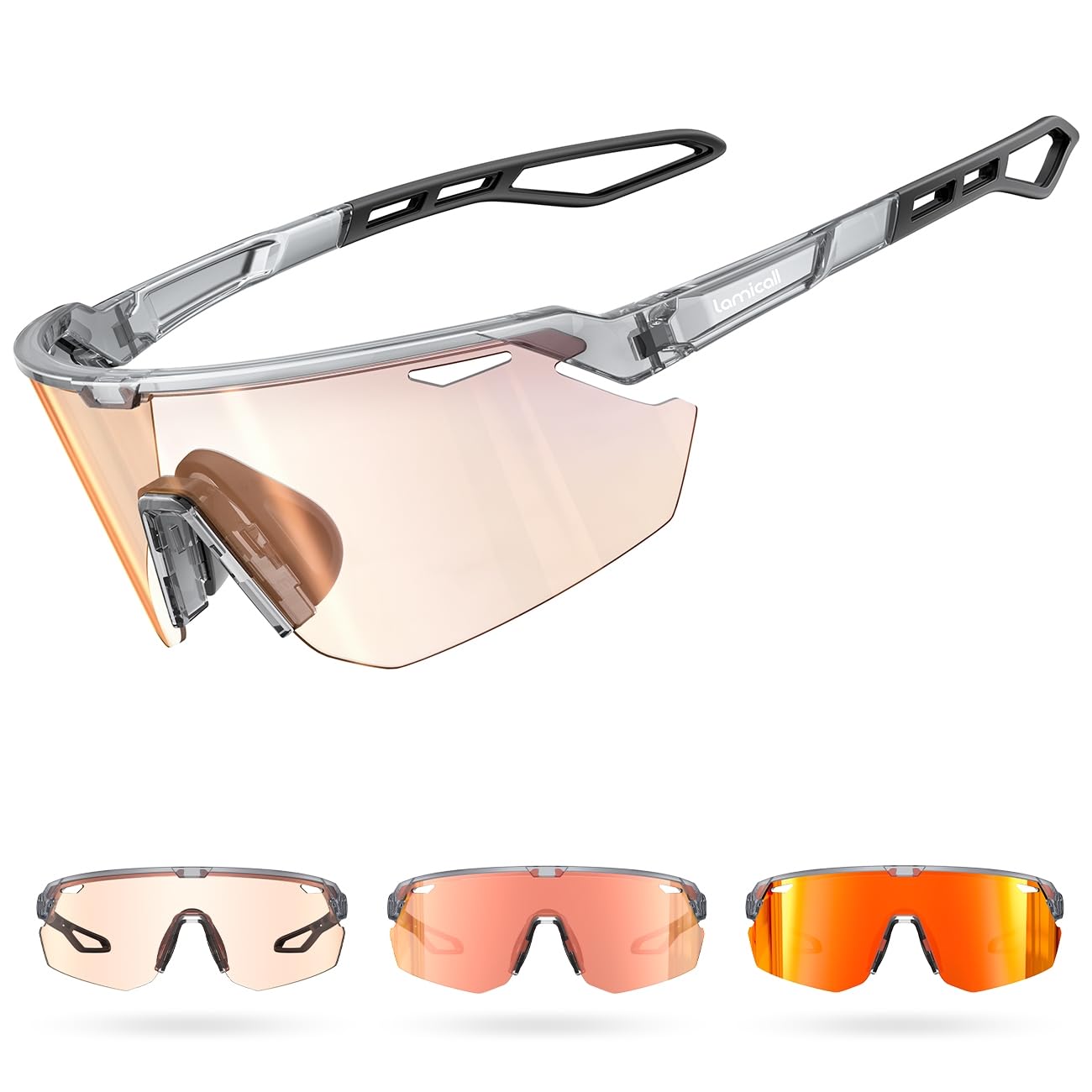
The Lamicall 24g sets itself apart with a sub-30-gram frame that reduces facial fatigue during multi-hour rides. The TR90 construction and polycarbonate photochromic lens keep the weight low while maintaining impact resistance. The lens darkens and lightens automatically based on UV exposure, allowing the same pair to serve from early morning fog to midday brightness without a lens swap. Adjustable three-level nose pads let riders fine-tune the vertical position for optimal alignment.
The anti-fog design includes air holes on both sides of the lens that promote circulation during exertion. This is a meaningful feature for riders who push hard enough to generate significant moisture. The included hard-shell case with a clip attaches to backpack straps for convenient access. The photochromic response is reliable across everyday temperature ranges and adjusts quickly enough for transitional conditions.
The primary limitation is that the photochromic lens has a moderate tint ceiling — it won’t get as dark as a dedicated dark-polarized lens on the brightest days. Riders who frequently ride in desert or high-glare environments may want more light reduction. The frame shape is sport-oriented rather than universal, which means it looks best in active contexts rather than casual settings. For riders who prioritize minimal weight and photochromic convenience above all else, this is a compelling option.
What works
- Ultralight sub-30-gram frame reduces fatigue
- Adjustable nose pads for customized fit
- Anti-fog vents help during high exertion
What doesn’t
- Maximum tint not sufficient for extreme glare conditions
- Sport-oriented styling limits casual versatility
6. X-TIGER Polarized Cycling Glasses with 5 Lenses
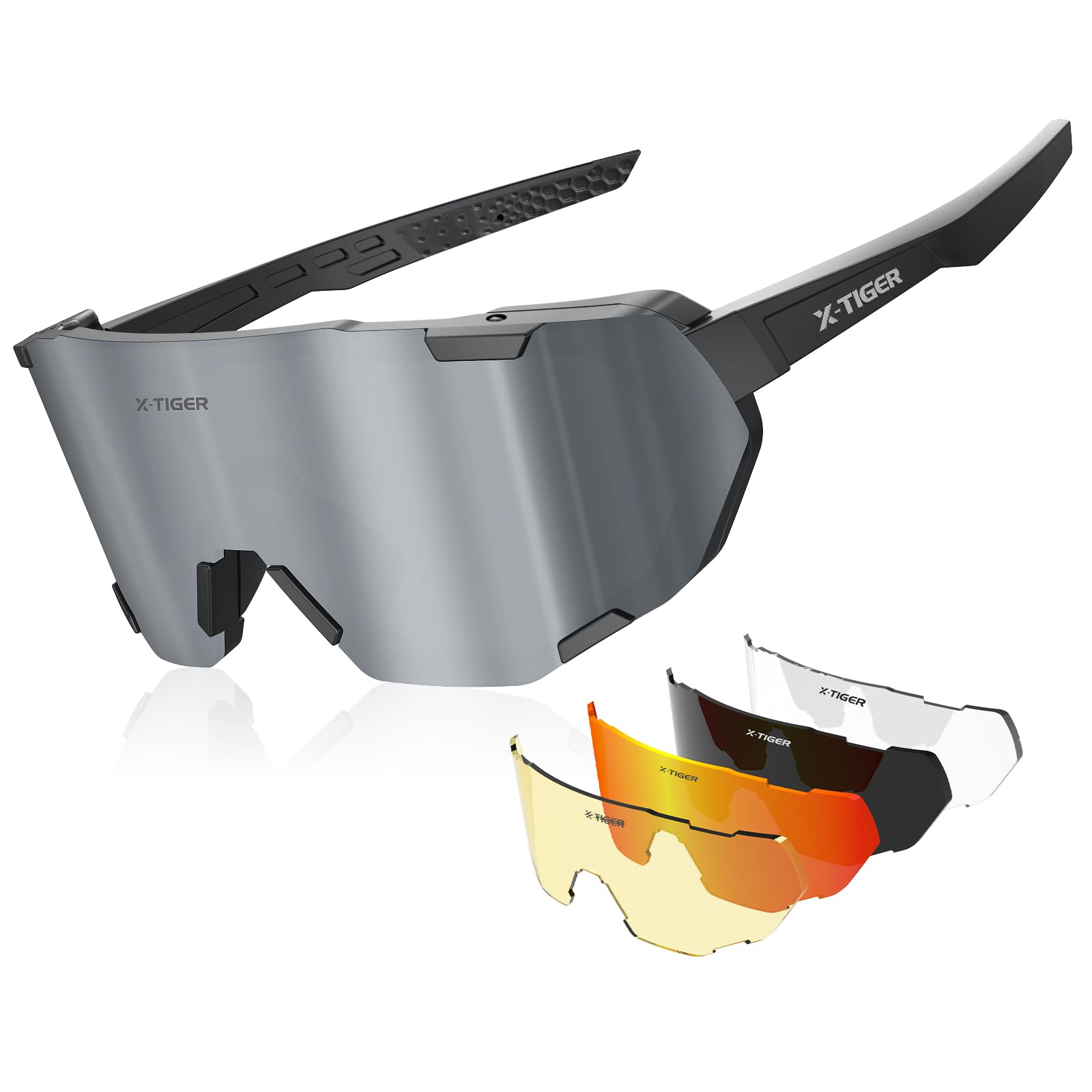
The X-TIGER kit provides five interchangeable lenses that cover everything from bright midday sun to low-light evening rides. Only the black lens is polarized for glare reduction, but the REVO lens improves contrast, the yellow lens boosts visibility at night, the mirror lens handles snow and beach conditions, and the clear lens works for overcast days. This system gives a single frame the versatility of a quiver of dedicated glasses without the multi-pair investment.
The TR90 frame and polycarbonate lenses are impact-resistant and lightweight, with a curved wraparound design that fits a broad range of face sizes. Soft rubber nose pads and removable side shields add protection against wind and debris. Owner feedback highlights the surprising comfort and field of view — the rimless design keeps the peripheral zone clear, and the glasses sit lightly enough that riders forget they’re wearing them. The included myopia frame adapter accommodates prescription inserts.
The main compromise is that only one of the five lenses is polarized. Riders who need consistent glare reduction across all conditions will need to swap lenses accordingly. Some users report that long sessions reveal pressure points, though this varies by face shape. For the rider who wants one frame that adapts to any activity — cycling, running, fishing, skiing, or driving — the X-TIGER kit offers exceptional breadth of coverage in a single package.
What works
- Five lenses cover every lighting scenario
- TR90 frame is impact-resistant and lightweight
- Includes myopia adapter for prescription inserts
What doesn’t
- Only one lens is polarized for glare reduction
- Pressure points may develop during very long rides
7. KAPVOE Polarized Cycling Glasses K76
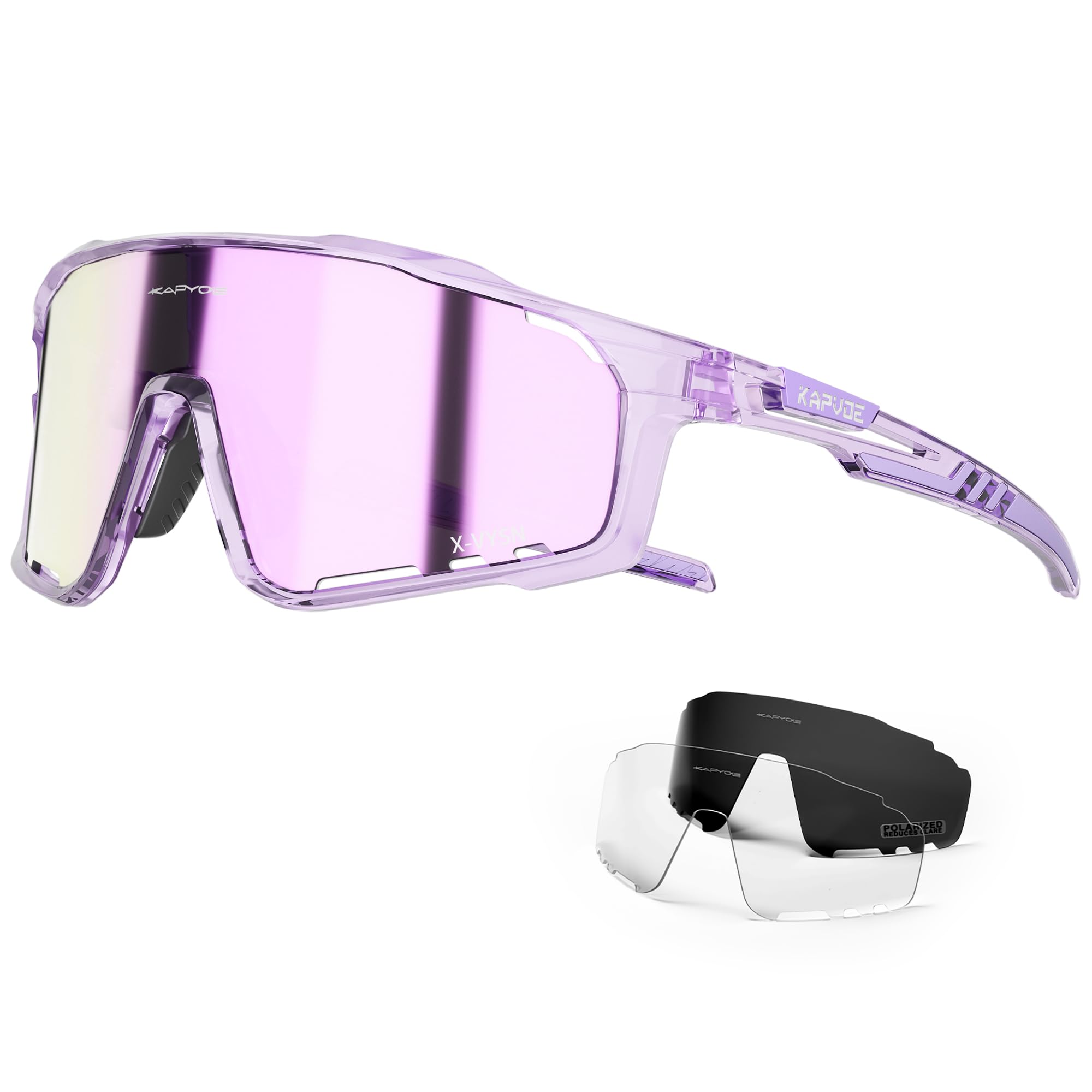
The KAPVOE K76 delivers a TR90 frame and polarized lenses at an entry-level price that makes sport-specific eyewear accessible without sacrificing the core performance features. The TR90 material provides flexibility and impact resistance while keeping weight in check, and the polarized coating effectively cuts road glare and reflected light. The wraparound coverage blocks wind and debris during mountain bike and road use alike.
KAPVOE has established a reliable reputation in the budget cycling eyewear segment, and the K76 continues that trend with a design that emphasizes function over frills. The frame geometry follows the brand’s established fit profile that accommodates medium to large face shapes. Ventilation is adequate for moderate-intensity rides, and the lens retention feels secure during rough trail sections. For riders who want polarized protection without spending more than necessary, the K76 hits the essential requirements.
The limitations are typical for the price tier: the frame doesn’t have the refined hinge feel or lens optical precision of premium alternatives, and the long-term scratch resistance may not match higher-end coatings. Riders who wear glasses for extended daily training sessions may eventually want to upgrade to a model with better ventilation or lighter frame weight. For casual cyclists, commuters, or anyone needing a dependable backup pair, the K76 offers solid polarized performance without overextending the budget.
What works
- TR90 frame is flexible and impact-resistant
- Polarized lens cuts road and water glare effectively
- Wraparound coverage provides good wind and debris protection
What doesn’t
- Long-term scratch resistance trails premium options
- Ventilation may struggle during sustained high effort
Hardware & Specs Guide
Lens Technology
Polarized lenses use a chemical film that blocks horizontal light waves, reducing glare from roads, water, and car surfaces. Photochromic lenses contain silver halide molecules that darken when exposed to UV light and clear when UV is absent. Interchangeable systems use mechanical retention to swap dedicated lenses for specific conditions. Polycarbonate is the dominant lens material due to its combination of impact resistance, optical clarity, and light weight.
Frame Materials
TR90 is a thermoplastic material known for its flexibility, shape memory, and corrosion resistance. It returns to its original shape after bending, which makes it ideal for sport frames that experience regular stress. Polycarbonate frames are rigid and impact-resistant but lack the recovery of TR90. Nylon frames offer low weight and high chemical resistance but come at a higher cost. Frame weight directly affects comfort on long rides — sub-30-gram frames minimize pressure points.
Fit and Coverage
Wraparound shields provide 180-degree or greater peripheral coverage, blocking wind and debris from all angles. Frameless designs remove the upper frame bar to improve visibility when the rider’s head is tilted forward in an aerodynamic position. Adjustable nose pads with two or three height settings allow vertical alignment of the lens relative to the pupil. Non-slip temple tips, often using hydrophilic rubber, prevent slippage as sweat accumulates.
UV Protection
UV400 rating indicates that the lens blocks 99 to 100 percent of UVA and UVB radiation up to 400 nanometers. This is the standard required for meaningful eye protection during outdoor activity. Some budget lenses claim UV protection without independent verification — looking for explicit UV400 labeling ensures compliance. All seven products in this guide carry UV400-rated lenses, which is non-negotiable for any pair used during daylight riding.
FAQ
What is the difference between polarized and photochromic lenses?
What frame material is best for cycling sunglasses?
How should bike riding shades fit for maximum comfort?
Can I use photochromic cycling glasses for driving?
Final Thoughts: The Verdict
For most buyers, the best bike riding shades winner is the Tifosi Vogel SL because it combines frameless visibility, interchangeable lens versatility, and proven durability at a reasonable price. If you want photochromic convenience with premium peripheral coverage, grab the 100% SPEEDCRAFT. And for budget-conscious riders who need polarized protection without compromise, the X-TIGER 5 Lens Kit provides the most versatility for the investment.

Certification: BSc in Mechanical Engineering
Education: Mechanical engineer
Lives In: 539 W Commerce St, Dallas, TX 75208, USA
Md Amir is an auto mechanic student and writer with over half a decade of experience in the automotive field. He has worked with top automotive brands such as Lexus, Quantum, and also owns two automotive blogs autocarneed.com and taxiwiz.com.